


Patient information: uses, side effects, how to take - Sustol
What is the most important information I should know about SUSTOL?
SUSTOL can cause serious side effects, including:
Serious injection site reactions. Some injection site reactions may be serious or severe and require medical care. Injection site reactions may include infections, prolonged bleeding, bruising, swelling that is caused by blood that collects under the skin (hematoma), small bumps (nodules) at the injection site, pain, and tenderness. Some injection site reactions can happen up to 2 weeks or more after receiving SUSTOL.
Tell your healthcare provider if you have:
ο pain or tenderness that you need to take pain medicine for or if you have pain that interferes with your daily activity.
ο bruising, hematoma, or a nodule at the injection site that does not go away. Your risk of severe bruising and hematomas at the injection site is increased if you take a blood thinner medicine (anticoagulant or antiplatelet medicine).
Get medical care right away if you have:
ο signs of an infection at the injection site, including continued redness or warmth, or if you have a fever.
ο bleeding at the injection site that is severe or lasts for longer than 24 hours.
- Stomach and intestinal problems. Problems having a bowel movement (constipation) that may be serious, can happen up to 7 days after treatment with SUSTOL. These problems may be more likely in people taking opioid pain medicines. SUSTOL can make it harder to identify certain stomach and bowel problems you may have. Tell your healthcare provider if you have constipation or your constipation worsens after you receive SUSTOL. Get medical care right away if you have pain or swelling in your stomach-area (abdomen).
Serious allergic reactions. Serious allergic reactions have happened in people who receive SUSTOL and who have had allergic reactions to other medicines used to help prevent nausea and vomiting called 5-HT3 receptor antagonists. Serious allergic reactions can happen up to 7 days or longer after treatment. Get emergency medical help right away if you have any signs or symptoms of a serious allergic reaction, including:
ο hives
ο breathing trouble
ο swollen face
ο chest pain
What is SUSTOL?
- SUSTOL is a prescription medicine called an "antiemetic."
- SUSTOL is used in adults to help prevent the nausea and vomiting that happens right away or later with certain anti-cancer medicines (chemotherapy).
It is not known if SUSTOL is safe and effective in children under 18 years of age.
Who should not receive SUSTOL?
Do not receive SUSTOL if you are allergic to:
- granisetron or any of the ingredients in SUSTOL. See the end of this Medication Guide for a complete list of ingredients in SUSTOL.
- any other 5-HT3 receptor antagonist medicine used to help prevent nausea and vomiting.
What should I tell my healthcare provider before receiving SUSTOL?
Before receiving SUSTOL, tell your healthcare provider about all of your medical conditions, including if you:
- have constipation
- have had recent stomach-area (abdominal) surgery
- have kidney problems
are pregnant or plan to become pregnant. It is not known if SUSTOL will harm your unborn baby.
- are breastfeeding or plan to breastfeed. It is not known if SUSTOL passes into your breast milk. Talk to your healthcare provider about the best way to feed your baby if you will receive SUSTOL.
Tell your healthcare provider about all the medicines you take, including prescription and over-the-counter medicines, vitamins, and herbal supplements. Using SUSTOL with certain other medicines can cause serious side effects.
Know the medicines you take. Keep a list of them to show your healthcare provider and pharmacist when you get a new medicine.
How will I receive SUSTOL?
- SUSTOL will be given to you by an injection under your skin (subcutaneously) in the back of your upper arm or in your stomach-area (abdomen) on Day 1 of your chemotherapy cycle.
- SUSTOL will be given to you by a healthcare provider.
- SUSTOL is usually given about 30 minutes before you receive your anti-cancer medicine (chemotherapy).
- You should not receive SUSTOL more often than 1 time every 7 days.
What are the possible side effects of SUSTOL?
SUSTOL may cause serious side effects, including:
- See "What is the most important information I should know about SUSTOL?"
Serotonin Syndrome. A possible life-threatening problem called serotonin syndrome can happen with medicines called 5-HT3 receptor antagonists, including SUSTOL, especially when used with medicines used to treat depression and migraine headaches called serotonin reuptake inhibitors (SSRIs), serotonin and norepinephrine reuptake inhibitors (SNRIs), monoamine oxidase inhibitors (MAOIs), and certain other medicines. Tell your healthcare provider or nurse right away if you have any of the following symptoms of serotonin syndrome:
ο agitation, seeing things that are not there (hallucinations), confusion, or coma
ο fast heartbeat or unusual and frequent changes in your blood pressure
ο dizziness, sweating, flushing, or fever
ο tremors, stiff muscles, muscle twitching, overactive reflexes, or loss of coordination
ο seizures
ο nausea, vomiting, or diarrhea
The most common side effects of SUSTOL include: injection site reactions, constipation, fatigue, headache, diarrhea, stomach-area (abdominal) pain, trouble sleeping or falling asleep, indigestion, dizziness, weakness, and heartburn.
These are not all the possible side effects of SUSTOL. Tell your healthcare provider if you have any side effect that bothers you or does not go away.
Call your doctor for medical advice about side effects.You may report side effects to FDA at 1-800-FDA-1088.
General Information about the safe and effective use of SUSTOL
Medicines are sometimes prescribed for purposes other than those listed in a Medication Guide. Do not use SUSTOL for a condition for which it was not prescribed. Do not give SUSTOL to other people, even if they have the same symptoms that you have. It may harm them.You can ask your healthcare provider or pharmacist for information about SUSTOL that is written for health professionals.
What are the ingredients in SUSTOL?
Active ingredient: granisetron
Inactive ingredients: triethylene glycol poly(orthoester) polymer and polyethylene glycol monomethyl ether
Manufactured for: Heron Therapeutics, Inc., Cary, NC 27511
Patent: https://www.herontx.com/patents/
SUSTOL® is a registered trademark of Heron Therapeutics, Inc.
Copyright © 2017-2026 Heron Therapeutics, Inc.
All rights reserved.
For more information, go to www.SUSTOL.com or call 1-844-437-6611.
This Medication Guide has been approved by the U.S. Food and Drug Administration
Revised: 04/2026
SUSTOL®
(granisetron) extended-release injection 10 mg/0.4 mL
Instructions for Use
You must read these complete instructions before you administer SUSTOL for the first time.
SUSTOL must be administered by a healthcare provider.
What is SUSTOL?
SUSTOL is a subcutaneous injection that provides long-acting antiemetic medication to patients receiving chemotherapy. SUSTOL contains a highly viscous polymer that provides sustained release of granisetron.
SUSTOL is supplied as part of an administration kit.
When should you administer SUSTOL?
Administer SUSTOL at least 30 minutes before chemotherapy on Day 1 of chemotherapy treatment and not more frequently than once every 7 days, because of the extended-release properties of the formulation.
Before you begin to prepare SUSTOL Injection
Read these critical instructions.
Do not substitute any of the components from the kit for administration.
Check to make sure the SUSTOL kit contains:
- One sterile single-dose glass syringe which contains 10 mg granisetron
- One sterile 18G x 5/8" administration needle
- Two sodium acetate warming pouches
- One Point-Lok® needle protection device
- Instructions for Use, Package Insert and Medication Guide
Bring SUSTOL to room temperature
STEP
To bring SUSTOL to room temperature:
1
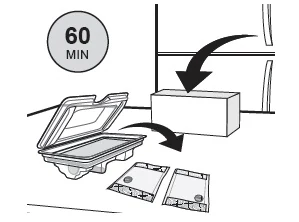
Remove SUSTOL kit from refrigeration. Open carton and remove tray. Open tray and unpack warming pouches. Wait a minimum of 60 minutes prior to use to allow SUSTOL and the warming pouches to warm to room temperature.
SUSTOL may be left out at room temperature overnight, and for up to 7 days, before it must be discarded. SUSTOL may be re-refrigerated if not used within the 7 day period.
Warming SUSTOL prior to injection decreases the viscosity and makes administration easier. Bringing SUSTOL to room temperature prior to warming with the sodium acetate warming pouch will facilitate warming of SUSTOL to body temperature.
Prepare the syringe
STEP
Follow these steps to prepare SUSTOL for use:
1
 Examine all contents of the package. Do not use if any component is damaged.
2
Check the expiration date on the syringe. Do not use if the expiration date has passed.
3
 Remove the perforated flag label from the plunger rod.
4
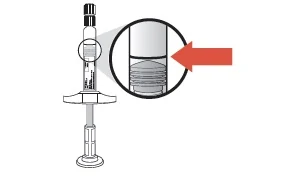
To ensure that the syringe contains the full dose, check that the gray stopper is close to or below the black line on the syringe barrel label as shown in the illustration.
Do NOT expel air bubbles. For a subcutaneous injection, air bubbles in the syringe will not harm the patient.
5
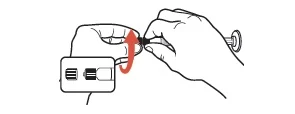
Unscrew the tip cap from the end of the pre-filled glass syringe.
Do NOT use if the tip cap is missing or has been tampered with. Do NOT use if the Luer fitting is missing or dislodged.
6
Remove the hub cover from the 18G x 5/8" needle supplied with the syringe. Attach the needle to the syringe and seat the needle securely. Do NOT remove the blue needle cover. Do not substitute with any other needle
Use ONLY the 18G x 5/8" needle provided with the syringe because of the highly viscous nature of the medication.
Warm SUSTOL to body temperature
STEP
Just prior to administering the injection, follow these steps:
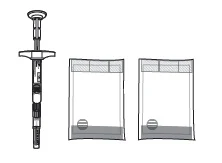
SUSTOL must be warmed to body temperature immediately prior to injection to reduce viscosity and facilitate administration.
SUSTOL is packaged with two warming pouches. The warming pouches use a non- toxic solution of sodium acetate to create an exothermic (warming) reaction. The second warming pouch can be used if SUSTOL is not immediately administered within the 15 minutes provided by the first warming pouch and needs to be re-warmed.
Before activating the warming pouch, make sure that the SUSTOL kit was removed from the refrigerator and that the warming pouches were unpacked from the kit at least 60 minutes prior to use to allow SUSTOL and the warming pouches to warm to room temperature.
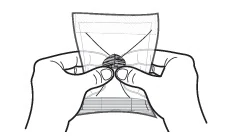
1
To activate the warming pouch, locate the metal disc and grasp with thumb and forefingers of both hands. Flex (bend) the disc rapidly until crystals begin to form (fluid will start to turn white). Massage warming pouch for a few seconds to soften and to increase the activation rate.
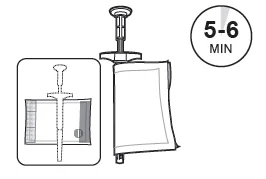
2
Wrap the SUSTOL syringe and needle in the syringe warming pouch. Use the outline on the warming pouch label as a placement guide for the syringe and needle. Fold the warming pouch over the syringe and press fastening strips together.
Allow SUSTOL to warm for 5 - 6 minutes in the warming pouch.
SUSTOL must be warmed to body temperature immediately prior to injection to reduce viscosity and facilitate administration.
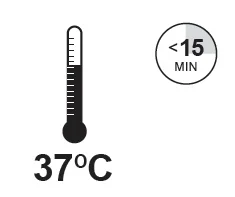
3
Keep the SUSTOL syringe and needle in the warming pouch until you are ready to administer SUSTOL. The warming pouch will keep the SUSTOL syringe at body temperature for 10 - 15 minutes. If more than 15 minutes has elapsed since warming the SUSTOL syringe, then re-warm the syringe using the second warming pouch prior to injecting SUSTOL.
Sodium acetate is a non-toxic salt. In case of a puncture to a warming pouch and the spilling of the solution or crystals, clean up with soap and water. In case of eye contact, flush with water for 15 minutes. In case of skin contact, wash with soap and water. Seek medical attention if irritation develops or persists.
Used warming pouches may be safely disposed of in the trash.
Select an injection site
STEP
To select an injection site, use these guidelines:
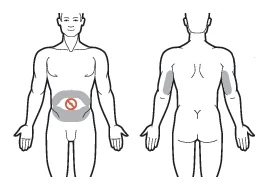
1
Use the skin of the abdomen at least one inch from the umbilicus or the skin of the back of the upper arms as sites for subcutaneous injections.
 For SUBCUTANEOUS injection only.
Do NOT inject within 1 inch of the umbilicus or anywhere the skin is:
- Burned • Hardened • Inflamed • Swollen • Compromised
For subsequent injections, use the same general area of the body. However, be sure not to inject in the exact same place. Administer new injections at least 1 inch from the previous site.
Inject SUSTOL
STEP
Follow these steps to inject SUSTOL:
1
Remove the syringe from the warming pouch.
The white finger flange on the syringe provides better control when administering SUSTOL. Do NOT remove white finger flange.
2
Remove the blue needle cover. Use standard sharps safety techniques to avoid needle sticks.
3
Use standard aseptic technique when performing the injection.
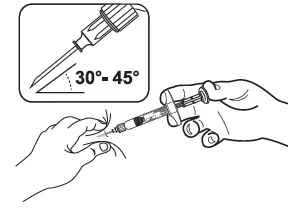
Pinch the skin and underlying subcutaneous tissue with your non-dominant hand to create a "tent."
Insert the needle into the subcutaneous tissue at a 30° - 45° angle with your dominant hand.
Administer SUSTOL ONLY as a subcutaneous injection. NEVER administer intravenously, intramuscularly or intraperitoneally.
4
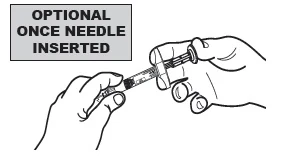
For additional stability, once the needle is inserted into the subcutaneous tissue, release the "tent" and hold the syringe barrel with your non-dominant hand.
5
Press the plunger using a slow, firm, and steady push until you have delivered the entire dose. Do not use excessive force to inject the material more quickly, as this will only result in greater difficulty with the injection.
Due to the high viscosity of SUSTOL, you will experience resistance when injecting SUSTOL. Apply firm and steady pressure to the plunger for about 20-30 seconds. Pressing harder will NOT expel SUSTOL faster.
Do NOT advance or reposition the syringe in the subcutaneous tissue during the injection.
6
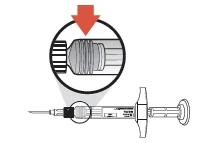
Because SUSTOL is highly viscous, before withdrawing the needle, make sure that the medication is completely expelled by checking the position of the stopper at the base of the syringe barrel.
7
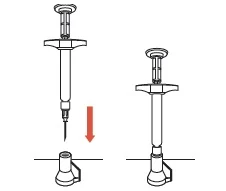
Withdraw the needle. Do not remove the needle from the syringe. Use the enclosed Point-Lok® device to prevent needle sticks.
Place the Point-Lok needle protection device, supplied within the SUSTOL kit, on a secured flat surface. Do not hold the Point-Lok device in your hand. Carefully insert the exposed needle into the opening at the top of the Point-Lok device and push down until the needle is fully seated in the Point-Lok device. This action will seal the needle tip and lock the needle firmly into the Point-Lok device. Discard the protected needle and attached syringe using your organization's standard sharps disposal procedures.
8
Dispense enclosed Medication Guide to each Patient.
Manufactured for: Heron Therapeutics, Inc.
Cary, NC 27511
© 2026 Heron Therapeutics, Inc.
Revision Date: April 2026
Questions about how to use SUSTOL?
Call the support line toll-free at 844-HERON11 (844-437-6611) or visit www.SUSTOL.com
xxxxxxxxxxx