


Patient information: uses, side effects, how to take - Icatibant
What is Icatibant Injection?
- Icatibant Injection is a medicine used to treat acute attacks of hereditary angioedema (HAE) in adults 18 years and older.
It is not known if Icatibant Injection is safe or effective for children under 18 years of age.
What should I tell my healthcare provider before using Icatibant Injection?
Before you use Icatibant Injection, tell your healthcare provider about all your medical conditions including if you:
are pregnant or plan to become pregnant. It is not known if Icatibant Injection will harm your unborn baby. You and your healthcare provider will decide if Icatibant Injection is right for you.
- are breastfeeding or plan to breastfeed. It is not known if Icatibant Injection passes into your breast milk. Talk to your healthcare provider about the best way to feed your baby if you use Icatibant Injection.
Tell your healthcare provider about all the medicines you take, including prescription and over the counter medicines, vitamins, and herbal supplements.
How should I use Icatibant Injection?
- Read the Instructions for Use at the end of this Patient Information leaflet for detailed instructions about the right way to use Icatibant Injection.
- Use Icatibant Injection exactly as your healthcare provider tells you to use it.
- Your healthcare provider will prescribe the right dose of Icatibant Injection for you and tell you when to use it.
- Your healthcare provider will teach you or a caregiver how to give icatibant injections.
- If your symptoms continue or come back, you may repeat your Icatibant Injection at least six hours apart.
- Do not use more than 3 doses in 24 hours.
- If you have a laryngeal attack, inject Icatibant Injection and then go to the nearest hospital emergency room right away.
What should I avoid while using Icatibant Injection?
Tiredness, drowsiness, and dizziness can happen in people who take Icatibant Injection. If this happens, do not drive a car, use machinery, or do anything that needs you to be alert.
What are the possible side effects of Icatibant Injection?
The most common side effects of Icatibant Injection include:
- redness, bruising, swelling, warmth, burning, itching, irritation, hives, numbness, pressure, or pain at the injection site
- fever
- too much of an enzyme called transaminase in your blood
- dizziness
- nausea
- headache
- rash
Tell your healthcare provider if you have any side effect that bothers you or that does not go away.
These are not all of the possible side effects of Icatibant Injection. For more information, ask your healthcare provider or pharmacist.
Call your doctor for medical advice about side effects. You may report side effects to FDA at 1-800-FDA-1088.
How should I store Icatibant Injection?
- Store Icatibant Injection between 2°C to 25°C (36°F to 77°F).
- Do not freeze.
- Store Icatibant Injection in the original carton until you are ready to use it.
Keep Icatibant Injection and all medicines out of the reach of children.
General information about the safe and effective use of Icatibant Injection
Medicines are sometimes prescribed for purposes other than those listed in a Patient Information leaflet. Do not use Icatibant Injection for a condition for which it was not prescribed. Do not give Icatibant Injection to other people, even if they have the same symptoms that you have. It may harm them.
This Patient Information leaflet summarizes the most important information about Icatibant Injection. If you would like more information, talk with your healthcare provider. You can ask your pharmacist or healthcare provider for information about Icatibant Injection that is written for health professionals.
For more information, email us.hikma@primevigilance.com or call 1-877-845-0689.
What are the ingredients in Icatibant Injection?
Active ingredient: icatibant acetate
Inactive Ingredients: sodium chloride (isotonicity reagent), glacial acetic acid (pH adjuster), sodium hydroxide (pH adjuster), and water for injection
INSTRUCTIONS FOR USE
Icatibant (eye-KAT-i-bant) Injection, for subcutaneous use
Step 1. Preparing your dose of Icatibant Injection
- Wash your hands with soap and water.
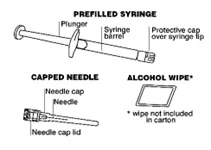
You will need the following supplies:
- Your Icatibant Injection carton that includes 1 single-dose Icatibant Injection prefilled syringe and 1 needle.
- 1 alcohol wipe
- The medicine inside your Icatibant Injection prefilled syringe should be clear and colorless. Do not use your Icatibant Injection prefilled syringe if the solution contains particles, is cloudy, or has an unusual color.
Figure A
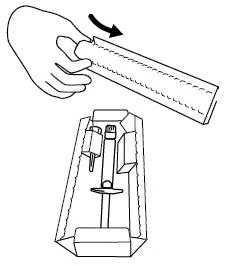
Step 2. Remove the prefilled syringe and needle from the carton. See Figure B.
Figure B
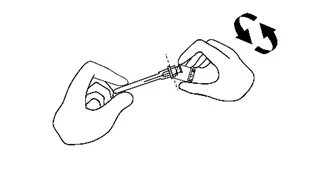
Step 3. Twist the needle cap lid to break the seal (the needle should remain inside the protective needle cap until ready to use) . See Figure C.
Figure C
Step 4. Remove the protective cap from the end of the pre-filled syringe by unscrewing the cap. Hold the syringe firmly. Carefully attach the needle to the prefilled syringe containing the colorless Icatibant Injection solution. See Figure D.
Figure D

Step 5. Firmly screw the needle on the prefilled syringe. Be careful not to remove the needle from the needle cap. See Figure E.
Figure E

Preparing the Injection Site
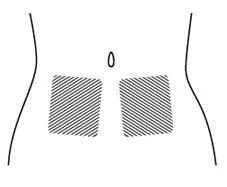
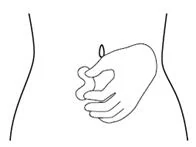
Step 6. Choose the injection site. The injection site should be a fold of skin on your stomach, about 2 to 4 inches (5 to 10 cm) below your belly button on either side. See Figure F.
The area you choose for injection should be at least 2 inches (5 cm) away from any scars. Do not choose an area that is bruised, swollen, or painful.
Figure F
Step 7. Clean your icatibant injection site with an alcohol wipe and allow it to dry. See Figure G.
Figure G
Injecting your Icatibant Injection
Step 8. Remove the needle from the needle cap by holding the needle cap and carefully pulling the syringe. Do not pull up on the plunger. See Figure H.
Figure H
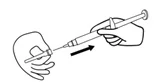
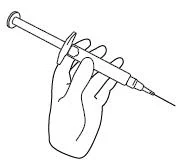
Step 9. Hold the Icatibant Injection prefilled syringe in 1 hand, between your fingers and thumb. See Figure I.
Figure I
Step 10. Use your other hand to gently pinch the fold of skin you cleaned with the alcohol wipe between your thumb and fingers for your injection. See Figure J.
Figure J
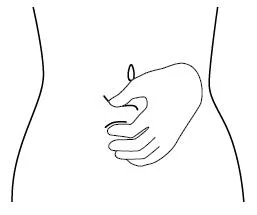
Step 11. Hold the syringe between a 45-to-90 degree angle to your skin with the needle facing the fold of skin you are holding. See Figure K.
Figure K
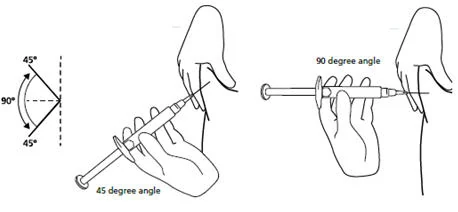
Step 12. Hold the fold of skin. Bring the syringe to the skin and quickly insert the needle into the skin fold. See Figure L.
Figure L
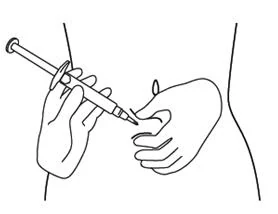
Step 13. Push the plunger, at the top of the syringe, for at least 30 seconds until no Icatibant Injection is in the syringe. See Figure M.
Figure M
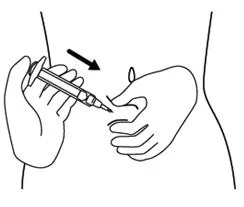
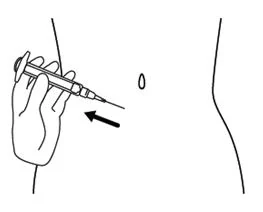
Step 14. Release the skin fold and gently pull the needle out. See Figure N.
Figure N
Disposal of your used Icatibant Injection prefilled syringe
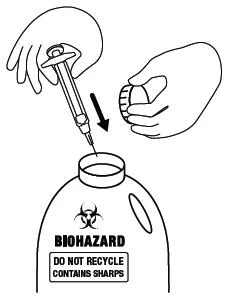
Step 15. Place your used Icatibant Injection syringe, with the needle attached, in an FDA-cleared sharps disposal container right away after use. Do not throw away (dispose of) loose needles and syringes in your household trash.
If you do not have an FDA-cleared sharps disposal container, you may use a household container that is:
- made of a heavy-duty plastic,
- can be closed with a tight-fitting, puncture-resistant lid, without sharps being able to come out,
- upright and stable during use,
- leak-resistant, and
- properly labeled to warn of hazardous waste inside the container.
When your sharps disposal container is almost full, you will need to follow your community guidelines for the right way to dispose of your sharps disposal container. There may be state or local laws about how you should throw away used needles and syringes. For more information about safe sharps disposal, and for specific information about sharps disposal in the state that you live in, go to the FDA’s website at: http://www.fda.gov/safesharpsdisposal.
Do not dispose of your sharps disposal container in your household trash unless your community guidelines permit this. Do not recycle your used sharps disposal container.
Figure O
Distributed by:
Hikma Pharmaceuticals USA Inc.
Berkeley Heights, NJ 07922
This Patient Information and Instructions for Use have been approved by the U.S. Food and Drug Administration.
Revised: April 2024
19AUF08