


Patient information: uses, side effects, how to take - Ziextenzo
What is ZIEXTENZO?
ZIEXTENZO is a prescription medicine that is used:
- in adults and children aged newborn and older to help reduce the chance of infection due to a low white blood cell count, in people with certain types of cancer (non-myeloid), who receive anti-cancer medicines (chemotherapy) that can cause fever and low blood cell count.
- in adults and children aged newborn and older for acute radiation syndrome. The effectiveness of pegfilgrastim for this use was only studied in animals, because it could not be studied in people.
Do not take ZIEXTENZO if you have had a serious allergic reaction to pegfilgrastim products or filgrastim products.
- Before you receive ZIEXTENZO, tell your healthcare provider about all of your medical conditions, including if you:
- • have a sickle cell disorder.
- • have kidney problems.
- •
are pregnant or plan to become pregnant. It is not known if ZIEXTENZO will harm your unborn baby.
- • are breastfeeding or plan to breastfeed. It is not known if ZIEXTENZO passes into your breast milk.
Tell your healthcare provider about all of the medicines you take, including prescription and over-the-counter medicines, vitamins, and herbal supplements.
How will I receive ZIEXTENZO?
- ZIEXTENZO is given as an injection under your skin (subcutaneous injection) by a healthcare provider. If your healthcare provider decides that the subcutaneous injections can be given at home by you or your caregiver, follow the detailed “Instructions for Use” that comes with your ZIEXTENZO for information on how to prepare and inject a dose of ZIEXTENZO using the single-dose prefilled syringe.
- You and your caregiver will be shown how to prepare and inject ZIEXTENZO using the single-dose prefilled syringe before you use it.
- You should not inject a dose of ZIEXTENZO to children weighing less than 99 pounds (45 kg) from a ZIEXTENZO prefilled syringe.
- If you are receiving ZIEXTENZO because you are also receiving chemotherapy, the last dose of ZIEXTENZO should be injected at least 14 days before and 24 hours after your dose of chemotherapy.
- If you miss a dose of ZIEXTENZO, talk to your healthcare provider about when you should give your next dose.
- If you inject too much ZIEXTENZO, call your healthcare provider or Poison Help line at 1-800-222-1222 or go to the nearest hospital emergency room right away.
What are possible side effects of ZIEXTENZO?
ZIEXTENZO may cause serious side effects, including:
- Spleen rupture. Your spleen may become enlarged and can rupture. A ruptured spleen can cause death. Call your healthcare provider right away if you have pain in the left upper stomach area or your left shoulder.
- A serious lung problem called Acute Respiratory Distress Syndrome (ARDS). Call your healthcare provider or get emergency help right away if you have shortness of breath with or without a fever, trouble breathing, or a fast rate of breathing.
- Serious allergic reactions. Allergic reactions can cause a rash over your whole body, shortness of breath, wheezing, dizziness, swelling around your mouth or eyes, fast heart rate, and sweating. If you have any of these symptoms, stop using ZIEXTENZO and call your healthcare provider or get emergency medical help right away.
- Sickle cell crises in people with sickle cell disorder. You may have a severe sickle cell crisis, which could lead to death. Call your healthcare provider right away if you have symptoms of sickle cell crisis such as pain or difficulty breathing.
Kidney injury. Call your healthcare provider right away if you develop any of the following symptoms:
- swelling of your face or ankles
- blood in your urine or dark colored urine
- you urinate less than usual
- Increased white blood cell count (leukocytosis). Your healthcare provider will check your blood count during treatment with ZIEXTENZO.
- Decreased platelet count (thrombocytopenia). Your healthcare provider will check your blood count during treatment with ZIEXTENZO. Tell your healthcare provider if you have unusual bleeding or bruising during treatment with ZIEXTENZO.
Capillary Leak Syndrome (CLS). ZIEXTENZO can cause fluid to leak from blood vessels into your body’s tissues. CLS can quickly cause you to have symptoms that may become life-threatening. Get emergency medical help right away if you develop any of the following symptoms:
- swelling or puffiness and are urinating less than usual
- trouble breathing
- swelling of your stomach area (abdomen) and feeling of fullness
- dizziness or feeling faint
- a general feeling of tiredness
- Myelodysplastic Syndrome (MDS) and Acute Myeloid Leukemia (AML). If you have breast cancer or lung cancer, when ZIEXTENZO is used with chemotherapy and radiation therapy, or with radiation therapy alone, you may have an increased risk of developing a precancerous blood condition called MDS or a blood cancer called AML. Call your healthcare provider if you develop any symptoms of MDS and AML, including tiredness, fever, or easy bruising or bleeding.
- Inflammation of the aorta (aortitis). Inflammation of the aorta (the large blood vessel that carries blood from the heart to the body) has happened in people who receive pegfilgrastim products. Tell your healthcare provider if you develop fever, stomach (abdominal) pain, feeling tired, or back pain.
The most common side effects of ZIEXTENZO are pain in the bones, arms, and legs.
These are not all the possible side effects of ZIEXTENZO.
Call your healthcare provider for medical advice about side effects. You may report side effects to FDA at 1-800-FDA-1088.
How should I store ZIEXTENZO single-dose prefilled syringes?
- Store ZIEXTENZO in the refrigerator between 36°F to 46°F (2°C to 8°C).
- Avoid freezing. If ZIEXTENZO is accidentally frozen, allow the prefilled syringe to thaw in the refrigerator before injecting. Do not use a ZIEXTENZO prefilled syringe that has been frozen more than 1 time. Use a new ZIEXTENZO prefilled syringe.
- Keep the prefilled syringe in the original carton to protect from light or physical damage.
- Do not shake ZIEXTENZO.
- Take ZIEXTENZO out of the refrigerator at least 15 to 30 minutes before use and allow it to reach room temperature, 68°F to 77°F (20°C to 25°C), before preparing an injection.
- Throw away (dispose of) any ZIEXTENZO that has been left at temperatures between 68°F to 95°F (20°C to 35°C) for more than 120 hours.
Keep ZIEXTENZO and all medicines out of the reach of children.
General information about the safe and effective use of ZIEXTENZO.
Medicines are sometimes prescribed for purposes other than those listed in a Patient Information leaflet. Do not use ZIEXTENZO for a condition for which it was not prescribed. Do not give ZIEXTENZO to other people, even if they have the same symptoms that you have. It may harm them. You can ask your pharmacist or healthcare provider for information about ZIEXTENZO that is written for health professionals.
What are the ingredients in ZIEXTENZO?
Active ingredient: pegfilgrastim-bmez
Inactive ingredients: acetic acid, polysorbate 20, sorbitol, and Water for Injection. Sodium hydroxide may be added as necessary to adjust pH.
Manufactured by: Sandoz Inc. Princeton, NJ 08540 US License No. 2003
For more information, visit www.ziextenzo.com or call 1-800-525-8747
- This Patient Information has been approved by the U.S. Food and Drug Administration. Revised: 05/2026
Instructions for Use
ZIEXTENZO® (zee-eks -TEN-zoh)
(pegfilgrastim-bmez)
Injection, for subcutaneous use
Single-Dose Prefilled Syringe
Guide to Parts
Before use
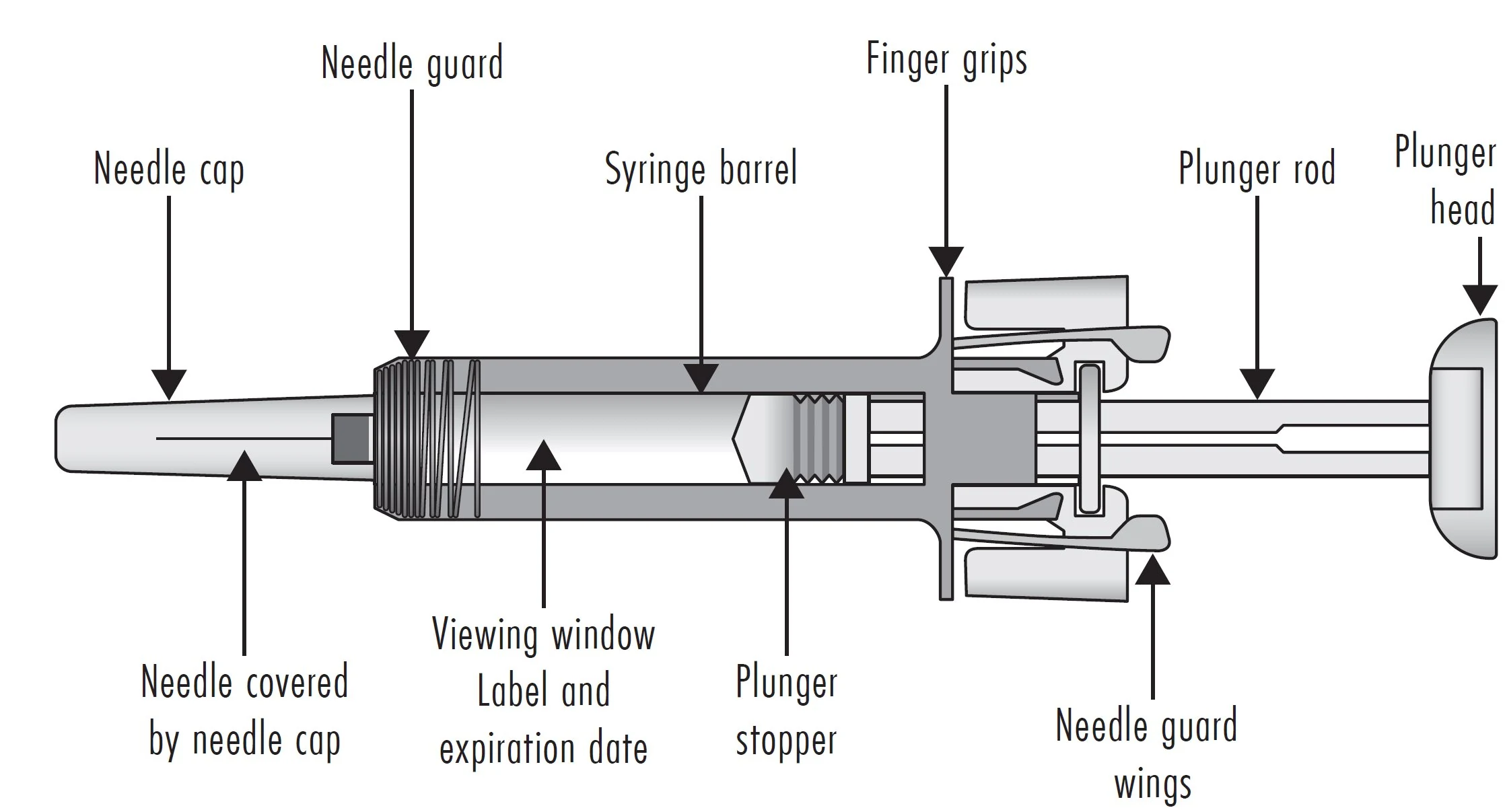
Figure A: The ZIEXTENZO prefilled syringe with needle guard not activated
Important: The needle is covered by the needle cap before use.
After use
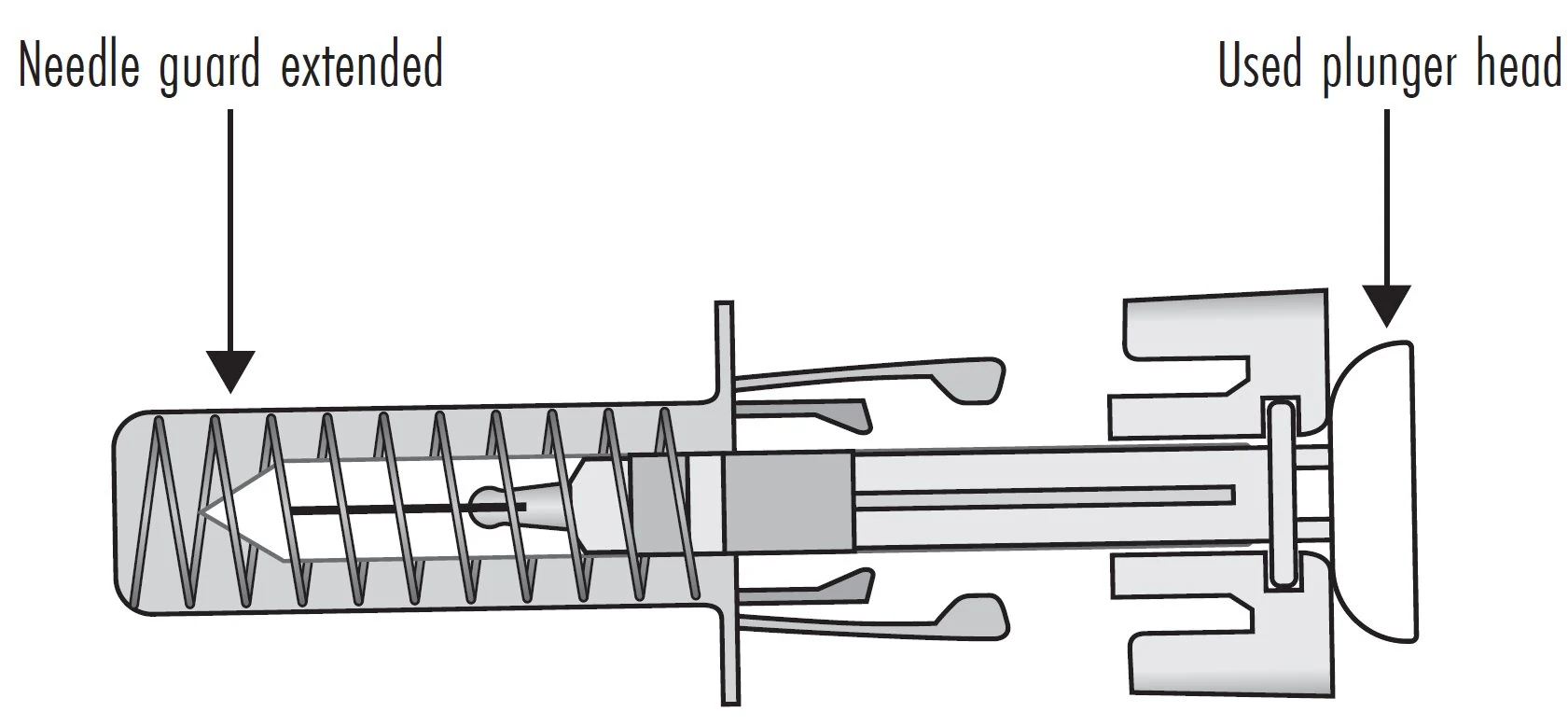
Figure B: The ZIEXTENZO prefilled syringe with needle guard activated.
- Important:
Read the Patient Information for important information you need to know about ZIEXTENZO before using these Instructions for Use.
Before you use a ZIEXTENZO prefilled syringe, read this important information.
Storing the ZIEXTENZO prefilled syringe
- Store ZIEXTENZO in a refrigerator between 36°F to 46°F (2°C to 8°C).
- Avoid freezing. If ZIEXTENZO is accidentally frozen, allow the prefilled syringe to thaw in the refrigerator before injecting.
- Do not use a ZIEXTENZO prefilled syringe that has been frozen more than 1 time. Throw it away and use a new ZIEXTENZO prefilled syringe.
- Keep ZIEXTENZO prefilled syringe in the original carton to protect from light or physical damage.
- Take the prefilled syringe out of the refrigerator at least 15 to 30 minutes before use and allow it to reach room temperature, 68°F to 77°F (20°C to 25°C), before preparing an injection.
- Throw away (dispose of) any ZIEXTENZO that has been left at temperatures between 68°F to 95°F (20°C to 35°C) for more than 120 hours. See “13. Disposing of used syringes”.
Keep ZIEXTENZO prefilled syringe out of the reach of children.
Using the prefilled syringe
- It is important that you do not try to give the injection unless you or your caregiver have received training from your healthcare provider.
- Make sure that the name ZIEXTENZO appears on the carton and prefilled syringe label.
- Check the carton and prefilled syringe label to make sure the dose strength is 6 mg.
- You should not inject a dose of ZIEXTENZO to children weighing less than 99 pounds (45 kg) from a ZIEXTENZO prefilled syringe.
- Do not use a prefilled syringe after the expiration date on the label.
- Do not shake the prefilled syringe.
- Do not open the original carton until you are ready to use the ZIEXTENZO prefilled syringe.
- Do not remove the needle cap from the prefilled syringe until you are ready to inject. Do not use the prefilled syringe if the needle cap is missing or not securely attached.
- Do not use the ZIEXTENZO prefilled syringe if the seal of the tray is broken or if there is liquid in the tray.
- Do not use a prefilled syringe if it has been dropped on a hard surface. The prefilled syringe may be broken even if you cannot see the break. Use a new prefilled syringe.
- Avoid touching the needle guard wings before use. Touching them may cause the needle guard to be activated too early.
- Do not use the prefilled syringe if the needle guard has been activated. Use another prefilled syringe that has not been activated and is ready to use.
Call your healthcare provider if you have any questions.
Prepare the injection
- 1. Find a clean, flat, well-lit work surface.
- 2. Remove the prefilled syringe carton from the refrigerator and check the expiration date.
- 3. Remove the syringe tray from the carton and place it unopened on your clean work surface for at least 15 to 30 minutes, so that it can reach room temperature, 68°F to 77°F (20°C to 25°C).
- • Do not use the prefilled syringe if the carton is damaged.
- • Do not try to warm the prefilled syringe by using a heat source such as hot water or a microwave.
- • Do not leave the prefilled syringe in direct sunlight.
- • Do not shake the prefilled syringe.
- 4. Wash your hands well with soap and water.
Gather the following supplies for the injection (See Figure C):
| 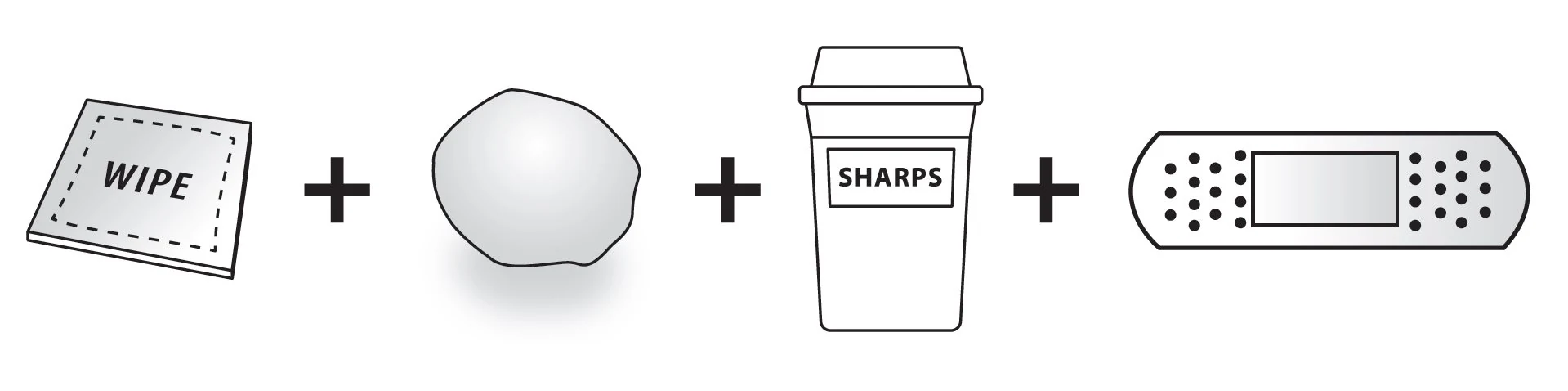 Figure C |
- 5.
Open the tray by peeling away the cover. Grab the needle guard to remove the prefilled syringe from the tray (See Figure D).
- For safety reasons:
- • Do not grab the plunger rod.
- • Do not grab the needle cap.
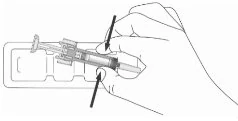
Figure D
Check to be sure that the plastic clear needle guard is located over the barrel of the glass syringe. If the clear needle guard is covering the needle cap, as shown in Figure B above, the needle guard has been activated. Do not try to use this prefilled syringe. Throw away (dispose of) this prefilled syringe. See “13. Disposing of used syringes”. Start over with a new prefilled syringe.
Inspect the prefilled syringe and medicine (See Figure E)
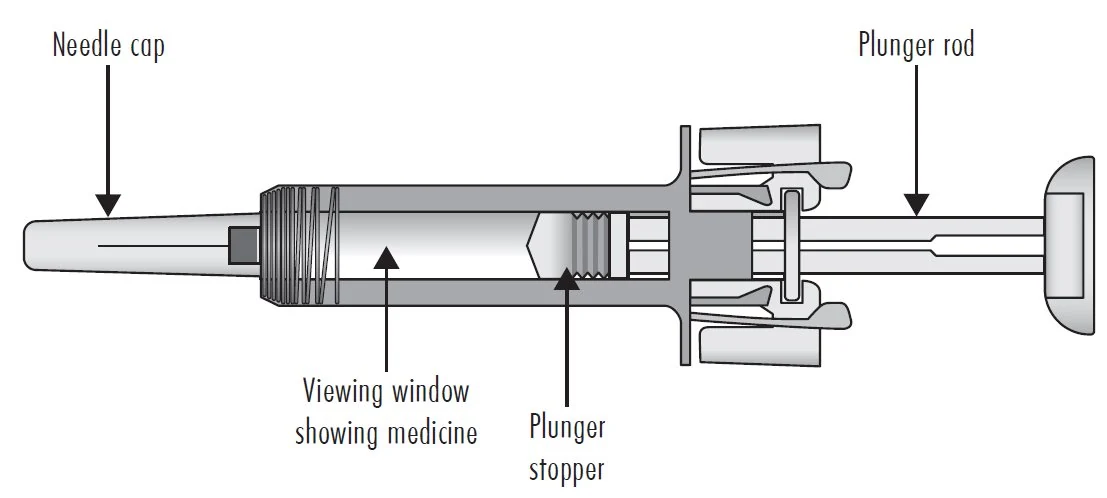
Figure E
- 6.
Make sure that the medicine in the prefilled syringe is clear and colorless to slightly yellowish. It is normal to see small air bubbles in the liquid (medicine).
- Do not use the prefilled syringe if:
- • the medicine looks cloudy or discolored or contains lumps, flakes or particles
- • any part appears used or cracked or broken
- • the needle cap is missing or not securely attached
- • the expiration date printed on the label has passed
- In all cases, use a new prefilled syringe and call your healthcare provider.
Select and clean the injection site
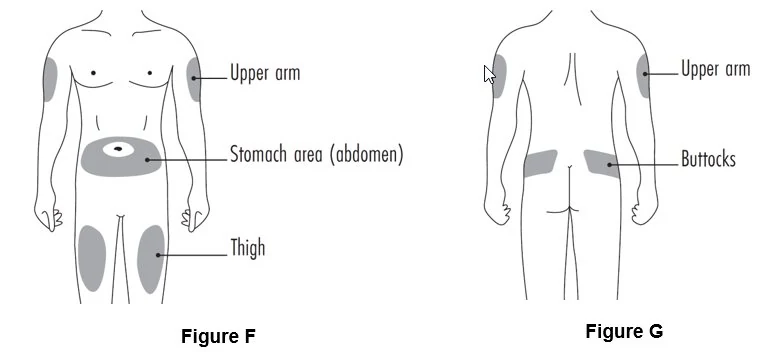
You can use (See Figure F and Figure G):
|
Prepare the ZIEXTENZO prefilled syringe for use
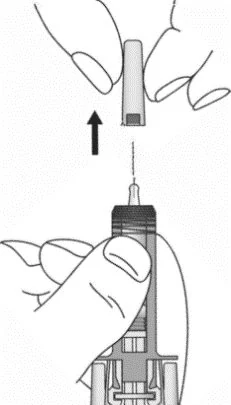 Figure H |
|
| |
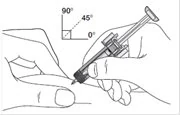 Figure I |
|
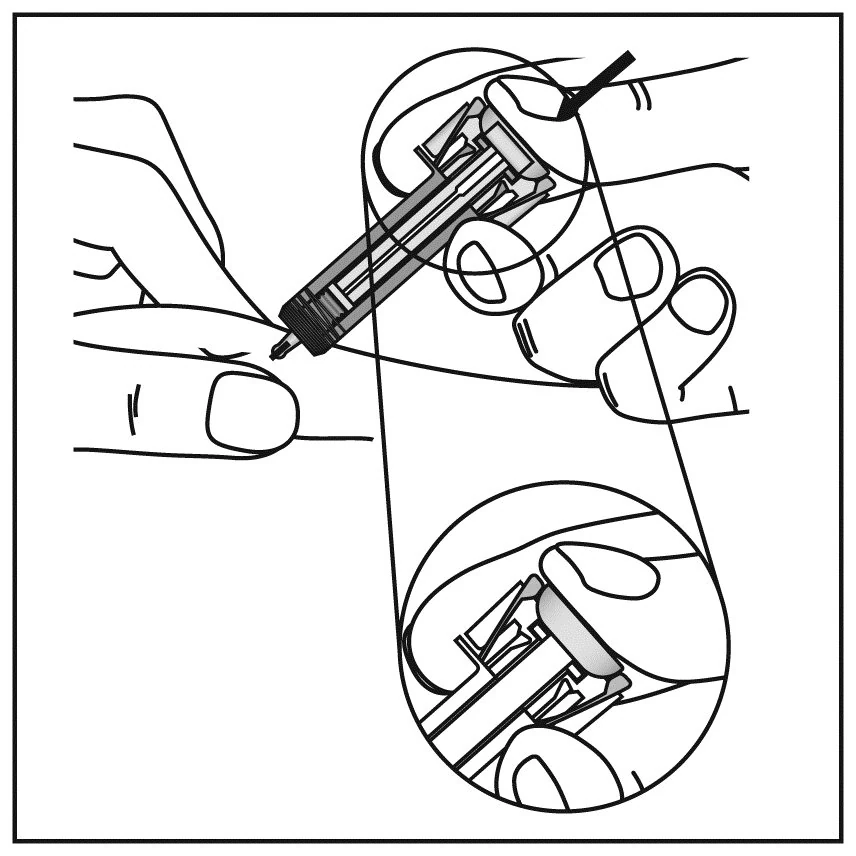 Figure J |
|
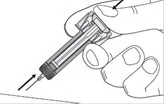 Figure K |
|
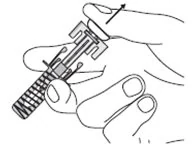 Figure L |
|
Disposing of used syringes
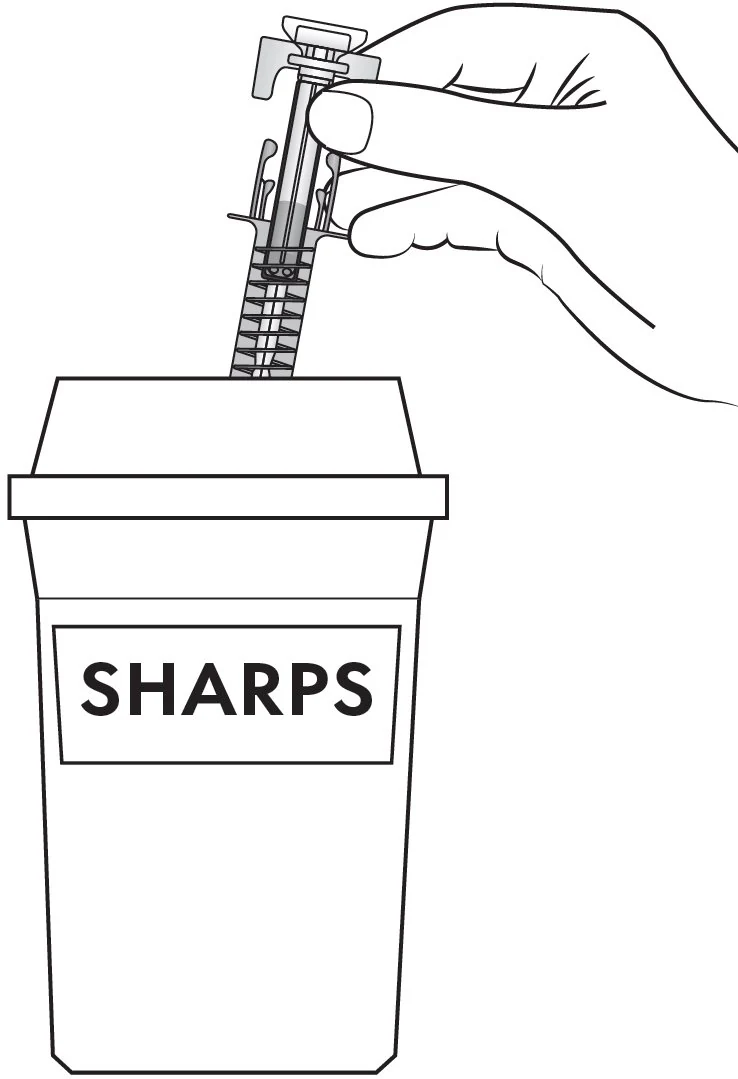 Figure M |
Important: Keep the sharps disposal container out of the reach of children. |
Examine the injection site
| |
This Instructions for Use has been approved by the U.S. Food and Drug Administration.
Manufactured by: Sandoz Inc. Princeton, NJ 08540
US License No. 2003
Revised: May/2026