


Patient information: uses, side effects, how to take - Spevigo
What is the most important information I should know about SPEVIGO?
SPEVIGO may cause serious side effects, including:
- Infections. SPEVIGO may lower the ability of your or your child's immune system to fight infections and may increase your or your child's risk of infections. Your healthcare provider should check you or your child for infections and tuberculosis (TB) before starting treatment with SPEVIGO and may treat you or your child for TB before you begin treatment with SPEVIGO if you have a history of TB or have active TB. Your healthcare provider should watch you or your child closely for signs and symptoms of TB during or after treatment with SPEVIGO. Tell your healthcare provider right away if you or your child have an infection or have symptoms of an infection during or after treatment with SPEVIGO, including:
- fevers, chills, or sweats
- muscle aches
- cough
- shortness of breath
- blood in your phlegm (mucus)
- burning when you urinate
- urinating more often than normal
Allergic reactions and infusion-related reactions. Serious allergic reactions may happen during or after your or your child's SPEVIGO injection. If you or your child have a serious allergic reaction, your healthcare provider will stop treatment with SPEVIGO. If you or your child are given SPEVIGO in a vein (intravenously) and have an infusion-related reaction, your healthcare provider will stop your or your child's SPEVIGO infusion and treat your or your child's symptoms and may restart SPEVIGO at a slower infusion rate.
Tell your healthcare provider or get emergency medical help right away if you or your child get any of the following symptoms during or after your or your child's SPEVIGO injection:
- feeling faint, dizzy, or lightheaded
- swelling of your face, eyelids, lips, mouth, tongue, or throat
- trouble breathing or throat tightness
- fever
- mouth sores
- chest tightness
- hives or skin rash that is different than the rash from generalized pustular psoriasis (GPP)
- itching
- swollen lymph nodes
See "What are the possible side effects of SPEVIGO?" for more information about side effects.
What is SPEVIGO?
SPEVIGO is a prescription medicine used to treat generalized pustular psoriasis (GPP) in adults and children 12 years of age and older who weigh at least 88 pounds (40 kg).
It is not known if SPEVIGO is safe and effective in children under 12 years of age or who weigh less than 88 pounds (40 kg).
Do not receive SPEVIGO if you or your child have had a severe or life-threatening allergic reaction to spesolimab- sbzo or any of the ingredients in SPEVIGO. See the end of this Medication Guide for a complete list of ingredients in SPEVIGO.
Before you or your child receive SPEVIGO, tell your healthcare provider about all of your medical conditions, including if you or your child:
- have an infection that does not go away or that keeps coming back. See "What is the most important information I should know about SPEVIGO?"
- have TB or have been in close contact with someone with TB.
- have recently received or are scheduled to receive an immunization (vaccine). You or your child should not receive live vaccines during and for at least 16 weeks after treatment with SPEVIGO. You or your child should be brought up to date with all vaccines before starting SPEVIGO.
are pregnant or plan to become pregnant. It is not known if SPEVIGO can harm your or your child's unborn baby.
- are breastfeeding or plan to breastfeed. It is not known if SPEVIGO passes into your breast milk. Talk to your healthcare provider about the best way to feed your or your child's baby during treatment with SPEVIGO.
Tell your healthcare provider about all the medicines you or your child take, including prescription and over-the- counter medicines, vitamins, and herbal supplements.
How will I receive SPEVIGO?
When given under the skin (subcutaneously) for treatment of GPP when not experiencing a flare:
- Read the detailed "Instructions for Use" that comes with SPEVIGO for information on how to prepare and inject a dose of SPEVIGO and how to properly throw away (dispose of) used SPEVIGO prefilled syringes.
- SPEVIGO prefilled syringes come in two different strengths (300 mg/2 mL or 150 mg/mL). Your healthcare provider will prescribe the prefilled syringe that is right for you.
- Your healthcare provider will tell you how much SPEVIGO to inject and when to inject it. Use SPEVIGO exactly as your healthcare provider tells you to use it.
- If your healthcare provider decides that you or a caregiver can give your or your child's injections of SPEVIGO at home, you should receive training on the right way to prepare and inject SPEVIGO. Do not try to inject SPEVIGO until you have been shown the right way by your healthcare provider. In children 12 years of age and older, SPEVIGO should be given under the supervision of an adult.
- If you miss a dose of SPEVIGO, inject your or your child's dose as soon as possible. Then, inject your or your child's next dose at the regular scheduled time. In case you are not sure when to inject SPEVIGO, call your healthcare provider.
When given in a vein (intravenously) for GPP flare treatment:
- Your healthcare provider will give you or your child SPEVIGO through a needle placed in your vein (intravenous infusion) over 90 minutes.
- SPEVIGO is usually given one time. If GPP flare symptoms continue, your healthcare provider will decide if you should receive an additional treatment with SPEVIGO after 1 week.
What are the possible side effects of SPEVIGO?
SPEVIGO may cause serious side effects.
- See "What is the most important information I should know about SPEVIGO?"
The most common side effects of SPEVIGO for GPP flare treatment include:
- feeling tired or weak
- headache
- nausea
- itching or itchy bumps
- a collection of blood under the skin at the infusion site or bruising
- urinary tract infection
The most common side effects of SPEVIGO for treatment of GPP when not experiencing a flare include:
- redness, pain, swelling, hardening, hives, or warmth at the injection site
- urinary tract infection
- joint pain
- itching
These are not all of the possible side effects of SPEVIGO.
Call your doctor for medical advice about side effects. You may report side effects to FDA at 1-800-FDA-1088.
How should I store SPEVIGO?
- Store SPEVIGO prefilled syringes in the refrigerator between 36°F to 46°F (2°C to 8°C).
- Do not freeze SPEVIGO. Do not use SPEVIGO if frozen, even if it has been thawed.
- Store SPEVIGO in the original carton until use to protect from light.
- If needed, SPEVIGO 300 mg/2 mL prefilled syringes may also be stored at room temperature up to 77°F (25°C) for up to 14 days. Throw away (dispose of) SPEVIGO 300 mg/2 mL prefilled syringes that have been left at room temperature for more than 14 days.
Keep SPEVIGO and all medicines out of the reach of children.
General information about the safe and effective use of SPEVIGO.
Medicines are sometimes prescribed for purposes other than those listed in a Medication Guide. Do not use SPEVIGO for a condition for which it was not prescribed. Do not give SPEVIGO to other people, even if they have the same symptoms that you have. It may harm them. You can ask your pharmacist or healthcare provider for information about SPEVIGO that is written for health professionals.
What are the ingredients in SPEVIGO?
Active ingredient: spesolimab-sbzo
Inactive ingredients: arginine hydrochloride, glacial acetic acid, polysorbate 20, sodium acetate, sucrose, and Water for Injection
Manufactured by: LEO Pharma A/S Industriparken 55, DK-2750 Ballerup, Denmark
Distributed by: LEO Pharma Inc., Madison, NJ 07940, USA
U.S. License No. 2169
SPEVIGO® is a registered trademark of LEO Pharma A/S.
© 2026 LEO Pharma Inc. All rights reserved.
For more information about SPEVIGO, including current prescribing information and Medication Guide, go to www.SPEVIGO.com, or call LEO Pharma, Inc. at 1-833-SPEVIGO.
INSTRUCTIONS FOR USE
SPEVIGO® (spea VEE go) (spesolimab-sbzo)
injection, for subcutaneous use 150 mg/mL
Two 150 mg/mL single-dose prefilled syringes for a total of 300 mg dose
This Instructions for Use contains information on how to inject SPEVIGO.
Read both sides of this Instructions for Use before you use SPEVIGO for the first time and each time you get a refill. There may be new information. This information does not take the place of talking to your healthcare provider about your or your child's medical condition or treatment. Your healthcare provider should show you or your child the right way to inject SPEVIGO before you try to inject yourself or your child for the first time. In children 12 years of age and older, SPEVIGO should be given under the supervision of an adult.
SPEVIGO is for one-time use only. Do not reuse the prefilled syringes.
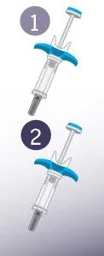
Your healthcare provider has prescribed a dose of SPEVIGO for you or your child that requires 2 injections (2 prefilled syringes) to deliver a complete dose.
You must inject the contents of both SPEVIGO prefilled syringes that come in the carton to deliver the complete dose.
Getting to know SPEVIGO:
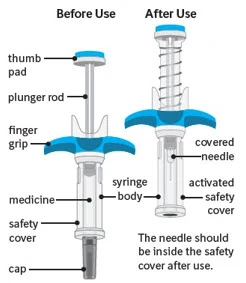
SPEVIGO comes in a prefilled syringe with a safety cover. The needle is pulled back into the safety cover after injection.
Guide to parts:
The figure below shows SPEVIGO before use, and after use with the activated safety cover.
Important information you need to know before injecting SPEVIGO:
- You must inject the contents of both SPEVIGO prefilled syringes to deliver a complete dose.
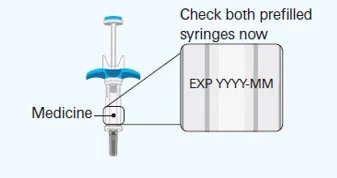
- Inspect the SPEVIGO carton to be sure that you have the correct medicine, 2 prefilled syringes for your or your child's prescribed dose, for any damage, and the expiration date (EXP).
- Do not use SPEVIGO if the liquid is cloudy or contains flakes or large or colored particles.
- Do not use SPEVIGO if the expiration date (EXP) has passed.
- Do not use SPEVIGO if the prefilled syringe has been dropped.
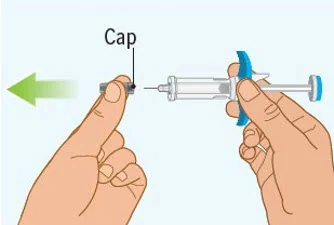
- Do not remove the cap until you are ready to inject.
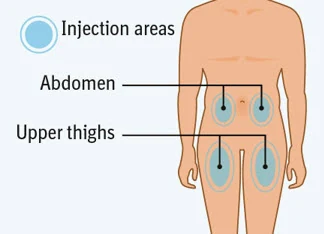
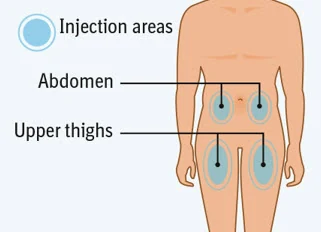
- Inject SPEVIGO under the skin (subcutaneous injection) in either the upper thighs or stomach-area (abdomen). Do not inject SPEVIGO into any other area of the body.
Storing SPEVIGO:
|  |
Keep SPEVIGO and all medicines out of the reach of children.
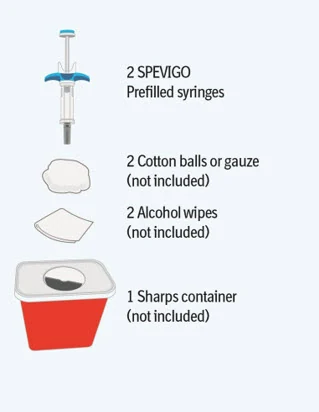
| Step 1 | Gather supplies |
 |
|
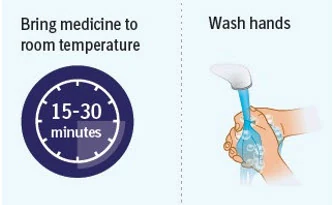
| Step 2 | Preparing to inject SPEVIGO |
 |
|
| Step 3 | Inspecting the prefilled syringes |
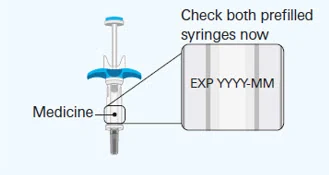 | Check both prefilled syringes now:
|
| Preparing for your first injection | |
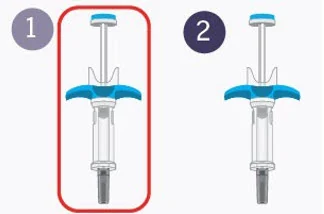 | Prepare for the first of 2 injections. You will repeat the following steps with the second syringe right away after your first injection. 2 injections are needed for a complete dose. |
| Step 4 | Choosing the injection site |
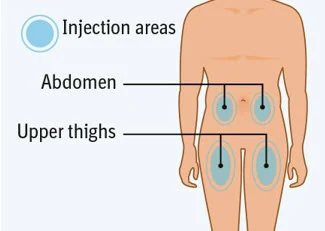 | Choose an injection site.
|
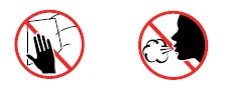
| Step 5 | Clean the injection site |
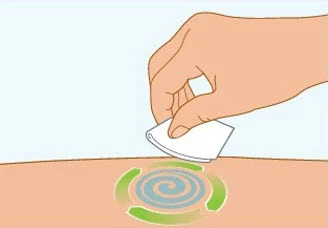 |
|
 | |
| Step 6 | Removing the cap from the prefilled syringe |
 |
|
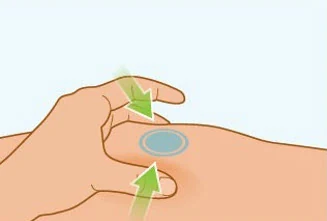
| Step 7 | Pinch the skin |
 |
|
| Step 8 | Injecting SPEVIGO |
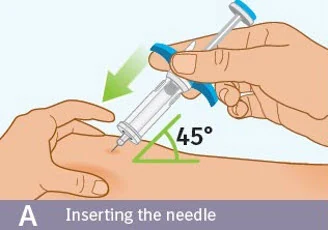 | A. Inserting the needle:
|
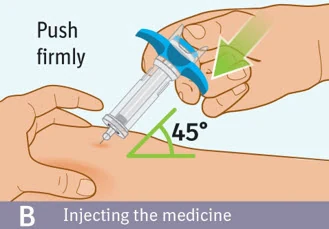 | B. Injecting the medicine:
|
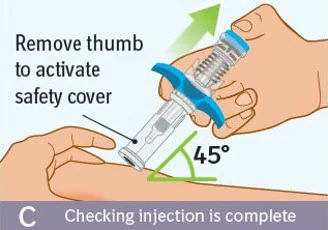 | C. Checking injection is complete:
Important: Do not move the prefilled syringe when inserting the needle into your skin, while injecting, or when removing the needle from your skin. |
| Step 9 | Second injection |
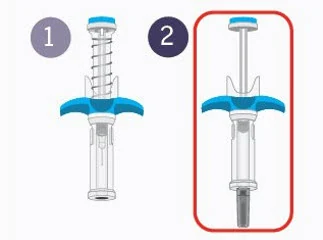 |
Important: You must inject the contents of both SPEVIGO prefilled syringes to give a complete dose. |
| Step 10 | Throwing away (disposing of) the used SPEVIGO prefilled syringes and caps |
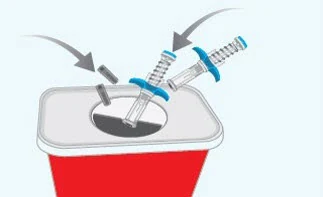 |
When your sharps disposal container is almost full, you will need to follow your community guidelines for the right way to dispose of your sharps disposal container. There may be state or local laws about how you should throw away used needles and syringes. For more information about safe sharps disposal, and for specific information about sharps disposal in the state that you live in, go to the FDA's website at: http://www.fda.gov/safesharpsdisposal.
Important: Always keep the sharps disposal container out of the reach of children. |
If you have any problems with your injection, do not use another SPEVIGO prefilled syringe. Call your healthcare provider or pharmacist for help. For more information call 1-833-SPEVIGO. | |
Manufactured by: LEO Pharma A/S Industriparken 55, DK-2750 Ballerup, Denmark
Distributed by: LEO Pharma Inc., Madison, NJ 07940, USA
U.S. License No. 2169
SPEVIGO® is a registered trademark of LEO Pharma A/S.
© 2026 LEO Pharma Inc. All rights reserved.
For more information about SPEVIGO, including current prescribing information and Medication Guide, go to www.SPEVIGO.com, or call LEO Pharma, Inc. at 1-833-SPEVIGO.
This Instructions for Use has been approved by the U.S. Food and Drug Administration.
Revised: 03/2026
INSTRUCTIONS FOR USE
SPEVIGO® (spea VEE go) (spesolimab-sbzo)
injection, for subcutaneous use 300 mg/2 mL
One 300 mg/2 mL single-dose prefilled syringe for a total of 300 mg dose
This Instructions for Use contains information on how to inject SPEVIGO.
Read both sides of this Instructions for Use before you use SPEVIGO for the first time and each time you get a refill. There may be new information. This information does not take the place of talking to your healthcare provider about your or your child's medical condition or treatment. Your healthcare provider should show you or your child the right way to inject SPEVIGO before you try to inject yourself or your child for the first time. In children 12 years of age and older, SPEVIGO should be given under the supervision of an adult.
SPEVIGO is for one-time use only. Do not reuse the prefilled syringe.
Your healthcare provider has prescribed a dose of SPEVIGO for you or your child that requires 1 injection to deliver a complete dose.
You must inject the contents of the SPEVIGO prefilled syringe that comes in the carton to deliver the complete dose.
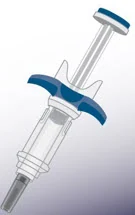
Getting to know SPEVIGO:
SPEVIGO comes in a prefilled syringe with a safety cover. The needle is pulled back into the safety cover after injection.
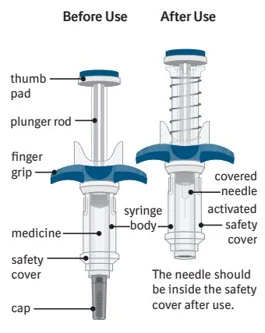
Guide to parts:
The figure below shows SPEVIGO before use, and after use with the activated safety cover.
Important information you need to know before injecting SPEVIGO
- Inspect the SPEVIGO carton to be sure that you have the correct medicine, 1 prefilled syringe for your or your child's prescribed dose, for any damage, and the expiration date (EXP).
- Do not use SPEVIGO if the liquid is cloudy or contains flakes or large or colored particles.
- Do not use SPEVIGO if the expiration date (EXP) has passed.
- Do not use SPEVIGO if the prefilled syringe has been dropped.
- Do not remove the cap until you are ready to inject.
- Inject SPEVIGO under the skin (subcutaneous injection) in either the upper thighs or stomach-area (abdomen). Do not inject SPEVIGO into any other area of the body.
Storing SPEVIGO:
|  |
Keep SPEVIGO and all medicines out of the reach of children.
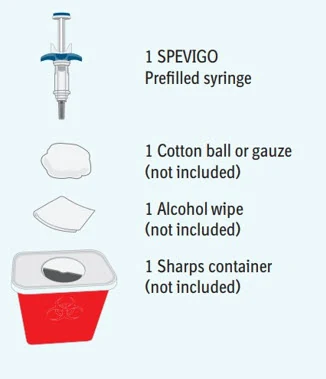
| Step 1 | Gather supplies |
 |
|
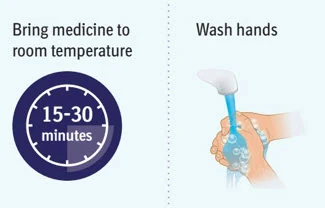
| Step 2 | Preparing to inject SPEVIGO |
 |
|
| Step 3 | Inspecting the prefilled syringe |
 | Check the prefilled syringe:
|
| Step 4 | Choosing the injection site |
 | Choose an injection site.
|
| Step 5 | Clean the injection site |
 |
|
 | |
| Step 6 | Removing the cap from the prefilled syringe |
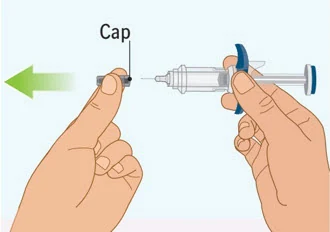 |
|
| Step 7 | Pinch the skin |
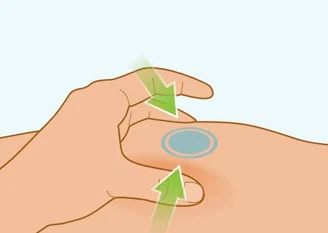 |
|
| Step 8 | Injecting SPEVIGO |
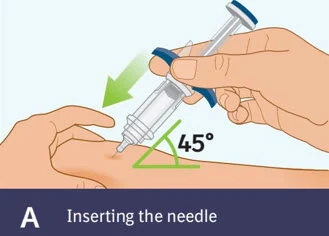 | A. Inserting the needle:
|
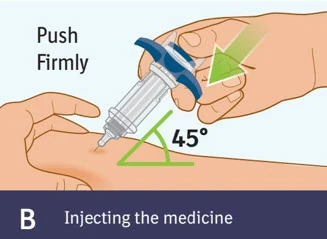 | B. Injecting the medicine:
|
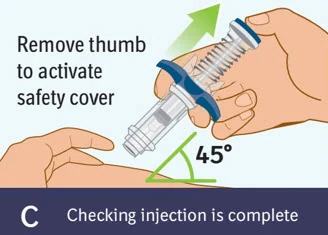 | C. Checking injection is complete:
Important: Do not move the prefilled syringe when inserting the needle into your skin, while injecting, or when removing the needle from your skin. |
| Step 9 | Throwing away (disposing of) the used SPEVIGO prefilled syringe and cap |
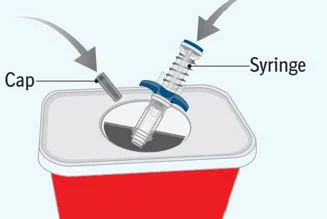 |
When your sharps disposal container is almost full, you will need to follow your community guidelines for the right way to dispose of your sharps disposal container. There may be state or local laws about how you should throw away used needles and syringes. For more information about safe sharps disposal, and for specific information about sharps disposal in the state that you live in, go to the FDA's website at: http://www.fda.gov/safesharpsdisposal.
Important: Always keep the sharps disposal container out of the reach of children. |
If you have any problems with your injection, do not use another SPEVIGO prefilled syringe. Call your healthcare provider or pharmacist for help. For more information call 1-833-SPEVIGO. | |
Manufactured by: LEO Pharma A/S Industriparken 55, DK-2750 Ballerup, Denmark
Distributed by: LEO Pharma Inc., Madison, NJ 07940, USA
U.S. License No. 2169
SPEVIGO® is a registered trademark of LEO Pharma A/S.
© 2026 LEO Pharma Inc. All rights reserved.
For more information about SPEVIGO, including current prescribing information and Medication Guide, go to www.SPEVIGO.com, or call LEO Pharma, Inc. at 1-833-SPEVIGO.
This Instructions for Use has been approved by the U.S. Food and Drug Administration.
Revised: 03/2026
INSTRUCTIONS FOR USE
SPEVIGO® (spea VEE go) (spesolimab-sbzo)
injection, for subcutaneous use 300 mg/2 mL
Two 300 mg/2 mL single-dose prefilled syringes for a total of 600 mg dose
This Instructions for Use contains information on how to inject SPEVIGO.
Read both sides of this Instructions for Use before you use SPEVIGO for the first time and each time you get a refill. There may be new information. This information does not take the place of talking to your healthcare provider about your or your child's medical condition or treatment. Your healthcare provider should show you or your child the right way to inject SPEVIGO before you try to inject yourself or your child for the first time. In children 12 years of age and older, SPEVIGO should be given under the supervision of an adult.
SPEVIGO is for one-time use only. Do not reuse the prefilled syringes.
Your healthcare provider has prescribed a dose of SPEVIGO for you or your child that requires 2 injections (2 prefilled syringes) to deliver a complete dose.
You must inject the contents of both SPEVIGO prefilled syringes that come in the carton to deliver the complete dose.
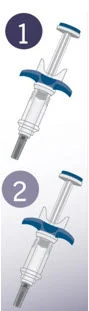
Getting to know SPEVIGO:
SPEVIGO comes in a prefilled syringe with a safety cover. The needle is pulled back into the safety cover after injection.
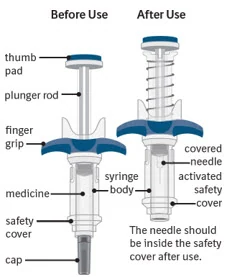
Guide to parts:
The figure below shows SPEVIGO before use, and after use with the activated safety cover.
Important information you need to know before injecting SPEVIGO
- You must inject the contents of both SPEVIGO prefilled syringes to deliver a complete dose.
- Inspect the SPEVIGO carton to be sure that you have the correct medicine, 2 prefilled syringes for your or your child's prescribed dose, for any damage, and the expiration date (EXP).
- Do not use SPEVIGO if the liquid is cloudy or contains flakes or large or colored particles.
- Do not use SPEVIGO if the expiration date (EXP) has passed.
- Do not use SPEVIGO if the prefilled syringe has been dropped.
- Do not remove the cap until you are ready to inject.
- Inject SPEVIGO under the skin (subcutaneous injection) in either the upper thighs or stomach-area (abdomen). Do not inject SPEVIGO into any other area of the body.
Storing SPEVIGO
 | |
| |
Keep SPEVIGO and all medicines out of the reach of children.
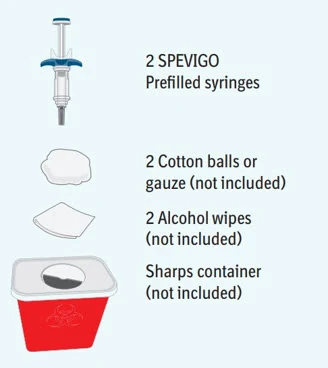
| Step 1 | Gather supplies |
 |
|
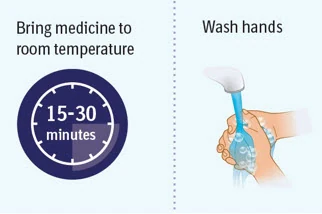
| Step 2 | Preparing to inject SPEVIGO |
 |
|
| Step 3 | Inspecting the prefilled syringes |
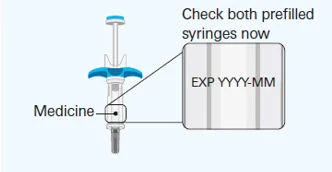 | Check both prefilled syringes now:
|
| Preparing for your first injection | |
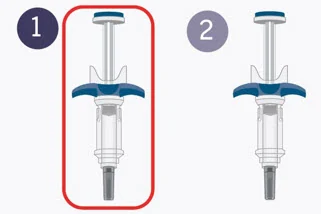 | Prepare for the first of 2 injections. You will repeat the following steps with the second syringe right away after your first injection. 2 injections are needed for a complete dose. |
| Step 4 | Choosing the injection site |
 | Choose an injection site.
|
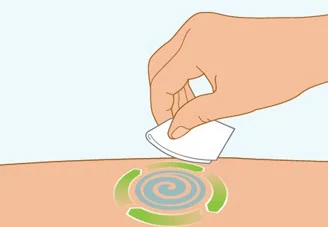
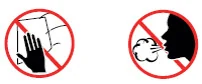
| Step 5 | Clean the injection site |
 |
|
 | |
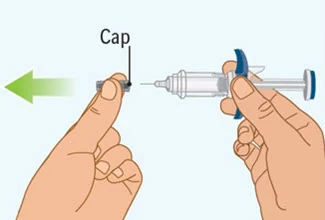
| Step 6 | Removing the cap from the prefilled syringe |
 |
|
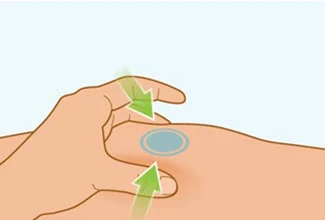
| Step 7 | Pinch the skin |
 |
|
| Step 8 | Injecting SPEVIGO |
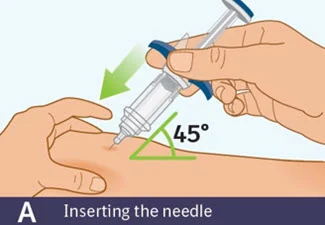 | A. Inserting the needle:
|
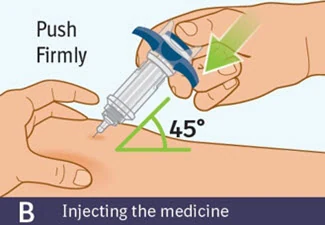 | B. Injecting the medicine:
|
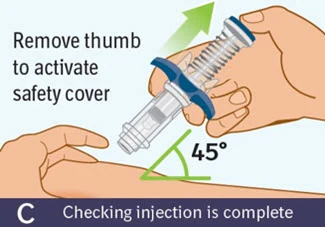 | C. Checking injection is complete:
Important: Do not move the prefilled syringe when inserting the needle into your skin, while injecting, or when removing the needle from your skin. |
| Step 9 | Second injection |
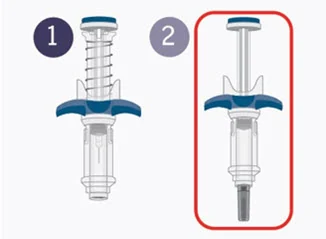 |
Important: You must inject the contents of both SPEVIGO prefilled syringes to give a complete dose. |
| Step 10 | Throwing away (disposing of) the used SPEVIGO prefilled syringes and caps |
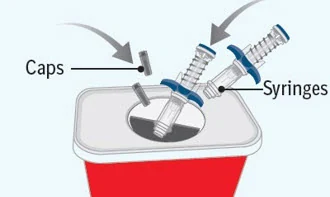 |
When your sharps disposal container is almost full, you will need to follow your community guidelines for the right way to dispose of your sharps disposal container. There may be state or local laws about how you should throw away used needles and syringes. For more information about safe sharps disposal, and for specific information about sharps disposal in the state that you live in, go to the FDA's website at: http://www.fda.gov/safesharpsdisposal.
Important: Always keep the sharps disposal container out of the reach of children. |
If you have any problems with your injection, do not use another SPEVIGO prefilled syringe. Call your healthcare provider or pharmacist for help. For more information call 1-833-SPEVIGO. | |
Manufactured by: LEO Pharma A/S Industriparken 55, DK-2750 Ballerup, Denmark
Distributed by: LEO Pharma Inc., Madison, NJ 07940, USA
U.S. License No. 2169
SPEVIGO® is a registered trademark of LEO Pharma A/S.
© 2026 LEO Pharma Inc. All rights reserved.
For more information about SPEVIGO, including current prescribing information and Medication Guide, go to www.SPEVIGO.com, or call LEO Pharma, Inc. at 1-833-SPEVIGO.
This Instructions for Use has been approved by the U.S. Food and Drug Administration.
Issued: 03/2026