


Prescribing information (package insert) - Repatha
1 INDICATIONS AND USAGE
REPATHA is indicated:
- To reduce the risk of major adverse cardiovascular (CV) events (CV death, myocardial infarction, stroke, unstable angina requiring hospitalization, coronary revascularization, or any ischemia-driven arterial revascularization) in adults at increased risk for these events.
As an adjunct to diet and exercise to reduce low-density lipoprotein cholesterol (LDL-C) in:
- adults with hypercholesterolemia.
- adults and pediatric patients aged 10 years and older with heterozygous familial hypercholesterolemia (HeFH).
- adults and pediatric patients aged 10 years and older with homozygous familial hypercholesterolemia (HoFH).
2 DOSAGE AND ADMINISTRATION
2.1 Recommended Dosage
In adults at increased risk for CV events or with hypercholesterolemia:
- The recommended dosage of REPATHA is either 140 mg every 2 weeks OR 420 mg once monthly administered subcutaneously [see Dosage and Administration (2.3)].
- If switching dosage regimens, administer the first dose of the new regimen on the next scheduled date of the prior regimen.
In adults and pediatric patients aged 10 years and older with HeFH:
- The recommended dosage of REPATHA is either 140 mg every 2 weeks OR 420 mg once monthly administered subcutaneously [see Dosage and Administration (2.3)].
- If switching dosage regimens, administer the first dose of the new regimen on the next scheduled date of the prior regimen.
In adults and pediatric patients aged 10 years and older with HoFH:
- The initial recommended dosage of REPATHA is 420 mg once monthly administered subcutaneously [see Dosage and Administration (2.3)].
- The dosage can be increased to 420 mg every 2 weeks if a clinically meaningful response is not achieved in 12 weeks.
- Patients on lipid apheresis may initiate treatment with 420 mg every 2 weeks to correspond with their apheresis schedule. Administer REPATHA after the apheresis session is complete.
- Assess LDL-C when clinically appropriate. The LDL-lowering effect of REPATHA may be measured as early as 4 weeks after initiation.
- When monitoring LDL-C for patients receiving REPATHA 420 mg once monthly, note that LDL-C can vary during the dosing interval in some patients; recommend measuring LDL-C just prior to the next scheduled dose [see Clinical Studies (14)].
2.2 Missed Doses
If a dose is missed:
- Within 7 days from the missed dose, instruct the patient to administer REPATHA and resume the patient's original schedule.
More than 7 days after the missed dose:
- For an every 2-week dose, instruct the patient to wait until the next dose on the original schedule.
- For a once-monthly dose, instruct the patient to administer the dose and start a new schedule based on this date.
2.3 Important Administration Instructions
- REPATHA is available as prefilled single-dose SureClick® autoinjectors and prefilled single-dose syringes that either contain dry natural rubber (a derivative of latex) in the needle cover or are not made with natural rubber latex [see How Supplied/Storage and Handling (16)]. Consider prescribing a presentation of REPATHA that does not contain dry natural rubber for individuals that are sensitive to latex [see Warnings and Precautions (5.1)].
- Train patients and/or caregivers on how to prepare and administer REPATHA, according to the Instructions for Use and instruct them to read and follow the Instructions for Use each time they use REPATHA.
- Prior to use, allow REPATHA to warm to room temperature for at least 30 minutes for the prefilled single-dose pen, prefilled single-dose SureClick® autoinjector, or prefilled single-dose syringe if REPATHA has been refrigerated [see How Supplied/Storage and Handling (16)].
- Visually inspect REPATHA prior to administration. REPATHA is a clear to opalescent, colorless to pale yellow solution. Do not use if the solution is cloudy, discolored, or contains particles.
For use in adult and pediatric patients aged 10 years and older:
- Administer REPATHA subcutaneously into areas of the abdomen, thigh, or upper arm that are not tender, bruised, red, or indurated. Avoid injecting into areas with scars or stretch marks. Rotate injection sites for each administration.
The 420 mg dose of REPATHA can be administered:
- by giving 3 injections consecutively within 30 minutes using the prefilled single-dose pen, prefilled single-dose SureClick® autoinjector, or prefilled single-dose syringe.
3 DOSAGE FORMS AND STRENGTHS
REPATHA injection is a clear to opalescent, colorless to pale yellow solution available as follows:
- 140 mg/mL solution in a prefilled single-dose pen
- 140 mg/mL solution in a prefilled single-dose SureClick® autoinjector
- 140 mg/mL solution in a prefilled single-dose syringe
4 CONTRAINDICATIONS
REPATHA is contraindicated in patients with a history of a serious hypersensitivity reaction to evolocumab or any of the excipients in REPATHA. Serious hypersensitivity reactions including angioedema have occurred in patients treated with REPATHA [see Warnings and Precautions (5.1)].
5 WARNINGS AND PRECAUTIONS
5.1 Hypersensitivity Reactions
Hypersensitivity reactions, including angioedema, have been reported in patients treated with REPATHA. If signs or symptoms of serious hypersensitivity reactions occur, discontinue treatment with REPATHA, treat according to the standard of care, and monitor until signs and symptoms resolve. REPATHA is contraindicated in patients with a history of serious hypersensitivity reactions to evolocumab or any excipient in REPATHA [see Contraindications (4)].
The prefilled single-dose SureClick® autoinjector and prefilled single-dose syringe presentations of REPATHA that contain dry natural rubber (a derivative of latex) in the needle cover may cause an allergic reaction in individuals sensitive to latex. Instruct patients to inform their healthcare provider if they are sensitive to latex. Consider prescribing a presentation of REPATHA that does not contain dry natural rubber for individuals that are sensitive to latex [see How Supplied/Storage and Handling (16)].
6 ADVERSE REACTIONS
The following adverse reactions are also discussed in other sections of the label:
- Hypersensitivity Reactions [see Warnings and Precautions (5.1)]
6.1 Clinical Trials Experience
Because clinical trials are conducted under widely varying conditions, adverse reaction rates observed in the clinical trials of a drug cannot be directly compared to rates in the clinical trials of another drug and may not reflect the rates observed in clinical practice.
Adverse Reactions in Adults with Hypercholesterolemia
The data described below reflect exposure to REPATHA in 8 placebo-controlled trials that included 2,651 patients treated with REPATHA, including 557 exposed for 6 months and 515 exposed for 1 year (median treatment duration of 12 weeks). The mean age of the population was 57 years, 49% of the population were female, 85% White, 6% Black or African American, 8% Asian, and 2% other races.
Adverse Reactions in a 52-Week Controlled Trial
In a 52-week, double-blind, randomized, placebo-controlled trial, 599 patients received 420 mg of REPATHA subcutaneously once monthly [see Clinical Studies (14)]. The mean age was 56 years (range: 22 to 75 years), 23% were older than 65 years, 52% female, 80% White, 8% Black or African American, 6% Asian; 6% identified as Hispanic or Latino ethnicity. Adverse reactions reported in at least 3% of REPATHA-treated patients, and more frequently than in placebo-treated patients are shown in Table 1. Adverse reactions led to discontinuation of treatment in 2.2% of REPATHA-treated patients and 1% of placebo-treated patients. The most common adverse reaction that led to REPATHA treatment discontinuation and occurred at a rate greater than placebo was myalgia (0.3% versus 0% for REPATHA and placebo, respectively).
Table 1. Adverse Reactions Occurring in ≥ 3% of REPATHA-treated Patients and More Frequently than with Placebo in a 52-Week Trial
Placebo (N = 302) % | REPATHA (N = 599) % | |
|---|---|---|
| Nasopharyngitis | 9.6 | 10.5 |
| Upper respiratory tract infection | 6.3 | 9.3 |
| Influenza | 6.3 | 7.5 |
| Back pain | 5.6 | 6.2 |
| Injection site reactionsincludes erythema, pain, bruising | 5.0 | 5.7 |
| Cough | 3.6 | 4.5 |
| Urinary tract infection | 3.6 | 4.5 |
| Sinusitis | 3.0 | 4.2 |
| Headache | 3.6 | 4.0 |
| Myalgia | 3.0 | 4.0 |
| Dizziness | 2.6 | 3.7 |
| Musculoskeletal pain | 3.0 | 3.3 |
| Hypertension | 2.3 | 3.2 |
| Diarrhea | 2.6 | 3.0 |
| Gastroenteritis | 2.0 | 3.0 |
Adverse Reactions in Seven Pooled 12-Week Controlled Trials
In seven pooled 12-week, double-blind, randomized, placebo-controlled trials, 993 patients received 140 mg of REPATHA subcutaneously every 2 weeks and 1,059 patients received 420 mg of REPATHA subcutaneously monthly. The mean age was 57 years (range: 18 to 80 years), 29% were older than 65 years, 49% female, 85% White, 5% Black or African American, 9% Asian; 5% identified as Hispanic or Latino ethnicity. Adverse reactions reported in at least 1% of REPATHA-treated patients, and more frequently than in placebo-treated patients, are shown in Table 2.
Table 2. Adverse Reactions Occurring in ≥ 1% of REPATHA-treated Patients and More Frequently than with Placebo in Pooled 12-Week Trials
Placebo (N = 1,224) % | REPATHA140 mg every 2 weeks and 420 mg once monthly combined (N = 2,052) % | |
|---|---|---|
| Nasopharyngitis | 3.9 | 4.0 |
| Back pain | 2.2 | 2.3 |
| Upper respiratory tract infection | 2.0 | 2.1 |
| Arthralgia | 1.6 | 1.8 |
| Nausea | 1.2 | 1.8 |
| Fatigue | 1.0 | 1.6 |
| Muscle spasms | 1.2 | 1.3 |
| Urinary tract infection | 1.2 | 1.3 |
| Cough | 0.7 | 1.2 |
| Influenza | 1.1 | 1.2 |
| Contusion | 0.5 | 1.0 |
Adverse Reactions in Eight Pooled Controlled Trials (Seven 12-Week Trials and One 52-Week Trial)
The adverse reactions described below are from a pool of the 52-week trial and seven 12-week trials. The mean and median exposure durations of REPATHA in this pool of eight trials were 20 weeks and 12 weeks, respectively.
Local Injection Site Reactions
Injection site reactions occurred in 3.2% and 3.0% of REPATHA-treated and placebo-treated patients, respectively. The most common injection site reactions were erythema, pain, and bruising. The proportions of patients who discontinued treatment due to local injection site reactions in REPATHA-treated patients and placebo-treated patients were 0.1% and 0%, respectively.
Hypersensitivity Reactions
Hypersensitivity reactions occurred in 5.1% and 4.7% of REPATHA-treated and placebo-treated patients, respectively. The most common hypersensitivity reactions were rash (1.0% versus 0.5% for REPATHA and placebo, respectively), eczema (0.4% versus 0.2%), erythema (0.4% versus 0.2%), and urticaria (0.4% versus 0.1%).
Adverse Reactions in the CV Outcomes Trials
Trial 1 (FOURIER)
In a double-blind, randomized, placebo-controlled CV outcomes trial in patients with established atherosclerotic cardiovascular disease (ASCVD), 27,525 patients received at least one dose of REPATHA or placebo [see Clinical Studies (14)]. The mean age was 62.5 years (range: 40 to 86 years), 45% were 65 years or older, 9% were 75 years or older, 25% female, 85% White, 10% Asian, and 2% Black or African American; 8% identified as Hispanic or Latino ethnicity. Patients were exposed to REPATHA or placebo for a median of 24.8 months; 91% of patients were exposed for ≥ 12 months, 54% were exposed for ≥ 24 months and 5% were exposed for ≥ 36 months.
The safety profile of REPATHA in this trial was generally consistent with the safety profile described above in the 12- and 52-week controlled trials involving patients with hypercholesterolemia. Common adverse reactions (> 5% of patients treated with REPATHA and occurring more frequently than placebo) included diabetes mellitus (8.8% REPATHA, 8.2% placebo), nasopharyngitis (7.8% REPATHA, 7.4% placebo), and upper respiratory tract infection (5.1% REPATHA, 4.8% placebo).
Among the 16,676 patients without diabetes mellitus at baseline, the incidence of new-onset diabetes mellitus during the trial was 8.1% in patients treated with REPATHA compared with 7.7% in patients that received placebo.
Trial 2 (VESALIUS-CV)
In another double-blind, randomized, placebo-controlled cardiovascular outcomes trial in patients at high CV risk without a prior myocardial infarction or stroke, including those with ASCVD or diabetes mellitus with additional risk factors for CV disease, 12,196 patients received at least one dose of REPATHA (6,102) or placebo (6,094) [see Clinical Studies (14)]. The mean age was 65 years (range: 46 to 86 years), 56% were 65 years or older, 10% were 75 years or older, 43% female, 93% White, 4% Asian, 2% Black or African American, 0.4% American Indian or Alaska Native, and < 0.1% Native Hawaiian or Other Pacific Islander; 17% identified as Hispanic or Latino ethnicity. A total of 6,102 patients were exposed to REPATHA for a median of 53 months; 84% of patients were exposed for ≥ 36 months, 62% were exposed for ≥ 48 months, and 22% were exposed for ≥ 60 months.
The safety profile of REPATHA in this trial was consistent with the known safety profile of REPATHA.
Adverse Reactions in Pediatric Patients with HeFH
In a 24-week, randomized, placebo-controlled, double-blind trial of 157 pediatric patients with HeFH, 104 patients received 420 mg REPATHA subcutaneously once monthly [see Clinical Studies (14)]. The mean age was 13.7 years (range: 10 to 17 years), 56% were female, 85% White, 1% Black or African American, 1% Asian, and 13% other; 8% identified as Hispanic or Latino ethnicity. Common adverse reactions (> 5% of patients treated with REPATHA and occurring more frequently than placebo) included:
- Nasopharyngitis (12% versus 11%)
- Headache (11% versus 2%)
- Oropharyngeal pain (7% versus 0%)
- Influenza (6% versus 4%)
- Upper respiratory tract infection (6% versus 2%)
One hundred fifty (150) of these 157 patients continued on to an 80-week open-label treatment period; 67% (n = 101) of patients continued REPATHA treatment, and 33% (n = 49) of patients switched from placebo to REPATHA. The safety profile reported in these patients was consistent with the description above for pediatric patients with HeFH in the double-blind treatment period.
Adverse Reactions in Adults and Pediatric Patients with HoFH
In a 12-week, double-blind, randomized, placebo-controlled trial of 49 patients with HoFH, 33 patients received 420 mg of REPATHA subcutaneously once monthly [see Clinical Studies (14)]. The mean age was 31 years (range: 13 to 57 years), 49% were female, 90% White, 4% Asian, and 6% other. The adverse reactions that occurred in at least two (6.1%) REPATHA-treated patients, and more frequently than in placebo-treated patients, included:
- Upper respiratory tract infection (9.1% versus 6.3%)
- Influenza (9.1% versus 0%)
- Gastroenteritis (6.1% versus 0%)
- Nasopharyngitis (6.1% versus 0%)
In a multicenter, open-label 5-year extension study, 106 patients with HoFH, including 14 pediatric patients, received 420 mg of REPATHA subcutaneously once monthly or every 2 weeks [see Clinical Studies (14)]. The mean age was 34 years (range: 13 to 68 years), 51% were female, 80% White, 12% Asian, 1% Native American, and 7% other; 5% identified as Hispanic or Latino ethnicity. No new adverse reactions were observed during the open-label extension study.
6.2 Postmarketing Experience
The following additional adverse reactions have been identified during post-approval use of REPATHA. Because these reactions are reported voluntarily from a population of uncertain size, it is not always possible to reliably estimate their frequency or establish a causal relationship to drug exposure.
- Hypersensitivity reactions: Angioedema
- Influenza-like illness
8 USE IN SPECIFIC POPULATIONS
8.1 Pregnancy
Risk Summary
Available data from clinical trials and postmarketing reports on REPATHA use in pregnant women are insufficient to evaluate for a drug-associated risk of major birth defects, miscarriage or other adverse maternal or fetal outcomes. In animal reproduction studies, there were no effects on pregnancy or neonatal/infant development when monkeys were subcutaneously administered evolocumab from organogenesis through parturition at dose exposures up to 12 times the exposure at the maximum recommended human dose of 420 mg every month. In a similar study with another drug in the PCSK9 inhibitor antibody class, humoral immune suppression was observed in infant monkeys exposed to that drug in utero at all doses. The exposures where immune suppression occurred in infant monkeys were greater than those expected clinically. No assessment for immune suppression was conducted with evolocumab in infant monkeys. Measurable evolocumab serum concentrations were observed in the infant monkeys at birth at comparable levels to maternal serum, indicating that evolocumab, like other IgG antibodies, crosses the placental barrier. Monoclonal antibodies are transported across the placenta in increasing amounts especially near term; therefore, evolocumab has the potential to be transmitted from the mother to the developing fetus.
The estimated background risk of major birth defects and miscarriage for the indicated population(s) is unknown. In the U.S. general population, the estimated background risk of major birth defects and miscarriage in clinically recognized pregnancies is 2-4% and 15-20%, respectively.
Report pregnancies by contacting Amgen at 1-800-77-AMGEN (1-800-772-6436) or https://wwwext.amgen.com/products/global-patient-safety/adverse-event-reporting.
Data
Animal Data
In cynomolgus monkeys, no effects on embryo-fetal or postnatal development (up to 6 months of age) were observed when evolocumab was dosed during organogenesis to parturition at 50 mg/kg once every 2 weeks by the subcutaneous route at exposures 30- and 12-fold the recommended human doses of 140 mg every 2 weeks and 420 mg once monthly, respectively, based on plasma AUC. No test of humoral immunity in infant monkeys was conducted with evolocumab.
8.2 Lactation
Risk Summary
There is no information regarding the presence of evolocumab in human milk, the effects on the breastfed infant, or the effects on milk production. Human IgG is present in human milk, but published data suggest that breast milk antibodies do not enter the neonatal and infant circulation in substantial amounts.
The development and health benefits of breastfeeding should be considered along with the mother's clinical need for REPATHA and any potential adverse effects on the breastfed infant from REPATHA or from the underlying maternal condition.
8.4 Pediatric Use
The safety and effectiveness of REPATHA in combination with diet and other LDL-C-lowering therapies for the treatment of HoFH have been established in pediatric patients aged 10 years and older. Use of REPATHA for this indication is supported by evidence from an adequate and well-controlled trial in adults and pediatric patients aged 13 years and older with HoFH (including 7 pediatric patients treated with REPATHA) and from open-label studies which included an additional 19 pediatric patients aged 11 years and older with HoFH not previously treated with REPATHA [see Adverse Reactions (6.1) and Clinical Studies (14)].
The safety and effectiveness of REPATHA as an adjunct to diet and other LDL-C-lowering therapies for the treatment of HeFH have been established in pediatric patients aged 10 years and older. Use of REPATHA for this indication is based on data from a 24-week, randomized, placebo-controlled, double-blind trial in pediatric patients with HeFH. In the trial, 104 patients received REPATHA 420 mg subcutaneously once monthly and 53 patients received placebo; 39 patients (25%) were 10 to 11 years of age [see Adverse Reactions (6.1) and Clinical Studies (14)].
The safety and effectiveness of REPATHA have not been established in pediatric patients with HeFH or HoFH who are younger than 10 years old or in pediatric patients with other types of hypercholesterolemia.
8.5 Geriatric Use
In controlled trials, 11,112 (45%) patients treated with REPATHA were ≥ 65 years old and 2,130 (9%) were ≥ 75 years old. No overall differences in safety or effectiveness were observed between these patients and younger patients, and other reported clinical experience has not identified differences in responses between the elderly and younger patients, but greater sensitivity of some older individuals cannot be ruled out.
8.6 Renal Impairment
No dose adjustment is needed in patients with renal impairment [see Clinical Pharmacology (12.3)].
8.7 Hepatic Impairment
No dose adjustment is needed in patients with mild to moderate hepatic impairment (Child-Pugh A or B). No data are available in patients with severe hepatic impairment [see Clinical Pharmacology (12.3)].
11 DESCRIPTION
Evolocumab is a human monoclonal immunoglobulin G2 (IgG2) directed against human proprotein convertase subtilisin kexin type 9 (PCSK9). Evolocumab has an approximate molecular weight (MW) of 144 kDa and is produced in genetically engineered mammalian (Chinese hamster ovary) cells.
REPATHA is a sterile, preservative-free, clear to opalescent, colorless to pale yellow solution for subcutaneous use. Each 1 mL prefilled single-dose pen, prefilled single-dose SureClick® autoinjector and prefilled single-dose syringe contains 140 mg evolocumab, acetate (1.2 mg), polysorbate 80 (0.1 mg), proline (25 mg) in Water for Injection, USP. Sodium hydroxide may be used to adjust to a pH of 5.0.
12 CLINICAL PHARMACOLOGY
12.1 Mechanism of Action
Evolocumab is a human monoclonal IgG2 directed against human proprotein convertase subtilisin kexin type 9 (PCSK9). PCSK9 binds to the low-density lipoprotein receptor (LDLR) on the surface of hepatocytes to promote LDLR degradation within the liver. By inhibiting the binding of PCSK9 to LDLR, evolocumab increases the number of LDLRs available to clear LDL from the blood, thereby lowering LDL-C levels.
12.2 Pharmacodynamics
Following single subcutaneous administration of 140 mg or 420 mg of evolocumab, maximum suppression of circulating unbound PCSK9 occurred by 4 hours. Unbound PCSK9 concentrations returned toward baseline when evolocumab concentrations decreased below the limit of quantitation. Maximum LDL-C reduction occurred by 2 weeks after a single-dose of 140 mg of evolocumab and by 3 weeks after a single-dose of 420 mg of evolocumab.
12.3 Pharmacokinetics
Evolocumab exhibits non-linear kinetics as a result of binding to PCSK9. Administration of the 140 mg dose in healthy volunteers resulted in a Cmax mean of 18.6 µg/mL and AUClast mean of 188 day∙µg/mL. Administration of the 420 mg dose in healthy volunteers resulted in a Cmax mean of 59.0 µg/mL and AUClast mean of 924 day∙µg/mL. Following a single 420 mg intravenous dose, the mean systemic clearance was estimated to be 12 mL/hr. An approximate 2- to 3-fold accumulation was observed in trough serum concentrations (Cmin 7.21 µg/mL) following 140 mg doses administered subcutaneously every 2 weeks or following 420 mg doses administered subcutaneously monthly (Cmin 11.2 µg/mL), and serum trough concentrations approached steady-state by 12 weeks of dosing.
Absorption
Following a single subcutaneous dose of 140 mg or 420 mg evolocumab administered to healthy adults, median peak serum concentrations were attained in 3 to 4 days, and estimated absolute bioavailability was 72%.
Distribution
Following a single 420 mg intravenous dose, the mean steady-state volume of distribution was estimated to be 3.3 L.
Elimination
Two elimination phases were observed for REPATHA. At low concentrations, the elimination is predominately through saturable binding to target (PCSK9), while at higher concentrations the elimination of REPATHA is largely through a non-saturable proteolytic pathway. REPATHA was estimated to have an effective half-life of 11 to 17 days.
Specific Populations
The pharmacokinetics of evolocumab were not affected by age, gender, race, or creatinine clearance across all approved populations [see Use in Specific Populations (8.5)].
The exposure of evolocumab decreased with increasing body weight. These differences are not clinically meaningful.
Pediatric Patients
The pharmacokinetics of REPATHA were evaluated in 103 pediatric patients aged 10 to 17 years with HeFH (Trial 7) [see Use in Specific Populations (8.4) and Clinical Studies (14)]. Following subcutaneous administration of 420 mg REPATHA once monthly, mean trough serum concentrations were 22.4 mcg/mL and 25.8 mcg/mL over the Week 12 and Week 24 time points, respectively. The pharmacokinetics of REPATHA were evaluated in 12 pediatric patients aged 11 to 17 years with HoFH (Trial 10) [see Use in Specific Populations (8.4) and Clinical Studies (14)]. Following subcutaneous administration of 420 mg REPATHA once monthly, mean serum trough concentrations were 20.3 mcg/mL and 17.6 mcg/mL at Week 12 and Week 80, respectively.
Renal Impairment
Since monoclonal antibodies are not known to be eliminated via renal pathways, renal function is not expected to impact the pharmacokinetics of evolocumab.
In a clinical trial of 18 patients with either normal renal function (estimated glomerular filtration rate [eGFR] ≥ 90 mL/min/1.73 m2, n = 6), severe renal impairment (eGFR < 30 mL/min/1.73 m2, n = 6), or end-stage renal disease (ESRD) receiving hemodialysis (n = 6), exposure to evolocumab after a single 140 mg subcutaneous dose was decreased in patients with severe renal impairment or ESRD receiving hemodialysis. Reductions in PCSK9 levels in patients with severe renal impairment or ESRD receiving hemodialysis was similar to those with normal renal function [see Use in Specific Populations (8.6)].
Hepatic Impairment
Following a single 140 mg subcutaneous dose of evolocumab in patients with mild or moderate hepatic impairment, a 20-30% lower mean Cmax and 40-50% lower mean AUC were observed as compared to healthy patients [see Use in Specific Populations (8.7)].
Drug Interaction Studies
An approximately 20% decrease in the Cmax and AUC of evolocumab was observed in adult patients co-administered a high-intensity statin regimen. This difference is not clinically meaningful.
12.6 Immunogenicity
The observed incidence of anti-drug antibodies is highly dependent on the sensitivity and specificity of the assay. Differences in assay methods preclude meaningful comparisons of the incidence of anti-drug antibodies in the studies described below with the incidence of anti-drug antibodies in other studies, including those of evolocumab or of other evolocumab products.
The immunogenicity of REPATHA has been evaluated using an electrochemiluminescent bridging screening immunoassay for the detection of binding anti-drug antibodies. For patients whose sera tested positive in the screening immunoassay, an in vitro biological assay was performed to detect neutralizing antibodies.
In a pool of placebo- and active-controlled clinical trials, 0.3% (48 out of 17,992) of adult patients treated with at least one dose of REPATHA tested positive for the development of binding antibodies [see Clinical Studies (14)]. Patients whose sera tested positive for binding antibodies were further evaluated for neutralizing antibodies; none of the patients tested positive for neutralizing antibodies.
The development of anti-evolocumab antibodies was not detected in clinical trials of pediatric patients treated with REPATHA.
There was no evidence that the presence of anti-drug binding antibodies impacted the pharmacokinetic profile, clinical response, or safety of REPATHA.
13 NONCLINICAL TOXICOLOGY
13.1 Carcinogenesis, Mutagenesis, Impairment of Fertility
The carcinogenic potential of evolocumab was evaluated in a lifetime study conducted in the hamster at dose levels of 10, 30, and 100 mg/kg administered every 2 weeks. There were no evolocumab-related tumors at the highest dose at systemic exposures up to 38- and 15-fold the recommended human doses of 140 mg every 2 weeks and 420 mg once monthly, respectively, based on plasma AUC. The mutagenic potential of evolocumab has not been evaluated; however, monoclonal antibodies are not expected to alter DNA or chromosomes.
There were no adverse effects on fertility (including estrous cycling, sperm analysis, mating performance, and embryonic development) at the highest dose in a fertility and early embryonic developmental toxicology study in hamsters when evolocumab was subcutaneously administered at 10, 30, and 100 mg/kg every 2 weeks. The highest dose tested corresponds to systemic exposures up to 30- and 12-fold the recommended human doses of 140 mg every 2 weeks and 420 mg once monthly, respectively, based on plasma AUC. In addition, there were no adverse evolocumab-related effects on surrogate markers of fertility (reproductive organ histopathology, menstrual cycling, or sperm parameters) in a 6-month chronic toxicology study in sexually mature monkeys subcutaneously administered evolocumab at 3, 30, and 300 mg/kg once weekly. The highest dose tested corresponds to 744- and 300-fold the recommended human doses of 140 mg every 2 weeks and 420 mg once monthly, respectively, based on plasma AUC.
13.2 Animal Toxicology and/or Pharmacology
During a 3-month toxicology study of 10 and 100 mg/kg once every 2 weeks evolocumab in combination with 5 mg/kg once daily rosuvastatin in adult monkeys, there were no effects of evolocumab on the humoral immune response to keyhole limpet hemocyanin (KLH) after 1 to 2 months exposure. The highest dose tested corresponds to exposures 54- and 21-fold higher than the recommended human doses of 140 mg every 2 weeks and 420 mg once monthly, respectively, based on plasma AUC. Similarly, there were no effects of evolocumab on the humoral immune response to KLH (after 3 to 4 months exposure) in a 6-month study in cynomolgus monkeys at dose levels up to 300 mg/kg once weekly evolocumab corresponding to exposures 744- and 300-fold greater than the recommended human doses of 140 mg every 2 weeks and 420 mg once monthly, respectively, based on plasma AUC.
14 CLINICAL STUDIES
Adult Patients at Increased Risk for CV Events
Trial 1 (FOURIER, NCT01764633) was a double-blind, randomized, placebo-controlled, event-driven trial in 27,564 (13,784 REPATHA, 13,780 placebo) adult patients with established cardiovascular disease (CVD) and with LDL-C ≥ 70 mg/dL and/or non-HDL-C ≥ 100 mg/dL despite high- or moderate-intensity statin therapy. Patients were randomly assigned 1:1 to receive either subcutaneous injections of REPATHA (140 mg every 2 weeks or 420 mg once monthly) or placebo; 86% used the every-2-week regimen throughout the trial. The median follow-up duration was 26 months. Overall, 99% of patients were followed until the end of the trial or death.
The mean (SD) age at baseline was 63 (9) years, with 45% being at least 65 years old; 25% were female. The trial population was 85% White, 10% Asian, and 2% Black or African American; 8% identified as Hispanic or Latino ethnicity. Regarding prior diagnoses of CVD, 81% had prior myocardial infarction, 19% prior non-hemorrhagic stroke, and 13% had symptomatic peripheral arterial disease. Selected additional baseline risk factors included hypertension (80%), diabetes mellitus (1% type 1; 36% type 2), current daily cigarette smoking (28%), New York Heart Association class I or II congestive heart failure (23%), and eGFR < 60 mL/min per 1.73 m2 (6%). Most patients were on a high- (69%) or moderate-intensity (30%) statin therapy at baseline, and 5% were also taking ezetimibe. Most patients were taking at least one other CV medication including anti-platelet agents (93%), beta blockers (76%), angiotensin-converting enzyme (ACE) inhibitors (56%), or angiotensin receptor blockers (23%). On stable background lipid-lowering therapy, the median [Q1, Q3] LDL-C at baseline was 92 [80, 109] mg/dL; the mean (SD) was 98 (28) mg/dL.
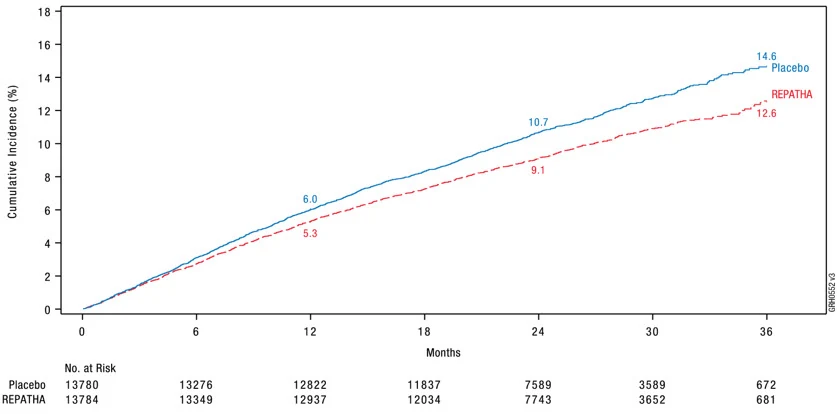
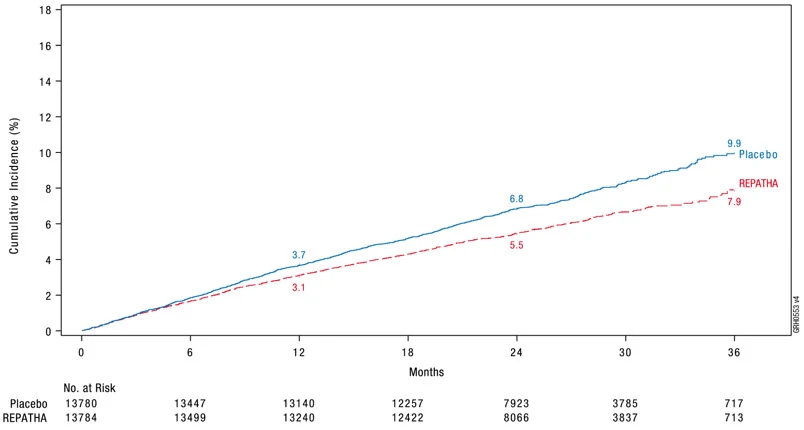
REPATHA significantly reduced the risk for the primary composite endpoint (time to first occurrence of CV death, myocardial infarction, stroke, hospitalization for unstable angina, or coronary revascularization; p < 0.0001) and the key secondary composite endpoint (time to first occurrence of cardiovascular death, myocardial infarction, or stroke; p < 0.0001). The Kaplan-Meier estimates of the cumulative incidence of the primary and key secondary composite endpoints over time are shown in Figure 1 and Figure 2 below.
The results of primary and secondary efficacy endpoints are shown in Table 3 below.
Table 3. Effect of REPATHA on CV Events in Patients with Established CVD in FOURIER
| Placebo | REPATHA | REPATHA vs. Placebo | |||
|---|---|---|---|---|---|
N = 13,780 n (%) | Incidence Rate (per 100 patient years) | N = 13,784 n (%) | Incidence Rate (per 100 patient years) | Hazard Ratio (95% CI) | |
| Primary composite endpoint | |||||
| Time to first occurrence of CV death, myocardial infarction, stroke, coronary revascularization, hospitalization for unstable angina | 1,563 (11.3) | 5.2 | 1,344 (9.8) | 4.5 | 0.85 (0.79, 0.92) |
| Key secondary composite endpoint | |||||
| Time to first occurrence of CV death, myocardial infarction, stroke | 1,013 (7.4) | 3.4 | 816 (5.9) | 2.7 | 0.80 (0.73, 0.88) |
| Other secondary endpoints | |||||
| Time to CV death | 240 (1.7) | 0.8 | 251 (1.8) | 0.8 | 1.05 (0.88, 1.25) |
| Time to death by any causeTime to death by any cause is not a component of either the primary composite endpoint or key secondary composite endpoint. | 426 (3.1) | 1.4 | 444 (3.2) | 1.5 | 1.04 (0.91, 1.19) |
| Time to first fatal or non-fatal myocardial infarction | 639 (4.6) | 2.1 | 468 (3.4) | 1.6 | 0.73 (0.65, 0.82) |
| Time to first fatal or non-fatal stroke | 262 (1.9) | 0.9 | 207 (1.5) | 0.7 | 0.79 (0.66, 0.95) |
| Time to first coronary revascularization | 965 (7.0) | 3.2 | 759 (5.5) | 2.5 | 0.78 (0.71, 0.86) |
| Time to first hospitalization for unstable anginaNot a prespecified endpoint; an ad hoc analysis was performed to ensure results are provided for each individual component of the primary endpoint. | 239 (1.7) | 0.8 | 236 (1.7) | 0.8 | 0.99 (0.82, 1.18) |
| Figure 1. Estimated Cumulative Incidence of Primary Composite Endpoint Over 3 Years in FOURIER |
|---|
 |
| Figure 2. Estimated Cumulative Incidence of Key Secondary Composite Endpoint Over 3 Years in FOURIER |
|---|
 |
The difference between REPATHA and placebo in mean percent change in LDL-C from baseline to Week 12 was −63% (95% CI: −63%, −62%) and from baseline to Week 72 was −57% (95% CI: −58%, −56%). At Week 48, the median [Q1, Q3] LDL-C was 26 [15, 46] mg/dL in the REPATHA group, with 47% of patients having LDL-C < 25 mg/dL.
In EBBINGHAUS (NCT02207634), a substudy of 1,974 patients enrolled in the FOURIER trial, REPATHA was non-inferior to placebo on selected cognitive function domains as assessed with the use of neuropsychological function tests over a median follow-up of 19 months.
Trial 2 (VESALIUS-CV, NCT03872401) was a multicenter, double-blind, randomized, placebo-controlled, parallel-group, cardiovascular outcomes trial to evaluate the effects of REPATHA in 12,206 adult patients (6,106 REPATHA, 6,100 placebo) at high CV risk, including those with ASCVD or diabetes mellitus (defined in the trial as diabetes of 10 or more years’ duration, treated with daily insulin, or complicated by microvascular disease), who have not had a prior myocardial infarction or stroke. Patients had to have an LDL-C ≥ 90 mg/dL or non-HDL-C ≥ 120 mg/dL or apolipoprotein B (ApoB) ≥ 80 mg/dL on stable, lipid-lowering background therapy. Patients were randomly assigned 1:1 to receive either subcutaneous injections of REPATHA (140 mg every 2 weeks) or placebo every 2 weeks. The median follow-up duration was 55 months. Overall, 98% of patients were followed until the end of the trial or death.
The mean (SD) age at baseline was 65 (7) years, with 56% being at least 65 years old; 43% were female. The study population was 93% White, 4% Asian, 2% Black or African American, 0.4% American Indian or Alaska Native, and < 0.1% Native Hawaiian or Other Pacific Islander; 17% identified as Hispanic or Latino ethnicity. Regarding prior diagnoses of cardiovascular disease, 45% had significant coronary artery disease, 10% had significant atherosclerotic cerebrovascular disease, 17% had significant peripheral arterial disease, and 58% had diabetes mellitus (57% type 2 diabetes) with 32% having diabetes mellitus without evidence of atherosclerotic cardiovascular disease.
Participants were also required to have at least one additional baseline risk factor including, but not limited to, hypertension (87%), current tobacco use (28%), increased lipoproteins (LDL-C ≥ 130 mg/dL, non-HDL-C ≥ 160 mg/dL, or ApoB ≥ 120 mg/dL) (51%), a history of both ASCVD and diabetes (25%), or elevated CAC score (> 300) (5%). At baseline, any statin use was reported for 87% (68% on high-intensity statin therapy), ezetimibe use was reported for 20%, and 8% of patients were not on any LDL-C lowering therapy. Most patients were taking at least one other cardiovascular medication, including anti-platelet agents (67%), anticoagulants (12%), beta blockers (55%), angiotensin-converting enzyme (ACE) inhibitors, angiotensin receptor-neprilysin inhibitors (ARNi) or angiotensin receptor blockers (75%), sodium-glucose cotransporter 2 (SGLT2) inhibitors (10%), or glucagon-like peptide-1 (GLP-1) receptor agonists (6%). The median (Q1, Q3) LDL-C at baseline was 122 (104, 149) mg/dL; the mean (SD) was 130 (37) mg/dL.
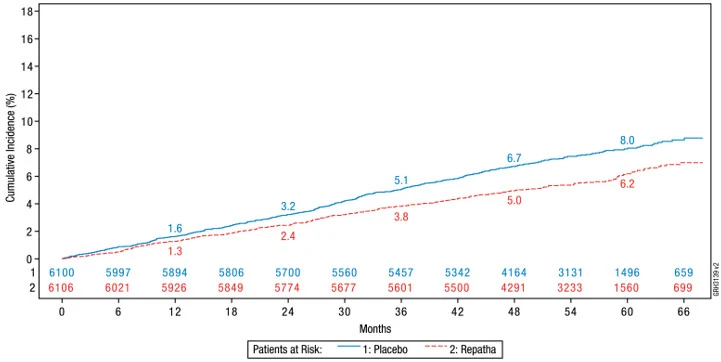
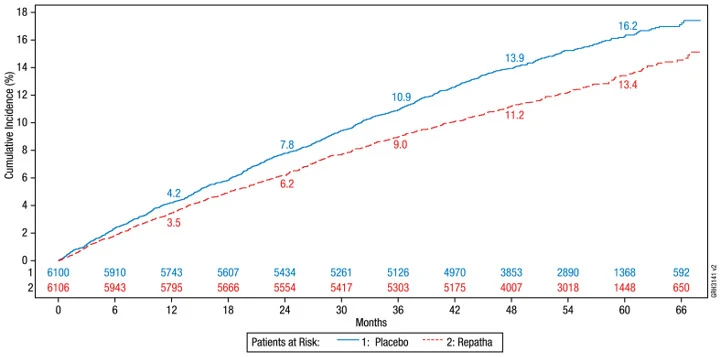
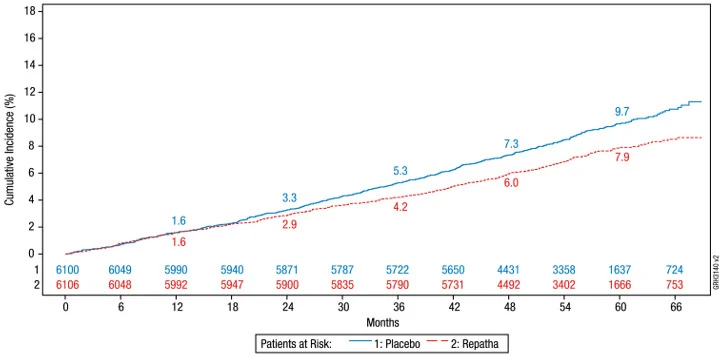
REPATHA significantly reduced the risk for the primary composite endpoint (MACE-3: time to first occurrence of coronary heart disease death, myocardial infarction, or ischemic stroke, p < 0.001) and the other primary composite endpoint (MACE-4: time to first occurrence of coronary heart disease death, myocardial infarction, ischemic stroke, or any ischemia-driven arterial revascularization, p < 0.001). The results of the primary efficacy endpoints and secondary endpoints are shown in Table 4 below. The Kaplan-Meier estimates of cumulative incidence over time for the primary composite endpoints and one secondary endpoint are shown in Figures 3 to 5.
Table 4. Effect of REPATHA on Cardiovascular Events in Patients at Increased Risk for Cardiovascular Events in VESALIUS-CV
Placebo (N = 6,100) n (%) | REPATHA (N = 6,106) n (%) | Hazard RatioCox-proportional hazards model with treatment as a factor and stratified by the randomization stratification factors. (95% CI) | |
|---|---|---|---|
| Primary MACE-3 composite endpoint | |||
| Time to CHD death, myocardial infarction, or ischemic stroke, whichever occurred firstStatistically significant, p-value <0.001. | 442 (7.3) | 336 (5.5) | 0.75 (0.65, 0.86) |
| Primary MACE-4 composite endpoint | |||
| Time to CHD death, myocardial infarction, ischemic stroke, or any ischemia-driven arterial revascularization, whichever occurred first | 905 (14.8) | 746 (12.2) | 0.81 (0.73, 0.89) |
| Secondary endpoints | |||
| Time to MI, ischemic stroke, or any ischemia-driven arterial revascularization | 833 (13.7) | 673 (11.0) | 0.79 (0.71, 0.88) |
| Time to CHD death, MI, or any ischemia-driven arterial revascularization | 817 (13.4) | 663 (10.9) | 0.79 (0.72, 0.88) |
| Time to cardiovascular death, MI, or ischemic stroke | 502 (8.2) | 374 (6.1) | 0.73 (0.64, 0.84) |
| Time to CHD death or MI | 312 (5.1) | 232 (3.8) | 0.73 (0.62, 0.87) |
| Time to MI , First occurrence of specified event at any time; patients may have experienced more than one adjudicated event. | 229 (3.8) | 149 (2.4) | 0.64 (0.52, 0.79) |
| Time to any ischemia-driven arterial revascularization , , Post-hoc analysis: The observed number of patients with coronary ischemia-driven arterial revascularization was REPATHA 365 [6.0%] versus placebo 503 [8.3%]. The observed number of patients with non-coronary ischemia-driven arterial revascularization was REPATHA 222 [3.6%] versus placebo 232 [3.8%]. | 698 (11.4) | 560 (9.2) | 0.79 (0.70, 0.88) |
| Time to CHD deathDid not meet statistical significance according to the prespecified hierarchical testing procedure. , | 116 (1.9) | 105 (1.7) | 0.90 (0.69, 1.17) |
| Time to cardiovascular death , | 194 (3.2) | 156 (2.6) | 0.80 (0.65, 0.98) |
| Time to all cause of death | 538 (8.8) | 432 (7.1) | 0.80 (0.70, 0.90) |
| Time to ischemic stroke , | 144 (2.4) | 115 (1.9) | 0.79 (0.62, 1.01) |
| Figure 3. Estimated Cumulative Incidence of the Primary MACE-3 Composite Endpoint (CHD Death, Myocardial Infarction, or Ischemic Stroke) Over 5.5 Years in VESALIUS-CV |
 |
| Figure 4. Estimated Cumulative Incidence of the Primary MACE-4 Composite Endpoint (CHD Death, Myocardial Infarction, Ischemic Stroke, or Any Ischemia-driven Arterial Revascularization) Over 5.5 Years in VESALIUS-CV |
 |
| Figure 5. Estimated Cumulative Incidence of All-cause Death |
 |
Serial assessment of lipid panels was conducted for a subset of patients (n = 2,014) from randomly selected sites and patients. The difference between REPATHA and placebo in mean percent change in LDL-C from baseline to Week 48 was -53% (95% CI: -56%, -49%) and from baseline to Week 96 was -46% (95% CI: -50%, -43%). The resultant LDL-C values achieved at Week 48 were a median (Q1, Q3) of 45 (26, 73) mg/dL and 109 (86, 144) mg/dL in the REPATHA and placebo arms, respectively.
Primary Hypercholesterolemia
Trial 3 (LAPLACE-2, NCT01763866) was a multicenter, double-blind, randomized controlled 12-week trial in which patients were initially randomized to an open-label specific statin regimen for a 4-week lipid stabilization period followed by random assignment to subcutaneous injections of REPATHA 140 mg every 2 weeks, REPATHA 420 mg once monthly, or placebo for 12 weeks. The trial included 1896 patients with hypercholesterolemia who received REPATHA, placebo, or ezetimibe as add-on therapy to daily doses of statins (atorvastatin, rosuvastatin, or simvastatin). Ezetimibe was also included as an active control only among those assigned to background atorvastatin. Overall, the mean age at baseline was 60 years (range: 20 to 80 years), 35% were ≥ 65 years old, 46% female, 94% White, 4% were Black or African American, and 1% Asian; 5% identified as Hispanic or Latino ethnicity. After 4 weeks of background statin therapy, the mean baseline LDL-C ranged between 77 and 127 mg/dL across the five background therapy arms.
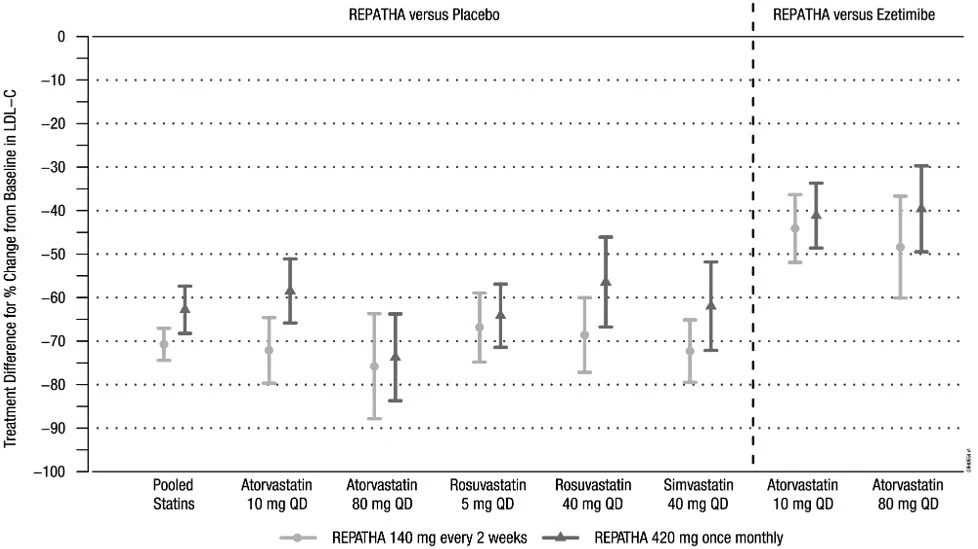
The difference between REPATHA and placebo in mean percent change in LDL-C from baseline to Week 12 was −71% (95% CI: −74%, −67%; p < 0.0001) and −63% (95% CI: −68%, −57%; p ˂ 0.0001) for the 140 mg every 2 weeks and 420 mg once monthly dosages, respectively. The difference between REPATHA and ezetimibe in mean percent change in LDL-C from baseline to Week 12 was −45% (95% CI: −52%, −39%; p < 0.0001) and −41% (95% CI: −47%, −35%; p ˂ 0.0001) for the 140 mg every 2 weeks and 420 mg once monthly dosages, respectively. For additional results, see Table 5 and Figure 6.
Table 5. Effect of REPATHA on Lipid Parameters in Patients with Hypercholesterolemia on Background Statin Regimens (Mean % Change from Baseline to Week 12 in LAPLACE-2)
| Treatment Group | LDL-C | Non-HDL-C | Apo B | Total Cholesterol |
|---|---|---|---|---|
| Estimates based on a multiple imputation model that accounts for treatment adherence | ||||
REPATHA every 2 weeks vs. Placebo every 2 weeks (Background statin: atorvastatin 10 mg or 80 mg; rosuvastatin 5 mg or 40 mg; simvastatin 40 mg) | ||||
Placebo every 2 weeks (n = 281) | 8 | 6 | 5 | 4 |
REPATHA 140 mg every 2 weeks140 mg every 2 weeks or 420 mg once monthly yield similar reductions in LDL-C (n = 555) | -63 | -53 | -49 | -36 |
Mean difference from placebo (95% CI) | -71 (-74, -67) | -59 (-62, -55) | -55 (-58, -52) | -40 (-43, -38) |
REPATHA once monthly vs. Placebo once monthly (Background statin: atorvastatin 10 mg or 80 mg; rosuvastatin 5 mg or 40 mg; simvastatin 40 mg) | ||||
Placebo once monthly (n = 277) | 4 | 5 | 3 | 2 |
REPATHA 420 mg once monthly (n = 562) | -59 | -50 | -46 | -34 |
Mean difference from placebo (95% CI) | -63 (-68, -57) | -54 (-58, -50) | -50 (-53, -47) | -36 (-39, -33) |
REPATHA every 2 weeks vs. Ezetimibe 10 mg daily (Background statin: atorvastatin 10 mg or 80 mg) | ||||
Ezetimibe 10 mg daily (n = 112) | -17 | -16 | -14 | -12 |
REPATHA 140 mg every 2 weeks (n = 219) | -63 | -52 | -49 | -36 |
Mean difference from Ezetimibe (95% CI) | -45 (-52, -39) | -36 (-41, -31) | -35 (-40, -31) | -24 (-28, -20) |
REPATHA once monthly vs. Ezetimibe 10 mg daily (Background statin: atorvastatin 10 mg or 80 mg) | ||||
Ezetimibe 10 mg daily (n = 109) | -19 | -16 | -11 | -12 |
REPATHA 420 mg once monthly (n = 220) | -59 | -50 | -46 | -34 |
Mean difference from Ezetimibe (95% CI) | -41 (-47, -35) | -35 (-40, -29) | -34 (-39, -30) | -22 (-26, -19) |
| Figure 6. Effect of REPATHA on LDL-C in Patients with Hypercholesterolemia when Combined with Statins (Mean % Change from Baseline to Week 12 in LAPLACE-2) |
|---|
| Estimates based on a multiple imputation model that accounts for treatment adherence |
| Error bars indicate 95% confidence intervals |
 |
Trial 4 (DESCARTES, NCT01516879) was a multicenter, double-blind, randomized, placebo-controlled, 52-week trial that included 901 patients with hypercholesterolemia who received protocol-determined background lipid-lowering therapy of a cholesterol-lowering diet either alone or in addition to atorvastatin (10 mg or 80 mg daily) or the combination of atorvastatin 80 mg daily with ezetimibe. After stabilization on background therapy, patients were randomly assigned to the addition of placebo or REPATHA 420 mg administered subcutaneously once monthly. Overall, the mean age at baseline was 56 years (range: 25 to 75 years), 23% were ≥ 65 years, 52% female, 80% White, 8% Black or African American, and 6% Asian; 6% identified as Hispanic or Latino ethnicity. After stabilization on the assigned background therapy, the mean baseline LDL-C ranged between 90 and 117 mg/dL across the four background therapy groups.
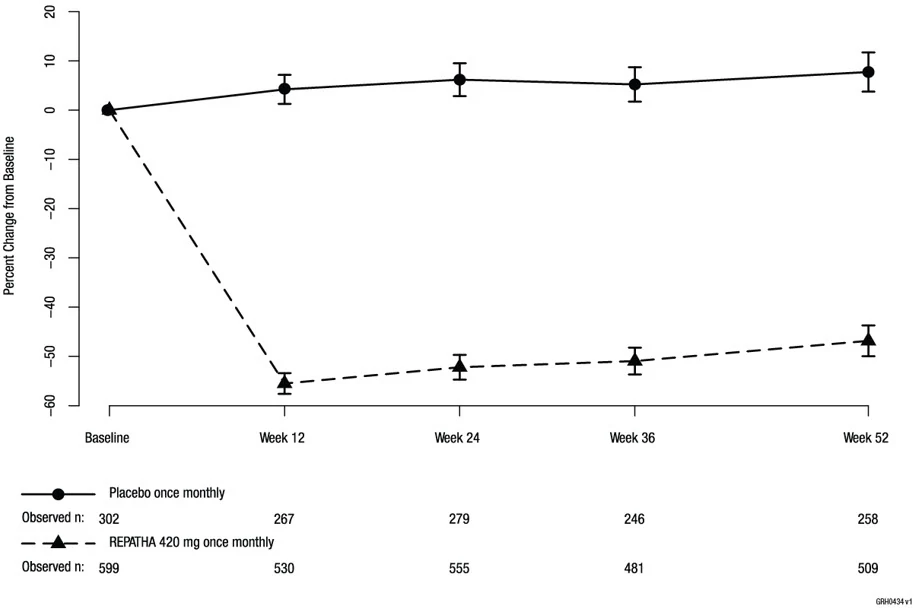
In these patients with hypercholesterolemia on a protocol-determined background therapy, the difference between REPATHA 420 mg once monthly and placebo in mean percent change in LDL-C from baseline to Week 52 was −55% (95% CI: −60%, −50%; p < 0.0001) (Table 6 and Figure 7). For additional results, see Table 6.
Table 6. Effect of REPATHA on Lipid Parameters in Patients with HypercholesterolemiaPrior to randomization, patients were stabilized on background therapy consisting of a cholesterol-lowering diet either alone or in addition to atorvastatin (10 mg or 80 mg daily) or the combination of atorvastatin 80 mg daily with ezetimibe. (Mean% Change from Baseline to Week 52 in DESCARTES)
| Treatment Group | LDL-C | Non-HDL-C | Apo B | Total Cholesterol |
|---|---|---|---|---|
| Estimates based on a multiple imputation model that accounts for treatment adherence | ||||
Placebo once monthly (n = 302) | 8 | 8 | 2 | 5 |
REPATHA 420 mg once monthly (n = 599) | -47 | -39 | -38 | -26 |
Mean difference from placebo (95% CI) | -55 (-60, -50) | -46 (-50, -42) | -40 (-44, -37) | -31 (-34, -28) |
| Figure 7. Effect of REPATHA 420 mg Once Monthly on LDL-C in Patients with Hypercholesterolemia in DESCARTES |
|---|
| Estimates based on a multiple imputation model that accounts for treatment adherence |
| Error bars indicate 95% confidence intervals |
 |
Trial 5 (MENDEL-2, NCT01763827) was a multicenter, double-blind, randomized, placebo- and active-controlled, 12-week trial that included 614 patients with hypercholesterolemia who were not taking lipid-lowering therapy at baseline. Patients were randomly assigned to receive subcutaneous injections of REPATHA 140 mg every 2 weeks, REPATHA 420 mg once monthly, or placebo for 12 weeks. Blinded administration of ezetimibe was also included as an active control. Overall, the mean age at baseline was 53 years (range: 20 to 80 years), 18% were ≥ 65 years old, 66% were female, 83% White, 7% Black or African American, and 9% Asian; 11% identified as Hispanic or Latino ethnicity. The mean baseline LDL-C was 143 mg/dL.
The difference between REPATHA and placebo in mean percent change in LDL-C from baseline to Week 12 was −55% (95% CI: −60%, −50%; p < 0.0001) and −57% (95% CI: −61%, −52%; p ˂ 0.0001) for the 140 mg every 2 weeks and 420 mg once monthly dosages, respectively. The difference between REPATHA and ezetimibe in mean percent change in LDL-C from baseline to Week 12 was −37% (95% CI: −42%, −32%; p < 0.0001) and −38% (95% CI: −42%, −34%; p ˂ 0.0001) for the 140 mg every 2 weeks and 420 mg once monthly dosages, respectively. For additional results, see Table 7.
Table 7. Effect of REPATHA on Lipid Parameters in Patients with Hypercholesterolemia (Mean % Change from Baseline to Week 12 in MENDEL-2)
| Treatment Group | LDL-C | Non-HDL-C | Apo B | Total Cholesterol |
|---|---|---|---|---|
| Estimates based on a multiple imputation model that accounts for treatment adherence | ||||
Placebo every 2 weeks (n = 76) | 1 | 0 | 1 | 0 |
Ezetimibe 10 mg daily (n = 77) | -17 | -14 | -13 | -10 |
REPATHA 140 mg every 2 weeks140 mg every 2 weeks or 420 mg once monthly yield similar reductions in LDL-C (n = 153) | -54 | -47 | -44 | -34 |
Mean difference from placebo (95% CI) | -55 (-60, -50) | -47 (-52, -43) | -45 (-50, -41) | -34 (-37, -30) |
Mean difference from Ezetimibe (95% CI) | -37 (-42, -32) | -33 (-37, -29) | -32 (-36, -27) | -23 (-27, -20) |
Placebo once monthly (n = 78) | 1 | 2 | 2 | 0 |
Ezetimibe 10 mg daily (n = 77) | -18 | -16 | -13 | -12 |
REPATHA 420 mg once monthly (n = 153) | -56 | -49 | -46 | -35 |
Mean difference from placebo (95% CI) | -57 (-61, -52) | -51 (-54, -47) | -48 (-52, -44) | -35 (-38, -32) |
Mean difference from Ezetimibe (95% CI) | -38 (-42, -34) | -32 (-36, -29) | -33 (-36, -29) | -23 (-26, -20) |
Trial 6 (RUTHERFORD-2, NCT01763918) was a multicenter, double-blind, randomized, placebo-controlled, 12-week trial in 329 patients with HeFH on statins with or without other lipid-lowering therapies. Patients were randomized to receive subcutaneous injections of REPATHA 140 mg every two weeks, 420 mg once monthly, or placebo. HeFH was diagnosed by the Simon Broome criteria (1991). In Trial 6, 38% of patients had clinical atherosclerotic CVD. The mean age at baseline was 51 years (range: 19 to 79 years), 15% of the patients were ≥ 65 years old, 42% were female, 90% were White, 5% were Asian, and 1% were Black or African American. The average LDL-C at baseline was 156 mg/dL with 76% of the patients on high-intensity statin therapy.
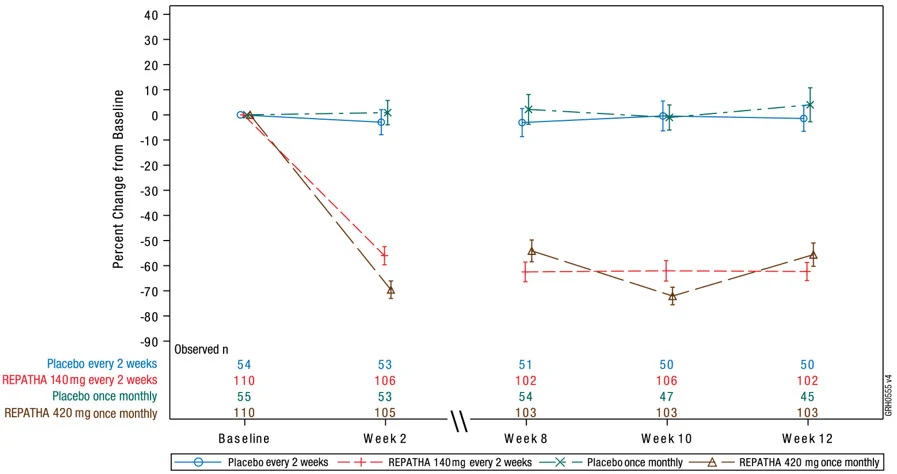
The difference between REPATHA and placebo in mean percent change in LDL-C from baseline to Week 12 was −61% (95% CI: −67%, −55%; p < 0.0001) and −60% (95% CI: −68%, −52%; p < 0.0001) for the 140 mg every 2 weeks and 420 mg once monthly dosages, respectively. For additional results, see Table 8 and Figure 8.
Table 8. Effect of REPATHA on Lipid Parameters in Patients with HeFH (Mean % Change from Baseline to Week 12 in RUTHERFORD-2)
| Treatment Group | LDL-C | Non-HDL-C | Apo B | Total Cholesterol |
|---|---|---|---|---|
| Estimates based on a multiple imputation model that accounts for treatment adherence | ||||
Placebo every 2 weeks (n = 54) | -1 | -1 | -1 | -2 |
REPATHA 140 mg every 2 weeks140 mg every 2 weeks or 420 mg once monthly yield similar reductions in LDL-C (n = 110) | -62 | -56 | -49 | -42 |
Mean difference from placebo (95% CI) | -61 (-67, -55) | -54 (-60, -49) | -49 (-54, -43) | -40 (-45, -36) |
Placebo once monthly (n = 55) | 4 | 4 | 4 | 2 |
REPATHA 420 mg once monthly (n = 110) | -56 | -49 | -44 | -37 |
Mean difference from placebo (95% CI) | -60 (-68, -52) | -53 (-60, -46) | -48 (-55, -41) | -39 (-45, -33) |
| Figure 8. Effect of REPATHA on LDL-C in Patients with HeFH (Mean % Change from Baseline to Week 12 in RUTHERFORD-2) |
|---|
| N = number of patients randomized and dosed in the full analysis set |
| Estimates based on a multiple imputation model that accounts for treatment adherence |
| Error bars indicate 95% confidence intervals |
 |
Pediatric Patients with HeFH
Trial 7 (HAUSER-RCT, NCT02392559) was a randomized, multicenter, placebo-controlled, double-blind, 24-week trial in 157 pediatric patients aged 10 to 17 years with HeFH [see Use in Specific Populations (8.4)]. HeFH was diagnosed by diagnostic criteria for HeFH [Simon Broome Register Group (1991), the Dutch Lipid Clinic Network (1999), MEDPED (1993)] or by genetic testing. Patients were required to be on a low-fat diet and optimized background lipid-lowering therapy. Patients were randomly assigned 2:1 to receive 24 weeks of subcutaneous once monthly 420 mg REPATHA or placebo; 104 patients received REPATHA and 53 patients received placebo. The mean age was 14 years (range: 10 to 17 years), 56% were female, 85% White, 1% Black or African American, 1% Asian, 13% Other, and 8% Hispanic or Latino ethnicity. The mean LDL-C at baseline was 184 mg/dL; 17% of patients were on high-intensity statin, 62% on moderate-intensity statin, and 13% on ezetimibe.
The difference between REPATHA and placebo in mean percent change in LDL-C from baseline to Week 24 was −38% (95% CI: −45%, −31%; p < 0.0001). For additional results, see Figure 9 and Table 9.
| Figure 9. Effect of REPATHA on LDL-C in Pediatric Patients with HeFH (Mean % Change from Baseline in HAUSER-RCT) |
|---|
| EvoMab = evolocumab; LDL-C = low-density lipoprotein cholesterol; QM = monthly (subcutaneous) |
N = number of patients randomized and dosed in the full analysis set. Vertical lines represent the standard error around the mean. Plot is based on observed data and no imputation is used for missing values. |
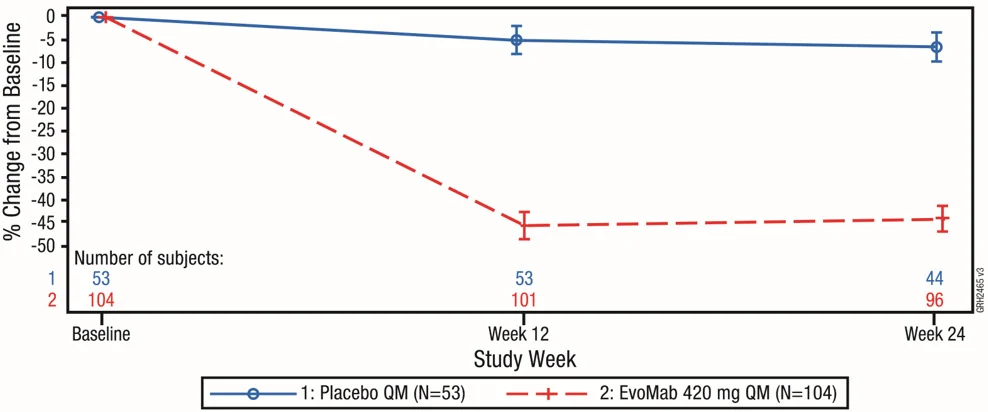 |
Table 9. Effect of REPATHA on Lipid Parameters in Pediatric Patients with HeFH (Mean % Change from Baseline to Week 24 in HAUSER-RCT)
| Treatment Group | LDL-C | Non-HDL-C | Apo B | Total Cholesterol |
|---|---|---|---|---|
| All adjusted p-values < 0.0001. | ||||
| n = number of patients randomized and dosed in the full analysis set. | ||||
Placebo once monthly (n = 53) | -6 | -6 | -2 | -5 |
REPATHA 420 mg once monthly (n = 104) | -44 | -41 | -35 | -32 |
Mean difference from placebo (95% CI) | -38 (-45, -31) | -35 (-42, -28) | -32 (-39, -26) | -27 (-32, -21) |
Adults and Pediatric Patients with HoFH
Trial 8 (TESLA, NCT01588496) was a multicenter, double-blind, randomized, placebo-controlled, 12-week trial in 49 patients (not on lipid-apheresis therapy) with HoFH. In this trial, 33 patients received subcutaneous injections of 420 mg of REPATHA once monthly and 16 patients received placebo as an adjunct to other lipid-lowering therapies (e.g., statins, ezetimibe). The mean age at baseline was 31 years, 49% were female, 90% White, 4% were Asian, and 6% other. The trial included 10 adolescents (ages 13 to 17 years), 7 of whom received REPATHA. The mean LDL-C at baseline was 349 mg/dL with all patients on statins (atorvastatin or rosuvastatin) and 92% on ezetimibe. The diagnosis of HoFH was made by genetic confirmation or a clinical diagnosis based on a history of an untreated LDL-C concentration > 500 mg/dL together with either xanthoma before 10 years of age or evidence of HeFH in both parents.
The difference between REPATHA and placebo in mean percent change in LDL-C from baseline to Week 12 was −31% (95% CI: −44%, −18%; p < 0.0001). For additional results, see Table 10.
Patients known to have two LDL-receptor negative alleles (little to no residual function) did not respond to REPATHA.
Table 10. Effect of REPATHA on Lipid Parameters in Patients with HoFH (Mean % Change from Baseline to Week 12 in TESLA)
| Treatment Group | LDL-C | Non-HDL-C | Apo B | Total Cholesterol |
|---|---|---|---|---|
| Estimates based on a multiple imputation model that accounts for treatment adherence | ||||
Placebo once monthly (n = 16) | 9 | 8 | 4 | 8 |
REPATHA 420 mg once monthly (n = 33) | -22 | -20 | -17 | -17 |
Mean difference from placebo (95% CI) | -31 (-44, -18) | -28 (-41, -16) | -21 (-33, -9) | -25 (-36, -14) |
Trial 9 (TAUSSIG, NCT01624142) was a multicenter, open-label 5-year extension study with REPATHA in 106 patients with HoFH, who were treated with REPATHA as an adjunct to other lipid-lowering therapies. The study included 14 pediatric patients (ages 13 to 17 years). All patients in the study were initially treated with REPATHA 420 mg once monthly except for those receiving lipid apheresis at enrollment, who began with REPATHA 420 mg every 2 weeks. Dose frequency in non-apheresis patients could be titrated up to 420 mg once every 2 weeks based on LDL-C response and PCSK9 levels.
A total of 48 patients with HoFH received REPATHA 420 mg once monthly for at least 12 weeks in Trial 9 followed by REPATHA 420 mg every 2 weeks for at least 12 weeks. Mean percent change from baseline in LDL-C were −20% at Week 12 of 420 mg once monthly treatment and −30% at Week 12 of 420 mg every 2 weeks treatment, based on available data.
Trial 10 (HAUSER-OLE, NCT02624869) was an open-label, single-arm, multicenter, 80-week study to evaluate the safety, tolerability, and efficacy of REPATHA for LDL-C reduction in pediatric patients aged 10 to 17 years with HoFH [see Use in Specific Populations (8.4)]. Patients were on a low-fat diet and receiving background lipid-lowering therapy. Overall, 12 patients with HoFH received 420 mg REPATHA subcutaneously once monthly. The mean age was 12 years (range: 11 to 17 years), 17% were female, 75% White, 17% Asian, and 8% Other. Median (Q1, Q3) LDL-C at baseline was 398 (343, 475) mg/dL, and all patients were on statins (atorvastatin or rosuvastatin) and ezetimibe. No patients were receiving lipid apheresis. The diagnosis of HoFH was made by genetic confirmation in all patients but enrollment by a clinical diagnosis was permitted. The median (Q1, Q3) percent change in LDL-C from baseline to Week 80 was −14% (−41, 4). Two of the 3 subjects with < 5% LDLR activity responded to evolocumab treatment.
16 HOW SUPPLIED/STORAGE AND HANDLING
REPATHA is a clear to opalescent, colorless to pale yellow solution supplied as follows:
Not Made with Natural Rubber Latex –
| Strength | Packaging Unit | NDC |
|---|---|---|
| 140 mg/mL prefilled single-dose pen | Carton of 2 | 72511-143-02 |
| 140 mg/mL prefilled single-dose pen | Carton of 1 | 72511-143-01 |
| 140 mg/mL prefilled single-dose SureClick® autoinjector | Carton of 2 | 72511-393-02 |
| 140 mg/mL prefilled single-dose SureClick® autoinjector | Carton of 1 | 72511-393-01 |
| 140 mg/mL prefilled single-dose syringe | Carton of 1 | 72511-501-01 |
Contains Dry Natural Rubber –
| Strength | Packaging Unit | NDC |
|---|---|---|
| 140 mg/mL prefilled single-dose SureClick® autoinjectorThe needle cover of the glass prefilled single-dose SureClick® autoinjector and prefilled single-dose syringe contain dry natural rubber (a derivative of latex) that may cause allergic reactions in individuals sensitive to latex [see Warnings and Precautions (5.1)]. | Carton of 2 | 72511-760-02 |
| 140 mg/mL prefilled single-dose syringe | Carton of 1 | 72511-750-01 |
Store refrigerated at 2°C to 8°C (36°F to 46°F) in the original carton to protect from light. Do not freeze. Do not shake.
REPATHA prefilled single-dose pen, prefilled single-dose SureClick® autoinjector, or prefilled single-dose syringe may also be kept at room temperature at 68°F to 77°F (20°C to 25°C) in the original carton for 30 days. If not used within the 30 days, discard REPATHA.
17 PATIENT COUNSELING INFORMATION
Advise the patient and/or caregiver to read the FDA-Approved Patient Labeling (Patient Information and Instructions for Use).
Hypersensitivity
Inform patients that serious hypersensitivity reactions (e.g., angioedema) have been reported in patients treated with REPATHA. Advise patients on the symptoms of hypersensitivity reactions and instruct them to discontinue REPATHA and seek medical attention promptly, if such symptoms occur.
Latex-Sensitivity
Instruct patients to inform their healthcare provider if they are sensitive to latex. Inform patients that REPATHA is available as prefilled single-dose SureClick® autoinjectors and prefilled single-dose syringes that either contain dry natural rubber (a derivative of latex) in the needle cover or are not made with natural rubber latex, and the carton and Instructions for Use state if the product contains dry natural rubber. Advise latex-sensitive patients that the needle cover of the glass prefilled single-dose SureClick® autoinjector and prefilled single-dose syringe that contain dry natural rubber (a derivative of latex) may cause allergic reactions in individuals sensitive to latex [see How Supplied/Storage and Handling (16)].
Pregnancy
Encourage pregnant patients to report their pregnancy to Amgen at 1-800-77-AMGEN (1-800-772-6436) or https://wwwext.amgen.com/products/global-patient-safety/adverse-event-reporting [see Use in Specific Populations (8.1)].
Administration
Provide guidance to patients and caregivers on proper subcutaneous administration technique and how to use the prescribed REPATHA device correctly. Inform patients that it may take up to 15 seconds to administer REPATHA using the prefilled single-dose pen, prefilled single-dose SureClick® autoinjector, or prefilled single-dose syringe.
The prefilled single-dose pen is not made with natural rubber latex.
For more information about REPATHA, go to www.REPATHA.com or call 1-844-REPATHA (1-844-737-2842).
REPATHA® (evolocumab)
Manufactured by:
Amgen Inc.
One Amgen Center Drive
Thousand Oaks, California 91320-1799
U.S. License Number 1080
Patent: http://pat.amgen.com/repatha/
© 2015-2021, 2024-2026 Amgen Inc. All rights reserved.
v14
| Side 1 | Reference Guide REPATHA® [ri-PAth-a] (evolocumab) injection, for subcutaneous use 140 mg/mL | Read Instructions for Use in carton before injecting. Questions? Call 1-844-REPATHA (1-844-737-2842) |
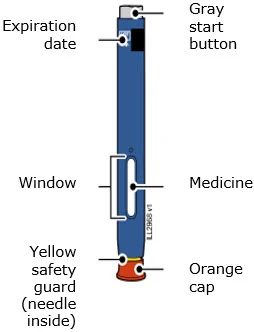
| 1. | Guide to parts | 2. | Wait 30 minutes for the autoinjector to reach room temperature before giving your injection. | 3. | Prepare and clean your injection site. | 4. | Pull the orange cap straight off when you are ready to inject within 5 minutes — the medicine can dry out. |
 | WAIT 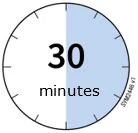 | 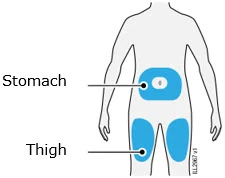 | 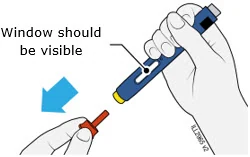 | ||||
| Turn over to continue | |||||||
| Side 2 | Reference Guide REPATHA® [ri-PAth-a] (evolocumab) injection, for subcutaneous use 140 mg/mL | Manufactured by: Amgen Inc. Thousand Oaks, CA 91320 © 2019-2022, 2025 Amgen Inc. All rights reserved. 1XXXXXX Revised: 08/2025 v5 | Read other side first
|
 This printed material is recyclable.
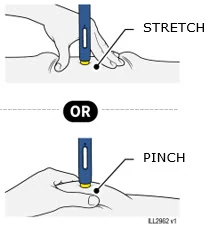
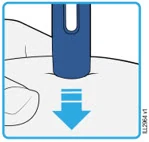
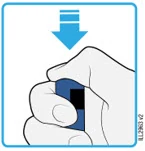
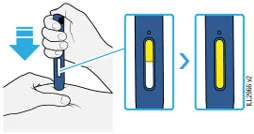
| 5. | Stretch or pinch the skin to create a firm surface at the injection site until the injection is finished. | 6. | PUSH and HOLD down against the skin. Do not lift. | 7. | PRESS gray start button. | 8. | Keep pushing down for up to 15 seconds. Wait for the window to turn fully yellow, then your injection is done. |
 |  |  |  |