


Patient information: uses, side effects, how to take - Repatha
What is REPATHA?
REPATHA is an injectable prescription medicine used:
- to reduce the risk of major adverse cardiovascular (CV) events, such as death from cardiovascular disease, heart attack, stroke, certain types of chest pain conditions (unstable angina) requiring hospitalization, or certain types of surgery or procedures to restore arterial blood flow to the heart and other parts of the body, in adults at increased risk for these events.
Along with diet and exercise to reduce low-density lipoprotein (LDL) or bad cholesterol in:
- adults with high blood cholesterol levels called hypercholesterolemia.
- adults and children aged 10 years and older with a type of high cholesterol called heterozygous familial hypercholesterolemia (HeFH).
- adults and children aged 10 years and older with a type of high cholesterol called homozygous familial hypercholesterolemia (HoFH).
It is not known if REPATHA is safe and effective in children with HeFH or HoFH who are younger than 10 years of age or in children with other types of hypercholesterolemia.
Who should not use REPATHA?
Do not use REPATHA if you or your child are allergic to evolocumab or to any of the ingredients in REPATHA. See the end of this leaflet for a complete list of ingredients in REPATHA.
What should I tell my healthcare provider before using REPATHA?
Before you or your child start using REPATHA, tell your healthcare provider about all your medical conditions, including if you or your child:
are allergic to rubber or latex. REPATHA is available as prefilled single-dose SureClick® autoinjectors and prefilled single-dose syringes that either contain dry natural rubber (a derivative of latex) in the needle cover or are not made with natural rubber latex. The carton and Instructions for Use will state if your prefilled single-dose SureClick autoinjector or prefilled single-dose syringe contains dry natural rubber.
- The prefilled single-dose pen is not made with natural rubber latex.
are pregnant or plan to become pregnant. It is not known if REPATHA will harm your unborn baby. Tell your healthcare provider if you become pregnant while taking REPATHA.
- are breastfeeding or plan to breastfeed. You and your healthcare provider should decide if you will take REPATHA or breastfeed.
If you or your child are pregnant or breastfeed during REPATHA treatment, you are encouraged to call Amgen at 1-800-772-6436 (1-800-77-AMGEN) or visit https://wwwext.amgen.com/products/global-patient-safety/adverse-event-reporting to share information about the health of you and your baby or your child and your child's baby.
Tell your healthcare provider or pharmacist about any prescription and over-the-counter medicines, vitamins, or herbal supplements you or your child take.
How should I use REPATHA?
- See the detailed Instructions for Use that comes with this Patient Information about the right way to prepare and give REPATHA.
- Use REPATHA exactly as your healthcare provider tells you or your child to use it.
REPATHA is given under the skin (subcutaneously), every 2 weeks or 1 time each month.
- If you or your child have HoFH, the recommended starting dose is 420 mg one time each month. After 12 weeks, your healthcare provider may decide to increase the dose to 420 mg every two weeks. If you receive or your child receives lipid apheresis, your healthcare provider may decide to start you or your child on a dose of 420 mg every two weeks to match with the apheresis treatment and you or your child should take the dose after the apheresis treatment.
REPATHA is for use in adults and children aged 10 years and older and comes as a:
- prefilled single-dose (1 time) pen,
- prefilled single-dose autoinjector (SureClick autoinjector), or
- prefilled single-dose syringe.
- Your healthcare provider will prescribe the type and dose that is best for you or your child.
If your healthcare provider prescribes you or your child the 420 mg dose, you or your child may use:
- 3 separate injections in a row, using a different prefilled pen, prefilled SureClick autoinjector or prefilled syringe for each injection. Give all of these injections within 30 minutes.
If your healthcare provider decides that you or your child or a caregiver can give REPATHA, you or your child or your caregiver should receive training on the right way to prepare and inject REPATHA. Do not try to inject REPATHA until you or your child have been shown the right way by your healthcare provider or nurse.
- If you or your child are using the prefilled single-dose SureClick autoinjector, put the yellow safety guard (needle inside) of the prefilled single-dose SureClick autoinjector on the skin before injecting.
- You or your child can use the prefilled single-dose pen, prefilled single-dose SureClick autoinjector, or prefilled single-dose syringe to inject into the thigh, upper arm, or stomach (abdomen), except for a two-inch area around the belly button.
- Do not choose an area where the skin is tender, bruised, red, or hard. Avoid injecting into areas with scars or stretch marks.
- Always check the label of your prefilled single-dose pen, prefilled single-dose SureClick autoinjector, or prefilled single-dose syringe to make sure you have the correct medicine and the correct dose of REPATHA before each injection.
If you or your child forget to use REPATHA or are not able to take the dose at the regular time, inject your or your child's missed dose as soon as you remember, as long as it is within 7 days of the missed dose.
- If it is more than 7 days from the missed dose and you or your child are using the every-2-week dose, inject the next dose based on the original schedule. This will put you or your child back on the original schedule.
- If it is more than 7 days from the missed dose and you or your child are using the 1 time each-month dose, inject the dose and start a new schedule using this date.
If you or your child are not sure when to take REPATHA after a missed dose, ask your healthcare provider or pharmacist.
- If your healthcare provider has prescribed REPATHA along with other cholesterol-lowering medicines for you or your child, follow instructions from your healthcare provider. Read the Patient Information for those medicines.
- If you or your child use more REPATHA than you should, talk to your healthcare provider or pharmacist.
- Do not stop using REPATHA without talking with your healthcare provider. If you or your child stop using REPATHA, the cholesterol levels can increase.
What are the possible side effects of REPATHA?
REPATHA can cause serious side effects including:
Serious Allergic Reactions. Some people taking REPATHA have had serious allergic reactions. Stop taking REPATHA and call your healthcare provider or seek emergency medical help right away if you or your child have any of these symptoms:
- trouble breathing or swallowing
- raised bumps (hives)
- rash, or itching
- swelling of the face, lips, tongue, throat or arms
The most common side effects of REPATHA include: runny nose, sore throat, symptoms of the common cold, flu or flu-like symptoms, back pain, high blood sugar levels (diabetes) and redness, pain, or bruising at the injection site.
Tell your healthcare provider if you or your child have any side effects that bother you or that do not go away.
These are not all the possible side effects of REPATHA. Ask your healthcare provider or pharmacist for more information.
Call your healthcare provider for medical advice about side effects. You may report side effects to FDA at 1-800-FDA-1088.
How should I store REPATHA?
- Store REPATHA in the refrigerator between 36°F to 46°F (2°C to 8°C). Store REPATHA in the original carton until use to protect it from light.
- If needed, REPATHA prefilled single-dose pen, prefilled single-dose SureClick autoinjector, or prefilled single-dose syringe can be stored at room temperature between 68°F to 77°F (20°C to 25°C) in the original carton for up to 30 days. Throw away REPATHA that has been stored at room temperature for more than 30 days.
- Do not freeze REPATHA.
- Do not shake REPATHA.
Keep REPATHA and all medicines out of the reach of children.
General information about the safe and effective use of REPATHA.
Medicines are sometimes prescribed for purposes other than those listed in a Patient Information leaflet. Do not use REPATHA for a condition for which it was not prescribed. Do not give REPATHA to other people, even if they have the same symptoms that you or your child have. It may harm them.
You can ask your pharmacist or healthcare provider for information about REPATHA that is written for healthcare professionals.
What are the ingredients in REPATHA?
- Active Ingredient: evolocumab
- Inactive Ingredients: acetate; polysorbate 80; proline; Water for Injection, USP; and sodium hydroxide may be used to adjust the pH.
Manufactured by: Amgen Inc. One Amgen Center Drive, Thousand Oaks, California 91320-1799.
U.S. License Number 1080
Patent: http://pat.amgen.com/repatha/
© 2017-2021, 2024-2026 Amgen Inc. All rights reserved.
For more information about REPATHA, go to www.REPATHA.com or call 1-844-REPATHA (1-844-737-2842).
INSTRUCTIONS FOR USE
REPATHA® [ri-PAth-a]
(evolocumab)
injection, for subcutaneous use
140 mg/mL
prefilled single-dose SureClick® autoinjector
(contains dry natural rubber)
This Instructions for Use contains information on how to inject REPATHA with a SureClick autoinjector.
If your healthcare provider decides that you or a caregiver may be able to give your injections of REPATHA at home, you should receive training on the right way to prepare and inject REPATHA. Do not try to inject yourself until you have been shown the right way to give the injections by your healthcare provider or nurse.
The medicine in the REPATHA autoinjector is for injection under the skin (subcutaneous injection). See the REPATHA Patient Information for information about REPATHA.
Getting to know the prefilled autoinjector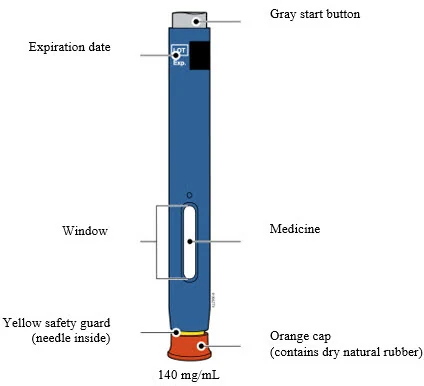 |
Important Information You Need to Know Before Injecting REPATHA
|
Frequently asked questions: For additional information and answers to frequently asked questions, visit www.repatha.com. |
Where to get help: If you want more information or help using REPATHA:
|
| Storing and Preparing to Inject REPATHA |
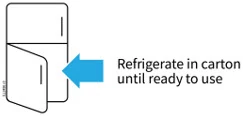 |
| 1 | Refrigerate the autoinjector carton until you are ready to use it.
| |
| Important: Keep the autoinjector and all medicines out of the sight and reach of children. | ||
WAIT 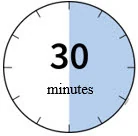 | ||
| 2 | Wait 30 minutes for the autoinjector to reach room temperature.
| |
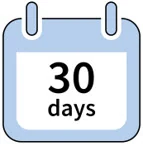 | ||
| 3 | You may keep REPATHA at room temperature for up to 30 days, if needed.
| |
| Important: Place the autoinjector in a sharps disposal container if it has reached room temperature and has not been used within 30 days. | ||
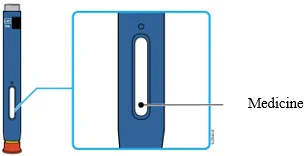 | ||
| 4 | Inspect the medicine. It should be clear and colorless to slightly yellow.
| |
| Important: If the medicine is cloudy, discolored, or contains flakes or particles, or if the autoinjector is damaged or expired, call 1-844-REPATHA (1-844-737-2842). | ||
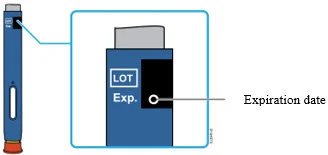 | ||
| 5 | Check the expiration date (Exp.) and inspect the autoinjector for damage.
| |
| Getting Ready to Inject REPATHA |
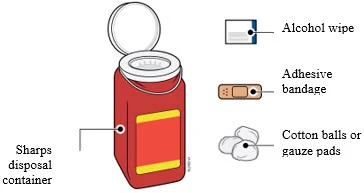 |
| 6 | Gather and place the following items for your injection on a clean, flat, and well-lit surface:
| |
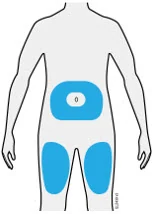 | ||
| 7 | Select 1 of these injection sites.
| |
| Important: Avoid areas with scars or stretch marks, or where the skin is tender, bruised, red, hard, raised, thick or scaly skin patch, or lesion. | ||
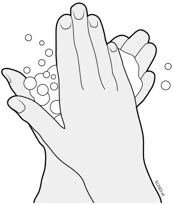 | ||
| 8 | Wash your hands thoroughly with soap and water. | |
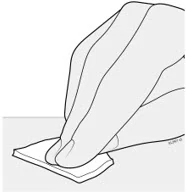 | ||
| 9 | Clean the injection site with an alcohol wipe.
| |
| Injecting REPATHA |
| Important: Only remove the orange cap when you can inject right away (within 5 minutes) because the medicine can dry out. Do not recap. |
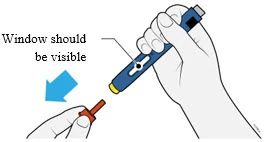 |
| 10 | Grasp the autoinjector so you can see the window. Pull the orange cap straight off. You may need to pull hard.
| |
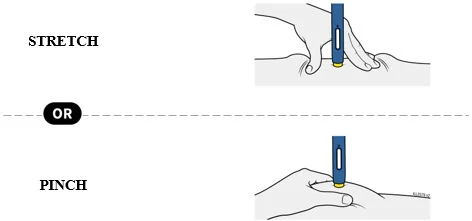 | ||
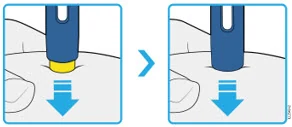
| 11 | Stretch or pinch the skin to create a firm surface at the injection site until the injection is finished. Place the yellow safety guard straight against the skin.
| |
PUSH and hold against skin | ||
| 12 | Firmly push the autoinjector down until the yellow safety guard stops moving. Hold the autoinjector down, do not lift.
| |
PRESS gray start button | ||
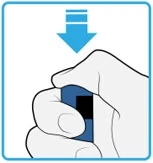
| 13 | Keep pushing the autoinjector down and press the gray start button to start the injection.
| |
WATCH window will turn fully yellow | ||
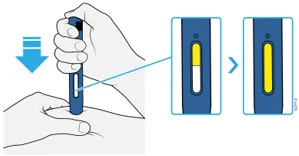
| 14 | Keep pushing the autoinjector down. Wait for the window to turn fully yellow.
| |
| Completing the Injection and Disposal | ||
CONFIRM 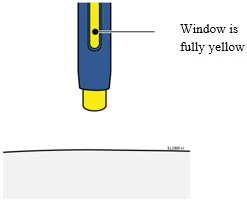 | ||
| 15 | Confirm a full dose of medicine was injected.
| |
| Important: If the window has not turned fully yellow, or if it looks like the medicine is still coming out, a full dose was not injected. Call your healthcare provider right away. | ||
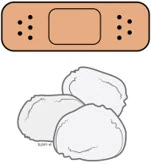 |
| 16 | Check the injection site. | |
| ||
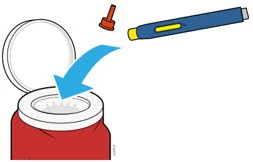 | ||
| 17 | Place the used autoinjector and orange cap in an FDA-cleared sharps disposal container. | |
| Important: Do not throw away the autoinjector in your household trash. | ||
| ||
Additional information about your sharps disposal container
If you do not have an FDA-cleared sharps disposal container, you may use a household container that is:
- made of a heavy-duty plastic,
- can be closed with a tight-fitting, puncture-resistant lid, without sharps being able to come out,
- upright and stable during use,
- leak-resistant, and
- properly labeled to warn of hazardous waste inside the container.
Disposing of sharps disposal containers:
When your sharps disposal container is almost full, you will need to follow your community guidelines for the right way to dispose of your sharps disposal container.
There may be state or local laws about how you should throw away used needles and syringes.
For more information about safe sharps disposal, and for specific information about sharps disposal in the state that you
live in, go to the FDA's website at: http://www.fda.gov/safesharpsdisposal
Do not dispose of your used sharps disposal container in your household trash unless your community guidelines permit this.
Do not recycle your used sharps disposal container.
Keep the autoinjector and sharps disposal container out of the sight and reach of children.
For more information or help call 1-844-REPATHA (1-844-737-2842).
REPATHA (evolocumab)
AMGEN
Manufactured by:
Amgen Inc.
One Amgen Center Drive
Thousand Oaks, California 91320-1799
U.S. License Number 1080
© 2015-2022, 2024-2025 Amgen Inc.
All rights reserved.
1XXXXXX
This Instructions for Use has been approved by the U.S. Food and Drug Administration.
Revised: 08/2025
v12
INSTRUCTIONS FOR USE
REPATHA® [ri-PAth-a]
(evolocumab)
injection, for subcutaneous use
140 mg/mL
prefilled single-dose SureClick® autoinjector
This Instructions for Use contains information on how to inject REPATHA with a SureClick autoinjector.
If your healthcare provider decides that you or a caregiver may be able to give your injections of REPATHA at home, you should receive training on the right way to prepare and inject REPATHA. Do not try to inject yourself until you have been shown the right way to give the injections by your healthcare provider or nurse.
The medicine in the REPATHA autoinjector is for injection under the skin (subcutaneous injection). See the REPATHA Patient Information for information about REPATHA.
Getting to know the prefilled autoinjector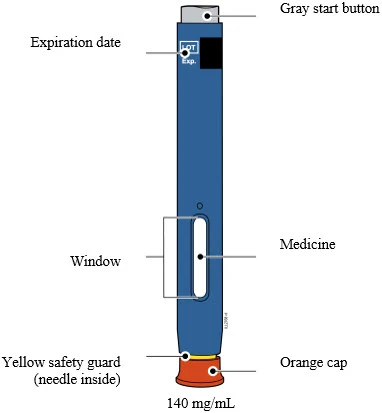 |
Important Information You Need to Know Before Injecting REPATHA
|
Frequently asked questions: For additional information and answers to frequently asked questions, visit www.repatha.com. |
Where to get help: If you want more information or help using REPATHA:
|
| Storing and Preparing to Inject REPATHA |
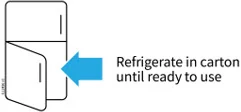 |
| 1 | Refrigerate the autoinjector carton until you are ready to use it.
| |
| Important: Keep the autoinjector and all medicines out of the sight and reach of children. | ||
WAIT 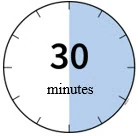 | ||
| 2 | Wait 30 minutes for the autoinjector to reach room temperature.
| |
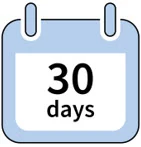 | ||
| 3 | You may keep REPATHA at room temperature for up to 30 days, if needed.
| |
| Important: Place the autoinjector in a sharps disposal container if it has reached room temperature and has not been used within 30 days. | ||
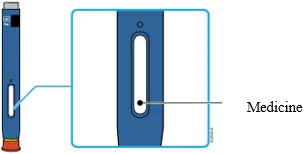 | ||
| 4 | Inspect the medicine. It should be clear and colorless to slightly yellow.
| |
| Important: If the medicine is cloudy, discolored, or contains flakes or particles, or if the autoinjector is damaged or expired, call 1-844-REPATHA (1-844-737-2842). | ||
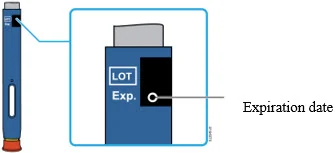 | ||
| 5 | Check the expiration date (Exp.) and inspect the autoinjector for damage.
| |
| Getting Ready to Inject REPATHA |
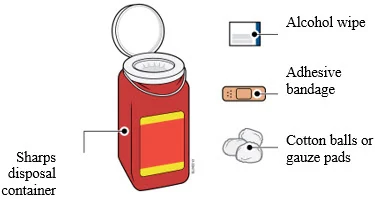 |
| 6 | Gather and place the following items for your injection on a clean, flat, and well-lit surface:
| |
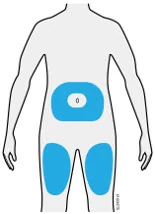 | ||
| 7 | Select 1 of these injection sites.
| |
| Important: Avoid areas with scars or stretch marks, or where the skin is tender, bruised, red, hard, raised, thick or scaly skin patch, or lesion. | ||
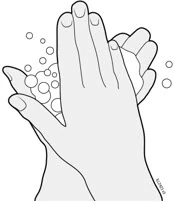 | ||
| 8 | Wash your hands thoroughly with soap and water. | |
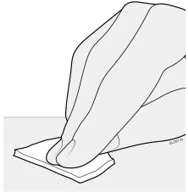 | ||
| 9 | Clean the injection site with an alcohol wipe.
| |
| Injecting REPATHA |
| Important: Only remove the orange cap when you can inject right away (within 5 minutes) because the medicine can dry out. Do not recap. |
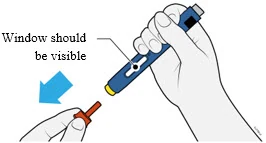 |
| 10 | Grasp the autoinjector so you can see the window. Pull the orange cap straight off. You may need to pull hard.
| |
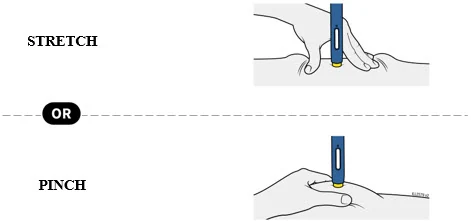 | ||
| 11 | Stretch or pinch the skin to create a firm surface at the injection site until the injection is finished. Place the yellow safety guard straight against the skin.
| |
PUSH and hold against skin | ||
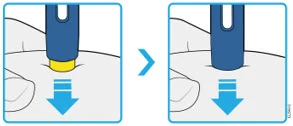
| 12 | Firmly push the autoinjector down until the yellow safety guard stops moving. Hold the autoinjector down, do not lift.
| |
PRESS gray start button | ||
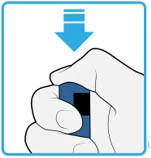
| 13 | Keep pushing the autoinjector down and press the gray start button to start the injection.
| |
WATCH window will turn fully yellow | ||
| 14 | Keep pushing the autoinjector down. Wait for the window to turn fully yellow.
| |
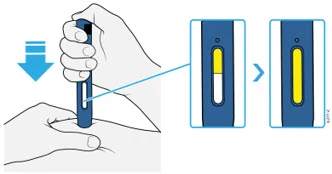
| Completing the Injection and Disposal | ||
CONFIRM 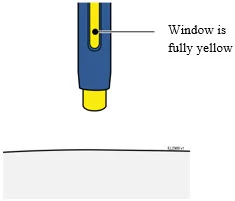 | ||
| 15 | Confirm a full dose of medicine was injected.
| |
| Important: If the window has not turned fully yellow, or if it looks like the medicine is still coming out, a full dose was not injected. Call your healthcare provider right away. | ||
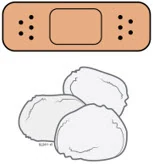 | ||
| 16 | Check the injection site.
| |
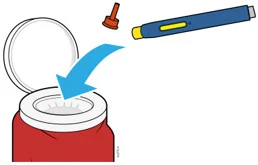 | ||
| 17 | Place the used autoinjector and orange cap in an FDA-cleared sharps disposal container. | |
| Important: Do not throw away the autoinjector in your household trash. | ||
| ||
Additional information about your sharps disposal container
If you do not have an FDA-cleared sharps disposal container, you may use a household container that is:
- made of a heavy-duty plastic,
- can be closed with a tight-fitting, puncture-resistant lid, without sharps being able to come out,
- upright and stable during use,
- leak-resistant, and
- properly labeled to warn of hazardous waste inside the container.
Disposing of sharps disposal containers:
When your sharps disposal container is almost full, you will need to follow your community guidelines for the right way to dispose of your sharps disposal container.
There may be state or local laws about how you should throw away used needles and syringes.
For more information about safe sharps disposal, and for specific information about sharps disposal in the state that you
live in, go to the FDA's website at: http://www.fda.gov/safesharpsdisposal
Do not dispose of your used sharps disposal container in your household trash unless your community guidelines permit this.
Do not recycle your used sharps disposal container.
Keep the autoinjector and sharps disposal container out of the sight and reach of children.
For more information or help call 1-844-REPATHA (1-844-737-2842).
REPATHA (evolocumab)
Manufactured by:
Amgen Inc.
One Amgen Center Drive
Thousand Oaks, California 91320-1799
U.S. License Number 1080
© 2024-2025 Amgen Inc.
All rights reserved.
1XXXXXX
This Instructions for Use has been approved by the U.S. Food and Drug Administration.
Revised: 08/2025
v2
Instructions for Use Repatha® (ri-PAth-a) (evolocumab) prefilled single-dose syringe (contains dry natural rubber) | |
| Getting to know the prefilled syringe | |
| Before use | After use |
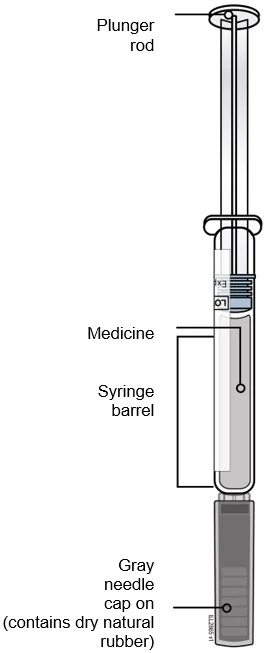 | 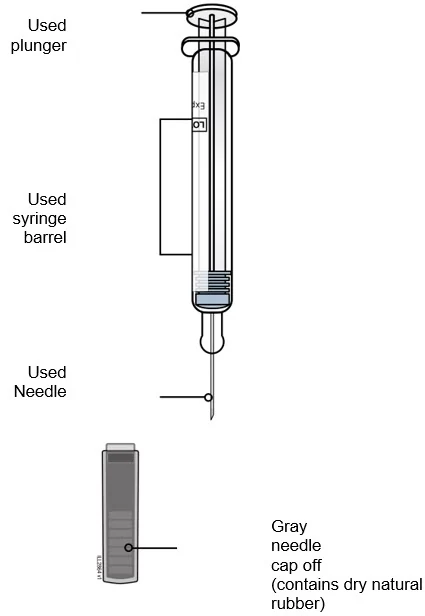 |
| Needle is inside | |
| Important |
Before you use a prefilled single-dose syringe, read this important information:
Storage of REPATHA :
|
| Do not: |
|
A healthcare provider who knows how to use the prefilled syringe should be able to answer your questions. For more information, call 1-844-REPATHA (1-844-737-2842) or visit www.REPATHA.com. Keep the prefilled syringe and all medicines out of the sight and reach of children. |
| Step 1: Prepare | |||
| 1 A | Remove the prefilled syringe carton from the refrigerator and wait 30 minutes. | ||
| Wait at least 30 minutes for the prefilled syringe in the carton to reach room temperature before injecting. | 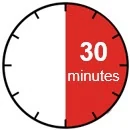 | ||
| Using the prefilled syringe at room temperature makes sure the full dose is delivered and allows for a more comfortable injection. Do not heat the syringe. Let it warm up on its own naturally. | |||
| Do not try to warm the prefilled syringe by using a heat source such as hot water or microwave. | |||
| Do not leave the prefilled syringe in direct sunlight. | |||
| Do not shake the prefilled syringe. | |||
| 1 B | Gather all materials needed for your injection. | ||
| Wash your hands thoroughly with soap and water. | |||
| On a clean, well-lit, flat work surface, place: | |||
| |||
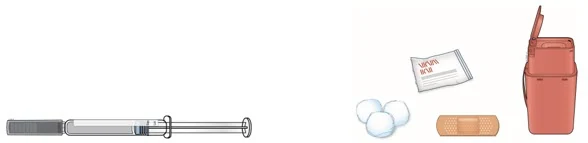 | |||
| 1 C | Choose your injection site. | ||
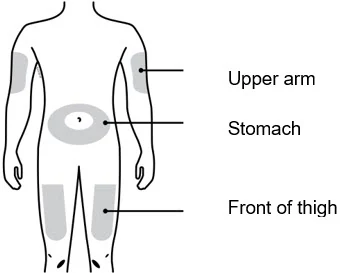 | |||
You can use the:
If someone else is giving you the injection, they can also use the outer area of the upper arm. Do not choose an area where the skin is tender, bruised, red, or hard. Avoid injecting into areas with scars or stretch marks. Choose a different site each time you give yourself an injection. | |||
| 1 D | Clean your injection site. | ||
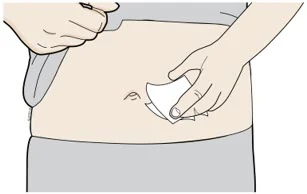 | |||
Clean your injection site with an alcohol wipe. Let your skin dry before injecting. Do not touch this area of skin again before injecting. | |||
| 1 E | Remove prefilled syringe from tray. | ||
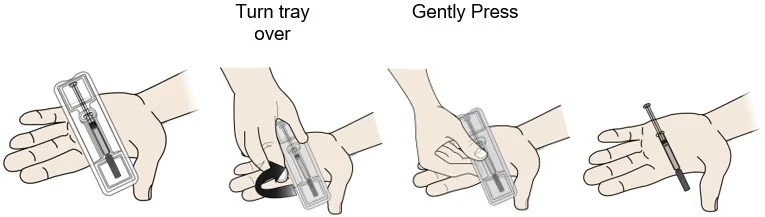 | |||
To remove:
| |||
| 1 F | Check the medicine and syringe. | ||
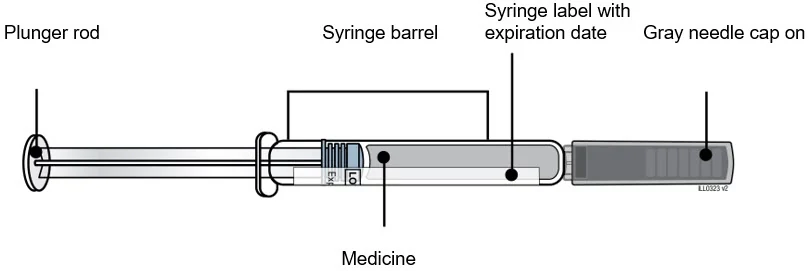 | |||
Always hold the prefilled syringe by the syringe barrel. Check that: | |||
In any above cases, use a new prefilled syringe and call 1-844-REPATHA (1-844-737-2842) or visit www.REPATHA.com. | |||
| Step 2: Get ready | ||
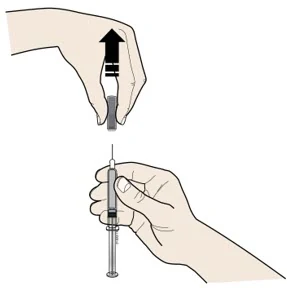
| 2 A | Carefully pull the gray needle cap straight out and away from your body. Do not leave the gray needle cap off for more than 5 minutes. This can dry out the medicine. | |
 | 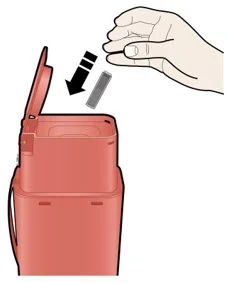 | |
| It is normal to see a drop of medicine at the end of the needle. | Place the gray needle cap in the sharps disposal container right away. | |
| Do not twist or bend the gray needle cap. This can damage the needle. | ||
| Do not put the gray needle cap back onto the prefilled syringe. | ||
| Do not try to remove any air bubbles in the syringe before the injection. | ||
| 2 B | Pinch your injection site to create a firm surface. |
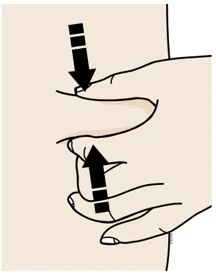 | |
| Pinch the skin firmly between your thumb and fingers, creating an area about 2 inches wide. | |
| It is important to keep the skin pinched while injecting. | |
| Step 3: Inject | |
| 3 A | Hold the pinch. Insert the needle into the skin using a 45 to 90 degree angle. |
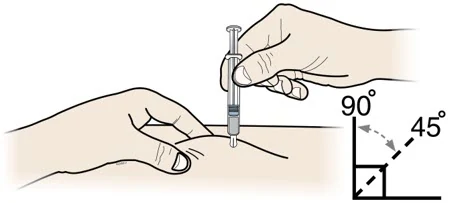 | |
| Do not place your finger on the plunger rod while inserting the needle. | |
| 3 B | Using slow and constant pressure, push the plunger rod all the way down until the prefilled syringe is empty. You may have to push harder on the plunger rod than for other injectable medicines. |
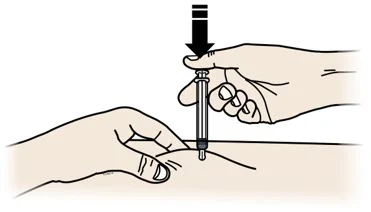 | |
| 3 C | When the prefilled syringe is empty, release your thumb, and gently lift the syringe out of the skin. |
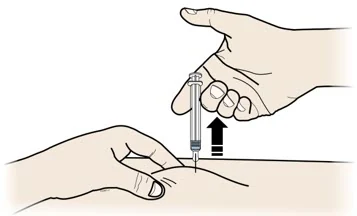 | |
| Do not put the gray needle cap back onto the used prefilled syringe. | |
| Step 4: Finish | |
| 4 A | Place the used prefilled syringe in a sharps disposal container right away. |
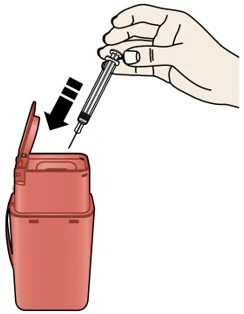 | |
| Do not reuse the used prefilled syringe. | |
Do not use any medicine that is left in the used prefilled syringe.
Do not dispose of your used sharps disposal container in your household trash unless your community guidelines permit this. Do not recycle your used sharps disposal container. | |
| Keep the used syringe and sharps container out of the sight and reach of children. | |
| 4 B | Check the injection site. |
| If there is blood, press a cotton ball or gauze pad on your injection site. Apply an adhesive bandage if needed. | |
| Do not rub the injection site. | |
This Instructions for Use has been approved by the U.S. Food and Drug Administration.
Manufactured by:
Amgen Inc.
Thousand Oaks, CA 91320-1799
U.S. License Number 1080
© 2015-2016, 2021, 2024 Amgen Inc.
All rights reserved.
<part number> Revised: 11/2024 v4
Instructions for Use Repatha® (ri-PAth-a) (evolocumab) prefilled single-dose syringe | |
| Getting to know the prefilled syringe | |
| Before use | After use |
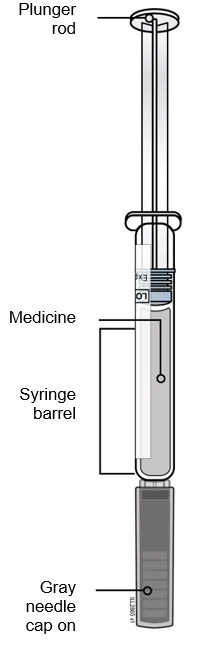 | 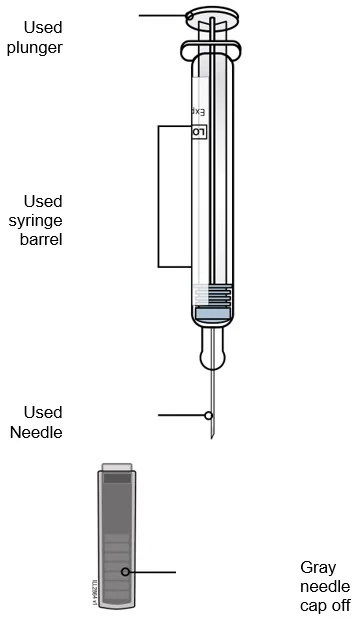 |
| Needle is inside | |
| Important |
Before you use a prefilled single-dose syringe, read this important information:
Storage of REPATHA :
|
| Do not: |
|
A healthcare provider who knows how to use the prefilled syringe should be able to answer your questions. For more information, call 1-844-REPATHA (1-844-737-2842) or visit www.REPATHA.com. Keep the prefilled syringe and all medicines out of the sight and reach of children. |
| Step 1: Prepare | |||
| 1 A | Remove the prefilled syringe carton from the refrigerator and wait 30 minutes. | ||
| Wait at least 30 minutes for the prefilled syringe in the carton to reach room temperature before injecting. | | ||
| Using the prefilled syringe at room temperature makes sure the full dose is delivered and allows for a more comfortable injection. Do not heat the syringe. Let it warm up on its own naturally. | |||
| Do not try to warm the prefilled syringe by using a heat source such as hot water or microwave. | |||
| Do not leave the prefilled syringe in direct sunlight. | |||
| Do not shake the prefilled syringe. | |||
| 1 B | Gather all materials needed for your injection. | ||
| Wash your hands thoroughly with soap and water. | |||
| On a clean, well-lit, flat work surface, place: | |||
| |||
| |||
| 1 C | Choose your injection site. | ||
| |||
You can use the:
If someone else is giving you the injection, they can also use the outer area of the upper arm. Do not choose an area where the skin is tender, bruised, red, or hard. Avoid injecting into areas with scars or stretch marks. Choose a different site each time you give yourself an injection. | |||
| 1 D | Clean your injection site. | ||
| |||
Clean your injection site with an alcohol wipe. Let your skin dry before injecting. Do not touch this area of skin again before injecting. | |||
| 1 E | Remove prefilled syringe from tray. | ||
| |||
To remove:
| |||
| 1 F | Check the medicine and syringe. | ||
| |||
Always hold the prefilled syringe by the syringe barrel. Check that: | |||
In any above cases, use a new prefilled syringe and call 1-844-REPATHA (1-844-737-2842) or visit www.REPATHA.com. | |||
| Step 2: Get ready | ||
| 2 A | Carefully pull the gray needle cap straight out and away from your body. Do not leave the gray needle cap off for more than 5 minutes. This can dry out the medicine. | |
| | |
| It is normal to see a drop of medicine at the end of the needle. | Place the gray needle cap in the sharps disposal container right away. | |
| Do not twist or bend the gray needle cap. This can damage the needle. | ||
| Do not put the gray needle cap back onto the prefilled syringe. | ||
| Do not try to remove any air bubbles in the syringe before the injection. | ||
| 2 B | Pinch your injection site to create a firm surface. |
| |
| Pinch the skin firmly between your thumb and fingers, creating an area about 2 inches wide. | |
| It is important to keep the skin pinched while injecting. | |
| Step 3: Inject | |
| 3 A | Hold the pinch. Insert the needle into the skin using a 45 to 90 degree angle. |
| |
| Do not place your finger on the plunger rod while inserting the needle. | |
| 3 B | Using slow and constant pressure, push the plunger rod all the way down until the prefilled syringe is empty. You may have to push harder on the plunger rod than for other injectable medicines. |
| |
| 3 C | When the prefilled syringe is empty, release your thumb, and gently lift the syringe out of the skin. |
| |
| Do not put the gray needle cap back onto the used prefilled syringe. | |
| Step 4: Finish | |
| 4 A | Place the used prefilled syringe in a sharps disposal container right away. |
| |
| Do not reuse the used prefilled syringe. | |
Do not use any medicine that is left in the used prefilled syringe.
Do not dispose of your used sharps disposal container in your household trash unless your community guidelines permit this. Do not recycle your used sharps disposal container. | |
| Keep the used syringe and sharps container out of the sight and reach of children. | |
| 4 B | Check the injection site. |
| If there is blood, press a cotton ball or gauze pad on your injection site. Apply an adhesive bandage if needed. | |
| Do not rub the injection site. | |
This Instructions for Use has been approved by the U.S. Food and Drug Administration.
Manufactured by:
Amgen Inc.
Thousand Oaks, CA 91320-1799
U.S. License Number 1080
© 2024 Amgen Inc.
All rights reserved.
<part number> Issued: 11/2024 v1
Instructions For Use for Patients
INSTRUCTIONS FOR USE Repatha® [ri-PAth-a] (evolocumab) injection, for subcutaneous use 140 mg/mL prefilled single-dose pen |  |
Side B
This Instructions for Use contains information on how to inject Repatha with a prefilled pen.
- If your healthcare provider decides that Repatha injections may be given at home, you or your caregiver should receive training on the right way to prepare and inject Repatha. You should not inject until you or your caregiver have been shown the right way to give the injections by your healthcare provider or nurse.
- The medicine in the prefilled pen is for injection under the skin (subcutaneous injection). See the Repatha Patient Information for information about Repatha.
Important Information You Need to Know Before Injecting Repatha
- You should not give the injection until you have fully read and understood this Instructions for Use.
- Do not shake the prefilled pen.
- The prefilled pen is not made with natural rubber latex.
Dosing
- The prefilled pen contains a 140 mg dose of Repatha.
- If your prescribed dose is 140 mg: Use one (1) 140 mg prefilled pen to administer your dose.
- If your prescribed dose is 420 mg: Use three (3) 140 mg prefilled pens and administer all three injections one at a time within 30 minutes to complete your 420 mg dose.
- Check the prefilled pen label and prescription to make sure you have the correct medicine, dose and number of prefilled pens.
Storage Information
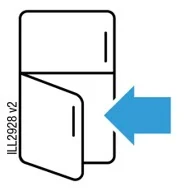 | Store refrigerated between 36°F to 46°F (2°C to 8°C) |
- Keep the prefilled pen in the original carton to protect it from light and physical damage.
- Do not freeze the prefilled pen or store in extreme heat.
- You may keep the prefilled pen at room temperature between 68°F to 77°F (20°C to 25°C) for up to 30 days, if needed.
| Important: Keep the prefilled pen and all medicines out of the sight and reach of children. |
Getting to Know the Prefilled Pen
Side A
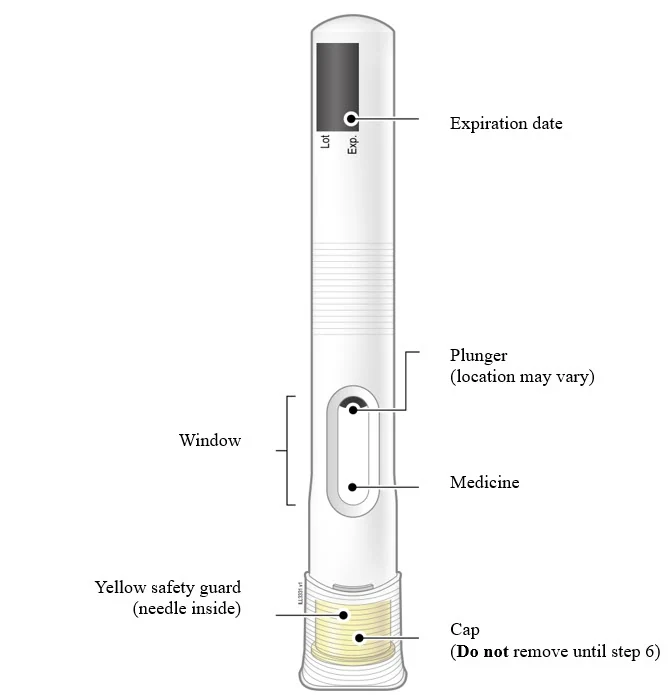
Pull to see instructions
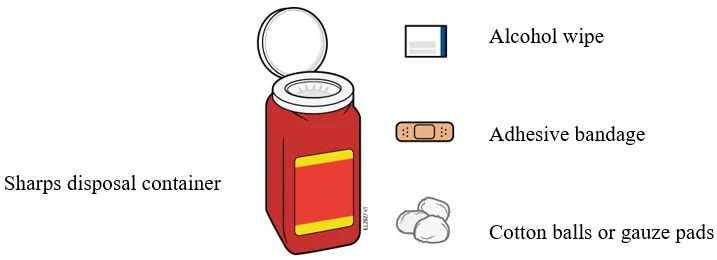
Gather the above items for the injection on a clean, flat, and well-lit surface.
Where to get help
For more information or help using Repatha:
- Contact your healthcare provider
- Visit www.REPATHA.com, or
- Call 1-844-REPATHA (1-844-737-2842).
 | Scan the QR code for optional information. |
| Getting Ready for the Injection |
| WAIT |
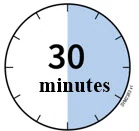 |
Remove the pens from the refrigerator. Wait at least 30 minutes for it to warm naturally to room temperature.
- Only remove the number of prefilled pens needed for a full dose of medicine.
- Do not heat the prefilled pen with hot water, a microwave, or direct sunlight.
- Put any unused prefilled pens back into the refrigerator.
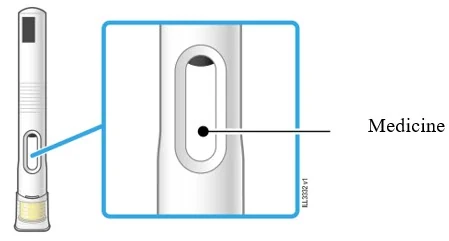 |
- Inspect the medicine. It should be clear and colorless to slightly yellow. It is okay to see air bubbles.
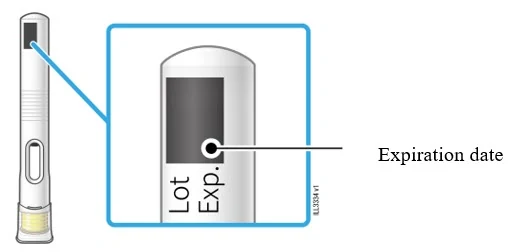 |
- Check the expiration date (Exp.) and inspect the prefilled pen for damage.
Important: Do not use the prefilled pen and call 1-844-REPATHA (1-844-737-2842) if:
|
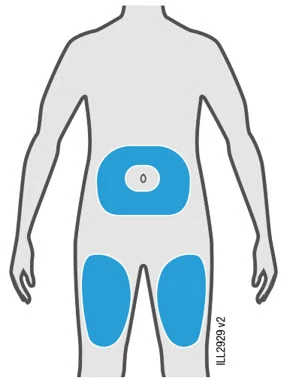 |
Select the thigh or stomach for the injection site.
- Only a caregiver or healthcare provider should inject in the back of the upper arm.
- Choose a different site for each injection.
| Important: Avoid areas with scars or stretch marks, or where the skin is tender, bruised, red, or hard. Avoid 2 inches around the belly button. |
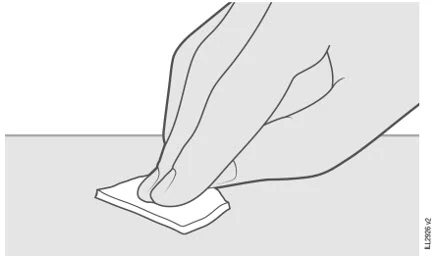 |
Wash your hands with soap and water. Clean the skin at the injection site with an alcohol wipe.
- Let the skin dry naturally.
- Do not blow on or touch the injection site again.
| Injecting Repatha |
| Important: Only remove the cap when you can inject the medicine within 5 minutes. Do not recap. |
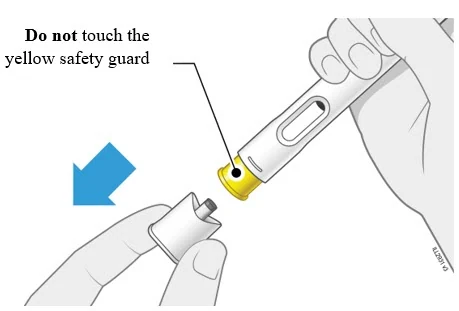 |
Pull hard or twist the cap to remove it. Never put the cap back on as it may damage the needle.
- It is okay to see a few drops of medicine come out of the needle.
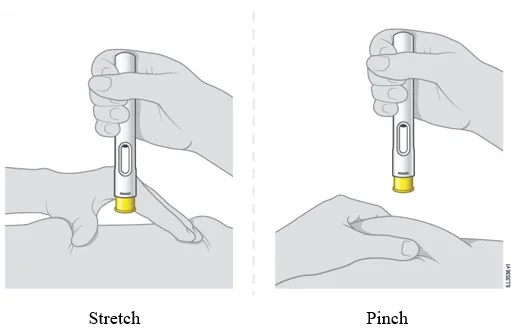 |
Grasp the prefilled pen so you can see the window. Create a firm surface at the injection site.
- If needed, stretch or pinch the skin to create a firm surface at the injection site until the injection is finished. Pinching is required for children under 12 years of age.
 |
| PUSH and HOLD |
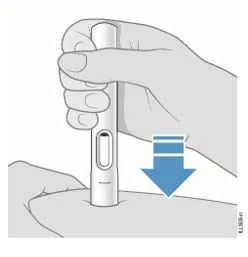 |
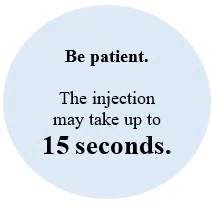
To start the injection, place the pen on your skin. Push down and hold firmly without releasing.
- The yellow safety guard will disappear, and you may hear a click.
Pull to see instructions
| WATCH until COMPLETE |
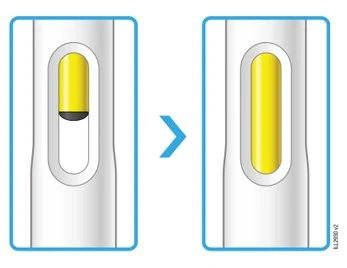 |
- Continue to hold the prefilled pen down. The injection is complete when the window turns fully yellow. You may hear a second click.
| Completing the Injection and Disposal |
| CONFIRM |
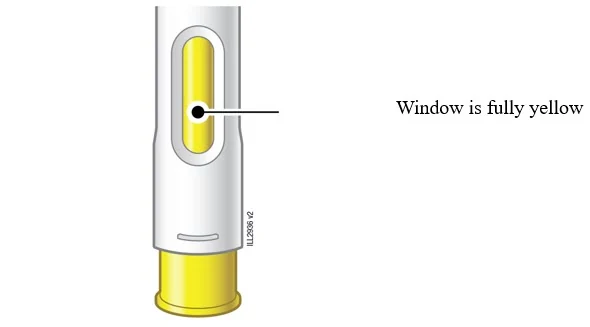 |
Confirm all medicine was injected.
- A small drop of liquid on the injection site is okay.
- Call your healthcare provider if you have not received a full injection of medicine.
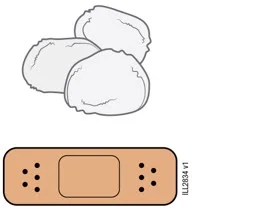 |
Check the injection site.
- Do not rub the injection site.
- If there is blood, use a cotton ball and apply an adhesive bandage.
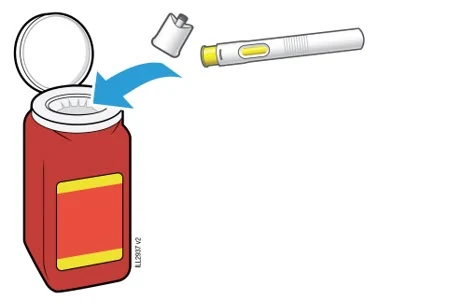 |
Place the used prefilled pen and cap in a sharps disposal container.
- Do not throw away the prefilled pen in your household trash.
Do not reuse the prefilled pen.
For more information or help call 1-844-REPATHA (1-844-737-2842).
If prescribed a 420 mg dose: Use 3 prefilled pens. Dispose of each used pen and cap, then inject with a new pen at a different injection site. Give all 3 injections within 30 minutes.
If you do not have an FDA-cleared sharps disposal container, you may use a household container that is:
- made of a heavy-duty plastic,
- can be closed with a tight-fitting, puncture-resistant lid, without sharps being able to come out,
- upright and stable during use,
- leak-resistant, and
- properly labeled to warn of hazardous waste inside the container.
Throwing away (disposing of) sharps disposal containers:
When your sharps disposal container is almost full, you will need to follow your community guidelines for the right way to dispose of your sharps disposal container.
There may be state or local laws about how you should throw away used needles and syringes.
For more information about safe sharps disposal, and for specific information about sharps disposal in the state that you live in, go to the FDA's website at: http://www.fda.gov/safesharpsdisposal
Do not dispose of your used sharps disposal container in your household trash unless your community guidelines permit this.
Do not recycle your used sharps disposal container.
Keep the prefilled pen and sharps disposal container out of the sight and reach of children.
Manufactured by:
Amgen Inc.
One Amgen Center Drive
Thousand Oaks, California 91320-1799
U.S. License No. 1080
© 2026 Amgen Inc. All rights reserved.
1XXXXXX
This Instructions for Use has been approved by the U.S. Food and Drug Administration.
Approved: 07/2026
v1