


Patient information: uses, side effects, how to take - Omlyclo
What is the most important information I should know about OMLYCLO?
OMLYCLO may cause serious side effects, including:
Severe allergic reaction. A severe allergic reaction called anaphylaxis can happen when you receive OMLYCLO. The reaction can occur after the first dose, or after many doses. It may also occur right after a OMLYCLO injection or days later. Anaphylaxis is a life-threatening condition and can lead to death. Go to the nearest emergency room right away if you have any of these symptoms of an allergic reaction:
- wheezing, shortness of breath, cough, chest tightness, or trouble breathing
- low blood pressure, dizziness, fainting, rapid or weak heartbeat, anxiety, or feeling of "impending doom"
- flushing, itching, hives, or feeling warm
- swelling of the throat or tongue, throat tightness, hoarse voice, or trouble swallowing
Your healthcare provider will monitor you closely for symptoms of an allergic reaction while you are receiving OMLYCLO and for a period of time after treatment is initiated. Your healthcare provider should talk to you about getting medical treatment if you have symptoms of an allergic reaction.
What is OMLYCLO?
OMLYCLO is an injectable prescription medicine used to treat:
- moderate to severe persistent asthma in people 6 years of age and older whose asthma symptoms are not well controlled with asthma medicines called inhaled corticosteroids. A skin or blood test is performed to see if you have allergies to year-round allergens. It is not known if OMLYCLO is safe and effective in people with asthma under 6 years of age.
- chronic rhinosinusitis with nasal polyps (CRSwNP) in people 18 years of age and older when medicines to treat CRSwNP called nasal corticosteroids have not worked well enough. It is not known if OMLYCLO is safe and effective in people with CRSwNP under 18 years of age.
- food allergy in people 1 year of age and older to reduce allergic reactions that may occur after accidentally eating one or more foods to which you are allergic. While taking OMLYCLO you should continue to avoid all foods to which you are allergic. It is not known if OMLYCLO is safe and effective in people with food allergy under 1 year of age.
- chronic spontaneous urticaria (CSU, previously referred to as chronic idiopathic urticaria (CIU), chronic hives without a known cause) in people 12 years of age and older who continue to have hives that are not controlled with H1 antihistamine treatment. It is not known if OMLYCLO is safe and effective in people with CSU under 12 years of age.
OMLYCLO should not be used for the emergency treatment of any allergic reactions, including anaphylaxis. OMLYCLO should also not be used to treat other forms of hives, or sudden breathing problems.
Who should not receive and use OMLYCLO?
Do not receive and use OMLYCLO if you:
- are allergic to omalizumab products or any of the ingredients in OMLYCLO. See the end of this Medication Guide for a complete list of ingredients in OMLYCLO.
What should I tell my healthcare provider before receiving OMLYCLO?
Before receiving OMLYCLO, tell your healthcare provider about all of your medical conditions, including if you:
- have sudden breathing problems (bronchospasm).
- have ever had a severe allergic reaction called anaphylaxis.
- have or have had a parasitic infection.
- have or have had cancer.
are pregnant or plan to become pregnant. It is not known if OMLYCLO may harm your unborn baby.
- are breastfeeding or plan to breastfeed. It is not known if OMLYCLO passes into your breast milk. Talk with your healthcare provider about the best way to feed your baby while you receive and use OMLYCLO.
Tell your healthcare provider about all the medicines you take, including prescription and over-the-counter medicines, vitamins, and herbal supplements.
How should I receive and use OMLYCLO?
- When starting treatment OMLYCLO should be given by your healthcare provider in a healthcare setting.
- If your healthcare provider decides that you or a caregiver may be able to give your own OMLYCLO prefilled syringe injections, you should receive training on the right way to prepare and inject OMLYCLO.
- Do not try to inject OMLYCLO until you have been shown the right way to give OMLYCLO prefilled syringe injections by a healthcare provider. Use OMLYCLO exactly as prescribed by your healthcare provider.
- For children 12 years of age and older, OMLYCLO prefilled syringe may be self-injected under adult supervision. For children 1 to 11 years of age, OMLYCLO prefilled syringe should be injected by a caregiver.
- See the detailed Instructions for Use that comes with OMLYCLO for information on the right way to prepare and inject OMLYCLO.
- OMLYCLO is given in 1 or more injections under the skin (subcutaneous), 1 time every 2 or 4 weeks.
- In people with asthma, CRSwNP and food allergy, a blood test for a substance called IgE must be performed before starting OMLYCLO to determine the appropriate dose and dosing frequency.
- In people with chronic hives, a blood test is not necessary to determine the dose or dosing frequency.
- Do not decrease or stop taking any of your other asthma, CRSwNP, hive medicine, food allergy medicine or allergen immunotherapy unless your healthcare providers tell you to.
- You may not see improvement in your symptoms right away after OMLYCLO treatment. If your symptoms do not improve or get worse, call your healthcare provider.
- If you inject more OMLYCLO than prescribed, call your healthcare provider right away.
What are the possible side effects of OMLYCLO?
OMLYCLO may cause serious side effects, including:
- See " What is the most important information I should know about OMLYCLO? "
- Cancer. Cases of cancer were observed in some people who received OMLYCLO.
- Inflammation of your blood vessels. Rarely, this can happen in people with asthma who receive OMLYCLO. This usually, but not always, happens in people who also take a steroid medicine by mouth that is being stopped or the dose is being lowered. It is not known whether this is caused by OMLYCLO. Tell your healthcare provider right away if you have:
- rash
- shortness of breath
- chest pain
- a feeling of pins and needles or numbness of your arms or legs
- Fever, muscle aches, and rash. Some people get these symptoms 1 to 5 days after receiving a OMLYCLO injection. If you have any of these symptoms, tell your healthcare provider.
- Parasitic infection. Some people who are at a high risk for parasite (worm) infections, get a parasite infection after receiving OMLYCLO. Your healthcare provider can test your stool to check if you have a parasite infection.
- Heart and circulation problems. Some people who receive OMLYCLO have had chest pain, heart attack, blood clots in the lungs or legs, or temporary symptoms of weakness on one side of the body, slurred speech, or altered vision. It is not known whether these are caused by OMLYCLO.
The most common side effects of OMLYCLO:
- In adults and children 12 years of age and older with asthma: joint pain especially in your arms and legs, dizziness, feeling tired, itching, skin rash, bone fractures, and pain or discomfort of your ears.
In children 6 to less than 12 years of age with asthma: swelling of the inside of your nose, throat, or sinuses, headache, fever, throat infection, ear infection, abdominal pain, stomach infection, and nose bleeds.
- In adults with chronic rhinosinusitis with nasal polyps: headache, injection site reactions, joint pain, upper abdominal pain, and dizziness.
- In people with chronic spontaneous urticaria: nausea, headaches, swelling of the inside of your nose, throat or sinuses, cough, joint pain, and upper respiratory tract infection.
- In people with food allergy: injection site reactions and fever.
These are not all the possible side effects of OMLYCLO. Call your doctor for medical advice about side effects. You may report side effects to FDA at 1-800-FDA-1088.
How should I store OMLYCLO?
- Store OMLYCLO in the refrigerator between 36°F to 46°F (2°C to 8°C).
- Keep your unused OMLYCLO prefilled syringes in the original carton until use to protect them from light.
- OMLYCLO prefilled syringe can be removed from and placed back in the refrigerator if needed. The total combined time out of refrigerator may not be more than 7 days. Do not use if OMLYCLO prefilled syringe is left at temperatures above 77°F (25°C) and discard in a FDA-cleared sharps disposal container.
- Do not freeze. Do not use if OMLYCLO prefilled syringes have been frozen.
- Do not shake.
- Keep OMLYCLO out of direct sunlight.
- Do not use OMLYCLO past the expiration date.
Keep the OMLYCLO prefilled syringe, FDA-cleared sharps disposal container and all medicines out of the reach of children.
General information about the safe and effective use of OMLYCLO.
Medicines are sometimes prescribed for purposes other than those listed in a Medication Guide. Do not use OMLYCLO for a condition for which it was not prescribed. Do not give OMLYCLO to other people, even if they have the same symptoms that you have. It may harm them. You can ask your pharmacist or healthcare provider for information about OMLYCLO that is written for health professionals.
For more information, call 800-560-9414
What are the ingredients in OMLYCLO?
Active ingredient: omalizumab-igec
Inactive ingredients:
Prefilled syringe: arginine hydrochloride, histidine, L-histidine hydrochloride monohydrate, and polysorbate 20
Manufactured by: CELLTRION, Inc. 23, Academy-ro, Yeonsu-gu, Incheon, 22014, Republic of Korea, U.S. License No.: 1996
Distributed by: CELLTRION USA, Inc. One Evertrust Plaza Suite 1207, Jersey City, NJ, 07302
OMLYCLO® is a registered trademark of CELLTRION, Inc.
INSTRUCTIONS FOR USE
OMLYCLO® [OM-ly-clo]
(omalizumab-igec)
injection, for subcutaneous use
Single-Dose Prefilled Syringe
Read and follow the Instructions for Use that come with your Omlyclo Prefilled Syringe before you start using it and each time you get a refill. There may be new information. Before you use Omlyclo Prefilled Syringe for the first time, make sure your healthcare provider shows you the right way to use it.
| Do not use OMLYCLO for the emergency treatment of any allergic reactions, including anaphylaxis, hives or sudden breathing problems. |
For children 12 years of age and older, OMLYCLO Prefilled Syringe may be self-injected under adult supervision.
For children 1 to 11 years of age, OMLYCLO Prefilled Syringe should be injected by a caregiver and healthcare provider.
Parts of the Prefilled Syringe (see Figure A)
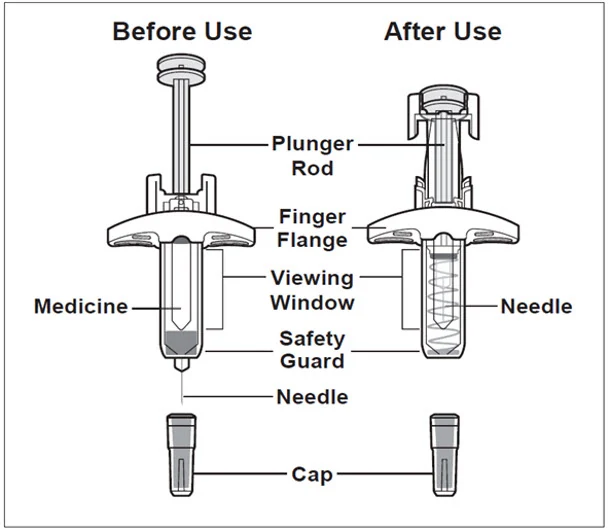 |
| Figure A |
Choose the Correct Prefilled Syringe or Combination of Prefilled Syringes
Omlyclo Prefilled Syringes are available in 3 dose strengths (see Figure B ). These instructions are to be used for all dose strengths.
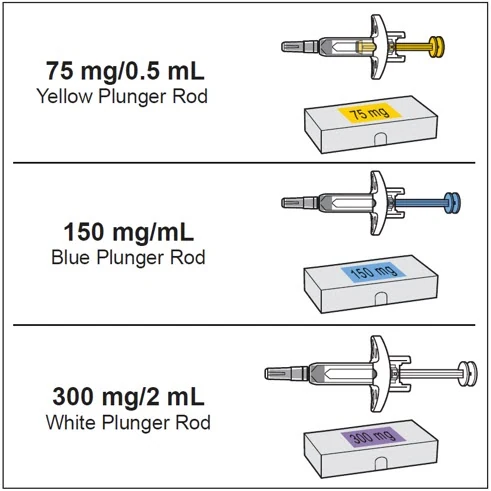 |
| Figure B |
Your prescribed dose may require more than 1 injection. The Dosing Table (Figure C) below shows the combination of Prefilled Syringes needed to give your full dose. Check the label on the Omlyclo carton to make sure you have received the correct Prefilled Syringe or combination of Prefilled Syringes for your prescribed dose. If your dose requires more than 1 injection, complete all injections for your prescribed dose, immediately one after another. Contact your healthcare provider if you have any questions.
| Dosing Table | |
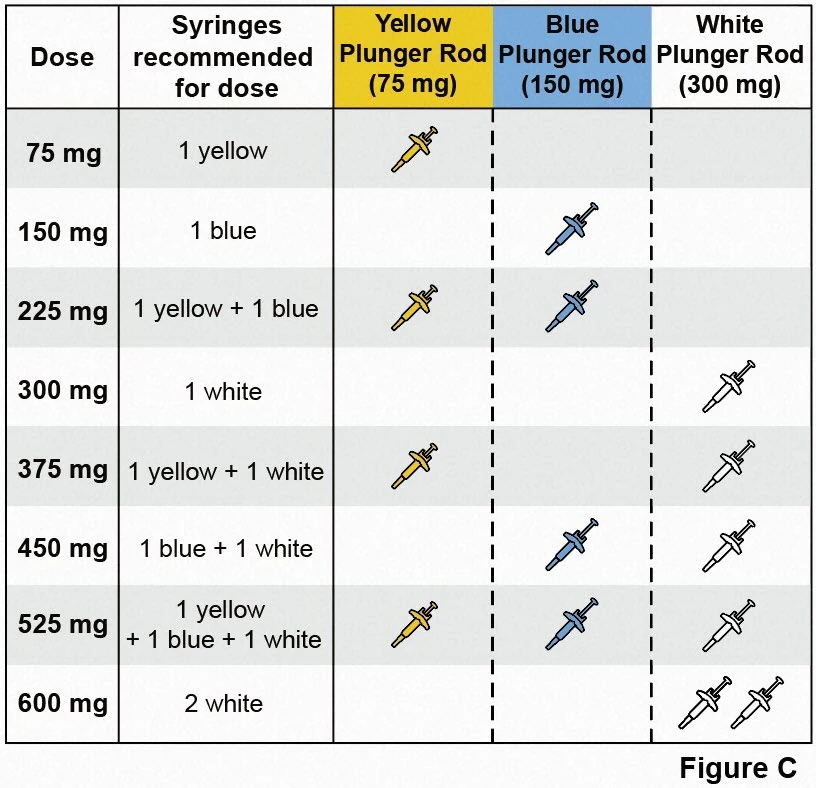 | |
Note: Your healthcare provider may prescribe a different combination of Prefilled Syringes for your complete dose.
How Should I Store OMLYCLO?
- Store the unused Prefilled Syringe in the original carton and store the carton in a refrigerator between 36°F to 46°F (2°C to 8ºC).
- Do not remove the Prefilled Syringe from its original carton during storage.
- Keep the Prefilled Syringe out of direct light.
- Do not freeze.
- Do not use if the Prefilled Syringe has been frozen.
- Before giving an injection, the carton can be removed from and placed back in the refrigerator if needed. The total combined time out of the refrigerator may not exceed 7 days. If the Prefilled Syringe is exposed to temperatures above 77°F (25°C), do not use it and throw away in a FDA-cleared sharps disposal container.
- Keep the Prefilled Syringe, and all medicines out of reach of children. Prefilled Syringe contains small parts.
Important information
- Do not open the sealed carton until you are ready to inject the Prefilled Syringe.
- Do not use if the carton or the Prefilled Syringe is damaged or appears to be tampered with.
- Do not take the Cap off until you are ready to inject the Prefilled Syringe.
- Do not use if the Prefilled Syringe has been dropped on a hard surface or dropped after removing the Cap.
- Do not reuse the same Prefilled Syringe.
- Do not leave the Prefilled Syringe unattended.
- Do not try to take the Prefilled Syringe apart at any time.
| This Instructions for Use has been approved by the U.S. Food and Drug Administration | 12/2025 |
Preparing for the Injection1. Take the carton containing the Prefilled Syringe out of the refrigerator. 1a. If you need more than 1 Prefilled Syringe to deliver your prescribed dose (see Figure C ), take all the cartons out of the refrigerator at the same time (each carton contains 1 Prefilled Syringe). The following steps must be followed for each Prefilled Syringe. | |
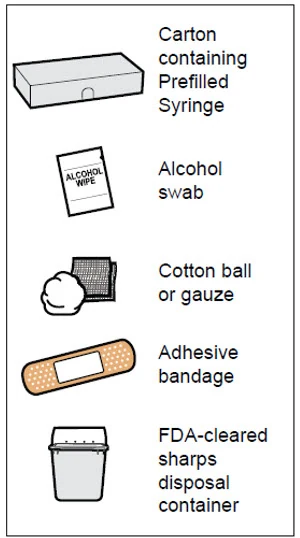 Figure D | 2.Gather the supplies needed to give your injection (see Figure D).
Not included in the carton:
Note: You may need more than 1 Prefilled Syringe for your prescribed dose. See the Dosing Table (Figure C) above for more information. Each carton contains 1 Prefilled Syringe. |
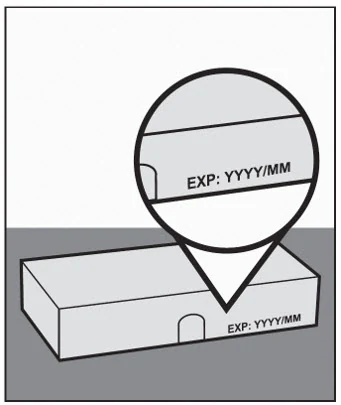 Figure E | 3.Check the expiration on the carton (see Figure E).
|
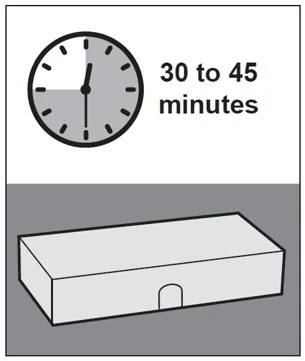 Figure F | 4.Allow the Prefilled Syringe to reach room temperature.
|
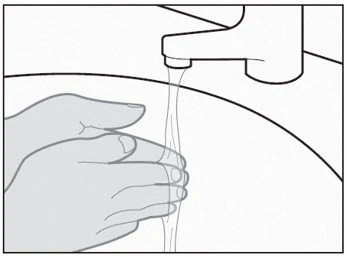 Figure G | 5.Wash your hands.
|
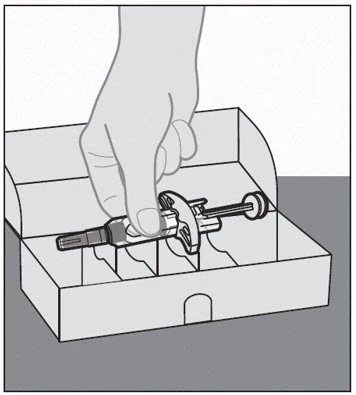 Figure H | 6.Remove the Prefilled Syringe from the carton.
|
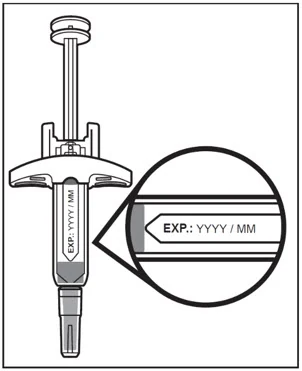 Figure I | 7.Inspect the Prefilled Syringe.
Note: If the expiration date is not visible in the viewing window, rotate the plunger rod of the Prefilled Syringe until the expiration date becomes visible. |
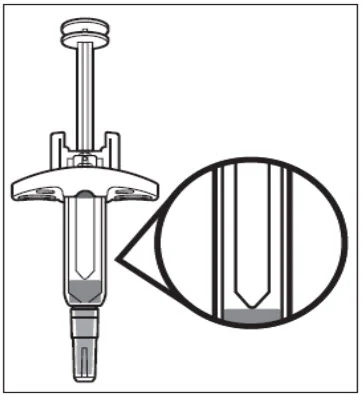 Figure J | 8.Inspect the Medicine.
|
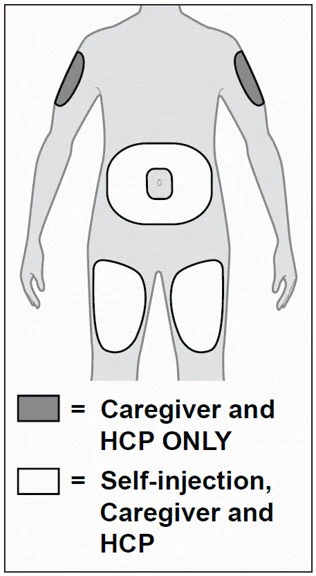 Figure K | 9.Choose an injection site (see Figure K)
|
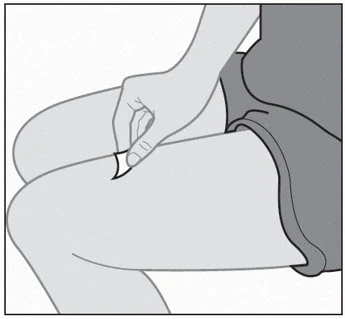 Figure L |
10a. Clean the injection site with an alcohol swab using a circular motion (see Figure L ). 10b. Let the skin dry for 10 seconds before injecting.
|
| Giving the Injection | |
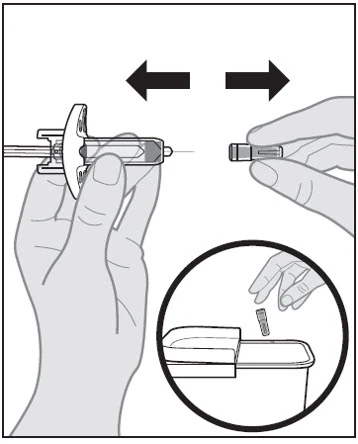 Figure M |
11a. Hold the Prefilled Syringe by the syringe body in one hand. 11b. Gently pull the Cap straight off with the other hand (See Figure M ).
11c. Dispose of the Cap right away in a FDA-cleared sharps disposal container (see Step 17. Dispose of the Prefilled Syringe and Figure M ).
|
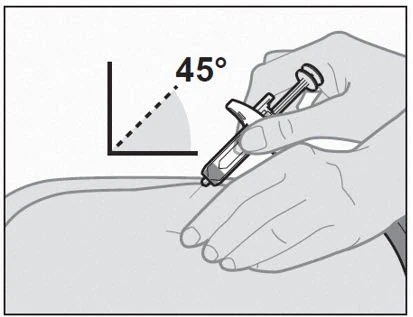 Figure N |
12a. Gently pinch a fold of skin at the injection site with one hand. Hold the pinched skin tightly until the injection is complete. Note: Pinching the skin is important to make sure that you inject under the skin (into the fatty area) but not any deeper (into muscle). 12b. With a quick and "dart-like" motion, insert the Needle all the way into the pinched skin at an angle of about 45 -degrees (see Figure N ). Note: It is important to use the correct angle to make sure the Medicine is delivered under the skin (into the fatty area), or the injection could be uncomfortable and the Medicine may not work.
|
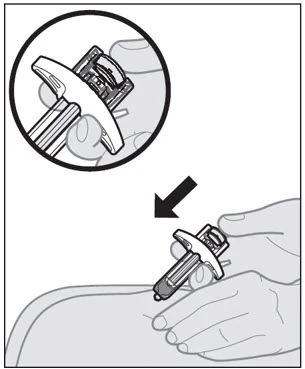 Figure O |
13a. Slowly push the Plunger rod all the way down until the full dose of medicine gets injected, and the syringe is empty (see Figure O ).
|
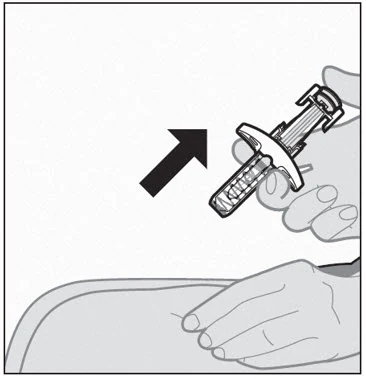 Figure P |
14a. After the Prefilled Syringe is empty, slowly lift your thumb from the Plunger rod until the Needle is completely covered by the Safety Guard (see Figure P ).
14b. Remove the Prefilled Syringe from the injection site and release the pinch.
|
15a. If some bleeding occurs or there is a drop of liquid at the injection site, treat the injection site by gently pressing, not rubbing, a cotton ball or gauze to the site and apply an adhesive bandage if needed.
15b. In case of skin contact with Medicine, wash the area that touched the Medicine with water. | |
16a. Throw away the used Prefilled Syringe as described in Step 17. Dispose of the Prefilled Syringe. 16b. Repeat Step 2 through Step 15 for the next injection using a new Prefilled Syringe.
| |
| After the injection | |
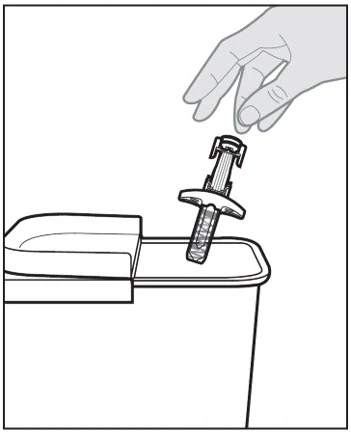 Figure Q | 17.Dispose of the Prefilled Syringe. 17a. Put the used Prefilled Syringe in a FDA-cleared sharps disposal container right away after use (see Figure Q ).
If you do not have an FDA-cleared sharps disposal container, you may use a household container that is:-made of a heavy-duty plastic,-can be closed with a tight fitting, puncture-resistant lid, without sharps being able to come out,-upright and stable during use,-leak-resistant, and-properly labeled to warn of hazardous waste inside the containerWhen your sharps disposal container is almost full, you will need to follow your community guidelines for the right way to dispose of it. There may be state or local laws about how you should throw away used needles and syringes. For more information about safe sharps disposal, and for specific information about sharps disposal in the state that you live in, go to the FDA's website at: http://www.fda.gov/safesharpsdisposal.
|
Manufactured by:
CELLTRION, Inc. 23 Academy-ro, Yeonsu-gu, Incheon, 22014, Republic of Korea, U.S. License No.: 1996