


Patient information: uses, side effects, how to take - Fasenra
What is FASENRA?
FASENRA is a prescription medicine used:
with other asthma medicines for the maintenance treatment of severe asthma in adults and children 6 years of age and older whose asthma is not controlled with their current asthma medicines. FASENRA helps prevent severe asthma attacks (exacerbations) and may improve your breathing.
- FASENRA is not used to treat sudden breathing problems.
- Tell your healthcare provider if your asthma does not get better or if it gets worse after you start treatment with FASENRA.
- to treat adults with eosinophilic granulomatosis with polyangiitis (EGPA).
- to treat adults and children 12 years of age and older with hypereosinophilic syndrome (HES). FASENRA helps reduce symptoms and prevent flares.
- FASENRA reduces blood eosinophils. Eosinophils are a type of white blood cell that may contribute to your condition.
It is not known if FASENRA is safe and effective in:
children with asthma younger than 6 years of age.
- children with EGPA younger than 18 years of age.
- children with HES younger than 12 years of age.
Do not use FASENRA if you are allergic to benralizumab or any of the ingredients in FASENRA. See the end of this leaflet for a complete list of ingredients in FASENRA.
Before using FASENRA, tell your healthcare provider about all of your medical conditions, including if you:
- are taking oral or inhaled corticosteroid medicines. Do not stop taking your corticosteroid medicines unless instructed by your healthcare provider. This may cause other symptoms that were controlled by the corticosteroid medicine to come back.
- have a parasitic (helminth) infection.
are pregnant or plan to become pregnant. It is not known if FASENRA will harm your unborn baby. Tell your healthcare provider if you become pregnant during your treatment with FASENRA.
- are breastfeeding or plan to breastfeed. It is not known if FASENRA passes into your breast milk. You and your healthcare provider should decide if you will use FASENRA and breastfeed. Talk to your healthcare provider about the best way to feed your baby if you use FASENRA.
Tell your healthcare provider about all the medicines you take, including prescription and over-the-counter medicines, vitamins, and herbal supplements.
Do not stop taking your other medicines for your condition unless your healthcare provider tells you to.
How will I use FASENRA?
FASENRA is injected under your skin (subcutaneously):
- one time every 4 weeks for the first 3 doses and then every 8 weeks, for asthma.
- one time every 4 weeks for EGPA and HES.
- FASENRA comes in a single‑dose prefilled syringe and in a single‑dose autoinjector.
- A healthcare provider will inject FASENRA using the single-dose prefilled syringe.
- If your healthcare provider decides that you or a caregiver can give the injection of FASENRA, you or your caregiver should receive training on the right way to prepare and give the injection using the single-dose autoinjector FASENRA PEN.
- In children with asthma aged 6 to 11 years, FASENRA should only be given by a caregiver or healthcare provider.
- Do not try to inject FASENRA until you have been shown the right way by your healthcare provider. See the detailed “Instructions for Use” that comes with FASENRA PEN for information on how to prepare and inject FASENRA.
- If you miss a dose of FASENRA, call your healthcare provider.
- If you use or give too much FASENRA, call the Poison Help Line at 1-800-222-1222.
What are the possible side effects of FASENRA?
FASENRA may cause serious side effects, including:
allergic (hypersensitivity) reactions, including anaphylaxis. Serious allergic reactions can happen after you get your FASENRA injection. Allergic reactions can sometimes happen hours or days after you get your injection. Tell your healthcare provider or get emergency help right away if you get any of the following symptoms of an allergic reaction:
- swelling of your face, mouth and tongue
- breathing problems
- fainting, dizziness, feeling lightheaded (low blood pressure)
- rash
- hives
The most common side effects of FASENRA in:
- adults and children with asthma include headache and sore throat.
- adults with EGPA include headache.
- adults and children with HES include headache, allergic reactions, and flu-like symptoms.
These are not all the possible side effects of FASENRA.
Call your doctor for medical advice about side effects. You may report side effects to FDA at 1-800-FDA-1088.
How should I store FASENRA?
- Store FASENRA in the refrigerator between 36°F to 46°F (2°C to 8°C).
- Store FASENRA in the original carton to protect from light.
- FASENRA may be stored at room temperature up to 77°F (25°C) for up to 14 days.
- After FASENRA is removed from the refrigerator and brought to room temperature, it must be used within 14 days or thrown away (disposed of).
- Do not freeze. Do not shake. Do not expose to heat.
- Do not use FASENRA past the expiration (EXP) date.
- Keep FASENRA and all medicines out of the reach of children.
General information about the safe and effective use of FASENRA.
Medicines are sometimes prescribed for purposes other than those listed in a Patient Information leaflet. Do not use FASENRA for a condition for which it was not prescribed. Do not give FASENRA to other people, even if they have the same symptoms that you have. It may harm them.
You can ask your pharmacist or healthcare provider for information about FASENRA that is written for healthcare providers.
What are the ingredients in FASENRA?
Active ingredient: benralizumab
Inactive ingredients: L-histidine, L-histidine hydrochloride monohydrate, polysorbate 20, α,α-trehalose dihydrate, and Water for Injection
Manufactured by: AstraZeneca AB, Södertälje, Sweden SE-15185
U.S. License Number 2059
Distributed by: AstraZeneca Pharmaceuticals LP, Wilmington, DE 19850
FASENRA is a registered trademark of the AstraZeneca group of companies.
©AstraZeneca 2026
For more information, go to https://www.FASENRA.com or call 1-800-236-9933.
This Patient Information has been approved by the U.S. Food and Drug Administration. Revised: May 2026
Instructions for Use FASENRA PEN® (fas-en-rah) (benralizumab) Injection, for subcutaneous use Single-dose Autoinjector | |||||||||
Read this Instructions for Use before you start using your FASENRA PEN and each time you get a refill. There may be new information. This information does not take the place of talking to your healthcare provider about your medical condition or your treatment. Important Information You Need to Know Before Injecting FASENRA PEN
If you or your caregiver have any questions, talk to your healthcare provider. | |||||||||
Storing FASENRA PEN
Keep FASENRA and all medicines out of the sight and reach of children. Do not use your FASENRA PEN if:
| |||||||||
| If any of these happen, throw away the FASENRA PEN in a puncture-resistant sharps disposal container and use a new FASENRA PEN. | |||||||||
Your FASENRA PEN Do not remove the cap until you have reached Step 6 of these instructions and are ready to inject FASENRA. | |||||||||
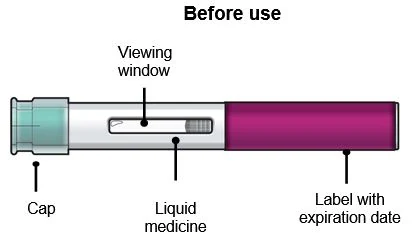 | 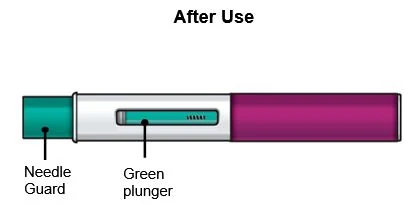 | ||||||||
| Step 1 – Gather supplies for your injection | |||||||||
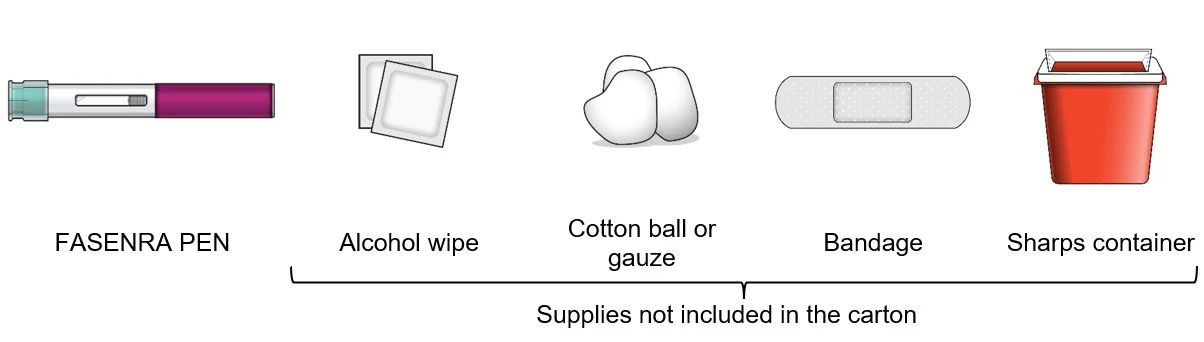 | |||||||||
Step 2 – Prepare to use your FASENRA PEN Check the expiration date (EXP) on the FASENRA PEN. Do not use if the expiration date has passed. Let FASENRA warm up at room temperature between 68°F to 77°F (20°C to 25°C) for about 30 minutes (min) before giving the injection. Do not warm the FASENRA PEN in any other way. For example, do not warm it in a microwave or hot water, or put it near other heat sources. Do not remove the cap until you have reached Step 6. |  | ||||||||
| Step 3 – Check the liquid | |||||||||
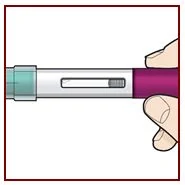 | Look at the liquid in the FASENRA PEN through the viewing window. The liquid should be clear and colorless to slightly yellow. It may contain small white particles. Do not inject FASENRA if the liquid is cloudy, discolored, or contains large particles. You may see small air bubbles in the liquid. This is normal. You do not need to do anything about it. | ||||||||
| Step 4 – Choose the injection site | |||||||||
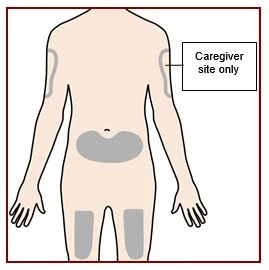 | If you are giving yourself the injection, use the front of your thigh or the lower part of your stomach (abdomen). A caregiver may inject you in the upper-arm, thigh, or abdomen. Do not try to inject yourself in the arm. For each injection, choose a different site that is at least 1‑inch (3-cm) away from where you last injected. Do not inject:
| ||||||||
| Step 5 – Clean the injection site | |||||||||
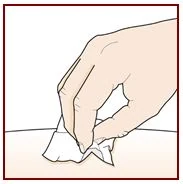 | Wash your hands well with soap and water. Clean the injection site with an alcohol wipe in a circular motion. Let it air dry. Do not touch the cleaned area before injecting. Do not fan or blow on the cleaned area. | ||||||||
| Step 6 – Pull off the cap | |||||||||
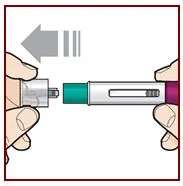 | Hold the FASENRA PEN with 1 hand. Carefully pull the cap straight off with your other hand. Put the cap aside to throw away later. The green needle guard is now exposed. It is there to prevent you from touching the needle. Do not try to touch the needle or push on the needle guard with your finger. Do not try to put the cap back on the FASENRA PEN. You could cause the injection to happen too soon or damage the needle. Complete the following steps right away after removing the cap. | ||||||||
| Step 7 – Inject FASENRA | |||||||||
Follow your healthcare providers instructions on how to inject. You can either gently pinch at the injection site or give the injection without pinching the skin. Inject FASENRA by following the steps in figures a, b, c, and d. Hold the FASENRA PEN in place for the entire injection. Do not change the position of the FASENRA PEN after the injection has started. | |||||||||
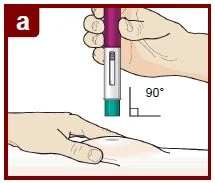 | 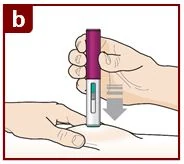 | 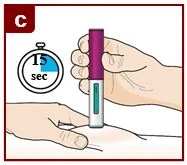 | 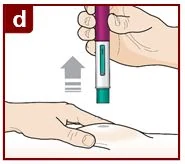 | ||||||
Position the FASENRA PEN at the injection site. Place the needle guard of the FASENRA PEN flat against your skin at a 90 degree angle. Make sure you can see the viewing window. | Press down firmly. You will hear a click. A ‘click’ tells you the injection has started. The green plunger will move down in the viewing window during the injection. | Hold down firmly for 15 seconds (sec). You will hear a second ‘click’. The second click tells you the injection has finished. The green plunger will fill the viewing window. | Lift the FASENRA PEN straight up. The needle guard will slide down and lock into place over the needle. | ||||||
| Step 8 – Check the viewing window | |||||||||
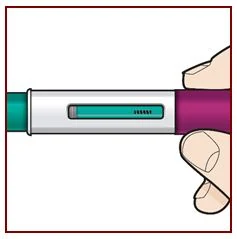 | Check the viewing window to make sure all the liquid has been injected. If the green plunger does not fill the viewing window, you may not have received the full dose. If this happens or if you have any other concerns, call your healthcare provider. | ||||||||
|  |  | After Injection | ||||||
| Step 9 – Check the injection site | |||||||||
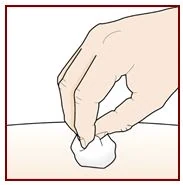 | There may be a small amount of blood or liquid where you injected. This is normal. Gently hold pressure over your skin with a cotton ball or gauze until the bleeding stops. Do not rub the injection site. If needed, cover the injection site with a small bandage. | ||||||||
| Step 10 – Dispose of the used FASENRA PEN safely | |||||||||
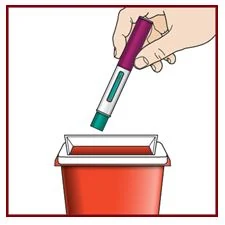 | Put your used FASENRA PEN in an FDA-cleared sharps disposal container right away after use. Do not share or reuse your FASENRA PEN. Do not throw away the FASENRA PEN in your household trash. Throw away the cap and other used supplies in your household trash. | ||||||||
Disposal guidelines If you do not have an FDA-cleared sharps disposal container, you may use a household container that is:
When your sharps disposal container is almost full, you will need to follow your community guidelines for the right way to dispose of your sharps disposal container. There may be state or local laws about how you should throw away used needles and syringes. For more information about safe sharps disposal, and for specific information about sharps disposal in the area that you live in, go to the FDA’s website at: http://www.fda.gov/safesharpsdisposal . Do not dispose of your used sharps disposal container in your household trash unless your community guidelines permit this. Do not recycle your used sharps disposal container. For more information go to www.FasenraPen.com or call 1-800-236-9933. If you still have questions, call your healthcare provider. Manufactured by: AstraZeneca AB, Södertälje, Sweden SE-15185 U.S. License Number 2059 Distributed by: AstraZeneca Pharmaceuticals LP, Wilmington, DE 19850 FASENRA is a registered trademark of the AstraZeneca group of companies. ©AstraZeneca 2026 This Instructions for Use has been approved by the U.S. Food and Drug Administration Revised: May 2026 | |||||||||