


Patient information: uses, side effects, how to take - Liraglutide
What is the most important information I should know about liraglutide injection?
Serious side effects may happen in people who take liraglutide injection, including:
- Possible thyroid tumors, including cancer. Tell your healthcare provider if you get a lump or swelling in your neck, hoarseness, trouble swallowing, or shortness of breath. These may be symptoms of thyroid cancer. In studies with rats and mice, liraglutide injection and medicines that work like liraglutide injection caused thyroid tumors, including thyroid cancer. It is not known if liraglutide injection will cause thyroid tumors or a type of thyroid cancer called medullary thyroid carcinoma (MTC) in people.
- Do not use liraglutide injection if you or any of your family have ever had a type of thyroid cancer called medullary thyroid carcinoma (MTC), or if you have an endocrine system condition called Multiple Endocrine Neoplasia syndrome type 2 (MEN 2).
What is liraglutide injection?
Liraglutide injection is an injectable prescription medicine used for adults with obesity or overweight (excess weight) who also have weight related medical problems, and children aged 12 to 17 years with a body weight above 132 pounds (60 kg) and obesity to help them lose weight and keep the weight off.
- Liraglutide injection should be used with a reduced calorie diet and increased physical activity.
- Liraglutide injection is not recommended for people who also take liraglutide or other medicines called glucagon-like peptide-1 (GLP-1) receptor agonists.
It is not known if liraglutide injection is safe and effective in children under 12 years of age.
- It is not known if liraglutide injection is safe and effective in children aged 12 to 17 years with type 2 diabetes.
Who should not use liraglutide injection?
Do not use liraglutide injection if:
- you or any of your family have ever had a type of thyroid cancer called medullary thyroid carcinoma (MTC) or if you have an endocrine system condition called Multiple Endocrine Neoplasia syndrome type 2 (MEN 2).
- you have had a serious allergic reaction to liraglutide or any of the ingredients in liraglutide injection. See the end of this Medication Guide for a complete list of ingredients in liraglutide injection. See " What are the possible side effects of liraglutide injection? " for symptoms of a serious allergic reaction.
Before taking liraglutide injection, tell your healthcare provider about all of your medical conditions, including if you:
- have or have had problems with your pancreas.
- have severe problems with your stomach, such as slowed emptying of your stomach (gastroparesis) or problems with digesting food.
- are scheduled to have surgery or other procedures that use anesthesia or deep sleepiness (deep sedation).
are breastfeeding or plan to breastfeed. It is not known if liraglutide passes into your breast milk. You and your healthcare provider should decide if you will use liraglutide injection or breastfeed.
Tell your healthcare provider about all the medicines you take including prescription, over-the-counter medicines, vitamins, and herbal supplements. Liraglutide injection may affect the way some medicines work and some other medicines may affect the way liraglutide injection works.
Tell your healthcare provider if you take diabetes medicines, especially insulin and sulfonylurea medicines. Talk with your healthcare provider if you are not sure if you take any of these medicines.
Know the medicines you take. Keep a list of them to show your healthcare provider and pharmacist when you get a new medicine.
How should I use liraglutide injection?
- Read the Instructions for Use that comes with liraglutide injection.
- Use liraglutide injection exactly as your healthcare provider tells you to.
- Your healthcare provider should show you how to use liraglutide injection before you use it for the first time.
- Use liraglutide injection with a reduced-calorie diet and increased physical activity.
- Liraglutide injection is injected under the skin (subcutaneously) in your stomach area (abdomen), upper leg (thigh), or upper arm. Do not inject into a muscle (intramuscularly) or vein (intravenously).
- Liraglutide injection is injected 1 time each day, at any time during the day.
- Start liraglutide injection with 0.6 mg per day in your first week. In your second week, increase your daily dose to 1.2 mg. In the third week, increase your daily dose to 1.8 mg. In the fourth week, increase your daily dose to 2.4 mg and in the fifth week onwards, increase your daily dose to the full dose of 3 mg. After that, do not change your dose unless your healthcare provider tells you to. Children may reduce their dose to 2.4 mg daily if the maximum dose is not tolerated.
- If you miss your daily dose of liraglutide injection, just take your next daily dose as usual on the following day. Do not take an extra dose of liraglutide injection or increase your dose on the following day to make up for your missed dose. If you miss your dose of liraglutide injection for 3 days or more , call your healthcare provider to talk about how to restart your treatment.
Liraglutide injection may be taken with or without food.
- Change (rotate) your injection site with each injection. Do not use the same site for each injection.
- Do not share your liraglutide injection pen with other people, even if the needle has been changed. You may give other people a serious infection or get a serious infection from them.
- If you take too much liraglutide injection, call your healthcare provider or Poison Help line at 1-800-222-1222 or go to the nearest hospital emergency room right away.
- Throw away the used liraglutide injection pen after 30 days.
What are the possible side effects of liraglutide injection?
Liraglutide injection may cause serious side effects, including:
- See "What is the most important information I should know about liraglutide injection?"
- inflammation of the pancreas ( pancreatitis). Stop using liraglutide injection and call your healthcare provider right away if you have severe pain in your stomach area (abdomen) that will not go away, with or without nausea or vomiting. You may feel the pain from your stomach area (abdomen) to your back.
- increased risk of low blood sugar (hypoglycemia) in adults with type 2 diabetes, especially those who also take medicines to treat type 2 diabetes mellitus such as an insulin or a sulfonylureas and in children who are 12 years of age and older without type 2 diabetes mellitus. Low blood sugar in patients with adults with type 2 diabetes and in children without type 2 diabetes mellitus who receive liraglutide injection can be both a serious and common side effect. Talk to your healthcare provider about how to recognize and treat low blood sugar. You should check your blood sugar before you start taking liraglutide injection and while you take liraglutide injection.
Signs and symptoms of low blood sugar may include:
- dizziness or light-headedness
- sweating
- confusion or drowsiness
- headache
- blurred vision
- slurred speech
- shakiness
- fast heartbeat
- anxiety, irritability, or mood changes
- hunger
- weakness
- feeling jittery
Talk to your healthcare provider about how to recognize and treat low blood sugar. You should check your blood sugar before you start taking liraglutide injection and while you take liraglutide injection.
- increased heart rate. Liraglutide injection can increase your heart rate while you are at rest. Your healthcare provider should check your heart rate while you take liraglutide injection. Tell your healthcare provider if you feel your heart racing or pounding in your chest and it lasts for several minutes.
- dehydration leading to kidney problems. Diarrhea, nausea and vomiting may cause a loss of fluids (dehydration) which may cause kidney problems. It is important for you to drink fluids to help reduce your chance of dehydration. Tell your healthcare provider right away if you have nausea, vomiting, or diarrhea that does not go away.
- severe stomach problems . Stomach problems, sometimes severe, have been reported in people who use liraglutide injection. Tell your healthcare provider if you have stomach problems that are severe or will not go away.
- serious allergic reactions. Stop using liraglutide injection, and get medical help right away if you have any symptoms of a serious allergic reaction including:
- swelling of your face, lips, tongue, or throat
- problems breathing or swallowing
- severe rash or itching
- fainting or feeling dizzy
- very rapid heartbeat
- gallbladder problems. Liraglutide injection may cause gallbladder problems including gallstones. Some gallbladder problems need surgery. Call your healthcare provider if you have any of the following symptoms:
- pain in your upper stomach (abdomen)
- fever
- yellowing of your skin or eyes (jaundice)
- clay-colored stools
- food or liquid getting into the lungs during surgery or other procedures that use anesthesia or deep sleepiness (deep sedation). Liraglutide injection may increase the chance of food getting into your lungs during surgery or other procedures. Tell all your healthcare providers that you are taking liraglutide injection before you are scheduled to have surgery or other procedures.
The most common side effects of liraglutide injection in adults include:
- nausea
- diarrhea
- constipation
- vomiting
- injection site reaction
- low blood sugar (hypoglycemia)
- headache
- upset stomach (dyspepsia)
- tiredness (fatigue)
- dizziness
- stomach pain
- change in enzyme (lipase) levels in your blood
Additional common side effects in children are fever and gastroenteritis
Talk to your healthcare provider if you have any side effect that bothers you or that does not go away.
These are not all the possible side effects of liraglutide injection. Call your doctor for medical advice about side effects. You may report side effects to FDA at 1-800-FDA-1088.
Keep your liraglutide injection pen, pen needles, and all medicines out of the reach of children.
General information about the safe and effective use of liraglutide injection.
Medicines are sometimes prescribed for purposes other than those listed in a Medication Guide. Do not use liraglutide injection for a condition for which it was not prescribed. Do not give liraglutide injection to other people, even if they have the same symptoms that you have. It may harm them.
You can ask your pharmacist or healthcare provider for information about liraglutide injection that is written for health professionals.
What are the ingredients in liraglutide injection?
Active ingredient: liraglutide
Inactive ingredients: disodium phosphate dihydrate, propylene glycol, phenol and water for injection. Hydrochloric acid or sodium hydroxide may be added to adjust the pH.
Manufactured by:
Orbicular Pharmaceutical Technologies Private Limited, Hyderabad-500090, India.
Made in India.
Manufacture for:
Cipla USA, Inc.
10 Independence Boulevard, Suite 300
Warren, NJ 07059
VICTOZA® and NovoFine® are registered trademarks of Novo Nordisk A/S.
BD Ultra-Fine™ is registered trademark of Becton, Dickinson and Company.
Brands listed are the trademarks of their respective owners.
This Medication Guide has been approved by the U.S. Food and Drug Administration
Revised: 04/2026
Instructions for Use
- Read these instructions carefully before using your liraglutide injection pen.
- Do not use your pen without proper training from your healthcare provider. Make sure that you know how to give yourself an injection with the pen before you start your treatment.
 If you are blind or have poor eyesight and cannot read the dose counter on the pen, do not use this pen without help. Get help from a person with good eyesight who is trained to use the liraglutide injection pen.
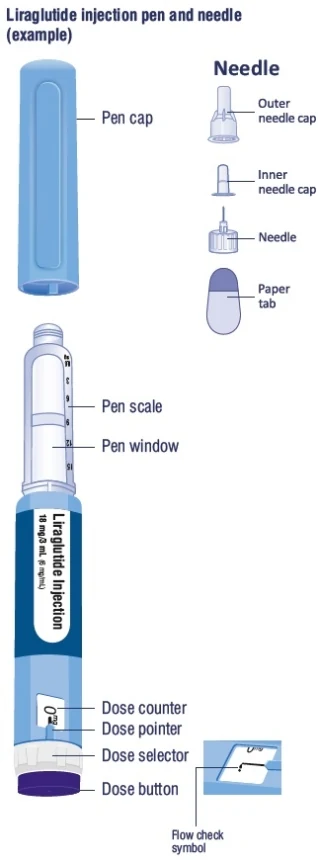
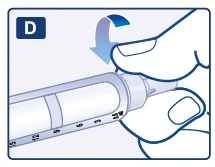
- Start by checking your pen to make sure that it contains liraglutide injection, then look at the pictures below to get to know the different parts of your pen and needle.
Your pen is a prefilled, dial-a-dose, single-patient-use pen. It contains 18 mg of liraglutide, and you can select doses of 0.6 mg, 1.2 mg, 1.8 mg, 2.4 mg and 3 mg. Your pen is made to be used with NovoFine ® or BD Ultra-Fine™ disposable needles up to a length of 8 mm. Pen needles are not included with your liraglutide injection pen.
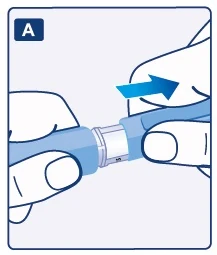
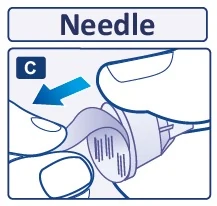
Step 1. Prepare your pen with a new needle
|  |
Look through the pen window. If liraglutide injection looks cloudy, do not use the pen. | 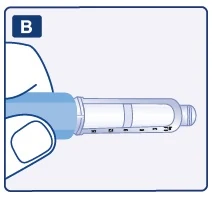 |
|  |
|  |
| 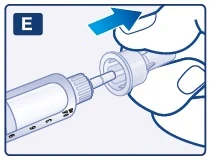 |
A drop of liraglutide injection may appear at the needle tip. This is normal, but you must still check the liraglutide injection flow, if you use a new pen for the first time. | 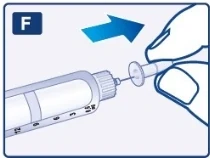 |
Step 2. Check the liraglutide injection flow with each new pen.
If your liraglutide injection pen is already in use, go to Step 3 "Select your dose".
| 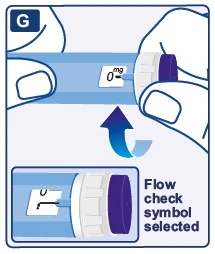 |
Press and push down the dose button until the dose counter shows 0. The black line indicating 0 must line up with the dose pointer. A drop of liraglutide injection will appear at the needle tip.
Do not use the pen if a drop of liraglutide injection still does not appear. Contact Orbicular Pharmaceutical Technologies Private Limited at 1-888-370-4186.
If no drop appears, you will not inject any liraglutide injection, even though the dose counter may move. This may mean that there is a blocked or damaged needle.
Only check the liraglutide injection flow before your first injection with each new pen. | 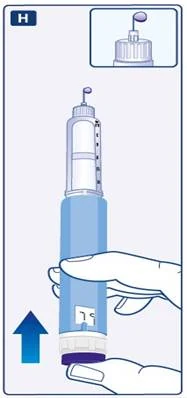 |
Step 3. Select your dose
Make sure you know the dose of liraglutide injection you should use. If you select the wrong dose, you can turn the dose selector forward or backwards to the correct dose.
You will hear a "click" every time you turn the dose selector. Do not set the dose by counting the number of clicks you hear. Do not use the pen scale to set the dose. It does not show exactly how much liraglutide injection is left in your pen. Only doses of 0.6 mg, 1.2 mg, 1.8 mg, 2.4 mg or 3 mg can be selected with the dose selector. The black line indicating the selected dose must line up exactly with the dose pointer to make sure that you get a correct dose.
You can select up to 3 mg each dose. When your pen contains less than 3 mg the dose counter stops before 3 mg is shown. The dose selector clicks differently when turned forward, backwards or past the number of mg left. Do not count the pen clicks. | 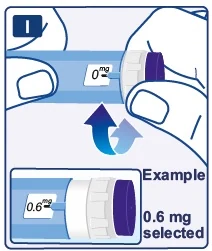 |
| 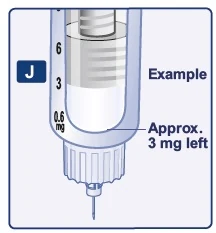 |
Turn the dose selector until the dose counter stops. If it shows 3, at least 3 mg are left in your pen. If the dose counter stops before 3 mg, there is not enough liraglutide injection left for a full dose of 3 mg.
Only if trained or told by your healthcare provider, you may split your dose between your current pen and a new pen. Use a calculator to plan the doses as instructed by your healthcare provider.
If you are not sure how to split your dose using 2 pens, then select and inject the dose you need with a new pen. | 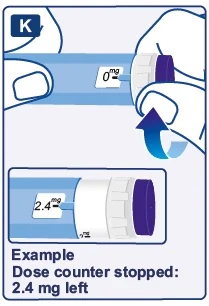 |
Step 4. Inject your dose
| 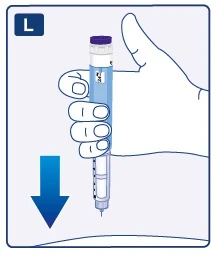 |
| 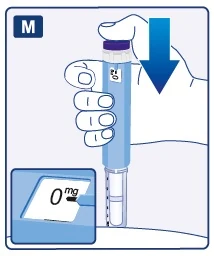 |
| 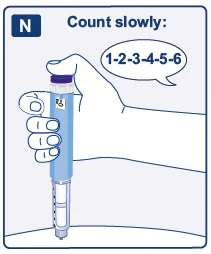 |
If blood appears at the injection site, press lightly. Do not rub the area.
How to identify a blocked or damaged needle?
How to handle a blocked needle? Change the needle as described in Step 5, and repeat all steps starting with Step 1: "Prepare your pen with a new needle". Make sure you select the full dose you need. Never touch the dose counter when you inject. This can stop the injection.
| 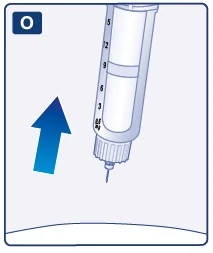 |
Step 5. After your injection
|  |
|  |
| 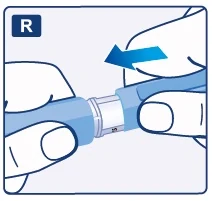 |
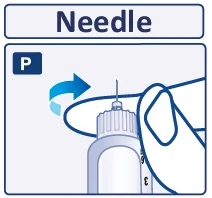
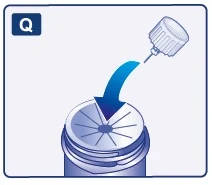
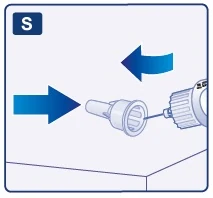
Always remove the needle from your pen. This prevents contamination, infection, leakage of liraglutide injection, and blocked needles leading to the wrong dose. If the needle is blocked, you will not inject any liraglutide injection.
|  |
| |
Caring for your pen
How should I store my liraglutide injection pen?
| |
Manufactured by: Orbicular Pharmaceutical Technologies Private Limited, Hyderabad-500090, India. Made in India. Manufactured for: Cipla USA, Inc. 10 Independence Boulevard, Suite 300 Warren, NJ 07059 | |
| This Instructions for Use has been approved by the U.S. Food and Drug Administration. | |
| Revised: 05/2025 | |
 .
 Always make sure that a drop appears at the needle tip before you use a new pen for the first time. This makes sure that liraglutide injection flows.
 A small drop may remain at the needle tip, but it will not be injected.
 Always use the dose counter and the dose pointer to see how many mg you select.
 The dose selector changes the dose. Only the dose counter and dose pointer will show how many mg you select for each dose.
 How much liraglutide injection is left?
 If you need more liraglutide injection than what is left in your pen
 Be very careful to calculate correctly.
 Always watch the dose counter to know how many mg you inject. Hold the dose button down until the dose counter shows 0.
 You may see a drop of liraglutide injection at the needle tip after injecting. This is normal and does not affect your dose.
 If you do not have a sharps container, follow a 1-handed needle recapping method. Carefully slip the needle into the outer needle cap. Dispose of the needle in a sharps container as soon as possible.
 Never try to put the inner needle cap back on the needle. You may stick yourself with the needle.
 Always dispose of the needle after each injection .
 Important