


Patient information: uses, side effects, how to take - Zepbound
What is the most important information I should know about ZEPBOUND?
ZEPBOUND may cause serious side effects, including:
- Possible thyroid tumors, including cancer. Tell your healthcare provider if you get a lump or swelling in your neck, hoarseness, trouble swallowing, or shortness of breath. These may be symptoms of thyroid cancer. In studies with rats, ZEPBOUND and medicines that work like ZEPBOUND caused thyroid tumors, including thyroid cancer. It is not known if ZEPBOUND will cause thyroid tumors, or a type of thyroid cancer called medullary thyroid carcinoma (MTC) in people.
- Do not use ZEPBOUND if you or any of your family have ever had a type of thyroid cancer called MTC, or if you have an endocrine system condition called Multiple Endocrine Neoplasia syndrome type 2 (MEN 2).
What is ZEPBOUND?
ZEPBOUND is an injectable prescription medicine used with a reduced-calorie diet and increased physical activity to help adults with:
- obesity, or some adults with overweight who also have weight-related medical problems, to lose excess body weight and keep the weight off.
- moderate to severe obstructive sleep apnea (OSA) and obesity to improve their OSA.
- ZEPBOUND contains tirzepatide and should not be used with other tirzepatide-containing products or any GLP-1 receptor agonist medicines.
- It is not known if ZEPBOUND is safe and effective for use in children.
Do not use ZEPBOUND if:
- you or any of your family have ever had a type of thyroid cancer called MTC or if you have an endocrine system condition called MEN 2.
- you have had a serious allergic reaction to tirzepatide or any of the ingredients in ZEPBOUND. See the end of this Medication Guide for a complete list of ingredients in ZEPBOUND. See "What are the possible side effects of ZEPBOUND?" for symptoms of a serious allergic reaction.
Before using ZEPBOUND, tell your healthcare provider about all of your medical conditions, including if you:
- have or have had problems with your pancreas.
- have severe problems with your stomach, such as slowed emptying of your stomach (gastroparesis) or problems with digesting food.
- have a history of diabetic retinopathy.
- are scheduled to have surgery or other procedures that use anesthesia or deep sleepiness (deep sedation).
are pregnant or plan to become pregnant. ZEPBOUND may harm your unborn baby. Tell your healthcare provider if you become pregnant while using ZEPBOUND.
- Pregnancy Exposure Registry: There is a pregnancy exposure registry for women who have taken ZEPBOUND during pregnancy. The purpose of this registry is to collect information about the health of you and your baby. Talk to your healthcare provider about how you can take part in this registry, or you may call 1-844-524-0039 or email at MILEregistry@thermofisher.com or visit https://pregnancyregistry.lilly.com/zepbound.
- Birth control pills by mouth may not work as well while using ZEPBOUND. If you take birth control pills by mouth, your healthcare provider may recommend another type of birth control for 4 weeks after you start ZEPBOUND and for 4 weeks after each increase in your dose of ZEPBOUND. Talk to your healthcare provider about birth control methods that may be right for you while using ZEPBOUND.
- are breastfeeding or plan to breastfeed. ZEPBOUND may pass into your breast milk. Talk to your healthcare provider about the best way to feed your baby while using ZEPBOUND.
Tell your healthcare provider about all the medicines you take , including prescription and over-the-counter medicines, vitamins, and herbal supplements. ZEPBOUND may affect the way some medicines work, and some medicines may affect the way ZEPBOUND works.
Before using ZEPBOUND, talk to your healthcare provider about low blood sugar and how to manage it. Tell your healthcare provider if you are taking medicines to treat diabetes including an insulin or sulfonylurea.
Know the medicines you take. Keep a list of them to show your healthcare provider and pharmacist when you get a new medicine.
How should I use ZEPBOUND?
- Read the Instructions for Use that comes with ZEPBOUND.
- Use ZEPBOUND exactly as your healthcare provider tells you to.
- Your healthcare provider should show you how to prepare to inject your dose of ZEPBOUND before injecting the first time.
- A caregiver may give you ZEPBOUND injections or you may self-inject if a healthcare provider determines that it is appropriate.
- Self-injection is not recommended for people who are visually impaired.
- Use ZEPBOUND with a reduced-calorie diet and increased physical activity.
- If using ZEPBOUND vials, always use a new syringe and needle for each injection.
- Inject ZEPBOUND under the skin (subcutaneously) of your stomach (abdomen), thigh, or another person should inject in the back of the upper arm. Do not inject ZEPBOUND into a muscle (intramuscularly) or vein (intravenously).
- Use ZEPBOUND 1 time each week, at any time of the day.
- You may change the day of the week you use ZEPBOUND as long as the time between the 2 doses is at least 3 days (72 hours).
- If you miss a dose of ZEPBOUND, take the missed dose as soon as possible within 4 days (96 hours) after the missed dose. If more than 4 days have passed, skip the missed dose and take your next dose on the regularly scheduled day. Do not take 2 doses of ZEPBOUND within 3 days (72 hours) of each other.
ZEPBOUND may be taken with or without food.
- Change (rotate) your injection site with each weekly injection. You may use the same area of your body but be sure to choose a different injection site in that area. Do not use the same site for each injection.
- If you take too much ZEPBOUND, call your healthcare provider or Poison Help line at 1-800-222-1222 or go to the nearest hospital emergency room right away.
What are the possible side effects of ZEPBOUND?
ZEPBOUND may cause serious side effects, including:
- See “What is the most important information I should know about ZEPBOUND?”
- severe stomach problems. Stomach problems, sometimes severe, have been reported in people who use ZEPBOUND. Tell your healthcare provider if you have stomach problems that are severe or will not go away.
- dehydration leading to kidney problems. Diarrhea, nausea, and vomiting may cause a loss of fluids (dehydration) which may cause kidney problems. It is important for you to drink fluids to help reduce your chance of dehydration. Tell your healthcare provider right away if you have nausea, vomiting, or diarrhea that does not go away.
gallbladder problems. Gallbladder problems have happened in some people who use ZEPBOUND. Tell your healthcare provider right away if you get symptoms of gallbladder problems which may include:
- pain in your upper stomach (abdomen)
- fever
- yellowing of skin or eyes (jaundice)
- clay-colored stools
- inflammation of your pancreas (pancreatitis). Stop using ZEPBOUND and call your healthcare provider right away if you have severe pain in your stomach area (abdomen) that will not go away, with or without nausea or vomiting. Sometimes you may feel the pain from your abdomen to your back.
serious allergic reactions. Stop using ZEPBOUND and get medical help right away if you have any symptoms of a serious allergic reaction including:
- swelling of your face, lips, tongue or throat
- problems breathing or swallowing
- severe rash or itching
- fainting or feeling dizzy
- very rapid heartbeat
low blood sugar (hypoglycemia). Your risk for getting low blood sugar may be higher if you use ZEPBOUND with medicines that can cause low blood sugar, such as an insulin or sulfonylurea.
Signs and symptoms of low blood sugar may include:
- dizziness or light-headedness
- sweating
- confusion or drowsiness
- headache
- blurred vision
- slurred speech
- shakiness
- fast heartbeat
- anxiety, irritability, or mood changes
- hunger
- weakness
- feeling jittery
- changes in vision in patients with type 2 diabetes. Tell your healthcare provider if you have changes in vision during treatment with ZEPBOUND.
- food or liquid getting into the lungs during surgery or other procedures that use anesthesia or deep sleepiness (deep sedation). ZEPBOUND may increase the chance of food getting into your lungs during surgery or other procedures. Tell all your healthcare providers that you are taking ZEPBOUND before you are scheduled to have surgery or other procedures.
The most common side effects of ZEPBOUND include:
- nausea
- diarrhea
- vomiting
- constipation
- stomach (abdominal) pain
- indigestion
- injection site reactions
- feeling tired
- allergic reactions
- belching
- hair loss
- heartburn
Talk to your healthcare provider if you have any side effect that bothers you or that does not go away. These are not all the possible side effects of ZEPBOUND. Call your doctor for medical advice about side effects. You may report side effects to FDA at 1-800-FDA-1088.
How should I store ZEPBOUND?
- Store ZEPBOUND in the original carton to protect it from light.
- Do not freeze ZEPBOUND. Do not use ZEPBOUND if frozen.
- Store single-dose pen and single-dose vial in the refrigerator between 36°F to 46°F (2°C to 8°C). If needed, each single-dose pen or single-dose vial can be stored at room temperature up to 86°F (30°C) for up to a total of 21 days. Throw away single-dose pen or single-dose vial after a total of 21 days at room temperature.
- Store multi-dose vial or single-patient-use KwikPen in the refrigerator between 36°F to 46°F (2°C to 8°C) or at room temperature [up to 86°F (30°C)]. Throw away the multi-dose vial or single-patient-use KwikPen after a total of 30 days at room temperature, 30 days after first use, or after taking 4 weekly doses, even if it still has medicine in it.
Keep ZEPBOUND and all medicines out of the reach of children.
General information about the safe and effective use of ZEPBOUND.
Medicines are sometimes prescribed for purposes other than those listed in a Medication Guide. Do not use ZEPBOUND for a condition for which it was not prescribed. Do not give ZEPBOUND to other people, even if they have the same condition you have. It may harm them. You can ask your pharmacist or healthcare provider for information about ZEPBOUND that is written for health professionals.
What are the ingredients in ZEPBOUND?
Active ingredient: tirzepatide
Inactive ingredients: sodium chloride, sodium phosphate dibasic heptahydrate, and water for injection. Benzyl alcohol, glycerin, and phenol are also inactive ingredients in the multi-dose vial and single-patient-use KwikPen. Hydrochloric acid solution and/or sodium hydroxide solution may have been added to adjust the pH.
ZEPBOUND® and KwikPen® are registered trademarks of Eli Lilly and Company.
Marketed by: Lilly USA, LLC, Indianapolis, IN 46285, USA
Copyright © 2023, 2026, Eli Lilly and Company. All rights reserved.
For more information, go to www.zepbound.com or call 1-800-545-5979.
ZEP-0010-MG-20260828
SINGLE-DOSE PEN INSTRUCTIONS FOR USE
INSTRUCTIONS FOR USE ZEPBOUND® (ZEHP-bownd) (tirzepatide) injection, for subcutaneous use 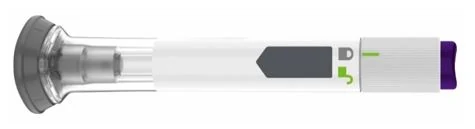 2.5 mg/0.5 mL single-dose pen 5 mg/0.5 mL single-dose pen 7.5 mg/0.5 mL single-dose pen 10 mg/0.5 mL single-dose pen 12.5 mg/0.5 mL single-dose pen 15 mg/0.5 mL single-dose pen use 1 time each week |
Important information you need to know before injecting ZEPBOUND
Read this Instructions for Use and the Medication Guide before using your ZEPBOUND pen and each time you get a refill. There may be new information. This information does not take the place of talking to your healthcare provider about your medical condition or treatment.
Talk to your healthcare provider about how to inject ZEPBOUND the right way.
- ZEPBOUND is a single-dose prefilled pen.
- ZEPBOUND is used 1 time each week.
- Inject under the skin (subcutaneously) only.
- You or another person can inject into your stomach (abdomen) or thigh.
- Another person can inject into the back of your upper arm.
Guide to parts
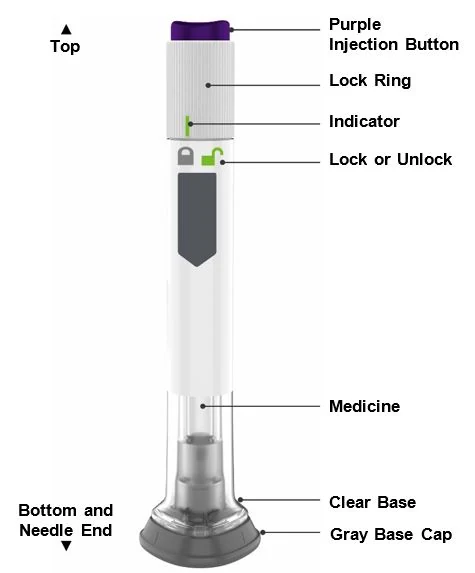
Preparing to inject ZEPBOUND
Remove the pen from the refrigerator. Leave the gray base cap on until you are ready to inject. | ||
Check the pen label to make sure you have the right medicine and dose, and that it has not expired. Inspect the pen to make sure that it is not damaged. | 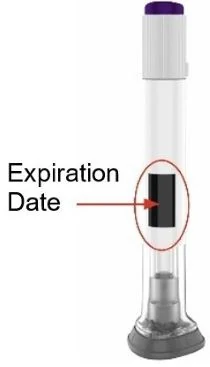 | |
| Make sure the medicine: | ||
|
| |
| Wash your hands. | ||
Step 1 | Choose your injection site |
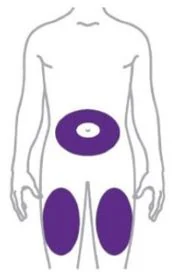 | Your healthcare provider can help you choose the injection site that is best for you. You or another person can inject the medicine in your stomach (abdomen) or thigh. |
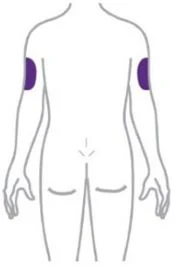 | Another person should give you the injection in the back of your upper arm. Change (rotate) your injection site each week. You may use the same area of your body but be sure to choose a different injection site in that area. |
Step 2 | Pull off the gray base cap | |
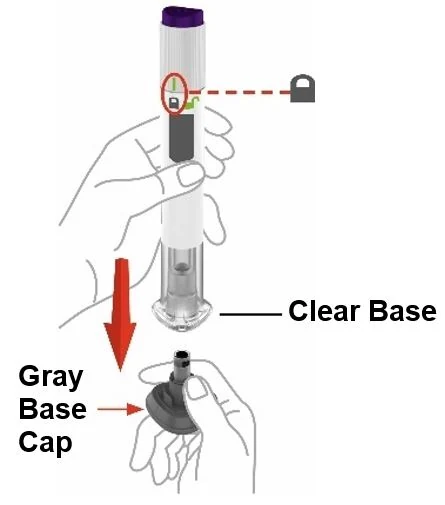 | Make sure the pen is locked. Do not unlock the pen until you place the clear base on your skin and are ready to inject. | |
Pull the gray base cap straight off and throw it away in your household trash. Do not put the gray base cap back on – this could damage the needle. Do not touch the needle. | ||
Step 3 | Place clear base on skin, then unlock | |
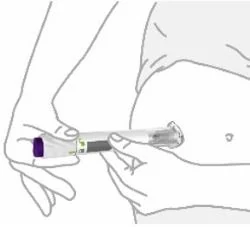 | Place the clear base flat against your skin at the injection site. | |
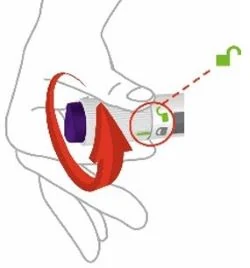 | Unlock by turning the lock ring. | |
Step 4 | Press and hold up to 10 seconds | |
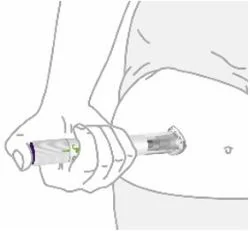 | Press and hold the purple injection button for up to 10 seconds. Listen for:
| |
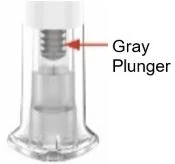 | You will know your injection is complete when the gray plunger is visible. | |
| After your injection, place the used pen in a sharps container. |
| See Disposing of your used pen. |
Disposing of your used pen
- Put your used pen in an FDA-cleared sharps disposal container right away after use. Do not throw away (dispose of) pens in your household trash.
If you do not have an FDA-cleared sharps disposal container, you may use a household container that is:
- made of a heavy-duty plastic,
- can be closed with a tight-fitting, puncture-resistant lid, without sharps being able to come out,
- upright and stable during use,
- leak-resistant, and
- properly labeled to warn of hazardous waste inside the container.
- When your sharps disposal container is almost full, you will need to follow your community guidelines for the right way to dispose of your sharps disposal container. There may be state or local laws about how you should throw away used needles and syringes. For more information about safe sharps disposal, and for specific information about sharps disposal in the state that you live in, go to the FDA's website at: http://www.fda.gov/safesharpsdisposal.
- Do not recycle your used sharps disposal container.
Storage and handling
- Store your pen in the refrigerator between 36°F to 46°F (2°C to 8°C).
- You may store your pen at room temperature up to 86°F (30°C) for up to a total of 21 days.
- Discard the pen after a total of 21 days at room temperature.
- Do not freeze your pen. If the pen has been frozen, throw the pen away and use a new pen.
- Store your pen in the original carton to protect your pen from light.
- The pen has glass parts. Handle it carefully. If you drop the pen on a hard surface, do not use it. Use a new pen for your injection.
- Keep your ZEPBOUND pen and all medicines out of the reach of children.
Commonly asked questions
What if I see air bubbles in my pen?
Air bubbles are normal.
What if my pen is not at room temperature?
It is not necessary to warm the pen to room temperature.
What if I unlock the pen and press the purple injection button before pulling off the gray base cap?
Do not remove the gray base cap. Throw away the pen and get a new pen.
What if there is a drop of liquid on the tip of the needle when I remove the gray base cap?
A drop of liquid on the tip of the needle is normal. Do not touch the needle.
Do I need to hold the injection button down until the injection is complete?
This is not necessary, but it may help you keep the pen steady against your skin.
I heard more than 2 clicks during my injection—2 loud clicks and 1 soft one. Did I get my complete injection?
Some people may hear a soft click right before the second loud click. That is the normal operation of the pen. Do not remove the pen from your skin until you hear the second loud click.
I am not sure if my pen worked the right way.
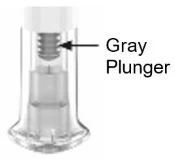 | Check to see if you have received your dose. Your dose was delivered the right way if the gray plunger is visible. Also, see Step 4 of the instructions. If you do not see the gray plunger, contact Lilly at 1-800-Lilly-Rx (1-800-545-5979) for further instructions. Until then, store your pen safely to avoid an accidental needle stick. |
What if there is a drop of liquid or blood on my skin after my injection?
This is normal. Press a cotton ball or gauze over the injection site. Do not rub the injection site.
Other information
- If you have vision problems, do not use your pen without help from a person trained to use the ZEPBOUND pen.
Where to learn more
- If you have questions or problems with your ZEPBOUND pen, contact Lilly at 1-800-Lilly-Rx (1-800-545-5979) or call your healthcare provider.
- For more information about the ZEPBOUND pen, visit our website at www.zepbound.com.
 | Scan this code to launch www.zepbound.com |
Marketed by:
Lilly USA, LLC
Indianapolis, IN 46285, USA
ZEPBOUND is a registered trademark of Eli Lilly and Company.
Copyright © 2023, 2026, Eli Lilly and Company. All rights reserved.
This Instructions for Use has been approved by the U.S. Food and Drug Administration. Revised: April 2026
ZEP-0003-PEN-IFU-20260422
SINGLE-DOSE VIAL INSTRUCTIONS FOR USE
INSTRUCTIONS FOR USE ZEPBOUND® [ZEHP-bownd] (tirzepatide) injection, for subcutaneous use 2.5 mg/0.5 mL single-dose vial 5 mg/0.5 mL single-dose vial 7.5 mg/0.5 mL single-dose vial 10 mg/0.5 mL single-dose vial 12.5 mg/0.5 mL single-dose vial 15 mg/0.5 mL single-dose vial |
Important information you need to know before injecting ZEPBOUND
Read this Instructions for Use before you start taking ZEPBOUND and each time you get a new vial. There may be new information. This information does not take the place of talking to your healthcare provider about your medical condition or your treatment.
Do not share your needles or syringes with other people. You may give other people a serious infection or get a serious infection from them.
Talk to your healthcare provider about how to inject ZEPBOUND the right way.
- ZEPBOUND is a single-dose vial.
- ZEPBOUND is used 1 time each week.
- Inject under the skin (subcutaneously) only.
- You or another person may inject into your stomach (abdomen) or thigh.
- Another person can inject into the back of your upper arm.
Gather supplies needed to give your injection
- 1 single-dose ZEPBOUND vial
- 1 syringe and 1 needle, supplied separately (for example, use a 1 mL syringe and needle as recommended by your healthcare provider)
- 1 alcohol swab
- gauze
- 1 sharps container for throwing away used needles and syringes. See “Disposing of used needles and syringes” at the end of these instructions.
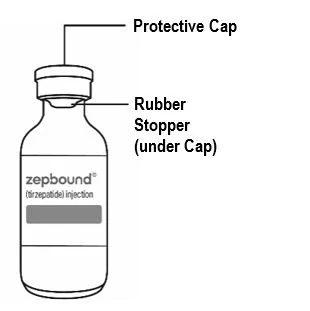
Guide to parts Vial | Needle and Syringe (not included) |
 | 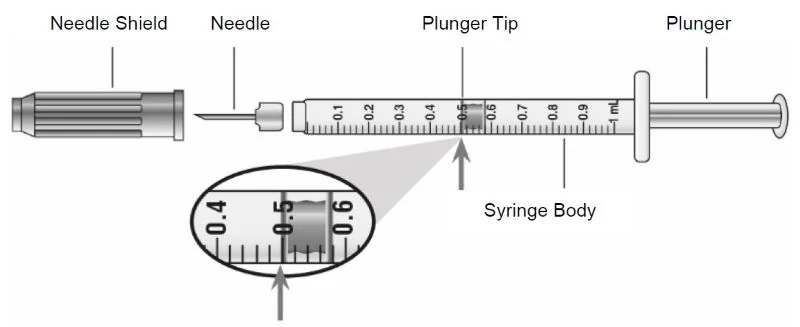 |
Note: The needle and syringe are not included. The needle and syringe recommended by your healthcare provider may look different than the needle and syringe in this Instructions for Use.
Preparing to inject ZEPBOUND
Remove the vial from the refrigerator.
Check the vial label to make sure you have the right medicine and dose, and that it has not expired.
Make sure the medicine:
|
|
Always use a new syringe and needle for each injection to prevent infections and blocked needles. Do not reuse or share your syringes or needles with other people. You may give other people a serious infection or get a serious infection from them.
Wash your hands with soap and water.
Step 1: Pull off the plastic protective cap. Do not remove the rubber stopper. | 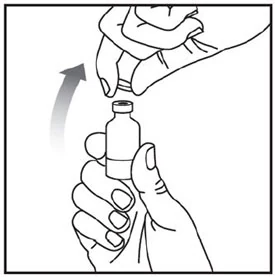 |
Step 2: Wipe the rubber stopper with an alcohol swab. | 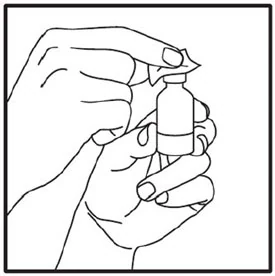 |
Step 3: Remove the outer wrapping from the syringe. | 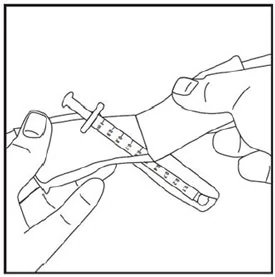 |
Step 4: Remove the outer wrapping from the needle. The syringe that your healthcare provider recommended may have a pre-attached needle. If the needle is attached, skip to step 6. | 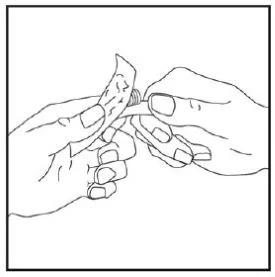 |
Step 5: Place the needle on top of the syringe and turn until it is tight and firmly attached. | 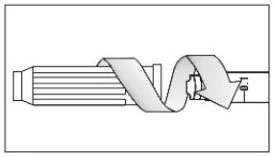 |
Step 6: Remove the needle shield by pulling straight off. | 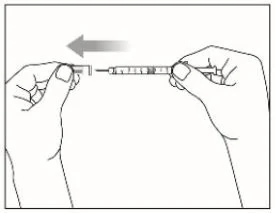 |
Step 7: Hold the syringe in one hand with the needle pointing up. With the other hand pull down on the plunger until the plunger tip reaches the line on the syringe indicating that 0.5 mL of air has been drawn into the syringe. | 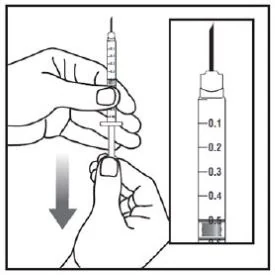 |
Step 8: Push the needle through the rubber stopper of the vial. | 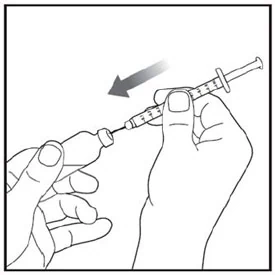 |
Step 9: Push the plunger all the way in. This puts air into the vial and makes it easier to pull the solution from the vial. | 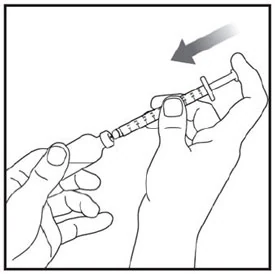 |
Step 10: Turn the vial and syringe upside down. Make sure that the tip of the needle is in the liquid and slowly pull the plunger down until the plunger tip is past the 0.5 mL line. If there are air bubbles, tap the syringe gently a few times to let any air bubbles rise to the top. | 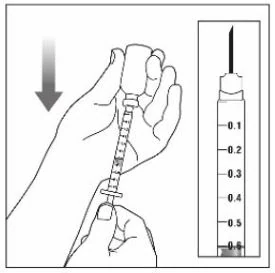 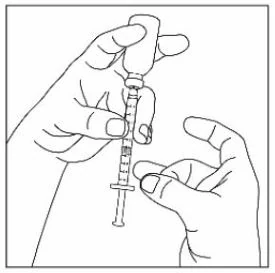 |
Step 11: Slowly push the plunger up until the plunger tip reaches the 0.5 mL line. | 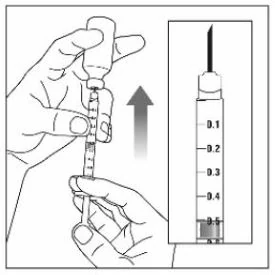 |
Step 12: Pull the syringe out of the rubber stopper of the vial. | 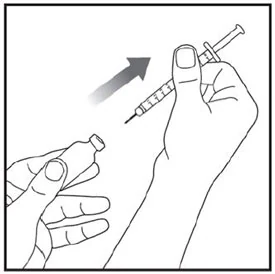 |
Injecting ZEPBOUND
- Inject exactly as your healthcare provider has shown you. Your healthcare provider should tell you if you should pinch the skin before injecting.
- Change (rotate) your injection site within the area you choose for each dose to reduce your risk of getting lipodystrophy (pits in skin or thickened skin) and localized cutaneous amyloidosis (skin with lumps) at the injection sites.
- Do not inject where the skin has pits, is thickened, or has lumps.
- Do not inject where the skin is tender, bruised, scaly or hard, or into scars or damaged skin.
- Do not mix ZEPBOUND with any other medicine.
- Do not inject ZEPBOUND in the same injection site used for other medicines.
Step 13: Choose your injection site. You can inject ZEPBOUND under the skin (subcutaneously) of your stomach area (abdomen) or thighs. Someone else can inject in your stomach area, thighs, or the back of the upper arms. | 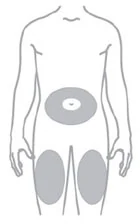 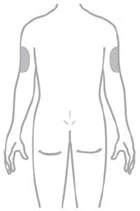 |
Step 14: Insert the needle into your skin. | 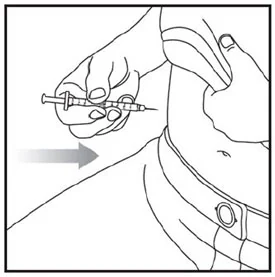 |
Step 15: Push down on the plunger to inject your dose. The needle should stay in your skin for at least 5 seconds to make sure you have injected all of your dose. | 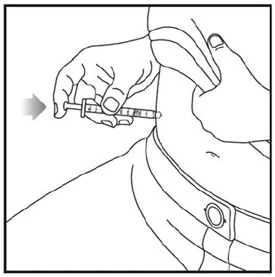 |
Step 16: Pull the needle out of your skin.
| 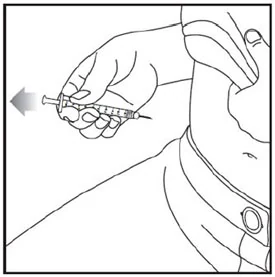 |
Disposing of used needles and syringes
- Put your used needle and syringe in an FDA-cleared sharps disposal container right away after use. Do not throw away (dispose of) loose needles and syringes in your household trash.
If you do not have an FDA-cleared sharps disposal container, you may use a household container that is:
- made of a heavy-duty plastic,
- can be closed with a tight-fitting, puncture-resistant lid, without sharps being able to come out,
- upright and stable during use,
- leak-resistant, and
- properly labeled to warn of hazardous waste inside the container.
When your sharps disposal container is almost full, you will need to follow your community guidelines for the right way to dispose of your sharps disposal container. There may be state or local laws about how you should throw away used needles and syringes. For more information about safe sharps disposal, and for specific information about sharps disposal in the state that you live in, go to the FDA’s website at:
http://www.fda.gov/safesharpsdisposal.
- Do not dispose of your used sharps disposal container in your household trash unless your community guidelines permit this. Do not recycle your used sharps disposal container.
Storing ZEPBOUND
- Store all unopened vials in the refrigerator at 36°F to 46°F (2°C to 8°C).
- You may store the unopened vial at room temperature up to 86°F (30°C) for up to a total of 21 days.
- Discard the vial after a total of 21 days at room temperature.
- Do not freeze. Do not use if ZEPBOUND has been frozen.
- Store the vial in the original carton to protect from light.
- Throw away all opened vials after use, even if there is medicine left in the vial.
Keep ZEPBOUND vials, syringes, needles, and all medicines out of the reach of children.
If you have any questions or problems with your ZEPBOUND, contact Lilly at 1-800-Lilly-Rx (1-800-545-5979) or call your healthcare provider for help.
Marketed by:
Lilly USA, LLC
Indianapolis, IN 46285, USA
ZEPBOUND is a registered trademark of Eli Lilly and Company.
Copyright © 2024, 2026, Eli Lilly and Company. All rights reserved.
ZEP-0002-VL-IFU-20260422
This Instructions for Use has been approved by the U.S. Food and Drug Administration.
Revised: April 2026
MULTIPLE-DOSE VIAL INSTRUCTIONS FOR USE
INSTRUCTIONS FOR USE
ZEPBOUND® [ZEHP-bownd]
(tirzepatide)
injection, for subcutaneous use
Multi-dose vial
Each vial contains 4 doses, one dose taken weekly.
Important information you need to know before injecting ZEPBOUND
Read this Instructions for Use before you start taking ZEPBOUND and each time you get a new vial. There may be new information. This information does not take the place of talking to your healthcare provider about your medical condition or your treatment.
Do not share your needles or syringes with other people.
Talk to your healthcare provider about how to inject ZEPBOUND the right way.
- ZEPBOUND is a multi-dose vial. The vial contains 4 doses, one dose taken weekly.
- Inject 0.6 mL in a single weekly injection, under the skin (subcutaneously).
- You or another person may inject into your stomach (abdomen) or thigh.
- Another person can inject into the back of your upper arm.
Gather supplies needed to give your injection
- 1 multi-dose ZEPBOUND vial
- 1 syringe and 1 needle, supplied separately (for example, use a 1 mL syringe and needle as recommended by your healthcare provider)
- 1 alcohol swab
- gauze
- 1 sharps container for throwing away used needles and syringes. See “Disposing of used needles and syringes” at the end of these instructions.
| Guide to parts | |
| Vial | Needle and Syringe (not included) |
| 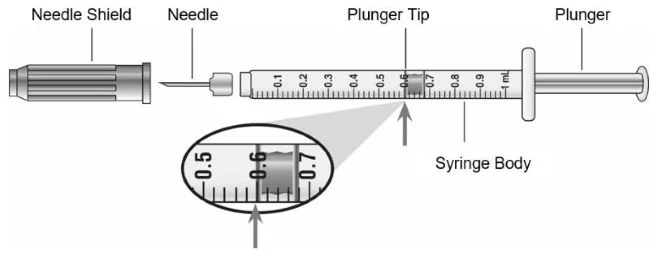 |
Note: The needle and syringe are not included. The needle and syringe recommended by your healthcare provider may look different than the needle and syringe in this Instructions for Use.
Preparing to inject ZEPBOUND
Check the vial label to make sure you have the right medicine and dose, and that it has not expired.
Make sure the medicine:
|
|
Always use a new syringe and needle for each injection to prevent infections and blocked needles. Do not reuse or share your syringes or needles with other people. You may give other people a serious infection or get a serious infection from them.
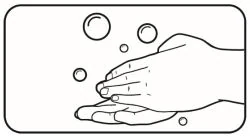
Wash your hands with soap and water.
Step 1: If you are using a new vial, pull off the plastic protective cap. Do not remove the rubber stopper. | |
Step 2: Wipe the rubber stopper with an alcohol swab. | |
Step 3: Remove the outer wrapping from the syringe. | |
Step 4: Remove the outer wrapping from the needle. The syringe that your healthcare provider recommended may have a pre-attached needle. If the needle is attached, skip to step 6. | |
Step 5: Place the needle on top of the syringe and turn until it is tight and firmly attached. | |
Step 6: Remove the needle shield by pulling straight off. | |
Step 7: Hold the syringe in one hand with the needle pointing up. With the other hand pull down on the plunger until the plunger tip reaches the line on the syringe indicating that 0.6 mL of air has been drawn into the syringe. | 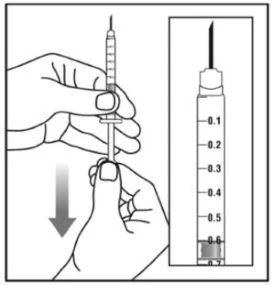 |
Step 8: Push the needle through the rubber stopper of the vial. | |
Step 9: Push the plunger all the way in. This puts air into the vial and makes it easier to pull the solution from the vial. | |
Step 10: Turn the vial and syringe upside down. Make sure that the tip of the needle is in the liquid and slowly pull the plunger down until the plunger tip is past the 0.6 mL line. If there are air bubbles, tap the syringe gently a few times to let any air bubbles rise to the top. | |
Step 11: Slowly push the plunger up until the plunger tip reaches the 0.6 mL line. | 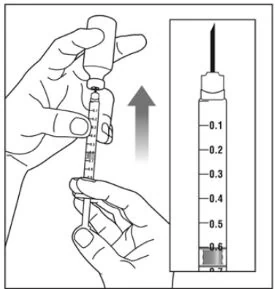 |
Step 12: Pull the syringe out of the rubber stopper of the vial. | |
Injecting ZEPBOUND
- Inject exactly as your healthcare provider has shown you. Your healthcare provider should tell you if you should pinch the skin before injecting.
- Change (rotate) your injection site within the area you choose for each dose to reduce your risk of getting lipodystrophy (pits in skin or thickened skin) and localized cutaneous amyloidosis (skin with lumps) at the injection sites.
- Do not inject where the skin has pits, is thickened, or has lumps.
- Do not inject where the skin is tender, bruised, scaly or hard, or into scars or damaged skin.
- Do not mix ZEPBOUND with any other medicine.
- Do not inject ZEPBOUND in the same injection site used for other medicines.
Step 13: Choose your injection site. You can inject ZEPBOUND under the skin (subcutaneously) of your stomach area (abdomen) or thighs. Someone else can inject in your stomach area, thighs, or the back of the upper arms. | |
Step 14: Insert the needle into your skin. | |
Step 15: Push down on the plunger to inject your dose. The needle should stay in your skin for at least 5 seconds to make sure you have injected all of your dose. | |
Step 16: Pull the needle out of your skin.
| |
Disposing of used needles and syringes
- Put your used needle and syringe in an FDA-cleared sharps disposal container right away after use. Do not throw away (dispose of) loose needles and syringes in your household trash.
If you do not have an FDA-cleared sharps disposal container, you may use a household container that is:
- made of a heavy-duty plastic,
- can be closed with a tight-fitting, puncture-resistant lid, without sharps being able to come out,
- upright and stable during use,
- leak-resistant, and
- properly labeled to warn of hazardous waste inside the container.
When your sharps disposal container is almost full, you will need to follow your community guidelines for the right way to dispose of your sharps disposal container. There may be state or local laws about how you should throw away used needles and syringes. For more information about safe sharps disposal, and for specific information about sharps disposal in the state that you live in, go to the FDA's website at:
http://www.fda.gov/safesharpsdisposal.
- Do not dispose of your used sharps disposal container in your household trash unless your community guidelines permit this. Do not recycle your used sharps disposal container.
Storing ZEPBOUND
- Do not freeze. Do not use if ZEPBOUND has been frozen.
- Store ZEPBOUND in original carton. Keep away from light.
Unopened vial:
- Store unopened vial in the refrigerator at 36°F to 46°F (2°C to 8°C). It can be used until the expiration date on the label if kept in the refrigerator.
- If stored at room temperature [up to 86°F (30°C)], throw away unopened vial after 30 days.
After vial has been opened:
- Store opened (in-use) vial in the original carton in the refrigerator at 36°F to 46°F (2°C to 8°C) or at room temperature [up to 86°F (30°C)]. Throw away opened vial after a total of 30 days at room temperature, 30 days after first use, or after taking 4 weekly doses, even if there is medicine left in it.
Keep ZEPBOUND vials, syringes, needles, and all medicines out of the reach of children.
If you have any questions or problems with your ZEPBOUND, contact Lilly at 1-800-Lilly-Rx (1-800-545-5979) or call your healthcare provider for help.
Marketed by:
Lilly USA, LLC
Indianapolis, IN 46285, USA
ZEPBOUND is a registered trademark of Eli Lilly and Company.
Copyright © 2026, Eli Lilly and Company. All rights reserved.
ZEP-0001-MDV-IFU-20260107
This Instructions for Use has been approved by the U.S. Food and Drug Administration .
Revised: January 2026
MULTI-DOSE KWIKPEN INSTRUCTIONS FOR USE
INSTRUCTIONS FOR USE
ZEPBOUND ® [ZEHP-bownd] KwikPen ® [KWIHK pehn]
(tirzepatide)
injection, for subcutaneous use
multi-dose single-patient-use prefilled pen
Each pen contains 4 fixed doses, one dose taken weekly.
This Instructions for Use contains information on how to inject ZEPBOUND.

| Important information you need to know before injecting ZEPBOUND |
Read this INSTRUCTIONS FOR USE before you start injecting ZEPBOUND KwikPen (Pen) and each time you get another new Pen. There may be new information. This information does not take the place of talking to your healthcare provider about your medical condition or your treatment.
- ZEPBOUND KwikPen is a disposable multi-dose single-patient-use prefilled pen. The Pen contains 4 fixed doses, one dose taken weekly. Inject in a single weekly injection, under the skin (subcutaneously).
- For your weekly dose, you need to turn the dose knob all the way until it stops AND the
 icon is in dose window.
- After 4 doses, throw away (discard) the Pen, including the unused medicine. The Pen will prevent you from dialing a full dose after you have given yourself 4 weekly doses. Do not inject the leftover medicine. Do not transfer ZEPBOUND from your Pen into a syringe.
- Do not share your ZEPBOUND Pen with other people, even if the pen needle has been changed. You may give other people a serious infection or get a serious infection from them.
- People who are blind or have vision problems should not use the Pen without help from a person trained to use the Pen.
| Guide to parts |
Parts of the ZEPBOUND Pen
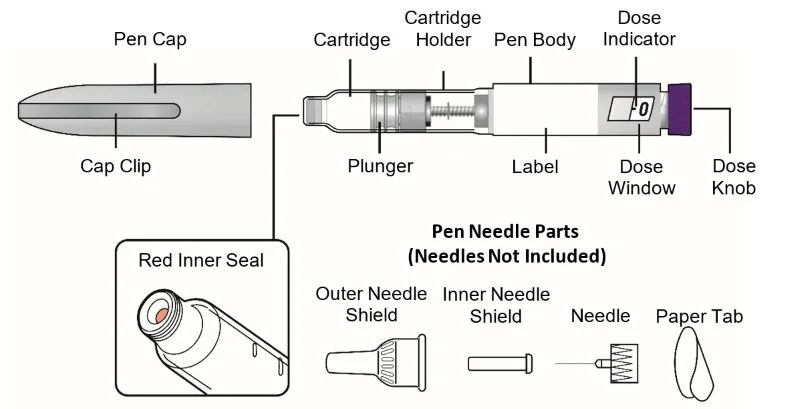
| Supplies needed to give your injection |
|
|
| Preparing to inject ZEPBOUND |
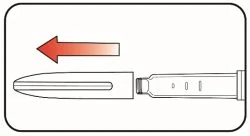
 | Step 1:
| |
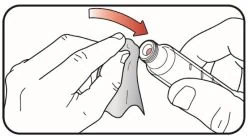
 | Step 2:
| |
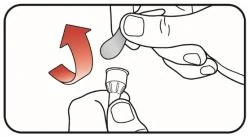
 | Step 3:
| |
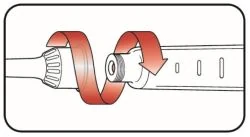
 | Step 4:
| |
 | Step 5:
| |
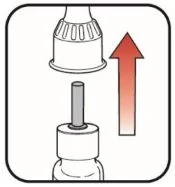 | 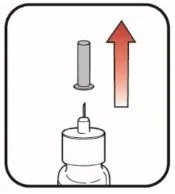 | Step 6:
|
| a. Outer needle shield | b. Inner needle shield | |
| Priming your Pen | ||
| Prime before each weekly injection. Priming removes air from the cartridge and makes sure that your Pen is working correctly. | ||
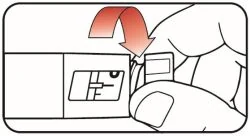 | Step 7:
| |
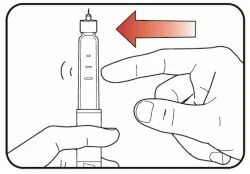 | Step 8:
| |
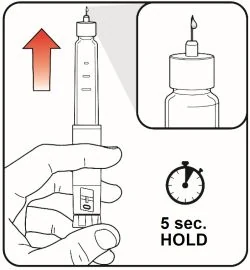 | Step 9:
| |
 extended line is shown in the dose window.
 icon must be shown in the dose window. Do not inject into your body.
| Injecting ZEPBOUND |
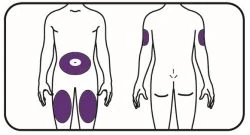 | Step 10:
|
| a. Front b. Back | |
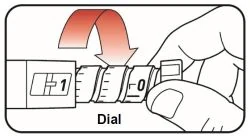 | Step 11:
|
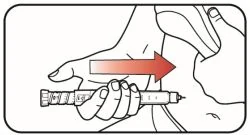 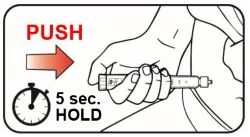 | Step 12:
|
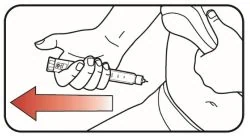 | Step 13:
|
| After your ZEPBOUND injection |
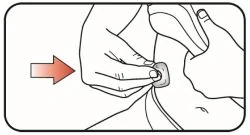 | Step 14:
|
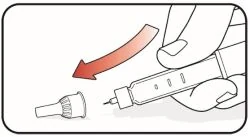 | Step 15:
|
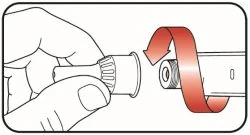 | Step 16:
|
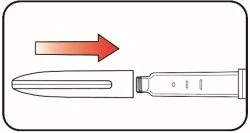 | Step 17:
|
| Storing your ZEPBOUND KwikPen |
Unused Pens:
- Store unused Pens in the refrigerator between 36°F to 46°F (2°C to 8°C).
- Unused Pens may be used until the expiration date (EXP) printed on the label if the Pen has been kept in the refrigerator.
- Do not freeze your Pen. Throw away (discard) the Pen if it has been frozen.
Used Pens:
- You may store your used Pen at room temperature up to 86°F (30°C) after your injection.
- Keep away from heat and light.
- Keep your Pen and needles out of the sight and reach of children.
- Throw away the Pen 30 days after first use even though the Pen has medicine left in it.
- Throw away the Pen after receiving 4 weekly doses. Attempting to inject any leftover medicine could result in an incomplete dose even though the Pen still has medicine left in it.
| Disposing of ZEPBOUND KwikPen and pen needles |
- Put your used pen needles in an FDA-cleared sharps disposal container right away after use.
- Do not throw away (discard) loose pen needles in your household trash.
- Discard the used Pen in your household trash or FDA-cleared sharps disposal container after you have removed the needle.
If you do not have an FDA-cleared sharps disposal container, you may use a household container that is:
- made of a heavy-duty plastic,
- can be closed with a tight-fitting, puncture-resistant lid, without sharps being able to come out,
- upright and stable during use,
- leak-resistant, and
- properly labeled to warn of hazardous waste inside the container.
- When your sharps disposal container is almost full, you will need to follow your community guidelines for the right way to dispose of your sharps disposal container. There may be state or local laws about how you should throw away (discard) used needles. For more information about safe sharps disposal, and for specific information about sharps disposal in the state you live in, go to the FDA's website at: http://www.fda.gov/safesharpsdisposal.
- Do not dispose of your used sharps disposal container in your household trash unless your community guidelines permit this. Do not recycle your used sharps disposal container.
| Troubleshooting |
- If you cannot remove the Pen cap, gently twist the Pen cap back and forth, and then pull the Pen cap straight off.
If the dose knob is hard to push:
- pushing the dose knob more slowly will make it easier to inject.
- your needle may be blocked. Put on a new pen needle and prime the Pen.
- you may have dust, food, or liquid inside the Pen. Throw the Pen away and get a new Pen.
If the Pen prevents you from turning the dose knob until the
is in the dose window:- Throw away (discard) the Pen, including the unused medicine. There may not be enough medicine left in the pen to give a full dose. Do not attempt to inject the leftover medicine.
Additional Information:
If you have any questions or problems with ZEPBOUND KwikPen:
| | Scan this code to launch www.zepbound.com |
ZEPBOUND® and KwikPen® are registered trademarks of Eli Lilly and Company.
Marketed by:
Lilly USA, LLC
Indianapolis, IN 46285, USA
Copyright © 2026, Eli Lilly and Company. All rights reserved.
ZEPBOUND KwikPen meets the current dose accuracy and functional requirements of ISO 11608-1.
This Instructions for Use has been approved by the U.S. Food and Drug Administration.
Revised: January 2026
ZEPKP-0002-IFU-20260121
| Medication Calendar |
Use ZEPBOUND 1 time a week. Write the day of the week you choose to inject. Inject on this day each week (Example: Monday). | I inject my weekly dose on the dates below. | ||||
| (Month/Day) | (Month/Day) | (Month/Day) | (Month/Day) | ||