


Patient information: uses, side effects, how to take - Yuflyma
What is the most important information I should know about YUFLYMA?
YUFLYMA is a medicine that affects your immune system. YUFLYMA can lower the ability of your immune system to fight infections. Serious infections have happened in people taking adalimumab products. These serious infections include tuberculosis (TB) and infections caused by viruses, fungi or bacteria that have spread throughout the body. Some people have died from these infections.
- Your doctor should test you for TB before starting YUFLYMA.
- Your doctor should check you closely for signs and symptoms of TB during treatment with YUFLYMA.
You should not start taking YUFLYMA if you have any kind of infection unless your doctor says it is okay.
Before starting YUFLYMA, tell your doctor if you:
- think you have an infection or have symptoms of infection such as:
- fever, sweats, or chills
- muscle aches
- cough
- shortness of breath
- blood in phlegm
- warm, red, or painful skin or sores on your body
- diarrhea or stomach pain
- burning when you urinate or urinate more often than normal
- feel very tired
- weight loss
- are being treated for an infection.
- get a lot of infections or have infections that keep coming back.
- have diabetes.
- have TB, or have been in close contact with someone with TB.
- were born in, lived in, or traveled to countries where there is more risk for getting TB. Ask your doctor if you are not sure.
- live or have lived in certain parts of the country (such as the Ohio and Mississippi River valleys) where there is an increased risk for getting certain kinds of fungal infections (histoplasmosis, coccidioidomycosis, or blastomycosis). These infections may happen or become more severe if you use YUFLYMA. Ask your doctor if you do not know if you have lived in an area where these infections are common.
- have or have had hepatitis B.
- use the medicine ORENCIA® (abatacept), KINERET® (anakinra), RITUXAN® (rituximab), IMURAN® (azathioprine), or PURINETHOL® (6–mercaptopurine, 6-MP).
- are scheduled to have major surgery.
After starting YUFLYMA, call your doctor right away if you have an infection, or any sign of an infection.
YUFLYMA can make you more likely to get infections or make any infection that you may have worse.
Cancer
- For children and adults taking Tumor Necrosis Factor (TNF)-blockers, including YUFLYMA, the chances of getting cancer may increase.
- There have been cases of unusual cancers in children, teenagers, and young adults using TNF-blockers.
- People with rheumatoid arthritis (RA), especially more serious RA, may have a higher chance for getting a kind of cancer called lymphoma.
- If you use TNF blockers including YUFLYMA, your chance of getting two types of skin cancer may increase (basal cell cancer and squamous cell cancer of the skin). These types of cancer are generally not life-threatening if treated. Tell your doctor if you have a bump or open sore that does not heal.
- Some people receiving TNF blockers including YUFLYMA developed a rare type of cancer called hepatosplenic T-cell lymphoma. This type of cancer often results in death. Most of these people were male teenagers or young men. Also, most people were being treated for Crohn's disease or ulcerative colitis with another medicine called IMURAN® (azathioprine) or PURINETHOL® (6-mercaptopurine, 6–MP).
What is YUFLYMA?
YUFLYMA is a medicine called a Tumor Necrosis Factor (TNF) blocker. YUFLYMA is used:
To reduce the signs and symptoms of:
- moderate to severe RA in adults. YUFLYMA can be used alone, with methotrexate, or with certain other medicines.
- moderate to severe polyarticular juvenile idiopathic arthritis (JIA) in children 2 years and older. YUFLYMA can be used alone or with methotrexate.
- psoriatic arthritis (PsA) in adults. YUFLYMA can be used alone or with certain other medicines.
- ankylosing spondylitis (AS) in adults.
- moderate to severe hidradenitis suppurativa (HS) in people 12 years and older.
- To treat moderate to severe Crohn's disease (CD) in adults and children 6 years of age and older.
- To treat moderate to severe ulcerative colitis (UC) in adults. It is not known if adalimumab products are effective in people who stopped responding to or could not tolerate TNF-blocker medicines.
- To treat moderate to severe chronic (lasting a long time) plaque psoriasis (Ps) in adults who have the condition in many areas of their body and who may benefit from taking injections or pills (systemic therapy) or phototherapy (treatment using ultraviolet light alone or with pills).
- To treat non-infectious intermediate, posterior, and panuveitis in adults and children 2 years of age and older.
What should I tell my doctor before taking YUFLYMA?
YUFLYMA may not be right for you. Before starting YUFLYMA, tell your doctor about all of your medical conditions, including if you:
- have an infection. See "What is the most important information I should know about YUFLYMA?"
- have or have had cancer.
- have any numbness or tingling or have a disease that affects your nervous system such as multiple sclerosis or Guillain-Barré syndrome.
- have or had heart failure.
- have recently received or are scheduled to receive a vaccine. You may receive vaccines, except for live vaccines while using YUFLYMA. Children should be brought up to date with all vaccines before starting YUFLYMA.
- are allergic to YUFLYMA or to any of its ingredients. See the end of this Medication Guide for a list of ingredients in YUFLYMA.
are pregnant or plan to become pregnant, breastfeeding or plan to breastfeed. You and your doctor should decide if you should take YUFLYMA while you are pregnant or breastfeeding.
- have a baby and you were using YUFLYMA during your pregnancy. Tell your baby's doctor before your baby receives any vaccines.
Tell your doctor about all the medicines you take, including prescription and over-the-counter medicines, vitamins, and herbal supplements.
Especially tell your doctor if you use:
- ORENCIA® (abatacept), KINERET® (anakinra), REMICADE® (infliximab), ENBREL® (etanercept), CIMZIA® (certolizumab pegol) or SIMPONI® (golimumab), because you should not use YUFLYMA while you are also using one of these medicines.
- RITUXAN® (rituximab). Your doctor may not want to give you YUFLYMA if you have received RITUXAN® (rituximab) recently.
- IMURAN® (azathioprine) or PURINETHOL® (6–mercaptopurine, 6-MP).
Keep a list of your medicines with you to show your doctor and pharmacist each time you get a new medicine.
How should I take YUFLYMA?
- YUFLYMA is given by an injection under the skin. Your doctor will tell you how often to take an injection of YUFLYMA. This is based on your condition to be treated. Do not inject YUFLYMA more often than you were prescribed.
- See the Instructions for Use inside the carton for complete instructions for the right way to prepare and inject YUFLYMA.
- Make sure you have been shown how to inject YUFLYMA before you do it yourself. You can call your doctor or 1-877-888-4231 if you have any questions about giving yourself an injection. Someone you know can also help you with your injection after they have been shown how to prepare and inject YUFLYMA.
- Do not try to inject YUFLYMA yourself until you have been shown the right way to give the injections. If your doctor decides that you or a caregiver may be able to give your injections of YUFLYMA at home, you should receive training on the right way to prepare and inject YUFLYMA.
- Do not miss any doses of YUFLYMA unless your doctor says it is okay. If you forget to take YUFLYMA, inject a dose as soon as you remember. Then, take your next dose at your regular scheduled time. This will put you back on schedule. In case you are not sure when to inject YUFLYMA, call your doctor or pharmacist.
- If you take more YUFLYMA than you were told to take, call your doctor.
What are the possible side effects of YUFLYMA?
YUFLYMA can cause serious side effects, including:
See "What is the most important information I should know about YUFLYMA?"
Serious Infections.
Your doctor will examine you for TB and perform a test to see if you have TB. If your doctor feels that you are at risk for TB, you may be treated with medicine for TB before you begin treatment with YUFLYMA and during treatment with YUFLYMA. Even if your TB test is negative your doctor should carefully monitor you for TB infections while you are taking YUFLYMA. People who had a negative TB skin test before receiving adalimumab products have developed active TB. Tell your doctor if you have any of the following symptoms while taking or after taking YUFLYMA:
- cough that does not go away
- low grade fever
- weight loss
- loss of body fat and muscle (wasting)
Hepatitis B infection in people who carry the virus in their blood.
If you are a carrier of the hepatitis B virus (a virus that affects the liver), the virus can become active while you use YUFLYMA. Your doctor should do blood tests before you start treatment, while you are using YUFLYMA, and for several months after you stop treatment with YUFLYMA. Tell your doctor if you have any of the following symptoms of a possible hepatitis B infection:
- muscle aches
- feel very tired
- dark urine
- skin or eyes look yellow
- little or no appetite
- vomiting
- clay-colored bowel movements
- fever
- chills
- stomach discomfort
- skin rash
- Allergic reactions. Allergic reactions can happen in people who use YUFLYMA. Call your doctor or get medical help right away if you have any of these symptoms of a serious allergic reaction:
- hives
- trouble breathing
- swelling of your face, eyes, lips or mouth
- Nervous system problems. Signs and symptoms of a nervous system problem include: numbness or tingling, problems with your vision, weakness in your arms or legs, and dizziness.
- Blood problems. Your body may not make enough of the blood cells that help fight infections or help to stop bleeding. Symptoms include a fever that does not go away, bruising or bleeding very easily, or looking very pale.
- New heart failure or worsening of heart failure you already have. Call your doctor right away if you get new worsening symptoms of heart failure while taking YUFLYMA, including:
- shortness of breath
- sudden weight gain
- swelling of your ankles or feet
- Immune reactions including a lupus-like syndrome. Symptoms include chest discomfort or pain that does not go away, shortness of breath, joint pain, or a rash on your cheeks or arms that gets worse in the sun. Symptoms may improve when you stop YUFLYMA.
- Liver Problems. Liver problems can happen in people who use TNF-blocker medicines. These problems can lead to liver failure and death. Call your doctor right away if you have any of these symptoms:
- feel very tired
- poor appetite or vomiting
- skin or eyes look yellow
- pain on the right side of your stomach (abdomen)
- Psoriasis. Some people using adalimumab products had new psoriasis or worsening of psoriasis they already had. Tell your doctor if you develop red scaly patches or raised bumps that are filled with pus. Your doctor may decide to stop your treatment with YUFLYMA.
Call your doctor or get medical care right away if you develop any of the above symptoms. Your treatment with YUFLYMA may be stopped.
The most common side effects of YUFLYMA include:
- injection site reactions: redness, rash, swelling, itching, or bruising. These symptoms usually will go away within a few days. Call your doctor right away if you have pain, redness or swelling around the injection site that does not go away within a few days or gets worse.
- upper respiratory infections (including sinus infections)
- headaches
- rash
These are not all the possible side effects with YUFLYMA. Tell your doctor if you have any side effect that bothers you or that does not go away. Ask your doctor or pharmacist for more information.
Call your doctor for medical advice about side effects. You may report side effects to the FDA at 1-800-FDA-1088.
How should I store YUFLYMA?
- Store YUFLYMA in the refrigerator at 36°F to 46°F (2°C to 8°C). Store YUFLYMA in the original carton until use to protect it from light. Do not shake.
- Do not freeze YUFLYMA. Do not use YUFLYMA if frozen, even if it has been thawed.
- Refrigerated YUFLYMA may be used until the expiration date printed on the YUFLYMA carton, dose pack, auto-injector or prefilled syringe. Do not use YUFLYMA after the expiration date.
- If needed, for example when you are traveling, you may also store YUFLYMA at room temperature up to 77°F (25°C) for up to 31 days. Store YUFLYMA in the original carton until use to protect it from light.
- Throw away YUFLYMA if it has been kept at room temperature and not been used within 31 days.
- Record the date you first remove YUFLYMA from the refrigerator in the spaces provided on the carton and dose pack.
- Do not store YUFLYMA in extreme heat or cold.
- Do not use an auto-injector or prefilled syringe if the liquid is cloudy, discolored, or has flakes or particles in it.
- Do not drop or crush YUFLYMA. The prefilled syringe is glass.
Keep YUFLYMA, injection supplies, and all other medicines out of the reach of children.
General information about the safe and effective use of YUFLYMA
Medicines are sometimes prescribed for purposes other than those listed in a Medication Guide. Do not use YUFLYMA for a condition for which it was not prescribed. Do not give YUFLYMA to other people, even if they have the same condition. It may harm them.
This Medication Guide summarizes the most important information about YUFLYMA. If you would like more information, talk with your doctor. You can ask your doctor or pharmacist for information about YUFLYMA that is written for health professionals.
What are the ingredients in YUFLYMA?
Active ingredient: adalimumab-aaty
YUFLYMA AI 40 mg/0.4 mL, YUFLYMA 40 mg/0.4 mL prefilled syringe with safety guard, and YUFLYMA 40 mg/0.4 mL prefilled syringe, YUFLYMA AI 80 mg/0.8 mL, YUFLYMA 80 mg/0.8 mL prefilled syringe with safety guard, YUFLYMA 80 mg/0.8 mL prefilled syringe, YUFLYMA 20 mg/0.2 mL prefilled syringe and YUFLYMA 10 mg/0.1 mL prefilled syringe:
Inactive ingredients: acetic acid, glycine, polysorbate 80, sodium acetate, and Water for Injection, USP.
Manufactured by: CELLTRION, Inc., 23, Academy-ro, Yeonsu-gu, Incheon, 22014, Republic of Korea
US License Number 1996
Distributed by: CELLTRION USA, Inc., One Evertrust Plaza, Suite 1207, Jersey City, NJ 07302, USA
INSTRUCTIONS FOR USE
YUFLYMA® (yoo-fly'-mah)
(adalimumab-aaty)
injection, for subcutaneous use
80 mg/0.8 mL, 40 mg/0.4 mL
Single-Dose Auto-injector
For subcutaneous use only
Read and follow the Instructions for Use that come with your YUFLYMA Auto-injector before you start using it and each time you get a refill. There may be new information. This information does not take the place of talking to your doctor about your medical condition or treatment.
Figure A: Parts of YUFLYMA Auto-injector
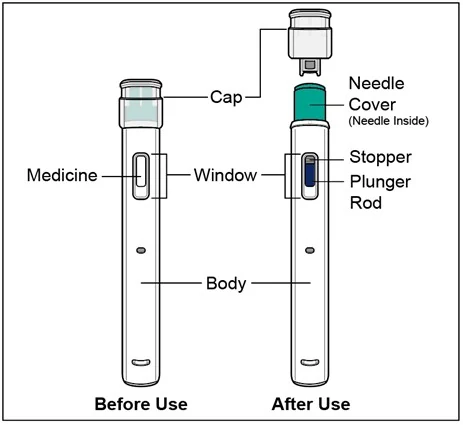 |
Important Information
- Use the Auto-injector only if your doctor has trained you on the right way to prepare for and to give an injection.
- Ask your doctor how often you will need to give an injection.
- Do not shake the Auto-injector at any time.
- Do not remove the Cap until you are ready to inject.
- Do not share the Auto-injector with anyone.
How to store the Auto-injector
- Store the Auto-injector in a refrigerator between 36°F to 46°F (2°C to 8°C).
- Keep the Auto-injector in the original carton until use to protect it from light.
- Do not use an Auto-injector that has been left in direct sunlight.
- Do not freeze the Auto-injector. If the Auto-injector has been frozen, do not use the Auto-injector even if it is thawed.
- If needed, you may store the Auto-injector at room temperature up to 77°F (25°C) for up to 31 days.
- After the Auto-injector has reached room temperature, do not put it back in the refrigerator.
- Keep the Auto-injector and all medicines out of the reach of children.
Read Instructions on All Pages Before Using the YUFLYMA Auto-injector
Prepare for Injection
| This Instructions for Use has been approved by the U.S. Food and Drug Administration. | Issued: 9/2023 |
| 1.Gather the supplies for the injection.1a. Prepare a clean, flat surface, such as a table or countertop, in a well-lit area.1b. Remove 1 Auto-injector from the carton stored in your refrigerator.1c. Make sure you have the following supplies:-Auto-injector-1 Alcohol swabNot included in the carton:-1 Cotton ball or gauze-1 Adhesive bandage-FDA-cleared sharps disposal container | |
2.Inspect the Auto-injector.2a. Make sure you have the correct medicine (YUFLYMA) and dosage.2b. Check the expiration date on the label of the Auto-injector (see Figure B ).2c. Look at the Auto-injector and make sure it is not cracked or damaged.
| 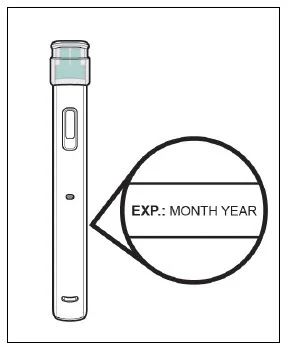 Figure B |
3.Inspect the Medicine.3a. Look through the Window and make sure that the liquid is clear, colorless to pale brown, and free of particles (see Figure C ).
| 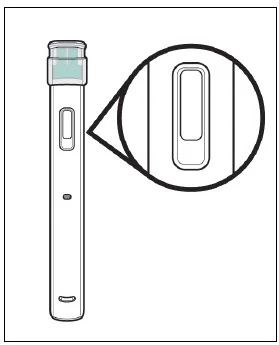 Figure C |
4.Wait 15 to 30 minutes.4a. Leave the Auto-injector at room temperature 68°F to 77°F (20°C to 25°C) for 15 to 30 minutes to allow it to warm up (see Figure D ).
| 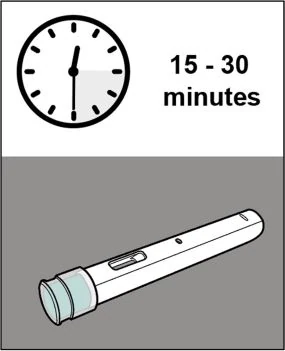 Figure D |
5.Choose an injection site (see Figure E).5a. You may inject into:-the front of your thighs.-your abdomen except for the 2 in (5 cm) around the belly button (navel).
5b. Rotate the injection site each time you give an injection.
| 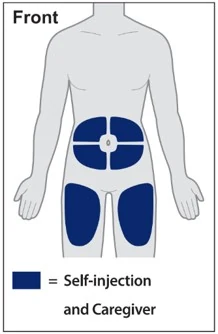 Figure E |
| 6.Wash your hands.6a. Wash your hands with soap and water and dry them thoroughly (see Figure F ). | 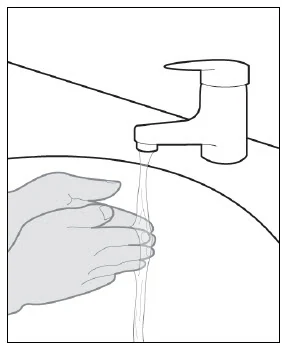 Figure F |
7.Clean the injection site.7a. Clean the injection site with an alcohol swab using a circular motion (see Figure G ).7b. Let the skin dry before injecting.
| 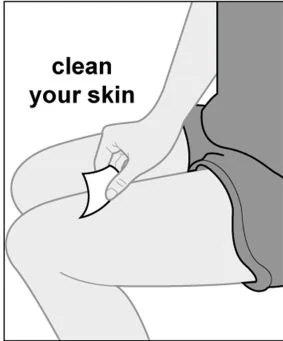 Figure G |
Give the Injection8.Remove the Cap.8a. Hold the Auto-injector by the injector body with the Cap on top using one hand. Gently pull the Cap straight off with the other hand.
| 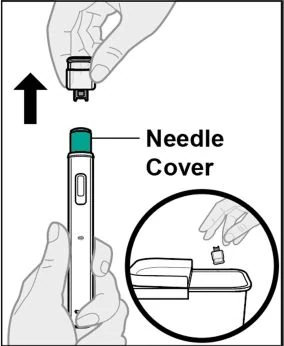 Figure H |
| 8b. Dispose of the Cap in an FDA cleared sharps container (see Step 12 and Figure H ). | |
| 9.Place the Auto-injector on the injection site.9a. Hold the Auto-injector so that you can see the Window.9b. Without pinching or stretching the skin, place the Auto-injector over the injection site at a 90-degree angle (see Figure I ). | 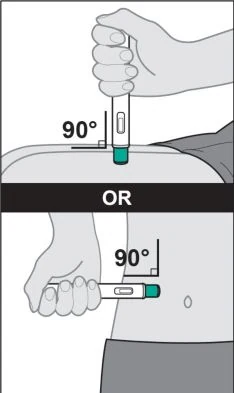 Figure I |
10.Give the injection (see Figure J).10a. Press the Auto-injector firmly against the skin.
10b. Keep holding the Auto-injector firmly against the skin and listen for the 2nd loud "click." This can take up to 10 seconds.
10c. After you hear the 2nd loud "click" continue to keep holding the Auto-injector firmly against the skin and count slowly to 5 to make sure you inject the full dose.10d. Look at the Auto-injector and make sure that the blue Plunger Rod is filling the Window completely. | 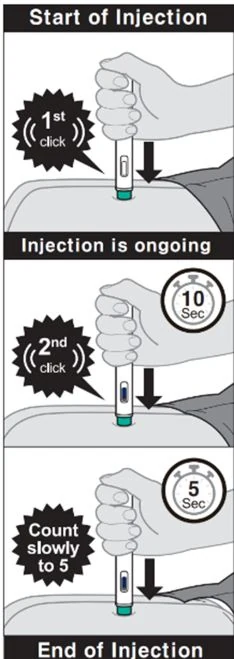 Figure J |
11.Remove the Auto-injector from your skin.11a. Remove the Auto-injector from your skin (see Figure K ).
| 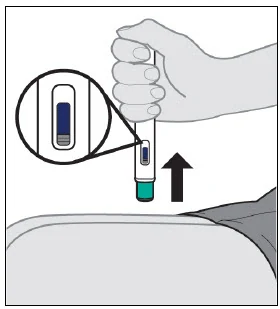 Figure K 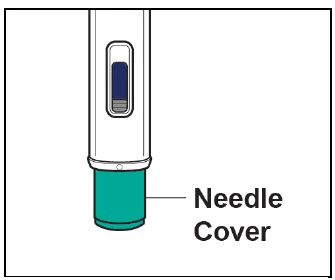 Figure L |
| After the Injection | |
12.Dispose of the Auto-injector.12a. Put the used Auto-injector in a FDA-cleared sharps disposal container right away after use (see Figure M ).
| 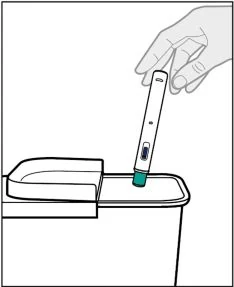 Figure M |
| |
| 13.Care for the injection site.13a. Treat the injection site by gently pressing, not rubbing, a cotton ball or gauze to the site and apply an adhesive bandage, if necessary. | |
Manufactured by: CELLTRION, Inc., 23, Academy-ro, Yeonsu-gu, Incheon, 22014, Republic of Korea US License Number 1996 | |
| Distributed by: CELLTRION USA, Inc., One Evertrust Plaza Suite 1207, Jersey City, NJ 07302 | |
INSTRUCTIONS FOR USE
YUFLYMA® (yoo-fly'-mah)
(adalimumab-aaty)
injection for subcutaneous use
80 mg/0.8 mL, 40 mg/0.4 mL
Single-Dose Prefilled Syringe with Safety Guard
For subcutaneous use only
Read and follow the Instructions for Use that come with your YUFLYMA Prefilled Syringe before you start using it and each time you get a refill. There may be new information. This information does not take the place of talking to your doctor about your medical condition or treatment.
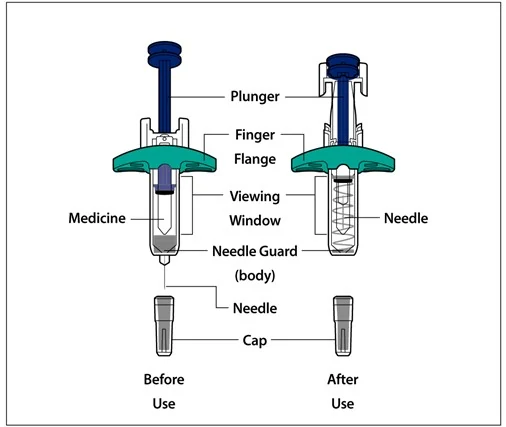
Figure A: Parts of YUFLYMA Prefilled Syringe with Safety Guard
 |
Important Information
- Use the Prefilled Syringe with Needle Guard only if your doctor has trained you on the right way to prepare for and to give an injection.
- Ask your doctor how often you will need to give an injection.
- Do not shake the Prefilled Syringe at any time.
- Do not remove the Cap until you are ready to inject.
- Do not share the Prefilled Syringe with anyone.
- Only use each Prefilled Syringe for one injection.
- Do not pull back on the plunger rod at any time.
How to store the Prefilled Syringe
- Store the Prefilled Syringe in a refrigerator between 36°F to 46°F (2°C to 8°C).
- Keep the Prefilled Syringe in the original carton to protect it from light.
- Do not use a Prefilled Syringe that has been left in direct sunlight.
- Do not freeze the Prefilled Syringe. If the Prefilled Syringe has been frozen, do not use the Prefilled Syringe even if it is thawed.
- If needed, you may store the Prefilled Syringe at room temperature up to 77°F (25°C) for up to 31 days.
- After the Prefilled Syringe has reached room temperature, do not put it back in the refrigerator.
- Keep the Prefilled Syringe and all medicines out of the reach of children.
Read Instructions on All Pages Before Using the YUFLYMA Prefilled Syringe
Prepare for Injection
| This Instructions for Use has been approved by the U.S. Food and Drug Administration. | Issued: 9/2023 |
1.Gather the supplies for the injection.1a.Prepare a clean, flat surface, such as a table or countertop, in a well-lit area.1b. Remove 1 Prefilled Syringe from the carton stored in your refrigerator.
1c. Make sure you have the following supplies:-Prefilled Syringe-1 Alcohol swabNot included in the carton:-1 Cotton ball or gauze-1 Adhesive bandage-FDA-cleared sharps disposal container | |
2.Inspect the Prefilled Syringe.2a. Make sure you have the correct medicine (YUFLYMA) and dosage.2b. Check the expiration date on the label of the Prefilled Syringe (see Figure B ).2c. Look at the Prefilled Syringe and make sure it is not cracked or damaged.
| 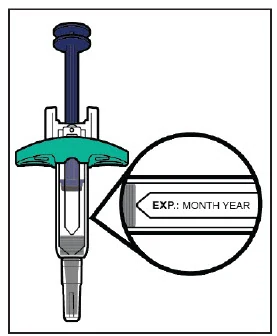 Figure B |
3.Inspect the Medicine.3a. Look at the Medicine and confirm that the liquid is clear, colorless to pale brown, and free of particles (see Figure C ).
| 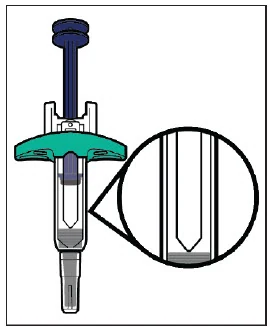 Figure C |
4.Wait 15 to 30 minutes.4a. Leave the Prefilled Syringe at room temperature 68°F to 77°F (20°C to 25°C) for 15 to 30 minutes to allow it to warm up (see Figure D ).
| 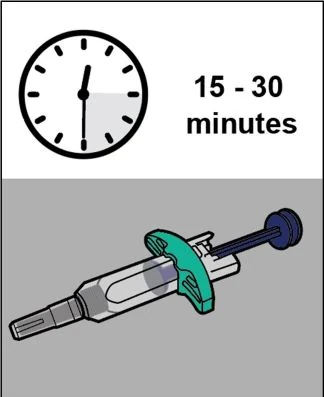 Figure D |
5.Choose an injection site (see Figure E).5a. You may inject into:-the front of your thighs.-your abdomen except for the 2 in (5 cm) around the belly button (navel).
5b. Rotate the injection site each time you give an injection. Each new injection site should be at least 1.2 in (3 cm) away from the injection site you used before. | 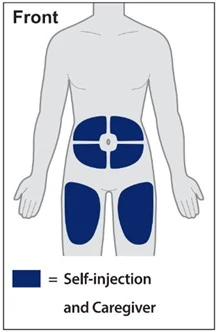 Figure E |
| 6.Wash your hands.6a. Wash your hands with soap and water and dry them thoroughly (see Figure F ). | Figure F |
7.Clean the injection site.7a. Clean the injection site with an alcohol swab using a circular motion (see Figure G ).7b. Let the skin dry before injecting.
| 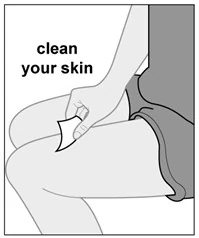 Figure G |
Give the Injection8.Remove the Cap.8a. Hold the Prefilled Syringe by the injector body with the Cap on top using one hand. Gently pull the Cap straight off with the other hand.
8b. Dispose of the Cap in an FDA cleared sharps container (see Step 12 and Figure H ). | 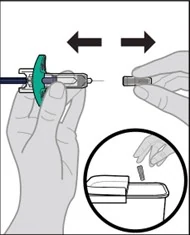 Figure H |
9.Insert the Prefilled Syringe into the injection site.9a. Gently pinch a fold of skin at the injection site with one hand.9b. With a quick and "dart-like" motion, insert the Needle completely into the fold of the skin at a 45-degree angle (see Figure I ).
| 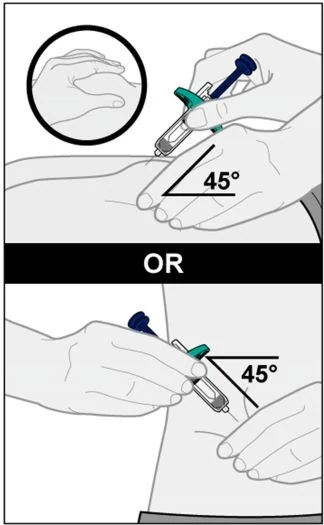 Figure I |
10.Give the injection.10a. After the Needle is inserted, release the pinch.10b. Slowly push the Plunger all the way down until all of the liquid is injected and the Syringe is empty (see Figure J ). | 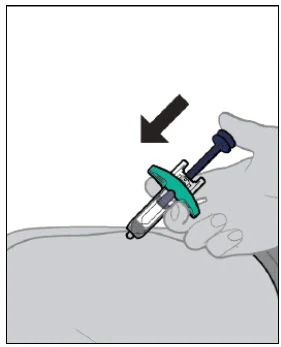 Figure J |
11.Remove the Prefilled Syringe from the injection site.11a. After the Prefilled Syringe is empty, slowly lift your thumb from the Plunger until Needle is completely covered by the Needle Guard (see Figure K ).
| 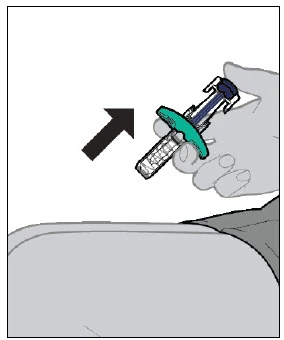 Figure K |
| After the Injection | |
12.Dispose of the Prefilled Syringe.12a. Put the used Prefilled Syringe in a FDA-cleared sharps disposal container right away after use (see Figure L ).
| 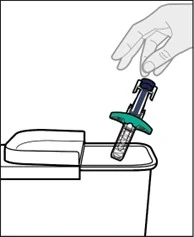 Figure L |
| |
| 13.Care for the injection site.13a. Treat the injection site by gently pressing, not rubbing, a cotton ball or gauze to the site and apply an adhesive bandage, if necessary. | |
Manufactured by: CELLTRION, Inc., 23, Academy-ro, Yeonsu-gu, Incheon, 22014, Republic of Korea US License Number 1996 | |
| Distributed by: CELLTRION USA, Inc., One Evertrust Plaza Suite 1207, Jersey City, NJ 07302 | |
INSTRUCTIONS FOR USE
YUFLYMA® (yoo-fly'-mah)
(adalimumab-aaty)
injection, for subcutaneous use
80 mg/0.8 mL, 40 mg/0.4 mL, 20 mg/0.2 mL, 10 mg/0.1 mL
Single-Dose Prefilled Syringe
For subcutaneous use only
Read and follow the Instructions for Use that come with your YUFLYMA Prefilled Syringe before you start using it and each time you get a refill. There may be new information. This information does not take the place of talking to your doctor about your medical condition or treatment.
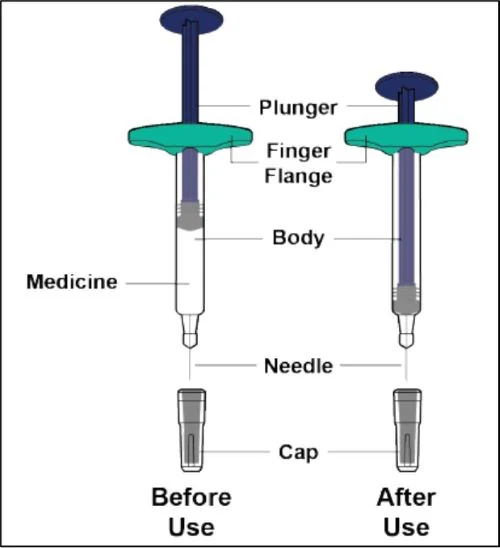
Figure A: Parts of YUFLYMA Prefilled Syringe
 |
Important Information
- Use the Prefilled Syringe only if your doctor has trained you on the right way to prepare for and to give an injection.
- Ask your doctor how often you will need to give an injection.
- Do not shake the Prefilled Syringe at any time.
- Do not remove the Cap until you are ready to inject.
- Do not share the Prefilled Syringe with anyone.
- Do not pull back on the plunger rod at any time.
How to store the Prefilled Syringe
- Store the Prefilled Syringe in a refrigerator between 36°F to 46°F (2°C to 8°C).
- Keep the Prefilled Syringe in the original carton to protect it from light.
- Do not use a Prefilled Syringe that has been left in direct sunlight.
- Do not freeze the Prefilled Syringe. If the Prefilled Syringe has been frozen, do not use the Prefilled Syringe even if it is thawed.
- If needed, you may store the Prefilled Syringe at room temperature up to 77°F (25°C) for up to 31 days.
- After the Prefilled Syringe has reached room temperature, do not put it back in the refrigerator.
- Keep the Prefilled Syringe and all medicines out of the reach of children.
Read Instructions on All Pages Before Using the YUFLYMA Prefilled Syringe
Prepare for Injection
| This Instructions for Use has been approved by the U.S. Food and Drug Administration. | Issued: 10/2025 |
1.Gather the supplies for the injection.1a. Prepare a clean, flat surface, such as a table or countertop, in a well-lit area.1b. Remove 1 Prefilled Syringe from the carton stored in your refrigerator.
1c. Make sure you have the following supplies:-Prefilled Syringe-1 Alcohol swabNot included in the carton:-1 Cotton ball or gauze-1 Adhesive bandage-FDA-cleared sharps disposal container | |
2.Inspect the Prefilled Syringe.2a. Make sure you have the correct medicine (YUFLYMA) and dosage.2b. Check the expiration date on the label of the Prefilled Syringe (see Figure B )2c. Look at the Prefilled Syringe and make sure it is not cracked or damaged.
| 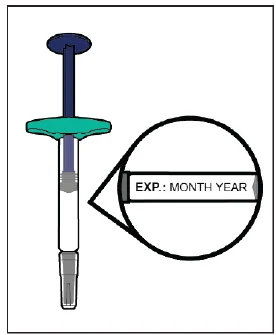 Figure B |
3.Inspect the Medicine.3a. Look at the Medicine and confirm that the liquid is clear, colorless to pale brown, and free of particles (see Figure C ).
| 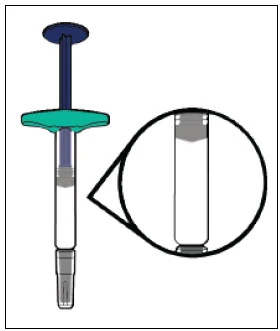 Figure C |
4.Wait 15 to 30 minutes.4a. Leave the Prefilled Syringe at room temperature 68°F to 77°F (20°C to 25°C) for 15 to 30 minutes to allow it to warm up (see Figure D ).
| 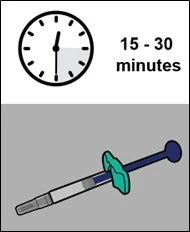 Figure D |
5.Choose an injection site (see Figure E).5a. You may inject into:-the front of your thighs.-your abdomen except for the 2 in (5 cm) around the belly button (navel).
5b. Rotate the injection site each time you give an injection. Each new injection site should be at least 1.2 in (3 cm) away from the injection site you used before. | 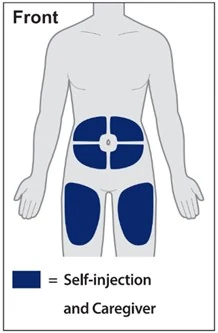 Figure E |
| 6.Wash your hands.6a. Wash your hands with soap and water and dry them thoroughly (see Figure F ). | 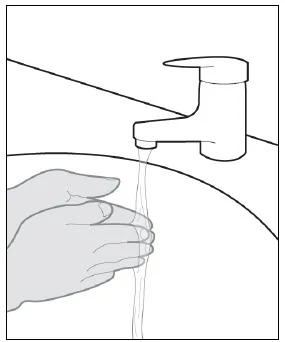 Figure F |
7.Clean the injection site.7a. Clean the injection site with an alcohol swab using a circular motion (see Figure G ).7b. Let the skin dry before injecting.
| 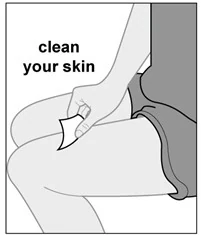 Figure G |
Give the Injection8.Remove the Cap.8a. Hold the Prefilled Syringe by the injector body with the Cap on top using one hand. Gently pull the Cap straight off with the other hand.
8b. Dispose of the Cap in an FDA cleared sharps container (see Step 12 and Figure H ). | 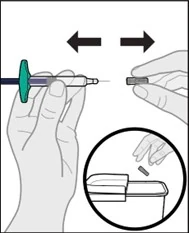 Figure H |
9.Insert the Prefilled Syringe into the injection site.9a. Gently pinch a fold of skin at the injection site with one hand.9b. With a quick and "dart-like" motion, insert the Needle completely into the fold of the skin at a 45-degree angle (see Figure I ).
| 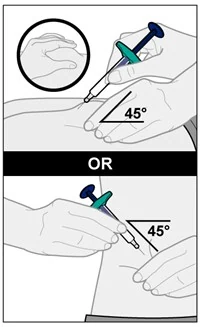 Figure I |
| 10.Give the injection.10a. After the Needle is inserted, release the pinch.10b. Slowly push the Plunger all the way down until all of the liquid is injected and the Syringe is empty (see Figure J ). | 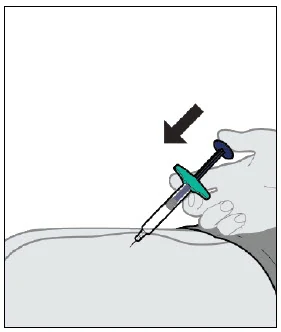 Figure J |
11.Remove the Prefilled Syringe from the injection site.11a. After the Prefilled Syringe is empty, remove the Prefilled Syringe from your skin (see Figure K ).
| 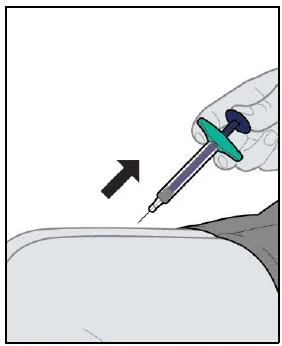 Figure K |
| After the Injection | |
12.Dispose of the Prefilled Syringe.12a. Put the used Prefilled Syringe in a FDA-cleared sharps disposal container right away after use (see Figure L ).
| 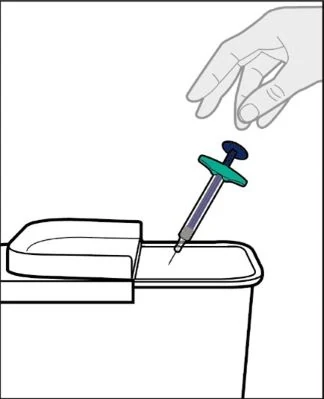 Figure L |
| |
| 13.Care for the injection site.13a. Treat the injection site by gently pressing, not rubbing, a cotton ball or gauze to the site and apply an adhesive bandage, if necessary. | |
Manufactured by: CELLTRION, Inc., 23, Academy-ro, Yeonsu-gu, Incheon, 22014, Republic of Korea US License Number 1996 | |
| Distributed by: CELLTRION USA, Inc., One Evertrust Plaza Suite 1207, Jersey City, NJ 07302 | |