


Patient information: uses, side effects, how to take - Suboxone Film
What is the most important information I should know about SUBOXONE sublingual film?
- SUBOXONE contains a medicine called buprenorphine. Buprenorphine is an opioid that can cause serious and life-threatening breathing problems, especially if you take or use certain other medicines or drugs.
- Ask your healthcare provider about medicines like naloxone or nalmefene that can be used in an emergency to reverse opioid overdose, including accidental use of SUBOXONE sublingual film by a child. If naloxone or nalmefene is given, you must call 911 or get emergency medical help right away to treat an overdose or accidental use of an opioid.
- SUBOXONE may cause serious and life-threatening breathing problems. Get emergency help right away if you:
- feel faint
- feel dizzy
- are confused
- feel sleepy or uncoordinated
- have blurred vision
- have slurred speech
- are breathing slower than normal
- cannot think well or clearly
- Do not take SUBOXONE with certain medicines. Taking SUBOXONE with other opioid medicines, benzodiazepines, gabapentinoids (gabapentin or pregabalin), alcohol, or other central nervous system depressants (including street drugs) can cause severe drowsiness, decreased awareness, breathing problems, coma, and death.
- Do not inject (“shoot-up”) SUBOXONE. Injecting SUBOXONE may cause life-threatening infections and other serious health problems. Injecting SUBOXONE may cause sudden serious withdrawal symptoms such as pain, cramps, vomiting, diarrhea, anxiety, sleep problems, and cravings.
- Do not switch from SUBOXONE sublingual film to other medicines that contain buprenorphine without talking with your healthcare provider. The amount of buprenorphine in a dose of SUBOXONE sublingual film is not the same as in other medicines that contain buprenorphine. Your healthcare provider will prescribe a starting dose of SUBOXONE sublingual film that may be different than other buprenorphine containing medicines you may have been taking.
- Do not stop taking SUBOXONE suddenly. You could become sick and have withdrawal symptoms because your body has become used to the medicine (physical dependence). Physical dependence is not the same as drug addiction.
- In an emergency, have family members tell emergency department staff that you are physically dependent on an opioid and are being treated with SUBOXONE sublingual film.
- Never give anyone else your SUBOXONE sublingual film. They could die from taking it. Selling or giving away SUBOXONE sublingual film is against the law.
- Store SUBOXONE sublingual film securely, out of sight and reach of children, and in a location not accessible by others, including visitors to the home.
What is SUBOXONE sublingual film?
- SUBOXONE sublingual film is a prescription medicine used to treat opioid addiction in adults and is part of a complete treatment program that also includes counseling and behavioral therapy.
Who should not take SUBOXONE sublingual film?
Do not take SUBOXONE sublingual film if you are allergic to buprenorphine or naloxone.
Before taking SUBOXONE, tell your healthcare provider about all your medical conditions, including if you have:
- trouble breathing or lung problems
- a curve in your spine that affects your breathing
- Addison's disease
- an enlarged prostate (men)
- problems urinating
- liver, kidney, or gallbladder problems
- alcoholism
- a head injury or brain problem
- mental health problems
- adrenal gland or thyroid gland problems
- tooth problems, including a history of cavities
Tell your healthcare provider if you are:
pregnant or plan to become pregnant. If you take SUBOXONE while pregnant, your baby may have symptoms of opioid withdrawal at birth that could be life-threatening if not recognized and treated. Talk to your healthcare provider if you are pregnant or plan to become pregnant.
- Breastfeeding or plan to breastfeed. SUBOXONE can pass into your breast milk and harm your baby. Talk to your healthcare provider about the best way to feed your baby if you take SUBOXONE. Monitor your baby for increased drowsiness and breathing problems if you breastfeed during treatment with SUBOXONE.
Tell your healthcare provider about all the medicines you take, including prescription and over-the-counter medicines, vitamins, or herbal supplements.
How should I take SUBOXONE sublingual film?
Read the Instructions for Use at the end of this Medication Guide for detailed instructions on how to take SUBOXONE
- Take SUBOXONE sublingual film exactly as prescribed by your healthcare provider. Your healthcare provider may change your dose after seeing how it affects you. Do not change your dose unless your healthcare provider tells you to change it.
- Do not take SUBOXONE sublingual film more often than prescribed by your healthcare provider.
- SUBOXONE is not for occasional or “as needed” use.
- When you are beginning treatment, take SUBOXONE sublingual film only under the tongue (sublingual administration).
- After SUBOXONE is completely dissolved, rinse your mouth with water and swallow. Wait for at least one hour before brushing teeth.
- Report any problems with your teeth immediately to your healthcare provider and schedule an appointment with a dentist. Tell your dentist that you have started taking SUBOXONE.
- After a few days, you can choose whether you will take SUBOXONE sublingual film on the inside of your cheek (buccal administration) or under the tongue (sublingual administration).
- Take the entire SUBOXONE sublingual film. Do not cut, tear, chew, or swallow SUBOXONE sublingual film because the medicine will not work as well.
- If you miss a dose of SUBOXONE, take it as soon as you remember. If it is almost time for your next dose, skip the missed dose and take the next dose at your regular time. Do not take 2 doses at the same time unless your healthcare provider tells you to. If you are not sure about your dosing, call your healthcare provider.
- Dispose of expired, unwanted, or unused SUBOXONE by removing SUBOXONE from the foil packaging, and promptly flushing down the toilet (if a drug take-back option is not readily available). Visit www.fda.gov/drugdisposal for additional information on disposal of unused medicines.
- If you take too much SUBOXONE or overdose, call Poison Control or get emergency medical help right away.
What should I avoid while taking SUBOXONE sublingual film?
- Do not drive, operate heavy machinery, or perform any other dangerous activities until you know how SUBOXONE affects you. Buprenorphine can cause drowsiness and slow reaction times. SUBOXONE can make you sleepy, dizzy, or lightheaded.
- You should not drink alcohol or take prescription or over-the-counter medicines that contain alcohol while taking SUBOXONE sublingual film, because this can lead to loss of consciousness or even death.
What are the possible side effects of SUBOXONE sublingual film?
SUBOXONE sublingual film can cause serious side effects, including:
- Trouble breathing. Taking SUBOXONE with other opioid medicines, benzodiazepines, gabapentinoids (gabapentin or pregabalin), alcohol, or other central nervous system depressants (including street drugs) can cause breathing problems that can lead to coma and death.
- Sleepiness, dizziness, and problems with coordination.
- Physical dependence or abuse.
- Liver problems. Call your healthcare provider right away if you notice any of these symptoms:
- your skin or the white part of your eyes turns yellow (jaundice)
- dark or “tea-colored” urine
- light colored stools (bowel movements)
- loss of appetite
- pain, aching, or tenderness on the right side of your stomach area
- nausea
- Your healthcare provider should do blood tests to check your liver before you start taking and while you take SUBOXONE.
- Allergic reaction. You may have a rash, hives, swelling of your face, wheezing, low blood pressure, or loss of consciousness. Call your healthcare provider or get emergency help right away.
- Opioid withdrawal. Call your healthcare provider right away if you get any of these symptoms:
- shaking
- sweating more than normal
- feeling hot or cold more than normal
- runny nose
- watery eyes
- goose bumps
- diarrhea
- vomiting
- muscle aches
- Decrease in blood pressure. You may feel dizzy if you get up too fast from sitting or lying down.
- The most common side effects of SUBOXONE include:
- headache
- nausea
- vomiting
- constipation
- pain
- increased sweating
- decrease in sleep (insomnia)
- SUBOXONE sublingual film may affect fertility in males and females. Talk to your healthcare provider if this is a concern for you.
These are not all the possible side effects of SUBOXONE.
Call your doctor for medical advice about side effects. You may report side effects to FDA at 1-800-FDA-1088.
General information about the safe and effective use of SUBOXONE sublingual film.
Medicines are sometimes prescribed for purposes other than those listed in a Medication Guide. Do not take SUBOXONE sublingual film for a condition for which it was not prescribed. Do not give SUBOXONE sublingual film to other people, even if they have the same symptoms you have. It may harm them and it is against the law.
You can ask your doctor or pharmacist for information that is written for healthcare professionals.
© 2025 Indivior UK Limited |SUBOXONE® is a registered trademark of Indivior UK Limited or its affiliate companies. | All rights reserved.
Manufactured for Indivior Inc., North Chesterfield, VA 23235 by Aquestive Therapeutics, Warren, NJ 07059
For more information, go to www.SUBOXONE.com or call 1-877-782-6966.
INSTRUCTIONS FOR USE
SUBOXONE (Sub-OX-own) (buprenorphine and naloxone) Sublingual Film, CIII
This “Instructions for Use” contains information on how to correctly take SUBOXONE sublingual film.
Important Information You Need to Know Before Taking SUBOXONE sublingual film:
- Your healthcare provider should show you how to take SUBOXONE sublingual film the right way.
- Each SUBOXONE sublingual film comes in a sealed child‐resistant foil pouch. Do not open the foil pouch until you are ready to take it.
Preparing to take SUBOXONE sublingual film:
To open your SUBOXONE sublingual film foil pouch, fold along the dotted line (see Figure 1).
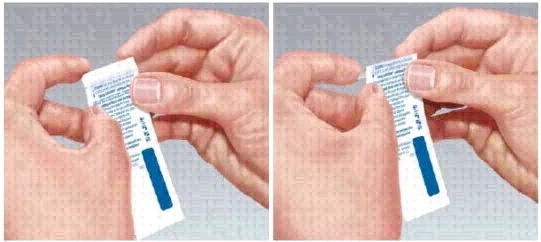
Figure 1
Tear down at slit or cut with scissors along the arrow (see Figure 2).

Figure 2
- Before taking SUBOXONE sublingual film, drink water to moisten your mouth. This helps the film dissolve more easily.
To take SUBOXONE sublingual film under your tongue (sublingual administration):
- Hold the film between two fingers by the outside edges.
Place the SUBOXONE sublingual film under your tongue, close to the base either to the left or right of the center (see Figure 3).
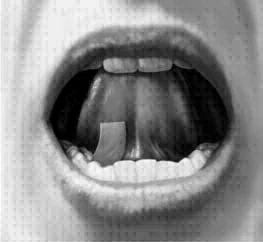
Figure 3
- If your healthcare provider tells you to take 2 films at a time, place the second film under your tongue on the opposite side. Avoid letting the films touch.
- Keep the films in place until they have completely dissolved.
- If your healthcare provider tells you to take a third film, place it under your tongue on either side after the first 2 films have dissolved.
To take SUBOXONE sublingual film on the inside of your cheek (buccal administration):
- Hold the film between two fingers by the outside edges.
Place one film on the inside of your right or left cheek (see Figure 4).
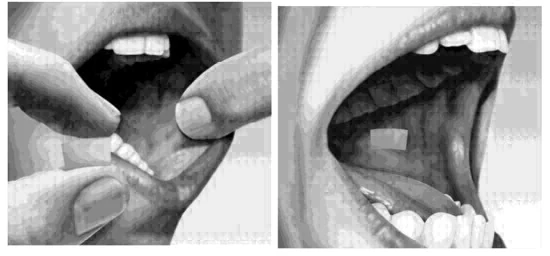
Figure 4
- If your healthcare provider tells you to take 2 films at a time, place the other film on the inside of the opposite cheek.
- Keep the films in place until they have completely dissolved.
- If your healthcare provider tells you to take a third film, place it on the inside of your right or left cheek after the first 2 films have dissolved.
- While SUBOXONE sublingual film is dissolving, do not chew or swallow the film because the medicine will not work as well.
- Talking while the film is dissolving can affect how well the medicine in SUBOXONE sublingual film is absorbed.
- After SUBOXONE is completely dissolved, rinse your mouth with water and swallow. Wait for at least one hour before brushing teeth.
- If you miss a dose of SUBOXONE sublingual film, take your medicine when you remember. If it is almost time for your next dose, skip the missed dose and take the next dose at your regular time. Do not take 2 doses at the same time unless your healthcare provider tells you to. If you are not sure about your dosing, call your healthcare provider.
- Do not stop taking SUBOXONE sublingual film suddenly. You could become sick and have withdrawal symptoms because your body has become used to the medicine. Physical dependence is not the same as drug addiction. Your healthcare provider can tell you more about the differences between physical dependence and drug addiction. To have fewer withdrawal symptoms, ask your healthcare provider how to stop using SUBOXONE sublingual film the right way.
If you take too much SUBOXONE sublingual film or overdose, call Poison Control or get emergency medical help right away.
Storing SUBOXONE Sublingual Film:
- Store SUBOXONE sublingual film at room temperature between 68°F to 77°F (20°C to 25°C).
- Keep SUBOXONE sublingual film in a safe place, out of the sight and reach of children.
Disposing of SUBOXONE Sublingual Film:
- Dispose of unused SUBOXONE sublingual film as soon as you no longer need them.
- Dispose of expired, unwanted or unused SUBOXONE sublingual film by removing the SUBOXONE sublingual film from the foil packaging, and promptly flushing down the toilet (if a drug take-back option is not readily available). Do not flush the SUBOXONE sublingual film foil pouch down the toilet. Visit www.fda.gov/drugdisposal for additional information on disposal of unused medicines.
If you need help with disposal of SUBOXONE sublingual film, call 1‐877‐782‐6966.
SUBOXONE® is a registered trademark of Indivior UK Limited.
This “Instructions for Use” has been approved by the U.S. Food and Drug Administration.
Revised 06/2022