


Patient information: uses, side effects, how to take - Opipza
What is the most important information I should know about OPIPZA?
OPIPZA may cause serious side effects, including:
- Increased risk of death in elderly people with dementia-related psychosis: Medicines like OPIPZA can increase the risk of death in elderly people who have lost touch with reality (psychosis) due to confusion and memory loss (dementia). OPIPZA is not for the treatment of people with dementia-related psychosis.
Increased risk of suicidal thoughts and actions: OPIPZA and antidepressant medicines increase the risk of suicidal thoughts and actions in people 24 years of age and younger, especially within the first few months of treatment or when the dose is changed.
- Depression and other mental illnesses are the most important causes of suicidal thoughts and actions.
How can I watch for and try to prevent suicidal thoughts and actions in myself or a family member?
- Pay close attention to any changes, especially sudden changes, in mood, behaviors, thoughts, or feelings or if you develop suicidal thoughts or actions. This is very important when OPIPZA or the antidepressant medicine is started or when the dose is changed.
- Call your healthcare provider right away to report new or sudden changes in mood, behavior, thoughts, or feelings of if you develop suicidal thoughts or actions.
- Keep all follow-up visits with your healthcare provider as scheduled. Call your healthcare provider between visits as needed, especially if you have concerns about symptoms.
Call a healthcare provider right away if you or your family member has any of the following symptoms, especially if they are new, worse, or worry you:
- thoughts about suicide or dying
- attempts to commit suicide
- new or worsening depression
- new or worsening anxiety
- feeling very agitated or restless
- panic attacks
- trouble sleeping (insomnia)
- new or worsening irritability
- acting aggressive, being angry, or violent
- acting on dangerous impulses
- an extreme increase in activity and talking (mania)
- other unusual changes in behavior or mood
See "What are the possible side effects of OPIPZA?" for more information about side effects.
What is OPIPZA?
OPIPZA is a prescription medicine used to treat:
- schizophrenia in people ages 13 years and older
- major depressive disorder (MDD) in adults when OPIPZA is used along with antidepressant medicines
- irritability associated with autistic disorder in children ages 6 years and older
- Tourette's disorder in children ages 6 years and older
It is not known if OPIPZA is safe and effective for treatment in children:
- under 13 years of age with schizophrenia
- with MDD
- under 6 years of age with irritability associated with autistic disorder
- under 6 years of age with Tourette's disorder
Who should not take OPIPZA?
Do not take OPIPZA if you are allergic to aripiprazole or any of the ingredients in OPIPZA. See the end of this Medication Guide for a complete list of ingredients in OPIPZA.
Before taking OPIPZA, tell your healthcare provider about all your medical conditions, including if you:
- have or had diabetes or high blood sugar in you or your family. Your healthcare provider should check your blood sugar before you start OPIPZA and during your treatment with OPIPZA.
- have or had high levels of total cholesterol, LDL cholesterol, or triglycerides, or low levels of HDL cholesterol
- have or had low or high blood pressure
- have or had heart problems or stroke
- have or had low white blood cell counts
- have or had seizures (convulsions)
are pregnant or plan to become pregnant. OPIPZA may harm your unborn baby. Taking OPIPZA during your third trimester of pregnancy may cause your baby to have abnormal muscle movements or withdrawal symptoms after birth. Talk to your healthcare provider about the risk to your unborn baby if you take OPIPZA during pregnancy.
- Tell your healthcare provider right away if you become pregnant during treatment with OPIPZA.
- If you become pregnant during treatment with OPIPZA, talk to your healthcare provider about registering with the National Pregnancy Registry for Atypical Antipsychotics. You can register by calling 1-866-961-2388 or go to http://womensmentalhealth.org/clinical-and-research-programs/pregnancyregistry/
- are breastfeeding or plan to breastfeed. OPIPZA passes into your breast milk. Talk to your healthcare provider about the best way to feed your baby during treatment with OPIPZA.
Tell your healthcare provider about all the medicines that you take, including prescription and over-the-counter medicines, vitamins, and herbal supplements.
OPIPZA and other medicines may affect each other causing possible serious side effects. OPIPZA may affect the way other medicines work, and other medicines may affect how OPIPZA works.
Your healthcare provider can tell you if it is safe to take OPIPZA with your other medicines. Do not start or stop any medicines during treatment with OPIPZA without first talking to your healthcare provider.
Know the medicines you take. Keep a list of your medicines to show your healthcare provider and pharmacist when you get a new medicine.
How should I take OPIPZA?
- Take OPIPZA exactly as your healthcare provider tells you to take it. Do not change the dose or stop taking OPIPZA unless your healthcare provider tells you to.
Take OPIPZA with or without food.
- Each OPIPZA film comes in a sealed child-resistant pouch. Do not open the pouch until you are ready to take your dose of OPIPZA.
- Let the film dissolve on your tongue before swallowing it.
- Do not chew the film or swallow it whole.
- Do not cut or split the film.
- See the detailed Instructions for Use for information on how to take a dose of OPIPZA.
- If you take too much OPIPZA, call your healthcare provider or Poison Help line at 1-800-222-1222, or go to the nearest hospital emergency room right away.
What should I avoid while taking OPIPZA?
- Do not drive, operate heavy machinery, or do other dangerous activities until you know how OPIPZA affects you. OPIPZA may make you drowsy or may affect your judgement, thinking, or motor skills.
Do not become too hot or dehydrated during treatment with OPIPZA.
- Do not exercise too much.
- In hot weather, stay inside in a cool place if possible.
- Stay out of the sun.
- Do not wear too much clothing or heavy clothing.
- Drink plenty of water.
What are the possible side effects of OPIPZA?
OPIPZA may cause serious side effects, including:
- See "What is the most important information I should know about OPIPZA?"
- Stroke (cerebrovascular problems) in elderly people with dementia-related psychosis that can lead to death
- Neuroleptic malignant syndrome (NMS), a serious condition that can lead to death. Call your healthcare provider right away or go to the nearest emergency room if you have some or all of the following signs and symptoms of NMS:
- high fever
- confusion
- changes in pulse, heart rate, and blood pressure
- stiff muscles
- sweating
- Uncontrolled body movements (tardive dyskinesia). OPIPZA may cause movements that you cannot control in your face, tongue, or other body parts. Tardive dyskinesia may not go away, even if you stop taking OPIPZA. Tardive dyskinesia may also start after you stop taking OPIPZA.
Problems with your metabolism such as:
High blood sugar (hyperglycemia) and diabetes. Increases in blood sugar can happen in some people who are treated with OPIPZA. Extremely high blood sugar can lead to coma or death. If you have diabetes or risk factors for diabetes such as being overweight, or a family history of diabetes, your healthcare provider should check your blood sugar before you start treatment and during your treatment with OPIPZA.
Call your healthcare provider if you have any of these symptoms of high blood sugar while receiving OPIPZA:
- feel very thirsty
- feel very hungry
- feel sick to your stomach
- need to urinate more than usual
- feel weak or tired
- feel confused, or your breath smells fruity
- Increased fat levels (cholesterol and triglycerides) in your blood. You healthcare provider may check your cholesterol and triglyceride levels during treatment with OPIPZA.
- Weight gain. You and your healthcare provider should check your weight regularly during treatment with OPIPZA.
- Unusual and uncontrollable (compulsive) urges. Some people taking OPIPZA have had unusual strong urges to gamble and gambling that cannot be controlled (compulsive gambling). Other compulsive urges can happen including sexual urges, shopping, and binge eating or eating that you cannot control. If you or your family members notice that you are having unusual urges or behaviors, talk to your healthcare provider.
- Decreased blood pressure (orthostatic hypotension) and fainting. You may feel lightheaded or faint when you rise too quickly from a sitting or lying position.
- Falls. OPIPZA may make you sleepy or dizzy, may cause a decrease in your blood pressure when changing position (orthostatic hypotension), and can slow your thinking and motor skills which may lead to falls that can cause fractures or other injuries.
- Low white blood cell count. Your healthcare provider may do blood cell count tests during your first few months of treatment with OPIPZA.
- Seizures (convulsions).
- Sleepiness, drowsiness, feeling tired, difficulty thinking and doing normal activities. See "What should I avoid while taking OPIPZA?"
- Problems controlling your body temperature so that you feel too warm. See " What should I avoid while taking OPIPZA? "
- Difficulty swallowing that can cause food or liquid to get into your lungs.
The most common side effects of OPIPZA in adults include:
- feeling like you need to move (akathisia)
- trouble sleeping (insomnia)
- restlessness
- constipation
- feeling tired
- blurred vision
The most common side effects of OPIPZA in children include:
- feeling sleepy or tired
- headache
- vomiting
- nausea
- increased or decreased appetite
- increased saliva or drooling
- uncontrolled movements, muscle stiffness, or tremors
- fever
- cold symptoms
- having no energy
These are not all of the possible side effects of OPIPZA.
Call your doctor for medical advice about side effects. You may report side effects to FDA at 1-800-FDA-1088.
How should I store OPIPZA?
- Store OPIPZA at room temperature between 68°F to 77°F (20°C to 25°C).
Keep OPIPZA and all medicines out of the reach of children.
General information about the safe and effective use of OPIPZA
Medicines are sometimes prescribed for purposes other than those listed in a Medication Guide. Do not use OPIPZA for a condition for which it was not prescribed. Do not give OPIPZA to other people, even if they have the same symptoms you have. It may harm them. You can ask your pharmacist or healthcare provider for information about OPIPZA that is written for health professionals.
What are the ingredients in OPIPZA?
Active ingredient: aripiprazole.
Inactive ingredients: hydroxypropyl cellulose, sodium lauryl sulfate, and sucralose. Imprinting ink contains glycerin, FD&C Blue No.1, polysorbate 20, and propylene glycol.
Distributed by
Carwin Pharmaceutical Associates, LLC
Hazlet, NJ 07730
Manufactured by
Xiamen LP Pharmaceutical Co., Ltd.
2010 Wengjiao West Road, Xiamen, Fujian 361027, China
For more information about OPIPZA go to https://carwinpharma.com/opipza/ or call 1-877-676-0778.
INSTRUCTIONS FOR USE
OPIPZA™ (o-PIP-sah)
(aripiprazole) oral film
This Instructions for Use contains information on how to take OPIPZA.
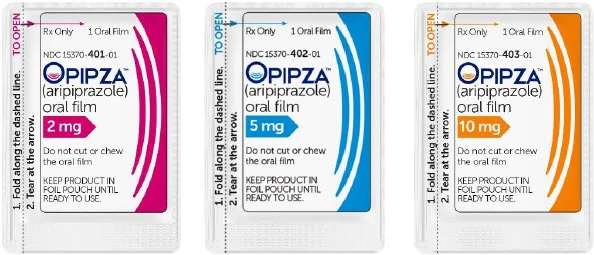
| Figure A |
|---|
 |
Important Information You Need to Know Before Taking OPIPZA.
Do not take OPIPZA until:
- you have read and understand these instructions.
- you have reviewed the steps with your healthcare provider on how to take it.
- you know the right time, how often, and the dose to take.
- you feel comfortable with how to use OPIPZA.
- If you are not sure about how or when to take OPIPZA, call your healthcare provider.
- OPIPZA is for oral use only (taken by mouth).
- Take OPIPZA with or without food.
- Each OPIPZA film comes in a sealed child-resistant pouch. Do not open the pouch until you are ready to take your dose of OPIPZA.
- Do not chew the film or swallow it whole.
- Do not cut or split the film.
- Check the expiration date printed on the pouch. Do not take OPIPZA if it is expired or if the pouch has been previously cut or pierced. Instead, throw away OPIPZA in your household trash and get a new pouch that is not expired or damaged.
Step 1. Preparing to Take OPIPZA
Wash and dry your hands before handling and taking OPIPZA (see Figure B ).
Figure B 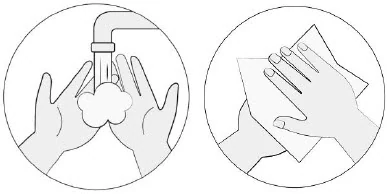
- Remove the number of pouches that you need for your prescribed dose from the OPIPZA carton.
- If you need to take more than 1 OPIPZA film for your dose, open only 1 pouch and take only 1 film at a time.
Step 2. Opening the OPIPZA Pouch
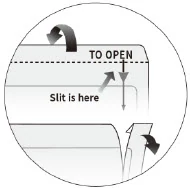
- Fold the pouch along the dashed line.
- Find the slit, the arrow, and the words "TO OPEN" on the OPIPZA pouch. Carefully tear the pouch in the direction of the arrow starting at the slit to open the pouch (see Figure C ).
| Figure C |
 |
Step 3. Taking OPIPZA
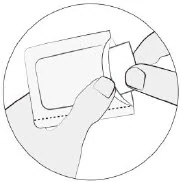
Carefully remove the film from the OPIPZA pouch (see Figure D ).
If the film tears or dissolves in your hands (hands were not dry enough) when it is removed from the pouch, throw away (dispose of) the film as described below (see "Disposing of OPIPZA") and get a new film. Repeat steps 1 to 3 with the new film.
| Figure D |
 |
- Take the OPIPZA film right away after opening the pouch and removing the film.
- Do not split or cut the OPIPZA film.
- Place the entire OPIPZA film on the top of your tongue and close your mouth. Let the film dissolve on your tongue before swallowing it. The film will dissolve quickly (see Figure E ).
- Do not chew the film or swallow the film whole.
- Do not rinse your mouth with liquid.
| Figure E |
 |
If you need more than 1 film for your prescribed dose wait until the previous film has completely dissolved before taking another OPIPZA film. Repeat steps 1 to 3 with each additional film that you need to take for your prescribed dose.
When you are finished taking OPIPZA, wash and dry your hands.
Disposing of OPIPZA
- Throw away (dispose of) any unused or expired OPIPZA in your household trash.
- Throw away the empty pouches in your household trash.
Storing OPIPZA
- Store OPIPZA at room temperature between 68°F to 77°F (20°C to 25°C).
- Keep OPIPZA in the unopened pouch until you are ready to take your dose.
- Keep OPIPZA and all medicines out of the reach of children.
Distributed by
Carwin Pharmaceutical Associates, LLC
Hazlet, NJ 07730
Manufactured by
Xiamen LP Pharmaceutical Co., Ltd.
2010 Wengjiao West Road, Xiamen, Fujian 361027, China
For more information or support regarding OPIPZA: Call 1-877-676-0778
The Instructions for Use has been approved by the U.S. Food and Drug Administration. Approved: 8/2024