


Prescribing information (package insert) - Ixinity
1 INDICATIONS AND USAGE
IXINITY, Coagulation Factor IX (Recombinant), is a human blood coagulation factor indicated in adults and children with hemophilia B for:
- On-demand treatment and control of bleeding episodes
- Perioperative management
- Routine prophylaxis to reduce the frequency of bleeding episodes
IXINITY is not indicated for induction of immune tolerance in patients with hemophilia B [see Warnings and Precautions (5.3)].
2 DOSAGE AND ADMINISTRATION
For intravenous use after reconstitution only.
2.1 Dose
- Each vial of IXINITY has the recombinant factor IX (rFIX) potency in international units (IU) stated on the vial.
- Dosage and duration of treatment for factor IX products depend on the severity of the factor IX deficiency, the location and extent of bleeding, the patient’s clinical condition, age, and pharmacokinetic parameters of factor IX, such as incremental recovery and half-life.
Initial Dose
Adolescents/Adults ≥ 12 years of age): Calculate the initial dose of IXINITY based on the empirical finding that one international unit (IU) of IXINITY per kg body weight increases the circulating level of factor IX by 0.98 international units/dL (IU/dL) of plasma in adults and children ≥ 12 years of age.
Children (< 12 years of age): Calculate the initial dose of IXINITY based on the empirical finding that one international unit (IU) of IXINITY per kg body weight increases the circulating level of factor IX by 0.79 international units/dL (IU/dL) of plasma in children < 12 years of age.
| Initial Dose = body weight (kg) x desired factor IX increase (% of normal or IU/dL) |
| × reciprocal of observed recovery (IU/kg per IU/dL) |
Incremental Recovery in Previously Treated Patients (PTPs)
Base calculation of the dose on the patient’s individual incremental recovery using serial factor IX activity assays, to account for the wide range of inter-individual differences in incremental recovery and the type of aPTT reagent used for the assay. Titrate the dose based on the patient’s clinical response and individual pharmacokinetics, in particular incremental recovery and half-life.
Adolescents/Adults (≥ 12 years of age):
For an incremental recovery of 0.98 IU/dL per IU/kg (0.98% of normal), calculate the dose as follows:
| Dose (IU) = body weight (kg) x desired factor IX increase (% of normal or IU/dL) |
| × 1.02 dL/kg |
Examples (assuming patient’s baseline factor IX level is < 1% of normal):
- 1.
A peak of 70% is required in a 60 kg patient. The appropriate dose would be
(60 kg × 70 IU/dL)/(0.98 IU/dL per IU/kg) = 4286 IU
- 2. A dose of 4550 international units (IUs) of IXINITY administered to a 70 kg patient should be expected to result in a peak post-infusion factor IX increase of 4550 IU x (0.98 IU/dL per IU/kg)/(70 kg) = 64 IU/dL (approximately 64% of normal)
Children (< 12 years of age):
A lower recovery has been observed in pediatric patients (< 12 years, n=20). For an incremental recovery of 0.79 IU/dL per IU/kg (0.79% of normal), calculate the dose as follows:
| Dose (IU) = body weight (kg) x desired factor IX increase (% of normal or IU/dL) |
| × 1.27 dL/kg |
Examples (assuming patient’s baseline factor IX level is < 1% of normal):
- 1. A peak of 60% is required in a 20 kg patient. The appropriate dose would be (20 kg x 60 IU/dL)/(0.79 IU/dL per IU/kg) = 1519 IU
- 2. A dose of 500 international units (IUs) of IXINITY administered to a 7 kg patient should be expected to result in a peak post-infusion factor IX increase of 500 IU x (0.79 IU/dL per IU/kg)/(7 kg) = 56 IU/dL (approximately 56% of normal)
- Monitor factor IX activity to ensure that the desired factor IX activity level has been achieved [see Warnings and Precautions (5.5) ].
- Titrate doses using factor IX activity and pharmacokinetic parameters such as half-life and incremental recovery, as well as by taking the clinical situation into consideration, to adjust the dose and frequency of repeated infusions as appropriate.
- Factor IX activity measurements in the clinical laboratory may be affected by the type of activated partial thromboplastin time (aPTT) reagent or laboratory standard used [see Warnings and Precautions (5.5) ].
On-demand Treatment and Control of Bleeding Episodes and Perioperative Management of Bleeding
Guides for dosing IXINITY in the on-demand treatment and control of bleeding episodes (Table 1) and perioperative management (Table 2) are provided in the tables below. Individual patients may vary in their response to factor IX and may demonstrate different levels of in vivo recovery and different half-lives.
For surgical procedures, initiate treatment with IXINITY early enough pre-operatively to achieve and maintain the desired factor IX level before starting the procedure.
Routine Prophylaxis
For adolescents/ adults ≥ 12 years of age the recommended dose for previously treated patients (PTPs) is 40 to 70 IU/kg twice weekly.
For children < 12 years of age the recommended dose for previously treated patients (PTPs) is 35 to 75 IU/kg twice weekly. Children (<12 years) have lower recovery, shorter half-life and higher clearance (based on per kg body weight) as compared to adolescents and adults. Adjust the dosing regimen (dose or frequency) based on the patient's clinical response. Adjust the dose based on the individual patient’s age, bleeding pattern, and physical activity.
Table 1 Dosing for On-demand Treatment and Control of Bleeding Episodes
| Adapted from Srivastava et al. 2013 (1). | |||
| Type of Bleeding Episode | Desired Peak Factor IX Level (% of normal or IU/dL) | Dosing Interval (hours) | Duration of therapy (days) |
Minor Early bleeds: uncomplicated hemarthroses and superficial muscle (except iliopsoas) with no neurovascular compromise, other soft tissue | 30-60 | 24 | 1-3, until healing is achieved |
Moderate Hemarthrosis of longer duration, recurrent hemarthrosis, mucous membranes, deep lacerations, hematuria | 40-60 | 24 | 2-7, until healing is achieved |
Major or Life Threatening Iliopsoas, deep muscle with neurovascular injury, substantial blood loss, CNS, pharyngeal, retropharyngeal, retroperitoneal | 60-100 | 12-24 | 2-14, until healing is achieved |
Table 2 Dosing for Perioperative Management
| Adapted from Srivastava et al. 2013 (1). | |||
| Type of Surgery | Desired Peak Factor IX Level (% of normal or IU/dL) | Dosing Interval (hours) | Duration of therapy (days) |
Minor (including uncomplicated dental extractions) | |||
| Pre-op | 50-80 | ||
| Post-op | 30-80 | 24 | 1-5, depending on type of procedure |
| Major | |||
| Pre-op | 60-80 | ||
| Post-op | 40-60 30-50 20-40 | 8-24 | 1-3 4-6 7-14 |
2.2 Preparation and Reconstitution
The procedures below are provided as general recommendations for the preparation and reconstitution of IXINITY.
Before starting reconstitution and administration you will need the following items that are included in each kit of IXINITY:
- One (or more) vial(s) of IXINITY 250, 500, 1000, 1500, 2000, or 3000 IU powder
- One (or more) 10 mL syringe(s), pre-filled with 5 mL of Sterile Water for Injection (pre-filled syringe) with plunger rod attached
- One sterile vial adapter with filter
In addition, you will need the following items that are not included in the kit:
- One sterile LUER-LOK™ syringe (administration syringe); additional or larger syringes may be required if pooling multiple vials
- Sterile alcohol swabs
- Sterile infusion set
- Sterile gauze pad
- Sterile bandage
Always work on a clean surface and wash your hands before performing the following procedures:
- 1. Use aseptic technique during reconstitution procedure.
- 2. Allow IXINITY and the pre-filled syringe to reach room temperature before use.
- 3.
Remove cap from the vial (See Figure A). Peel back the cover of the vial adapter package (leave the vial adapter in the package).
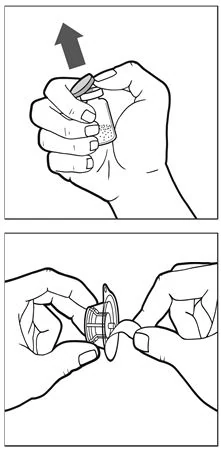
Figure A
- 4. Place the administration syringe, if using, and vial adapter on a clean flat work surface.
- 5.
Twist off the cap of the pre-filled syringe and place it on the clean flat surface (See Figure B).
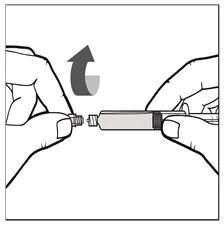
Figure B
- 6. Wipe the top of the IXINITY vial with an alcohol swab (or similar germicidal solution) and allow it to dry. Place on a clean, flat surface.
- 7.
Firmly hold the package containing the vial adapter on a clean, flat surface. Connect the pre-filled syringe to the vial adapter by pushing the syringe tip down onto the LUER-LOK in the center of the vial adapter, and screw until the syringe is secured (See Figure C).
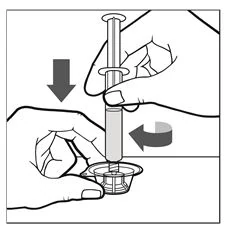
Figure C
- 8.
Carefully lift up the combined syringe-and-vial-adapter and remove it from the plastic package (See Figure D).
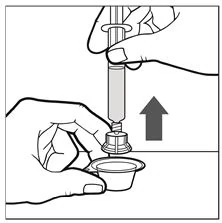
Figure D
- 9.
With one hand, continue to hold the combined syringe-and-vial-adapter. With the other hand, hold the IXINITY vial tightly on a clean, flat surface. In a continuous motion, place the vial adapter over the IXINITY vial; firmly push the filter spike of the vial adapter through the center of IXINITY vial’s rubber circle until the clear plastic cap snaps onto the IXINITY vial (See Figure E). Push the plunger down to complete the transfer of all liquid from the syringe to the IXINITY vial.
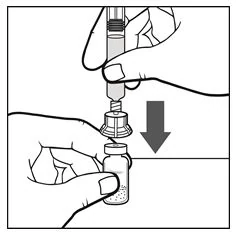
Figure E
- 10.
With the syringe and the vial still attached, gently swirl, in a circular motion, the IXINITY vial until the product is fully dissolved/reconstituted (See Figure F).
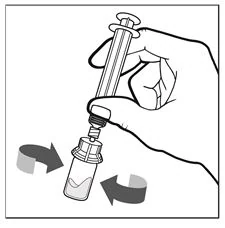
Figure F
- 11.
Remove the pre-filled syringe (now empty) from the vial adapter by turning it counterclockwise until it is completely detached (See Figure G).
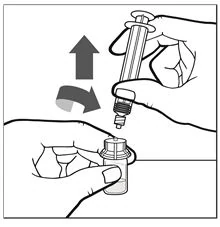
Figure G
- 12. Remove the administration syringe from its packaging.
- 13.
Leave the vial adapter attached to the vial and attach the administration syringe to the vial adapter by turning clockwise until it is securely attached (See Figure H).
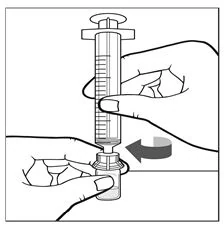
Figure H
- 14.
Keeping the administration syringe plunger pressed, turn the IXINITY vial upside down. Draw the solution from the vial through the filter spike in the vial adapter by pulling the plunger back slowly until all solution is transferred into the administration syringe (See Figure I).
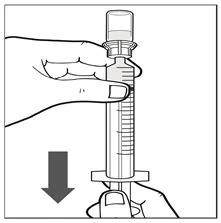
Figure I
- 15.
Keep the administration syringe plunger facing downwards and prevent it from moving. With one hand hold the vial-and-vial-adapter, and with the other hand firmly grasp the barrel of the administration syringe and unscrew the syringe from the vial adapter (See Figure J).
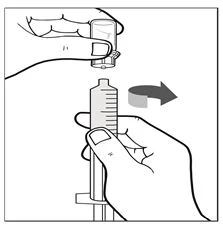
Figure J
- 16. If only dosing with a single vial, proceed to administer IXINITY via intravenous infusion; otherwise proceed to Pooling Instructions.
POOLING INSTRUCTIONS
- 1. If two or more vials are required to achieve the required dose, remove the pre-filled syringe from the vial adapter on the reconstituted second vial by turning it counterclockwise until it is completely detached.
- 2. Leave the vial adapter attached to the vial and attach the administration syringe containing the reconstituted IXINITY from the first vial by turning it clockwise until it is securely in place.
- 3. Turn the IXINITY vial upside down and slowly pull on the plunger rod to draw the solution into the administration syringe (see Figure I).
- 4.
Continue with remaining vials, if required. Once pooling is complete, proceed to administer IXINITY via intravenous infusion.
- After reconstitution of the lyophilized powder, all dosage strengths should yield a clear, colorless solution without visible particles. Discard if visible particulate matter or discoloration is observed.
- Infuse reconstituted solution immediately or within 3 hours of storage at room temperature after reconstitution. Do not refrigerate after reconstitution.
- Do not touch the syringe tip or the inside of the cap. Place the syringe containing the IXINITY solution on the clean surface, making sure that the tip does not touch anything.
2.3 Administration
For intravenous use after reconstitution only.
- 1. Inspect parenteral drug products visually for particulate matter and discoloration prior to administration, whenever solution and container permit.
- 2. Do not mix IXINITY with other medicinal products for infusion.
- 3. Attach the administration syringe containing the reconstituted IXINITY solution to a sterile infusion set.
- 4. Adapt the infusion rate to the comfort level of each patient, not exceeding 10 mL per minute.
- 5. Record the name and batch number of the product in the patient record.
Dispose of any unused product or waste material in accordance with local requirements.
3 DOSAGE FORMS AND STRENGTHS
IXINITY is available as a lyophilized white or almost white powder, in single-dose glass vials containing nominally 250, 500, 1000, 1500, 2000, or 3000 IU per vial.
4 CONTRAINDICATIONS
IXINITY is contraindicated in patients who have known hypersensitivity to IXINITY or its excipients, including hamster protein [see Warnings and Precautions (5.1) ].
5 WARNINGS AND PRECAUTIONS
5.1 Hypersensitivity Reactions
Hypersensitivity reactions, including anaphylaxis, has occurred with IXINITY. Signs of allergic reactions, which can progress to anaphylaxis, include urticaria, angioedema, chest or throat tightness, hypotension, lethargy, nausea, vomiting, dysphagia, paresthesia, restlessness, wheezing and dyspnea. Immediately discontinue administration and initiate appropriate treatment if allergic or anaphylactic-type reactions occur. In case of severe allergic reactions, consider alternative hemostatic measures.
There are literature reports of allergic reactions occurring in close temporal association with the development of factor IX inhibitors.
IXINITY contains trace amounts of Chinese hamster ovary (CHO) proteins. Patients treated with this product may develop hypersensitivity to CHO proteins.
5.2 Neutralizing Antibodies
Development of neutralizing antibodies (inhibitors) to IXINITY may occur. If expected factor IX activity plasma levels are not attained, or if bleeding is not controlled as expected with the calculated dose, perform an assay that measures factor IX inhibitor concentration [see Warnings and Precautions (5.5) ].
Patients with factor IX inhibitors are at an increased risk of severe hypersensitivity reactions or anaphylaxis if re-exposed to IXINITY.
5.3 Nephrotic Syndrome
Nephrotic syndrome may occur with IXINITY. Nephrotic syndrome has been reported following attempted immune tolerance induction in hemophilia B patients with factor IX inhibitors and a history of allergic reactions.
5.4 Thromboembolism
Thromboembolism has occurred with IXINITY use. One thrombotic event of deep vein thrombosis was reported in an adult female over 45 years of age from post-marketing experience. Because of the potential risk for thromboembolism with the use of factor IX products, monitor for early signs of thromboembolism and consumptive coagulopathy when administering IXINITY to patients with liver disease, fibrinolysis, peri-operative status, or risk for thromboembolic events or disseminated intravascular coagulation.
5.5 Monitoring Laboratory Tests
- Monitor patients for factor IX activity levels with the one-stage clotting assay to confirm that adequate factor IX levels have been achieved and maintained, when clinically indicated. Factor IX results can be affected by the type of aPTT reagent used [see Dosage and Administration (2.1) ].
- Monitor patients for the development of inhibitors if expected factor IX activity plasma levels are not attained, or if bleeding is not controlled with the recommended dose of IXINITY. Assays used to determine if factor IX inhibitor is present should be titered in Bethesda Units (BUs).
6 ADVERSE REACTIONS
The most common adverse reaction (> 2%) reported in clinical trials was headache.
6.1 Clinical Trials Experience
Because clinical trials are conducted under widely varying conditions, adverse reaction rates observed in the clinical trials of a drug cannot be directly compared to rates in the clinical trials of another drug and may not reflect the rates observed in clinical practice.
A total of 15 adverse reactions were reported following IXINITY administration among 7 of the 98 subjects who received at least one dose of IXINITY in trials of previously treated patients (PTPs), which included 11 subjects 12 - 18 years of age and 21 subjects < 12 years of age. A total of 12,952 infusions of IXINITY were administered to the 98 subjects. The adverse reactions that were assessed as probably or possibly related to study drug are provided in the table below.
Table 3 Summary of Adverse Reactions
MedDRA Standard System Organ Class | Adverse Reaction | Number of Events | Number of Subjects (n = 98) (%) |
| Congenital, familial and genetic disorders | Hemophilia (i.e., lack of efficacy) | 1 | 1 (1.0%) |
| General disorders and administration site conditions | Asthenia | 1 | 1 (1.0%) |
| Injection site discomfort | 1 | 1 (1.0%) | |
| Immune System Disorders | Hypersensitivity | 1 | 1 (1.0%) |
| Infections and infestations | Influenza | 1 | 1 (1.0%) |
| Nervous system disorders | Headache | 5 | 2 (2.0%) |
| Dysgeusia | 1 | 1 (1.0%) | |
| Lethargy | 1 | 1 (1.0%) | |
| Psychiatric disorders | Apathy | 1 | 1 (1.0%) |
| Depression | 1 | 1 (1.0%) | |
| Skin and subcutaneous tissue disorders | Rash pruritic | 1 | 1 (1.0%) |
6.2 Postmarketing Experience
The following adverse reactions have been identified during post approval use of IXINITY.
Because these reactions are reported voluntarily from a population of uncertain size, it is not always possible to reliably estimate their frequency or establish a causal relationship to drug exposure.
Immune System Disorders: Anaphylaxis
Vascular Disorders: Deep vein thrombosis
The following class adverse reactions have been seen with another recombinant factor IX: inadequate factor IX recovery, inhibitor development, angioedema, hypotension, and thrombosis.
8 USE IN SPECIFIC POPULATIONS
8.1 Pregnancy
Risk Summary
There are no data with IXINITY use in pregnant women to inform a drug-associated risk. Animal reproduction studies have not been conducted with IXINITY.
In the U.S. general population, the estimated background risk of major birth defect and miscarriage in clinically recognized pregnancies is 2-4% and 15-20%, respectively.
8.2 Lactation
Risk Summary
There is no information regarding the presence of IXINITY in human milk, the effect on the breastfed infant, or the effects on milk production. The developmental and health benefits of breastfeeding should be considered along with the mother’s clinical need for IXINITY and any potential adverse effects on the breastfed infant from IXINITY or from the underlying maternal condition.
8.4 Pediatric Use
The safety, efficacy, and pharmacokinetics of IXINITY have been evaluated in previously treated pediatric patients (PTP). Subjects received twice or once weekly prophylaxis treatment (four subjects were prescribed once a week treatment, 17 were prescribed twice a week treatment) with IXINITY for a mean of 158.7 exposure days [see Clinical Studies (14)].
Compared to adolescents and adults (≥ 12 years old), children (< 12 years old) showed higher Factor IX body weight-adjusted clearance, shorter half-life, and lower recovery. Adjustment in dose or dosing frequency may be needed [see Dosage and Administration (2.1) and Clinical Pharmacology (12.3)].
There were no inhibitors detected [see Clinical Pharmacology (12.6)]. One patient in the pediatric study had an adverse reaction of hypersensitivity resulting in withdrawal from the study. No new safety concerns were identified in the pediatric trial [see Adverse Reactions (6.1)].
8.5 Geriatric Use
Clinical studies of IXINITY did not include subjects aged 65 and over. It is not known whether elderly patients respond differently than younger patients. Individualize dose selection for elderly patients [see Dosage and Administration (2.1) ].
11 DESCRIPTION
IXINITY [coagulation factor IX (recombinant)] is a purified protein that has 415 amino acids. It has an amino acid sequence that is comparable to the Thr148 allelic form of plasma-derived factor IX. Coagulation factor IX (recombinant) is a single-chain glycoprotein with a molecular mass of about 55,000 Dalton that is secreted by a genetically engineered mammalian cell line derived from Chinese hamster ovary (CHO) cells. No human or animal proteins are added during any stage of manufacturing or formulation of IXINITY. The CHO cell line secretes recombinant factor IX into a defined cell culture medium that does not contain hormones. The recombinant factor IX is purified by a chromatography purification process. The process includes three validated steps for virus inactivation and removal, namely, solvent/detergent treatment, a chromatographic step, and nanofiltration. The process also includes a validated step to reduce the presence of CHO proteins in the final drug product.
IXINITY is formulated as a sterile, nonpyrogenic lyophilized powder to be reconstituted with Sterile Water for Injection for intravenous administration. It does not contain any preservatives and is available in single-dose vials containing the labeled amount of factor IX activity, expressed in international units (IU). Each vial contains nominally 250, 500, 1000, 1500, 2000, or 3000 IU of recombinant coagulation factor IX. After reconstitution of the lyophilized powder, all dosage strengths yield a clear, colorless solution. The concentrations of excipients are:
| Excipient | Concentration |
| Histidine | 10 mM |
| Mannitol | 3% |
| Trehalose Dihydrate | 1% |
| Sodium Chloride | 66 mM |
| Polysorbate 80 | 0.0075% |
12 CLINICAL PHARMACOLOGY
12.1 Mechanism of Action
Hemophilia B is a sex-linked hereditary disorder of blood coagulation caused by a deficiency in factor IX and results in bleeding into joints, muscles or internal organs, either spontaneously or as a result of accidental or surgical trauma. Treatment with IXINITY replaces factor IX, thereby enabling a temporary correction of the factor deficiency and correction of the bleeding tendencies.
12.2 Pharmacodynamics
The administration of IXINITY increases plasma levels of factor IX and can temporarily correct the coagulation defect in these patients, as reflected by decrease in the aPTT.
12.3 Pharmacokinetics
PTPs ≥ 12 years of age
Pharmacokinetic studies with IXINITY were conducted in 32 previously treated patients (PTPs) ≥ 12 years of age with severe to moderately severe hemophilia B (factor IX ≤ 2 IU/dL). Intravenous administration of 75 ± 5 IU/kg of IXINITY to 32 PTPs showed an initial recovery ranging from 51 to 113 IU/dL (median 70 IU/dL). The results of pharmacokinetic studies are summarized below in Table 4.
Table 4 Pharmacokinetic Parameters for IXINITY PTPs ≥ 12 Years of Age (n = 32)
| Parameters | Mean (± SD) (Range) |
| AUC0–∞ (IU/dL/hr) | 1573 (± 451) (862-2643) |
| Incremental Recovery (IU/dL per IU/kg) | 0.98 (± 0.21) (0.67-1.50) |
| Terminal Half-life (hours) | 24 (± 7) (13-43) |
| Cmax (IU/dL) | 73 (± 17) (51-113) |
| Mean Residence Time (hours) | 32 (± 6) (19-47) |
| VDss (mL/kg) | 175 (± 57) (102-314) |
| Clearance [mL/(kg·hr)] | 5.1 (± 1.3) (2.8-7.7) |
Pharmacokinetic parameters were re-assessed in a subset of 14 subjects after routine treatment with IXINITY for a median of 5.8 months (range 3.1 to 18.6 months) as summarized in Table 5 below.
Table 5 Pharmacokinetic Parameters for IXINITY Following Repeat-Dosing PTPs ≥ 12 Years of Age (n = 14)
| Parameters | Initial Mean (± SD) | Repeat-Dosing PK Mean (± SD) |
| AUC0–∞ (IU/dL/hr) | 1438 (± 409) | 1530 (± 435) |
| Incremental Recovery (IU/dL per IU/kg) | 0.96 (± 0.22) | 0.95 (± 0.18) |
| Terminal Half-life (hours) | 24 (± 7) | 24 (± 6) |
| Cmax (IU/dL) | 73 (± 16) | 73 (± 15) |
| Mean Residence Time (hours) | 30 (± 6) | 31 (± 5) |
| VDss (mL/kg) | 193 (± 62) | 185 (± 70) |
| Clearance [mL/(kg·hr)] | 5.6 ± (1.3) | 5.3 (± 1.5) |
Repeat dosing did not impact the pharmacokinetics of IXINITY.
The PK data were divided into two subgroups of subjects with a BMI ≤ 30 (n = 26) or BMI > 30 (n = 6). The AUC(0-∞) and Cmax values of IXINITY were 40% and 34% higher, respectively, in subjects with BMI > 30.
PTPs <12 years of age
Pharmacokinetics were evaluated in 20 previously treated patients (PTPs) < 12 years of age with severe to moderately severe hemophilia B (factor IX ≤ 2 IU/dL).
Following a single intravenous administration of 75 ± 5 IU/kg of IXINITY, an initial recovery ranged from 44 to 109 IU/dL (median 77 IU/dL). Pediatric patients < 12 years of age showed higher clearance, shorter half-life, and lower incremental recovery compared to adults and adolescents (≥ 12 years old). The results of pharmacokinetic studies are summarized below in Table 6.
Table 6 Pharmacokinetic Parameters for PTPs <12 Years of Age Following 75 ± 5 IU/kg of IXINITY (n=20)
a n=6 for t1/2, AUC0-∞, MRT, CL, and Vdss b n=6 for t1/2 and n=5 for AUC0-∞, MRT, CL, and Vdss c n=12 for t1/2 and n=11 for AUC0-∞, MRT, CL, and Vdss | |||
| Parameters | < 6 years N=10a Mean (± SD) | 6 to < 12 years N=10b Mean (± SD) | All subjects < 12 years N=20c Mean (± SD) |
| AUC0–∞ (IU/dL/hr) | 1118 (± 307) | 1232 (± 81.7) | 1170 (± 231) |
| Incremental Recovery (IU/dL per IU/kg) | 0.73 (± 0.15) | 0.85 (± 0.15) | 0.79 (± 0.16) |
| Terminal Half-life (hours) | 15.9 (± 1.4) | 16.8 (± 2.8) | 16.3 (± 2.2) |
| Cmax (IU/dL) | 56.4 (± 13.7) | 63.7 (± 9.86) | 60.1 (± 12.2) |
| Mean Residence Time (hours) | 19.9 (± 2.48) | 20.0 (± 2.87) | 20.0 (± 2.53) |
| VDss (mL/kg) | 144 (± 36.7) | 123 (± 18.9) | 134 (± 30.6) |
| Clearance [mL/(kg·hr)] | 7.3 (± 1.9) | 6.1 (± 0.5) | 6.8 (± 1.5) |
12.6 Immunogenicity
The observed incidence of anti-drug antibodies is highly dependent on the sensitivity and specificity of the assay. Differences in assay methods preclude meaningful comparisons of the incidence of anti-drug antibodies in the studies described below with the incidence of anti-drug antibodies in other studies, including those of IXINITY or of other factor IX products.
Routine Prophylaxis
PTPs ≥ 12 years of age
All subjects participating in the clinical trial were monitored for inhibitory and non-inhibitory antibodies to factor IX and antibodies for CHO cell proteins (CHOP) at the following time points; pre-infusion, after the first five exposure days, and then every three months thereafter.
No subjects developed inhibitors to factor IX, including 55 subjects with more than 50 exposure days and 45 of those subjects with more than 100 exposure days. Non-inhibitory factor IX binding antibodies were detected in 30% (23/77) of subjects, including five subjects positive at baseline. In three of the subjects, the non-inhibitory factor IX antibodies were persistent, while in the remainder the antibodies were sporadic and non-persistent.
Antibodies against CHOP were observed in 29% (20/68) of subjects. The manufacturing process for IXINITY was modified to include an additional step to ensure increased clearance of CHOP to address the anti-CHOP response seen in clinical trials. Subjects who transitioned to the modified IXINITY for at least three months (n = 17), anti-CHOP antibodies remained negative (n = 10), stable/nonspecific assay binding (n = 5) or declined (n = 2) after the transition.
PTPs <12 years of age
All subjects participating in the clinical trial were monitored for inhibitory and non-inhibitory antibodies to factor IX and antibodies for CHOP at the following time points; at screening, pre-infusion, then at exposure day 5, 12, 25, 50, 75, 100, and then every three months thereafter.
No subjects developed inhibitors to factor IX, including 19 subjects with more than 50 exposure days and 16 of those subjects with more than 100 exposure days. Non-inhibitory factor IX binding antibodies were detected in 14% (3/21) of subjects, including two subjects positive at baseline; in one subject, the non-inhibitory factor IX antibodies were persistent.
Anti-CHOP antibodies were detected in 14% (3/21) of subjects; in one subject, the anti-CHOP antibodies were persistent. There was no correlation between the three subjects who developed non-inhibitory anti-factor IX antibodies and the three subjects who tested positive for anti-CHOP antibodies.
Effects of non-inhibitory anti-factor IX antibodies and anti-CHOP antibodies
Detection of non-inhibitory anti-factor IX antibodies or anti-CHOP antibodies has been reported following administration of other factor IX products or other recombinant coagulation factor products produced in CHO cells. No adverse events were associated with non-inhibitory anti-factor IX antibodies or anti-CHOP antibodies. However, the effect of these antibodies on the pharmacokinetics and effectiveness of IXINITY is unknown.
13 NONCLINICAL TOXICOLOGY
13.1 Carcinogenesis, Mutagenesis, Impairment of Fertility
No macroscopic or microscopic pathologies in reproductive organs were observed in repeated dose toxicity studies of IXINITY in animals. Animal studies regarding impairment of fertility were not conducted.
No nonclinical investigations of genotoxicity, carcinogenicity, or toxicity to reproduction and development have been conducted with IXINITY.
14 CLINICAL STUDIES
Routine Prophylaxis
PTPs ≥ 12 years of age
The efficacy of IXINITY was evaluated in a prospective, open-label, uncontrolled multicenter study in which a total of 77 subjects (76 male, 1 female carrier in surgery study) were exposed to IXINITY for treatment of hemophilia B or for perioperative management. All male subjects either had severe or moderately severe (factor IX level ≤ 2 IU/dL) hemophilia B, or had factor IX levels between 2-8 IU/dL and clinically severe hemophilia B with recurrent hemarthroses and required surgery (n = 3 in surgery study, one continued to treatment phase). Previously treated patients (PTPs) were defined as patients with a minimum of 150 exposures to another factor IX preparation. Of the 77 subjects, 68 PTPs between 7 and 64 years of age received IXINITY either as routine prophylaxis or on-demand treatment. Routine prophylaxis treatment was defined as PTPs who received a starting dose of 40-70 international units (IU) per kg twice weekly. Excluded from the study were patients with a history of a detectable factor IX inhibitor (≥ 0.6 BU), a history of hypersensitivity reactions following exposure to factor IX-containing products, a known allergic reaction to hamster proteins, evidence of severe liver impairment, evidence of impaired renal function, CD4 count < 400 cells/mm3, or any coagulation defect other than hemophilia B. In addition, there was a prospective, open-label, uncontrolled, multicenter substudy where 17 subjects (16 male, 1 female carrier) underwent surgeries (19 major procedures in males) receiving IXINITY for perioperative management; some of the surgery subjects also participated in the treatment trial.
Of the 68 PTPs in the treatment group, subjects were primarily prescribed a routine prophylaxis (n = 58) or an on-demand regimen (n = 9); one subject was not assigned a regimen. Subjects were allowed to switch regimens during the course of the study. As a result, 61 subjects were treated at some point with routine prophylaxis treatment and 12 were treated at some point with an on-demand regimen. Subjects in the routine prophylaxis therapy group received mean intravenous doses of 55 ± 12.8 IU/kg of IXINITY twice weekly. Subjects in the on-demand therapy group received mean doses of 60 ± 18.2 IU/kg (median 59.3, interquartile range 49.9, 71.8) for bleeding episodes. The mean number of exposure days (ED) was 138.2 (median 127.5), including 45 subjects with ≥ 100 ED and 55 subjects with ≥ 50 ED. Median duration on study for the on-demand group was 14.1 months (range 2.3-36.9).
Annualized bleeding rates for PTPs ≥12 years of age in prophylaxis arm are summarized in Table 7.
Table 7: Efficacy of Prophylaxis with IXINITY (N=61) for subjects ≥ 12 years of age
| aThe lower quartile, or first quartile (Q1) is the value under which 25% of data points are found when arranged in increasing order. The upper quartile, or third quartile (Q3), is the value under which 75% of data points are found when arranged in increasing order. | |
| Total ABR | |
| Mean ± SD | 3.55 ± 7.19 |
| Median (Q1, Q3)a | 1.52 (0;3.47) |
| Spontaneous ABR | |
| Mean ± SD | 1.07± 3.06 |
| Median (Q1, Q3)a | 0.00 (0;1.22) |
| Subjects with zero bleeding episodes | |
| n (%) | 19 (31.1%) |
PTP < 12 years of age
The PK, safety and efficacy of IXINITY for treatment of hemophilia B was evaluated in a prospective multi-center, multi-country study of 21 previously treated patients (PTPs) (10 subjects < 6 years of age and 11 subjects 6 to < 12 years of age). PTP were defined as patients who were exposed to a factor IX containing product for ≥ 50 exposure days (ED). All subjects had severe to moderately severe (factor ≤ 2%). Subjects with history of hypersensitivity reactions following exposure to factor IX-containing products, a known allergic reaction to hamster proteins, evidence of severe liver impairment, evidence of impaired renal function, CD4 count < 400 cells/mm3, or any coagulation defect other than hemophilia B, evidence of thrombotic disease, fibrinolysis, or disseminated intravascular coagulation (DIC) were excluded from the trial.
Subjects received IXINITY prophylaxis once to twice weekly, the recommended dose range was 35 – 75 IU/kg. Subjects < 6 years received a mean intravenous dose of 58 (45-72) ± 8.9 IU/kg and subjects 6 to < 12 received a mean intravenous dose of 52 (46-60) ± 11.6 IU/kg. Twenty-one subjects completed the PK analysis, and 19 subjects completed a minimum of 50 ED. The mean number of ED was 159 (median 163), including 16 subjects with ≥ 100 ED and 7 subjects with ≥ 200 ED.
Annualized bleeding rates for PTPs <12 years of age are summarized in Table 8.
Table 8: Efficacy of Prophylaxis with IXINITY (N=21) for subjects <12 years of age
| aThe lower quartile, or first quartile (Q1) is the value under which 25% of data points are found when arranged in increasing order. The upper quartile, or third quartile (Q3), is the value under which 75% of data points are found when arranged in increasing order. | |
| Total ABR | |
| Mean ± SD | 2.34 ± 4.23 |
| Median (Q1, Q3)a | 0.86 (0;1.96) |
| Spontaneous ABR | |
| Mean ± SD | 0.63 ± 1.26 |
| Median (Q1, Q3)a | 0.00 (0;0.85) |
| Subjects with zero bleeding episodes | |
| n (%) | 7 (33.3%) |
Control of Bleeding Episodes
PTPs ≥ 12 years of age
A total of 508 bleeding episodes were treated with IXINITY, of which 286 bleeds were recorded for subjects treated with the routine prophylaxis treatment regimen and 222 with the on-demand regimen. Bleeding resolved in 360 episodes (70.9%) after a single infusion of IXINITY and in 66 (13.0%) episodes after two infusions. For 24 bleeding episodes (4.7%), five or more infusions were required; these 24 bleeding episodes were predominantly related to trauma, target joints, or muscle bleeds.
Hemostatic efficacy to resolve a bleed was rated by subjects as excellent or good in 84% of treated bleeding episodes. Excellent was defined as a dramatic response with abrupt pain relief and clear reduction in joint or hemorrhage site size, and good was defined as pain relief or reduction in hemorrhage size that may have required an additional infusion for resolution.
PTP < 12 years of age
There were 52 bleeding episodes; nine did not require treatment and resolved with IXINITY routine prophylaxis once or twice-weekly treatment. In 45 of 52 (86.5%) of the episodes, hemostasis was achieved with zero to two infusions. For four bleeding episodes (7.7%) three infusions were required, two episodes (3.8%) four infusions were required, and one episode (1.9%) required five infusions for resolution.
Hemostatic efficacy to resolve a bleed was rated by subjects as excellent or good in 41 (95%) of the 43 bleeding episodes that required treatment; two bleeding episodes did not have efficacy assessments. Excellent was defined as a dramatic response with abrupt pain relief and clear reduction in joint or bleeding site size and good was defined as pain relief or reduction in bleeding site size that may have required an additional infusion for resolution.
Perioperative Management
The efficacy analysis of IXINITY in perioperative management included 19 major surgeries performed in 16 male PTPs between 12 and 56 years of age (female carrier not included in efficacy analysis). Efficacy of IXINITY for support of major surgery was based on the surgeon’s assessment of efficacy including: a) at the time of surgery as estimation of blood loss as ‘less than expected’, ‘expected’, or ‘more than expected’; and b) at 12 and 24 hours post-surgical assessments of hemostasis as ‘adequate’, ‘better than adequate’, or ‘poorly controlled’. Transfusion requirements to support surgery were also monitored. There were no transfusions required during the procedures.
IXINITY was administered during major surgical procedures as bolus (n = 13) or continuous infusion (n = 6). IXINITY was rated as adequate or better in controlling hemostasis post-surgery as assessed by the surgeon when used in various procedures, including, knee arthroplasty (n = 8), elbow arthroplasty (n = 2), knee amputation (n = 1), percutaneous Achilles tendon lengthening (n = 1), open inguinal hernia repair (n = 1), tibiotalar fusion (n = 1), arthroscopic synovectomy (n = 2), and debridement (ankle, knee) (n = 3). In all instances, blood loss at surgery was ‘expected’ or ‘less than expected’ as assessed by the surgeon.
15 REFERENCES
- 1. Srivastava A, et al. World Federation of Hemophilia, Guidelines for the management of hemophilia. Haemophilia. 2013; 19(1):e1–e47.
- 2. Ingerslev J, Christiansen K, Ravn HB, et al. Antibodies to heterologous proteins in hemophilia A patients receiving recombinant factor VIII (Recombinate™). Thromb Haemost. 2002; 87:626–634.
16 HOW SUPPLIED/STORAGE AND HANDLING
IXINITY is supplied as a lyophilized powder in single-dose glass vials containing the labeled amount of factor IX activity, expressed in international units (IU). The actual factor IX activity in IU is stated on the label of each vial.
Kits include one single-dose vial (containing nominally 250, 500, 1000, 1500, 2000, or 3000 IU per vial), a 10 mL syringe pre-filled with 5 mL of Sterile Water for Injection with plunger rod attached, and a vial adapter with filter. None of the kit components are made with natural rubber latex.
| Color Code | Nominal Strength | Kit NDC Number |
| Yellow | 250 IU | 59137-287-05 |
| Blue | 500 IU | 59137-282-05 |
| Green | 1000 IU | 59137-283-05 |
| Orange | 1500 IU | 59137-284-05 |
| Red | 2000 IU | 59137-288-05 |
| Brown | 3000 IU | 59137-289-05 |
250 IU strength only; store at 2 to 8°C (36 to 46°F).
500, 1000, 1500, 2000, and 3000 IU strengths: store at 2 to 25°C (36 to 77°F).
Do not freeze.
Keep the vial in the carton and protect from light.
Infuse reconstituted solution immediately or within 3 hours of storage at room temperature after reconstitution. Do not refrigerate after reconstitution.
17 PATIENT COUNSELING INFORMATION
- Advise patients to read the FDA-approved patient labeling (Patient Information and Instructions for Use).
- Inform patients of the early signs of hypersensitivity reactions (including hives, generalized urticaria, chest tightness, wheezing, and hypotension) and anaphylaxis. Instruct patients to discontinue use of the product and contact their physician if these symptoms occur.
- Advise patients to contact their physician or treatment facility for further treatment and/or assessment if they experience a lack of clinical response to factor IX replacement therapy, as in some cases this may be a manifestation of an inhibitor.
Manufactured by:
Medexus Pharma, Inc.
Chicago, IL 60606
U.S. License No. 2220