


Prescribing information (package insert) - SevenFACT
WARNING: THROMBOSIS
- Serious arterial and venous thrombotic events may occur following administration of SEVENFACT ® . [See Warnings and Precautions ( 5.1 )]
- Discuss the risks and explain the signs and symptoms of thrombotic and thromboembolic events to patients who will receive SEVENFACT ® .
- Monitor patients for signs or symptoms of activation of the coagulation system and for thrombosis.
1 INDICATIONS AND USAGE
SEVENFACT is indicated for the treatment and control of bleeding episodes occurring in adults and adolescents 12 years of age and older with hemophilia A or B with inhibitors.
Limitation s of Use:
SEVENFACT is not indicated for the treatment of patients with congenital Factor VII deficiency.
2 DOSAGE AND ADMINISTRATION
2.1 Dose
For intravenous use after reconstitution only.
- Dose and duration of SEVENFACT depend on the location and severity of the bleeding, need for urgent hemostasis, frequency of administration, and known patient responsiveness to FVIIa-containing bypassing agents during prior bleeding events. Treatment with SEVENFACT should be initiated as soon as a bleeding event occurs.
- The dose, frequency, and duration of SEVENFACT therapy should be based on the patient’s clinical response and hemostasis evaluation.
- The use of laboratory assessment(s) of coagulation (PT/INR, aPTT, FVII:C) does not necessarily correlate with or predict the hemostatic effectiveness of SEVENFACT.
- Dose adjustment may be required if the patient has received other procoagulant therapies prior to treatment with SEVENFACT.
Based on the clinical trial program for SEVENFACT, the recommended initial dose should be adjusted based on the criteria provided in Table 1.
Table 1 Dosing for Treatment and Control of Bleeding
| Type of Bleeding | Dosing Regimen Recommendation | Duration of Therapy |
Mild and Moderate Joint, superficial muscle, soft tissue and mucous membranes. | 75 mcg/kg repeated every 3 hours until hemostasis is achieved or Initial dose of 225 mcg/kg. If hemostasis is not achieved within 9 hours, additional 75 mcg/kg doses may be administered every 3 hours as needed to achieve hemostasis. Consider alternative treatments if successful control of bleeding does not occur within 24 hours of the first administration of SEVENFACT. | Continue therapy to support healing and prevent recurrent hemorrhage after hemostasis to maintain the hemostatic plug. The site and severity of bleeding should determine therapy duration. |
Severe Life or limb threatening hemorrhage, iliopsoas and deep muscle with neurovascular injury, retroperitoneum, intracranial, or gastrointestinal. Patients should seek immediate medical care if signs or symptoms of severe bleeding occur in the home setting. | 225 mcg/kg initially, followed if necessary 6 hours later with 75 mcg/kg every 2 hours until hemostasis is achieved. Subsequent Dosing: After achieving hemostasis, base the decision for dosing on clinical assessment and the type of bleeding. Consider the risk of thrombosis with subsequent dosing after achieving hemostatic efficacy. | Continue therapy to support healing and prevent recurrent hemorrhage. The site and severity of bleeding and the use of other procoagulant therapies should determine therapy duration. |
2.2 Reconstitution
- Follow the procedures below for reconstitution of SEVENFACT.
- Calculate the amount of SEVENFACT required and select the appropriate SEVENFACT packages containing the matching pre-filled syringe of sterile Water for Injection, and the vial adapters.
- Reconstitute each vial with the pre-filled syringe provided with each vial of SEVENFACT.
Overview of SEVENFACT P ackage :
Figure 1 Vial with SEVENFACT L yophilized P owder
Lyophilized Powder Drug Vial
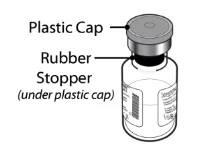
Figure 2 Syringe P lunger R od and P re-filled S yringe with Water for Injection D iluent
Syringe Plunger Rod Pre-filled S yringe with Diluent
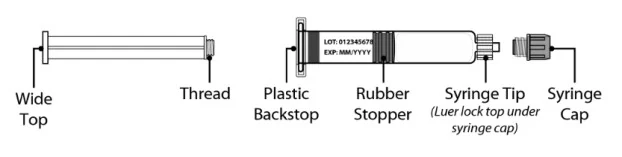
Figure 3 SEVENFACT 1 mg and 2 mg V ial A dapter and SEVENFACT 5 mg V ial A dapter
Vial Adapters* and Packaging
1 mg and 2 mg V ial A dapter 5 mg V ial A dapter
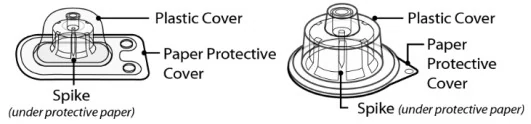
* N ote: Each SEVENFACT kit will contain only one vial adapter.
The instructions below serve as a general guideline for reconstitution of SEVENFACT.
Reconstitution :
- 1. Based on the prescribed dose, take out the number of SEVENFACT kits (each kit containing one vial of SEVENFACT powder and one pre-filled Water for Injection diluent syringe with one vial adapter for needleless reconstitution), an infusion set (not supplied in the kit) and an alcohol swab (not supplied in the kit). Check the expiration date on the side of the box(es) for the SEVENFACT kit(s).
- 2. Always use aseptic technique. Wash your hands with soap and water and dry them using a clean towel or air dry.
- 3. Take out the contents of one kit and one alcohol swab. Place items on a clean surface.
- 4. Inspect all contents of the kit. Make sure each vial has a matching colored syringe.
- 5.
Bring SEVENFACT (lyophilized powder) and the specified pre-filled syringe (diluent) to room temperature. The specified volume of diluent corresponding to the amount of SEVENFACT is as follows:
1 mg (1000 micrograms) vial + 1.1 mL Water for Injection diluent in pre-filled syringe
2 mg (2000 micrograms) vial + 2.2 mL Water for Injection diluent in pre-filled syringe
5 mg (5000 micrograms) vial + 5.2 mL Water for Injection diluent in pre-filled syringe
- 6. Remove the plastic cap from the SEVENFACT vials to expose the central portion of the rubber stopper. Cleanse the rubber stoppers with an alcohol swab and allow to dry prior to use.
- 7. Peel back the protective paper from the vial adapter. Do not remove the vial adapter from the package.
- 8. Place the SEVENFACT vial on a flat surface. While holding the vial adapter package, place the vial adapter over the SEVENFACT vial and press down firmly on the package until the vial adapter spike breaks through the rubber stopper.
- 9. Lightly squeeze the plastic cover and lift up to remove it from the vial adapter. Note: the 5 mg vial adapter may not sit flat against the vial, but it is fully functional.
- 10. Remove the syringe cap from the pre-filled syringe by holding the syringe body with one hand to unscrew the syringe cap (turn to the left).
- 11. While holding the edges of the vial adapter, screw on the pre-filled syringe (turn to the right) a few turns until it starts to tighten.
- 12. Insert the plunger rod into the syringe, then screw a few turns (turn to the right) so that the plunger rod is attached to the gray rubber stopper in the syringe.
- 13. Push the plunger rod to slowly inject all the diluent into the vial. Keep the plunger rod pressed down and swirl the vial gently until the powder is dissolved.
- 14. The reconstituted solution is clear to slightly opaque. All powder must be mixed with no particles floating in the liquid.
- 15. Without withdrawing any drug back into the syringe, unscrew the syringe from the vial adapter (turn to the left) until it is completely detached.
- 16. Withdraw the liquid drug from the vial(s), using an infusion syringe provided by the pharmacy; the syringe should be large enough to hold the prescribed dose.
- 17. The reconstituted solution should be stored in the vial at room temperature, but can be stored between 36oF to 86oF (2oC to 30oC) for up to 4 hours after reconstitution. After reconstitution with the specified volume of diluent, each vial contains approximately 1 mg per mL SEVENFACT (1000 micrograms per mL).
2.3 Administration
For Intravenous Use Only .
- Visually inspect the reconstituted solution for particulate matter and discoloration prior to administration. Do not use if particulate matter or discoloration is observed.
- Do not freeze reconstituted solution or store it in a syringe.
- SEVENFACT must be infused within 4 hours after reconstitution.
- SEVENFACT should be infused over 2 minutes or less as a bolus intravenous infusion.
- Do not mix with other infusion solutions.
- Any unused solution should be discarded 4 hours after reconstitution.
3 DOSAGE FORMS AND STRENGTHS
SEVENFACT is a white to off-white lyophilized powder for reconstitution in a colorless solution for injection. It is supplied in single-dose vial sizes containing 1 mg, 2 mg or 5 mg of coagulation factor VIIa (recombinant)-jncw.
The diluent for reconstitution of SEVENFACT is supplied in single-dose prefilled glass syringes containing 1.1 mL, 2.2 mL or 5.2 mL sterile Water for Injection. It is a clear colorless solution.
After reconstitution with the appropriate volume of Water for Injection diluent, each mL of SEVENFACT contains 1 mg per mL of coagulation factor VIIa (recombinant)-jncw (1,000 micrograms per mL).
4 CONTRAINDICATIONS
SEVENFACT is contraindicated in patients with:
- known allergy to rabbits or rabbit proteins. Exposure to SEVENFACT in these patients can result in severe hypersensitivity reaction.
- severe hypersensitivity reaction to SEVENFACT or any of its components. Exposure to SEVENFACT in these patients can result in severe hypersensitivity reaction.
5 WARNINGS AND PRECAUTIONS
5.1 Thrombosis
Serious arterial and venous thrombosis can occur with coagulation factor VIIa containing products including SEVENFACT.
The following patients may have increased risk of thrombosis with use of SEVENFACT:
- History of congenital or acquired hemophilia receiving concomitant treatment with aPCC/PCC (activated or non-activated prothrombin complex) or other hemostatic agents
- History of atherosclerotic disease, coronary artery disease, cerebrovascular disease, crush injury, septicemia, or thromboembolism.
- Monitor patients who receive SEVENFACT for the development of signs and symptoms of activation of the coagulation system or thrombosis. When there is laboratory confirmation of intravascular coagulation or presence of clinical thrombosis, reduce the dose of SEVENFACT or stop treatment, depending on the patient’s condition.
5.2 Hypersensitivity and Infusion-Related Reactions
Hypersensitivity and infusion-related reactions including anaphylaxis can occur with coagulation factor VIIa containing products including SEVENFACT. Sign and symptoms may include hives, itching, rash, difficulty breathing, swelling around the mouth and throat, tightness of the chest, wheezing, dizziness or fainting, and low blood pressure. Patients with known IgE-based hypersensitivity to casein may be at higher risk of hypersensitivity reactions. In the event of hypersensitivity or infusion-related reactions, discontinue SEVENFACT and manage according to clinical practice guideline.
5.3 Neutralizing Antibodies
Neutralizing antibodies may occur with the use of SEVENFACT. If treatment with SEVENFACT does not result in adequate hemostasis, then suspect development of neutralizing antibody as the possible cause and perform testing as clinically indicated.
Neutralizing antibodies to other Factor VIIa-containing products have been observed in congenital Factor VII-deficient patients. SEVENFACT has not been studied in this patient population. [ See limitation of use statement under Indications and Usage ( 1 )].
5.4 Laboratory Tests
Laboratory coagulation parameters (PT/INR, aPTT, FVII:C) do not correlate with clinical response to SEVENFACT treatment.
6 ADVERSE REACTIONS
6.1 Clinical Trials Experience
Because clinical trials are conducted under widely varying conditions, adverse reaction rates observed in the clinical trials of a drug cannot be directly compared to rates in the clinical trials of another drug and may not reflect the rates observed in practice.
The safety database described in this section reflect exposure to SEVENFACT in two clinical studies, Study 1 and Study 2. A total of 42 patients with Hemophilia A or B with or without inhibitors received SEVENFACT: 27 patients in Study 1 at doses 75 mcg/kg and 225 mcg/kg and 15 patients in Study 2 at three escalating dose levels 25 mcg/kg, 75 mcg/kg and 225 mcg/kg [see Clinical Studies (14)] .
The most common adverse reactions (incidence ≥1%) reported in clinical trials for SEVENFACT were headache, dizziness, infusion-site discomfort, infusion-site hematoma, infusion-related reaction, and fever.
Adverse reactions reported in the two clinical studies are shown in Table 2.
Table 2 Adverse Reactions Occurring in Clinical Studies
| Preferred Terms | Number of Patient Adverse Reactions (% Incidence Rate) Study 2 (N=15) | Number of A dverse R eactions * Study 2 | Number of Patient Adverse Reactions (% Incidence Rate) Study 1 (N=27) | Number of A dverse R eactions * Study 1 |
| Infusion site discomfort | - | - | 1 (4) | 4 |
| Infusion site hematoma | - | - | 1 (4) | 2 |
| Dizziness | 1 (7) | 2 | - | - |
| Headache | 1 (7) | 1 | - | - |
| Body temperature increase | - | - | 1 (4) | 1 |
| Infusion related reaction** | 1 (7) | 1 | - | - |
* Three patients experienced adverse reactions in Study 2 and two patients experienced adverse reactions in Study 1.
** Symptoms resolved without any intervention and did not recur with subsequent administration.
7 DRUG INTERACTIONS
Clinical experience with pharmacologic use of FVIIa-containing products indicates an elevated risk of serious thrombotic events when used simultaneously with activated prothrombin complex concentrates.
8 USE IN SPECIFIC POPULATIONS
8.1 Pregnancy
Risk Summary
There are no adequate and well-controlled studies using SEVENFACT in pregnant women to determine whether there is a drug-associated risk. Animal studies evaluating the embryo-fetal teratogenic potential of SEVENFACT have not been conducted. It is unknown whether SEVENFACT can cause fetal harm when administered to a pregnant woman or can affect fertility.
In the U.S. general population, the estimated background risks of major birth defect and miscarriage in clinically recognized pregnancies are 2-4% and 15-20%, respectively.
8.2 Lactation
Risk Summary
There is no information regarding the presence of SEVENFACT in human milk, the effect on the breastfed infant, and the effects on milk production. The developmental and health benefits of breastfeeding should be considered along with the mother’s clinical need for SEVENFACT and any potential adverse effects on the breastfed infant from SEVENFACT or from the underlying maternal condition.
8.3 Females and Males of Reproductive Potential
Risk Summary
In Study 1, male patients cautioned to avoid sexual activity without condoms received SEVENFACT for the treatment of bleeding episodes. No pregnancies from sexual partners were reported. The relative benefits of SEVENFACT should be weighed against any potential risk arising from exposure in sexually active patients.
All clinical studies of SEVENFACT were performed on males, as males are predominantly affected with the congenital form of hemophilia. No adverse effects on the mating index, fertility, or conception rate were observed following administration of SEVENFACT at dose levels up to 13-fold higher than the highest recommended human dose in healthy male rats prior to and during cohabitation with healthy untreated female rats [See Carcinogenesis, Mutagenesis, Impairment of Fertility ( 13.1 )].
8.4 Pediatric Use
The safety and effectiveness of SEVENFACT have been established for pediatric patients ≥ 12 years of age for the treatment and control of bleeding episodes. Limited clinical data for SEVENFACT in adolescents (≥12 to <18 years) were collected in an adult and adolescent study (Study 1). A total of five patients were dosed with SEVENFACT. These five patients were treated for a total of 79 bleeding episodes (all mild or moderate) that occurred while patients were still under 18 years of age. Hemostatic efficacy in this subgroup (n=5) was comparable to efficacy observed in the overall population [See Clinical Studies ( 14 )].
The safety and effectiveness of SEVENFACT for the treatment and control of bleeding episodes have not been established in children < 12 years of age. Effectiveness was not demonstrated in a trial of 25 pediatric patients 6 months to < 12 years of age. The safety and effectiveness of SEVENFACT in infants less than 6 months of age have not been evaluated.
8.5 Geriatric Use
Safety and effectiveness of SEVENFACT in patients >65 years of age have not been evaluated in clinical trials (Study 1 and Study 2). The presence of age-related comorbidities and the attendant risks associated with thrombotic and thromboembolic events should be considered when administering SEVENFACT to patients older than 50 years of age.
11 DESCRIPTION
SEVENFACT [coagulation factor VIIa (recombinant)-jncw] is a sterile, white to off-white lyophilized powder in a single-dose vial containing either 1 mg, 2 mg or 5 mg of coagulation factor VIIa (recombinant)-jncw as the active ingredient. SEVENFACT is to be reconstituted with Sterile Water for Injection in a pre-filled syringe supplied with the product. The reconstituted product is a clear to slightly opaque solution of coagulation factor VIIa (recombinant)-jncw at a concentration of 1 mg of protein per mL with a pH of approximately 6.0. SEVENFACT is formulated with arginine, isoleucine, citrate, glycine, lysine and polysorbate 80. It does not contain any antimicrobial preservatives nor human or bovine plasma-derived proteins.
The active ingredient in SEVENFACT, activated coagulation Factor VII, is a glycoprotein of 406 amino acids with a molecular weight of approximately 50 kilodaltons. The amino acid sequence of activated coagulation Factor VII is identical to that of human plasma-derived Factor VIIa. It is >99% pure with a nominal specific activity of 45,000 IU/mg of protein when tested against the World Health Organization international standard for human Factor VIIa activity.
SEVENFACT is produced by recombinant DNA technology using genetically engineered rabbits into which the DNA coding sequence for human Factor VII has been introduced. Human Factor VII is expressed in the rabbit mammary gland and secreted into the milk. During purification and processing, Factor VII is enzymatically converted to activated Factor VII. The manufacturing process of SEVENFACT includes specific steps to reduce impurities. SEVENFACT may contain trace amounts of rabbit proteins. The purification process also includes steps that are validated to inactivate or remove viruses, such as Xenotropic murine leukemia virus (X-MuLV), bovine viral diarrhea virus (BVDV), Pseudorabies virus (PRV), Feline Calicivirus (FCV), and Porcine Parvovirus (PPV).
12 CLINICAL PHARMACOLOGY
12.1 Mechanism of Action
The active ingredient in SEVENFACT is a recombinant analog of human Factor VIIa, a vitamin K-dependent coagulation factor. In the presence of both calcium and phospholipids, Factor VIIa in a complex with tissue factor (TF) activates Factor X to Factor Xa, directly bypassing the reactions that require Factor VIII or Factor IX. Activation of Factor X to Factor Xa initiates the common pathway of the coagulation cascade in which prothrombin is activated to thrombin, which then converts fibrinogen to fibrin to form a hemostatic plug, thereby achieving clot formation at the site of hemorrhage (hemostasis). This process may also occur in the absence of TF on the surface of activated platelets.
12.2 Pharmacodynamics
Laboratory assessment of coagulation does not necessarily correlate with or predict the hemostatic effectiveness of SEVENFACT.
SEVENFACT demonstrated a dose and concentration-dependent pharmacodynamics effect on the coagulation system, including shortening of the activated partial thromboplastin time (aPTT) and the prothrombin time (PT), and increasing the thrombin generation with platelets (TGT) and the maximum clot firmness (ROTEM-FIBTEM test).
12.3 Pharmacokinetics
Pharmacokinetic (PK) evaluation was conducted in an open-label, randomized, dose-comparison study to evaluate safety and pharmacokinetic of SEVENFACT in 28 adult patients (ages 18-75 yrs) with hemophilia A with or without inhibitors who were not actively bleeding. Patients received a single intravenous administration of either 75 mcg/kg or 225 mcg/kg dose of SEVENFACT. The PK parameters evaluated were maximum plasma concentration (Cmax) of FVIIa (ng/mL), clearance (L/h), volume of distribution (Vss (L)), area under the plasma concentration-time curve from Time 0 (dosing) to infinity (AUC0-inf) (ng*h/mL), and half-life time (t1/2 (h)), calculated from non-compartmental analysis (NCA) PK analyses using a validated activity assay.
Table 3 Pharmacokinetic Parameters of SEVENFACT (Arithmetic Mean [CV%])
PK Parameter ( Arithmetic Mean [ CV% ] ) | C max ( ng/mL ) | Clearance (L/h) | Vss (L) | AUC 0-inf (ng*h/mL) | t 1/2 (h) |
75 mcg/kg (n=14) | 938 (37) | 5.1 (37) | 8.2 (37) | 1108 (447) | 2.3 (16) |
225 mcg/kg (n=14) | 3211 (23) | 4.5 (20) | 7.0 (22) | 3571 (26) | 2.0 (8) |
Five minutes after infusion, plasma SEVENFACT levels were 938 ng/mL and 3211 ng/mL for 75 mcg/kg and 225 mcg/kg dose groups respectively. Observed plasma concentration-time profiles show a biexponential decay from the maximal concentration to return to baseline approximately 8 hours post-administration. Exposure PK parameters Cmax and AUC0-inf suggested dose dependence over the ranges studied. The clearance of SEVENFACT was approximately 5.1 L/h and 4.5 L/h for 75 mcg/kg and 225 mcg/kg dose levels respectively. Half-life time was approximately 2 hours at both levels. Results were based on Non-Compartmental Analysis. (Table 3)
12.6 Immunogenicity
The observed incidence of anti-drug antibodies is highly dependent on the sensitivity and specificity of the assay. Differences in assay methods preclude meaningful comparisons of the incidence of anti-drug antibodies in the studies described below with the incidence of anti-drug antibodies in other studies, including those of SEVENFACT or of other Factor VIIa containing products.
In Study 1, two out of 27 patients had a positive screening assay for anti-SEVENFACT antibody at baseline, prior to exposure to SEVENFACT, and at follow-up visits. One of these two patients had a transient SEVENFACT antibody with an additional confirmatory test for anti-SEVENFACT antibody, which was confirmed as non-neutralizing.
In Study 2, five of 15 patients tested positive for anti-SEVENFACT antibody using a screening assay. The confirmatory assay was negative for all patients at all time points.
No patient developed anti-rabbit milk protein antibodies during treatment with SEVENFACT.
There was no identified clinically significant effect of anti-drug antibodies on pharmacokinetics, pharmacodynamics, safety, or effectiveness of SEVENFACT over the study duration.
13 NONCLINICAL TOXICOLOGY
13.1 Carcinogenesis, Mutagenesis, Impairment of Fertility
Studies in animals to evaluate the potential effect of SEVENFACT on carcinogenesis or mutagenesis were not conducted. Male rats intravenously infused with SEVENFACT at 0.1, 0.3, 1 and 3 mg/kg/day (up to 13-fold higher than the highest recommended human dose of 225 mcg/kg), beginning 28 days before cohabitation and during cohabitation did not display adverse effects for the mating index, fertility, or conception rate. Comparing animals administered vehicle to animals administered SEVENFACT, there were no differences in sperm motility, morphology, or concentration.
13.2 Animal Toxicology and/or Pharmacology
The no observed adverse effect level (NOAEL) in 28-day repeat-dose toxicity studies in male Sprague-Dawley rats and Cynomolgus monkeys was 1 mg/kg/day, which is 4-fold higher than the highest recommended human dose. Anti-drug antibody formation was observed by Day 29 in both animal species. The NOAEL in a 13-week repeat-dose toxicity study in male and female Cynomolgus monkeys was 1 mg/kg/day. Anti-drug antibody formation was observed in all animals by Day 28. Antibody presence was not associated with any adverse effects in either animal species.
14 CLINICAL STUDIES
The efficacy and safety of SEVENFACT for treatment of bleeding episodes was evaluated in Study 1, a global, multicenter, randomized, open-label, cross-over study (NCT02020369). The study enrolled 27 patients with hemophilia A or B with inhibitors who were treated for 468 bleeding events, of which 465 were mild or moderate and three were severe bleeding events.
The population characteristics were as follows: Mean age was 31 years (range 12 to 54 years) including five patients 12 to < 18 years of age who experienced 79 bleeding events. Patients were male, predominantly Caucasian (93%), median of 10 (range 3-50) bleeding episodes in six months prior to study enrollment. Overall, target joint(s)/bleeding site(s) were reported in 63% of patients at study entry.
Of the 468 bleeding events in diverse anatomic locations that were treated, 82% were spontaneous and the remaining (18%) were traumatic bleeding episodes; 465 were mild or moderate bleeding events and three were severe (refer to Table 5). The majority (98%) of bleeding events were treated at home, with 88% treated within one hour of recognition of bleeding.
Treatment Regimens for Mild or Moderate Bleeding Episodes
For mild to moderate bleeding episodes, patients were randomized to one of two initial dose regimens of SEVENFACT:
- 75 mcg/kg followed by subsequent doses of 75 mcg/kg every 3 hours as necessary to achieve hemostatic efficacy. A total of eight administrations were allowed in this dose regimen.
- 225 mcg/kg dose followed nine hours later with 75 mcg/kg doses every 3 hours as necessary to achieve hemostatic efficacy. A total of six administrations were allowed in this dose regimen.
Treatment with SEVENFACT was discontinued when bleeding persisted 24 hours after the first administration of SEVENFACT.
In Study 1, patients were randomized to one of two initial dosing regimens and continued on the dose regimen for three months, after which the patients were crossed over to the other dose regimen for three months.
Treatment Regimens for Severe Bleeding Episodes
Patients in the randomized study who experienced a severe bleed were administered the initial dose of 225 mcg/kg SEVENFACT at home, and were required to receive subsequent treatments at 75 mcg/kg every two hours in a hospital or hemophilia treatment center (HTC), if additional doses were considered necessary for treatment of ongoing bleeding. If response to treatment after the first or any subsequent administrations of study drug were satisfactory (i.e., efficacy assessment was rated as “good” or “excellent”), the dosing interval was changed from two hours to three hours for 1 to 2 days, after which the interval could be increased to 4 to 12 hours, depending on the severity of the bleeding episode, for as long as needed.
B leeding Assessment
The primary endpoint of the study was successful treatment of mild or moderate bleeding episode at 12 hours after initial SEVENFACT dose administration. Success was defined by a combination of the following: patient’s response of “good” or “excellent” using a 4-point hemostatic efficacy scale (presented in Table 4), no further treatment with SEVENFACT beyond the 12-hour time point, no other hemostatic treatment needed for the bleeding episode, no administration of blood products, and no increase in pain beyond 12 hours.
Table 4 The 4-point Hemostatic Efficacy Scale Used to Assess Efficacy of Treatment
| Patient and/or HCP * Evaluation | Therapeutic Response | Description |
| None | Lack of hemostatic efficacy | No noticeable effect of the treatment on the bleeding or worsening of patient’s condition. Continuation of treatment with the study drug was needed. |
| Moderate | Lack of hemostatic efficacy | Some effect of the treatment on the bleeding was noticed (e.g., pain decreased, or bleeding signs improved) but the bleeding continued and required continued treatment with the study drug. |
| Good | Hemostatic efficacy | Symptoms of the bleeding (e.g., swelling, tenderness, and decreased range of motion in the case of musculoskeletal hemorrhage) had largely been reduced by the treatment, but had not completely disappeared. Symptoms had improved enough to not require more infusions of the study drug. |
| Excellent | Hemostatic Efficacy | Full relief of pain and cessation of objective signs of the bleeding (e.g., swelling, tenderness, and decreased range of motion in the case of musculoskeletal hemorrhage). No additional infusion of study drug was required. |
| *Healthcare provider | ||
The primary efficacy analysis compared hemostatic efficacy of each dosing regimen with a prespecified objective performance criterion (OPC) of 55%. This OPC was based on historical data for hemostatic efficacy of bypassing agents. The study was powered to detect a 15% improvement over OPC for each dosing regimen. Results of the primary efficacy analysis are shown in Table 5.
Of the 465 mild or moderate bleeding episodes, 17 bleeding events were not evaluable due to missing a hemostatic efficacy assessment at 12 hours.
The proportion of mild or moderate bleeding events with hemostatic efficacy at 12 hours was 82% in the 75 mcg/kg dose regimen group and was 91% in the 225 mcg/kg dose regimen group.
Hemostatic efficacy was evaluated in 79 bleeding events in the five adolescent patients: for the 75 mcg/kg dose regimen, hemostatic efficacy was 93% (95% CI; 81%- 99%) and for the 225 mcg/kg dose regimen, it was 91% (95% CI; 77%-98%), with the confidence intervals given by the Clopper-Pearson exact method.
Table 5 Efficacy of SEVENFACT at 12 Hours for Treatment and Control of Mild or Moderate Bleeding Episodes
75 mcg /kg ( N =25) 1 | 225 mcg /kg ( N =25) 1 | Overall ( N =27) 1 | |
| Number of bleeding episodes | 252 | 213 | 465 |
| Number of bleeds with hemostatic efficacy | 197 (78.1%) | 188 (88.2%) | 385 (82.8%) |
| Number of failures | 44 (17.4.%) | 19 (8.9%) | 63 (13.5%) |
| Number of missing | 11 (4.3%) | 6 (2.8%) | 17 (3.7%) |
| P roportion of bleeds with hemostatic efficacy [ 95% CI] 2 | 82 % [7 2 % , 9 1 % ] | 91 % [ 8 4 % , 98 % ] | 86 % [ 7 8 % , 9 3 % ] |
| p-value3 | <0.001 | <0.001 | |
1 N in the column header indicates number of patients who had at least 1 bleeding episode treated with a given dose of study drug. 2 Analysis was based on data as observed. No missing value imputation was made. 3 p-value from 1-sided normal approximation test of H0: p ≤0.55, where p is the true proportion of successfully treated mild or moderate bleeding episodes at 12 hours, with adjustment for the correlation among bleeding episodes for a given patient. The null hypothesis of hemostatic efficacy less than or equal to 55% was rejected. Note: Stratified by actual treatment regimen at the time of the bleeding episode. CI = confidence interval. | |||
The median and mean (SD) numbers of administrations per mild or moderate bleeding episode were 2.0 and 2.5 (1.75) for the 75 mcg/kg dose regimen and 1.0 and 1.4 (0.96) for the 225 mcg/kg dose regimen.
The median time to attain good or excellent assessment by the patient was six hours for the 75 mcg/kg dose regimen and three hours for the 225 mcg/kg dose regimen.
There were three severe bleeding episodes, of which one was a traumatic intramuscular bleeding episode and two were spontaneous bleeding episodes in the right hip and kidney. Hemostasis was achieved at 12 hours in the three severe bleeding events. One severe bleed was treated with three 225 mcg/kg doses administered every six hours, which was a deviation from the study protocol-specified dosing. The remaining two patients were treated with 1 and 5 doses of SEVENFACT respectively.
No patient received any alternative therapy prior to 24 hours. In addition, 97.6% of bleeding episodes treated with the 75 mcg/kg dose regimen, and 99.5% of bleeding episodes treated with the 225 mcg/kg dose regimen, did not require treatment with alternative bypassing agents.
1 6 HOW SUPPLIED/STORAGE AND HANDLING
How Supplied
- SEVENFACT [coagulation factor VIIa (recombinant)-jncw], is supplied as a room temperature stable, white to off-white, lyophilized powder in single-dose vials, one vial per carton. The diluent for reconstitution of SEVENFACT is Water for Injection supplied as a clear colorless solution in a pre-filled syringe.
- Single 1 mg, 2 mg or 5 mg vials of SEVENFACT are available in packages as indicated in Table 6.
Table 6 SEVENFACT Presentations
| Presentation | Cap Color Indication | NDC Number | Contents |
| 1 mg per vial | Yellow | NDC 71127-1000-1 |
|
| 2 mg per vial | Green | NDC 71127-2000-1 |
|
| 5 mg per vial | Purple | NDC 71127-5000-1 |
|
- The SEVENFACT vials are made of glass, closed with a bromobutyl rubber stopper (not made with natural rubber latex), and sealed with an aluminum cap.
- The pre-filled diluent syringes are made of glass, with a siliconized bromobutyl rubber plunger (not made with natural rubber latex).
Storage and Handling
- Prior to reconstitution, the SEVENFACT kit should be stored at room temperature but can be stored between 36°F to 86°F (2°C to 30°C), protected from light in the product package. Do not freeze.
- After reconstitution, SEVENFACT should be stored at room temperature but can be stored between 36°F to 86°F (2°C to 30°C), for up to 4 hours. Do not freeze or store in syringes.
1 7 PATIENT COUNSELING INFORMATION
Advise patients:
- to read the FDA-approved patient labeling (Patient Product Information and Instructions for Use).
about the early signs of hypersensitivity reactions and to seek medical help if the following occur:
- Hives, itching, rash, difficulty breathing, swelling around the mouth and throat, tightness of the chest, wheezing, dizziness or fainting, low blood pressure, or other symptoms of anaphylaxis.
about the signs of thrombosis and to seek medical help if the following occur:
- New-onset swelling and pain in the limbs or abdomen, new-onset chest pain, shortness of breath, loss of sensation or motor power, or altered consciousness or speech.
Revised: November 13, 2025
U.S. License Number: 2061
“SEVENFACT” is a registered trademark of LFB S.A.
PATENT Information: https://hemabiodup.wpengine.com/patents/
For I nformation C ontact :
Call: 855.718.HEMA (4362)
Email: medinfo@hemabio.com
Manufacture d by :
Laboratoire Français du Fractionnement et des Biotechnologies S.A. (LFB S.A.)
Puteaux, 92800
France
U.S. License Number: 2061
Distributed by:
HEMA Biologics
Louisville, KY 40241
U.S. License Number: 2061