


Patient information: uses, side effects, how to take - Enspryng
What is the most important information I should know about ENSPRYNG?
ENSPRYNG may cause serious side effects including:
- 1.
Infections. ENSPRYNG can increase your risk of serious infections some of which can be life-threatening. Talk to your healthcare provider if you are being treated for an infection or call them right away if you think you have signs of an infection, with or without a fever, such as:
- chills, feeling tired, muscle aches, cough that will not go away or a sore throat.
- skin redness, swelling, tenderness, pain or sores on your body.
- diarrhea, belly pain, or feeling sick.
- burning when you urinate or urinating more often than usual.
- Your healthcare provider will check if you have an infection and treat it if needed before you start or continue to take ENSPRYNG.
- Your healthcare provider should test you for hepatitis and tuberculosis (TB) before you start taking ENSPRYNG.
- All required vaccinations should be completed before starting ENSPRYNG. People using ENSPRYNG should not be given 'live' or 'live-attenuated' vaccines. 'Live' or 'live-attenuated' vaccines should be given at least 4 weeks before you start ENSPRYNG. Your healthcare provider may recommend that you get a 'non-live' (inactivated) vaccine, such as some of the seasonal flu vaccines. If you plan to get a 'non-live' (inactivated) vaccine, it should be given, whenever possible, at least 2 weeks before you start ENSPRYNG.
Increased liver enzymes.
Your healthcare provider should order blood tests to check your liver enzymes before and while you are taking ENSPRYNG. Your healthcare provider will tell you how often you will need to have these blood tests. Make sure you get all of your follow-up blood tests as ordered by your healthcare provider. Your healthcare provider will tell you if you need to wait to start ENSPRYNG if your liver enzymes are increased.
Low neutrophil count.
ENSPRYNG can cause a decrease in your neutrophil counts in your blood. Neutrophils are white blood cells that help the body fight off bacterial infections. Your healthcare provider should order blood tests to check your neutrophil count while you are taking ENSPRYNG.
See "What are the possible side effects with ENSPRYNG?"
What is ENSPRYNG?
ENSPRYNG is a prescription medicine used to treat:
- neuromyelitis optica spectrum disorder (NMOSD) in adults who are aquaporin-4 (AQP4) antibody positive.
- thyroid eye disease (TED) no matter how severe it is or how long a person has had it.
It is not known if ENSPRYNG is safe and effective in children.
Do not take ENSPRYNG if you:
- are allergic to satralizumab-mwge or any of the ingredients in ENSPRYNG. See "What are the ingredients in ENSPRYNG?" at the end of this Medication Guide for a complete list of ingredients in ENSPRYNG.
- have an active hepatitis B infection.
- have active or untreated inactive (latent) TB.
Before you take ENSPRYNG, tell your healthcare provider about all of your medical conditions, including if you:
- have or think you have an infection. See "What is the most important information I should know about ENSPRYNG?"
- have liver problems.
- have ever had hepatitis B or are a carrier of the hepatitis B virus..
- have had or have been in contact with someone with tuberculosis.
- have had a recent vaccination or are scheduled to receive any vaccination.
are pregnant, think that you might be pregnant, or plan to become pregnant. It is not known if ENSPRYNG will harm your unborn baby.
- Pregnancy Registry: There is a registry for pregnant women who take ENSPRYNG for NMOSD. The purpose of this registry is to check the health of the pregnant mother and her baby. If you are pregnant or become pregnant while taking ENSPRYNG for NMOSD, talk to your healthcare provider about how you can join this pregnancy registry, or you may contact the registry at 1-833-277-9338 to enroll.
are breastfeeding or plan to breastfeed. It is not known if ENSPRYNG passes into your breast milk. Talk to your healthcare provider about the best way to feed your baby if you take ENSPRYNG.
Tell your healthcare provider about all the medicines you are taking, including prescription and over-the-counter medicines, vitamins, and herbal supplements.
How should I take ENSPRYNG?
- ENSPRYNG is provided as a solution in a single-dose, prefilled syringe of 120 mg/mL of satralizumab-mwge, or autoinjector of 120 mg/mL or 180 mg/1.5mL of satralizumab-mwge.
- See the Instructions for Use inside the carton for complete instructions for the right way to prepare and inject ENSPRYNG.
- ENSPRYNG is given by an injection under the skin (subcutaneously). If your healthcare provider decides that you or your caregiver can give your injections of ENSPRYNG, you or your caregiver should receive training on the right way to prepare and inject ENSPRYNG.
- Before injecting, wait 30 minutes for the ENSPRYNG prefilled syringe or autoinjector to reach room temperature.
- Use ENSPRYNG within 5 minutes of removing the cap or the needle may clog. Do not remove the cap until ready to inject.
- Always inject all of the medicine in the prefilled syringe or autoinjector.
- The first 3 injections (loading period) of ENSPRYNG are taken 1 time every 2 weeks.
- After this, injection of ENSPRYNG is taken every 4 weeks (maintenance period). Keep taking ENSPRYNG 1 time every 4 weeks for as long as your healthcare provider tells you to.
- If you miss a dose of ENSPRYNG, talk to your health care provider about restarting dosing.
What are the possible side effects of ENSPRYNG?
ENSPRYNG may cause serious side effects, including:
- See "What is the most important information I should know about ENSPRYNG?"
- Serious allergic reactions. Serious allergic reactions that may be life-threatening have happened with other medicines like ENSPRYNG. Tell your healthcare provider before taking your next dose if you had hives, rash, or flushing after your injection. Seek medical attention right away if you have any symptoms of a serious allergic reaction, such as:
- shortness of breath or trouble breathing
- dizziness or feeling faint
- swelling of your lips, face, or tongue
- moderate or severe stomach (abdominal) pain or vomiting
- chest pain
The most common side effects of ENSPRYNG include:
- sore throat, runny nose (nasopharyngitis)
- rash
- fatigue
- extremity pain
- headache
- upper respiratory tract infection
- nausea
- inflammation of the stomach lining (gastritis)
- joint pain
These are not all the possible side effects of ENSPRYNG.
Call your doctor for medical advice about side effects. You may report side effects to FDA at 1-800-FDA-1088. You may also report side effects to Genentech at 1-888-835-2555.
How should I store ENSPRYNG?
- Store ENSPRYNG in the refrigerator between 36°F to 46°F (2°C to 8°C) in the original carton to protect from light.
- Do not freeze. Do not use ENSPRYNG if it has been frozen.
- Do not shake.
- The ENSPRYNG carton can be stored at room temperature up to 86°F (30°C) for up to 8 days. If ENSPRYNG is removed from and returned to the refrigerator the total combined time out of the refrigerator should not be more than 8 days.
- Always keep in the original carton to protect from light.
- Keep ENSPRYNG and all medicines out of the reach of children.
General information about the safe and effective use of ENSPRYNG.
Medicines are sometimes prescribed for purposes other than those listed in a Medication Guide. Do not use ENSPRYNG for a condition for which it was not prescribed. Do not give ENSPRYNG to other people, even if they have the same symptoms that you have. It may harm them. You can ask your pharmacist or healthcare provider for information about ENSPRYNG that is written for health professionals.
What are the ingredients in ENSPRYNG?
Active ingredient: satralizumab-mwge
Inactive ingredients: L-arginine, L-aspartic acid, L-histidine, poloxamer 188, and Water for Injection.
Manufactured by: Genentech, Inc., A Member of the Roche Group, 1 DNA Way, South San Francisco, CA 94080-4990
ENSPRYNG® is a registered trademark of Chugai Pharmaceutical Co., Ltd., Tokyo, Japan
U.S. License No.: 1048
For more information, go to www.ENSPRYNG.com or call 1-844-NSPRYNG.
INSTRUCTIONS FOR USE
ENSPRYNG® (en-spryng)
(satralizumab-mwge)
Injection, for subcutaneous use
single-dose prefilled syringe
Read this Instructions for Use before you start using the ENSPRYNG syringe and each time you get a refill. There may be new information. This information does not take the place of talking to your healthcare provider about your medical condition or treatment.
Your healthcare provider will show you or your caregiver how to use the ENSPRYNG syringe the right way. Talk to your healthcare provider if you have any questions.
Important information you need to know before injecting ENSPRYNG
- Do not use the ENSPRYNG prefilled syringe until your healthcare provider has trained you or your caregiver on the right way to inject.
- Do not share your ENSPRYNG syringe with other people. You may give them a serious infection or get a serious infection from them.
- Do not use if the expiration (EXP) date has passed.
- Do not use if the seals on the carton have been broken.
- Do not try to take the syringe apart at any time.
- Do not take the needle cap off until you are ready to inject ENSPRYNG.
- Do not use the syringe if it has been dropped or damaged.
- Do not re-use the same syringe. Each prefilled syringe can be used only 1 time.
- Do not inject through clothing.
How should I store the ENSPRYNG prefilled syringe?
- Store ENSPRYNG in the refrigerator between 36°F to 46°F (2°C to 8°C) in the original carton to protect from light.
- Do not freeze. Do not use ENSPRYNG if it has been frozen.
- Do not shake.
- The ENSPRYNG carton can be stored at room temperature up to 86°F (30°C) for up to 8 days.
- If ENSPRYNG is removed from and returned to the refrigerator the total combined time out of the refrigerator should not be more than 8 days.
- Always keep in the original carton to protect from light.
- Keep ENSPRYNG and all medicines out of the reach of children.
Supplies needed to give your injection
Each ENSPRYNG carton contains:
- 1 prefilled syringe for 1-time use only.
Not included in the carton:
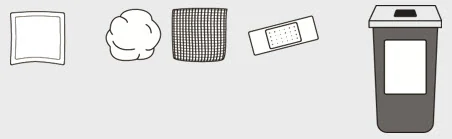
- 1 alcohol pad
- 1 sterile cotton ball or gauze
- 1 small bandage
- 1 FDA-cleared, puncture-resistant sharps container for safe disposal of the needle cap and used syringe. See Step 21 "Disposing of ENSPRYNG" at the end of this Instructions for Use.
Always check that you have the right medicine and dose that your healthcare provider prescribed.
ENSPRYNG prefilled syringe
(See Figure A and Figure B)
Before use:
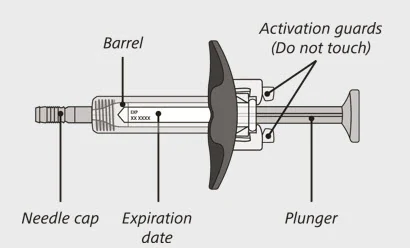
Figure A
After use:
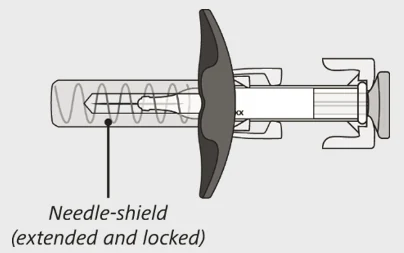
Figure B
The syringe has a needle-shield that automatically covers the needle when the injection is complete.
Prepare to use ENSPRYNG
| Step 1. | Take the carton containing the syringe out of the refrigerator and place it on a clean, flat work surface (like a table). |
| Step 2. | Check the expiration (EXP) date on the back of the carton (See Figure C). Do not use if the expiration date has passed. |
| Step 3. | Check the front of the carton to make sure it is sealed (Figure C). Do not use if the seal has been broken. If the expiration date has passed or the seal is broken, do not use. Then go to Step 21 "Disposing of ENSPRYNG" and contact your healthcare provider. |
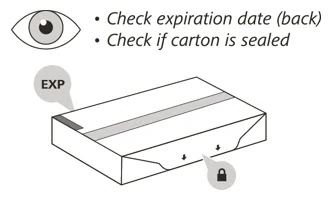
Figure C
| Step 4. | Open the sealed carton (See Figure D). |
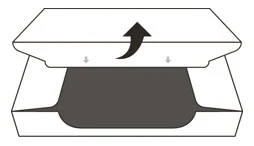
Figure D
| Step 5. | Carefully lift the syringe out of the carton by holding the barrel (See Figure E).
|
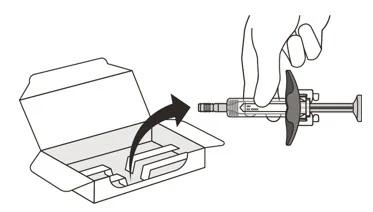
Figure E
Check the syringe
(See Figure F)
| Step 6. | Check the expiration date on the syringe. Do not use the syringe if it has expired. |
| Step 7. | Check the syringe for any damage. Do not use if it is cracked or broken. |
| Step 8. | Check that the liquid through the viewing window is clear and colorless to slightly yellow. Do not inject the medicine if the liquid is cloudy, discolored, or has particles in it.
|
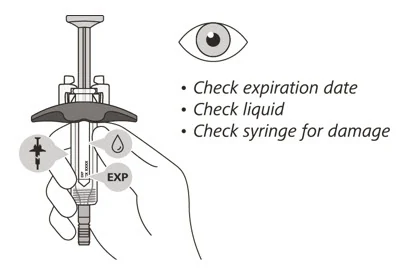
Figure F
If the expiration (EXP) date has passed, the syringe is damaged or the liquid is cloudy, discolored or has particles in it, do not use. Then go to Step 21 "Disposing of ENSPRYNG" and contact your healthcare provider.
Let your syringe reach room temperature
| Step 9. | After you have checked the syringe, place it on a clean, flat work surface (like a table) for 30 minutes. This will allow it to reach room temperature. (See Figure G). It is important to let the syringe gently warm to room temperature as injecting cold medicine may feel uncomfortable and make it harder to push.
|
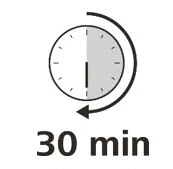
Figure G
Wash your hands
| Step 10. | Wash your hands with soap and water. (See Figure H). |
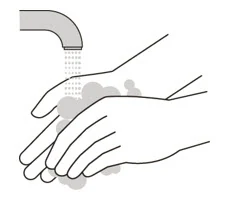
Figure H
Choose the injection site
| Step 11. | Choose your injection site in either:
|
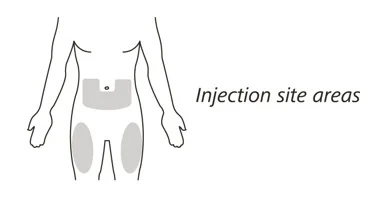
Figure I
|
Choose a different injection site for each new injection. Choose a different place to inject which is at least 1 inch (2.5 cm) away from the place where you last injected.
Clean the injection site
| Step 12. | Wipe the injection site with an alcohol pad and let it air dry (See Figure J).
|
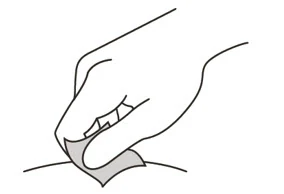
Figure J
Inject ENSPRYNG
| Step 13. | Hold the barrel of the syringe between your thumb and index finger. With your other hand, pull the needle cap straight off. You may see a drop of liquid at the end of the needle. This is normal and will not affect your dose (See Figure K).
|
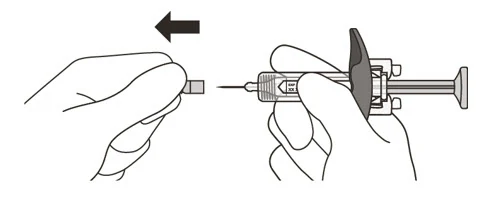
Figure K
| Step 14. | Throw away the needle cap in a puncture-resistant sharps container immediately. See Step 21 "Disposing of ENSPRYNG". |
| Step 15. | Hold the barrel of the syringe using your thumb and index finger. With your other hand, pinch the area of skin you have cleaned (See Figure L). |
| Step 16: | Use a quick, dart-like motion to insert the needle at an angle between 45° to 90° (See Figure L).
|
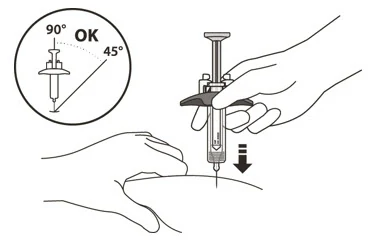
Figure L
| Step 17: | After the needle is inserted, let go of the pinched skin. |
| Step 18: | Slowly inject all of the medicine by gently pushing the plunger all the way down until it touches the activation guards (See Figure M). |
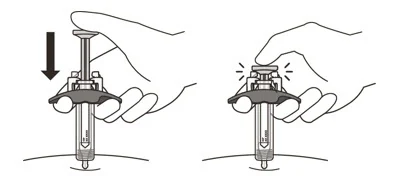
Figure M
| Step 19: | Gently release the plunger and allow the needle to come out of the skin at the same angle it was inserted (See Figure N). |
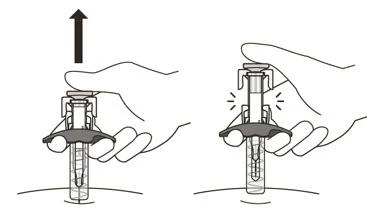
Figure N
|
Taking care of the injection site
| Step 20: | There may be a little bleeding at the injection site. You can press a cotton ball or gauze over the injection site but do not rub it. If needed, you may also cover the area you injected with a small bandage. If the medicine gets into contact with your skin, wash the area with water. |
Disposing of ENSPRYNG
| Step 21: | Put your used syringe in an FDA-cleared sharps disposal container immediately after use (See Figure O). Do not throw away (dispose of) the syringe in your household trash. |
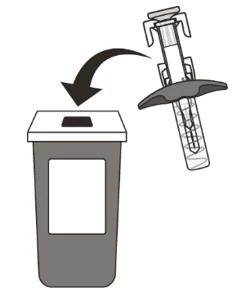
Figure O
|
This Instructions for Use has been approved by the U.S. Food and Drug Administration.
Manufactured by:
Genentech, Inc.
A Member of the Roche Group
1 DNA Way
South San Francisco, CA 94080-4990
U.S. License No.: 1048
Revised: 10/2026
ENSPRYNG® is a registered trademark of Chugai Pharmaceutical Co., Ltd., Tokyo, Japan
© 2026 Genentech, Inc. All rights reserved.
INSTRUCTIONS FOR USE
ENSPRYNG® (en-spryng)
(satralizumab-mwge)
injection, for subcutaneous use
single-dose prefilled autoinjector
Read this Instructions for Use before you start using the ENSPRYNG autoinjector and each time you get a refill. There may be new information. This information does not take the place of talking to your healthcare provider about your medical condition and treatment.
Your healthcare provider will show you or your caregiver how to use the ENSPRYNG autoinjector the right way. Talk to your healthcare provider if you have questions.
Important information you need to know before injecting ENSPRYNG
- Do not use the ENSPRYNG autoinjector until your healthcare provider has trained you or your caregiver on the right way to inject.
- Do not use if the expiration (EXP) date has passed.
- Do not use if the seals on the carton have been broken.
- Do not try to take the autoinjector apart at any time.
- Do not remove the cap until you are ready to inject.
- Do not use if the autoinjector has been damaged or dropped.
- Do not touch or clean the green needle shield.
- Do not try to re-use the same autoinjector. Each prefilled autoinjector can be used only one time.
- Do not inject through clothing.
How should I store the ENSPRYNG autoinjector?
- Store ENSPRYNG in the refrigerator between 36°F to 46°F (2°C to 8°C) in the original carton to protect from light.
- Do not freeze. Do not use ENSPRYNG if it has been frozen.
- Do not shake.
- The ENSPRYNG carton can be stored at room temperature up to 86°F (30°C) for up to 8 days.
- If ENSPRYNG is removed from and returned to the refrigerator the total combined time out of the refrigerator should not be more than 8 days.
- Always keep in the original carton to protect from light.
- Keep ENSPRYNG and all medicines out of the reach of children.
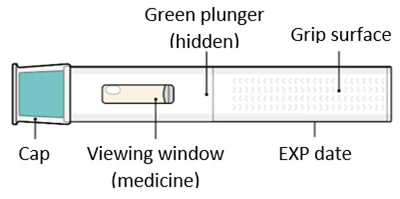
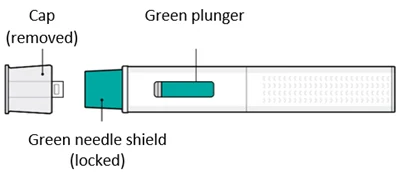
ENSPRYNG autoinjector
Always check that you have the right medicine and dose that your healthcare provider prescribed.
Before use
After use
Prepare to use ENSPRYNG
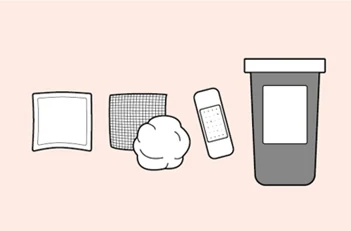 |
| Step 1. | Gather supplies needed for your injection. |
Included in the carton:
- ENSPRYNG autoinjector
Not included in the carton:
- 1 alcohol pad
- 1 sterile cotton ball or gauze
- 1 small adhesive bandage
- 1 FDA-cleared sharps disposal container (See Step 17 Dispose of the autoinjector)
Remove the autoinjector
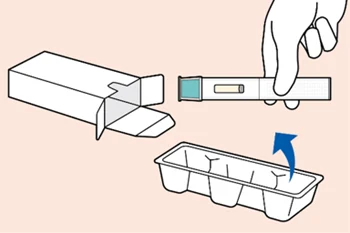 |
| Step 2. | Take the ENSPRYNG autoinjector carton out of the refrigerator. |
| Step 3. | Open the carton and take the autoinjector out of the tray. |
Check the autoinjector
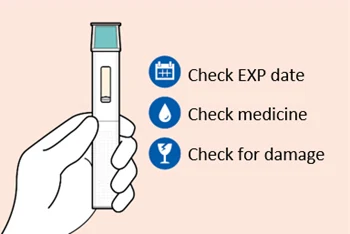 |
| Step 4. | Check the expiration (EXP) date on the autoinjector.
|
| Step 5. | Check the medicine through the viewing window. The medicine should be clear or slightly yellow. There should be no particles in it.
|
| Step 6. | Check the autoinjector for any damage.
|
If the expiration date has passed, the autoinjector is damaged or the medicine is cloudy, discolored or has particles in it, do not use. Safely throw away (dispose of) the autoinjector in an FDA-cleared sharps disposal container (See Step 17) and contact your healthcare provider.
Let your autoinjector reach room temperature
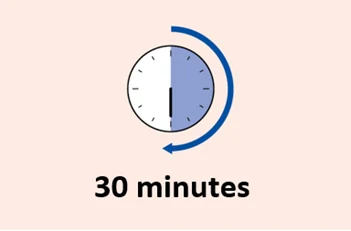 |
| Step 7. | Place the autoinjector on a clean, flat surface (like a table) for 30 minutes. This allows the medicine to reach room temperature. If the autoinjector does not reach room temperature, it may take longer to inject the medicine. Injecting cold medicine may feel uncomfortable.
|
Choose the injection site
 |
| Step 8. | You can inject ENSPRYNG in the stomach area (abdomen) or front of the thigh.
|
Choose a different injection site for each new injection. Each injection must be at least 1 inch (2.5 cm) away from area where you last injected.
Clean your skin
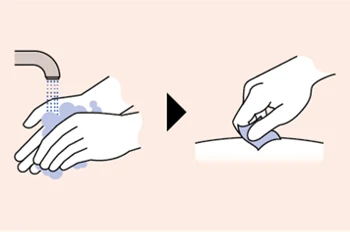 |
| Step 9. | Wash your hands with soap and water. |
| Step 10. | Clean the injection site with an alcohol pad and let it air dry.
|
Remove the cap
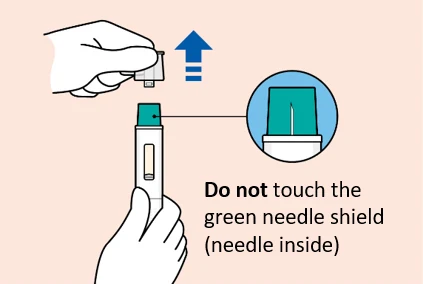 |
| Step 11. | Hold the autoinjector with the cap pointing up. Then pull the cap straight off. The needle will remain hidden. Use the autoinjector within 5 minutes of removing the cap. |
| Important: | Do not touch the green needle shield. This may cause a needle stick injury.
|
Place onto the skin
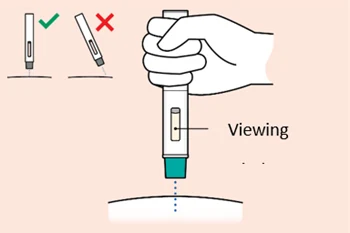 |
| Step 12. | Hold the autoinjector so that you can see the viewing window. Place the autoinjector flat against the skin with the green needle shield facing down. You may see drops of liquid. This is normal.
|
Push firmly and hold in place
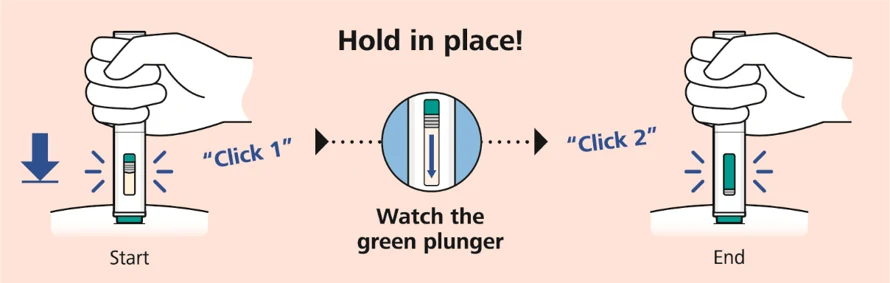 |
| Step 13. | Push firmly and hold down the autoinjector against the skin. The first click indicates the injection has started. The green plunger moves down in the viewing window. It might take up to 15 seconds for the green plunger to move all the way down and fill the viewing window.
|
| Step 14. | Keep holding down the autoinjector firmly. Wait for the second click. This means the injection is done. Watch the green plunger as it moves down. Or check if the green plunger has already filled the entire viewing window (See Step 15). |
Check the green plunger
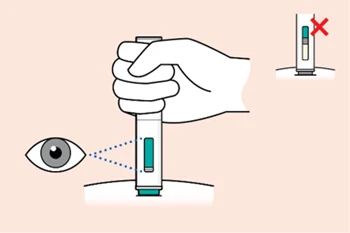 |
| Step 15. | Before removing the autoinjector from the injection site, check that the green plunger fills the viewing window entirely. If the green plunger does not fill the viewing window, you may not have received the full dose. Safely throw away (dispose of) the autoinjector in a sharps disposal container (See Step 17) and contact your healthcare provider. |
Remove the autoinjector
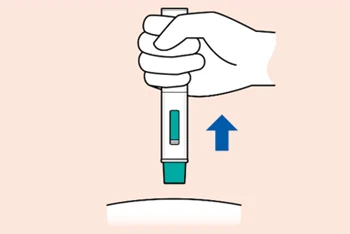 |
| Step 16. | Remove the autoinjector by lifting it straight up from the skin. The green needle shield will lock into place, covering the needle when the injection is complete. |
Dispose of the autoinjector
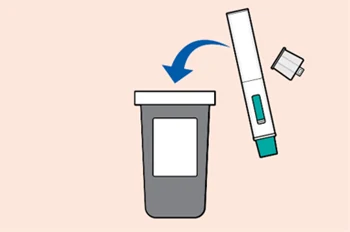 |
| Step 17. | Put the used autoinjector and the cap in an FDA-cleared sharps disposal container right away after use.
|
Check the injection site
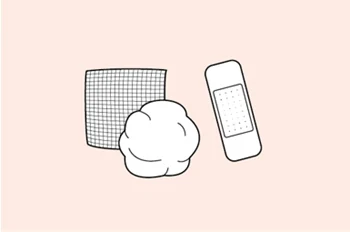 |
| Step 18. | There may be a small amount of blood or medicine at the injection site. You can press a cotton ball or gauze on the area. If needed, cover the injection site with a small adhesive bandage. The injection is now complete.
|
Disposal of the autoinjector
 | If you do not have an FDA-cleared sharps disposal container, you may use a household container that is:
|
When your sharps disposal container is almost full, you will need to follow your community guidelines for the right way to dispose of your sharps disposal container. There may be state or local laws about how you should throw away used needles and syringes. For more information about the safe sharps disposal, and for specific information about sharps disposal in the state that you live in, go to the FDA's website at: http://www.fda.gov/safesharpsdisposal.
Do not dispose of your used sharps disposal container in your household trash unless your community guidelines permit this.
Do not recycle your used sharps disposal container.
Keep the sharps disposal container out of the reach of children.
Manufactured by:
Genentech, Inc.
A Member of the Roche Group
1 DNA Way
South San Francisco, CA 94080-4990
U.S. License No.: 1048
ENSPRYNG® is a registered trademark of Chugai Pharmaceutical Co., Ltd., Tokyo, Japan
© 2026 Genentech, Inc. All rights reserved.
This Instructions for Use has been approved by the U.S. Food and Drug Administration
Revised: 10/2026