


Prescribing information (package insert) - Enspryng
1 INDICATIONS AND USAGE
1.1 Neuromyelitis Optica Spectrum Disorder (NMOSD)
ENSPRYNG is indicated for the treatment of neuromyelitis optica spectrum disorder (NMOSD) in adult patients who are anti-aquaporin-4 (AQP4) antibody positive.
1.2 Thyroid Eye Disease (TED)
ENSPRYNG is indicated for the treatment of thyroid eye disease (TED) regardless of TED activity or duration in adult patients.
2 DOSAGE AND ADMINISTRATION
2.1 Assessments Prior to the First Dose of ENSPRYNG
Hepatitis B Virus Screening
Prior to initiating ENSPRYNG, perform Hepatitis B virus (HBV) screening. ENSPRYNG is contraindicated in patients with active HBV confirmed by positive results for surface antigen [HBsAg] and anti-HBV tests. For patients who are negative for HBsAg and positive for HB core antibody [HBcAb+] or are carriers of HBV [HBsAg+], consult liver disease experts before starting and during treatment with ENSPRYNG [see Contraindications (4) and Warnings and Precautions (5.1)].
Tuberculosis Screening
Prior to initiating ENSPRYNG, evaluate for active tuberculosis and test for latent infection. For patients with active tuberculosis or positive tuberculosis screening without a history of appropriate treatment, consult infectious disease experts before initiating treatment with ENSPRYNG [see Contraindications (4) and Warnings and Precautions (5.1)].
Liver Transaminase Screening
Liver transaminases and serum bilirubin should be assessed prior to initiation of treatment with ENSPRYNG [see Warnings and Precautions (5.2)].
Caution should be exercised when considering initiation of ENSPRYNG treatment in patients whose aspartate aminotransferase (AST) or alanine aminotransferase (ALT) levels are greater than 1.5 times the upper limit of normal (ULN).
Vaccinations
Because vaccination with live-attenuated or live vaccines is not recommended during treatment with ENSPRYNG, administer all immunizations according to immunization guidelines at least 4 weeks prior to initiation of ENSPRYNG for live or live-attenuated vaccines and, whenever possible, at least 2 weeks prior to initiation of ENSPRYNG for non-live vaccines [see Warnings and Precautions (5.1)].
2.2 Recommended Dosage
For subcutaneous use only.
Prior to every use of ENSPRYNG, advise patients to consult with their healthcare professional (HCP) if they suspect an active infection, including localized infections. In case of active infection, delay use of ENSPRYNG until the infection is resolved [see Warnings and Precautions (5.1)].
Recommended Dosage for NMOSD
The recommended loading dosage of ENSPRYNG for the first three administrations is 120 mg by subcutaneous injection at Weeks 0, 2, and 4, followed by a maintenance dosage of 120 mg every 4 weeks.
Recommended Dosage for TED
The recommended dose is based on the patient's body weight, as shown in Table 1.
Table 1 ENSPRYNG Dosing Regimen Based on Body Weight for TED
| Body WeightDosing is based on actual body weight. | 40 kg to less than or equal to 100 kg | Greater than 100 kg |
|---|---|---|
| ** "0 weeks" refers to time of the first administration. | ||
| Loading Dose | ||
Every 2 weeks for the first three administrations. Weeks 0, 2 and 4 | 120 mg | 180 mg |
| Maintenance Dose | ||
| From week 8 and every 4 weeks thereafter | 120 mg | 180 mg |
The safety and effectiveness of ENSPRYNG have not been established in TED patients weighing less than 40 kg.
Missed Dose
If a dose of ENSPRYNG is missed for any reason other than increases in liver enzymes [see Dosage and Administration (2.4)], administer as described in Table 2.
Table 2 Recommended Dosage for Delayed or Missed Doses
| Last Dose Administered | Recommended Dosage for Delayed or Missed Doses |
|---|---|
| Less than 8 weeks during the maintenance period or missed a loading dose | Administer the recommended dose [see Recommended Dose (2.2.1 and 2.2.2)] by subcutaneous injection as soon as possible, and do not wait until the next planned dose. Maintenance period After the delayed or missed dose is administered, reset the dose schedule to every 4 weeks. Loading period If the second loading dose is delayed or missed, administer as soon as possible and administer the 3rd and final loading dose 2 weeks later. If the third loading dose is delayed or missed, administer as soon as possible and administer the 1st maintenance dose 4 weeks later. |
| 8 weeks to less than 12 weeks | Administer the recommended dose by subcutaneous injection at 0"0 weeks" refers to time of the first administration after the missed dose. and 2 weeks, followed by the recommended dose every 4 weeks. |
| 12 weeks or longer | Administer the recommended dose by subcutaneous injection at 0, 2, and 4 weeks followed by the recommended dose every 4 weeks. |
2.3 Important Administration Instructions
- ENSPRYNG is intended for patient self-administration by subcutaneous injection under the guidance of a health care professional (HCP). After proper training in subcutaneous injection technique, a patient may self-inject ENSPRYNG or the patient's caregiver may administer ENSPRYNG, if the HCP determines that it is appropriate. Refer patients and/or caregivers to the ENSPRYNG "Instructions for Use" (IFU) for the prefilled syringe or the IFU for the autoinjector, as appropriate, for more detailed instructions on the preparation and administration of ENSPRYNG.
- Patients or caregivers should seek immediate medical attention if the patient develops symptoms of a serious allergic reaction and should not administer further doses until evaluated by an HCP [see Contraindications (4) and Warning and Precautions (5.4)].
- Prior to use, remove ENSPRYNG from the refrigerator and allow it to sit at room temperature outside of the carton for 30 minutes. Do not warm ENSPRYNG in any other way.
- Inspect visually for particulate matter and discoloration prior to administration. ENSPRYNG solution should be clear and colorless to slightly yellow. Do not use ENSPRYNG if the solution is cloudy, discolored, contains particles, or if the prefilled syringe or the autoinjector appears to be damaged or has been dropped.
- Instruct patients who are prescribed the prefilled syringe to inject the full amount (1 mL), which provides 120 mg of ENSPRYNG, according to the directions provided in the IFU.
- Administer ENSPRYNG by subcutaneous injection in the abdomen or thigh. Do not inject into the 2-inch (5 cm) area around the navel. Rotate injection sites with each administration. Each injection must be at least 1 inch (2.5 cm) away from the most recent injection site. Do not inject into moles, scars, or areas where the skin is tender, bruised, red, hard, or not intact.
2.4 Safety Monitoring During Treatment
Liver Transaminases
Monitor ALT and AST levels every 4 weeks for the first 3 months of treatment with ENSPRYNG, followed by every 3 months for one year, and thereafter as clinically necessary [see Warnings and Precautions (5.2)].
If an ALT or AST elevation of greater than 5 times the ULN occurs, discontinue ENSPRYNG as follows:
- If associated with any bilirubin elevation, discontinue ENSPRYNG, and reinitiation is not recommended.
If not associated with any bilirubin elevation above the ULN, when the ALT or AST level has returned to the normal range and following a benefit-risk assessment of the patient, treatment with ENSPRYNG can be restarted per the schedule in Table 3.
Table 3 Recommended Dosage for Restart of Treatment After Liver Transaminase Elevation
Last Dose Administered Recommended Dosage for Restart of Treatment Less than 12 weeks Restart at the recommended dosage by subcutaneous injection every 4 weeks [see Recommended Dose (2.2.1 and 2.2.2)]. 12 weeks or longer Restart at the recommended dosage by subcutaneous injection at Weeks 0"0 weeks" refers to time of the first administration after the missed dose., 2, and 4, followed by recommended dosage every 4 weeks. If treatment is restarted, the liver parameters must be closely monitored, and if any subsequent increase in ALT/AST and/or bilirubin above the ULN is observed, ENSPRYNG should be discontinued, and another reinitiation is not recommended.
Neutrophil Counts
Monitor neutrophils 4 to 8 weeks after initiation of therapy and thereafter at regular clinically determined intervals. If the neutrophil count is below 1.0 × 10⁹/L and confirmed by repeat testing, ENSPRYNG should be interrupted until the neutrophil count is > 1.0 × 10⁹/L [see Warnings and Precautions (5.3)].
3 DOSAGE FORMS AND STRENGTHS
ENSPRYNG is a clear, and colorless to slightly yellow solution available as:
- Injection: 120 mg/mL in single-dose prefilled syringe.
- Injection: 120 mg/mL in single-dose autoinjector.
- Injection: 180 mg/1.5 mL in single-dose autoinjector
4 CONTRAINDICATIONS
ENSPRYNG is contraindicated in patients with:
- A known hypersensitivity to satralizumab or any of the inactive ingredients [see Warnings and Precautions (5.4)]
- Active Hepatitis B infection [see Warnings and Precautions (5.1)]
- Active or untreated latent tuberculosis [see Warnings and Precautions (5.1)]
5 WARNINGS AND PRECAUTIONS
5.1 Infections
An increased risk of infections, including serious and potentially fatal infections, has been observed in patients treated with IL-6 receptor antagonists, including ENSPRYNG.
The most common infections reported in a randomized clinical trial of patients treated with ENSPRYNG who were not on other chronic immunosuppressant therapies (Study 1), and that occurred more often than in patients receiving placebo, were nasopharyngitis (12%) and cellulitis (10%). The most common infections in patients who were on an additional concurrent immunosuppressant, and that occurred more often than in patients receiving placebo, were nasopharyngitis (31%), upper respiratory infection (19%), and pharyngitis (12%).
Delay ENSPRYNG administration in patients with an active infection, including localized infections, until the infection is resolved.
Hepatitis B Virus (HBV) Reactivation
Risk of HBV reactivation has been observed with other immunosuppressant therapies. Patients with chronic HBV infection were excluded from clinical trials. Perform HBV screening in all patients before initiation of treatment with ENSPRYNG. Do not administer ENSPRYNG to patients with active hepatitis. For patients who are chronic carriers of HBV [HBsAg+] or are negative for HBsAg and positive for HB core antibody [HBcAb+], consult liver disease experts before starting and during treatment with ENSPRYNG.
Tuberculosis
Tuberculosis has occurred in patients treated with other interleukin-6 receptor antagonists. Patients should be evaluated for tuberculosis risk factors and tested for latent infection prior to initiating ENSPRYNG. Consider anti-tuberculosis therapy prior to initiation of ENSPRYNG in patients with a history of latent or active tuberculosis in whom an adequate course of treatment cannot be confirmed, and for patients with a negative test for latent tuberculosis but having risk factors for tuberculosis infection. Consult infectious disease experts regarding whether initiating anti-tuberculosis therapy is appropriate before starting treatment. Patients should be monitored for the development of symptoms and signs of tuberculosis with ENSPRYNG, even if initial tuberculosis testing is negative.
Vaccinations
Live or live-attenuated vaccines should not be given concurrently with ENSPRYNG because clinical safety has not been established. Administer all immunizations according to immunization guidelines at least 4 weeks prior to initiation of ENSPRYNG for live or live-attenuated vaccines and, whenever possible, at least 2 weeks prior to initiation of ENSPRYNG for non-live vaccines.
5.2 Elevated Liver Enzymes
Mild and moderate elevations of liver enzymes have been observed in patients treated with ENSPRYNG at a higher incidence than in patients receiving placebo [see Adverse Reactions (6.1)].
ALT and AST levels should be monitored every 4 weeks for the first 3 months of treatment, followed by every 3 months for one year, and thereafter, as clinically indicated [see Dosage and Administration (2.4)].
5.3 Decreased Neutrophil Counts
Decreases in neutrophil counts were observed in patients treated with ENSPRYNG at a higher incidence than placebo [see Adverse Reactions (6.1)].
Neutrophil counts should be monitored 4 to 8 weeks after initiation of therapy, and thereafter at regular clinically determined intervals [see Dosage and Administration (2.4)].
5.4 Hypersensitivity Reactions
Hypersensitivity reactions, including rash, urticaria, and fatal anaphylaxis, have occurred with other interleukin-6 receptor antagonists.
6 ADVERSE REACTIONS
The following clinically significant adverse reactions are described elsewhere in the labeling:
- Infections [see Warnings and Precautions (5.1)]
- Elevated Liver Enzymes [see Warnings and Precautions (5.2)]
- Decreased Neutrophil Counts [see Warnings and Precautions (5.3)]
- Hypersensitivity Reactions [see Warnings and Precautions (5.4)]
6.1 Clinical Trials Experience
Because clinical studies are conducted under widely varying conditions, adverse reaction rates observed in the clinical studies of a drug cannot be directly compared to rates in the clinical studies of another drug and may not reflect the rates observed in clinical practice.
Adverse Reactions
Neuromyelitis Optica Spectrum Disorder (NMOSD)
The safety of ENSPRYNG in NMOSD was evaluated in two randomized, placebo-controlled clinical trials [Study 1 evaluated ENSPRYNG without concurrent immunosuppressive therapy (IST) and Study 2 evaluated ENSPRYNG with concurrent IST], which included 41 anti-AQP4 seropositive patients treated with ENSPRYNG in Study 1 and 26 anti-AQP4 seropositive patients treated with ENSPRYNG in Study 2 [see Clinical Studies (14)]. In the double-blind, controlled period, the median exposure time on ENSPRYNG treatment was approximately 2 years in Study 1 and approximately 3 years in Study 2. The median exposure time on placebo treatment was approximately 1 year in both Study 1 and Study 2.
Adverse reactions that occurred in Study 1 and Study 2 in more than 5% of patients treated with ENSPRYNG, and at a greater incidence than in patients who received placebo, are shown in Table 4 and Table 5. The most common adverse reactions (15% or greater with ENSPRYNG in either) were nasopharyngitis, headache, upper respiratory tract infection, gastritis, rash, arthralgia, extremity pain, fatigue, and nausea.
Table 4 Adverse Reactions Occurring in 4 or More Patients Treated with ENSPRYNG and Greater Incidence than Placebo in Patients with NMOSD in Study 1
| Adverse Reaction | ENSPRYNG (N = 41) % | PLACEBO (N = 23) % |
|---|---|---|
| Rash | 17 | 0 |
| Arthralgia | 17 | 0 |
| Pain in extremity | 15 | 9 |
| Fatigue | 15 | 4 |
| Nausea | 15 | 9 |
| Nasopharyngitis | 12 | 4 |
| Pruritus | 10 | 0 |
| Depression | 10 | 0 |
| Cellulitis | 10 | 0 |
| Neutropenia | 10 | 4 |
| Blood creatine phosphokinase increased | 10 | 4 |
| Fall | 10 | 4 |
Table 5 Adverse Reactions Occurring in 3 or More Patients Treated with ENSPRYNG and Greater Incidence than Placebo in Patients with NMOSD in Study 2
| Adverse Reaction | ENSPRYNG + IST (N = 26) % | PLACEBO + IST (N = 26) % |
|---|---|---|
| Nasopharyngitis | 31 | 15 |
| Headache | 27 | 12 |
| Upper respiratory tract infection | 19 | 12 |
| Gastritis | 15 | 0 |
| Arthralgia | 12 | 0 |
| Pharyngitis | 12 | 8 |
Thyroid Eye Disease (TED)
The safety of ENSPRYNG in TED was evaluated in two phase III randomized, double-masked, placebo-controlled, multicenter clinical trials (Study 3 and Study 4) which included 131 patients treated with ENSPRYNG.
Adverse reactions that occurred in Study 3 and Study 4 in more than 5% of patients treated with ENSPRYNG, and at a greater incidence than in patients who received placebo, are shown in Table 6.
Table 6 Adverse Reactions Occurring in 5% or More of Patients Treated with ENSPRYNG and Greater Incidence than Placebo in Patients with TED (Study 3 and Study 4 Pooled Analysis)
| Adverse Reaction | ENSPRYNG (N = 131) % | PLACEBO (N = 124) % |
|---|---|---|
| Upper respiratory tract infection | 5.3 | 2.4 |
| Alanine aminotransferase increased | 5.3 | 0.8 |
Neutropenia was also reported with less than 5% occurrence.
Injection-Related Reactions
NMOSD
In Study 1 and Study 2, injection-related reactions were reported in 9% of patients treated with ENSPRYNG compared with 8% in patients receiving placebo. These reactions in the ENSPRYNG-treated patients were predominantly mild to moderate in severity, and most occurred within 24 hours after the injection. The most commonly reported systemic symptom was diarrhea. The reported local injection site reactions were pruritus, injection site reaction, and skin mass.
TED
In Study 3 and Study 4, injection-related reactions (IRR) were predominantly mild to moderate in severity. No serious IRRs were reported. The most frequently reported systemic symptoms were fatigue and headache, and the most commonly reported local injection site reaction was pruritus. The majority of these events did not require dose interruption or treatment discontinuation, with the exception of two cases (pruritus and injection site reaction) that resulted in the discontinuation of treatment. IRRs were generally self-limiting and resolved without specific treatment.
In an open label trial in healthy adults, in which a single injection of 180 mg/1.5 mL by autoinjector was compared to two injections of 60 mg/0.5 mL and 120 mg/1 mL by prefilled syringe, the most commonly reported local injection site reactions were erythema, edema, induration, and pain. All local injection site reactions were mild to moderate in severity and most were resolved within 24 hours.
Infections
NMOSD
In Study 1, the rate of patients with infections was 51 patients/100 patient-years (95% CI: 32, 78) in patients treated with ENSPRYNG compared with 108 patients/100 patient-years (95% CI: 52, 199) in patients receiving placebo. The rate of patients with serious infections was 5 patients/100 patient-years (95% CI: 1, 14) in patients treated with ENSPRYNG compared with 4 patients/100 patient-years (95% CI: 0, 21) in patients receiving placebo.
In Study 2, the rate of patients with infections was 168 patients/100 patient-years (95% CI: 100, 265) in patients treated with ENSPRYNG compared with 143 patients/100 patient-years (95% CI: 83, 229) in patients treated with placebo. The rate of patients with serious infections was 4 patients/100 patient-years (95% CI: 1, 15) in patients treated with ENSPRYNG compared with 10 patients/100 patient-years (95% CI: 2, 28) in patients receiving placebo.
TED
In Study 3 and Study 4 the rate of infections was lower in patients treated with ENSPRYNG [94.08 events/100 PY (95% CI: 71.07,122.17)] compared with patients receiving placebo [113.92 events/100 PY (95% CI: 86.93,146.64)]. The rate of serious infections was 0.00 events/100 PY (95% CI: 0,6.2) in patients treated with ENSPRYNG compared with 1.90 events/100 PY (95% CI: 0.05,10.58) in patients receiving placebo.
Laboratory Abnormalities
Decreased Neutrophil Count
NMOSD
Of the patients treated with ENSPRYNG, 10% had neutrophils below 1 × 10⁹/L compared to 9% in placebo in Study 1. In Study 2, 15% of patients had neutrophils below 1 × 10⁹/L compared to 4% in placebo. There was one patient in Study 1 treated with ENSPRYNG with neutrophil counts < 0.5 × 10⁹/L, and one patient in Study 2 discontinued ENSPRYNG because of neutropenia.
TED
In Study 3 and Study 4, decreased neutrophil counts through Week 24 were observed in 28.2% of patients treated with ENSPRYNG compared with 9.7% of patients receiving placebo. Of these patients in the ENSPRYNG group, 2.3 % had neutrophil count decreased below 1 x 10⁹/L compared to no patients in the placebo group. The decreased neutrophil counts were not associated with serious infections.
Decreased Platelet Count
NMOSD
In Study 1, a shift in platelet count decreases from normal at baseline to below the lower limit of normal (LLN) occurred in 26% of patients treated with ENSPRYNG compared to 5% of patients receiving placebo. In Study 2, decreases in platelet counts from normal at baseline to below the LLN occurred in 35% of patients treated with ENSPRYNG and in 17% of patients receiving placebo. None of the patients had a decrease in platelet count to less than 50 × 109/L.
TED
In Study 3 and Study 4, decreases in platelet count through Week 24 were reported in 8.4 % of patients treated with ENSPRYNG compared to 2.4% of patients receiving placebo. All decreases in the ENSPRYNG group were characterized by a platelet counts in the range of below the LLN to 75 × 109/L. In the placebo group, two patients experienced decreases in platelet counts to the range of <LLN to 75 × 109/L, and one patient experienced a decrease in platelet count to the range of <75 to 50 × 109/L. None of the patients had a decrease in platelet count to less than 50 × 10⁹/L, and decreases were not associated with bleeding events.
Elevated Liver Enzymes
NMOSD
In Study 1, increases from normal at baseline to above ULN in ALT or AST occurred in 43% and 25% of patients treated with ENSPRYNG, respectively, compared to 13% and 9% of patients receiving placebo. In Study 2, increases from normal at baseline to above the ULN in ALT or AST occurred in 8% and 8% of patients treated with ENSPRYNG, respectively, compared to 12% and 19% of patients receiving placebo.
In Study 1 and Study 2 combined, elevations of ALT or AST greater than 3 times the ULN occurred in 3% of patients treated with ENSPRYNG, compared to no patients treated with placebo. These elevations were not associated with increases in total bilirubin. One patient receiving ENSPRYNG in Study 2 had an elevation of ALT above 5 times the ULN, which was observed 4 weeks after initiation of therapy, normalizing 78 days after discontinuation of ENSPRYNG.
TED
In Study 3 and Study 4, elevations in ALT or AST through Week 24 occurred in 25.2% and 11.5% of patients treated with ENSPRYNG respectively, compared with 7.3% and 4.8% of patients receiving placebo. The majority of elevations were characterized by an elevation above ULN to 3 × ULN. One patient (0.8%) in the placebo group experienced an AST elevation of >3 to 5 × ULN. No transaminase elevations of > 5 to 20× ULN or > 20 × ULN were reported. Most events of ALT and AST elevation resolved without requiring dose modification or discontinuation of ENSPRYNG.
Elevations in ALT or AST were not associated with increase in total bilirubin. Overall post-baseline, liver function tests abnormalities were infrequent, predominantly of low grade and, with no evidence of drug-induced liver injury or hepatotoxicity.
Lipid Abnormalities
NMOSD
In Study 1 and Study 2, elevations in total cholesterol above 7.75 mmol/L (300 mg/dl) occurred in 12% and 15% of patients treated with ENSPRYNG, respectively, compared to no patients receiving placebo.
Elevations in triglycerides above 3.42 mmol/L (300 mg/dl) occurred in 27% and 12% of patients treated with ENSPRYNG in Study 1 and Study 2, respectively, compared to 13% and 8% of patients receiving placebo.
TED
In Study 3 and Study 4, increases in total cholesterol through Week 24 were reported in 19.8% of patients treated with ENSPRYNG compared with 9.7% of patients receiving placebo. Elevations in cholesterol above 7.75 mmol/L were observed in 9.2% of these patients treated with ENSPRYNG compared with 2.4% of corresponding patients receiving placebo.
Increases in triglycerides were through Week 24 reported in 33.6% of patients treated with ENSPRYNG compared with 27.4 % of patients receiving placebo. Elevations in triglycerides above 3.42 mmol/L were observed in 1.5% of patients treated with ENSPRYNG compared with 3.2% of patients receiving placebo. The elevations in lipid parameters did not require treatment discontinuation
Fibrinogen Levels
NMOSD
In Study 1, the median percent reduction in fibrinogen was 38% in patients treated with ENSPRYNG compared to 5% in patients receiving placebo. In Study 2, the median percent reduction in fibrinogen level was 33% in patients treated with ENSPRYNG compared to 0% in patients receiving placebo.
Complement Levels
NMOSD
In Study 1, the median percent reduction in the C3 and C4 components of complement was 23% and 50% in patients treated with ENSPRYNG, respectively, compared to 0% and 1% patients receiving placebo. In Study 2, the median percent reduction in the C3 and C4 components of complement was 20% and 53% in patients treated with ENSPRYNG, respectively, compared to 0% and 1% in patients receiving placebo.
Body Weight
NMOSD
In the pool of Studies 1 and 2, body weight increases of at least 7% from baseline occurred in 28% of patients treated with ENSPRYNG compared to 8% of patients receiving placebo.
Body weight increases of at least 15% from baseline occurred in 4% of patients treated with ENSPRYNG compared to 4% of patients receiving placebo.
6.2 Immunogenicity
As with all therapeutic proteins, there is a potential for immunogenicity. The detection of antibody formation is highly dependent on the sensitivity and specificity of the assay. Additionally, the observed incidence of antibody (including neutralizing antibody) positivity in an assay may be influenced by several factors, including assay methodology, sample handling, timing of sample collection, concomitant medications, and underlying disease. For these reasons, comparison of the incidence of anti-satralizumab-mwge antibodies in the studies described below with the incidence of antibodies in other studies or to other products may be misleading.
In NMOSD Study 1 and NMOSD Study 2, anti-drug-antibodies (ADAs) were observed in 73% and 38% of patients receiving ENSPRYNG in the double-blind period, respectively. The ability of these ADAs to neutralize satralizumab-mwge binding is unknown. Patients with higher body weight and lower exposure were more likely to develop ADAs (irrespective of treatment with IST). Exposure was lower in ADA positive patients. Although anti-satralizumab-mwge antibody development was not found to affect the efficacy of ENSPRYNG in these patients, the available data are too limited to make definitive conclusions. Immunogenicity does not have a clinically-relevant impact on safety. Based on the available information, neither dose interruption nor modification is warranted in those patients who develop ADAs.
In TED Study 3 and TED Study 4, anti-drug-antibodies (ADAs) were observed in 44.8% and 39.1% of patients receiving ENSPRYNG, respectively. The ability of these ADAs to neutralize satralizumab-mwge binding is unknown. ADA incidence is similar in the 120 mg (50 of 119, 42%) and 180 mg (5 of 12, 41.7%) dose groups. Exposure was lower in ADA positive patients. Immunogenicity does not appear to have a clinically-relevant impact on safety, efficacy or PD.
8 USE IN SPECIFIC POPULATIONS
8.1 Pregnancy
Pregnancy Exposure Registry
There is a pregnancy exposure registry that monitors pregnancy outcomes in women with NMOSD exposed to ENSPRYNG during pregnancy. Healthcare providers are encouraged to register NMOSD patients and pregnant women with NMOSD are encouraged to register themselves by calling 1-833-277-9338.
Risk Summary
There are no adequate data on the developmental risk associated with the use of ENSPRYNG in pregnant women. In an animal reproduction study, no adverse effects on maternal animals or fetal development were observed in pregnant monkeys and their offspring, with administration of satralizumab-mwge at doses up to 50 mg/kg/week (see Data).
In the U.S. general population, the estimated background risk of major birth defect and miscarriage in clinically recognized pregnancies is 2 – 4% and 15 – 20%, respectively. The estimated background risk of major birth defects and miscarriage for the indicated population is unknown. ENSPRYNG should be used in pregnancy only if the potential benefit justifies the potential risk to the fetus.
Clinical Considerations
Fetal/neonatal adverse reactions
Monoclonal antibodies are increasingly transported across the placenta as pregnancy progresses, with the largest amount transferred during the third trimester. Risks and benefits should be considered prior to administering live or live-attenuated vaccines to infants exposed to ENSPRYNG in utero [see Warnings and Precautions (5.1)].
Data
Animal Data
Weekly subcutaneous administration of satralizumab-mwge (0, 2, or 50 mg/kg) to monkeys throughout pregnancy resulted in no adverse effects on postnatal development of the offspring; however, immune function was impaired in offspring at both doses. Plasma exposures (Cave) in dams at the low and high doses were approximately 3 and 100 times, respectively, that in humans at the recommended monthly maintenance dose of 120 mg.
8.2 Lactation
Risk Summary
No information is available on the presence of satralizumab-mwge in human milk, the effects of the satralizumab-mwge on the breastfed infant, or the effects of the satralizumab-mwge on milk production. Satralizumab-mwge was excreted in the milk of lactating monkeys administered satralizumab-mwge throughout pregnancy. Human IgG is excreted in human milk and the potential for absorption in the infant is unknown. The developmental and health benefits of breastfeeding should be considered along with the mother's clinical need for ENSPRYNG and any potential adverse effects on the breastfed infant from ENSPRYNG or from the underlying maternal condition.
8.4 Pediatric Use
Safety and effectiveness in pediatric patients have not been established.
8.5 Geriatric Use
Clinical studies of ENSPRYNG did not include sufficient numbers of patients aged 65 years and older to determine whether they respond differently from younger patients. However, population pharmacokinetic analyses in patients with NMOSD and TED did not show that age affected the pharmacokinetics of satralizumab-mwge [see Clinical Pharmacology (12.3)]. In general, caution should be used when dosing the elderly, reflecting the greater frequency of decreased hepatic, renal, or cardiac function, and of concomitant diseases or other drug therapy.
11 DESCRIPTION
Satralizumab-mwge is a recombinant humanized anti-human interleukin 6 (IL-6) receptor monoclonal antibody based on a human IgG2 framework. Each light chain and heavy chain consists of 214 and 443 amino acids, respectively. Satralizumab-mwge is a glycoprotein with an approximate molecular weight of 143 kDa and is produced by recombinant DNA technology in Chinese hamster ovary cells. The binding of satralizumab-mwge to the IL-6 receptor is pH-sensitive.
ENSPRYNG (satralizumab-mwge) injection for subcutaneous administration is supplied as a sterile, clear, colorless to slightly yellow solution with no preservative, and with an approximate pH of 6. ENSPRYNG is supplied in a single-dose 1 mL prefilled syringe with a needle safety device or a single-dose 1 mL or 1.5 mL autoinjector that contains a prefilled syringe.
Each prefilled syringe delivers 1 mL of solution containing 120 mg satralizumab-mwge, L-arginine (26.1 mg), L-aspartic acid (pH adjustment), L-histidine (3.1 mg), poloxamer 188 (0.5 mg), and Water for Injection, USP.
Each prefilled autoinjector delivers either:
- 1 mL of solution containing 120 mg satralizumab-mwge, L-arginine (26.1 mg), L-aspartic acid (pH adjustment), L-histidine (3.1 mg), poloxamer 188 (0.5 mg), and Water for Injection, USP.
- 1.5 mL of solution containing 180 mg satralizumab-mwge, L-arginine (39.2 mg), L-aspartic acid (pH adjustment), L-histidine (4.65 mg), poloxamer 188 (0.75 mg), and Water for Injection, USP.
12 CLINICAL PHARMACOLOGY
12.1 Mechanism of Action
The precise mechanism by which satralizumab-mwge exerts therapeutic effects in NMOSD and TED is unknown but is presumed to involve inhibition of IL-6-mediated signaling through binding to soluble and membrane-bound IL-6 receptors.
12.2 Pharmacodynamics
The relationship between any of the pharmacodynamic effects of ENSPRYNG and clinical outcomes in NMOSD and TED is unknown.
12.3 Pharmacokinetics
The pharmacokinetics of ENSPRYNG have been characterized in healthy volunteers, and in NMOSD and TED patients. Population pharmacokinetic analyses were performed on databases of 154 NMOSD patients and 131 TED patients.
ENSPRYNG's pharmacokinetics was best described by a two-compartment population pharmacokinetic model with parallel linear and target-mediated (Michaelis-Menten) elimination and first-order SC absorption. ENSPRYNG clearance and volume parameters allometrically scaled by body weight (through power function with the fixed power coefficient of 0.75 and 1 for clearance and volume parameters, respectively)
The pharmacokinetics of satralizumab-mwge following administration of ENSPRYNG by prefilled syringe or autoinjector were comparable.
In patients with NMOSD using the recommended dose, steady state pharmacokinetics were achieved after the loading period (8 weeks) as follows [mean (±SD)]: Cmin: 19.7 (12.2) mcg/mL, Cmax: 31.5 (14.9) mcg/mL, and AUC: 737 (386) mcg.day/mL.
In patients with TED using the recommended dose, steady state pharmacokinetics were achieved after the loading period (8 weeks) as follows (mean (±SD)): Cmin: 17.7 (9.64) mcg/mL, Cmax: 28.7 (11.3) mcg/mL and AUC: 666 (301) mcg.day/mL.
Absorption
The median time to maximum concentration (Tmax) at steady state was approximately 6 days based on population pharmacokinetic analyses. The bioavailability of satralizumab-mwge was 85%. In healthy subjects, the bioavailability of satralizumab was comparable following a single subcutaneous injection with the auto-injector and the prefilled syringes.
Distribution
Satralizumab-mwge undergoes biphasic distribution. The central volume of distribution was 3.46 L and the peripheral volume of distribution was 2.07 L. The inter-compartmental clearance was 0.336 L/day.
Elimination
The total clearance of satralizumab-mwge is concentration-dependent. Linear clearance (accounting for approximately half of the total clearance at steady state using the recommended dose) is estimated to be 0.0601 L/day. The associated terminal t1/2 is approximately 30 days based on data pooled from all studies.
Metabolism
The metabolism of satralizumab-mwge has not been directly studied, as antibodies are cleared principally by catabolism.
Excretion
Monoclonal antibodies, including satralizumab-mwge, are not eliminated via renal or hepatic pathways.
Specific Populations
Population pharmacokinetic analyses in patients with NMOSD or with TED showed that age, gender, and race did not meaningfully influence the pharmacokinetics of satralizumab-mwge.
Patients with Renal or Hepatic Impairment
No formal studies of the effect of renal impairment or hepatic impairment on the pharmacokinetics of satralizumab-mwge were conducted.
Drug Interaction Studies
No formal drug-drug interaction studies have been performed with ENSPRYNG.
Based on population pharmacokinetic analyses of the available data, the impact of commonly used small molecule drugs on the pharmacokinetics of satralizumab-mwge remains inconclusive.
Suppression of IL-6 signaling by treatment with ENSPRYNG, from the low baseline levels seen in NMOSD and TED Studies is expected to have a minor impact on exposure of concomitant medications metabolized by CYP450 enzymes. The clinical significance of this is unknown.
13 NONCLINICAL TOXICOLOGY
13.1 Carcinogenesis, Mutagenesis, Impairment of Fertility
Carcinogenesis
Carcinogenicity studies of satralizumab-mwge were not conducted.
Mutagenesis
Genetic toxicology studies of satralizumab-mwge were not conducted. As an antibody, satralizumab-mwge is not expected to interact directly with DNA.
Impairment of Fertility
In monkeys administered satralizumab-mwge (0, 2, 10, or 50 mg/kg) weekly by subcutaneous injection for 26 weeks, no effects on sperm, estrus cycle, or male and female reproductive organs were observed. At the high dose, plasma exposures (Cave) were approximately 100 times that in humans at the recommended monthly maintenance dose of 120 mg.
14 CLINICAL STUDIES
14.1 Clinical Studies in NMOSD
The efficacy of ENSPRYNG for the treatment of NMOSD in adult patients was established in two studies. Study 1 was a randomized (2:1), placebo-controlled trial in 95 patients without concurrent IST (Study 1, NCT02073279) in which 64 patients were anti-AQP4 antibody positive and 31 patients were anti-AQP4 antibody negative.
Study 2 was a randomized (1:1), placebo-controlled trial in 76 adult patients with concurrent IST (Study 2, NCT02028884). Of these, 52 adult patients were anti-AQP4 antibody positive and 24 adult patients were anti-AQP4 antibody negative.
Patients met the following eligibility criteria:
- 1. Study 1: Clinical evidence of 1 relapse in the previous 12 months
- 2. Study 2: Clinical evidence of at least 2 relapses in the previous 2 years, at least one of which must have occurred in the previous year
- 3. EDSS score of 0 to 6.5 (both studies)
- 4. Study 1: Patients were excluded if previously treated with IST within an interval specified for each such therapy
- 5. Study 2: One of the following baseline treatments at a stable dose as a monotherapy for 8 weeks prior to baseline: azathioprine, mycophenolate mofetil, oral corticosteroids
In Study 1, 41 anti-AQP4 antibody positive adult patients were randomized to and received ENSPRYNG and 23 received placebo. Females accounted for 76% of the ENSPRYNG group and 96% of the placebo group. The remaining baseline demographic characteristics were balanced between the treatment groups. The mean age was 44 years. Fifty percent were White, 22% were Black or African-American, and 20% were Asian. The mean EDSS score was 3.8.
In Study 2, 26 anti-AQP4 antibody positive adult patients were randomized to and received ENSPRYNG and 26 received placebo. All patients were receiving either concurrent azathioprine (42%), oral corticosteroids (52%), or mycophenolate mofetil (6%) during the trial. The baseline demographic and disease characteristics were balanced between the treatment groups. Females accounted for 100% of the study population. Forty-six percent of patients were White and 52% were Asian. The mean age was 46 years. The mean EDSS score was 4.0.
All potential relapses were adjudicated by a blinded Clinical Endpoint Committee (CEC). The primary efficacy endpoint for both studies was the time to the first CEC-confirmed relapse.
In Study 1, the time to the first CEC-confirmed relapse was significantly longer in ENSPRYNG-treated patients compared to patients who received placebo (risk reduction 55%; hazard ratio 0.45; p = 0.0184). In the anti-AQP4 antibody positive population, there was a 74% risk reduction; hazard ratio 0.26; p = 0.0014 (Table 7; Figure 1). There was no evidence of a benefit in the anti-AQP4 antibody negative patients.
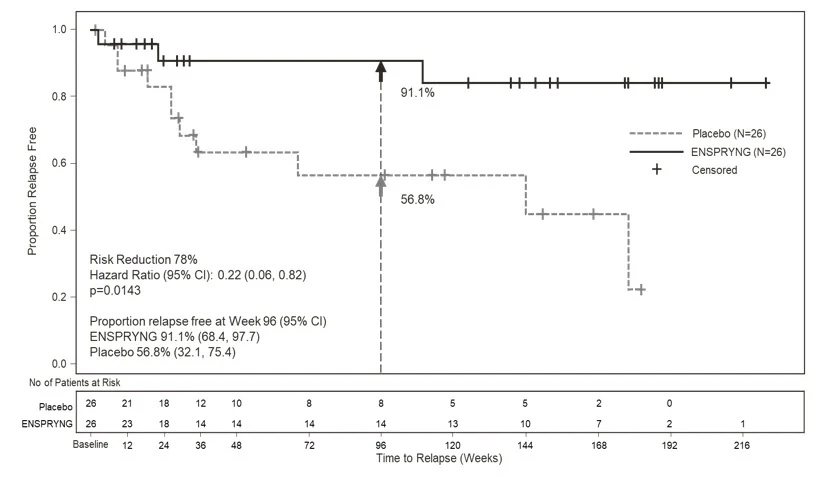
In Study 2, the time to the first CEC-confirmed relapse was significantly longer in patients treated with ENSPRYNG compared to patients who received placebo (risk reduction 62%; hazard ratio 0.38; p = 0.0184). In the anti-AQP4 antibody positive population, there was a 78% risk reduction; hazard ratio 0.22; p = 0.0143 (Table 7; Figure 2). There was no evidence of a benefit in the anti-AQP4 antibody negative patients.
Table 7 Efficacy Results from Study 1 and Study 2 in anti-AQP4 Antibody Positive NMOSD Patients
| Study 1 | Study 2 | |||
|---|---|---|---|---|
ENSPRYNG N=41 | Placebo N=23 | ENSPRYNG + ISTIST = immunosuppressant therapy N= 26 | Placebo + IST N=26 | |
| Time to Clinical Endpoint Committee (CEC)-Determined Relapse (Primary Efficacy Endpoint) | ||||
| Number (%) of Patients with Relapse | 9 (22) | 13 (56.5) | 3 (11.5) | 11 (42.3) |
| Hazard Ratio (95% CI) | 0.26 (0.11, 0.63) | 0.22 (0.06, 0.82) | ||
| p-value | 0.0014 | 0.0143 | ||
| Risk Reduction | 74% | 78% | ||
| Proportion of Protocol Defined Relapse-Free Patients at 96 Weeks | 76.5% | 41.1% | 91.1% | 56.8% |
Figure 1 Study 1: Time to First CEC-Determined NMOSD Relapse in the Randomized Controlled Period in the ITT Population Anti-AQP4 Antibody Positive Patients
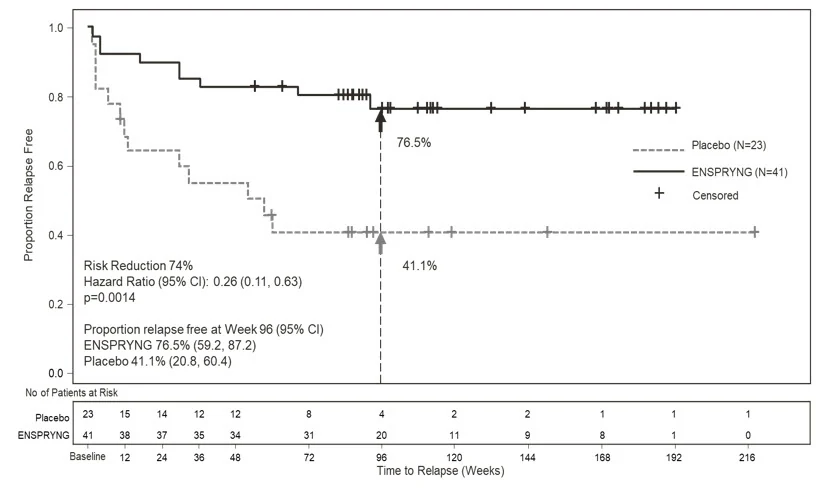
Figure 2 Study 2: Time to First CEC-Determined NMOSD Relapse in the Randomized Controlled Period in the ITT Population Anti-AQP4 Antibody Positive Patients
14.2 Clinical Studies in TED
The efficacy of ENSPRYNG for the treatment of thyroid eye disease (TED) was evaluated in two identical, randomized, double-masked, placebo-controlled, multicenter Phase 3 clinical trials (Study 3, NCT05987423 and Study 4, NCT06106828) in patients with TED. A total of 258 patients were enrolled in the two studies, of whom 255 received at least one dose of study treatment through Week 24 (131 patients received ENSPRYNG). Overall, 238 patients (92.2%) completed the studies through Week 24. Patient age ranged from 19 to 80 years (median age, 49.4 years).
The study population included patients with active, moderate-to-severe TED (76.7%) and patients with inactive TED (23.3%). Patients were required to have either:
- a clinical diagnosis of active TED, defined as a Clinical Activity Score (CAS) ≥3 and proptosis ≥3 mm above normal in the study eye, or
- a clinical diagnosis of stable, chronic inactive TED, defined as CAS <3 and proptosis ≥3 mm above normal.
All patients were required to be euthyroid at baseline or to have mild hypo- or hyperthyroidism (defined as free T3 and free T4 within 50% above or below the normal range at screening). Patients with prior surgical or biologic treatment for TED were excluded. In both studies, patients were randomized to receive ENSPRYNG at the recommended dose [see Dosage and Administration (2.2)] or placebo administered by subcutaneous injection at Weeks 0, 2, and 4, followed by dosing every 4 weeks through Week 20.
The primary efficacy endpoint was the proptosis responder rate at Week 24 in the active TED population. A proptosis responder was defined as a patient with a ≥2 mm reduction in proptosis in the study eye from baseline without deterioration (≥2 mm increase in proptosis) in the non-study eye (Table 8). Additional evaluations included signs and symptoms of TED, including orbital pain, gaze evoked orbital pain, eyelid swelling, eyelid erythema, conjunctival redness, chemosis, inflammation, clinical activity score and assessments of quality of life (functional vision and patient appearance). Efficacy results of satralizumab were generally consistent across pre-defined subgroups (e.g., age, gender, ethnicity, race, iris pigmentation, smoking status) for the proptosis responder rate.
Proptosis response in the active TED population at Week 24 was 52.9% in the ENSPRYNG group compared to 23.4% in the placebo group in Study 4. Study 3 did not meet its pre-specified primary efficacy endpoint at Week 24 compared to placebo (Table 8).
Table 8: Primary Efficacy Results at Week 24 in Study 3 and Study 4 among TED Patients
| Efficacy Outcomes | Study 3 | Study 4 | ||
|---|---|---|---|---|
Enspryng (n=50) | Placebo (n=51) | Enspryng (n=48) | Placebo (n=49) | |
| Proptosis response in active TED population% (n) | 49.0% | 31.2% | 52.9% | 23.4% |
Difference 95.03% CI (p-value) | 17.9% (-1.6%, 37.3%) (0.07) | 28.9% (11.5%, 46.2%) (<0.01) | ||
Efficacy was also evaluated in the overall TED population, including both active and inactive disease (Table 9). Proptosis response in the overall TED population at Week 24 was 46.9% in the ENSPRYNG group compared to 22.2% in the placebo group in Study 4. The proptosis response in the overall TED population in Study 3 was generally consistent with Study 4.
Table 9 Additional Efficacy Results from Study 4 in TED Patients
| Efficacy Outcomes at Week 24 | Study 4 | |
|---|---|---|
Enspryng n/N (%) / mean | Placebo n/N (%) / mean | |
| Proptosis response in overall TED population at Week 24 | 30/64 (46.9%) | 14/63 (22.2%) |
Difference 95.03% CI (p-value) | 24.6% 9.4%, 39.8% (<0.01) | |
| Proportion of patients with Grade ≥ 1 reduction/improvement in diplopia (active population) at Week 24Results from baseline (Day 1) at Week 24 among participants with diplopia present at baseline | 17/28 (60.7%) | 8/31 (25.8%) |
Difference 95.03% CI (p-value) | 35.1% 11.0%, 59.3% (<0.01) | |
| Change in proptosis (mm) in the study eye (active population) at Week 24 | 48 –1.97mm | 49
|
Difference 95.03% CI (p-value) |
(<0.01) | |
16 HOW SUPPLIED/STORAGE AND HANDLING
16.1 How Supplied
ENSPRYNG (satralizumab-mwge) injection is available as a sterile, preservative-free, clear, colorless to slightly yellow solution for subcutaneous injection in a single-dose prefilled syringe (PFS) with needle safety device or a single-dose autoinjector.
ENSPRYNG prefilled syringe and autoinjector are not made with natural rubber latex. Each ENSPRYNG carton contains either:
- One single-dose 120 mg/mL prefilled syringe (NDC 50242‑007‑01)
- One single-dose 120 mg/mL autoinjector (NDC 50242-007-55).
- One single-dose 180 mg/1.5mL autoinjector (NDC 50242-005-01).
16.2 Storage and Handling
- Refrigerate at 2°C to 8°C (36°F to 46°F) in original carton to protect from light. Do not freeze. Do not shake.
- ENSPRYNG can be stored out of refrigeration for a maximum of 8 days at a temperature that does not exceed 30°C (86°F). If ENSPRYNG is removed from and returned to the refrigerator, the total combined time out of refrigeration should not exceed 8 days.
- Always keep in the original carton to protect from light.
17 PATIENT COUNSELING INFORMATION
Advise the patients to read the FDA-approved patient labeling (Medication Guide and Instructions for Use).
Infections
Inform patients that an increased risk of infections, including serious and potentially fatal infections, has been observed in patients treated with IL-6 receptor antagonists, including ENSPRYNG. Instruct patients to contact their healthcare provider immediately when symptoms suggesting infection (e.g., fever, chills, constant cough, or sore throat) appear during treatment [see Warning and Precautions (5.1)].
Vaccinations
Advise patients to complete any required vaccinations at least 4 weeks prior to initiation of ENSPRYNG for live or live-attenuated vaccines and, whenever possible, at least 2 weeks prior to initiation of ENSPRYNG for non-live vaccines [see Warnings and Precautions 5.1].
Elevated Liver Enzymes
Inform patients on the importance of liver enzyme testing [see Warnings and Precautions (5.2)].
Decreased Neutrophil Counts
Inform patients on the importance of neutrophil count testing [see Warnings and Precautions (5.3)].
Hypersensitivity Reactions
Inform patients about the signs and symptoms of hypersensitivity reactions and anaphylaxis and advise them to contact their healthcare provider immediately if these symptoms occur [see Warnings and Precautions (5.4)].
Instruction on Injection Technique
Instruct patients and caregivers to read the Instructions for Use before the patient starts using ENSPRYNG, and each time the patient gets a refill as there may be new information they need to know.
Perform the first injection under the guidance of a qualified healthcare professional. If a patient or caregiver is to administer subcutaneous ENSPRYNG, instruct him/her in injection techniques and assess his/her ability to inject subcutaneously to ensure proper administration of subcutaneous ENSPRYNG and the suitability for home use [see Dosage and Administration (2.3) and Instructions for Use].
Instruct patients to remove the prefilled syringe or autoinjector from the refrigerator prior to use and allow it to sit at room temperature outside of the carton for 30 minutes. Do not warm ENSPRYNG in any other way.
Instruct patients to use the syringe or the autoinjector within 5 minutes of removing the cap. Do not remove the cap until ready to inject.
Advise patients not to touch the green needle shield of the autoinjector or put the cap back on after it has been removed, as this may unintentionally activate the autoinjector.
Advise patients to consult their healthcare provider if the full dose is not received.
A puncture-resistant container for disposal of syringes should be used and should be kept out of the reach of children. Instruct patients or caregivers in the technique as well as proper prefilled syringe or autoinjector disposal, and caution against reuse of these items.
Pregnancy Exposure Registry for NMOSD
Encourage patients to enroll in the ENSPRYNG Pregnancy Registry if they become pregnant while taking ENSPRYNG for NMOSD. The Registry monitors fetal outcomes of pregnant women with NMOSD exposed to ENSPRYNG [see Use in Specific Populations (8.1)].
ENSPRYNG® [satralizumab-mwge]
Manufactured by:
Genentech, Inc.
A Member of the Roche Group
1 DNA Way
South San Francisco, CA 94080-4990
ENSPRYNG® is a registered trademark of
Chugai Pharmaceutical Co., Ltd., Tokyo, Japan
©2026 Genentech, Inc. All rights reserved.
U.S. License No.: 1048