


Prescribing information (package insert) - Cyclomydril
DESCRIPTION
CYCLOMYDRIL® (cyclopentolate hydrochloride and phenylephrine hydrochloride ophthalmic solution) is a mydriatic prepared as a sterile topical ophthalmic solution. The active ingredients are represented by the chemical structures:
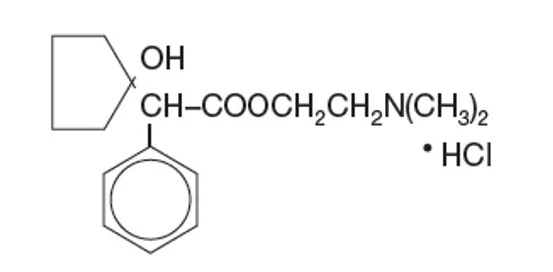
Established Name:
Cyclopentolate Hydrochloride
Chemical Name:
2-(Dimethylamino)ethyl 1 - hydroxy-α-phenylcyclopentaneacetate hydrochloride)
Molecular Formula:
C17H25NO3 • HCl
Molecular Weight:
327.85 g/mol
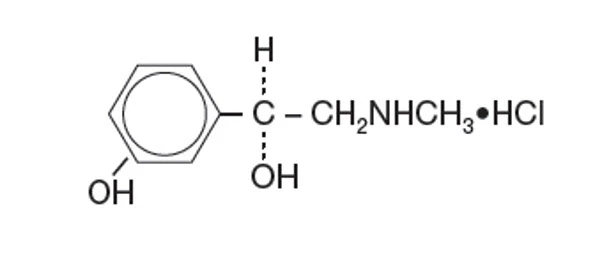
Established Name:
Phenylephrine Hydrochloride
Chemical Name:
3-hydroxy-α[(methylamino)-methyl]-, Benzenemethanol, hydrochloride (R)-.
Molecular Formula:
C9H13NO2 • HCl
Molecular Weight:
203.67 g/mol
Each mL of CYCLOMYDRIL® (cyclopentolate hydrochloride and phenylephrine hydrochloride ophthalmic solution) contains:
Active: cyclopentolate hydrochloride 0.2%, phenylephrine hydrochloride 1%. Preservative: benzalkonium chloride 0.01%.
Inactives: edetate disodium, boric acid, hydrochloric acid and /or sodium carbonate (to adjust pH), purified water.
CLINICAL PHARMACOLOGY
Cyclopentolate hydrochloride is an anticholinergic drug and phenylephrine hydrochloride is an adrenergic drug. This combination induces mydriasis that is greater than that of either drug alone at its respective concentration. The concentrations of cyclopentolate hydrochloride and phenylephrine hydrochloride have been selected to induce mydriasis with little accompanying cycloplegia. Heavily pigmented irides may require more doses than lightly pigmented irides.
INDICATIONS AND USAGE
For the production of mydriasis.
CONTRAINDICATIONS
Do not use in patients with hypersensitivity to any component of this preparation.
WARNINGS
FOR TOPICAL OPHTHALMIC USE ONLY. NOT FOR INJECTION. There have been reports of serious cardiovascular reactions, including ventricular arrhythmias and myocardial infarctions, in patients using higher concentrations of phenylephrine. These episodes, some fatal, have usually occurred in patients with pre-existing cardiovascular diseases. This preparation may cause central nervous system (CNS) disturbances. This is especially true in younger age groups, but may occur at any age, especially with the stronger solutions. Infants are especially prone to CNS and cardiopulmonary side effects from cyclopentolate.
PRECAUTIONS
General
Caution should be observed when considering use of this medication in the presence of Down's syndrome due to potential increased sensitivity to anticholinergics. This product should be used with caution in patients at risk for angle closure due to the potential to precipitate acute angle closure. Because of the risk of provoking hyperthermia, use with caution in patients, especially children, who may be exposed to elevated environmental temperatures or who are febrile. The use of phenylephrine in the eye may liberate pigment granules from the iris. Mydriatics may produce a transient elevation of intraocular pressure.
Information for Patients
Do not touch dropper tip to any surface, as this may contaminate the solution. Patient should be advised not to drive or engage in hazardous activities while pupils are dilated. Patient may experience sensitivity to light.
Carcinogenesis, Mutagenesis, Impairment of Fertility
There have been no long-term studies done using cyclopentolate hydrochloride and/or phenylephrine hydrochloride in animals to evaluate carcinogenic potential.
Pregnancy
Animal reproduction studies have not been conducted with cyclopentolate hydrochloride and/or phenylephrine hydrochloride. It is also not known whether cyclopentolate hydrochloride and/or phenylephrine hydrochloride can cause fetal harm when administered to a pregnant woman or can affect reproduction capacity. CYCLOMYDRIL® (cyclopentolate hydrochloride and phenylephrine hydrochloride ophthalmic solution) should be given to a pregnant woman only if clearly needed.
Nursing Mothers
It is not known whether these drugs are excreted in human milk. Because many drugs are excreted in human milk, caution should be exercised when CYCLOMYDRIL® (cyclopentolate hydrochloride and phenylephrine hydrochloride ophthalmic solution) is administered to a nursing woman.
Pediatric Use
Use of cyclopentolate has been associated with psychotic reactions and behavioral disturbances in pediatric patients. Increased susceptibility to cyclopentolate has been reported in infants, young children, and in children with spastic paralysis or brain damage. These disturbances include ataxia, incoherent speech, restlessness, hallucinations, hyperactivity, seizures, disorientation as to time and place. Feeding intolerance may follow ophthalmic use of this product in infants. It is recommended that feeding be withheld after administration, and to observe infants closely for at least 30 minutes (see PRECAUTIONS).
Geriatric Use
No overall differences in safety or effectiveness have been observed between elderly and younger patients.
ADVERSE REACTIONS
Ocular
The following ocular adverse experiences have been associated with the use of CYCLOMYDRIL® (cyclopentolate hydrochloride and phenylephrine hydrochloride ophthalmic solution): increased intraocular pressure, burning/irritation upon instillation, photophobia, blurred vision and superficial punctate keratitis.
Nonocular
Use of cyclopentolate hydrochloride has been associated with psychotic reactions and behavioral disturbances in children. These disturbances include ataxia, incoherent speech, restlessness, hallucinations, hyperactivity, seizures, disorientation as to time and place. This drug produces reactions similar to those of other adrenergic and anticholinergic drugs; however, the central nervous system manifestations as noted above are most common. Other manifestations of adrenergic and anticholinergic topical ophthalmic drugs include tachycardia, hyperpyrexia, hypertension, vasodilation, urinary retention, diminished gastrointestinal motility, convulsion, bradycardia, apnea, necrotizing colitis and abdominal distention (in newborns and especially premature infants), skin rash, drowsiness, and decreased secretion in salivary and sweat glands, pharynx, bronchi and nasal passages. Severe manifestations of toxicity include coma, medullary paralysis and death. Systemic toxicity can result from topical application of sympathomimetic drugs: headache, blood pressure elevation, extrasystoles, tachycardia, syncope and cerebrovascular accidents have been reported.
OVERDOSAGE
Excessive dosage may produce behavioral disturbances, tachycardia, hyperpyrexia, hypertension, elevated intraocular pressure, vasodilation, urinary retention, diminished gastrointestinal motility and decreased secretion in salivary and sweat glands, pharynx, bronchi and nasal passages. Pulmonary oedema or cardiac arrest may occur due to phenylephrine toxicity. Severe intoxication is characterized by central nervous system depression, coma, circulatory and respiratory failure, and death.
Patients exhibiting signs of overdosage should receive supportive care and monitoring.
DOSAGE AND ADMINISTRATION
Instill one drop in each eye every five to ten minutes. To minimize systemic absorption, apply pressure over the nasolacrimal sac for two to three minutes following instillation. Observe infants closely for at least 30 minutes.
HOW SUPPLIED
CYCLOMYDRIL® (cyclopentolate hydrochloride and phenylephrine hydrochloride ophthalmic solution) is supplied as a sterile solution in 2 mL and 5 mL, in plastic DROP-TAINER® dispensers.
2 mL NDC 0065-0359-02
5 mL NDC 0065-0359-05
Storage: Store at 8°C to 25°C (46°F - 77°F)
Distributed by:
ALCON LABORATORIES, INC.
6201 South Freeway
Fort Worth, Texas 76134-2099
© 2025 Alcon Inc.
Revised: May 2025.
300065206-1223