


Patient information: uses, side effects, how to take - Xromi
What is the most important information I should know about XROMI?
XROMI can cause serious side effects including:
- Low blood cell counts are common with XROMI, including low red blood cells, white blood cells, and platelets, and can be severe and life-threatening. If your child's white blood cell count becomes very low, your child is at increased risk for infection. Your child's healthcare provider will check your child's blood cell counts before and during treatment with XROMI. Your child's healthcare provider may change your child's dose or tell your child to stop taking XROMI if your child has low blood cell counts. Tell your child's healthcare provider right away if your child gets any of the following symptoms:
- fever or chills
- body aches
- feeling very tired
- shortness of breath
- bleeding or unexplained bruising
- Hemolytic Anemia, the fast breakdown of red blood cells, has happened in people who take XROMI. Tell your child’s healthcare provider if your child develops yellowing of their skin (jaundice) or blood in their urine. Your child’s healthcare provider may do blood tests if your child has persistent or worsening anemia not related to sickle cell anemia.
- Cancer. Some people have developed cancer, such as leukemia and skin cancer, after taking XROMI for a long time. Your child's healthcare provider will check your child for cancer. You should protect your child's skin from the sun using sunblock, hats, and sun-protective clothing.
XROMI can harm an unborn baby.
Females taking XROMI who can become pregnant should:
- avoid becoming pregnant during treatment with XROMI.
- talk with your healthcare provider about the risks of XROMI to your unborn baby.
- use effective birth control during treatment with XROMI and for at least 6 months after treatment.
- expect that their healthcare provider will perform a pregnancy test before they start treatment with XROMI.
- tell their healthcare provider right away if you become pregnant or think you may be pregnant.
For males taking XROMI:
If your child has a female sexual partner who can become pregnant, your child should use effective birth control during treatment with XROMI and for at least 6 months after treatment.
XROMI may cause fertility problems in males. Talk to your child’s healthcare provider if this is a concern for you.
What is XROMI?
XROMI is a prescription medicine that is used to reduce the frequency of painful crises and reduce the need for blood transfusions in children aged 6 months of age and older with sickle cell anemia with recurrent moderate to severe painful crises.
XROMI is not for use in adults.
It is not known if XROMI is safe and effective in children less than 6 months old.
Your child should not take XROMI if your child is allergic to hydroxyurea or any of the ingredients in XROMI. See the end of this Medication Guide for a list of the ingredients in XROMI.
Before taking XROMI, tell your healthcare provider about all of your medical conditions, including if you:
- have kidney problems or is receiving hemodialysis.
- have liver problems.
- have human immunodeficiency virus (HIV) or take HIV medicines. Taking XROMI with certain HIV medicines can cause serious reactions and may lead to death. Tell your child's healthcare provider if your child takes an HIV medicine.
- have increased levels of uric acid in their blood (hyperuricemia).
- have a history of receiving interferon therapy or is currently receiving interferon therapy.
- have leg wounds or ulcers.
- plan to receive any vaccinations. You should not receive "live vaccines" during treatment with XROMI.
are pregnant or plan to become pregnant. See “What is the most important information I should know about XROMI?”
- are breastfeeding or plan to breastfeed. It is not known if XROMI can pass into your breast milk. Do not breastfeed during treatment with XROMI.
- are using a continuous glucose monitor (CGM) to test your blood glucose. Hydroxyurea may affect your sensor glucose results and may lead to low blood sugar (hypoglycemia). Talk to the healthcare provider that prescribed your CGM about whether it is safe to use while you are taking XROMI.
Tell your healthcare provider about all the medicines your child takes, including prescription and over-the-counter medicines, vitamins, and herbal supplements.
How should your child take XROMI?
Read the Instructions for Use that comes with XROMI for information about the right way to measure and give a dose of XROMI. If you have any questions, talk to your child's healthcare provider or pharmacist.
- Administer XROMI exactly as your child's healthcare provider tells you to administer it. XROMI is taken 1 time a day at the same time each day.
- Administer XROMI with or after meals. Administer XROMI the same way each day.
- Drink some water after each dose of XROMI.
- If your child takes too much XROMI, call your child's healthcare provider or go to the nearest hospital emergency room.
- If you miss a dose of XROMI, call your healthcare provider for advice.
- XROMI oral solution should be handled with care. To decrease the risk of exposure, caregivers should do the following when handling XROMI:
- Wear disposable gloves when handling oral dosing syringes or bottles containing XROMI.
- Wash your hands with soap and water before and after handling oral dosing syringes or bottles containing XROMI.
- Avoid contact with the oral solution. If contact with the oral solution happens on the skin, wash the skin area right away and thoroughly with soap and water. If contact with the oral solution happens in the eyes, flush the eyes thoroughly with water and isotonic eyewash used for that purpose for at least 15 minutes.
- If the oral solution is spilled, wipe it up right away with a damp disposable towel. Throw the damp disposable towel away in a closed container such as a plastic bag. The spill area should then be cleaned up using a detergent solution followed by clean water.
- During treatment with XROMI, your child's healthcare provider will do blood tests regularly to check your child's blood cell counts and liver function. Your healthcare provider may change your child's dose if your child has side effects.
What are the possible side effects of XROMI?
XROMI may cause serious side effects, including:
See What is the most important information I should know about XROMI?"
- Skin ulcers and death of tissue (gangrene) have happened in people who take XROMI. This has happened most often in people who receive interferon therapy or have a history of interferon therapy. Your child's healthcare provider will decrease your dose or stop treatment with XROMI if your child develops any skin ulcers.
- Enlarged red blood cells (macrocytosis). Macrocytosis is common in people who take XROMI and can make it difficult to detect a decrease of folic acid. Your child's healthcare provider may prescribe a folic acid supplement for your child.
Respiratory (breathing) problems. Some people have developed life-threatening respiratory conditions called interstitial lung disease. Your child’s healthcare provider may tell your child to stop taking XROMI if your child develops respiratory problems. Tell your child’s healthcare provider right away if your child gets any of the following symptoms:
- fever
- cough
- shortness of breath
The most common side effects of XROMI include:
- low blood levels of a type of white blood cell (neutropenia)
- low blood levels of platelets (thrombocytopenia)
- raised bumps on the skin (papular rash)
These are not all the possible side effects of XROMI.
Call your child's doctor for medical advice about side effects. You may report side effects to FDA at 1-800-FDA-1088.
How should I store XROMI?
- XROMI comes in a bottle with a child-resistant cap.
- Refrigerate XROMI between 35°F to 46°F (2°C to 8°C). Do not freeze.
- Store the XROMI bottle and oral dosing syringe in a clean place.
- XROMI oral solution should be used within 12 weeks after opening the bottle. Dispose of (throw away) any unused medicine and the dosing syringes after 12 weeks.
- Do not use after the expiration date on the carton and bottle.
Keep XROMI and all medicines out of the reach of children.
General information about the safe and effective use of XROMI
Medicines are sometimes prescribed for purposes other than those listed in a Medication Guide. Do not use XROMI for a condition for which it was not prescribed. Do not give XROMI to other people, even if they have the same symptoms your child has. It may harm them. You can ask your child's healthcare provider or pharmacist for information about XROMI that is written for health professionals.
What are the ingredients of XROMI?
Active ingredient: hydroxyurea
Inactive ingredients: methyl parahydroxybenzoate, purified water, sodium hydroxide, strawberry flavor, sucralose and xanthan gum.
Manufactured by: Nova Laboratories Ltd., Leicester, LE18 4YL, United Kingdom
Manufactured for: Rare Disease Therapeutics, Inc., 2550 Meridian Blvd., Suite 150, Franklin, TN 37067
For more information, go to www.xromi-us.com.
Part Number: D001230/1
INSTRUCTIONS FOR USE XROMI®(ex-ro-mee) hydroxyurea) oral solution |
Read these Instructions for Use before your child starts taking XROMI, and each time you get a refill. There may be new information. This Instructions for Use does not take the place of talking to your child's healthcare provider about your child's medical condition or treatment.
Important information:
- Always use the oral dosing syringe provided with your child's XROMI oral solution to measure your child's prescribed dose. Ask your child’s healthcare provider or pharmacist to show you which oral dosing syringe to use and how to measure your child’s prescribed dose if you are not sure.
- Wash your hands with soap and water before and after handling XROMI oral solution and oral dosing syringes.
- Wear disposable gloves when handling XROMI oral solution and oral dosing syringes.
- Avoid contact with the oral solution. If contact with the oral solution happens on the skin, nose, or mouth, wash the area right away and thoroughly with soap and water. If contact with the oral solution happens in the eyes, flush the eyes thoroughly with water and isotonic eyewash used for that purpose for at least 15 minutes.
- If the oral solution is spilled, wipe it up right away with a damp disposable towel. Throw the damp disposable towel away in a closed container such as a plastic bag. The spill area should then be cleaned up using a detergent solution followed by clean water.
Do not shake the bottle.
Each carton of XROMI oral solution contains:
- 1 bottle of XROMI oral solution
- 1 bottle adapter
- One 3 mL oral dosing syringe (for doses of 3 mL or less)
- One 10 mL oral dosing syringe (for doses more than 3 mL)
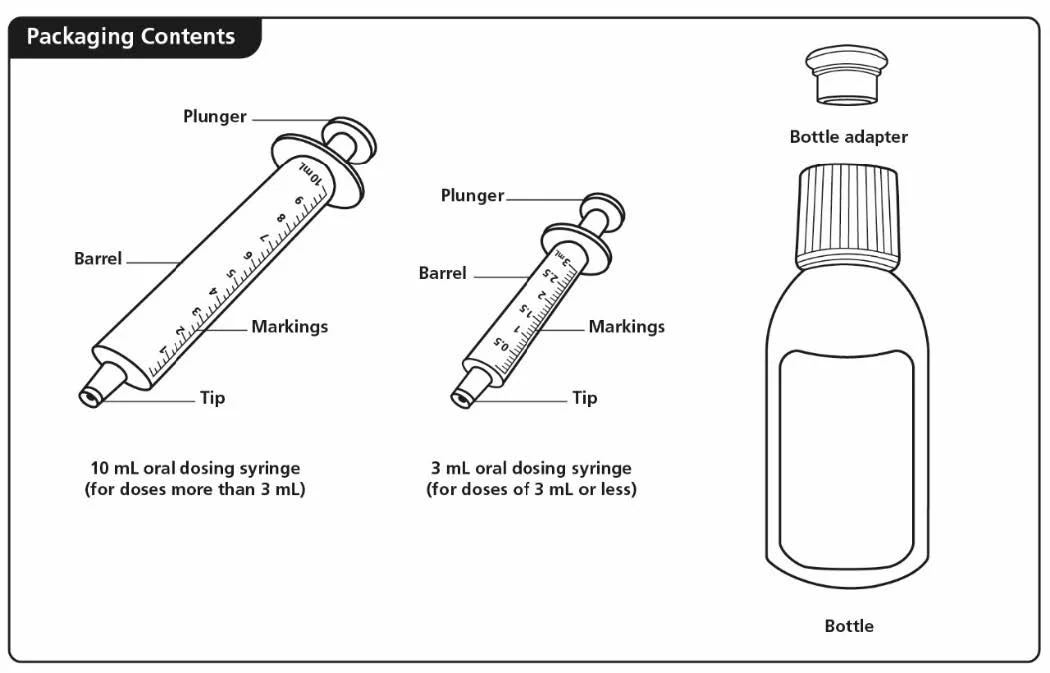
If your carton does not contain two oral dosing syringes, contact your pharmacist.
You will also need disposable gloves.
| Before giving XROMI: | |
| Step 1. Wash your hands well with soap and water. | |
| Step 2. Put on disposable gloves. | |
| Step 3. Place the items from the carton on a clean flat surface. | |
Step 4. Open the bottle by pushing down firmly on the child-resistant cap and turning it counter-clockwise (See Figure A). Do not throw away the child-resistant cap. | 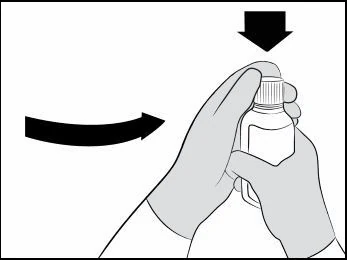 Figure A |
Step 5. First time use only: Insert the bottle adapter. Push the ribbed end of the bottle adapter into the neck of the bottle until it is firmly in place. The bottom edge of the adapter should fully contact the top rim of the bottle (See Figure B). Do not remove the adapter from the bottle after it is inserted. | 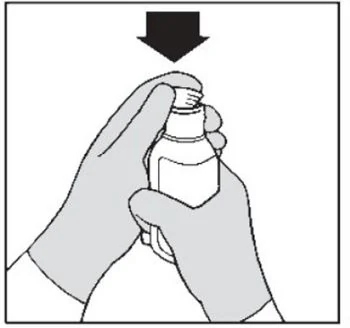 Figure B |
| Measuring your child's prescribed dose of XROMI: | |
Step 6. Choose the oral dosing syringe you need to measure your child's prescribed dose. (See Figure C). Check the dose in mL as prescribed by your child’s healthcare provider. Choose the right oral dosing syringe for your child’s dose.
Find the marking for your child’s prescribed dose on the right oral dosing syringe. | 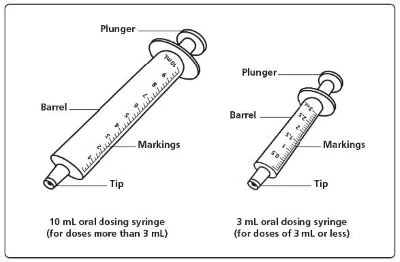 Figure C |
| Step 7. Push the plunger of the oral dosing syringe all the way down to remove any air in the oral dosing syringe (See Figure D). | 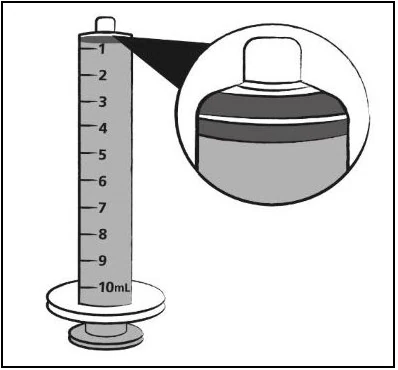 Figure D |
| Step 8. Hold the bottle upright. Insert the tip of the oral dosing syringe into the opening of the bottle adapter until it is firmly in place (See Figure E). | 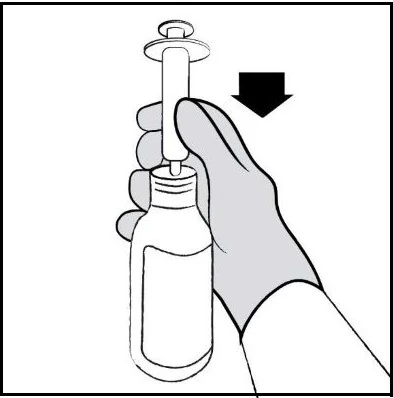 Figure E |
Step 9. Turn the bottle upside down with the oral dosing syringe in place. Pull back slowly on the plunger of the oral dosing syringe until the top of the plunger is even with the mL mark on the oral dosing syringe that corresponds to your child’s prescribed dose. See Figure F for an example of a dose of 6 mL. Your dose may be different than the example shown. | 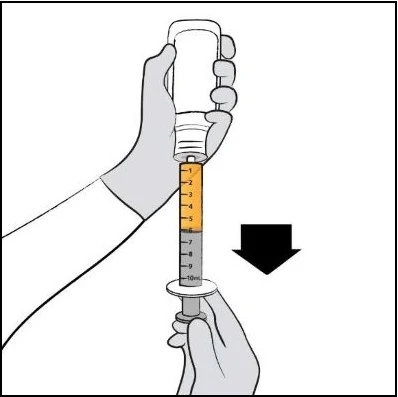 Figure F |
| Step 10. Leave the oral dosing syringe in the bottle adapter and turn the bottle upright. Place the bottle onto a flat surface. Hold the oral dosing syringe by the barrel and carefully remove it from the adapter. Do not hold the oral dosing syringe by the plunger (See Figure G). | 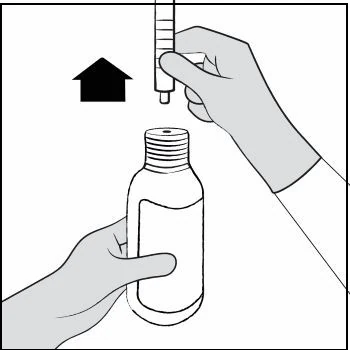 Figure G |
Step 11. Hold the oral dosing syringe with the oral dosing syringe tip pointing up. Check that the correct dose was drawn up into the oral dosing syringe (See Figure H). If there are large air bubbles in the oral dosing syringe (See Figure I) or if you have drawn up the wrong dose, re-insert the oral dosing syringe tip firmly into the bottle adapter while the bottle is in an upright position. Fully push in the plunger so the oral solution flows back into the bottle. Repeat Steps 8 and 9. |
|
| Giving the prescribed dose of XROMI: | |
Step 12. Place the tip of the oral dosing syringe in your child’s mouth and place the tip against the inside of your child’s cheek. Gently push the plunger all the way down to give all the medicine in the oral dosing syringe and then remove the oral dosing syringe from your child’s mouth (See Figure J). Make sure the child has time to swallow the medicine. If your child’s prescribed dose is more than 10 mL, you will need to divide the dose. Follow the instructions given to you by your healthcare provider or pharmacist about how to divide the dose and repeat Steps 6 through 12. | 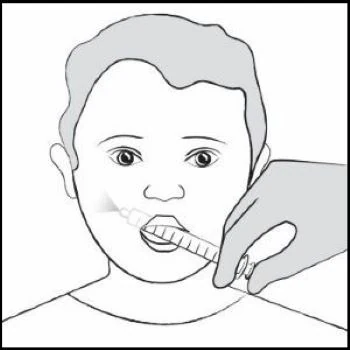 Figure J |
| Step 13. Have your child drink some water to make sure no medicine is left in your child’s mouth. | |
| Step 14. Close the bottle tightly by turning the child-resistant cap clockwise, leaving the bottle adapter in place. | |
Step 15. Wash your hands well with soap and water. Rinse and wash the oral dosing syringes with cold or warm water and dry completely before next use. Hold the oral dosing syringe under water and move the plunger up and down several times to make sure the inside of the oral dosing syringe is clean. Let the oral dosing syringe dry completely before you use it again. Do not throw away the oral dosing syringe after use. |
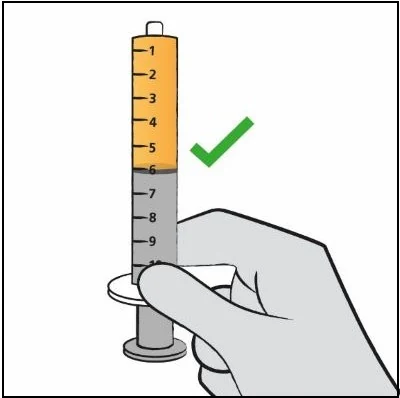 Figure H
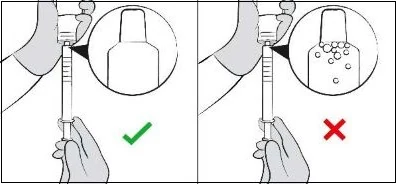 Figure I
Storing XROMI
- Store XROMI in a refrigerator between 35°F to 46°F (2°C to 8°C). Do not freeze.
- Store the XROMI bottle and oral dosing syringe in a clean place.
- XROMI oral solution should be used within 12 weeks after opening the bottle. Dispose of (throw away) any unused medicine and the dosing syringes after 12 weeks.
- Do not use after the expiration date on the carton and the bottle.
- Keep XROMI and all medicines out of the reach of children.
Disposing of XROMI
- Ask your pharmacist for instructions on how to throw away (dispose of) XROMI that is expired or no longer needed.
Manufactured by: Nova Laboratories Ltd., Leicester, LE18 4YL, United Kingdom
Manufactured for: Rare Disease Therapeutics, Inc., 2550 Meridian Blvd., Suite 150, Franklin, TN 37067
Part Number: D001426/1
This “Instructions for Use” has been approved by the U.S. Food and Drug Administration Revised: 12/2024