


Patient information: uses, side effects, how to take - Valcyte
What is the most important information I should know about VALCYTE?
VALCYTE can cause serious side effects, including:
- Blood and bone marrow problems. VALCYTE can affect the bone marrow lowering the amount of your white blood cells, red blood cells, and platelets and may cause serious and life-threatening problems.
- Kidney failure. Kidney failure may happen in people who are elderly, people who take VALCYTE with certain other medicines, or people who are not adequately hydrated.
- Fertility problems. VALCYTE may lower sperm count in males and cause fertility problems. VALCYTE may also cause fertility problems in women. Talk to your healthcare provider if this is a concern for you.
Birth defects. VALCYTE causes birth defects in animals. It is not known if VALCYTE causes birth defects in people. If you are a female who can become pregnant, you should use effective birth control during treatment with VALCYTE and for at least 30 days after treatment. If you are pregnant, talk to your healthcare provider before starting treatment with VALCYTE. If you are a female who can become pregnant, you should have a pregnancy test done before starting VALCYTE.
- Tell your healthcare provider right away if you become pregnant during treatment with VALCYTE.
- Males should use condoms during treatment with VALCYTE, and for at least 90 days after treatment, if their female sexual partner can become pregnant. Talk to your healthcare provider if you have questions about birth control.
- Cancer. VALCYTE causes cancer in animals and may potentially cause cancer in people.
Your healthcare provider will do regular blood tests during treatment with VALCYTE to check you for side effects. Your healthcare provider may change your dose or stop treatment with VALCYTE if you have serious side effects.
What is VALCYTE?
VALCYTE is a prescription antiviral medicine.
In adults, VALCYTE tablets are used:
- to treat cytomegalovirus (CMV) retinitis in people who have acquired immunodeficiency syndrome (AIDS). When CMV virus infects the eyes, it is called CMV retinitis. If CMV retinitis is not treated, it can cause blindness.
- to prevent CMV disease in people who have received a kidney, heart, or kidney-pancreas transplant and who have a high risk for getting CMV disease.
VALCYTE does not cure CMV retinitis. You may still get retinitis or worsening of retinitis during or after treatment with VALCYTE. It is important to stay under a healthcare provider's care and have your eyes checked at least every 4 to 6 weeks during treatment with VALCYTE.
In children, VALCYTE tablets or oral solution are used:
- to prevent CMV disease in children 4 months to 16 years of age who have received a kidney transplant and have a high risk for getting CMV disease.
- to prevent CMV disease in children 1 month to 16 years of age who have received a heart transplant and have a high risk for getting CMV disease.
It is not known if VALCTYE is safe and effective in children for prevention of CMV disease in liver transplant, in kidney transplant in infants less than 4 months of age, in heart transplant in infants less than 1 month of age, in children with AIDS who have CMV retinitis, and in infants with congenital CMV infection.
Do not take VALCYTE if you have had a serious allergic reaction to valganciclovir, ganciclovir or any of the ingredients of VALCYTE. See the end of this leaflet for a list of the ingredients in VALCYTE.
Before you take VALCYTE, tell your healthcare provider about all of your medical conditions, including if you:
- have low blood cell counts
- have kidney problems
- are receiving hemodialysis
- are receiving radiation treatment
are pregnant or plan to become pregnant. See "What is the most important information I should know about VALCYTE?"
are breastfeeding or plan to breastfeed. It is not known if VALCYTE passes into your breast milk. You should not breastfeed if you take VALCYTE.
- You should not breastfeed if you have Human Immunodeficiency Virus (HIV-1) because of the risk of passing HIV-1 to your baby.
- Talk to your healthcare provider about the best way to feed your baby.
Tell your healthcare provider about all the medicines you take,including prescription and over-the-counter medicines, vitamins and herbal supplements. VALCYTE and other medicines may affect each other and cause serious side effects. Keep a list of your medicines to show your healthcare provider and pharmacist.
- You can ask your healthcare provider or pharmacist for a list of medicines that interact with VALCYTE.
- Do not start taking a new medicine without telling your healthcare provider. Your healthcare provider can tell you if it is safe to take VALCYTE with other medicines.
How should I take VALCYTE?
- Take VALCYTE exactly as your healthcare provider tells you. Your dose of VALCYTE will depend on your medical condition.
- Adults should only take VALCYTE tablets. Children may take either VALCYTE tablets or oral solution.
- Take VALCYTE with food.
- Do not break or crush VALCYTE tablets. Avoid contact with your skin or eyes. If you come in contact with the contents of the tablet or oral solution, wash your skin well with soap and water or rinse your eyes well with plain water.
- If your child is prescribed VALCYTE for oral solution, your pharmacist will give you oral dosing dispensers to measure your child's dose of VALCYTE for oral solution. To be sure you receive the prescribed dose, it is important to use the dispenser provided to you. See the detailed Instructions for Use below for information about how to take VALCYTE for oral solution. Ask your pharmacist if you have any questions. If you lose or damage your oral dispensers and cannot use them, contact your pharmacist.
- If you take too much VALCYTE, call your healthcare provider or go to the nearest hospital emergency room right away.
What should I avoid during treatment with VALCYTE?
VALCYTE can cause seizures, dizziness, and confusion. You should not drive a car or operate machinery until you know how VALCYTE affects you.
What are the possible side effects of VALCYTE?
VALCYTE may cause serious side effects, including:
See " What is the most important information I should know about VALCYTE? "
The most common side effects of VALCYTE in adults include:
- diarrhea
- fever
- fatigue
- nausea
- shaky movements (tremors)
- low white cell, red cell and platelet cell counts in blood tests
- headache
- sleeplessness
- urinary tract infection
- vomiting
The most common side effects of VALCYTE in children include:
- diarrhea
- fever
- upper respiratory tract infection
- urinary tract infection
- vomiting
- low white blood cell counts in blood tests
- headache
These are not all the possible side effects of VALCYTE.
Call your doctor for medical advice about side effects. You may report side effects to FDA at 1-800-FDA-1088.
How should I store VALCYTE?
- Store VALCYTE tablets at room temperature between 68°F to 77°F (20°C to 25°C).
- Store VALCYTE for oral solution in the refrigerator between 36°F to 46°F (2°C to 8°C), for no longer than 49 days.
- Do not freeze.
- Do not keep VALCYTE that is out of date or that you no longer need.
Keep VALCYTE and all medicines out of the reach of children.
General information about the safe and effective use of VALCYTE.
Medicines are sometimes prescribed for purposes other than those listed in a Patient Information leaflet. Do not use VALCYTE for a condition for which it was not prescribed. Do not give VALCYTE to other people, even if they have the same symptoms you have. It may harm them. You can ask your pharmacist or healthcare provider for information about VALCYTE that is written for health professionals.
What are the ingredients in VALCYTE?
Active ingredient: valganciclovir hydrochloride
Inactive ingredients for tablets: microcrystalline cellulose, povidone K-30, crospovidone, and stearic acid. The film-coating applied to the tablets contains Opadry Pink®.
Inactive ingredients for oral solution: sodium benzoate, fumaric acid, povidone K-30, sodium saccharin, mannitol and tutti-frutti flavoring.
VALCYTE is a registered trademark of CHEPLAPHARM Arzneimittel GmbH.
Distributed by:
H2-Pharma, LLC
Montgomery, AL 36117, USA
Licensed by:
CHEPLAPHARM Arzneimittel GmbH
Ziegelhof 24, 17489 Greifswald, Germany
Revised: 04/2023
For more information call 1-866-946-3684.
© 2023 CHEPLAPHARM Arzneimittel GmbH. All rights reserved.
Instructions for Use
VALCYTE (Val-site)
(valganciclovir)
for oral solution
Be sure that you read, and that you understand and follow these instructions carefully to ensure proper dosing of the oral solution.
Important:
- Avoid contact with your skin or eyes. If you come in contact with the contents of the oral solution, wash your skin well with soap and water or rinse your eyes well with plain water.
- Do not use VALCYTE for oral solution after the discard date on the bottle.
- Always use the oral dispenser provided to give or take a dose of VALCYTE for oral solution.
- Call your pharmacist if your oral dispenser is lost or damaged, and they will tell you how to continue to give or take a dose of VALCYTE for oral solution.
- Ask your healthcare provider or pharmacist to show you how to measure your prescribed dose.
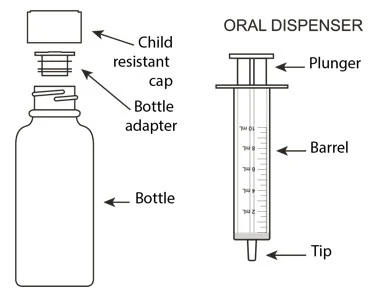
To take a dose of VALCYTE for oral solution, you will need the bottle of medicine and an oral dispenser provided with the medicine (see Figure 1). Your pharmacist inserts the bottle adapter in the VALCYTE for oral solution bottle.
| Figure 1 |
 |
| Step 1: With the child-resistant cap on the bottle, shake the bottle well for about 5 seconds before each use. | 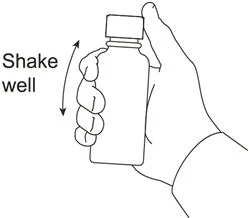 |
| Step 2: Open the bottle by pressing downward firmly on the child-resistant cap and turning it counter-clockwise. Do not throw away the child-resistant cap. | 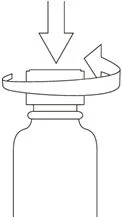 |
| Step 3: Check the dose in milliliters (mL) as prescribed by your healthcare provider. Find this number on the oral dispenser. | 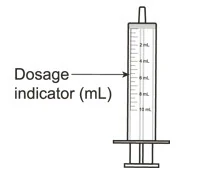 |
| Step 4: Push the plunger down toward the tip of the oral dispenser. | 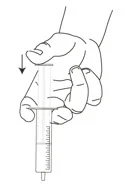 |
| Step 5: With the bottle in an upright position, insert the oral dispenser into the bottle adapter opening until firmly in place. | 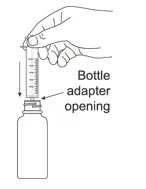 |
Step 6: Carefully turn the bottle upside down with the oral dispenser in place. Pull the plunger to withdraw the prescribed dose. If you see air bubbles in the oral dispenser, fully push in the plunger so that the oral solution flows back into the bottle. Then withdraw your prescribed dose of VALCYTE for oral solution. | 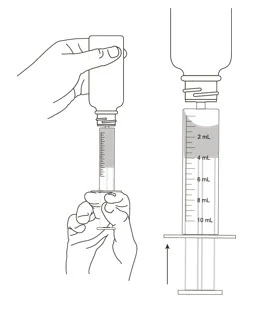 |
| Step 7: Leave the oral dispenser in the bottle adapter and turn the bottle to an upright position. Slowly remove the oral dispenser from the bottle adapter. | 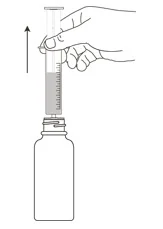 |
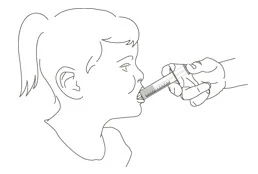
Step 8:Give or take the dose of VALCYTE for oral solution.
|  |
| Step 9: Put the child-resistant cap back on the bottle. Return the bottle back to the refrigerator. | 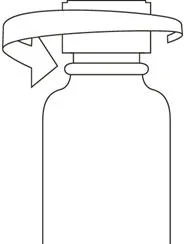 |
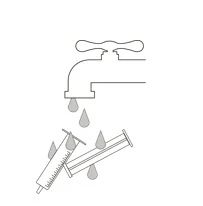
Step 10: Rinse the oral dispenser with tap water after each use.
|  |
Do not throw away the oral dispenser. | 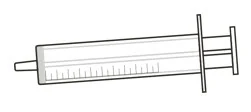 |
How should I store VALCYTE for oral solution?
- Store solution in the refrigerator at 36°F to 46°F (2°C to 8°C) for no longer than 49 days.
- Do not freeze.
This Patient Information and Instructions for Use have been approved by the U.S. Food and Drug Administration.
VALCYTE is a registered trademark of CHEPLAPHARM Arzneimittel GmbH.
Distributed by:
H2-Pharma, LLC
Montgomery, AL 36117, USA
Licensed by:
CHEPLAPHARM Arzneimittel GmbH
Ziegelhof 24, 17489 Greifswald, Germany
Revised: 04/2023
For more information call 1-866-946-3684.
© 2023 CHEPLAPHARM Arzneimittel GmbH. All rights reserved.