


Prescribing information (package insert) - Tosymra
1 INDICATIONS AND USAGE
TOSYMRA is indicated for the acute treatment of migraine with or without aura in adults.
Limitations of Use:
- Use only if a clear diagnosis of migraine has been established. If a patient has no response to the first migraine attack treated with TOSYMRA, reconsider the diagnosis before TOSYMRA is administered to treat any subsequent attacks.
- TOSYMRA is not indicated for the preventive treatment of migraine.
- TOSYMRA is not indicated for the treatment of cluster headache.
2 DOSAGE AND ADMINISTRATION
The recommended dose of TOSYMRA is 10 mg given as a single spray in one nostril.
The maximum cumulative dose that may be given in a 24-hour period is 30 mg, with doses of TOSYMRA separated by at least 1 hour. TOSYMRA may also be given at least 1 hour following a dose of another sumatriptan product.
3 DOSAGE FORMS AND STRENGTHS
Single-dose nasal spray device delivering 10 mg of sumatriptan.
4 CONTRAINDICATIONS
TOSYMRA is contraindicated in patients with:
- Ischemic coronary artery disease (CAD) (angina pectoris, history of myocardial infarction, or documented silent ischemia) or coronary artery vasospasm, including Prinzmetal's angina [see Warnings and Precautions (5.1)].
- Wolff-Parkinson-White syndrome or arrhythmias associated with other cardiac accessory conduction pathway disorders [see Warnings and Precautions (5.2)].
- History of stroke or transient ischemic attack (TIA) or history of hemiplegic or basilar migraine because these patients are at a higher risk of stroke [see Warnings and Precautions (5.4)].
- Peripheral vascular disease [see Warnings and Precautions (5.5)].
- Ischemic bowel disease [see Warnings and Precautions (5.5)].
- Uncontrolled hypertension [see Warnings and Precautions (5.8)].
- Recent use (i.e., within 24 hours) of ergotamine-containing medication, ergot-type medication (such as dihydroergotamine or methysergide), or another 5-hydroxytryptamine1 (5-HT1) agonist [see Drug Interactions (7.1, 7.3)].
- Concurrent administration of a monoamine oxidase (MAO)-A inhibitor or recent (within 2 weeks) use of an MAO-A inhibitor [see Drug Interactions (7.2) and Clinical Pharmacology (12.3)].
- Hypersensitivity to sumatriptan (angioedema and anaphylaxis seen) [see Warnings and Precautions (5.9)].
- Severe hepatic impairment [see Clinical Pharmacology (12.3)].
5 WARNINGS AND PRECAUTIONS
5.1 Myocardial Ischemia, Myocardial Infarction, and Prinzmetal's Angina
The use of TOSYMRA is contraindicated in patients with ischemic or vasospastic CAD. There have been rare reports of serious cardiac adverse reactions, including acute myocardial infarction, occurring within a few hours following administration of sumatriptan. Some of these reactions occurred in patients without known CAD. 5-HT1 agonists, including TOSYMRA, may cause coronary artery vasospasm (Prinzmetal's angina), even in patients without a history of CAD.
Perform a cardiovascular evaluation in triptan-naive patients who have multiple cardiovascular risk factors (e.g., increased age, diabetes, hypertension, smoking, obesity, strong family history of CAD) prior to receiving TOSYMRA. If there is evidence of CAD or coronary artery vasospasm, TOSYMRA is contraindicated. For patients with multiple cardiovascular risk factors who have a negative cardiovascular evaluation, consider administering the first dose of TOSYMRA in a medically supervised setting and performing an electrocardiogram (ECG) immediately following administration of TOSYMRA. For such patients, consider periodic cardiovascular evaluation in intermittent long-term users of TOSYMRA.
5.2 Arrhythmias
Life-threatening disturbances of cardiac rhythm, including ventricular tachycardia and ventricular fibrillation leading to death, have been reported within a few hours following the administration of 5-HT1 agonists. Discontinue TOSYMRA if these disturbances occur.
TOSYMRA is contraindicated in patients with Wolff-Parkinson-White syndrome or arrhythmias associated with other cardiac accessory conduction pathway disorders.
5.3 Chest, Throat, Neck, and/or Jaw Pain/Tightness/Pressure
Sensations of tightness, pain, pressure, and heaviness in the precordium, throat, neck, and jaw commonly occur after treatment with sumatriptan injection and are usually non-cardiac in origin. However, perform a cardiac evaluation if these patients are at high cardiac risk. The use of TOSYMRA is contraindicated in patients shown to have CAD and those with Prinzmetal's variant angina.
5.4 Cerebrovascular Events
Cerebral hemorrhage, subarachnoid hemorrhage, and stroke have occurred in patients treated with 5-HT1 agonists, and some have resulted in fatalities. In a number of cases, it appears possible that the cerebrovascular events were primary, the 5-HT1 agonist having been administered in the incorrect belief that the symptoms experienced were a consequence of migraine when they were not. Also, patients with migraine may be at increased risk of certain cerebrovascular events (e.g., stroke, hemorrhage, TIA). Discontinue TOSYMRA if a cerebrovascular event occurs.
Before treating headaches in patients not previously diagnosed with migraine or in patients who present with atypical symptoms, exclude other potentially serious neurological conditions. TOSYMRA is contraindicated in patients with a history of stroke or TIA.
5.5 Other Vasospasm Reactions
TOSYMRA may cause non-coronary vasospastic reactions, such as peripheral vascular ischemia, gastrointestinal vascular ischemia and infarction (presenting with abdominal pain and bloody diarrhea), splenic infarction, and Raynaud's syndrome. In patients who experience symptoms or signs suggestive of non-coronary vasospasm reaction following the use of any 5-HT1 agonist, rule out a vasospastic reaction before receiving additional TOSYMRA.
Reports of transient and permanent blindness and significant partial vision loss have been reported with the use of 5-HT1 agonists. Since visual disorders may be part of a migraine attack, a causal relationship between these events and the use of 5-HT1 agonists have not been clearly established.
5.6 Medication Overuse Headache
Overuse of acute migraine drugs (e.g., ergotamine, triptans, opioids, or combination of these drugs for 10 or more days per month) may lead to exacerbation of headache (medication overuse headache). Medication overuse headache may present as migraine-like daily headaches, or as a marked increase in frequency of migraine attacks. Detoxification of patients, including withdrawal of the overused drugs, and treatment of withdrawal symptoms (which often includes a transient worsening of headache) may be necessary.
5.7 Serotonin Syndrome
Serotonin syndrome may occur with TOSYMRA, particularly during co-administration with selective serotonin reuptake inhibitors (SSRIs), serotonin norepinephrine reuptake inhibitors (SNRIs), tricyclic antidepressants (TCAs), and MAO inhibitors [see Drug Interactions (7.4)]. Serotonin syndrome symptoms may include mental status changes (e.g., agitation, hallucinations, coma), autonomic instability (e.g., tachycardia, labile blood pressure, hyperthermia), neuromuscular aberrations (e.g., hyperreflexia, incoordination), and/or gastrointestinal symptoms (e.g., nausea, vomiting, diarrhea). The onset of symptoms usually occurs within minutes to hours of receiving a new or a greater dose of a serotonergic medication. Discontinue TOSYMRA if serotonin syndrome is suspected.
5.8 Increase in Blood Pressure
Significant elevation in blood pressure, including hypertensive crisis with acute impairment of organ systems, has been reported on rare occasions in patients treated with 5-HT1 agonists, including patients without a history of hypertension. Monitor blood pressure in patients treated with TOSYMRA. TOSYMRA is contraindicated in patients with uncontrolled hypertension.
5.9 Hypersensitivity Reactions
Hypersensitivity reactions, including angioedema and anaphylaxis, have occurred in patients receiving sumatriptan. Such reactions can be life threatening or fatal. In general, anaphylactic reactions to drugs are more likely to occur in individuals with a history of sensitivity to multiple allergens. TOSYMRA is contraindicated in patients with a history of hypersensitivity reaction to sumatriptan.
5.10 Seizures
Seizures have been reported following administration of sumatriptan. Some have occurred in patients with either a history of seizures or concurrent conditions predisposing to seizures. There are also reports in patients where no such predisposing factors are apparent. TOSYMRA should be used with caution in patients with a history of epilepsy or conditions associated with a lowered seizure threshold.
5.11 Local Irritation
Local irritative symptoms were reported in approximately 46% of patients treated with TOSYMRA in an open-label trial which allowed repeated use of TOSYMRA over the course of 6 months. Of these, the most common local irritative symptoms were application site reaction (36%), dysgeusia (21%), and throat irritation (5%). Approximately 0.5% of the cases were reported as severe.
6 ADVERSE REACTIONS
The following serious adverse reactions are described below and elsewhere in the labeling:
- Myocardial Ischemia, Myocardial Infarction, and Prinzmetal's Angina [see Warnings and Precautions (5.1)]
- Arrhythmias [see Warnings and Precautions (5.2)]
- Chest, Throat, Neck, and/or Jaw Pain/Tightness/Pressure [see Warnings and Precautions (5.3)]
- Cerebrovascular Events [see Warnings and Precautions (5.4)]
- Other Vasospasm Reactions [see Warnings and Precautions (5.5)]
- Medication Overuse Headache [see Warnings and Precautions (5.6)]
- Serotonin Syndrome [see Warnings and Precautions (5.7)]
- Increase in Blood Pressure [see Warnings and Precautions (5.8)]
- Hypersensitivity Reactions [see Contraindications (4), Warnings and Precautions (5.9)]
- Seizures [see Warnings and Precautions (5.10)]
- Local Irritation [see Warnings and Precautions (5.11)]
6.1 Clinical Trials Experience
Because clinical trials are conducted under widely varying conditions, adverse reaction rates observed in the clinical trials of a drug cannot be directly compared with rates in the clinical trials of another drug and may not reflect the rates observed in practice.
Adverse Reactions in Placebo-Controlled Trials with Sumatriptan Injection
Table 1 lists adverse reactions that occurred in 2 placebo-controlled clinical trials in patients with migraine (Studies 2 and 3) following either a single 6 mg dose of sumatriptan injection or placebo. Only reactions that occurred at a frequency of 2% or more in groups treated with sumatriptan injection 6 mg and that occurred at a frequency greater than the placebo group are included in Table 1.
Table 1: Adverse Reactions in Pooled Placebo-Controlled Trials in Patients with Migraine (Studies 2 and 3)
| Adverse Reaction | Sumatriptan Injection 6 mg Subcutaneous (n = 547) % | Placebo (n = 370) % |
|---|---|---|
| Atypical sensations | 42 | 9 |
| Tingling | 14 | 3 |
| Warm/hot sensation | 11 | 4 |
| Burning sensation | 7 | <1 |
| Feeling of heaviness | 7 | 1 |
| Pressure sensation | 7 | 2 |
| Feeling of tightness | 5 | <1 |
| Numbness | 5 | 2 |
| Feeling strange | 2 | <1 |
| Tight feeling in head | 2 | <1 |
| Cardiovascular | ||
| Flushing | 7 | 2 |
| Chest discomfort | 5 | 1 |
| Tightness in chest | 3 | <1 |
| Pressure in chest | 2 | <1 |
| Ear, nose, and throat | ||
| Throat discomfort | 3 | <1 |
| Discomfort: nasal cavity/sinuses | 2 | <1 |
| Miscellaneous | ||
| Jaw discomfort | 2 | 0 |
| Musculoskeletal | ||
| Weakness | 5 | <1 |
| Neck pain/stiffness | 5 | <1 |
| Myalgia | 2 | <1 |
| Neurological | ||
| Dizziness/vertigo | 12 | 4 |
| Drowsiness/sedation | 3 | 2 |
| Headache | 2 | <1 |
| Skin | ||
| Sweating | 2 | 1 |
The incidence of adverse reactions in controlled clinical trials was not affected by gender or age of the patients. There were insufficient data to assess the impact of race on the incidence of adverse reactions.
Adverse Reactions in Studies with TOSYMRA
In an open-label study that was designed to evaluate the local tolerability of TOSYMRA, repeated use of TOSYMRA was allowed over the course of 6 months. In this study, local irritative symptoms were reported in approximately 46% of patients treated with TOSYMRA, the most common of which were application site reactions (e.g., burning sensations in the nose), dysgeusia, and throat irritation [see Warnings and Precautions (5.11)].
6.2 Post-marketing Experience
The following adverse reactions have been identified during post-approval use of sumatriptan tablets, sumatriptan nasal spray, and sumatriptan injection. Because these reactions are reported voluntarily from a population of uncertain size, it is not always possible to reliably estimate their frequency or establish a causal relationship to drug exposure.
Cardiovascular:
Hypotension, palpitations.
Neurological:
Dystonia, tremor.
7 DRUG INTERACTIONS
7.1 Ergot-Containing Drugs
Ergot-containing drugs have been reported to cause prolonged vasospastic reactions. Because these effects may be additive, use of ergotamine-containing or ergot-type medications (like dihydroergotamine or methysergide) and TOSYMRA within 24 hours of each other is contraindicated.
7.2 Monoamine Oxidase-A Inhibitors
MAO-A inhibitors increase systemic exposure by 2-fold. Therefore, the use of TOSYMRA in patients receiving MAO-A inhibitors is contraindicated [see Clinical Pharmacology (12.3)].
7.3 Other 5-HT1 Agonists
Because their vasospastic effects may be additive, coadministration of TOSYMRA and other 5-HT1 agonists (e.g., triptans) within 24 hours of each other is contraindicated.
7.4 Selective Serotonin Reuptake Inhibitors/Serotonin Norepinephrine Reuptake Inhibitors and Serotonin Syndrome
Cases of serotonin syndrome have been reported during co-administration of triptans and SSRIs, SNRIs, TCAs, and MAO inhibitors [see Warnings and Precautions (5.7)].
8 USE IN SPECIFIC POPULATIONS
8.1 Pregnancy
Risk Summary
Data from a prospective pregnancy exposure registry and epidemiological studies of pregnant women have not detected an increased frequency of birth defects or a consistent pattern of birth defects among women exposed to sumatriptan compared with the general population (see Data). In developmental toxicity studies in rats and rabbits, oral administration of sumatriptan to pregnant animals was associated with embryo lethality, fetal abnormalities, and pup mortality. When administered by the intravenous route to pregnant rabbits, sumatriptan was embryo lethal (see Data).
In the U.S. general population, the estimated background risk of major birth defects and of miscarriage in clinically recognized pregnancies is 2% to 4% and 15% to 20%, respectively. The reported rate of major birth defects among deliveries to women with migraine ranged from 2.2% to 2.9% and the reported rate of miscarriage was 17%, which were similar to rates reported in women without migraine.
Clinical Considerations
Disease-Associated Maternal and/or Embryo/Fetal Risk: Several studies have suggested that women with migraine may be at increased risk of preeclampsia during pregnancy.
Data
Human Data
The Sumatriptan/Naratriptan/Treximet (sumatriptan and naproxen sodium) Pregnancy Registry, a population-based international prospective study, collected data for sumatriptan from January 1996 to September 2012. The Registry documented outcomes of 626 infants and fetuses exposed to sumatriptan during pregnancy (528 with earliest exposure during the first trimester, 78 during the second trimester, 16 during the third trimester, and 4 unknown). The occurrence of major birth defects (excluding fetal deaths and induced abortions without reported defects and all spontaneous pregnancy losses) during first-trimester exposure to sumatriptan was 4.2% (20/478 [95% CI: 2.6% to 6.5%]) and during any trimester of exposure was 4.2% (24/576 [95% CI: 2.7% to 6.2%]). The sample size in this study had 80% power to detect at least a 1.73- to 1.91-fold increase in the rate of major malformations. The number of exposed pregnancy outcomes accumulated during the registry was insufficient to support definitive conclusions about overall malformation risk or for making comparisons of the frequencies of specific birth defects. Of the 20 infants with reported birth defects after exposure to sumatriptan in the first trimester, 4 infants had ventricular septal defects, including one infant who was exposed to both sumatriptan and naratriptan, and 3 infants had pyloric stenosis. No other birth defect was reported for more than 2 infants in this group.
In a study using data from the Swedish Medical Birth Register, live births to women who reported using triptans or ergots during pregnancy were compared with those of women who did not. Of the 2,257 births with first-trimester exposure to sumatriptan, 107 infants were born with malformations (relative risk 0.99 [95% CI: 0.91 to 1.21]). A study using linked data from the Medical Birth Registry of Norway to the Norwegian Prescription Database compared pregnancy outcomes in women who redeemed prescriptions for triptans during pregnancy, as well as a migraine disease comparison group who redeemed prescriptions for sumatriptan before pregnancy only, compared with a population control group. Of the 415 women who redeemed prescriptions for sumatriptan during the first trimester, 15 had infants with major congenital malformations (OR 1.16 [95% CI: 0.69 to 1.94]) while for the 364 women who redeemed prescriptions for sumatriptan before, but not during, pregnancy, 20 had infants with major congenital malformations (OR 1.83 [95% CI: 1.17 to 2.88]), each compared with the population comparison group. Additional smaller observational studies evaluating use of sumatriptan during pregnancy have not suggested an increased risk of teratogenicity.
Animal Data
Oral administration of sumatriptan to pregnant rats during the period of organogenesis resulted in an increased incidence of fetal blood vessel (cervicothoracic and umbilical) abnormalities. The highest no-effect dose for embryofetal developmental toxicity in rats was 60 mg/kg/day. Oral administration of sumatriptan to pregnant rabbits during the period of organogenesis resulted in increased incidences of embryo lethality and fetal cervicothoracic vascular and skeletal abnormalities. Intravenous administration of sumatriptan to pregnant rabbits during the period of organogenesis resulted in an increased incidence of embryo lethality. The highest oral and intravenous no-effect doses for developmental toxicity in rabbits were 15 and 0.75 mg/kg/day, respectively.
Oral administration of sumatriptan to rats prior to and throughout gestation resulted in embryofetal toxicity (decreased body weight, decreased ossification, increased incidence of skeletal abnormalities). The highest no-effect dose was 50 mg/kg/day. In offspring of pregnant rats treated orally with sumatriptan during organogenesis, there was a decrease in pup survival. The highest no-effect dose for this effect was 60 mg/kg/day. Oral treatment of pregnant rats with sumatriptan during the latter part of gestation and throughout lactation resulted in a decrease in pup survival. The highest no-effect dose for this finding was 100 mg/kg/day.
8.2 Lactation
Risk Summary
Sumatriptan is excreted in human milk following subcutaneous administration (see Data). There are no data on the effects of sumatriptan on the breastfed infant or the effects of sumatriptan on milk production.
The developmental and health benefits of breastfeeding should be considered along with the mother's clinical need for TOSYMRA and any potential adverse effects on the breastfed infant from sumatriptan or from the underlying maternal condition.
Clinical Considerations
Infant exposure to sumatriptan can be minimized by avoiding breastfeeding for 12 hours after treatment with TOSYMRA.
Data
Following subcutaneous administration of a 6 mg dose of sumatriptan injection in 5 lactating volunteers, sumatriptan was present in milk.
8.4 Pediatric Use
Safety and effectiveness of TOSYMRA in pediatric patients have not been established. TOSYMRA is not recommended for use in patients younger than 18 years of age.
Two controlled clinical trials evaluated sumatriptan nasal spray (5 mg to 20 mg) in 1,248 pediatric migraineurs 12 to 17 years of age who treated a single attack. The trials did not establish the efficacy of sumatriptan nasal spray compared with placebo in the treatment of migraine in pediatric patients. Adverse reactions observed in these clinical trials were similar in nature to those reported in clinical trials in adults.
Five controlled clinical trials (2 single-attack trials, 3 multiple-attack trials) evaluating oral sumatriptan (25 mg to 100 mg) in pediatric subjects 12 to 17 years of age enrolled a total of 701 pediatric migraineurs. These trials did not establish the efficacy of oral sumatriptan compared with placebo in the treatment of migraine in pediatric patients. Adverse reactions observed in these clinical trials were similar in nature to those reported in clinical trials in adults. The frequency of all adverse reactions in these patients appeared to be both dose- and age-dependent, with younger patients reporting reactions more commonly than older pediatric patients.
Post-marketing experience documents that serious adverse reactions have occurred in the pediatric population after use of subcutaneous, oral, and/or intranasal sumatriptan. These reports include reactions similar in nature to those reported rarely in adults, including stroke, visual loss, and death. A myocardial infarction has been reported in a 14-year-old male following the use of oral sumatriptan; clinical signs occurred within 1 day of drug administration. Clinical data to determine the frequency of serious adverse reactions in pediatric patients who might receive subcutaneous, oral, or intranasal sumatriptan are not presently available.
8.5 Geriatric Use
Clinical trials of sumatriptan did not include sufficient numbers of subjects aged 65 and over to determine whether they respond differently from younger patients. Other reported clinical experience has not identified differences in responses between the elderly and younger subjects. In general, dose selection for an elderly patient should be cautious, usually starting at the low end of the dosing range, reflecting the greater frequency of decreased hepatic, renal, or cardiac function and of concomitant disease or other drug therapy.
A cardiovascular evaluation is recommended for geriatric patients who have other cardiovascular risk factors (e.g., diabetes, hypertension, smoking, obesity, strong family history of CAD) prior to receiving TOSYMRA [see Warnings and Precautions (5.1)].
10 OVERDOSAGE
Coronary vasospasm was observed after intravenous administration of sumatriptan injection [see Contraindications (4)]. Overdoses would be expected from animal data (dogs at 0.1 g/kg, rats at 2 g/kg) to possibly cause convulsions, tremor, inactivity, erythema of the extremities, reduced respiratory rate, cyanosis, ataxia, mydriasis, injection site reactions (desquamation, hair loss, and scab formation), and paralysis.
The elimination half-life of sumatriptan is about 2 hours [see Clinical Pharmacology (12.3)], and therefore monitoring of patients after overdose with TOSYMRA should continue for at least 10 hours or while symptoms or signs persist.
It is unknown what effect hemodialysis or peritoneal dialysis has on the serum concentrations of sumatriptan.
11 DESCRIPTION
TOSYMRA contains sumatriptan, a selective 5-HT1B/1D receptor agonist. Sumatriptan is chemically designated as 1-[3-[2-(dimethylamino)ethyl]-1H-indol-5-yl]-N-methylmethanesulfonamide, and it has the following structure:
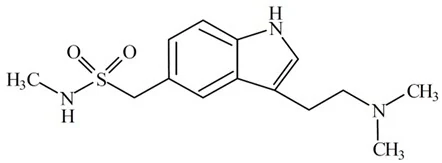
The empirical formula is C14H21N3O2S, representing a molecular weight of 295.40. Sumatriptan is a white to pale yellow powder that is very slightly soluble in water.
TOSYMRA nasal spray is a clear, pale yellow to yellow colored liquid. Each 100 uL of TOSYMRA contains 10 mg of sumatriptan in single-dose aqueous buffered solution containing citric acid monohydrate, n-Dodecyl beta-D-maltoside, potassium phosphate monobasic, sodium chloride, and sodium phosphate dibasic anhydrous in water for injection.
The pH range of solution is approximately 5.0 to 6.0 and the osmolality is between 270 to 330 mOsmol.
12 CLINICAL PHARMACOLOGY
12.1 Mechanism of Action
Sumatriptan binds with high affinity to human cloned 5-HT1B/1D receptors. Sumatriptan presumably exerts its therapeutic effects in the treatment of migraine headache through agonist effects at the 5-HT1B/1D receptors on intracranial blood vessels and sensory nerves of the trigeminal system, which result in cranial vessel constriction and inhibition of pro-inflammatory neuropeptide release.
12.2 Pharmacodynamics
Blood Pressure
Significant elevation in blood pressure, including hypertensive crisis, has been reported in patients with and without a history of hypertension [see Warnings and Precautions (5.8)].
Peripheral (Small) Arteries
In healthy volunteers (N = 18), a trial evaluating the effects of sumatriptan on peripheral (small vessel) arterial reactivity failed to detect a clinically significant increase in peripheral resistance.
Heart Rate
Transient increases in blood pressure observed in some subjects in clinical trials carried out during sumatriptan's development as a treatment for migraine were not accompanied by any clinically significant changes in heart rate.
12.3 Pharmacokinetics
Following nasal administration of 10 mg TOSYMRA in 73 healthy subjects, the relative bioavailability of TOSYMRA was approximately 87% [90% confidence interval (CI) 82 to 94] of that obtained following 4 mg subcutaneous injection of sumatriptan. The relative bioavailability of TOSYMRA was 58% [90% CI 55 to 62] following 6 mg subcutaneous injection of sumatriptan.
Absorption
Peak plasma concentration of sumatriptan was observed in a median time of 10 minutes (range 5 to 23 minutes). After single nasal administration of the 10 mg dose, the mean (CV%) Cmax and AUC were 51.8 ng/mL (58%) and 60.70 ng•hr/mL (42%), respectively.
Distribution
Sumatriptan protein binding, determined by equilibrium dialysis over the concentration range of 10 to 1,000 ng/mL, is low, approximately 14% to 21%. The effect of sumatriptan on the protein binding of other drugs has not been evaluated.
Following a 6-mg subcutaneous injection into the deltoid area of the arm in 9 males (mean age: 33 years, mean weight: 77 kg) the volume of distribution central compartment of sumatriptan was 50 ± 8 liters and the distribution half-life was 15 ± 2 minutes.
Elimination
The elimination half-life of sumatriptan following administration of TOSYMRA is 2.44 ± 1.00 hours.
Metabolism
In vitro studies with human microsomes suggest that sumatriptan is metabolized by MAO, predominantly the A isoenzyme. Most of a radiolabeled dose of sumatriptan excreted in the urine is the major metabolite indole acetic acid (IAA) or the IAA glucuronide, both of which are inactive.
Excretion
After a single 6 mg subcutaneous dose, 22% ± 4% was excreted in the urine as unchanged sumatriptan and 38% ± 7% as the IAA metabolite.
Following a 6 mg subcutaneous injection into the deltoid area of the arm, the systemic clearance of sumatriptan was 1,194 ± 149 mL/min and the terminal half-life was 115 ± 19 minutes.
Specific Populations
Age
The pharmacokinetics of sumatriptan in the elderly (mean age: 72 years, 2 males and 4 females) and in subjects with migraine (mean age: 38 years, 25 males and 155 females) were similar to that in healthy male subjects (mean age: 30 years).
Patients with Hepatic Impairment
The effect of hepatic disease on the pharmacokinetics of TOSYMRA has not been evaluated. The effect of mild to moderate hepatic disease on the pharmacokinetics of subcutaneously administered sumatriptan has been evaluated. There were no significant differences in the pharmacokinetics of subcutaneously administered sumatriptan in moderately hepatically impaired subjects compared with healthy controls. The pharmacokinetics of subcutaneously administered sumatriptan in patients with severe hepatic impairment has not been studied. The use of TOSYMRA in this population is contraindicated [see Contraindications (4)].
Racial Groups
The systemic clearance and Cmax of subcutaneous sumatriptan were similar in black (n=34) and Caucasian (n=38) healthy male subjects. TOSYMRA has not been evaluated for race differences.
Drug Interaction Studies
Monoamine Oxidase-A Inhibitors
In a trial of 14 healthy females, pretreatment with an MAO-A inhibitor decreased the clearance of subcutaneous sumatriptan, resulting in a 2-fold increase in the area under the sumatriptan plasma concentration-time curve (AUC), corresponding to a 40% increase in elimination half-life.
13 NONCLINICAL TOXICOLOGY
13.1 Carcinogenesis, Mutagenesis, Impairment of Fertility
Carcinogenesis
In carcinogenicity studies in mouse and rat, sumatriptan was administered orally for 78 weeks and 104 weeks, respectively, at doses up to 160 mg/kg/day (the highest dose in rat was reduced from 360 mg/kg/day during Week 21). There was no evidence in either species of an increase in tumors related to sumatriptan administration.
Mutagenesis
Sumatriptan was negative in in vitro (bacterial reverse mutation [Ames], gene cell mutation in Chinese hamster V79/HGPRT, chromosomal aberration in human lymphocytes) and in vivo (rat micronucleus) assays.
Impairment of Fertility
When sumatriptan (0, 5, 50, 500 mg/kg/day) was administered orally to male and female rats prior to and throughout the mating period, there was a treatment-related decrease in fertility secondary to a decrease in mating in animals treated with doses greater than 5 mg/kg/day. It is not clear whether this finding was due to an effect on males or females or both.
When sumatriptan was administered by subcutaneous injection to male and female rats prior to and throughout the mating period, there was no evidence of impaired fertility at doses up to 60 mg/kg/day.
13.2 Animal Toxicology and/or Pharmacology
Corneal Opacities
Dogs receiving oral sumatriptan developed corneal opacities and defects in the corneal epithelium. Corneal opacities were seen at the lowest dose tested, 2 mg/kg/day, and were present after 1 month of treatment. Defects in the corneal epithelium were noted in a 60-week study. Earlier examinations for these toxicities were not conducted and no-effect doses were not established.
14 CLINICAL STUDIES
The efficacy of TOSYMRA is based on the relative bioavailability of TOSYMRA nasal spray compared to sumatriptan subcutaneous injection (4 mg) in healthy adults [see Clinical Pharmacology (12.3)].
In controlled clinical trials enrolling more than 1,000 patients during migraine attacks who were experiencing moderate or severe pain and 1 or more of the symptoms enumerated in Table 3, onset of relief began as early as 10 minutes following a 6 mg sumatriptan injection. Lower doses of sumatriptan injection may also prove effective, although the proportion of patients obtaining adequate relief was decreased and the latency to that relief is greater with lower doses.
In Study 1, 6 different doses of sumatriptan injection (n = 30 each group) were compared with placebo (n = 62) in a single-attack, parallel-group design; the dose-response relationship was found to be as shown in Table 2.
Table 2: Proportion of Patients with Migraine Relief and Incidence of Adverse Reactions by Time and by Sumatriptan Dose in Study 1
| Dose of sumatriptan Injection | Percent Patients with ReliefRelief is defined as the reduction of moderate or severe pain to no or mild pain after dosing without use of rescue medication. | Adverse Reactions Incidence (%) | |||
|---|---|---|---|---|---|
| at 10 Minutes | at 30 Minutes | at 1 Hour | at 2 Hours | ||
| Placebo | 5 | 15 | 24 | 21 | 55 |
| 1 mg | 10 | 40 | 43 | 40 | 63 |
| 2 mg | 7 | 23 | 57 | 43 | 63 |
| 3 mg | 17 | 47 | 57 | 60 | 77 |
| 4 mg Efficacy of Tosymra nasal spray was demonstrated based on bioavailability to 4 mg sumatriptan SC injection. | 13 | 37 | 50 | 57 | 80 |
| 6 mg | 10 | 63 | 73 | 70 | 83 |
| 8 mg | 23 | 57 | 80 | 83 | 93 |
In 2 randomized, placebo-controlled clinical trials of sumatriptan injection 6 mg in 1,104 patients with moderate or severe migraine pain (Studies 2 and 3), the onset of relief was less than 10 minutes. Headache relief, as defined by a reduction in pain from severe or moderately severe to mild or no headache, was achieved in 70% of the patients within 1 hour of a single 6 mg subcutaneous dose of sumatriptan injection. Approximately 82% and 65% of patients treated with sumatriptan 6 mg had headache relief and were pain free within 2 hours, respectively.
Table 3 shows the 1- and 2-hour efficacy results for sumatriptan injection 6 mg in Studies 2 and 3.
Table 3: Proportion of Patients with Pain Relief and Relief of Migraine Symptoms after 1 and 2 Hours of Treatment in Studies 2 and 3
| 1-Hour Data | Study 2 | Study 3 | ||
Placebo (n = 190) | Sumatriptan Injection 6 mg (n = 384) | Placebo (n = 180) | Sumatriptan Injection 6 mg (n = 350) | |
| Patients with pain relief (Grade 0/1) | 18% | 70%P<0.05 versus placebo. | 26% | 70% |
| Patients with no pain | 5% | 48% | 13% | 49% |
| Patients without nausea | 48% | 73% | 50% | 73% |
| Patients without photophobia | 23% | 56% | 25% | 58% |
| Patients with little or no clinical disabilityA successful outcome in terms of clinical disability was defined prospectively as ability to work mildly impaired or ability to work and function normally. | 34% | 76% | 34% | 76% |
| 2-Hour Data | Study 2 | Study 3 | ||
| Placebo Includes patients that may have received an additional placebo injection 1 hour after the initial injection. | Sumatriptan Injection 6 mg Includes patients that may have received an additional 6 mg of sumatriptan injection 1 hour after the initial injection. | Placebo | Sumatriptan Injection 6 mg | |
| Patients with pain relief (Grade 0/1) | 31% | 81% | 39% | 82% |
| Patients with no pain | 11% | 63% | 19% | 65% |
| Patients without nausea | 56% | 82% | 63% | 81% |
| Patients without photophobia | 31% | 72% | 35% | 71% |
| Patients with little or no clinical disability | 42% | 85% | 49% | 84% |
Sumatriptan injection also relieved photophobia, phonophobia (sound sensitivity), nausea, and vomiting associated with migraine attacks.
The efficacy of sumatriptan injection was unaffected by whether or not the migraine was associated with aura, duration of attack, gender or age of the patient, or concomitant use of common migraine prophylactic drugs (e.g., beta-blockers).
16 HOW SUPPLIED/STORAGE AND HANDLING
16.1 How Supplied
- TOSYMRA® 10 mg (NDC 70792-812-89) contains sumatriptan and is supplied as a ready-to-use, single-dose, disposable unit.
- Each carton contains 6 units (NDC 70792-812-61) and a Patient Information and Instructions for Use leaflet.
16.2 Storage and Handling
Store at 20° to 25°C (68° to 77°F); excursions permitted between 15° to 30°C (59° to 86°F).
Do not store in the refrigerator or freezer. Do not test before use.
17 PATIENT COUNSELING INFORMATION
Advise the patient to read the FDA-approved patient labeling (Patient Information and Instructions for Use).
Risk of Myocardial Ischemia and/or Infarction, Prinzmetal's Angina, Other Vasospasm-Related Events, Arrhythmias, and Cerebrovascular Events
Inform patients that TOSYMRA may cause serious cardiovascular side effects such as myocardial infarction or stroke. Although serious cardiovascular events can occur without warning symptoms, patients should be alert for the signs and symptoms of chest pain, shortness of breath, irregular heartbeat, significant rise in blood pressure, weakness, and slurring of speech and should ask for medical advice when observing any indicative sign or symptoms are observed. Apprise patients of the importance of this follow-up [see Warnings and Precautions (5.1, 5.2, 5.4, 5.5, 5.8)].
Hypersensitivity Reactions
Inform patients that anaphylactic reactions have occurred in patients receiving sumatriptan. Such reactions can be life threatening or fatal. In general, anaphylactic reactions to drugs are more likely to occur in individuals with a history of sensitivity to multiple allergens [see Contraindications (4) and Warnings and Precautions (5.9)].
Concomitant Use with Other Triptans or Ergot Medications
Inform patients that use of TOSYMRA within 24 hours of another triptan or an ergot-type medication (including dihydroergotamine or methylsergide) is contraindicated [see Contraindications (4), Drug Interactions (7.1, 7.3)].
Serotonin Syndrome
Caution patients about the risk of serotonin syndrome with the use of TOSYMRA or other triptans, particularly during combined use with SSRIs, SNRIs, TCAs, and MAO inhibitors [see Warnings and Precautions (5.7), Drug Interactions (7.4)].
Medication Overuse Headache
Inform patients that use of acute migraine drugs for 10 or more days per month may lead to an exacerbation of headache and encourage patients to record headache frequency and drug use (e.g., by keeping a headache diary) [see Warnings and Precautions (5.6)].
Pregnancy
Advise patients to notify their healthcare provider if they become pregnant during treatment or plan to become pregnant [see Use in Specific Populations (8.1)].
Lactation
Advise patients to notify their healthcare provider if they are breastfeeding or plan to breastfeed [see Use in Specific Populations (8.2)].
Ability to Perform Complex Tasks
Treatment with TOSYMRA may cause somnolence and dizziness; instruct patients to evaluate their ability to perform complex tasks during migraine attacks and after administration of TOSYMRA.
Local Irritation
Inform patients that they may experience local irritation of their nose, mouth, and throat; and changes in taste [see Warnings and Precautions (5.11)].
How to Use TOSYMRA
Provide patients instruction on the proper use of TOSYMRA. Caution patients to avoid spraying the contents of the device in their eyes.
Manufactured for
TONIX MEDICINES, INC. Berkeley Heights, NJ 07922
TOSYMRA is a registered trademark of Tonix Medicines, Inc.
This product may be covered by one or more U.S. patent(s).
Revised: 08/2026