


Prescribing information (package insert) - Simtriyo
WARNING: SUICIDAL IDEATION AND BEHAVIORS IN PEDIATRIC PATIENTS AGED 6 YEARS AND OLDER; and ABUSE, MISUSE AND ADDICTION
Suicidal Ideation and Behaviors in Pediatric Patients 6 Years of Age and Older
In a short-term (6-week) clinical study, higher rates of suicidal ideation and behavior were reported in SIMTRIYO-treated pediatric patients with attention deficit/hyperactivity disorder (ADHD) aged 6 to 12 years than in pediatric patients treated with placebo. All pediatric patients 6 years of age or older treated with SIMTRIYO should be monitored closely for suicidal ideation and behaviors, clinical worsening, or unusual changes in behavior, especially during the initial months of therapy. Families and caregivers should be advised of the need for close observation and communication with the healthcare provider. Consider stopping SIMTRIYO in patients who experience emergent suicidal ideation and behavior [see Warnings and Precautions (5.1)].
Abuse, Misuse, and Addiction
SIMTRIYO has a potential for abuse and misuse. Abuse of central nervous system (CNS) stimulants, including SIMTRIYO, can lead to the development of a substance use disorder, including addiction. Misuse and abuse of CNS stimulants, including SIMTRIYO, can result in overdose and death [see Overdosage (10)], and this risk is increased with a higher dosage or unapproved methods of administration, such as snorting or injection.
Before prescribing SIMTRIYO, assess each patient's risk for abuse, misuse, and addiction. Educate patients and their families about these risks, proper storage of SIMTRIYO, and proper disposal of any unused drug. Throughout SIMTRIYO treatment, reassess each patient's risk of abuse, misuse, and addiction and frequently monitor for signs and symptoms of abuse, misuse, and addiction [see Warnings and Precautions (5.2) and Drug Abuse and Dependence (9.1, 9.2)].
1 INDICATIONS AND USAGE
SIMTRIYO is indicated for the treatment of attention-deficit/hyperactivity disorder (ADHD) in adults and pediatric patients 6 years of age and older weighing at least 20 kg.
Limitations of Use
The use of SIMTRIYO is not recommended in pediatric patients:
- Younger than 6 years of age because this pediatric subpopulation had a higher incidence of weight loss than pediatric patients 6 years of age and older [see Use in Specific Populations (8.4)].
- Weighing less than 20 kg because of a lack of data for this subpopulation and the risk of weight loss [see Use in Specific Populations (8.4)].
2 DOSAGE AND ADMINISTRATION
2.1 Testing and Screening Recommendations Prior to and During Treatment with SIMTRIYO
Prior to treating patients with SIMTRIYO, assess:
- The risk of abuse, misuse, and addiction [see Warnings and Precautions (5.2)].
- For the presence of cardiac disease (e.g., perform a careful history, family history of sudden death or ventricular arrhythmia, and physical exam) [see Warnings and Precautions (5.3)].
- Heart rate and blood pressure [see Warnings and Precautions (5.4)].
- The risk factors for developing a manic episode (e.g., history of depressive symptoms or a family history of suicide, bipolar disorder, or depression) [see Warnings and Precautions (5.5)].
- For a family history of tics or Tourette' syndrome and clinically evaluate patients for motor or verbal tics or Tourette's syndrome [see Warnings and Precautions (5.10)].
2.2 Recommended Dosage
Pediatric Patients 6 Years of Age and Older Weighing at Least 20 kg
In pediatric patients 6 to 12 years of age weighing at least 20 kg, the recommended SIMTRIYO dosage is based on weight and is provided in Table 1.
Table 1: Recommended Oral Once Daily Dosage of SIMTRIYO in Pediatric Patients 6 to 12 years of Age by Body Weight
| Body Weight (kg) | Dose (mg) |
|---|---|
| 20 kg to less than 35 kg | 140 mg |
| 35 kg to 50 kg | 210 mg |
| Greater than 50 kg | 280 mg |
In pediatric patients 13 to 17 years of age weighing at least 20 kg, the recommended SIMTRIYO dosage is 280 mg orally once daily.
The effectiveness of SIMTRIYO 140 mg once daily in patients aged 13 to 17 years and the weight-based equivalent dosage in patients aged 6 to 12 years was not established [see Clinical Studies (14)]. SIMTRIYO 210 mg once daily and weight-based equivalent dosages have not been studied in pediatric patients aged 6 to 17 years and are not recommended.
Adults
In adults, the recommended starting dosage of SIMTRIYO is 210 mg orally once daily. The dosage may be increased to the maximum recommended dosage of 280 mg once daily based on clinical response and tolerability.
2.3 Administration Instructions
Administer SIMTRIYO orally, in the morning, with or without food, at approximately the same time each day [see Clinical Pharmacology (12.3)]. Do not cut, crush, or chew the capsules.
Take SIMTRIYO capsules whole or open the capsule and sprinkle the entire contents over one tablespoon (15 mL) of applesauce or yogurt or in one tablespoon (15 mL) of orange juice. Consume immediately followed by water. Do not chew the granules. Do not save for later use.
2.4 Starting SIMTRIYO After Use of a Monoamine Oxidase Inhibitor
Must wait at least 14 days after stopping a monoamine oxidase inhibitor (MAOI) before starting SIMTRIYO [see Contraindications (4), Warnings and Precautions (5.9), and Drug Interactions (7)].
2.5 Missed Doses
If a dose of SIMTRIYO is missed, administer the missed dose as soon as remembered but no later than 4 hours after the normal dosing time. Patients should not take more than one dose of SIMTRIYO in the same day.
3 DOSAGE FORMS AND STRENGTHS
Extended-release capsules:
- 140 mg of centanafadine: capsules with light orange opaque cap (imprinted with "C140") and white opaque body (imprinted with "Otsuka")
- 210 mg of centanafadine: capsules with yellow opaque cap (imprinted with "C210") and white opaque body (imprinted with "Otsuka")
- 280 mg of centanafadine: capsules with powder blue opaque cap (imprinted with "C280") and white opaque body (imprinted with "Otsuka")
4 CONTRAINDICATIONS
SIMTRIYO is contraindicated in patients:
- With known hypersensitivity to centanafadine or any of the excipients of SIMTRIYO. Hypersensitivity reactions, including angioedema and anaphylaxis, have been reported with SIMTRIYO [see Warnings and Precautions (5.6) and Adverse Reactions (6.1)].
- Taking, or within 14 days of stopping, MAOIs due to the risk of serious and possibly fatal drug interactions, including hypertensive crisis and serotonin syndrome [see Warnings and Precautions (5.9) and Drug Interactions (7)].
- With pheochromocytoma or a history of pheochromocytoma. Serious reactions, including elevated blood pressure and tachyarrhythmia, have been reported in patients with pheochromocytoma or a history of pheochromocytoma who received a CNS stimulant.
5 WARNINGS AND PRECAUTIONS
5.1 Suicidal Ideation and Behaviors in Pediatric Patients Aged 6 Years and Older
In a short-term (6-week) clinical study, higher rates of suicidal ideation and behaviors were reported in SIMTRIYO-treated pediatric patients aged 6 to 12 years of age with ADHD than in placebo-treated pediatric patients [see Adverse Reactions (6.1)].
All pediatric patients 6 years of age and older treated with SIMTRIYO should be monitored closely for suicidal ideation and behavior, clinical worsening, or unusual changes in behavior, especially during the initial months of SIMTRIYO therapy.
Families and caregivers of pediatric patients 6 years of age and older treated with SIMTRIYO should be advised of the need to monitor patients for the emergence of suicidal ideation and behavior, and to report such symptoms immediately to a healthcare provider.
Consider changing the therapeutic regimen, including stopping SIMTRIYO, in patients who experience emergent suicidal ideation or behavior or symptoms that might be precursors to emerging suicidal ideation and behavior, especially if these symptoms are severe or abrupt in onset, or were not part of the patient's presenting symptoms.
5.2 Abuse, Misuse, and Addiction
SIMTRIYO has a potential for abuse and misuse. The use of CNS stimulants, including SIMTRIYO, exposes individuals to the risks of abuse, which can lead to the development of a substance use disorder, including addiction [see Drug Abuse and Dependence (9.1, 9.2)]. Misuse and abuse of CNS stimulants, including SIMTRIYO, can result in overdose and death [see Overdosage (10)], and this risk is increased with higher dosage or unapproved methods of administration, such as snorting or injection.
Before prescribing SIMTRIYO, assess each patient's risk for abuse, misuse, and addiction. Educate patients and their families about these risks, proper storage of SIMTRIYO, and proper disposal of any unused drug. Advise patients to store SIMTRIYO in a safe place, preferably locked, and instruct patients to not give SIMTRIYO to anyone else. Throughout SIMTRIYO treatment, reassess each patient's risk of abuse, misuse, and addiction and frequently monitor for signs and symptoms of abuse, misuse, and addiction.
5.3 Risks to Patients with Serious Cardiac Disease
Sudden death has been reported in patients with structural cardiac abnormalities or other serious cardiac disease who were treated with CNS stimulants at the recommended ADHD dosage.
Prior to treating patients with SIMTRIYO, assess for the presence of cardiac disease (e.g., perform a careful history, family history of sudden death or ventricular arrhythmia, and physical exam). Avoid SIMTRIYO use in patients with known structural cardiac abnormalities, cardiomyopathy, serious cardiac arrhythmia, coronary artery disease, or other serious cardiac disease.
5.4 Increased Blood Pressure and Heart Rate
CNS stimulants, including SIMTRIYO, can cause an increase in heart rate and blood pressure [see Adverse Reactions (6.1]. Concomitant use of SIMTRIYO with other CNS stimulants increases the risk of cardiovascular adverse reactions, including increased blood pressure and heart rate [see Drug Interactions (7)].
Assess heart rate and blood pressure prior to initiating treatment with SIMTRIYO, following increases in dosage, and periodically while on therapy.
5.5 Psychiatric Adverse Reactions
Exacerbation of Pre-existing Psychosis in Patients with a Psychotic Disorder
CNS stimulants, including SIMTRIYO, may exacerbate behavior disturbance and thought disorder in patients with a pre-existing psychotic disorder.
Induction of a Manic Episode in Patients with Bipolar Disorder
CNS stimulants, including SIMTRIYO, may induce a manic or mixed episode in patients with bipolar disorder. Prior to initiating SIMTRIYO treatment, screen patients for risk factors for developing a manic episode (e.g., history of depressive symptoms or a family history of suicide, bipolar disorder, or depression).
New Psychotic or Manic Symptoms in Patients without a History of a Bipolar or Psychotic Disorder
CNS stimulants, including SIMTRIYO, at the recommended dosage, may cause psychotic or manic symptoms (e.g., hallucinations, delusional thinking, or mania) in patients without a prior history of psychotic illness or mania [see Adverse Reactions (6.1)]. In a pooled analysis of multiple short-term, placebo-controlled studies of CNS stimulants, psychotic or manic symptoms occurred in approximately 0.1% of CNS stimulant-treated patients, compared with 0% of placebo-treated patients. If such symptoms occur, consider discontinuing SIMTRIYO.
5.6 Hypersensitivity Reactions
Serious hypersensitivity reactions, including angioedema and anaphylaxis, requiring emergency treatment, have been reported during clinical trials with SIMTRIYO [see Adverse Reactions (6.1)]. If a clinically significant hypersensitivity reaction occurs, immediately initiate appropriate therapy and discontinue SIMTRIYO. SIMTRIYO is contraindicated in patients with known hypersensitivity to centanafadine or any of the excipients of SIMTRIYO.
5.7 Long-Term Suppression of Growth in Pediatric Patients
SIMTRIYO is not approved for use and is not recommended in pediatric patients less than 6 years of age or weighing less than 20 kg [see Use in Specific Populations (8.4)]. CNS stimulants, including SIMTRIYO, have been associated with weight loss. Long-term treatment with SIMTRIYO is associated with slowing of linear growth in pediatric patients, particularly those 6 to 12 years of age [see Adverse Reactions (6.1)].
Closely monitor weight, body mass index, and linear growth in SIMTRIYO-treated pediatric patients. Consider treatment interruption in pediatric patients who are not growing or gaining height or weight as expected.
5.8 Peripheral Vasculopathy Including Raynaud's Phenomenon
CNS stimulants, including SIMTRIYO, used to treat ADHD are associated with peripheral vasculopathy, including Raynaud's phenomenon. Signs and symptoms of these cases of peripheral vasculopathy were usually intermittent and mild; however, sequelae have included digital ulceration and/or soft tissue breakdown. Effects of peripheral vasculopathy, including Raynaud's phenomenon, were observed in post-marketing reports and at the therapeutic dosages of CNS stimulants in all age groups throughout the course of treatment. Signs and symptoms generally improved after CNS stimulant dosage reduction or discontinuation.
During SIMTRIYO treatment, carefully assess for digital changes. Further clinical evaluation (e.g., rheumatology referral) may be appropriate for SIMTRIYO-treated patients who develop signs or symptoms of peripheral vasculopathy.
5.9 Serotonin Syndrome
Concomitant use of SIMTRIYO with other serotonergic drugs may cause serotonin syndrome, a potentially life-threatening condition with changes including altered mental status, hypertension, restlessness, myoclonus, hyperthermia, hyperreflexia, diaphoresis, shivering, and tremor [see Drug Interactions (7)].
The concomitant use of SIMTRIYO is contraindicated in patients taking or within 14 days of stopping a MAOI, including linezolid or intravenous methylene blue [see Contraindications (4)]. If it is necessary to initiate treatment with an MAOI such as linezolid or intravenous methylene blue in a patient taking SIMTRIYO, discontinue SIMTRIYO before initiating treatment with the MAOI.
If concomitant use of SIMTRIYO with other serotonergic drugs is clinically warranted, inform patients of the increased risk for serotonin syndrome and monitor for symptoms. Discontinue SIMTRIYO and/or concomitant serotonergic drug immediately if the above symptoms occur and initiate supportive symptomatic treatment.
5.10 Motor and Verbal Tics, and Worsening of Tourette's Syndrome
CNS stimulants have been associated with the onset or exacerbation of motor and verbal tics. Worsening of Tourette's syndrome has also been reported.
Before initiating SIMTRIYO, assess the family history for tics or Tourette's syndrome and clinically evaluate patients for tics or Tourette's syndrome. Regularly monitor SIMTRIYO-treated patients for the emergence or worsening of tics or Tourette's syndrome and discontinue SIMTRIYO if clinically appropriate.
5.11 Allergic Reactions Due to Inactive Ingredient FD&C Yellow No. 5
The SIMTRIYO 210 mg capsule contains FD&C Yellow No. 5 (tartrazine) which may cause allergic-type reactions (including bronchial asthma) in certain susceptible persons. Although the overall incidence of FD&C Yellow No. 5 (tartrazine) sensitivity in the general population is low, it is frequently seen in patients who also have aspirin hypersensitivity [see Contraindications (4)].
6 ADVERSE REACTIONS
The following adverse reactions are discussed in more detail in other sections of the labeling:
- Suicidal Ideation and Behaviors in Pediatric Patients Aged 6 Years and Older [see Warnings and Precautions (5.1)]
- Abuse, Misuse, and Addiction [see Warnings and Precautions (5.2)]
- Risks to Patients with Serious Cardiac Disease [see Warnings and Precautions (5.3)]
- Increased Blood Pressure and Heart Rate [see Warnings and Precautions (5.4)]
- Psychiatric Adverse Reactions [see Warnings and Precautions (5.5)]
- Hypersensitivity Reactions [see Warnings and Precautions (5.6)]
- Long-Term Suppression of Growth in Pediatric Patients [see Warnings and Precautions (5.7)]
- Peripheral Vasculopathy Including Raynaud's Phenomenon [see Warnings and Precautions (5.8)]
- Serotonin Syndrome [see Warnings and Precautions (5.9)]
- Motor and Verbal Tics, and Worsening of Tourette's Syndrome [see Warnings and Precautions (5.10)]
6.1 Clinical Trials Experience
Because clinical trials are conducted under widely varying conditions, adverse reaction rates observed in the clinical trials of a drug cannot be directly compared to rates in the clinical trials of another drug and may not reflect the rates observed in practice.
The safety of SIMTRIYO is based on studies in:
- Pediatric patients aged 4 to 17 years with ADHD who were exposed to one or more doses of SIMTRIYO in two 6-week randomized, double-blind, placebo-controlled studies (Studies 1 and 2) [see Clinical Studies (14)] and a long-term open-label study. SIMTRIYO is not approved for use in patients less than 6 years of age or weighing less than 20 kg [see Indications and Usage (1)]. In Studies 1 and 2, 608 pediatric patients 6 years of age and older were exposed to SIMTRIYO. A total of 394 pediatric patients 6 years of age and older were treated with SIMTRIYO for at least 6 months, and 286 were treated for 12 months or longer.
- Adult patients aged 18 to 55 years with ADHD who were exposed to another formulation of centanafadine [see Clinical Pharmacology (12.3)] in two 6-week randomized, double blind, placebo-controlled studies (Studies 3 and 4) [see Clinical Studies (14)] and a long-term open-label study. In Studies 3 and 4, 586 adult patients were exposed to another formulation of centanafadine. A total of 422 adult patients were exposed to another formulation of centanafadine for at least six months and 221 were exposed for 12 months or longer.
The most common adverse reactions (≥5% and greater than placebo) in the double-blind clinical trials were:
- Pediatric Patients Aged 6 to 12 Years: rash, decreased appetite (see Table 2).
- Pediatric Patients Aged 13 to 17 Years: decreased appetite, nausea, rash, headache, abdominal pain (see Table 3).
- Adults: headache, decreased appetite, insomnia, nausea, dry mouth, diarrhea (see Table 4).
The most common adverse reactions associated with discontinuation (≥1%) in the pediatric and adult double-blind clinical trials were rash, decreased appetite, nausea, and somnolence.
Adverse Reactions in Pediatric Patients 6 Years of Age and Older
The safety data below are from pediatric patients aged 6 to 17 years in Studies 1 and 2 who received SIMTRIYO 280 mg (or weight-based equivalent) once daily [see Clinical Studies (14)].
Table 2 presents adverse reactions reported in 2% or more of SIMTRIYO-treated pediatric patients aged 6 to 12 years and more frequently than placebo-treated patients in Study 1.
Table 2: Adverse Reactions in ≥2% of Pediatric Patients 6 to 12 Years of Age Treated with SIMTRIYO and Greater than Placebo in 6-Week Placebo-Controlled ADHD Study (Study 1)
Placebo (N=153) | SIMTRIYO High doseWeight-based equivalent dose (targeting adult exposures at 280 mg/day) [see Dosage and Administration (2.2)] (N=157) | |
|---|---|---|
| RashRash includes: drug eruption, macular rash, maculo-papular rash, morbilliform rash, papular rash, and other related terms | 0% | 9% |
| Decreased appetite | 3% | 8% |
| FatigueFatigue includes: lethargy | 0% | 4% |
| Abdominal painAbdominal pain includes: upper abdominal pain, abdominal discomfort | 2% | 4% |
| Nausea | 1% | 3% |
| Pharyngitis streptococcal | 2% | 3% |
| Diarrhea | 0% | 2% |
| Influenza | 0% | 2% |
Table 3 presents adverse reactions reported in 2% or more of SIMTRIYO-treated pediatric patients aged 13 to 17 years and more frequently than placebo-treated patients in Study 2.
Table 3: Adverse Reactions in ≥2% of Pediatric Patients 13 to 17 Years of Age Treated with SIMTRIYO and Greater than Placebo in 6-Week Placebo-Controlled ADHD Study (Study 2)
Placebo (N=147) | SIMTRIYO 280 mg/day (N=151) | |
|---|---|---|
| Decreased appetite | 2% | 15% |
| Nausea | 3% | 10% |
| RashRash includes: drug eruption, macular rash, maculo-papular rash, morbilliform rash, papular rash, and other related terms. | 1% | 8% |
| HeadacheHeadache includes: migraine | 6% | 7% |
| Abdominal painAbdominal pain includes: abdominal discomfort, upper abdominal pain, abdominal tenderness, gastrointestinal pain; lower abdominal pain | 0% | 5% |
| SomnolenceSomnolence includes: sedation | 3% | 4% |
| FatigueFatigue includes: lethargy | 1% | 3% |
| Dizziness | 0% | 3% |
| Nasopharyngitis | 1% | 3% |
| InsomniaInsomnia includes: initial insomnia | 1% | 3% |
| Irritability | 1% | 3% |
| Dry mouth | 0% | 2% |
| Weight decreased | 1% | 2% |
Adverse Reactions in Adults
The safety data below are based on pooled data from Studies 3 and 4 in adult patients with ADHD treated with another formulation of centanafadine for 6 weeks [see Clinical Studies (14)].
Table 4 lists adverse reactions reported in ≥2% of adult patients treated with another formulation of centanafadine and more frequently than placebo-treated patients.
Table 4: Adverse Reactions in ≥2% of Adults Treated with Another Centanafadine Formulation and Greater than Placebo in 6-Week Placebo-Controlled ADHD Studies (Studies 3 and 4)
| Another Centanafadine Formulation | Another Centanafadine Formulation | ||
|---|---|---|---|
Placebo (N=290) | Low DoseThere are no expected differences in the safety of SIMTRIYO 210 mg and 280 mg once daily compared to the low and high doses of the other centanafadine formulation, respectively, for the treatment of ADHD in adults. (N=294) | High Dose (N=292) | |
| HeadacheHeadache includes: cervicogenic headache, migraine with aura, migraine without aura, sinus headache, head discomfort, tension headache, migraine, and other related terms | 7% | 5% | 8% |
| Decreased appetite | 2% | 5% | 7% |
| InsomniaInsomnia includes: initial insomnia, middle insomnia, poor quality sleep, terminal insomnia, and other related terms. | 4% | 5% | 7% |
| Nausea | 2% | 2% | 7% |
| Dry mouth | 0% | 3% | 6% |
| Diarrhea | 1% | 2% | 5% |
| Irritability | 2% | 3% | 4% |
| RashRash includes: erythematous rash, maculo-papular rash, morbilliform rash, papular rash, pruritic rash, and other related terms. | 2% | 2% | 4% |
| Abdominal painAbdominal pain includes: abdominal discomfort, upper abdominal pain, lower abdominal pain, abdominal tenderness, gastrointestinal pain, and other related terms. | 1% | 2% | 4% |
| ParasomniaParasomnia includes: abnormal dreams, sleep terror, nightmare, somnambulism, and other related terms. | 1% | 1% | 3% |
| TachycardiaTachycardia includes: sinus tachycardia, supraventricular tachycardia, postural orthostatic tachycardia syndrome, increased orthostatic heart rate response, increased heart rate, and other related terms. | 1% | 1% | 2% |
| Depressed moodDepressed mood includes: depressive symptom, depression, major depressive disorder, major depression, dysphoria, and other related terms. | 0% | 3% | 2% |
| AnxietyAnxiety includes: nervousness, panic attack, and other related terms. | 1% | 2% | 2% |
| Upper respiratory tract infection | 2% | 5% | 2% |
Adverse Reactions Associated with Discontinuation
Pediatric Patients 6 to 12 Years of Age
In Study 1, 6% (10/157) of SIMTRIYO-treated patients aged 6 to 12 years discontinued due to adverse reactions versus 1% (2/153) of placebo-treated patients. The most frequently reported adverse reaction associated with discontinuation (1% or more and twice rate of placebo) was rash (2.5%).
Pediatric Patients 13 to 17 Years of Age
In Study 2, 8% (12/151) of SIMTRIYO-treated patients aged 13 to 17 years discontinued due to adverse reactions versus 0% (0/147) of placebo-treated patients. The most frequently reported adverse reactions (1% or more and twice rate of placebo) associated with discontinuation were rash (2%), decreased appetite (2%), nausea (2%), and somnolence (1%).
Adults
In Studies 3 and 4, 6% (18/292) of adult patients treated with the high dose of another formulation of centanafadine discontinued due to adverse reactions versus 5% (14/294) of patients treated with the low dose and 1% (4/290) of placebo-treated patients. The most frequently reported adverse reaction associated with discontinuation (1% or more and twice rate of placebo) was rash (2%).
Suicidal Ideation and Behavior
Pediatric Patients Aged 6 Years and Older
In the 6-week study in pediatric patients aged 6 to 12 years (Study 1), suicide attempt was reported in 0.7% (2/304) of SIMTRIYO-treated patients versus 0% in placebo (0/153). In the long-term open-label trial in pediatric patients aged 6 to 17 years, suicidal ideation was reported in 0.8% (5/620) of patients, leading to discontinuation in 0.6% (4/620).
Increases in Blood Pressure and Heart Rate
Pediatric Patients 6 to 12 Years of Age
Compared to placebo, short-term (6-week) treatment (Study 1) with SIMTRIYO in patients 6 to 12 years of age was associated with differences, ranging from +0.1 to +2.8 mmHg, in the mean absolute change from baseline systolic blood pressure (SBP) and with differences, ranging from -0.2 mmHg to +1.6 mmHg, in the mean absolute change from baseline diastolic blood pressure (DBP).
Patients enrolled in the long-term open-label study had mean absolute changes in baseline SBP ranging from +0.7 to +2.7 mmHg and in baseline DBP ranging from +0.5 to +2.8 mmHg through Week 88.
Pediatric Patients 13 to 17 Years of Age
During the 6-week trial (Study 2), the proportion of SIMTRIYO-treated patients 13 to 17 years of age who developed new-onset hypertension was 10.7% compared to 8.9% treated with placebo. Compared to placebo, short-term (6-week) treatment with SIMTRIYO in patients 13 to 17 years of age was associated with differences, ranging from +0.5 to +2.1 mmHg, in the mean absolute change from baseline SBP and with differences, ranging from +0.6 mmHg to +1.5 mmHg, in the mean absolute change from baseline DBP.
Patients enrolled in the long-term open-label study had mean absolute changes in baseline SBP ranging from +0.9 to +3.2 mmHg and in baseline DBP ranging from +1.7 to +3.1 mmHg through Week 88.
Adults
In Studies 3 and 4 in adults (18 to 55 years of age), increases in heart rate ≥20 beat per minute (bpm) in supine position at any visit occurred in 15% (44/292) of patients on the high dose of another formulation of centanafadine and 12% (34/294) on the low dose, versus 11% (32/290) on placebo. Increases in systolic blood pressure of ≥20 mmHg in supine position at any visit occurred in 9% (25/292) of patients treated with the high dose of another centanafadine formulation and 12% (36/294) of patients treated with the low dose, versus 7% (21/290) on placebo.
Psychiatric Adverse Reactions
Pediatric Patients 6 to 12 Years of Age
In Study 1, psychiatric adverse reactions occurring in <2% of SIMTRIYO-treated patients receiving the weight-based dose equivalent of 280 mg daily and greater than placebo included suicide attempt and insomnia. In a long-term open-label safety study, psychiatric adverse reactions led to discontinuation of SIMTRIYO in 2% of pediatric patients 6 to 12 years of age. Psychiatric adverse reactions leading to discontinuation included irritability, auditory hallucination, visual hallucination, major depression, altered mood, and suicidal ideation.
Pediatric Patients 13 to 17 Years of Age
In Study 2, psychiatric adverse reactions occurred in 9% of patients receiving 280 mg daily of SIMTRIYO compared with 3% of patients who received placebo. Irritability and insomnia were the most common psychiatric adverse reactions in this age group (see Table 3). Irritability occurred in 3% of patients receiving 280 mg SIMTRIYO compared with 1% of patients receiving placebo. Insomnia occurred in 3% of patients receiving 280 mg SIMTRIYO compared with 1% of patients receiving placebo. In a long-term open-label pediatric safety study, psychiatric adverse reactions led to discontinuation in 4% of pediatric patients 13 to 17 years of age. Psychiatric adverse reactions leading to discontinuation included suicidal ideation, depression, irritability, apathy, aggression, anxiety, defiant behavior, and feelings of worthlessness.
Adults
In Studies 3 and 4, psychiatric adverse reactions occurred in 16% of patients receiving the high dose of another centanafadine formulation, 14% of patients receiving the low dose, and 8% of patients receiving placebo. The most frequent psychiatric adverse reactions were insomnia, irritability, abnormal dreams, depressed mood, and anxiety (see Table 4). In a long-term open-label study in adults, 21% of patients experienced psychiatric adverse reactions. The most common psychiatric adverse reactions were insomnia (8%), anxiety (6%), and irritability (3%).
Hypersensitivity Reactions
In two other ADHD clinical trials, and one trial in an unapproved population, two adult patients reported angioedema, and one patient reported suspected anaphylactic reaction, some of these events required urgent treatment as outpatients.
Effects on Growth in Pediatric Patients 6 Years of Age and Older
Pediatric Patients 6 to 12 Years of Age
The mean baseline BMI in SIMTRIYO-treated patients 6 to 12 years of age compared to placebo was 20.4 kg/m2 and 20.0 kg/m2, respectively. Short-term (6-week) treatment (Study 1) with SIMTRIYO was associated with a mean change from baseline weight of -0.6 kg compared to +0.8 kg in placebo-treated patients at Week 6. The mean baseline weight z-score decreased by at least 0.5 in 0.8% of SIMTRIYO-treated patients compared to none in placebo-treated patients at Week 6. The mean baseline BMI z-score decreased by at least 0.5 in 7.3% of SIMTRIYO-treated patients compared to 3.2% of placebo-treated patients at Week 6.
In the SIMTRIYO long-term open-label study, 2.2% of patients had a change from baseline weight leading to a decrease in weight z-score by at least 1, 2.2% had a decrease in BMI z-score by at least 1, and 15.6% had a decrease in height z-score by at least 1 at Week 88.
Pediatric Patients 13 to 17 Years of Age
The mean baseline BMI in both SIMTRIYO- and placebo-treated patients 13 to 17 years of age was 24.4 kg/m2; however, placebo-treated patients had higher mean baseline weight (69 kg vs. 67.7 kg) and height (167.7 cm vs. 166.7 cm). Short-term (6-week) treatment (Study 2) with SIMTRIYO was associated with a mean change from baseline weight of -1.2 kg compared to +0.6 kg in placebo-treated patients at Week 6. The mean baseline weight z score decreased by at least 0.5 in 2% of SIMTRIYO-treated patients compared to none in placebo-treated patients at Week 6. The mean baseline BMI z-score decreased by at least 0.5 in 4.9% of SIMTRIYO-treated patients compared to none in placebo-treated patients at Week 6. In the SIMTRIYO long-term open-label study, 4.6% of patients had a change from baseline weight leading to a decrease in weight z-score by at least 1, 4.6% had a decrease in BMI z-score by at least 1, and 1.5% had a decrease in height z-score by at least 1 at Week 88.
7 DRUG INTERACTIONS
Table 5 presents clinically significant drug interactions with SIMTRIYO.
Table 5: Clinically Significant Drug Interactions with SIMTRIYO
| Monoamine Oxidase Inhibitors (MAOIs) | |
| Prevention or Management | Concomitant use of SIMTRIYO with MAOIs or within 14 days after discontinuing an MAOI is contraindicated [see Dosage and Administration (2.4) and Contraindications (4)]. |
| Mechanism and Clinical Effect(s) | Concomitant use of SIMTRIYO with MAOIs increases the risk of hypertensive crisis (potential outcomes include death, stroke, myocardial infarction, aortic dissection, ophthalmological complications, eclampsia, pulmonary edema, and renal failure) and serotonin syndrome [see Warnings and Precautions (5.9)]. |
| Alcohol | |
| Prevention or Management | Avoid consumption of alcohol at the same time as, and for at least two hours after, administration of SIMTRIYO. |
| Mechanism and Clinical Effect(s) | Consumption of alcohol at the same time as, and for at least two hours after, administration of SIMTRIYO may result in a more rapid release of centanafadine. A more rapid release of centanafadine may increase exposure-related adverse reactions and may also reduce efficacy during the late hours of the dosing interval due to lower centanafadine exposures [see Clinical Pharmacology (12.3)]. |
| CYP1A2 Substrates | |
| Prevention or Management | When SIMTRIYO is used concomitantly with CYP1A2 substrates, monitor for adverse reactions and consider dosage reduction of the concomitantly used CYP1A2 substrate. |
| Mechanism and Clinical Effect(s) | Centanafadine is a moderate inhibitor of CYP1A2. Concomitant use with centanafadine increases exposure of CYP1A2 substrates [see Clinical Pharmacology (12.3)], which may increase the risk of adverse reactions associated with these substrates. |
| CNS Stimulants | |
| Prevention or Management | Monitor for cardiovascular adverse reactions (e.g., increased blood pressure, increased heart rate) if SIMTRIYO is used with other CNS stimulants. If cardiovascular adverse reactions occur, consider reducing the dosage of the concomitant CNS stimulant or discontinuation of SIMTRIYO and/or the concomitant CNS stimulant. |
| Mechanism and Clinical Effect(s) | Concomitant use of SIMTRIYO with other CNS stimulants exerts additive pharmacological effects such as increase in blood pressure and heart rate [see Warnings and Precautions (5.4)]. |
| Serotonergic Drugs | |
| Prevention or Management | Monitor for symptoms of serotonin syndrome when SIMTRIYO is used concomitantly with other drugs that may affect the serotonergic neurotransmitter systems. If serotonin syndrome occurs, discontinue SIMTRIYO and/or concomitant serotonergic drug immediately and initiate supportive symptomatic treatment. |
| Mechanism and Clinical Effect | Concomitant use of SIMTRIYO with other serotonergic drugs may cause serotonin syndrome [see Warnings and Precautions (5.9)]. |
8 USE IN SPECIFIC POPULATIONS
8.1 Pregnancy
Pregnancy Exposure Registry
There is a pregnancy exposure registry that monitors pregnancy outcomes in women exposed to ADHD medications, including SIMTRIYO, during pregnancy. Pregnant women exposed to SIMTRIYO and healthcare providers are encouraged to contact the National Pregnancy Registry for ADHD Medications at 1-866-961-2388 or visiting
https://womensmentalhealth.org/research/pregnancyregistry/adhd-medications/.
Risk Summary
Available data from the clinical development program with SIMTRIYO use in pregnant women are insufficient to evaluate for a drug-associated risk of major birth defects, miscarriage or other adverse maternal or fetal outcomes. In embryo-fetal developmental studies, pregnant rats and rabbits received oral centanafadine during gestation. In rats, decreased maternal body weight and body weight gain and decreased fetal body weight were observed at exposures lower than the human exposure at the Maximum Recommended Human Dose (MRHD) of 280 mg. An increase in the incidence of fetal skeletal variations was observed at exposures approximately 4 times the human exposure at the MRHD of 280 mg. In rabbits, centanafadine did not result in any effects on embryo-fetal survival or development at any dose. In a rat pre- and post-natal developmental study, oral administration of centanafadine during gestation and lactation resulted in decreased maternal body weight gain during gestation and a slight increase in the incidence of early postnatal pup mortality at exposures lower than the human exposure at the MRHD of 280 mg (see Data ).
The background risk of major birth defects and miscarriage for the indicated population is unknown. All pregnancies have a background risk of birth defect, loss, or other adverse outcomes. In the U.S. general population, the estimated background risks of major birth defects and miscarriage in clinically recognized pregnancies is 2 to 4% and 15 to 20%, respectively.
Data
Animal Data
In an embryo-fetal study in rats, centanafadine was administered to females orally, once-daily, at dose levels of 10, 30, or 100 mg/kg during gestational development. Mean maternal body weight gain and/or absolute maternal body weights were decreased in the 30 and 100 mg/kg dose groups and correlated with reduced food consumption. Live fetal body weights were significantly reduced in the 30 and 100 mg/kg/day dose groups compared to controls. Treatment-related fetal abnormalities included a significant increase in the litter and fetal incidences of irregularly shaped cervical arches, incompletely ossified cervical arches, and short ribs in the 100 mg/kg dose group. The No Observed Adverse Effect Level (NOAEL) for both maternal toxicity and fetal development was 10 mg/kg/day, which is below the human exposure at the MRHD of 280 mg based on AUC.
The effects of centanafadine on pregnant female White New Zealand rabbits and development of the embryo and fetus was determined at doses of 3, 6, and 15 mg/kg/day. Mean maternal body weight gains were decreased in the 15 mg/kg/day dose group compared to controls. Centanafadine did not result in any effects on embryo-fetal survival, fetal body weights, or fetal external, visceral, or skeletal malformations or variations at any dose. The NOAEL for maternal toxicity was 6 mg/kg/day, which is below the human exposure at the MRHD of 280 mg based on AUC. The NOAEL for fetal development was 15 mg/kg/day, which is lower than the human exposure at the MRHD of 280 mg based on AUC.
Centanafadine was administered orally to pregnant rats during gestation and lactation at doses of 3, 10, or 30 mg/kg/day. Mean maternal body weight gain was decreased in the 30 mg/kg/day group during gestation and correlated with reduced food consumption. There was a slight increase in the incidence of early pup mortality in the 30 mg/kg/day group, which is lower than the human exposure at the MRHD based on AUC.
8.2 Lactation
Risk Summary
There are no data on the presence of centanafadine or its metabolite in either human or animal milk, the effects on the breastfed infant, or the effects on milk production. The developmental and health benefits of breastfeeding should be considered along with the mother's clinical need for SIMTRIYO and any potential adverse effects on the breastfed child from SIMTRIYO or from the underlying maternal condition.
8.4 Pediatric Use
The safety and effectiveness of SIMTRIYO have been established for the treatment of ADHD in pediatric patients 6 years and older weighing at least 20 kg. Use of SIMTRIYO for this indication is based on evidence from two 6-week, randomized, double-blind, placebo-controlled studies in pediatric patients with ADHD and a long-term open-label study [see Clinical Studies (14)]. In short-term studies, increased rates of suicidal ideation and behaviors were reported in SIMTRIYO-treated patients 6 to 12 years of age [see Warnings and Precautions (5.1)]. Short- and long-term treatment with SIMTRIYO in pediatric patients 6 years of age and older was associated with increases in blood pressure and weight loss [see Warnings and Precautions (5.4, 5.7) and Adverse Reactions (6.1)]. Long term treatment with SIMTRIYO was associated with decreased linear growth [see Warnings and Precautions (5.7) and Adverse Reactions (6.1)].
The safety and effectiveness of SIMTRIYO have not been established in pediatric patients less than 6 years of age or weighing less than 20 kg. The use of SIMTRIYO is not recommended in pediatric patients younger than 6 years of age because this pediatric subpopulation had a higher incidence of weight loss than pediatric patients 6 years of age and older. The use of SIMTRIYO is not recommended in pediatric patients weighing less than 20 kg because of a lack of data for this subpopulation and the risk of weight loss. A higher proportion of patients 4 to less than 6 years of age developed changes in mean baseline weight z-score and BMI z-score with short-term (6-week) SIMTRIYO treatment compared to pediatric patients 6 years of age and older. The mean baseline weight z-score decreased by at least 0.5 in 8.5% of SIMTRIYO-treated patients compared to none of the placebo-treated patients at Week 6. The mean baseline BMI z-score decreased by at least 0.5 in 25.5% of SIMTRIYO-treated patients compared to 4.2% of placebo-treated patients at Week 6. With short- and long-term SIMTRIYO treatment, a higher proportion of patients 4 to less than 6 years of age also developed decreases in heart rate of at least 10% leading to a measured heart rate below the first percentile for age compared to pediatric patients 6 years of age and older.
Juvenile Animal Toxicity Data
Juvenile rats were administered centanafadine at dose levels of 3, 10, and 30 mg/kg/day on post-natal day 21 through post-natal day 62. Lower body weights were observed at the 30 mg/kg/day dose and correlated with lower mean food consumption. A delay in preputial separation (which was associated with a decrease in body weight gain) and a slightly lower proportion of sperms with normal morphology were observed at 30 mg/kg/day, but there were no effects on fertility or reproductive performance. The NOAEL was 30 mg/kg/day, which is less than the human exposure at the MRHD of 280 mg based on AUC in pediatrics.
8.5 Geriatric Use
Clinical studies of SIMTRIYO did not include patients 65 years of age and older to determine if they respond differently than younger adult patients.
8.6 Hepatic Impairment
The pharmacokinetics of centanafadine was not studied in patients with severe hepatic impairment (Child-Pugh Class C) or in patients with mild hepatic impairment (Child-Pugh Class A). The exposure of centanafadine in patients with moderate hepatic impairment (Child-Pugh Class B) is similar to that in patients with normal hepatic function [see Clinical Pharmacology (12.3)].
SIMTRIYO is not recommended in patients with severe hepatic impairment. The recommended dosage of SIMTRIYO in patients with mild (Child-Pugh A) or moderate hepatic impairment is the same as that for patients with normal hepatic function.
9 DRUG ABUSE AND DEPENDENCE
9.1 Controlled Substance
SIMTRIYO contains centanafadine. (Controlled substance schedule to be determined after review by the Drug Enforcement Administration.)
9.2 Abuse
SIMTRIYO has a potential for abuse which can lead to the development of a substance use disorder, including addiction [see Warnings and Precautions (5.1)]. Abuse is the intentional non-therapeutic use of a drug, even once, to achieve a desired psychological or physiological effect. Drug addiction is a cluster of behavioral, cognitive, and physiological phenomena that may include a strong desire to take the drug, difficulties in controlling drug use (e.g., continuing drug use despite harmful consequences, giving a higher priority to drug use than other activities and obligations), and possible tolerance or physical dependence.
SIMTRIYO has a potential for misuse. Misuse is the intentional use, for therapeutic purposes, of a drug by an individual in a way other than prescribed by a health care provider or for whom it was not prescribed. Misuse, like abuse, is often associated with higher doses and/or more frequent use of the drug, which may lead to adverse reactions similar to those seen in the context of abuse and substance use disorder.
Misuse and abuse of SIMTRIYO may cause increased heart rate, respiratory rate, or blood pressure; sweating; dilated pupils; hyperactivity; restlessness; insomnia; decreased appetite; loss of coordination; tremors; flushed skin; vomiting; and/or abdominal pain. Anxiety, psychosis, hostility, aggression, and suicidal or homicidal ideation have also been observed with CNS stimulants abuse and/or misuse. Misuse and abuse of CNS stimulants, including SIMTRIYO, can result in overdose and death [see Overdosage (10)], and this risk is increased with higher doses or unapproved methods of administration, such as snorting or injection.
Two human abuse potential studies were conducted with centanafadine, using individuals with a history of recreational use of stimulants as subjects:
- In the first study, single doses of centanafadine 400 mg or 800 mg immediate release formulation (approximately 2 and 4 times, respectively, the recommended starting dosage of SIMTRIYO in adults) produced scores on the subjective visual analog scale (VAS) for the primary measure of Drug Liking that were greater than placebo and were not statistically significantly less than scores produced by amphetamine 40 mg. Similarly, single doses of centanafadine 800 mg produced scores on Drug Liking that were greater than placebo and not statistically significantly less than the scores produced by lisdexamfetamine 150 mg. In this study, centanafadine also produced the adverse reaction of elevated mood (9 to 12%) comparable to amphetamine (7%) and lisdexamfetamine (12%).
- In the second study, single doses of centanafadine 200 mg, 400 mg or 800 mg immediate release formulation (approximately 1, 2, and 4 times, respectively, the recommended starting dosage of SIMTRIYO in adults) produced scores on VAS Drug Liking that were greater than placebo but less than the scores produced by amphetamine 15 mg and 30 mg. In this study, centanafadine produced the adverse reaction of euphoric mood (17 to 30%) comparable to amphetamine (19 to 35%).
These human data demonstrate that centanafadine has abuse potential.
9.3 Dependence
Tolerance
Centanafadine may produce tolerance. Tolerance is a physiological state characterized by a reduced response to a drug after repeated administration (i.e., a higher dose of a drug is required to produce the same effect that was once obtained at a lower dose).
Physical Dependence
Physical dependence is a state that develops as a result of physiological adaptation in response to repeated drug use, manifested by withdrawal signs and symptoms after abrupt discontinuation or a significant dose reduction of a drug.
Withdrawal signs and symptoms after abrupt discontinuation or dose reduction following prolonged use of CNS stimulants include dysphoric mood; depression; fatigue; vivid, unpleasant dreams; insomnia or hypersomnia; increased appetite; and psychomotor retardation or agitation. However, in two phase 3 studies in which adults with ADHD received chronic administration of SIMTRIYO (200 and 400 mg total daily dose), abrupt discontinuation of the drug produced a very low degree of withdrawal symptoms that were indistinguishable from those produced by placebo. This suggests that even though SIMTRIYO is a CNS stimulant, it does not produce physical dependence.
10 OVERDOSAGE
Human Experience
There is limited clinical trial experience regarding SIMTRIYO overdosage in humans. During a premarketing clinical study with an immediate-release centanafadine formulation, vomiting, tachypnea, tachycardia, and elevations of blood pressure were observed at concentrations higher than the recommended dosage of SIMTRIYO.
Posterior reversible encephalopathy syndrome (PRES) symptoms including headache, altered mental status, hypertension, seizures, and visual disturbances including blindness have occurred in the setting of a CNS stimulant overdose. Symptoms of PRES are usually reversible but may evolve into ischemic stroke or cerebral hemorrhage. Diagnosis of PRES should be confirmed by radiological procedure (e.g., MRI).
Treatment and Management
If an overdose of SIMTRIYO occurs, administer supportive care, symptomatic treatment and clinical monitoring as appropriate. Consider contacting the Poison Help Line (1-800-222-1222) or a medical toxicologist for additional overdosage management recommendations.
11 DESCRIPTION
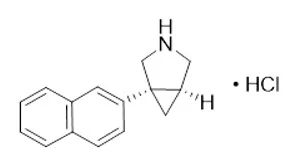
SIMTRIYO is a norepinephrine-dopamine-serotonin reuptake inhibitor and central nervous system stimulant. Centanafadine hydrochloride has the chemical designation of (1R,5S)-1-(naphthalen-2-yl)-3-azabicyclo[3.1.0]hexane hydrochloride. The molecular formula is C15H15N∙HCl which corresponds to a molecular weight of 245.75 with the following structural formula:
SIMTRIYO (centanafadine) extended-release capsules for oral use contain 140 mg, 210 mg, or 280 mg of centanafadine, equivalent to 164.4 mg, 246.6 mg, or 328.8 mg, respectively, of centanafadine hydrochloride. Each capsule contains a combination of immediate release, extended release, and delayed release beads. Inactive ingredients for the beads include: colloidal silicon dioxide, ethyl acrylate and methyl methacrylate copolymer, hypromellose, mannitol, microcrystalline cellulose, plasacryl, poly (methyl acrylate-CO-methyl methacrylate-CO-methacrylic acid), polysorbate 80, and talc. The capsule shell contains: hypromellose, titanium dioxide, FD&C Blue No. 1 (280 mg capsule), FD&C Yellow No. 5 (210 mg capsule), FD&C Yellow No. 6 (140 mg capsule). The capsules are imprinted with edible black ink.
12 CLINICAL PHARMACOLOGY
12.1 Mechanism of Action
Centanafadine has inhibitory activity at norepinephrine (NE), dopamine (DA), and serotonin (5-HT) reuptake transporters and is a central nervous system stimulant. The mechanism of action of centanafadine in the treatment of ADHD is unclear; however, its efficacy could be mediated through its activity as a norepinephrine-dopamine-serotonin reuptake inhibitor.
12.2 Pharmacodynamics
Centanafadine binds to the norepinephrine transporter, dopamine transporter, and serotonin transporter, and inhibits the reuptake of these neurotransmitters.
Cardiac Electrophysiology
At 2 times the maximum recommended dose of centanafadine, clinically significant QTc interval prolongation was not observed.
12.3 Pharmacokinetics
Following multiple doses of SIMTRIYO, peak plasma concentration (Cmax) and area under the plasma concentration-time curve (AUC) increased slightly greater than dose proportionally across the dose range of 140 to 280 mg following once-daily dosing. Steady state concentrations were achieved on Day 2 with minimal drug accumulation (1.2- to 1.3-fold).
Absorption
Time to reach Cmax (Tmax) of once daily SIMTRIYO extended-release capsules was 5 hours.
Effect of Food
Administration of SIMTRIYO with a high-fat meal (1000 calories, 50% fat) resulted in 29% increase in Cmax, 1.5 hours delay in Tmax and no change in AUCinf of SIMTRIYO capsule compared to the fasted state. The differences in pharmacokinetic parameters are not considered clinically meaningful [see Dosage and Administration (2.3)].
Sprinkling the contents of a SIMTRIYO capsule on applesauce or yogurt, or in orange juice, had comparable pharmacokinetics (Cmax and AUC) to those observed after administration of the intact capsule of SIMTRIYO [see Dosage and Administration (2.3)].
Distribution
Centanafadine is highly plasma protein bound. The fraction unbound of centanafadine in the plasma of healthy adults is <0.01 and is independent of centanafadine concentrations. The apparent volume of distribution of SIMTRIYO is approximately 167 L.
Elimination
The mean half-life of SIMTRIYO is 5.2 hours. The mean apparent clearance is 410 mL/min.
Metabolism
Centanafadine is primarily metabolized by monoamine oxidase A. The lactam metabolite was the most abundant metabolite and was not pharmacologically active.
Excretion
Following administration of a 14C centanafadine dose, 88% of the administered radioactivity was excreted in the urine as metabolites, and 7% was recovered in the feces.
Specific Populations
Pediatric Patients (6 to 12 years of age)
The pharmacokinetics of centanafadine (Cmax and AUC) in pediatric patients was similar to adults following single and multiple centanafadine doses when the dosage was adjusted for weight. Similar to adults, minor accumulation was observed following multiple centanafadine doses to pediatric patients.
Patients with Renal Impairment
In adults with severe renal impairment (eGFR <30 mL/min, and not undergoing dialysis), centanafadine exposures were lower (Cmax reduced by 25% and AUCinf reduced by 20%) compared to healthy matched adults.
Patients with Hepatic Impairment
In adults with moderate hepatic impairment (Child Pugh B), centanafadine exposures were lower (Cmax reduced by 30% and AUCinf reduced by 25%) compared to healthy matched adults. The effect of severe hepatic impairment (Child Pugh C) or mild hepatic impairment (Child-Pugh Class A) on centanafadine pharmacokinetics has not been studied [see Use in Specific Populations (8.6)].
Drug Interaction Studies
No clinically meaningful change in pharmacokinetics of centanafadine was observed with concomitant use of ciprofloxacin (a CYP1A2 inhibitor), quinidine (a CYP2D6 inhibitor), or smoking (a CYP1A2 inducer).
Following the concomitant use of multiple oral doses of another centanafadine formulation with a caffeine citrate solution (200 mg), a CYP1A2 substrate, there was no appreciable change in the mean Cmax of caffeine; however, there was a 2-fold increase in the AUCinf of caffeine compared to a single dose administration of caffeine citrate solution (200 mg) alone [see Drug Interactions (7)].
Effect of Alcohol
An in vitro dissolution study was conducted to evaluate the effects of alcohol on the release characteristics of centanafadine from SIMTRIYO. The study showed that 20% and 40% alcohol can cause approximately 85% and 100% of centanafadine release, respectively, within 1.5 hours compared to 23% of centanafadine release in the control (0% alcohol). At 5% alcohol, the centanafadine release was comparable to the control through 1.5 hours; however, the release was accelerated beyond that time point (i.e., after 2 hours) [see Drug Interactions (7)].
13 NONCLINICAL TOXICOLOGY
13.1 Carcinogenesis, Mutagenesis, Impairment of Fertility
Carcinogenesis
Centanafadine did not increase the incidence of tumors in rats treated for up to 91 weeks at any of the oral doses tested, up to 20 mg/kg/day in males and 30 mg/kg/day in females, which are less than the human exposure at the maximum recommended human dose (MRHD) of 280 mg based on AUC. Centanafadine did not increase the incidence of tumors in rasH2 mice treated for 26 weeks at oral doses of up to 10 mg/kg/day.
Mutagenesis
Centanafadine was not genotoxic in a battery of genotoxicity tests. Centanafadine was not mutagenic in the in vitro bacterial reverse mutation (Ames) assay, or clastogenic in the in vitro mammalian chromosomal aberration assay or in vivo in the rat bone marrow micronucleus test.
Impairment of Fertility
Centanafadine did not impact rat fertility or reproduction at doses of 3, 10, or 30 mg/kg/day, with the highest dose tested being lower than the human exposure at the MRHD of 280 mg based on AUC.
14 CLINICAL STUDIES
Pediatric Patients with ADHD
The efficacy of SIMTRIYO for the treatment of ADHD in pediatric patients 6 years of age and older weighing at least 20 kg was evaluated in two short-term, randomized, placebo-controlled studies (Studies 1 and 2).
Study 1
Study 1 (NCT05428033) was a randomized, double-blind, multicenter, placebo-controlled study in patients 4 to 12 years of age with ADHD. SIMTRIYO is not approved for use in patients less than 6 years of age or weighing less than 20 kg [see Indications and Usage (1)]; efficacy results are presented only for pediatric patients 6 years of age and older.
Patients in Cohort 1 (6 to 12 years of age) were randomized 1:1:1 at baseline to receive weight-based dose equivalent to 280 mg SIMTRIYO, weight-based dose equivalent to 140 mg SIMTRIYO, or placebo once daily for 6 weeks. Patients had a mean age of 9 years (range: 6 to 12 years), 58% were male, 27% Black/African American and 65% White, and 31% were of Hispanic or Latino ethnicity.
The primary endpoint was the change from baseline at Week 6 (Day 42) in the symptoms total raw score on the ADHD Rating Scale Version 5 (ADHD-RS-5). Higher ADHD-RS-5 scores reflect more severe symptoms.
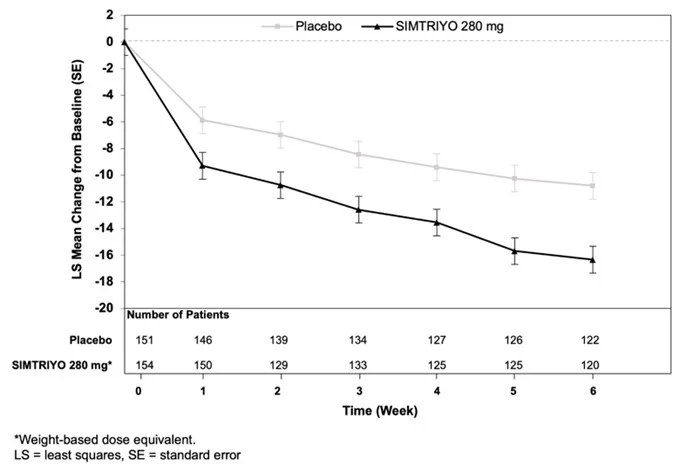
A total of 480 patients 6 to 12 years of age were randomized, 367 completed the study and 90 were discontinued. Patients treated with a weight-based dose equivalent to 280 mg SIMTRIYO once daily showed a statistically significant difference in the ADHD-RS-5 symptoms total raw score at Week 6 (Day 42) compared to patients treated with placebo (see Table 6 and Figure 1).
Only the weight-based dose equivalent to 280 mg SIMTRIYO once daily is approved for pediatric patients 6 to 12 years of age [see Dosage and Administration (2.2)]. The weight-based dose equivalent to 140 mg SIMTRIYO once daily did not demonstrate a significantly greater difference in the ADHD-RS-5 symptoms total raw score at Day 42 compared to patients treated with placebo and is not an approved dosage regimen.
Table 6: Primary Efficacy Results for Change from Baseline in ADHD-RS-5 Total Score in Pediatric Patients 6 to 12 Years of Age with ADHD (Study 1)
| Primary Efficacy Measure: ADHD-RS-5 Total Score | ||||
|---|---|---|---|---|
| Treatment Group | N | Mean Baseline Score (SD) | LS Mean Change from Baseline (SE) | Placebo-subtracted DifferenceDifference (drug minus placebo) in least-squares mean change from baseline. (95% CI) |
| SD: standard deviation; SE: standard error; LS Mean: least-squares mean; CI: confidence interval. | ||||
| Placebo | 151 | 43.0 (6.69) | -10.8 (1.19) | -- |
| SIMTRIYO 280 mg once dailyWeight-based dose equivalent | 154 | 43.0 (6.65) | -16.3 (1.19) | -5.6 (-8.78, -2.33) |
Figure 1: LS Mean Change from Baseline in ADHD-RS-5 Total Score in Pediatric Patients 6 to 12 Years of Age with ADHD (Study 1)
Study 2
Study 2 (NCT05257265) was a randomized, double-blind, multicenter, placebo-controlled study in patients 13 to 17 years of age with ADHD. Patients were randomized 1:1:1 to receive 140 mg SIMTRIYO, 280 mg SIMTRIYO, or placebo once daily for 6 weeks. Patients had a mean age of 15 years (range: 13 to 17 years), 59% were male; 25% Black/African American, 70% White, and 28% were of Hispanic or Latino ethnicity.
The primary endpoint was the change from baseline at Week 6 (Day 42) in the symptoms total raw score on the ADHD Rating Scale Version 5 (ADHD-RS-5), an 18-question scale that assesses hyperactivity, impulsivity, and inattentive symptoms. Higher ADHD-RS-5 scores reflect more severe symptoms.
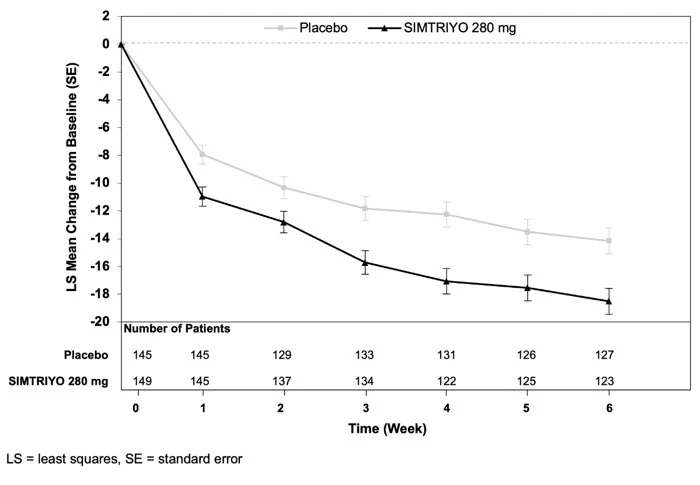
A total of 459 patients were randomized, 371 completed the study, and 88 were discontinued. Patients treated with 280 mg SIMTRIYO once daily showed a statistically significant difference in the ADHD-RS-5 symptoms total raw score at Week 6 (Day 42) compared to patients treated with placebo (see Table 7 and Figure 2).
Only SIMTRIYO 280 mg once daily is approved for pediatric patients 13 to 17 years of age [see Dosage and Administration (2.2)]. Patients treated with 140 mg SIMTRIYO once daily did not demonstrate a significantly greater difference in the ADHD-RS-5 symptoms total raw score at Day 42 compared to patients treated with placebo and is not an approved dosage regimen.
Table 7: Primary Efficacy Results for Change from Baseline in ADHD-RS-5 Total Score in Pediatric Patients 13 to 17 Years of Age with ADHD (Study 2)
| Treatment Group | N | Primary Efficacy Measure: ADHD-RS-5 Total Score | ||
|---|---|---|---|---|
| Mean Baseline Score (SD) | LS Mean Change from Baseline (SE) | Placebo-subtracted DifferenceDifference (drug minus placebo) in least-squares mean change from baseline. (95% CI) | ||
| SD: standard deviation; SE: standard error; LS Mean: least-squares; CI: confidence interval. | ||||
| Placebo | 145 | 37.0 (5.73) | -14.2 (0.93) | -- |
SIMTRIYO 280 mg once daily | 149 | 37.9 (6.46) | -18.5 (0.93) | -4.4 (-6.83, -1.87) |
Figure 2: LS Mean Change from Baseline in ADHD-RS-5 Total Score in Pediatric Patients 13 to 17 Years of Age with ADHD (Study 2)
Adult Patients with ADHD
The efficacy of SIMTRIYO for the treatment of ADHD in adults is based on two short-term, randomized, double-blind, multicenter, placebo-controlled studies with another formulation of centanafadine (Studies 3 and 4). There are no expected differences in effectiveness of the low and high doses of the other centanafadine formulation compared to SIMTRIYO 210 mg and 280 mg once daily, respectively, for the treatment of ADHD.
In Study 3 (NCT03605680) and Study 4 (NCT03605836), patients 18 to 55 years of age were randomized (1:1:1) to receive low or high doses of another formulation of centanafadine or placebo for 6 weeks. Patients began double-blind treatment on Day 1 and continued through Day 42. Patients randomized to receive the low dose-initiated treatment on Day 1 and remained at that dose for the duration of the study. Patients randomized to receive the high dose-initiated treatment at the low dose on Day 1 through Day 7, then received the high dose on Day 8 through the duration of the study.
Study 3 included 466 patients with a mean age of 36 years (range: 18 to 55 years old); 51% were male; 14% Black/African American, 81% White, and 22% were of Hispanic or Latino ethnicity. Study 4 included 440 patients with a mean age of 35 years (range: 18 to 55 years old); 53% were male; 13% Black/African American, 79% White, and 18% were of Hispanic or Latino ethnicity.
The primary endpoint in both studies was the change from baseline at Day 42 in the ADHD Investigator Symptom Rating Scale (AISRS) total score, an 18-item scale corresponding to 18 symptoms of ADHD. Higher AISRS scores reflect more severe symptoms. The change from baseline in the Clinical Global Impression-Severity of Illness (CGI-S) score at Day 42 was the key secondary endpoint. Higher CGI-S scores reflect more severe symptoms.
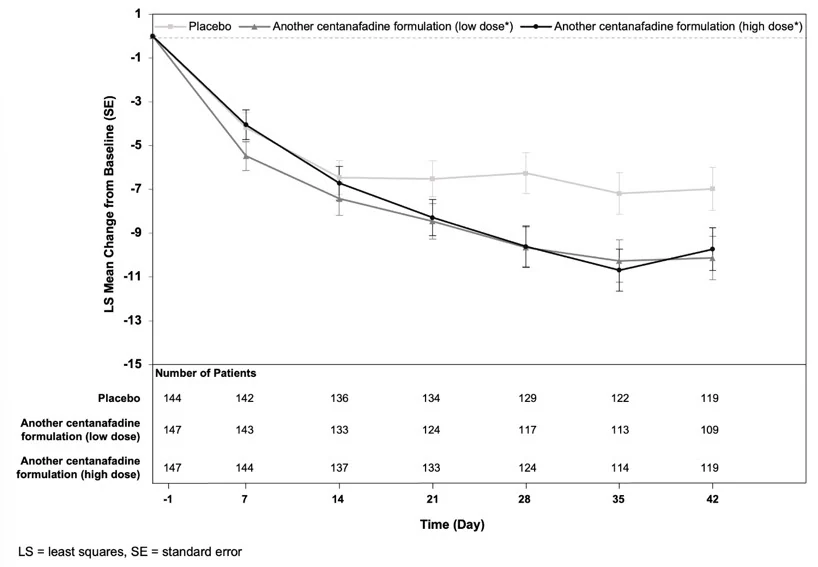
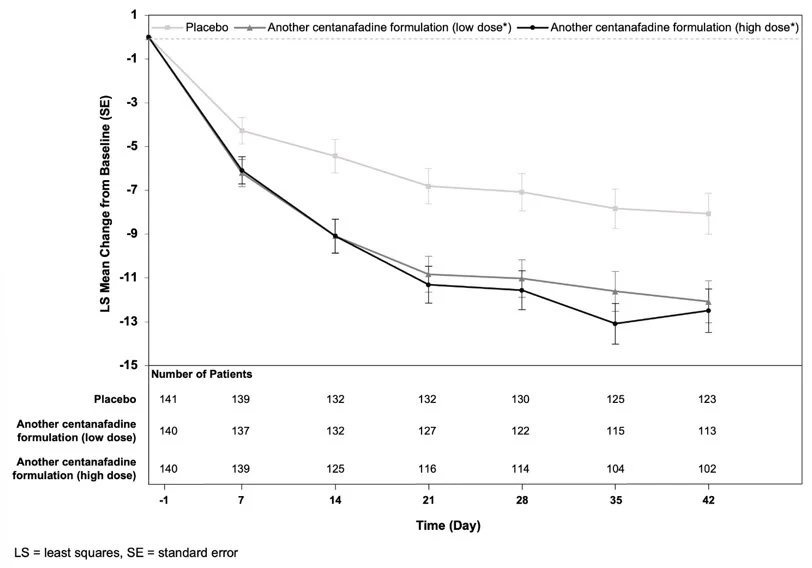
In Studies 3 and 4, a total of 906 patients were randomized; 684 completed the study, and 222 were discontinued. In both studies, the change from baseline (reduction) in the AISRS total score at Day 42 was statistically significantly greater in adults treated with another formulation of centanafadine compared to adults treated with placebo (see Table 8 and Figures 3 and 4). In addition, the change from baseline (reduction) in the CGI-S score, demonstrating reduction in the severity of symptoms of ADHD, was statistically significantly greater in adults treated with another formulation of centanafadine compared to adults treated with placebo.
Table 8: Primary Efficacy Results for Change from Baseline in AISRS Total Score in Adults with ADHD (Studies 3 and 4)
| Study Number | Treatment Group | N | Primary Efficacy Measure: AISRS Total Score in Adults | ||
|---|---|---|---|---|---|
| Mean Baseline Score (SD) | LS Mean Change from Baseline (SE) | Placebo-subtracted DifferenceDifference (drug minus placebo) in least-squares mean change from baseline. (95% CI) | |||
| SD: standard deviation; SE: standard error; LS Mean: least-squares mean; CI: confidence interval. | |||||
| Study 3 | Placebo | 144 | 39.5 (7.20) | -7.0 (0.98) | -- |
| Another centanafadine formulation (low doseThere are no expected differences in effectiveness of SIMTRIYO 210 mg and 280 mg once daily compared to the low and high doses of the other centanafadine formulation, respectively, for the treatment of ADHD in adults.) | 147 | 39.6 (6.69) | -10.1 (0.99) | -3.2 (-5.79, -0.51) | |
| Another centanafadine formulation (high dose) | 147 | 39.6 (6.82) | -9.7 (0.98) | -2.7 (-5.35, -0.14) | |
| Study 4 | Placebo | 141 | 37.7 (6.35) | -8.1 (0.94) | -- |
| Another centanafadine formulation (low dose) | 140 | 37.6 (6.75) | -12.1 (0.96) | -4.0 (-6.55, -1.46) | |
| Another centanafadine formulation (high dose) | 140 | 38.8 (6.96) | -12.5 (0.99) | -4.4 (-7.02, -1.82) | |
| * There are no expected differences in effectiveness of SIMTRIYO 210 mg and 280 mg once daily compared to the low and high doses of the other centanafadine formulation, respectively, for the treatment of ADHD in adults. |
| Figure 3: LS Mean Change from Baseline in AISRS Total Score in Adults with ADHD (Study 3) |
 |
| * There are no expected differences in effectiveness of SIMTRIYO 210 mg and 280 mg once daily compared to the low and high doses of the other centanafadine formulation, respectively, for the treatment of ADHD in adults. |
| Figure 4: LS Mean Change from Baseline in AISRS Total Score in Adults with ADHD (Study 4) |
 |
16 HOW SUPPLIED/STORAGE AND HANDLING
How Supplied
SIMTRIYO (centanafadine) extended-release capsules are available as follows:
| Strength | Colors | Imprint codes | Size | NDC |
|---|---|---|---|---|
| 140 mg | light orange opaque cap/white opaque body | "C140" (cap) and "Otsuka" (body) | Bottle of 30 | 59148-302-13 |
| 210 mg | yellow opaque cap/white opaque body | "C210" (cap) and "Otsuka" (body) | Bottle of 30 | 59148-303-13 |
| 280 mg | powder blue opaque cap/white opaque body | "C280" (cap) and "Otsuka" (body) | Bottle of 30 | 59148-304-13 |
Storage and Handling
Store at 20°C to 25°C (68°F to 77°F); excursions permitted between 15°C and 30°C (59°F to 86°F) [see USP Controlled Room Temperature].
17 PATIENT COUNSELING INFORMATION
Advise patients or caregivers to read the FDA-approved patient labeling (Medication Guide).
Suicidal Ideation and Behaviors
Patients, their families, and their caregivers should be alerted about the need to monitor patients for the emergence of suicidal ideation and behavior, especially during the first few months of SIMTRIYO treatment. Such symptoms should be reported to the patient's healthcare provider immediately [see Boxed Warning and Warnings and Precautions (5.1)].
Abuse, Misuse, and Addiction
Educate patients and their families about the risks of abuse, misuse, and addiction of SIMTRIYO, which can lead to overdose and death, and proper disposal of any unused drug. Advise patients to store SIMTRIYO in a safe place, preferably locked, and instruct patients to not give SIMTRIYO to anyone else [see Warnings and Precautions (5.2), Drug Abuse and Dependence (9.1, 9.2), and Overdosage (10)].
Risks to Patients with Serious Cardiac Disease
Advise patients and their caregivers that there are potential risks to patients with serious cardiac disease, including sudden death, with SIMTRIYO use. Instruct patients to contact a healthcare provider immediately if they develop symptoms such as exertional chest pain, unexplained syncope, or other symptoms suggestive of cardiac disease [see Warnings and Precautions (5.3)].
Increased Blood Pressure and Heart Rate
Advise patients and their caregivers that SIMTRIYO can cause elevations in blood pressure and heart rate [see Warnings and Precautions (5.4)].
Psychiatric Adverse Reactions
Advise patients and their caregivers that SIMTRIYO, at recommended doses, may cause psychotic or manic symptoms, even in patients without a prior history of psychotic symptoms [see Warnings and Precautions (5.5)].
Hypersensitivity Reactions
Inform patients that hypersensitivity reactions, including anaphylaxis, angioedema and rash, have occurred with SIMTRIYO. Advise patients to seek immediate medical attention if they experience any symptoms of a hypersensitivity reaction [see Warnings and Precautions (5.6)].
Long-term Suppression of Growth in Pediatric Patients
Advise patients, and their caregivers that SIMTRIYO may cause slowing of growth and weight loss in pediatric patients. Height and weight should be monitored while using SIMTRIYO [see Warnings and Precautions (5.7)].
Peripheral Vasculopathy, Including Raynaud's Phenomenon
Instruct patients and their caregivers about the risk of peripheral vasculopathy, including Raynaud's phenomenon, and associated signs and symptoms; to report to their healthcare provider any new numbness, pain, skin color change, or sensitivity to temperature in fingers or toes; to call their healthcare provider immediately with any signs of unexplained wounds appearing on fingers or toes while taking SIMTRIYO [see Warnings and Precautions (5.8)].
Serotonin Syndrome
Inform patients and their caregivers that use of SIMTRIYO with other serotonergic drugs may cause serotonin syndrome. Instruct patients who are taking other serotonergic drugs to contact their healthcare provider or report to the emergency room if they experience signs or symptoms of serotonin syndrome [see Warnings and Precautions (5.9) and Drug Interactions (7)].
Allergic Reactions and Reactions to FD&C Yellow No. 5 (Tartrazine)
Advise patients that the SIMTRIYO 210 mg capsules contain FD&C Yellow No. 5 (tartrazine), which may cause allergic-type reactions (including bronchial asthma) in certain susceptible persons or in patients who also have an aspirin hypersensitivity. Advise patients to seek immediate medical attention if they experience any symptoms of a hypersensitivity reaction [see Warnings and Precautions (5.11)].
Pregnancy
Advise patients about the pregnancy exposure registry that monitors outcomes in women exposed to ADHD medications, including SIMTRIYO, during pregnancy [see Use in Specific Populations (8.1)].
Administration Instructions
Instruct patients to take SIMTRIYO in the morning, with or without food, at approximately the same time each day. Advise patients to not cut, chew or crush the capsules. Instruct patients to swallow SIMTRIYO whole or open the capsule and sprinkle the contents over one tablespoon (15 mL) of applesauce or yogurt or in one tablespoon (15 mL) of orange juice. Advise patients to consume the contents immediately, without chewing the granules, and not to store for future use [see Dosage and Administration (2.3)].
Effect of Alcohol
Advise patients to avoid consuming alcohol at the same time as, and for at least two hours after, taking SIMTRIYO. Inform patients that consuming alcohol at the same time as, or within two hours after, taking SIMTRIYO may result in a more rapid release of centanafadine [see Drug Interactions (7)].
Missed Dose Instructions
Advise patients that if a dose is missed, it should be taken as soon as remembered, but no later than 4 hours after the normal dosing time. Advise patients to not take more than one dose of SIMTRIYO in the same day [see Dosage and Administration (2.5)].
Manufactured for Otsuka America Pharmaceutical, Inc., Rockville, MD 20850 USA
SIMTRIYO is a registered trademark of Otsuka Pharmaceutical Co., Ltd.
©2026, Otsuka Pharmaceutical Co., Ltd., Tokyo, 101-8535 Japan