


Patient information: uses, side effects, how to take - Selzentry
What is the most important information I should know about SELZENTRY?
SELZENTRY can cause serious side effects including serious liver problems (liver toxicity). Some people who take SELZENTRY can develop a severe rash or an allergic reaction before liver problems happen and may be life-threatening. Stop taking SELZENTRY and call your healthcare provider right away if you get any of the following signs or symptoms of liver problems:
- an itchy rash on your body (allergic reaction)
- your skin or the white part of your eyes turns yellow (jaundice)
- dark or “tea-colored” urine
- vomiting
- pain, aching, or tenderness on the right side of your stomach area
Your healthcare provider will do blood tests to check your liver before you begin treatment with SELZENTRY and as needed during treatment with SELZENTRY.
What is SELZENTRY?
SELZENTRY is a prescription Human Immunodeficiency Virus-1 (HIV-1) medicine given with other HIV-1 medicines to treat CCR5-tropic HIV-1 infection in adults and children weighing at least 4.4 lb (2 kg).
HIV-1 is the virus that causes Acquired Immune Deficiency Syndrome (AIDS).
Use of SELZENTRY is not recommended in people with dual/mixed- or CXCR4‑tropic HIV‑1.
SELZENTRY should not be used in premature newborns or children weighing less than 4.4 pounds (2 kg).
Do not take SELZENTRY if you have severe kidney problems or are on hemodialysis and are also taking certain other medications.
Before you take SELZENTRY, tell your healthcare provider about all of your medical conditions, including if you:
- have or have had liver problems including hepatitis B or C virus infection.
- have heart problems.
- have kidney problems.
- have low blood pressure or take medicines to lower blood pressure.
are pregnant or plan to become pregnant. It is not known if SELZENTRY may harm your unborn baby.
Pregnancy Registry. There is a pregnancy registry for women who take SELZENTRY during pregnancy. The purpose of this registry is to collect information about the health of you and your baby. Talk to your healthcare provider about how you can take part in this registry.
- are breastfeeding or plan to breastfeed. Do not breastfeed if you take SELZENTRY. You should not breastfeed if you have HIV-1 because of the risk of passing HIV-1 to your baby. Talk to your healthcare provider about the best way to feed your baby.
Tell your healthcare provider about all the medicines you take, including prescription and over-the-counter medicines, vitamins, and herbal supplements.
- Some medicines may interact with SELZENTRY. Keep a list of your medicines to show your healthcare provider and pharmacist.
- You can ask your healthcare provider or pharmacist for a list of medicines that interact with SELZENTRY.
Do not start taking a new medicine without telling your healthcare provider. Your healthcare provider can tell you if it is safe to take SELZENTRY with other medicines. Your healthcare provider may need to change your dose of SELZENTRY when you take it with certain medicines. You should not take SELZENTRY if you also take St. John’s wort (Hypericum perforatum).
How should I take SELZENTRY?
- Take SELZENTRY exactly as your healthcare provider tells you.
- Do not change your dose or stop taking SELZENTRY without first talking with your healthcare provider.
- If you miss a dose of SELZENTRY, take it as soon as you remember. Do not take 2 doses at the same time. If you are not sure about your dosing, call your healthcare provider.
- Stay under the care of a healthcare provider during treatment with SELZENTRY.
- Swallow SELZENTRY tablets whole. Do not chew the tablets.
SELZENTRY may be taken with or without food.
- Your healthcare provider will prescribe a dose of SELZENTRY based on your child’s body weight and other medicines they are taking.
- Tell your healthcare provider if your child has trouble swallowing tablets. SELZENTRY comes as tablets or as a liquid (oral solution).
- SELZENTRY oral solution should be given with the supplied press-in bottle adapter and oral dosing syringe. See the Instructions for Use that comes with SELZENTRY oral solution for information about the right way to take a dose.
- Do not run out of SELZENTRY. The virus in your blood may increase and the virus in your blood may become harder to treat. When your supply starts to run low, get more from your healthcare provider or pharmacy.
- If you take too much SELZENTRY, call your healthcare provider or go to the nearest hospital emergency room right away.
What are the possible side effects of SELZENTRY?
SELZENTRY can cause serious side effects including:
- See “What is the most important information I should know about SELZENTRY?”
- Severe skin rash and allergic reactions. Severe and potentially life-threatening skin reactions and allergic reactions have been reported in some people taking SELZENTRY. If you develop a rash with any of the following symptoms, stop using SELZENTRY and contact your healthcare provider right away:
- fever
- generally ill feeling
- muscle aches
- blisters or sores in your mouth
- blisters or peeling of the skin
- redness or swelling of the eyes
- swelling of the mouth or face or lips
- problems breathing
- yellowing of the skin or whites of your eyes
- dark or tea-colored urine
- pain, aching, or tenderness on the right side below the ribs
- loss of appetite
- nausea/vomiting
- Heart problems including heart attack.
Low blood pressure when standing up (postural hypotension) that can cause dizziness or fainting. You should avoid driving or operating heavy machinery if you have dizziness during treatment with SELZENTRY.
- Changes in your immune system (Immune Reconstitution Syndrome) can happen when you start taking HIV-1 medicines. Your immune system may get stronger and begin to fight infections that have been hidden in your body for a long time. Tell your healthcare provider right away if you develop new symptoms during treatment with SELZENTRY.
- Possible chance of infection or cancer. SELZENTRY affects other immune system cells and therefore may possibly increase your chance for getting other infections or cancer.
The most common side effects of SELZENTRY in adults include colds and cold-like symptoms, cough, fever, rash, bloating and gas, indigestion, constipation, and dizziness.
The most common side effects of SELZENTRY in children include vomiting, abdominal pain, diarrhea, nausea, and dizziness.
The most common side effect of SELZENTRY in newborns is decreased hemoglobin (protein inside red blood cells).
These are not all the possible side effects of SELZENTRY. Call your doctor for medical advice about side effects. You may report side effects to FDA at 1‑800‑FDA‑1088.
How should I store SELZENTRY?
- Store SELZENTRY tablets and oral solution at room temperature between 68°F to 77°F (20°C to 25°C).
- Throw away any unused oral solution 60 days after first opening the bottle.
Keep SELZENTRY and all medicines out of the reach of children.
General information about the safe and effective use of SELZENTRY
Medicines are sometimes prescribed for purposes other than those mentioned in a Medication Guide. Do not use SELZENTRY for a condition for which it was not prescribed. Do not give SELZENTRY to other people, even if they have the same symptoms that you have. It may harm them.
You can ask your pharmacist or healthcare provider for the information about SELZENTRY that is written for health professionals.
What are the ingredients in SELZENTRY?
Active ingredient: maraviroc
Inactive ingredients:
Tablets: Dibasic calcium phosphate (anhydrous), magnesium stearate, microcrystalline cellulose, and sodium starch glycolate. Tablet film-coating contains: FD&C blue #2 aluminum lake, soya lecithin, polyethylene glycol (macrogol 3350), polyvinyl alcohol, talc, and titanium dioxide.
Oral Solution: Citric acid, purified water, sodium benzoate, sodium citrate dihydrate, strawberry flavoring (501440T), and sucralose.
Manufactured for:
ViiV Healthcare
Durham, NC 27701
SELZENTRY is a trademark owned by or licensed to the ViiV Healthcare group of companies.
©2022 ViiV Healthcare group of companies or its licensor.
SEL:10MG
For more information go to www.selzentry.com.
This Medication Guide has been approved by the U.S. Food and Drug Administration.
Revised: 9/2022
INSTRUCTIONS FOR USE
SELZENTRY (sell-ZEN-tree)
(maraviroc)
oral solution
Read this Instructions for Use before you start taking SELZENTRY oral solution and each time you get a refill. There may be new information. This leaflet does not take the place of talking to your healthcare provider about your medical condition or treatment.
Important information about measuring SELZENTRY oral solution:
Always use the correct oral syringe that comes with your SELZENTRY oral solution to measure your prescribed dose. Ask your healthcare provider or pharmacist to show you which syringe to use and how to measure your prescribed dose if you are not sure.
Each carton of SELZENTRY oral solution contains:
- One 3-mL oral syringe (for doses of 2.5 mL or less)
- One 10-mL oral syringe (for doses more than 2.5 mL)
- 1 press-in bottle adapter
- 1 bottle of SELZENTRY oral solution
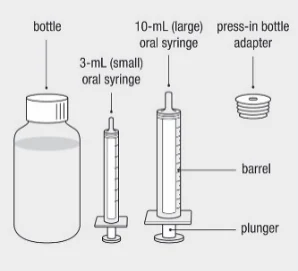
Before each use: Wash your hands with soap and water. Place the items from the carton on a clean flat surface.
Step 1. Open the bottle of SELZENTRY oral solution.
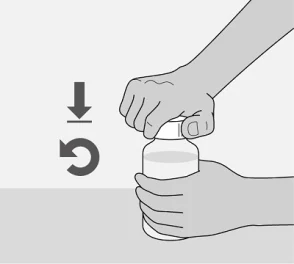
Open the bottle by pushing down firmly on the child-resistant cap and turning it counter-clockwise. See Figure A.
Do not throw away the child-resistant cap.
Figure A. Opening the bottle
Step 2. First time use only: Insert the press-in bottle adapter.
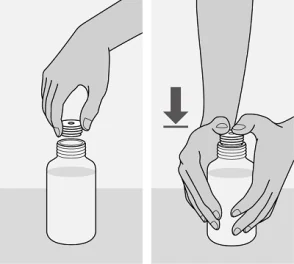
Remove the press-in bottle adapter and oral syringe from the plastic overwrap. With the bottle on a flat surface, push the ribbed end of the press-in bottle adapter all the way into the neck of the bottle while holding the bottle firmly. See Figure B.
Note: Do not remove the press-in bottle adapter from the bottle after it is inserted.
Figure B. Inserting the press-in bottle adapter
Step 3. Choose the oral syringe you need and find your prescribed dose on the oral syringe.
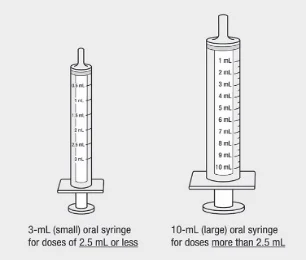
Check the dose in milliliters (mL) as prescribed by your healthcare provider. Choose the right syringe for your child’s dose: use the 3-mL (small) syringe for doses of 2.5 mL or less, or the 10-mL (large) syringe for doses more than 2.5 mL. Then find this marking on the oral syringe. See Figure C.
Figure C. Choose the oral syringe you need and find your prescribed dose.
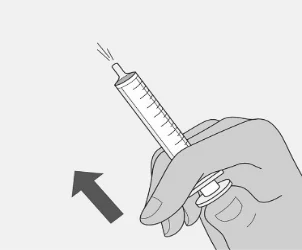
Step 4. Remove air from oral syringe.
Push the oral syringe plunger to the bottom of the barrel of the syringe (toward its tip) to remove excess air. See Figure D.
Figure D. Removing air from oral syringe.
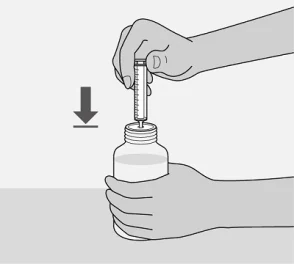
Step 5. Insert the oral syringe.
Insert the oral syringe into the upright bottle through the opening of the press-in bottle adapter until it is firmly in place. See Figure E.
Figure E. Inserting the oral syringe
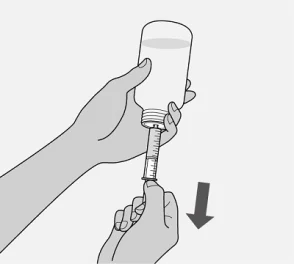
Step 6. Withdraw the prescribed dose of SELZENTRY from the bottle.
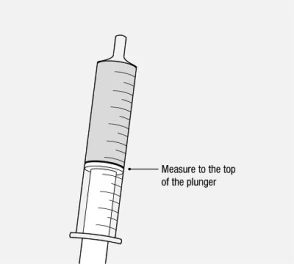
With the oral syringe in place, turn the bottle upside down. Pull back the plunger of the oral syringe until the top of the plunger is even with the markings on the oral syringe for your prescribed dose. See Figure F.
If you see air bubbles in the oral syringe, fully push the plunger in to empty the oral solution back into the bottle. Then withdraw your prescribed dose of oral solution.
Figure F. Withdrawing the oral solution
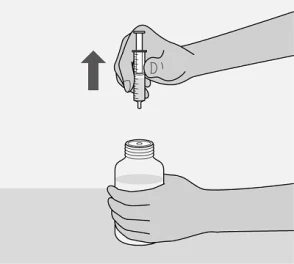
Step 7. Removing the oral syringe.
Turn the bottle upright and place the bottle on a flat surface. Remove the oral syringe from the bottle adapter and bottle by pulling straight up on the barrel of the oral syringe. See Figure G.
Figure G. Removing the oral syringe
Step 8. Check the dose withdrawn.
Check that the correct dose was drawn up into the oral syringe. See Figure H.
If the dose is not correct, re-insert the oral syringe tip firmly into the bottle adapter. Fully push in the plunger so that the oral solution flows back into the bottle. Repeat Steps 6 and 7.
Figure H. Checking the dose withdrawn.
Step 9. Take the dose of SELZENTRY. See Figure I.
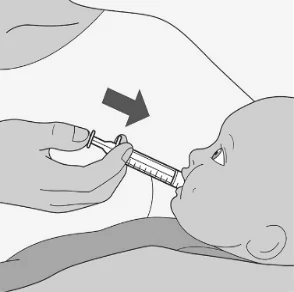
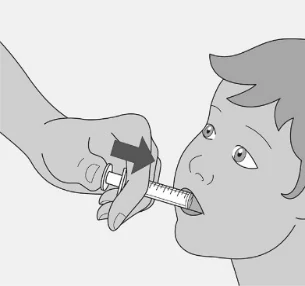
Place the tip of the oral syringe against the inside of the child’s cheek.
Slowly push the plunger all the way down to give all the medicine in the oral syringe. Make sure the child has time to swallow the medicine.
Note: If the prescribed dose is more than 10 mL, you will need to divide the dose. Follow the instructions given to you by your healthcare provider or pharmacist about how to divide the dose and repeat Steps 5 through 9.
Figure I. Taking the dose of SELZENTRY
Step 10. Close the bottle.
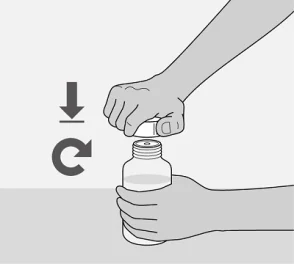
Close the bottle tightly by turning the child-resistant cap clockwise, leaving the press-in bottle adapter in place. See Figure J.
Figure J. Closing the bottle
Step 11. Clean the oral syringe.
Rinse the oral syringe with tap water after each use.
Remove the plunger from the barrel by pulling the plunger and the barrel away from each other. See Figure K.
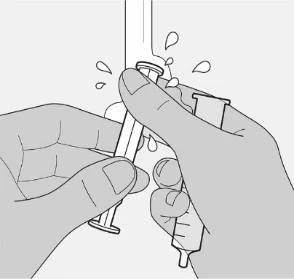
Rinse the plunger and barrel with water. See Figure L.
Allow parts to air dry completely.
Figure K. Removing the plunger from the barrel
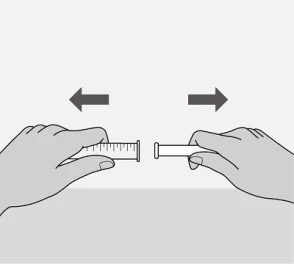
Figure L. Rinsing the plunger and barrel
Step 12. Put the oral syringe back together.
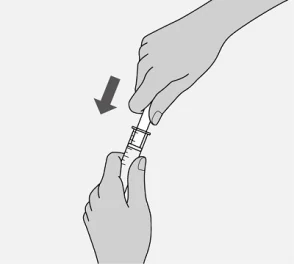
When the barrel and plunger are dry, put the oral syringe back together by inserting the plunger into the barrel. See Figure M. Store the oral syringe with the SELZENTRY oral solution.
Do not throw away the oral syringe.
Figure M. Putting the oral syringe back together
How should I store SELZENTRY?
Store SELZENTRY oral solution at room temperature between 68°F to 77°F (20°C to 25°C).
- Throw away any unused oral solution 60 days after first opening the bottle.
Ask your healthcare provider or pharmacist how to dispose of unused oral solution.
Keep SELZENTRY and all medicines out of the reach of children.
Manufactured for:
ViiV Healthcare
Durham, NC 27701
SELZENTRY is a trademark owned by or licensed to the ViiV Healthcare group of companies.
©2022 ViiV Healthcare group of companies or its licensor.
SEL:4IFU
This Instructions for Use has been approved by the U.S. Food and Drug Administration.
Revised: 9/2022