


Patient information: uses, side effects, how to take - Rufinamide
What is the most important information I should know about rufinamide?
Do not stop taking rufinamide without first talking to your healthcare provider.
Stopping rufinamide suddenly can cause serious problems.
Rufinamide can cause serious side effects, including:
1. Like other antiepileptic drugs, rufinamide may cause suicidal thoughts or actions in a very small number of people, about 1 in 500.
Call a healthcare provider right away if you have any of these symptoms, especially if they are new, worse, or worry you:
- thoughts about suicide or dying
- attempt to commit suicide
- new or worse depression
- new or worse anxiety
- feeling agitated or restless
- panic attacks
- trouble sleeping (insomnia)
- new or worse irritability
- acting aggressive, being angry, or violent
- acting on dangerous impulses
- an extreme increase in activity and talking (mania)
- other unusual changes in behavior or mood
- Suicidal thoughts or actions can be caused by things other than medicines. If you have suicidal thoughts or actions, your healthcare provider may check for other causes.
How can I watch for early symptoms of suicidal thoughts and actions?
- Pay attention to any changes, especially sudden changes, in mood, behaviors, thoughts, or feelings.
- Keep all follow-up visits with your healthcare provider as scheduled.
Call your healthcare provider between visits as needed, especially if you are worried about symptoms.
Do not stop rufinamide without first talking to a healthcare provider.
- Stopping rufinamide suddenly can cause serious problems. Stopping a seizure medicine suddenly in a patient who has epilepsy can cause seizures that will not stop (status epilepticus).
2. Rufinamide may cause you to feel sleepy, tired, weak, dizzy, or have problems with coordination and walking.
What is rufinamide?
Rufinamide is a prescription medicine used with other medicines to treat seizures associated with Lennox-Gastaut Syndrome (LGS) in adults and pediatric patients 1 year of age and older. It is not known if rufinamide is safe and effective in the treatment of Lennox-Gastaut Syndrome in pediatric patients under 1 year of age.
Who should not take rufinamide?
Do not take rufinamide if you have a genetic condition called familial short QT syndrome, a problem that affects the electrical system of the heart.
What should I tell my healthcare provider before taking rufinamide?
Before you take rufinamide, tell your healthcare provider if you:
- have heart problems
- have liver problems
- have any other medical problems
- have or have had suicidal thoughts or actions, depression or mood problems
are pregnant or plan to become pregnant. It is not known if rufinamide can harm your unborn baby. Tell your healthcare provider right away if you become pregnant while taking rufinamide. You and your healthcare provider will decide if you should take rufinamide while you are pregnant.
- Rufinamide may make certain types of birth control less effective. Talk to your healthcare provider about the best birth control methods for you while you take rufinamide.
- If you become pregnant while taking rufinamide, talk to your healthcare provider about registering with the North American Antiepileptic Drug Pregnancy Registry. You can enroll in this registry by calling 1-888-233-2334. The purpose of this registry is to collect information about the safety of antiepileptic medicines during pregnancy.
- are breastfeeding or plan to breastfeed. It is not known if rufinamide will pass into your breast milk. Talk to your healthcare provider about the best way to feed your baby if you take rufinamide.
Tell your healthcare provider about all the medicines you take, including prescription and non-prescription medicines, vitamins, and herbal supplements.
Taking rufinamide with certain other medicines can cause side effects or affect how well they work. Do not start or stop other medicines without talking to your healthcare provider.
Know the medicines you take. Keep a list of them and show it to your healthcare provider and pharmacist each time you get a new medicine.
How should I take rufinamide?
- Take rufinamide exactly as your healthcare provider tells you. Your healthcare provider will tell you how much rufinamide to take.
- Your healthcare provider may change your dose. Do not change your dose of rufinamide without talking to your healthcare provider.
- Take rufinamide with food.
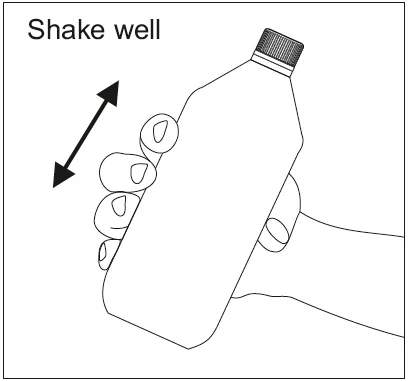
- If you take rufinamide oral suspension, shake the bottle well before you take each dose. Measure your dose of rufinamide oral suspension using the bottle adapter and dosing syringes provided.
See the complete Instructions for Use below for information on how to use the dosing syringes and measure your dose of rufinamide oral suspension.
- If you take too much rufinamide, call your local Poison Control Center or get emergency medical help right away.
What should I avoid while taking rufinamide?
- Do not drink alcohol or take other medicines that make you sleepy or dizzy while taking rufinamide until you talk to your healthcare provider. Rufinamide taken with alcohol or medicines that cause sleepiness or dizziness may make your sleepiness or dizziness worse.
- Do not drive, operate heavy machinery, or do other dangerous activities until you know how rufinamide affects you. Rufinamide can slow your thinking and motor skills.
What are the possible side effects of rufinamide?
See “What is the most important information I should know about rufinamide?”
Rufinamide may cause serious side effects including:
- Rufinamide can also cause allergic reactions or serious problems which may affect organs and other parts of your body like the liver or blood cells. You may or may not have a rash with these types of reactions.
Call your healthcare provider right away if you have any of the following. Symptoms may include:
- swelling of your face, eyes, lips, or tongue
- trouble swallowing or breathing
- a skin rash
- hives
- fever, swollen glands, or sore throat that do not go away or come and go
- swollen glands
- yellowing of your skin or eyes
- dark urine
- unusual bruising or bleeding
- severe fatigue or weakness
- severe muscle pain
- your seizures happen more often or become worse
Call your healthcare provider right away if you have any of the symptoms listed above.
The most common side effects of rufinamide include:
- headache
- dizziness
- tiredness
- sleepiness
- nausea
- vomiting
Tell your healthcare provider about any side effect that bothers you or that does not go away. These are not all of the possible side effects of rufinamide. For more information, ask your healthcare provider or pharmacist.
Call your doctor for medical advice about side effects. You may report side effects to FDA at 1-800-FDA-1088.
How should I store rufinamide?
- Store rufinamide oral suspension at 59ºF to 86ºF (15ºC to 30ºC).
Oral Suspension
- Replace the cap securely after opening.
- Keep rufinamide oral suspension in an upright position.
- Use rufinamide oral suspension within 90 days of first opening the bottle.
Keep rufinamide and all medicines out of the reach of children.
General Information about the safe and effective use of rufinamide
Medicines are sometimes prescribed for purposes other than those listed in a Medication Guide. Do not use rufinamide for a condition for which it was not prescribed. Do not give rufinamide to other people, even if they have the same symptoms that you have. It may harm them.
This Medication Guide summarizes the most important information about rufinamide. If you would like more information, talk with your doctor. You can ask your pharmacist or doctor for information about rufinamide that is written for health professionals. For more information, go to www.ascendlaboratories.com or call Ascend Laboratories, LLC at 1-877-272-7901.
What are the ingredients in Rufinamide?
Oral Suspension
Active ingredient: rufinamide
Inactive ingredients:citric acid anhydrous, colloidal silicon dioxide, hydroxyethylcellulose, hypromellose, lactose monohydrate, methylparaben, magnesium stearate, microcrystalline cellulose (GR101), microcrystalline cellulose and carboxymethylcellulose sodium, noncrystallizing sorbitol solution 70%, orange flavor, potassium sorbate, propylene glycol, propylparaben, purified water and simethicone emulsion 30%.
The oral suspension does not contain lactose or gluten and is dye-free. The oral suspension does contain carbohydrates.
Manufactured by:
Alkem Laboratories Ltd.,
Mumbai - 400 013, INDIA.
Distributed by:
Ascend Laboratories, LLC
Bedminster, NJ 07921
Revised: 4/2026
This Medication Guide has been approved by the U.S. Food and Drug Administration.
Instructions for Use
Rufinamide (roo-FIN-a-mide)
Oral Suspension
Read the Instructions for Use before using rufinamide oral suspension and each time you get a refill. There may be new information. This leaflet does not take the place of talking with the doctor about your medical condition or treatment.
Prepare the r ufinamide oral suspension dose
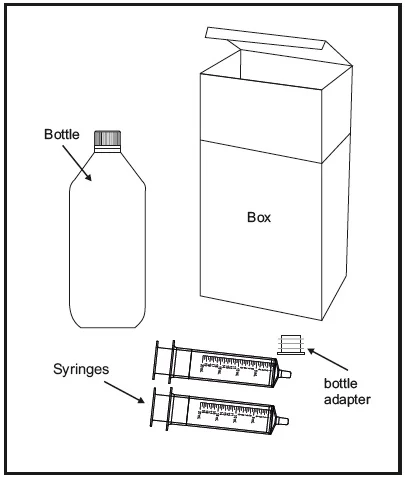
You will need the following supplies: See Figure A
- Rufinamide oral suspension bottle
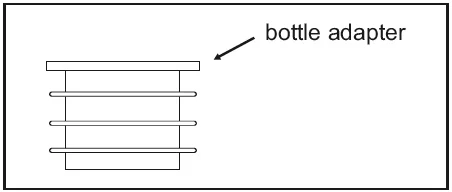
- Bottle adapter
- Dosing syringe (2 dosing syringes are included in the rufinamide oral suspension box)
Figure A
Your total daily dose of rufinamide oral suspension is ______mL. Take rufinamide in 2 equally divided doses: Morning dose = _____mL Evening dose =______mL Note: The doctor may change your dose, especially when you are first starting rufinamide oral suspension. If your morning and evening doses are more than 20 mL each, measure each dose using either:
|
Step 1. Remove the rufinamide oral suspension bottle, bottle adapter, and 2 syringes from the box. See Figure A
Step 2. Shake the bottle well before each use. See Figure B
Figure B
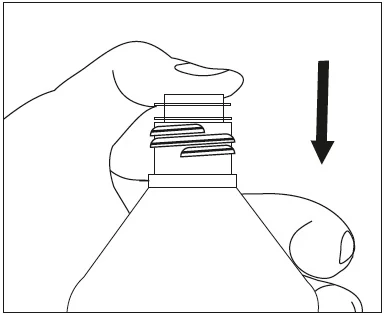
Step 3. Uncap the bottle and insert the bottle adapter into the bottle. See Figure C
Figure C
Once the bottle adapter is installed, it cannot be removed. See Figure D
Figure D
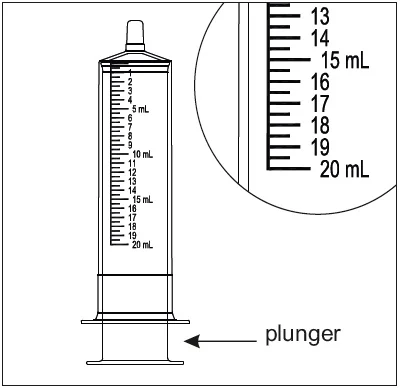
Step 4. Check the morning or evening dose in milliliters (mL) as prescribed by your doctor. Locate this number on the syringe. See Figure E
Figure E
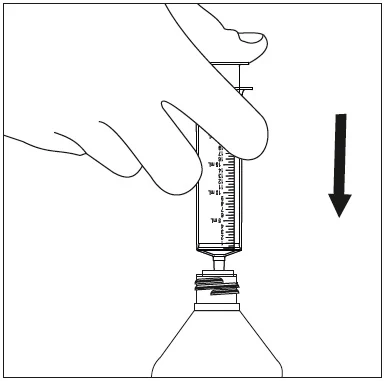
Step 5. Insert the syringe into the upright bottle and push the plunger all the way down. See Figure F
Figure F
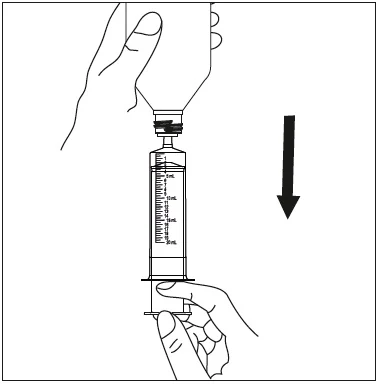
Step 6. With the syringe in place, turn the bottle upside down. Pull the plunger to the number of mL needed (the amount of liquid medicine in Step 4). See Figure G
Figure G
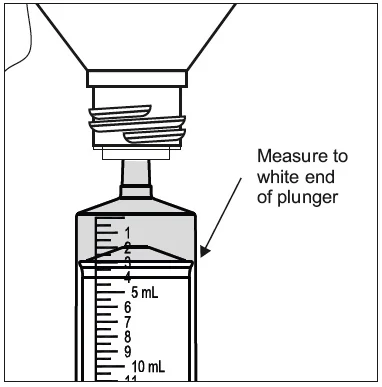
Measure the mLs of medicine from the end of the plunger. See Figure H
Figure H
Step 7. If the dose is more than 20 mL, you can either use:
- 2 syringes, or
- 1 syringe, taking two steps to draw up the medicine in that same syringe
For example:
If your dose is 30 mL, draw up 20 mL in the first syringe and the remaining 10 mL in the second syringe.
or
If your dose is 30 mL, draw up 20 mL in the single syringe and squirt the medicine into your mouth, then draw up the remaining 10 mL in that same syringe.
Repeat Steps 4 through 6 when drawing up the remaining dose of medicine, if your dose is more than 20 mL.
Step 8. Remove the syringe from the bottle adapter.
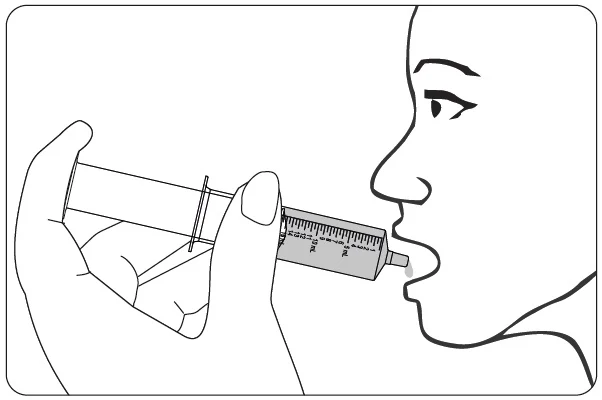
Step 9. Slowly squirt rufinamide directly into the corner of your mouth. If you need 2 syringes for your dose, slowly squirt the medicine from the first syringe into your mouth, then slowly squirt the medicine from the second syringe into your mouth. See Figure I
Figure I
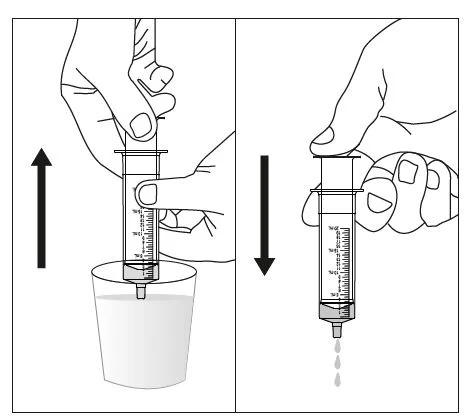
Step 10. Rinse the syringe (or syringes) with tap water after each use. See Figure J
- Fill a cup with water
- Pull back on the plunger and draw the water from the cup into the syringe
- Push on the plunger to release the water into the sink
Figure J
Step 11. Cap the bottle tightly. The cap will fit over the bottle adapter. Store the bottle upright at 59°F to 86°F (15°C to 30°C). See Figure K
Figure K
Manufactured by:
Alkem Laboratories Ltd.,
Mumbai - 400 013, INDIA.
Distributed by:
Ascend Laboratories, LLC
Bedminster, NJ 07921
This Instructions for Use has been approved by the U. S. Food and Drug Administration.
Revised: 4/2026
PT3469-04