


Patient information: uses, side effects, how to take - Rotarix
What is ROTARIX?
ROTARIX is a vaccine that protects your baby from a kind of virus (called a rotavirus) that can cause bad diarrhea and vomiting. Rotavirus can cause diarrhea and vomiting that is so bad that your baby can lose too much body fluid and may need to go to the hospital.
Rotavirus vaccine is a liquid that is given to your baby by mouth. It is not an injection.
Who should not take ROTARIX?
Your baby should not get ROTARIX if:
- he or she has had an allergic reaction after getting a dose of ROTARIX.
- he or she is allergic to any of the ingredients of this vaccine. A list of ingredients can be found at the end of this leaflet.
- a doctor has told you that your baby’s digestive system has a defect (is not normal).
- he or she has a history of a serious problem called intussusception that happens when a part of the intestine gets blocked or twisted.
- he or she has Severe Combined Immunodeficiency Disease (SCID), a severe problem with his/her immune system.
Tell your doctor if your baby:
- has problems with his/her immune system.
- has cancer.
- will be in close contact with someone who has problems with his/her immune system or is getting treated for cancer, as the spread of vaccine virus to non-vaccinated contacts could occur. Hand washing is recommended after diaper changes to help prevent the spread of vaccine virus.
If your baby has been having diarrhea and vomiting, your doctor may want to wait before giving your baby a dose of ROTARIX.
How is ROTARIX given?
ROTARIX is a liquid that is dropped into your baby’s mouth and swallowed.
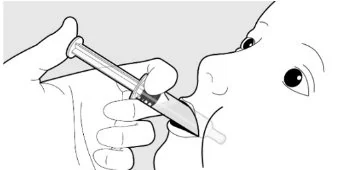
For oral use only.
Your baby will get the first dose at around 6 weeks of age.
The second dose will be at least 4 weeks after the first dose (before 6 months of age).
Be sure to plan the time for your baby’s second dose with the doctor because it is important that your baby gets both doses of ROTARIX before your baby is 6 months old.
The doctor may decide to give your baby other vaccines at the same time as ROTARIX.
Your baby can be fed normally after getting ROTARIX.
What are possible side effects of ROTARIX?
The most common side effects of ROTARIX are:
- crying
- fussiness
- cough
- runny nose
- fever
- loss of appetite
- vomiting.
Call your doctor right away or go to the emergency department if your baby has any of these problems after getting ROTARIX, even if it has been several weeks since the last vaccine dose because these may be signs of a serious problem called intussusception:
- bad vomiting
- bad diarrhea
- bloody bowel movement
- high fever
- severe stomach pain (if your baby brings his/her knees to his/her chest while crying or screaming).
Studies showed an increased risk of intussusception after the first and second dose of vaccine, especially in the first 7 days.
Since FDA approval, reports of infants with intussusception have been received by Vaccine Adverse Event Reporting System (VAERS). Intussusception occurred days and sometimes weeks after vaccination. Some infants needed hospitalization, surgery on their intestines, or a special enema to treat this problem. Death due to intussusception has occurred.
Other reported side effects include: Kawasaki disease (a serious condition that can affect the heart; symptoms may include fever, rash, red eyes, red mouth, swollen glands, swollen hands and feet, and, if not treated, death can occur).
Talk to your baby’s doctor if your baby has any problems that concern you.
What are the ingredients in ROTARIX?
ROTARIX contains weakened human rotavirus.
ROTARIX also contains disodium adipate, sucrose, Dulbecco’s Modified Eagle Medium (DMEM), and sterile water. The ingredients of DMEM are as follows: sodium chloride, potassium chloride, magnesium sulfate, ferric (III) nitrate, sodium dihydrogen phosphate, sodium pyruvate, D-glucose, concentrated vitamin solution, L-cystine, L-tyrosine, amino acids solution, L-glutamine, calcium chloride, and sodium hydrogenocarbonate.
ROTARIX contains no preservatives.
The tip cap and plunger stopper of the oral dosing applicator, used to give your baby ROTARIX, are not made with natural rubber latex.
Manufactured by GlaxoSmithKline Biologicals
Rixensart, Belgium, U.S. License 1617
Distributed by GlaxoSmithKline
Durham, NC 27701
Trademarks are owned by or licensed to the GSK group of companies.
©2026 GSK group of companies or its licensor.
RTX:16PIL
This Patient Information has been approved by the U.S. Food and Drug Administration.
Revised: 4/2026