


Prescribing information (package insert) - Pimjetmi
1 INDICATIONS AND USAGE
PIMJETMI is indicated for the treatment of adult patients with symptomatic tenosynovial giant cell tumor (TGCT) for which surgical resection may cause worsening functional limitations or severe morbidity.
2 DOSAGE AND ADMINISTRATION
2.1 Recommended Dosage and Administration
The recommended dosage of PIMJETMI is 50 mg orally once daily with or without food.
Swallow PIMJETMI capsules whole. Do not open, break, or chew the capsules.
Missed Dose
If a dose of PIMJETMI is missed within 12 hours, take the missed dose. If a dose is missed by more than 12 hours, resume at the next regularly scheduled time.
Vomiting
If vomiting occurs after taking a dose, do not take an additional dose and take the next dose at the regularly scheduled time.
2.2 Dosage Modifications for Adverse Reactions
Temporarily withhold PIMJETMI or reduce the dose to 25 mg once daily to manage adverse reactions [see Adverse Reactions (6.1)].
Permanently discontinue PIMJETMI in patients who are unable to tolerate 25 mg orally daily.
The recommended dosage modifications of PIMJETMI for hepatotoxicity are provided in Table 1 [see Warnings and Precautions (5.1)].
Table 1: Recommended Dosage Modifications for Hepatotoxicity
Hepatotoxicity Severity | PIMJETMI Dosage Modifications |
|---|---|
| ALT - alanine aminotransferase; AST - aspartate aminotransferase; ULN - upper limit of normal | |
| AST or ALT increases >5 to 8 x ULN |
|
AST or ALT >3 to 5 × ULN and total bilirubin >2 × ULN |
|
AST or ALT >5 × ULN and total bilirubin >1.5 × ULN |
|
| AST or ALT >8 × ULN |
|
| Any AST or ALT and total bilirubin >3 × ULN |
|
2.3 Dosage Modifications for Drug Interactions
Strong and Moderate CYP3A Inhibitors
Avoid concomitant use of strong and moderate CYP3A inhibitors.
If concomitant use cannot be avoided, reduce PIMJETMI dose from 50 mg once daily to 25 mg once daily [see Drug Interactions (7.1)].
After the strong or moderate inhibitor has been discontinued for 3-5 half-lives, resume the PIMJETMI dosage taken prior to initiating the inhibitor.
Strong and Moderate CYP3A Inducers
Avoid concomitant use of strong and moderate CYP3A inducers.
If concomitant use of a moderate CYP3A inducer cannot be avoided, increase the PIMJETMI dosage from 50 mg once daily to 75 mg once daily [see Drug Interactions (7.1)].
After discontinuing use of a moderate CYP3A inducer, resume PIMJETMI dose (7 to 14 days after discontinuing the CYP3A inducer) that was taken prior to initiating the moderate CYP3A inducer.
3 DOSAGE FORMS AND STRENGTHS
Capsules: 25 mg of pimicotinib, white opaque, size 3, imprinted with "PIMI 25" in black ink.
4 CONTRAINDICATIONS
None.
5 WARNINGS AND PRECAUTIONS
5.1 Hepatotoxicity
Cases of serious and fatal liver injury have occurred with the use of another kinase inhibitor that targets CSF1R [see Clinical Pharmacology (12.1)]. Serious and fatal liver injury have not been observed with PIMJETMI.
Across clinical trials in 255 patients treated with PIMJETMI, 1 (0.4%) patient had Grade 3 increased ALT and 2 (0.8%) patients had Grade 3 increased AST.
Dosage interruptions occurred in 3.5% of patients and dose reductions in 0.8% of patients due to AST/ALT increase.
Avoid PIMJETMI in patients with pre-existing active liver or biliary disease. Monitor liver function tests (including AST, ALT, ALP, gamma-glutamyl transferase (GGT) and total bilirubin), prior to initiation of PIMJETMI, monthly for the first 3 months then every 3 months for the first year of therapy and as clinically indicated thereafter. Withhold and reduce the dose, or permanently discontinue PIMJETMI based on the severity of liver transaminase elevations [see Dosage and Administration (2.2)].
5.2 Embryo-Fetal Toxicity
Based on animal studies and its mechanism of action, PIMJETMI can cause fetal harm when administered to a pregnant woman. Oral administration of pimicotinib to pregnant rats and rabbits during organogenesis resulted in embryo-fetal toxicity including structural abnormalities and alterations to growth at exposures as low as 3 times the recommended dose based on area under the curve (AUC). Oral administration of pimicotinib to rats during organogenesis, parturition, and lactation resulted in neonatal mortality and alterations to growth at exposures below the recommended dose based on AUC. Advise pregnant women of the potential risk to a fetus. Advise females of reproductive potential and males with female partners of reproductive potential to use effective contraception during treatment with PIMJETMI and for 2 weeks after the last dose [see Use in Specific Populations (8.1, 8.3)].
5.3 Increased Serum Creatinine Without Affecting Renal Function
In MANEUVER study Part 1, a maximum mean increase in serum creatinine of 11.4 µmol/L was observed 5 weeks after initiation of treatment with PIMJETMI. The serum creatinine increases persisted throughout treatment and were reversible upon treatment completion. These increases in serum creatinine may not be associated with changes in renal function. The increases in serum creatinine may be due to inhibition of renal tubular secretion transporters [see Clinical Pharmacology (12.3)]. During PIMJETMI treatment, use alternative measures that are not based on serum creatinine to assess renal function.
6 ADVERSE REACTIONS
The following clinically significant adverse reactions are described in greater detail elsewhere in the labeling:
- Hepatotoxicity [see Warnings and Precautions (5.1)]
6.1 Clinical Trials Experience
Because clinical trials are conducted under widely varying conditions, adverse reaction rates observed in the clinical trials of a drug cannot be directly compared to rates in the clinical trials of another drug and may not reflect the rates observed in practice.
The pooled safety population described in the Warnings and Precautions reflects exposure to PIMJETMI in 255 patients including 63 patients enrolled in the double-blind portion and in 31 patients in the open-label portion who crossed over to PIMJETMI in MANEUVER [see Clinical Studies (14)] and in 161 patients with TGCT or solid tumors in other clinical trials. The safety of PIMJETMI was evaluated in 63 adult patients with TGCT in MANEUVER [see Clinical Studies (14)]. MANEUVER excluded patients with bilirubin, AST, or ALT >1.5 x ULN. All patients received PIMJETMI 50 mg daily until disease progression or unacceptable toxicity. At completion of the double-blind, randomized part of the trial, 78% of patients treated with PIMJETMI were exposed for 6 months or longer and 37% were exposed for greater than one year.
Serious adverse reactions were reported in 3 (4.8%) patients who received PIMJETMI. Serious adverse reactions in ≥1% included erythema nodosum, infectious enterocolitis, and blood pressure increase.
Permanent discontinuation due to an adverse reaction occurred in 1 (1.6%) patient (fatigue) who received PIMJETMI.
Dose reductions due to an adverse reaction occurred in 8% of patients who received PIMJETMI. Adverse reactions leading to dose reduction in >1% of patients were rash, creatine phosphokinase increased, fatigue, and headache.
Treatment interruptions due to an adverse reaction occurred in 56% of patients who received PIMJETMI. Adverse reactions leading to dose interruption in >2% of patients were creatine phosphokinase increased, rash, face edema, periorbital edema, pruritus, peripheral edema, neutrophil count decreased, AST increase, lipase increased, fatigue, and hypertension.
The most common (>20%) adverse reactions were pruritus, rash, face edema, periorbital edema, fatigue, nausea, headache, and peripheral edema.
The most common (>30%) lab abnormalities were creatine phosphokinase increased, lactate dehydrogenase increased, aspartate aminotransferase increased, lipase increased, cholesterol increased, amylase increased, and alanine aminotransferase increased.
Table 2 and Table 3 summarize the adverse reactions and laboratory abnormalities in MANEUVER during the randomized phase through Week 25.
Table 2: Adverse Reactions, Occurring in ≥10% of Patients Receiving PIMJETMI with a Difference Between Arms of >5% Compared to Placebo Through Week 25 in MANEUVER
System organ class Adverse reactionThe severity of adverse reactions was assessed using CTCAE v5.0. | PIMJETMI N=63 | Placebo N=31 | ||
|---|---|---|---|---|
All Grades % | Grade 3 or 4 % | All Grades % | Grade 3 or 4 % | |
| Skin and subcutaneous tissue disorders | ||||
| Pruritus | 52 | 3.2 | 3.2 | 0 |
| RashIncludes multiple related terms | 48 | 6 | 10 | 0 |
| General disorders and administration site conditions | ||||
| Face edema | 48 | 0 | 0 | 0 |
| Fatigue | 37 | 0 | 23 | 0 |
| Peripheral edema | 21 | 0 | 6 | 0 |
| Eye disorders | ||||
| Periorbital edema | 41 | 0 | 10 | 0 |
| Gastrointestinal disorders | ||||
| Nausea | 27 | 0 | 6 | 0 |
| Nervous system disorders | ||||
| Headache | 22 | 0 | 6 | 0 |
| Dizziness | 16 | 0 | 3.2 | 0 |
| Vascular disorders | ||||
| Hypertension | 19 | 10 | 6 | 0 |
| Hemorrhage | 13 | 0 | 0 | 0 |
| Psychiatric disorders | ||||
| Insomnia | 14 | 0 | 6 | 0 |
Table 3: Laboratory Abnormalities Worsening from Baseline in ≥10% of Patients Receiving PIMJETMI with a Difference Between Arms of >5% Compared to Placebo Through Week 25 in MANEUVER
| Laboratory AbnormalityThe denominator used to calculate the rate varied from 48 to 63 for PIMJETMI and from 23 to 31 for Placebo based on the number of patients with a baseline value and at least one post-treatment value. Represents the incidence of laboratory findings, not of reported adverse events , The severity of adverse reactions was assessed using CTCAE v5.0. | PIMJETMI N=63 | Placebo N=31 | ||
|---|---|---|---|---|
All Grades % | Grade 3 or 4 % | All Grades % | Grade 3 or 4 % | |
| ALT - alanine aminotransferase; AST - aspartate aminotransferase; CPK - creatine phosphokinase; LDH - blood lactate dehydrogenase | ||||
| Chemistry | ||||
| CPK increased | 97 | 16Includes Grade 4 events | 19 | 0 |
| LDH increased | 95 | 0 | 6 | 0 |
| AST increased | 83 | 0 | 13 | 0 |
| Lipase increased | 58 | 4.2 | 26 | 0 |
| Cholesterol increased | 53 | 0 | 30 | 0 |
| Amylase increased | 52 | 0 | 3.3 | 0 |
| ALT increased | 37 | 0 | 26 | 0 |
| Creatinine increased | 25 | 0 | 0 | 0 |
| Hematology | ||||
| White blood cell decreased | 27 | 0 | 3.2 | 0 |
| Neutrophil count decreased | 21 | 1.6 | 0 | 0 |
| Lymphocyte count decreased | 14 | 0 | 3.2 | 0 |
Other Clinical Trial Experience
Other clinically significant adverse reactions occurring across clinical trials in patients with TGCT treated with PIMJETMI 50 mg once daily (N = 158) include dermal mucinosis reported as skin indentations (23%).
7 DRUG INTERACTIONS
7.1 Effects of Other Drugs on PIMJETMI
Table 4 describes drug interactions where concomitant use of another drug affects PIMJETMI.
Table 4: Effects of Other Drugs on PIMJETMI
| Strong and Moderate CYP3A Inhibitors | |
|---|---|
| Prevention or management |
|
| Mechanism and Clinical Effects | Pimicotinib is a CYP3A substrate. Concomitant use with a strong or moderate CYP3A inhibitor increases pimicotinib exposure [see Clinical Pharmacology (12.3)], which may increase the risk of PIMJETMI-related adverse reactions. |
| Strong and Moderate CYP3A Inducers | |
| Prevention or management |
|
| Mechanism and Clinical Effects | Pimicotinib is a CYP3A substrate. Concomitant use with a strong or moderate CYP3A inducer decreases pimicotinib exposure [see Clinical Pharmacology (12.3)], which may reduce the effectiveness of PIMJETMI. |
8 USE IN SPECIFIC POPULATIONS
8.1 Pregnancy
Risk Summary
Based on animal studies and its mechanism of action, PIMJETMI can cause fetal harm when administered to a pregnant woman [see Clinical Pharmacology (12.1)]. There are no available data on the use of PIMJETMI in pregnant women.
Oral administration of pimicotinib to pregnant rats and rabbits during organogenesis resulted in embryo-fetal toxicity including structural abnormalities and alterations to growth at exposures as low as 3 times the recommended dose based on AUC. Oral administration of pimicotinib to rats during organogenesis, parturition, and lactation resulted in neonatal mortality and alterations to growth at exposures below the recommended dose based on AUC (see Data ). Advise pregnant women of the potential risk to a fetus.
In the U.S. general population, the estimated background risk of major birth defects and miscarriage in clinically recognized pregnancies is 2% to 4% and 15% to 20%, respectively.
Data
Animal Data
In embryo-fetal development studies, pimicotinib was orally administered to rats and rabbits during the period of organogenesis. In rats, structural abnormalities including external malformation and subcutaneous edema were observed at a dose of 10 mg/kg/day (18 times the exposure at the recommended dose based on AUC). In rabbits, structural abnormalities, including external and visceral malformations, were observed at doses as low as 5 mg/kg/day (3 times the exposure at the recommended dose based on AUC). Fetal growth restriction, including decreased fetal weight and crown-rump length, and increased visceral variations were observed at 20 mg/kg/day (15 times the exposure at the recommended dose based on AUC).
In a pre-and postnatal developmental study in rats, pimicotinib was orally administered to rats at doses of 1, 2, and 4 mg/kg/day during organogenesis, parturition, and lactation. Maternal toxicity including mortality was observed at 2 mg/kg/day. Fetal growth restriction and neonatal mortality were observed at ≥1 mg/kg/day (0.8 times the exposure at the recommended dose based on AUC).
8.2 Lactation
Risk Summary
There are no data on the presence of pimicotinib or its metabolites in human milk or its effects on a breastfed child or on milk production. When administered to lactating rats, pimicotinib was detected in the plasma of nursing pups (see Data ). When a drug is present in animal milk, it will likely be present in human milk. Because of the potential for serious adverse reactions in a breastfed child, advise women not to breastfeed during treatment with PIMJETMI and for 2 weeks after the last dose.
Data
Animal Data
In a pre- and postnatal developmental study in rats, pimicotinib was orally administered to lactating rats at doses of 1, 2, and 4 mg/kg/day. Pimicotinib was detected in the plasma of nursing pups on postnatal days 4 and 21, indicating the presence of pimicotinib in rat milk or prolonged persistence in pups.
8.3 Females and Males of Reproductive Potential
PIMJETMI can cause fetal harm when administered to a pregnant woman [see Use in Specific Populations (8.1)].
Pregnancy Testing
Verify pregnancy status of females of reproductive potential prior to initiating treatment with PIMJETMI.
Contraception
Females
Advise females of reproductive potential to use effective contraception during treatment with PIMJETMI and for 2 weeks after the last dose.
Males
Advise males with female partners of reproductive potential to use effective contraception during treatment with PIMJETMI and for 2 weeks after the last dose.
Infertility
Males
Based on findings in animals, PIMJETMI may impair male fertility. The effect on sperm in rats was reversible [see Nonclinical Toxicology (13.1)].
8.4 Pediatric Use
Safety and effectiveness of PIMJETMI have not been established in pediatric patients.
Animal Toxicity Data
In a rat repeat-dose toxicology study, oral pimicotinib resulted in decreased systemic calcium and phosphate levels and increased thickness of the physis and trabecular bone in the distal femur and proximal tibia at ≥3 mg/kg (7 times the exposure at the recommended dose based on AUC).
8.5 Geriatric Use
Of the 63 patients with TGCT treated with PIMJETMI in the MANEUVER trial, 6 (10%) were 65 years of age and older, while none were 75 years of age and older; this trial did not include sufficient numbers of patients aged 65 and older to determine whether they respond differently from younger patients.
11 DESCRIPTION
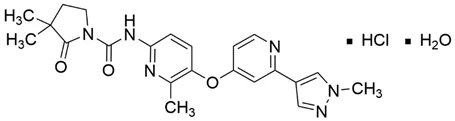
Pimicotinib is a kinase inhibitor. The chemical name of pimicotinib hydrochloride is 3,3-dimethyl-N-(6-methyl-5-{[2-(1-methyl-1H-pyrazol-4-yl)pyridin-4-yl]oxy}pyridin-2-yl)-2-oxopyrrolidine-1-carboxamide hydrochloride hydrate. The molecular formula for pimicotinib hydrochloride is C22H24N6O3•HCl•H2O. The molecular weight is 474.94 g/mol for the pimicotinib hydrochloride and 420.47 g/mol for the free base.
The chemical structure is shown below.
Pimicotinib hydrochloride is a white to off-white powder. The solubility of pimicotinib hydrochloride in aqueous solutions and bio-relevant media decreases with increasing pH. The pKa was determined to be 5.0 (base). Pimicotinib hydrochloride is freely soluble in ethanol and practically insoluble or insoluble in water.
PIMJETMI (pimicotinib) capsules for oral administration contain 25 mg pimicotinib equivalent to 28.24 mg pimicotinib hydrochloride monohydrate. Each capsule contains the following inactive ingredients: colloidal silicon dioxide, croscarmellose sodium, lactose monohydrate, magnesium stearate, and microcrystalline cellulose. The capsule shell, imprinted with black ink, contains the following inactive ingredients: black iron oxide, butyl alcohol, dehydrated alcohol, gelatin, isopropyl alcohol, potassium hydroxide, propylene glycol, purified water, shellac, strong ammonia solution, and titanium dioxide.
12 CLINICAL PHARMACOLOGY
12.1 Mechanism of Action
Pimicotinib is a kinase inhibitor that inhibits colony stimulating factor 1 receptor (CSF-1R). In vitro, pimicotinib inhibited CSF-1R kinase activity and CSF-1R-dependent cell proliferation.
12.2 Pharmacodynamics
Exposure-Response Relationship
Higher pimicotinib exposure is associated with an increased risk of elevated amylase and elevated AST.
Pimicotinib exposure-response relationship and time course of pharmacodynamic response for the effectiveness have not been fully characterized.
Cardiac Electrophysiology
At the maximum recommended PIMJETMI dosage (50 mg once daily), a mean increase in the QTc interval >20 ms is unlikely.
12.3 Pharmacokinetics
Pimicotinib pharmacokinetics were observed at steady state in patients with advanced solid tumors at the approved recommended dosage and are presented as mean (coefficient of variation, %), unless otherwise specified. Pimicotinib maximum concentration (Cmax) is 566 (66%) ng/mL and total systemic exposure (AUC) is 5,692 (62%) hrs*ng/mL. Cmax and AUC increased in a dose proportional manner over the dose range from 25 to 75 mg (0.5 to 1.5 times the recommended dose). Steady state is reached within 15 days and the mean accumulation ratio based on AUC is 3.4.
Absorption
Pimicotinib median (min, max) time to maximum plasma concentrations (tmax) is 1 (0.4, 3.5) hour.
Effect of Food
Pimicotinib Cmax decreased to 40% with no change in AUC following administration of a high-fat, high-calorie meal (total 800-1,000 calories, of which 500-600 from fat).
Distribution
Pimicotinib apparent (oral) volume of distribution is 730 L (38%).
Pimicotinib plasma protein binding is 95% and is not concentration dependent, in vitro.
Pimicotinib blood-to-plasma ratio is about 0.8 to 1.3 in humans.
Elimination
Pimicotinib elimination half-life is 44 hours (34%) with an apparent (oral) clearance of 12 L/h (53%).
Metabolism
The metabolic pathways of pimicotinib include primarily hydrolysis and oxidation. Oxidative metabolism is mediated mainly via CYP3A and accounts for approximately 20% of total drug elimination.
Excretion
Following a single dose of radiolabeled pimicotinib 50 mg to healthy subjects, 58% of the dose was recovered in urine and 38% in feces with no notable unchanged pimicotinib in urine or feces.
Specific Populations
No clinically significant differences in the pharmacokinetics of pimicotinib were observed based on age (18 to 82 years), body weight (41 to 120 kg), sex, race (73% Asian, 5% Black or African American or 21% White), or CLcr 30 to 89 mL/min (estimated by Cockcroft-Gault). The effect of CLcr < 30 mL/min and dialysis on the pharmacokinetics of pimicotinib have not been studied.
Patients with Hepatic Impairment
No clinically significant changes in the pharmacokinetics of pimicotinib were observed in patients with mild hepatic impairment (Child Pugh class A). Pimicotinib AUC increased 1.5-fold in subjects with moderate hepatic impairment (Child Pugh class B) with no change in Cmax. The effect of severe hepatic impairment (Child Pugh class C) has not been studied.
Drug Interaction Studies
Clinical Studies and Model-Informed Approaches
Strong and Moderate CYP3A Inhibitors: Pimicotinib AUC increased 1.6-fold with no change in Cmax following concomitant use of itraconazole (strong CYP3A4 inhibitor) 200 mg once daily for 4 days.
Pimicotinib AUC is predicted to increase 1.4-fold to 1.5-fold with no change in Cmax following concomitant use of fluconazole or erythromycin (moderate CYP3A4 inhibitors).
Strong and Moderate CYP3A Inducers : Pimicotinib AUC decreased to 31% and Cmax to 72% following concomitant use of rifampicin (strong CYP3A inducer) 600 mg QD for 7 days.
Pimicotinib AUC is predicted to decrease to 48% and Cmax to 78% following concomitant use of efavirenz (moderate CYP3A inducer).
Acid-Reducing Agents: Pimicotinib displayed pH-dependent aqueous solubility [see Description (11)]. Pimicotinib Cmax decreased to 58% with no change in AUC following concomitant use of omeprazole 40 mg QD for 5 days.
CYP3A Substrates: Midazolam (CYP3A substrate) AUC and Cmax are predicted to increase 1.4-fold following concomitant use of multiple doses of PIMJETMI.
P-gp Substrates: Fexofenadine (P-gp substrate) AUC increased 1.6-fold and Cmax 1.8-fold following concomitant use of multiple doses of PIMJETMI.
MATE1 Substrates: Metformin (MATE1 substrate) AUC increased 1.4-fold and Cmax 1.3-fold following concomitant use of multiple doses of PIMJETMI.
BCRP Substrates: Rosuvastatin (BCRP substrate) AUC increased 1.4-fold and Cmax 1.5-fold following concomitant use of multiple doses of PIMJETMI.
In Vitro Studies
CYP enzymes: Pimicotinib does not inhibit CYP1A2, CYP2B6, CYP2C9, CYP2C19, CYP2C8 or CYP2D6. Pimicotinib does not induce CYP1A2 or CYP2B6.
13 NONCLINICAL TOXICOLOGY
13.1 Carcinogenesis, Mutagenesis, Impairment of Fertility
Carcinogenesis
Pimicotinib was not carcinogenic in a 6-month rasH2-Tg mouse study at oral doses up to 40 mg/kg/day (approximately 50 times the exposure at the recommended dose based on AUC).
Mutagenesis
Pimicotinib and its major human circulating metabolites, M281 and M113, were not mutagenic in the bacterial reverse mutation test (Ames) or clastogenic in an in vitro chromosomal aberration assay. Pimicotinib was not clastogenic or aneugenic in an in vivo bone marrow micronucleus assay in mice at doses up to 200 mg/kg/day. M113 was not clastogenic or aneugenic in an in vivo bone marrow micronucleus assay in rats at doses up to 1000 mg/kg/day in males or 750 mg/kg/day in females.
Impairment of Fertility
In a fertility and early embryonic development study, no effects on fertility or reproductive capacities were observed in male or female rats at oral pimicotinib doses up to 20 mg/kg/day (37 times the exposure at the recommended dose based on AUC). In a 26-week rat repeat-dose toxicology study, sperm were decreased at ≥3 mg/kg/day (7 times the exposure at the recommended dose based on AUC), but the finding was reversible.
13.2 Animal Toxicology and/or Pharmacology
In a rat repeat-dose toxicology study, pimicotinib resulted in glomerulonephritis and degeneration of blood vessels (vascular inflammation and necrosis of arteries) at ≥1 mg/kg/day (approximately 2 times the exposure at the recommended dose based on AUC).
14 CLINICAL STUDIES
The efficacy of PIMJETMI was evaluated in MANEUVER (NCT05804045), a double-blind, randomized (2:1), placebo-controlled, international, multicenter trial in patients with TGCT for whom surgical resection may cause dysfunction or serious complications. Eligible patients were symptomatic and had measurable disease per Response Evaluation Criteria in Solid Tumors (RECIST v1.1) with at least one lesion having a minimum size of 2 cm.
Patients were randomized to PIMJETMI 50 mg or placebo once daily. Randomization was stratified by geographic region (China versus non-China). At Week 25, patients who completed the double-blind, randomized part of the trial were eligible to participate in an open-label extension study in which all patients received PIMJETMI.
The major efficacy outcome measure was overall response rate (ORR), as assessed by blinded independent central review (BICR) per RECIST v1.1 at Week 25. Additional efficacy outcomes measured at Week 25 were ORR as assessed by BICR using tumor volume score (TVS), mean change from baseline in the range of motion (ROM) of the affected joint measured by goniometry assessments, Brief Pain Inventory (BPI) Worst Pain numeric rating scale (NRS) score, and Patient-reported Outcomes Measurement Information System Physical Functioning (PROMIS-PF) Short Form.
A total of 94 patients were randomized to PIMJETMI (N=63) or placebo (N=31) during the double-blind period of the study. The median age was 40 years (range: 18-69 years); 68% of patients were female; 51% were Asian, 39% were White, 5% were Black or African American, and 4.3% were Other; 87% were not Hispanic or Latino, 3.2% were Hispanic, and 10% were not reported or unknown; 85% of patients had diffuse TGCT; 60% had prior surgery, and 6% had previously been treated with systemic therapy. Disease locations were knee (50%), ankle (15%), hip (14%), foot (9%), wrist (7%), and other (5%).
A statistically significant improvement in ORR was demonstrated in patients randomized to PIMJETMI compared with placebo. Efficacy results in MANEUVER are summarized in Table 5.
Table 5: Efficacy Results Assessed at Week 25 for MANEUVER
| Efficacy Parameter | PIMJETMI N=63 | Placebo N=31 |
|---|---|---|
+: Indicated that the patient's response was ongoing at last assessment as of the data cutoff date NR - Not reached; NA - Not applicable; BPI - Brief Pain Inventory; CI - confidence interval; LS - least squares; MMRM - mixed model for repeated measures; N - number of patients in treatment group in analysis set and denominators for all percentages; n - number of patients in analysis with data available; NRS - numerical rating scale; PROMIS-PF - Patient-reported Outcomes Measurement Information System- Physical Function; ROM - range of motion; SD - Standard deviation. DOR results are based on an approximately additional 12-months of follow-up from the time of ORR analysis. DCO: March 1, 2026. | ||
| Overall response rate Assessed by blinded independent central review. , ORR analysis was based on data cut-off date (DCO) March 12, 2025. (ORR) per RECIST v1.1 | ||
ORR, n (%) (95% CI) | 35 (56) (42, 68) | 1 (3.2) (0.1, 17) |
| Complete response | 1 (1.6) | 0 |
| Partial response | 34 (54) | 1 (3.2) |
| p-value | <0.0001 | |
| Duration of response (DoR) | ||
Median (months)Estimate using Kaplan-Meier method. Range (months) | NR (2.5, 26.2+) | NA |
| Patients with DoR ≥ 6 monthsBased on observed duration of response. | 32/35 (91%) | - |
| Patients with DoR ≥ 12 months | 27/35 (77%) | - |
| Range of Motion (ROM) ROM, BPI Worst Pain NRS and PROMIS PF T-Score endpoints analysis were based on DCO September 23, 2024. (%) | ||
| Patients with data at baseline and Week 25, n | 55 | 28 |
| at baseline, mean (SD) | 70.6 (20.7) | 66.1 (21.8) |
| at Week 25, mean (SD) | 84.9 (21.4) | 67.6 (23.6) |
Change from baseline, LS mean (95% CI)Estimated using a MMRM approach. | 15.6 (10.4, 20.9) | -0.1 (-7.0, 6.9) |
| Difference from placebo (95% CI) | 15.7 (7.3, 24.1) | |
| p-value | 0.0003 | |
| BPI Worst Pain NRS , Measured by BPI Worst Pain Numeric Rating Scale (NRS), based on a scale of 0 to 10. Low numbers on scale indicate less pain. | ||
| Patients with data at baseline and Week 25, n | 56 | 29 |
| at baseline, mean (SD) | 4.8 (2.1) | 4.8 (2.6) |
| at Week 25, mean (SD) | 2.5 (1.9) | 4.4 (2.5) |
Change from baseline, LS mean (95% CI) | -2.3 (-2.7, -1.9) | -0.2 (-0.8, 0.3) |
| Difference from placebo (95% CI) | -2.1 (-2.8, -1.4) | |
| p-value | <0.0001 | |
| PROMIS Physical Function T-Score , Measured by PROMIS-PF T-score (15-Item score; ranges from 0-100). Higher scores of PROMIS-PF indicate better physical functioning. | ||
| Patients with data at baseline and Week 25, n | 56 | 29 |
| at baseline, mean (SD) | 41.2 (7.1) | 39.8 (6.0) |
| at Week 25, mean (SD) | 46.6 (7.8) | 42.6 (7.8) |
Change from baseline, LS mean (95% CI) | 5.6 (4.2, 7.1) | 2.2 (0.2, 4.2) |
| Difference from placebo (95% CI) | 3.4 (0.9, 5.9) | |
| p-value | 0.0074 | |
ORR per RECIST v1.1 by BICR for patients receiving PIMJETMI in China (N=31) was 65% (95% CI: 45, 81) and 47% (95% CI: 29, 65) outside of China (N=32). ORR as assessed by the Investigator was 35% (95% CI: 23%, 48%) in the PIMJETMI arm and 0% in the placebo arm. ORR by TVS was 65% (95% CI: 52%, 77%; p < 0.0001) in patients receiving PIMJETMI and 3.2% (95% CI: 0.1%,17%) in patients receiving placebo (DCO: March 12, 2025).
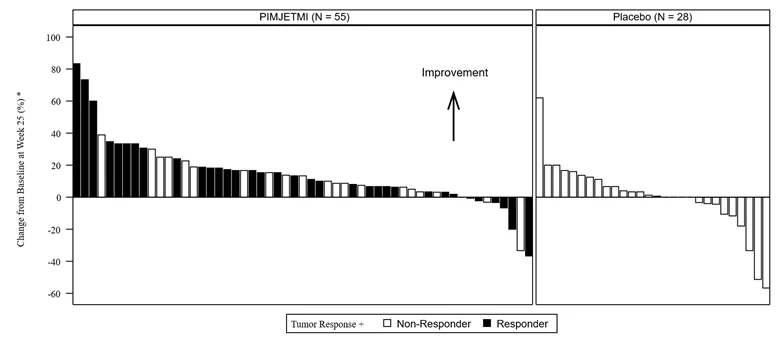
Figure 1 shows the change from baseline in range of motion for each patient at Week 25.
| *Percent normal reference range for the affected joint. |
| + Response by RECIST |
| Figure 1: Change from Baseline in Range of Motion at Week 25 for MANEUVER |
 |
16 HOW SUPPLIED/STORAGE AND HANDLING
PIMJETMI (pimicotinib) capsules are white opaque, size 3, imprinted with "PIMI 25" in black ink and contain 25 mg pimicotinib. Available in a carton (NDC 44087-6100-6) containing 2 bottles fitted with a child-resistant closure each containing 30 capsules and a desiccant (NDC 44087-6100-3).
Store PIMJETMI at 20°C to 25°C (68°F to 77°F); excursions permitted from 15°C to 30°C (59°F to 86°F) [see USP Controlled Room Temperature].
Store in the original bottle with desiccant to protect from moisture.
17 PATIENT COUNSELING INFORMATION
Advise the patient to read the FDA-approved patient labeling (Medication Guide).
Hepatotoxicity
Advise patients that PIMJETMI can cause asymptomatic AST or ALT elevations and that their healthcare provider needs to monitor liver transaminase levels before and during initial few months of treatment [see Warnings and Precautions (5.1)].
Embryo-Fetal Toxicity
Advise pregnant women and patients of reproductive potential of the potential risk to a fetus. Advise females of reproductive potential to inform their healthcare provider of a known or suspected pregnancy [see Warnings and Precautions (5.2), Use in Specific Populations (8.1)].
Advise females of reproductive potential to use effective contraception during treatment with PIMJETMI and for 2 weeks after the last dose [see Use in Specific Populations (8.3)].
Advise male patients with female partners of reproductive potential to use effective contraception during treatment with PIMJETMI and for 2 weeks after the last dose [see Use in Specific Populations (8.3)].
Lactation
Advise females not to breastfeed during treatment with PIMJETMI and for 2 weeks after the last dose [see Use in Specific Populations (8.2)].
Infertility
Advise male patients that PIMJETMI may impair fertility [see Use in Specific Populations (8.3), Nonclinical Toxicology (13.1)].
Drug Interactions
Advise patients to inform their healthcare provider of all concomitant medications, including prescription medicines, over-the-counter drugs and herbal products [see Drug Interactions (7)].
Manufactured for: EMD Serono, Inc., Boston, MA 02210, U.S.A.
PIMJETMI is a trademark of Merck KGaA, Darmstadt, Germany