


Patient information: uses, side effects, how to take - Oxycodone
Oxycodone Hydrochloride Oral Solution is:
- A strong prescription pain medicine that contains an opioid (narcotic) that is used to manage pain severe enough to require an opioid pain medicine, when other pain treatments such as non-opioid pain medicines do not treat your pain well enough or you cannot tolerate them.
- An opioid pain medicine that can put you at risk for overdose and death. Even if you take your dose correctly as prescribed you are at risk for opioid addiction, abuse, and misuse that can lead to death.
Important information about Oxycodone Hydrochloride Oral Solution:
- Get emergency help or call 911 right away if you take too much Oxycodone Hydrochloride Oral Solution (overdose). When you first start taking Oxycodone Hydrochloride Oral Solution, when your dose is changed, or if you take too much (overdose), serious or life-threatening breathing problems that can lead to death may occur. Ask your healthcare provider about medicines like naloxone or nalmefene that can be used in an emergency to reverse an opioid overdose.
- Taking Oxycodone Hydrochloride Oral Solution with other opioid medicines, benzodiazepines, gabapentinoids (gabapentin or pregabalin), alcohol, or other central nervous system depressants (including street drugs) can cause severe drowsiness, decreased awareness, breathing problems, coma, and death.
- Never give anyone else your Oxycodone Hydrochloride Oral Solution. They could die from taking it. Selling or giving away Oxycodone Hydrochloride Oral Solution is against the law.
- Store Oxycodone Hydrochloride Oral Solution securely, out of sight and reach of children, and in a location not accessible by others, including visitors to the home.
Do not take Oxycodone Hydrochloride Oral Solution if you have:
- severe asthma, trouble breathing, or other lung problems.
- bowel blockage or have narrowing of the stomach or intestines.
- an allergy to oxycodone or any of the ingredients in Oxycodone Hydrochloride Oral Solution.
Before taking Oxycodone Hydrochloride Oral Solution, tell your healthcare provider if you have a history of:
- head injury, seizures
- problems urinating
- abuse of street or prescription drugs, alcohol addiction, opioid overdose, or mental health problems.
- liver, kidney, thyroid problems
- pancreas or gallbladder problems
Tell your healthcare provider if you are:
- noticing your pain getting worse. If your pain gets worse after you take Oxycodone Hydrochloride Oral Solution, do not take more of Oxycodone Hydrochloride Oral Solution without first talking to your healthcare provider. Talk to your healthcare provider if the pain that you have increases, if you feel more sensitive to pain, or if you have new pain after taking Oxycodone Hydrochloride Oral Solution.
- pregnant or planning to become pregnant. Use of Oxycodone Hydrochloride Oral Solution for an extended period of time during pregnancy can cause withdrawal symptoms in your newborn baby that could be life-threatening if not recognized and treated.
- breastfeeding. Oxycodone Hydrochloride Oral Solution passes into breast milk and may harm your baby. Carefully observe infants for increased sleepiness (more than usual), breathing difficulties, or limpness. Seek immediate medical care if you notice these signs.
- living in a household where there are small children or someone who has abused street or prescription drugs.
- taking prescription or over-the-counter medicines, vitamins, or herbal supplements. Taking Oxycodone Hydrochloride Oral Solution with certain other medicines can cause serious side effects that could lead to death.
When taking Oxycodone Hydrochloride Oral Solution:
- Do not change your dose. Take Oxycodone Hydrochloride Oral Solution exactly as prescribed by your healthcare provider. Use the lowest dose possible for the shortest time needed.
- For acute (short-term) pain, you may only need to take Oxycodone Hydrochloride Oral Solution for a few days. You may have some Oxycodone Hydrochloride Oral Solution left over that you did not use. See disposal information at the bottom of this section for directions on how to safely throw away (dispose of) your unused Oxycodone Hydrochloride Oral Solution.
- See the detailed Instructions for Use for information about how to take Oxycodone Hydrochloride Oral Solution 100 mg per 5 mL (20 mg per mL).
- Always use the enclosed graduated measuring cup that comes with Oxycodone Hydrochloride Oral Solution 5 mg per 5 mL and the enclosed graduated oral syringe that comes with Oxycodone Hydrochloride Oral Solution 100 mg per 5 mL (20 mg per mL) to correctly measure your dose. Never use a household teaspoon or tablespoon to measure Oxycodone Hydrochloride Oral Solution.
- Take your prescribed dose every 4 to 6 hours as needed for pain. Do not take more than your prescribed dose. If you miss a dose, take your next dose at your usual time.
- Call your healthcare provider if the dose you are taking does not control your pain.
- If you have been taking Oxycodone Hydrochloride Oral Solution regularly, do not stop taking Oxycodone Hydrochloride Oral Solution without talking to your healthcare provider.
- Dispose of expired, unwanted, or unused Oxycodone Hydrochloride Oral Solution by promptly flushing down the toilet, if a drug take-back option is not readily available. Visit www.fda.gov/drugdisposal for additional information on disposal of unused medicines.
While taking Oxycodone Hydrochloride Oral Solution DO NOT:
- Drive or operate heavy machinery, until you know how Oxycodone Hydrochloride Oral Solution affects you. Oxycodone Hydrochloride Oral Solution can make you sleepy, dizzy, or lightheaded.
- Drink alcohol or use prescription or over-the-counter medicines that contain alcohol. Using products containing alcohol during treatment with Oxycodone Hydrochloride Oral Solution may cause you to overdose and die.
The possible side effects of Oxycodone Hydrochloride Oral Solution:
- constipation, nausea, sleepiness, vomiting, tiredness, headache, dizziness, abdominal pain. Call your healthcare provider if you have any of these symptoms and they are severe.
Get emergency medical help or call 911 right away if you have:
- trouble breathing, shortness of breath, fast heartbeat, chest pain, swelling of your face, tongue, or throat, extreme drowsiness, light-headedness when changing positions, feeling faint, agitation, high body temperature, trouble walking, stiff muscles, or mental changes such as confusion.
These are not all the possible side effects of Oxycodone Hydrochloride Oral Solution.
Call your healthcare provider for medical advice about side effects. You may report side effects to FDA at 1-800-FDA-1088. For more information go to dailymed.nlm.nih.gov
Manufactured by and Distributed by:
Genus Lifesciences Inc., 514 North 12th Street, Allentown, PA 18102, www.genuslifesciences.com or call 1-866-511-6754.
This Medication Guide has been approved by the U.S. Food and Drug Administration.
Revised: 12/2025
| Patient Instructions for Use |
Oxycodone Hydrochloride Oral Solution 100 mg per 5 mL (20 mg per mL) Oral Syringe Important information about measuring Oxycodone Hydrochloride Oral Solution
|
Step 1. Insert the tip of the oral syringe into the medicine bottle. Step 2. Pull back the plunger to the line that matches the dose prescribed by your healthcare provider. Step 3. Remove the oral syringe from the medicine bottle. Step 4. Take your medicine by slowly pushing the plunger until the oral syringe is empty. |
Figure 1 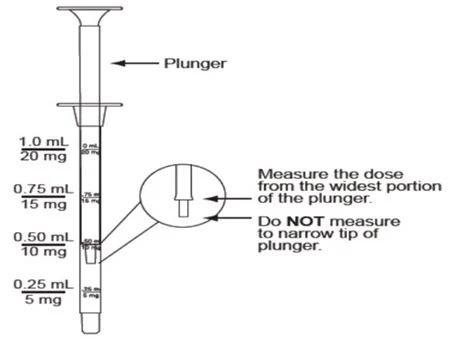 |