


Patient information: uses, side effects, how to take - Ohtuvayre
What is OHTUVAYRE?
- OHTUVAYRE is a prescription medicine used to treat chronic obstructive pulmonary disease (COPD) in adults. COPD is a chronic (long-term) lung disease that includes chronic bronchitis, emphysema, or both.
- OHTUVAYRE is an inhibitor of phosphodiesterases 3 and 4 (PDE3 and PDE4).
- Decreasing PDE3 activity helps the muscles around the airways in your lungs stay relaxed to prevent symptoms such as wheezing, coughing, chest tightness, and shortness of breath, which can happen when muscles around the airway tighten, making it hard to breathe. Decreasing PDE4 activity helps to decrease inflammation in the lungs. Inflammation in the lungs can lead to breathing problems.
- OHTUVAYRE is used to improve symptoms of COPD for better breathing and to reduce the number of flare-ups (the worsening of your COPD symptoms for several days).
- OHTUVAYRE is used long-term as 1 ampule of OHTUVAYRE, 2 times each day (1 in the morning and 1 in the evening) inhaled through your nebulizer that is fitted with a mouthpiece.
- OHTUVAYRE is not used to relieve sudden breathing problems and will not replace an inhaled rescue medicine.
- OHTUVAYRE should not be used in children. It is not known if OHTUVAYRE is safe and effective in children.
Do not use OHTUVAYRE if you have had an allergic reaction to ensifentrine or any of the ingredients in OHTUVAYRE. See "What are the ingredients in OHTUVAYRE?" at the end of this Patient Information leaflet for a complete list of ingredients in OHTUVAYRE.
Before taking OHTUVAYRE, tell your healthcare provider about all your medical conditions, including if you:
- have or have had a history of mental health problems including depression and suicidal behavior.
- have liver problems.
are pregnant or plan to become pregnant. It is not known if OHTUVAYRE may harm your unborn baby.
- are breastfeeding. It is not known if the medicine in OHTUVAYRE passes into your breast milk and if it can harm your baby.
Tell your healthcare provider about all the medicines you take, including prescription and over-the-counter medicines, vitamins, and herbal supplements.
How should I use OHTUVAYRE?
Read the step-by-step instructions for using OHTUVAYRE at the end of this Patient Information leaflet.
- OHTUVAYRE is only for use with a standard jet nebulizer.
- Do not use OHTUVAYRE unless your healthcare provider has taught you how to use it with your nebulizer and you understand how to use it correctly.
- Use OHTUVAYRE exactly as your healthcare provider tells you to use it. Do not use OHTUVAYRE more often than prescribed.
- OHTUVAYRE is taken as a breathing treatment by oral (mouth) inhalation and should be used with a standard jet nebulizer with a mouthpiece connected to an air compressor.
- Do not mix other medicines with OHTUVAYRE in your nebulizer.
- Shake the OHTUVAYRE ampule well immediately before using it. When shaken, OHTUVAYRE should appear cloudy or milky and yellow to pale yellow in color.
- Use 1 ampule of OHTUVAYRE 2 times a day, 1 time in the morning and 1 time in the evening. Do not use more than 1 ampule of OHTUVAYRE in a single treatment. Do not use more than 2 ampules of OHTUVAYRE a day.
- If you use too much OHTUVAYRE, call your healthcare provider or go to the nearest hospital emergency room right away if you have any unusual symptoms, such as increased heart rate or headaches.
- OHTUVAYRE does not relieve sudden symptoms of COPD and you should not use extra doses of OHTUVAYRE to relieve these sudden symptoms. Always have an inhaled rescue medicine with you to treat sudden symptoms. If you do not have an inhaled rescue medicine, call your healthcare provider to have one prescribed for you.
Call your healthcare provider or get emergency medical care right away if:
- your breathing problems get worse.
- you need to use your inhaled rescue medicine more often than usual.
- your inhaled rescue medicine does not relieve your symptoms.
- Do not stop using OHTUVAYRE, even if you are feeling better, unless your healthcare provider tells you to, because your symptoms might get worse.
- Throw away the OHTUVAYRE ampule immediately after use. Due to their small size, the ampules pose a danger of choking to young children.
What are the possible side effects of OHTUVAYRE?
OHTUVAYRE can cause serious side effects, including:
- Sudden breathing problems immediately after inhaling your medicine. If you have sudden breathing problems immediately after inhaling your medicine, stop using OHTUVAYRE and call your healthcare provider right away or go to the nearest hospital emergency room right away.
- Mental health problems including suicidal thoughts and behavior. You may experience mood or behavior changes when taking OHTUVAYRE. Call your healthcare provider right away if you have any of these symptoms, especially if they are new, worse, or worry you:
- thoughts of suicide or dying
- attempt to commit suicide
- trouble sleeping (insomnia)
- new or worse anxiety
- new or worse depression
- acting on dangerous impulses
- other unusual changes in your behavior or mood
Most common side effects of OHTUVAYRE include:
- back pain
- high blood pressure
- bladder infection
- diarrhea
These are not all the possible side effects of OHTUVAYRE.
Call your doctor for medical advice about side effects. You may report side effects to FDA at 1-800-FDA-1088.
How should I store OHTUVAYRE?
- Store OHTUVAYRE at room temperature between 68°F to 77°F (20°C to 25°C). Keep OHTUVAYRE away from direct sunlight and excessive heat. Do not freeze. Do not store upside down.
- Store OHTUVAYRE in the unopened protective foil pouch and only open the foil pouch immediately before using OHTUVAYRE. For pouches of 5 ampules, remove one ampule and place the remaining ampules back into the pouch standing upright until next use.
- Throw away the used ampule and any leftover medicine, including foam, after use.
- Do not use OHTUVAYRE after the expiration date provided on the foil pouch and ampule.
- Keep OHTUVAYRE and all medicines out of the reach of children.
General information about the safe and effective use of OHTUVAYRE.
Medicines are sometimes prescribed for purposes other than those listed in a Patient Information leaflet. Do not use OHTUVAYRE for a condition for which it was not prescribed. Do not give OHTUVAYRE to other people, even if they have the same symptoms that you have. It may harm them.
You can ask your healthcare provider or pharmacist for information about OHTUVAYRE that is written for health professionals.
What are the ingredients in OHTUVAYRE?
Active ingredient: ensifentrine
Inactive ingredients: dibasic sodium phosphate, monobasic sodium phosphate, polysorbate 20, sodium chloride, sorbitan monolaurate and water for injection.
Manufactured for:
Merck Sharp & Dohme LLC
Rahway, NJ 07065, USA
For patent information: www.msd.com/research/patent
Copyright © 2026 Merck & Co., Inc., Rahway, NJ, USA, and its affiliates.
All rights reserved.
usppi-mk5884-si-2610r003
INSTRUCTIONS FOR USE OHTUVAYRE™ (OH-too-vare) (ensifentrine) inhalation suspension, for oral inhalation | |
| This Instructions for Use contains information on how to use OHTUVAYRE. | |
 | To use OHTUVAYRE, you will also need a standard jet nebulizer machine and air compressor. |
OHTUVAYRE single-dose ampule | |
Important Information You Need to Know Before Using OHTUVAYRE
- For oral inhalation only
- OHTUVAYRE is used only in a standard jet nebulizer machine with a mouthpiece connected to an air compressor.
- Do not mix other medicines with OHTUVAYRE in your nebulizer.
- OHTUVAYRE comes in an ampule that is sealed in a foil pouch. Do not open the sealed pouch until you are ready to use a dose of OHTUVAYRE. Use 1 ampule of OHTUVAYRE 2 times a day, 1 time in the morning and 1 time in the evening.
- Use your OHTUVAYRE right away after opening the pouch and shaking the ampule. For pouches of 5 ampules, place the remaining ampules back into the pouch standing upright until next use.
- Before shaking, the ampule may look clear. After shaking, it should look cloudy or milky and yellow to pale yellow in color.
- After squeezing out the liquid into the nebulizer cup (reservoir), throw away the OHTUVAYRE ampule immediately after use. Due to their small size, the ampules pose a danger of choking to young children.
- Store OHTUVAYRE ampules in the protective foil pouch standing upright. As you remove the foil pouches from the carton, the remaining pouches may lean or fall over. Keep them upright and do not store them upside down.
Preparing to Use OHTUVAYRE
- Make sure you know how to use your nebulizer machine before you use it to breathe in OHTUVAYRE.
- Check that the hoses and cup are clean before each use. Follow the cleaning instructions from the nebulizer manufacturer.
- Read the following steps before using OHTUVAYRE. If you have any questions, ask your healthcare provider or pharmacist.
Using OHTUVAYRE
Step 1. Open Pouch: Open the foil pouch by tearing along the seam of the pouch. Remove an ampule of OHTUVAYRE from the foil pouch. For pouches of 5 ampules, remove one ampule and place the remaining ampules back into the pouch until next use. Once the foil pouch is opened, throw away ampules if not used within 14 days.
Before shaking, the appearance of the Ohtuvayre ampule may vary. The medicine may appear as:
- a clear liquid with yellow powder
- cloudy or milky
- yellow to pale yellow
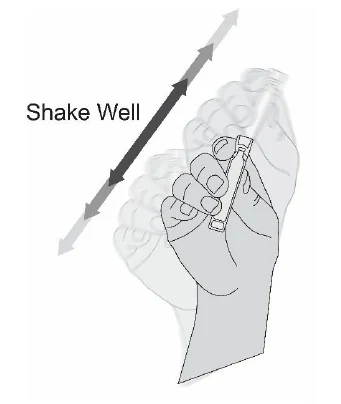
Step 2. Shake Ampule: Shake ampule well until the medicine is thoroughly mixed and no longer clear (see Figure A ). You may need to shake it a few times and flicking the ampule can help mix it. This step may need to be repeated to fully mix the medicine. When fully mixed, the medicine should look cloudy or milky and range from yellow to pale yellow in color.
It is normal to see foam or bubbles on top of the liquid or in the ampule after shaking.
| Figure A |
|---|
 |
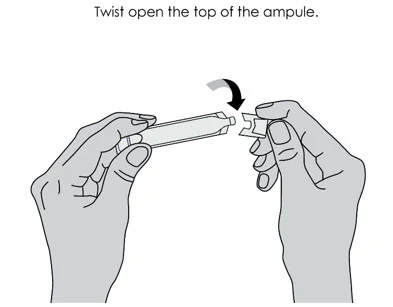
Step 3. Open Ampule: Carefully twist open the top of the ampule and use the medicine right away (see Figure B ).
| Figure B |
|---|
 |
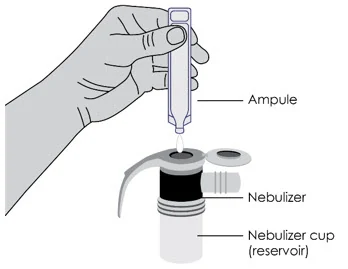
Step 4. Add Medicine: Squeeze all the medicine from the ampule into the nebulizer cup (reservoir) (see Figure C ). Some foam might stay in the ampule after you squeeze the medicine into the nebulizer cup (reservoir). Throw away the used ampule and any leftover medicine, including foam.
| Figure C |
|---|
 |
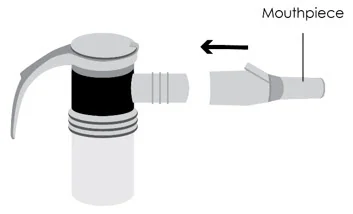
Step 5. Attach Mouthpiece: If a separate mouthpiece attachment is supplied with your nebulizer, connect the mouthpiece to the nebulizer (see Figure D ).
| Figure D |
|---|
 |
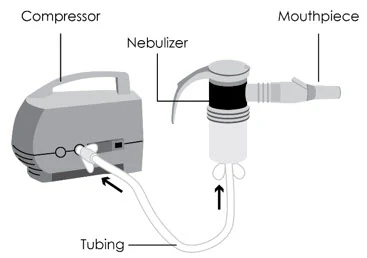
Step 6. Connect the Nebulizer to the Compressor: Firmly insert one end of the tubing to the compressor. Insert the other end of the tubing to the bottom of the nebulizer cup (reservoir) (see Figure E ).
| Figure E |
|---|
 |
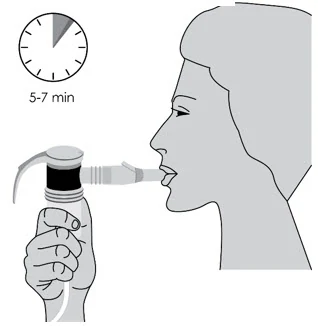
Step 7. Prepare for Treatment: Sit in a comfortable, upright position. Place the mouthpiece in your mouth and close your lips around the mouthpiece (see Figure F ).
| Figure F |
|---|
 |
Step 8. Begin Treatment: Turn on the compressor to begin treatment.
Step 9. Breathe in Medicine: Breathe calmly, deeply, and evenly as possible until no more mist is seen in the nebulizer cup (reservoir). Your treatment will typically take about 5 to 7 minutes. When you no longer see any mist in the nebulizer, your treatment is completed. Turn the compressor off.
Storing OHTUVAYRE and Nebulizer
- Clean and store your nebulizer. See the manufacturer's instructions that come with your nebulizer for how to clean and store your nebulizer.
- Store OHTUVAYRE ampules in the protective foil pouch in the carton at room temperature between 68°F to 77°F (20°C to 25°C) away from direct sunlight and excessive heat, in an upright position. Do not freeze. Do not store upside down.
Additional Information
Please call Merck Sharp & Dohme LLC at 1-800-672-6372 for more product information or to report problems with the product. Please call Merck Sharp & Dohme LLC at 1-800-672-6372 or FDA at 1-800-FDA-1088 or www.fda.gov/medwatch to report adverse reactions.
Manufactured for: Merck Sharp & Dohme LLC
Rahway, NJ 07065, USA
For patent information: www.msd.com/research/patent
Copyright © 2026 Merck & Co., Inc., Rahway, NJ, USA, and its affiliates.
All rights reserved.
usifu-mk5884-si-2610r003
This Instructions for Use has been approved by the U.S. Food and Drug Administration. Revised: 10/2026