


Patient information: uses, side effects, how to take - Nitroglycerin Topical
How to use
NITROGLYCERIN
TRANSDERMAL SYSTEM
for the prevention of angina
The Nitroglycerin Transdermal Patch is easy to use – it has a clear peelable liner, and a special adhesive that keeps the patch firmly in place.
Where to place the
Nitroglycerin Transdermal Patch
Select any area of skin on the body, EXCEPT the extremities below the knee or elbow. The chest is the preferred site. The area should be clean, dry, and hairless. If hair is likely to interfere with patch adhesion or removal, it can be clipped but not shaved. Take care to avoid areas with cuts or irritations. Do NOT apply the patch immediately after showering or bathing. It is best to wait until you are certain the skin is completely dry.
How to apply the
Nitroglycerin Transdermal Patch
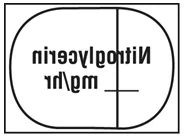
- Each Nitroglycerin Transdermal Patch is individually sealed in a protective package. Open the pouch at the tear mark. Carefully remove the patch. The patch is printed with the wording ‘Nitroglycerin’ and the amount of nitroglycerin delivered each hour. The patch is attached to a clear peelable liner. The liner has a slit which divides it into two strips. Hold the patch with the wording facing away from you. The slit should now be facing toward you. Rotate the patch as necessary to place the slit in an up and down position.
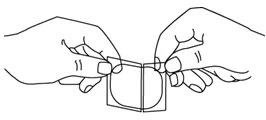
- Bend both sides of the clear peelable liner away from you at the slit.
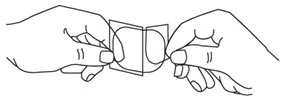
- Slowly peel off only one of the strips of the clear liner. Do not touch the exposed sticky side of the patch.
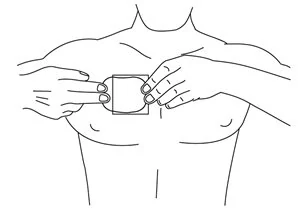
- Using the remaining strip as a “handle”, apply the exposed sticky side of the patch to the skin. Press the sticky side on the chosen skin site and smooth down.
- Fold back the unattached side of the patch. Grasp the remaining strip and remove it while applying the remainder of the patch to the skin. Press the patch on the skin and smooth down with the palm of your hand. Once the patch is in place, do not test the adhesion by pulling on it.
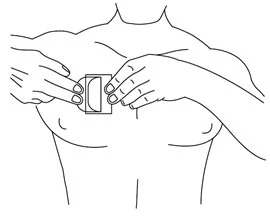
- When Nitroglycerin Transdermal Patch is applied to your body, the nitroglycerin contained in the patch begins to flow from the adhesive surface through your skin at a uniform rate.
- After applying the patch, wash hands to remove any drug.
- At the time recommended by your doctor, remove and discard the patch.
- Place a new patch on a different skin site (following steps 1 through 6) according to your doctor’s instructions.
Please note:
Contact with water, as in bathing, swimming, or showering will not affect the patch. In the unlikely event that a patch falls off, discard it and put a new one on a different skin site.
Precautions:
The most common side effect is headache, which often decreases as therapy is continued, but may require treatment with a mild analgesic. Although uncommon, faintness, flushing, and dizziness may occur, especially when suddenly rising from the recumbent (lying horizontal) position. If these symptoms occur, remove the patch and notify your physician.
Skin irritation may occur. If it persists, consult your physician.
Keep these patches and all drugs out of the reach of children.
Important:
Your doctor may decide to increase or decrease the size of the patch, or prescribe a combination of patches, to suit your particular needs. The dose may vary depending on your individual response to the patch.
This patch is to be used for preventing angina, not for treating an acute attack.
Store at 20° to 25°C (68° to 77°F).
Do not refrigerate.
Do not store outside of the protective package. Apply immediately upon removal from the protective package.
Call your doctor for medical advice about side effects. You may report side effects to FDA at 1-800-FDA-1088.
For more information, call Mylan Pharmaceuticals Inc. at 1-877-446-3679 (1-877-4-INFO-RX).
Mylan Pharmaceuticals Inc.
Morgantown, WV 26505 U.S.A.
REVISED NOVEMBER 2014
PL:NTG:R12