


Patient information: uses, side effects, how to take - Mircera
What is the most important information I should know about Mircera?
Mircera may cause serious side effects that can lead to death, including:
For people with cancer:
Mircera is not for use to treat anemia that is caused by cancer chemotherapy. If you have certain cancers, your tumor may grow faster, and you may die sooner if you take Mircera.
For people with anemia from chronic kidney disease (CKD) who take Mircera:
- Serious heart problems, such as heart attack or heart failure, and stroke. You may die sooner if you are treated with Mircera to increase red blood cells (RBCs) to near the same level found in healthy people.
Blood clots. Blood clots may happen at any time while taking Mircera. Your chance of getting a blood clot that is serious and life threatening is higher if you have cancer. If you are receiving Mircera and you are going to have surgery, talk to your healthcare provider about whether or not you need to take a blood thinner to lessen the chance of blood clots during or following surgery. Blood clots can form in blood vessels (veins), especially in your leg (deep venous thrombosis or DVT). Pieces of a blood clot may travel to the lungs and block the blood circulation in the lungs (pulmonary embolus).
Call your healthcare provider or get medical help right away if you have any of these symptoms:
- Chest pain
- Trouble breathing or shortness of breath
- Pain in your legs, with or without swelling
- A cool or pale arm or leg
- Sudden confusion, trouble speaking, or trouble understanding others’ speech
- Sudden numbness or weakness in your face, arm or leg, especially on one side of your body
- Sudden trouble seeing
- Sudden trouble walking, dizziness, loss of balance or coordination
- Loss of consciousness (fainting)
- Hemodialysis vascular access stops working
If you and your healthcare provider decide that you should take Mircera, you should be prescribed the smallest dose of Mircera that is necessary to reduce your chance of needing RBC transfusions.
See “What are the possible side effects of Mircera?” below for more information.
What is Mircera?
Mircera is a prescription medicine used to treat anemia in certain people with chronic kidney disease (CKD). People with anemia have a lower-than-normal number of RBCs. Mircera works like the human protein called erythropoietin to help your body make more RBCs. Mircera is used to reduce or avoid the need for RBC transfusions.
Mircera may be used to treat anemia if it is caused by CKD in:
- adults who may or may not be on dialysis
- children 3 months to 17 years of age who may or may not be on dialysis who are switching from another erythropoiesis-stimulating agent (ESA) after their hemoglobin level is stable
If your hemoglobin level stays too high or if your hemoglobin goes up too quickly, this may lead to serious health problems which may result in death. These serious health problems may happen if you take Mircera, even if you do not have an increase in your hemoglobin level.
Mircera is not used for the treatment of anemia:
- that is caused by cancer chemotherapy
- in place of emergency treatment for anemia (RBC transfusions).
Mircera has not been proven to improve quality of life, fatigue, or well-being.
It is not known if Mircera is safe and effective in children who:
- are under 3 months of age or
- have received another ESA medicine and do not have stable hemoglobin or
- have not been treated with another ESA medicine to correct anemia
Who should not take Mircera?
Do not take Mircera if you:
- Have high blood pressure that is not controlled (uncontrolled hypertension)
- Have been told by your healthcare provider that you have or have ever had a type of anemia called Pure Red Cell Aplasia (PRCA) that starts after treatment with Mircera or other erythropoietin protein medicines
- Have had serious allergic reactions to Mircera. See “What are the possible side effects of Mircera?” for more information.
Before taking Mircera, tell your healthcare provider about all of your medical conditions, including if you:
- Have heart disease.
- Have or develop cancer.
- Have high blood pressure.
- Have had a seizure (convulsion) or stroke.
- Receive dialysis treatment.
Are pregnant or plan to become pregnant. It is not known if Mircera may harm your unborn baby.
- Are breastfeeding or plan to breastfeed. It is not known if Mircera passes into your breast milk.
Tell your healthcare provider about all of the medicines you take, including prescription and over-the-counter medicines, vitamins, and herbal supplements.
How should I take Mircera?
If you or your caregiver has been trained to give Mircera shots (injections) at home:
- Be sure that you read, understand, and follow the “Instructions for Use” that come with Mircera.
- Take Mircera exactly as your healthcare provider tells you to. Do not change the dose of Mircera unless told to by your healthcare provider.
- Your healthcare provider may lower your dose, or temporarily stop Mircera and restart it at a lower dose, if your hemoglobin levels get too high during treatment.
- Your healthcare provider will show you how much Mircera to use, how to inject it, how often it should be injected, and how to safely throw away the used prefilled syringes and needles.
- If you take more than your prescribed dose of Mircera, call your healthcare provider right away for instructions on what to do.
- During treatment with Mircera, continue to follow your healthcare provider’s instructions for diet, dialysis, and medicines, including medicines for high blood pressure.
- Have your blood pressure checked as instructed by your healthcare provider.
- Your healthcare provider will do regular blood tests during treatment to check your hemoglobin levels.
What are the possible side effects of Mircera?
Mircera may cause serious side effects, including:
- See “What is the most important information I should know about Mircera?”
- High blood pressure. High blood pressure is a common side effect of Mircera in patients with chronic kidney disease. Your blood pressure may go up or be difficult to control with blood pressure medicine while taking Mircera. This can happen even if you have never had high blood pressure before. Your healthcare provider should check your blood pressure often. If your blood pressure does go up, your healthcare provider may prescribe new or more blood pressure medicine.
- Seizures. If you have any seizures while taking Mircera, get medical help right away and tell your healthcare provider.
- No response or loss of your hemoglobin response to Mircera. If your hemoglobin does not increase, or if the increase cannot be maintained, your healthcare provider will look for the cause of the problem. Your dose of Mircera or other medicines may need to be changed.
- Antibodies to Mircera. Your body may make antibodies to Mircera. These antibodies can block or lessen your body’s ability to make RBCs and cause you to have severe anemia. Call your healthcare provider if you have unusual tiredness, lack of energy, dizziness or fainting. You may need to stop taking Mircera.
- Serious allergic reaction. Serious allergic reactions can cause itching, shortness of breath, wheezing, dizziness and fainting because of a drop in blood pressure, swelling around your mouth or eyes, fast pulse, or sweating. If you have a serious allergic reaction, stop using Mircera and call your healthcare provider or get emergency medical help right away.
- Severe skin reactions. Severe skin reactions can happen during treatment. Signs and symptoms of severe skin reactions with Mircera may include skin rash with itching, hives, blisters, skin sores, peeling, or areas of skin coming off. If you develop any signs or symptoms of skin reactions, stop using Mircera and call your healthcare provider or get medical help right away.
Common side effects of Mircera include:
- diarrhea
- pain or swelling (inflammation) in your nose or throat (nasopharyngitis).
These are not all of the possible side effects of Mircera. Your healthcare provider can give you a more complete list. Tell your healthcare provider about any side effects that bother you or that do not go away.
Call your doctor for medical advice about side effects. You may report side effects to FDA at 1-800-FDA-1088.
How should I store Mircera?
- Store Mircera prefilled syringes in the refrigerator between 36°F to 46°F (2°C to 8°C).
- Do not freeze or shake Mircera.
- Keep Mircera in the original carton to protect it from light.
- Mircera prefilled syringes may be stored at room temperature up to 77°F (25°C) for no more than 30 days.
- Throw away (discard) Mircera after 30 days if it has been stored at room temperature.
Keep Mircera and all medicines out of the reach of children.
General information about the safe and effective use of Mircera.
Medicines are sometimes prescribed for purposes other than those listed in a Medication Guide. Do not use Mircera for a condition for which it was not prescribed. Do not give Mircera to other people, even if they have the same symptoms that you have. It may harm them. You can ask your pharmacist or healthcare provider for information about Mircera that is written for health professionals.
What are the ingredients in Mircera?
Active ingredients: methoxy polyethylene glycol-epoetin beta
Inactive ingredients: mannitol, methionine, poloxamer 188, sodium phosphate monobasic monohydrate, and sodium sulfate.
Manufactured by:
Vifor (International) Inc.
Rechenstrasse 37
9014 St. Gallen
Switzerland

U.S. License No. 2039
U.S. Toll-free: 1-800–576-8295
Info_MirceraUS@viforpharma.com
Copyright © 2018 Vifor (International) Inc. All rights reserved.
This Medication Guide has been approved by the U.S. Food and Drug Administration.
Revised: 06/2024
INSTRUCTIONS FOR USE MIRCERA® (mir-SER-ah) (methoxy polyethylene glycol-epoetin beta) injection, for intravenous or subcutaneous use single-dose prefilled syringe |
Read the Medication Guide that comes with Mircera for the most important information you need to know.
This Instructions for Use explains how to give yourself or another individual an injection of Mircera using the single-dose prefilled syringe. Be sure that you read, understand and follow these instructions before injecting a dose of Mircera and each time you get your prescription refilled, so that you are able to use the prefilled syringe correctly and safely.
Your healthcare provider should show you how to correctly prepare and inject Mircera using the single-dose prefilled syringe before you use it for the first time. Ask your healthcare provider or pharmacist if you have any questions about Mircera.
When you receive your Mircera prefilled syringes, make sure that:
- The name Mircera appears on the pack.
- The pack is not damaged. Do not use Mircera if the prefilled syringe, the pack or the plastic tray containing the prefilled syringe appears to be damaged.
- The expiration date on the pack has not passed. Do not use Mircera after the expiration date on the pack.
The strength (mcg/mL) on the Mircera pack is the same as the strength (mcg/mL) prescribed by your healthcare provider. Mircera prefilled syringes come in several different strengths measured in mcg/mL. Depending on your prescribed dose you may:
- receive more than one strength of Mircera prefilled syringes
- need to give more than one injection to receive a complete dose
Important Information You Need to Know Before Injecting Mircera:
- Only use Mircera prefilled syringes if you have been prescribed this medicine by your healthcare provider.
- Your healthcare provider may decide that you or a caregiver may give Mircera at home by an injection under your skin (subcutaneous) or by an intravenous injection. Your healthcare provider or nurse will train you how to prepare and inject Mircera properly. It is important that you do not try to give Mircera unless you or your caregiver has received training from your healthcare provider.
Children under 17 years of age should not inject themselves with Mircera. An adult caregiver should prepare and give Mircera injections to the child.
- Keep the Mircera prefilled syringe in the sealed pack until you are ready to use it.
- Do not use the syringe if the medicine is cloudy, hazy, or contains particles.
- Do not attempt to take the syringe apart.
- Do not hold or pull the prefilled syringe by the plunger.
- Do not remove the needle shield until you are ready to give an injection.
- Do not inject through clothing.
- Do not swallow the medicine in the syringe.
- Do not touch the activation guards before use (see Figure A). Touching them may cause the needle safety device to be released too early and make the prefilled syringe unusable.
- Do not try to inject a dose that is smaller than the dose (a partial dose) contained in the prefilled syringe.
Throw away (dispose of) the used Mircera prefilled syringe right away after use. Do not reuse a Mircera prefilled syringe or needle. See “Disposing of used Mircera prefilled syringes and needles” at the end of this Instructions for Use.
Storing Mircera
How should I store Mircera?
- Store Mircera in the refrigerator between 36°F to 46°F (2°C to 8°C).
- If a refrigerator is not available, Mircera prefilled syringes can be stored at room temperature between 68°F to 77°F (20°C to 25°C) for no more than 30 days.
- Throw away Mircera after 30 days if it has been stored at room temperature.
- Do not freeze Mircera. Do not use Mircera that has been frozen.
- Keep Mircera in the original package to protect it from light.
- Do not shake Mircera.
Keep Mircera and all medicines out of the reach of children.
Materials (supplies)
Materials included in the Mircera prefilled syringe pack (Figure A):
- A prefilled syringe containing Mircera
- A separate injection needle
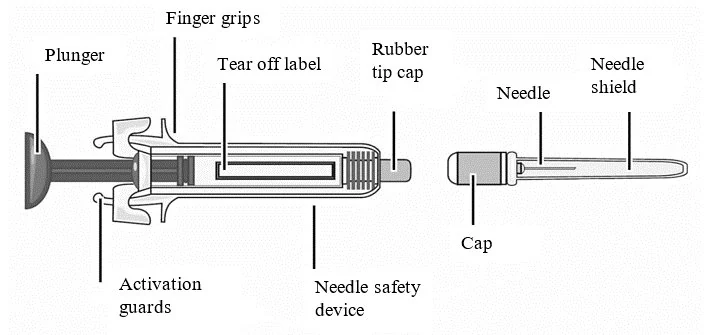
Figure A
Materials not included in the Mircera prefilled syringe pack (Figure B):
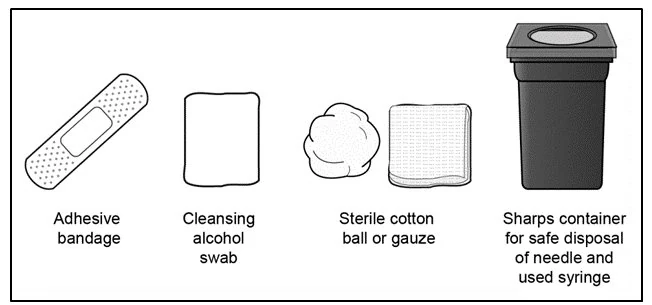
Figure B
| Important: Follow these instructions exactly to help avoid infections. | |
Preparing for a Mircera injection:
| 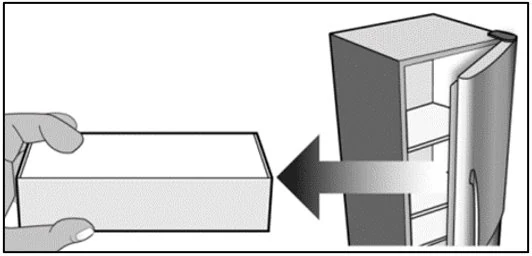 Figure C |
| 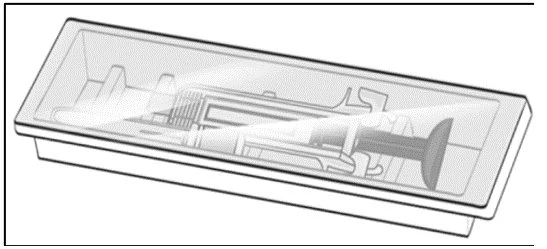 Figure D |
| 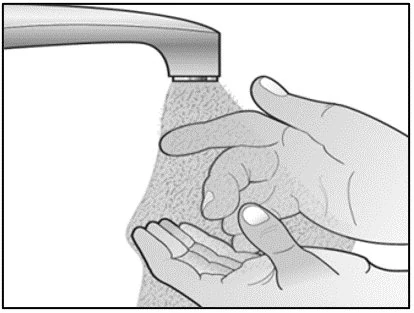 Figure E |
| 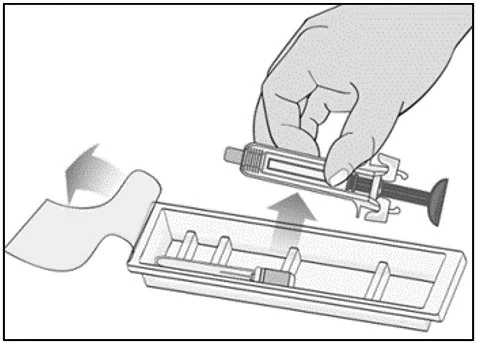 Figure F |
| 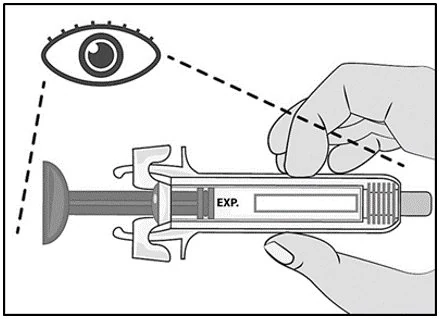 Figure G |
Attach needle to prefilled syringe:
| 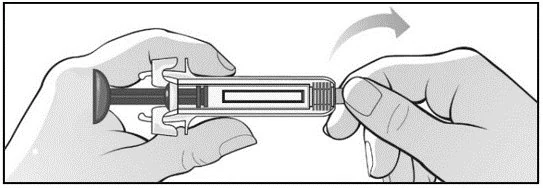 Figure H |
| 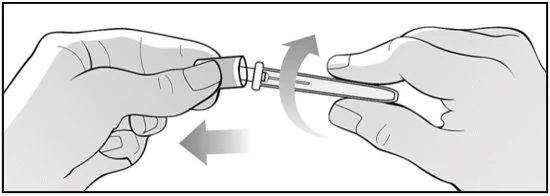 Figure I |
| 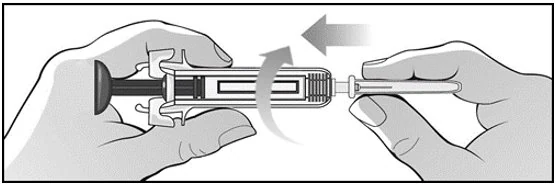 Figure J |
| |
Giving the Mircera injection Follow your healthcare provider’s instructions for how you should inject Mircera. Giving Mircera as a subcutaneous (under the skin) injection: If your healthcare provider tells you to inject Mircera as a subcutaneous (under your skin) injection, give your dose as described below. | |
Selecting and preparing a subcutaneous injection site: After you prepare the prefilled syringe as described in steps 7 to 10 above:
| 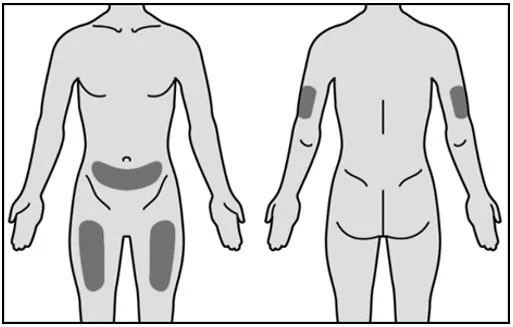 Figure K |
| 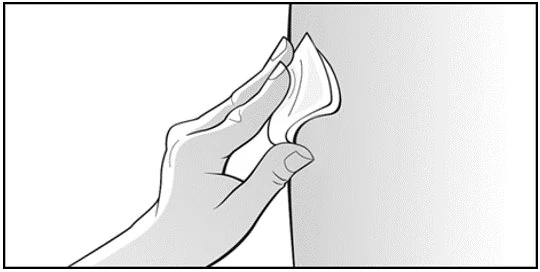 Figure L |
| 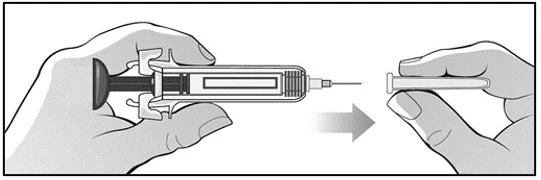 Figure M |
| 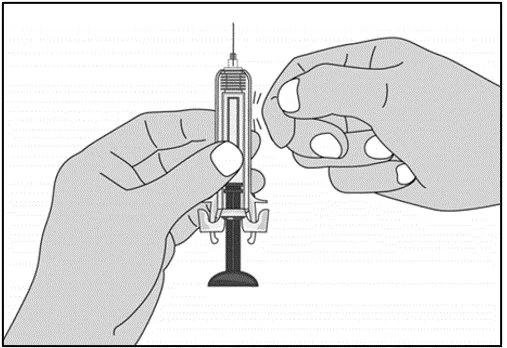 Figure N |
| 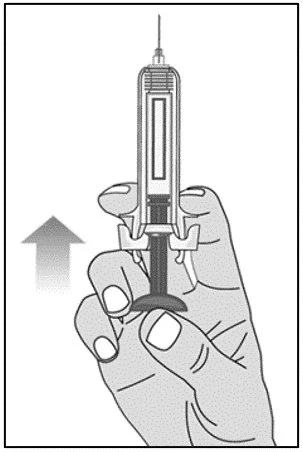 Figure O |
| 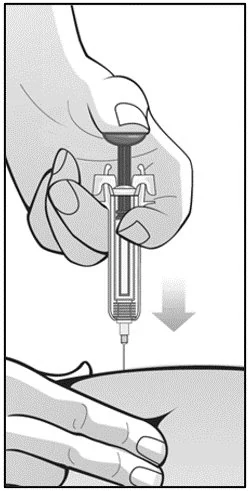 Figure P |
| 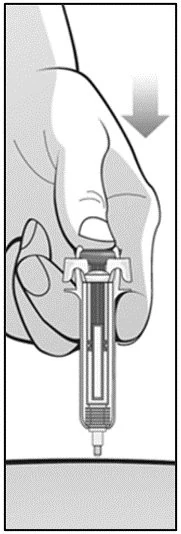 Figure Q |
| 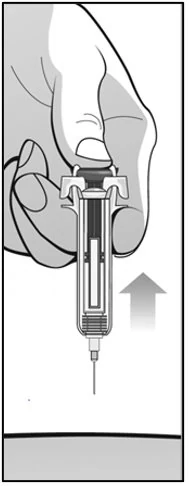 Figure R |
| 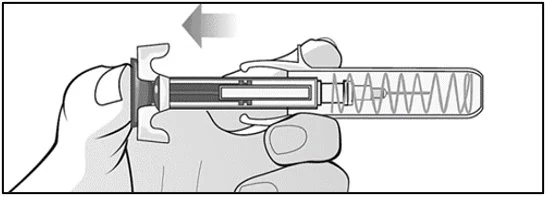 Figure S |
| 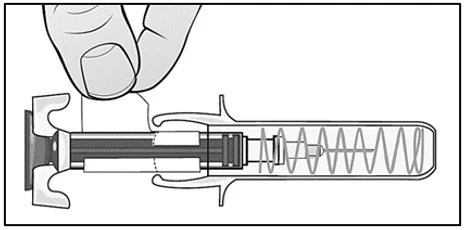 Figure T |
| 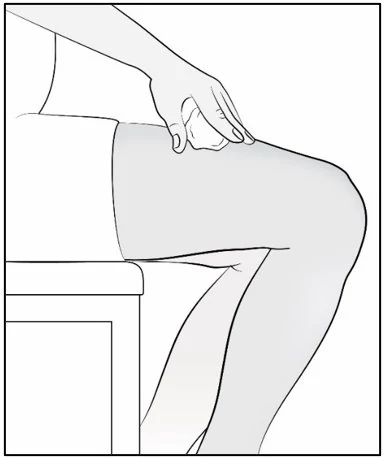 Figure U |
| |
Giving Mircera as an intravenous injection: If your healthcare provider has told you to and has shown you or your caregiver how to inject Mircera intravenously, give your dose as described below:
After you prepare the prefilled syringe as described in steps 7 to 10 above: | |
| 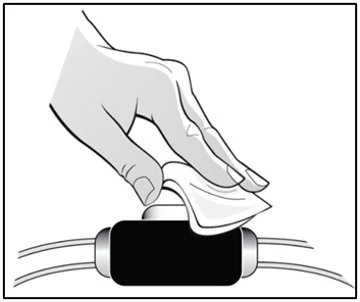 |
| Figure A | |
| 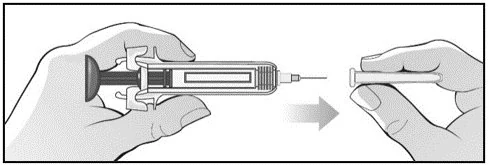 |
| Figure B | |
| 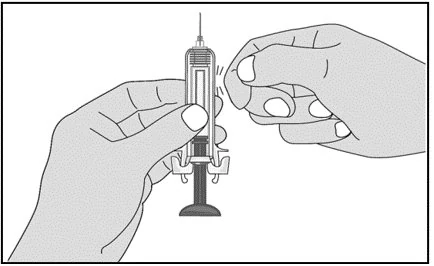 |
| Figure C | |
| 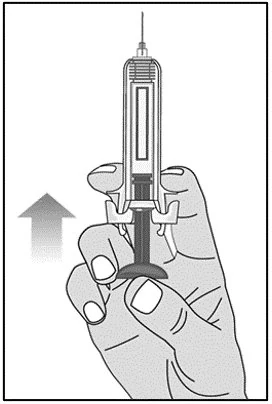 |
| Figure D | |
| 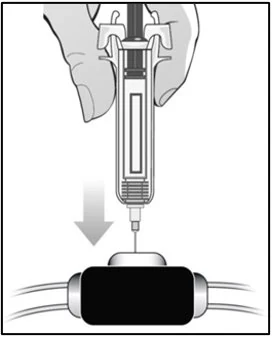 |
| Figure E | |
| 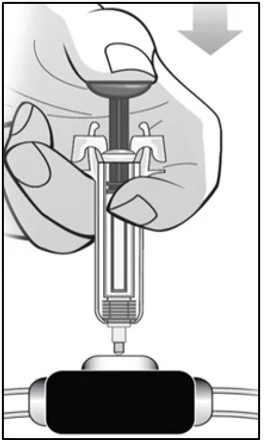 |
| Figure F | |
| 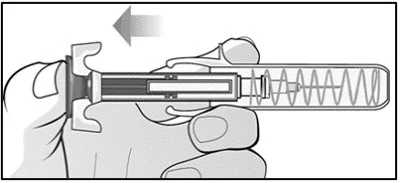 |
| Figure G | |
| 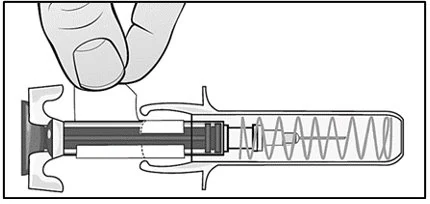 |
| Figure H | |
| |
- Disposing of used Mircera prefilled syringes and needles:
- • Put your used needles and prefilled syringes in an FDA-cleared sharps disposal container right away after use. Do not throw away (dispose of) loose needles and prefilled syringes in your household trash.
- •
If you do not have an FDA-cleared sharps disposal container, you may use a household container that is:
- made of heavy-duty plastic,
- can be closed with a tight-fitting, puncture-resistant lid, without sharps being able to come out,
- upright and stable during use,
- leak-resistant, and
- properly labeled to warn of hazardous waste inside the container.
- • When your sharps disposal container is almost full, you will need to follow your community guidelines for the right way to dispose of your sharps disposal container. There may be state or local laws about how you should throw away used needles, syringes and prefilled injectors. For more information about safe sharps disposal, and for specific information about sharps disposal in the state that you live in, go to the FDA’s website at: http://www.fda.gov/safesharpsdisposal.
- • Do not dispose of your used sharps disposal container in your household trash unless your community guidelines permit this. Do not recycle your used sharps disposal container.
Always keep the sharps disposal container out of the reach of children.
This Instructions for Use has been approved by the U.S. Food and Drug Administration.
Vifor (International) Inc., Rechenstrasse 37, 9014 St. Gallen, Switzerland, U.S. License No. 2039
U.S. Toll-free: 1-800–576-8295, Info_MirceraUS@viforpharma.com,
Copyright 2016 Vifor (International) Inc. All rights reserved.
Revised: April 2024