


Prescribing information (package insert) - Mektovi
1 INDICATIONS AND USAGE
1.1 BRAF V600E or V600K Mutation-Positive Unresectable or Metastatic Melanoma
MEKTOVI is indicated, in combination with encorafenib, for the treatment of patients with unresectable or metastatic melanoma with a BRAF V600E or V600K mutation, as detected by an FDA-approved test [see Dosage and Administration (2.1)].
1.2 BRAF V600E Mutation-Positive Metastatic Non-Small Cell Lung Cancer (NSCLC)
MEKTOVI is indicated, in combination with encorafenib, for the treatment of adult patients with metastatic non-small cell lung cancer (NSCLC) with a BRAF V600E mutation, as detected by an FDA-approved test. [see Dosage and Administration (2.1)].
2 DOSAGE AND ADMINISTRATION
2.1 Patient Selection
BRAF V600E or V600K Mutation-Positive Unresectable or Metastatic Melanoma
Confirm the presence of a BRAF V600E or V600K mutation in tumor specimens prior to initiating MEKTOVI [see Clinical Studies (14)]. Information on FDA-approved tests for the detection of BRAF V600E and V600K mutations in melanoma is available at: http://www.fda.gov/CompanionDiagnostics.
BRAF V600E Mutation-Positive Metastatic Non-Small Cell Lung Cancer (NSCLC)
Confirm the presence of a BRAF V600E mutation in tumor or plasma specimens prior to initiating MEKTOVI [see Clinical Studies (14.2)]. If no mutation is detected in a plasma specimen, test tumor tissue. Information on FDA-approved tests for the detection of BRAF V600E mutations in NSCLC is available at: http://www.fda.gov/CompanionDiagnostics.
2.2 Recommended Dosage and Administration
The recommended dosage of MEKTOVI is 45 mg orally taken twice daily, approximately 12 hours apart, in combination with encorafenib until disease progression or unacceptable toxicity. Refer to the encorafenib prescribing information for recommended encorafenib dosing information.
MEKTOVI may be taken with or without food [see Clinical Pharmacology (12.3)]. Do not take a missed dose of MEKTOVI within 6 hours of the next dose of MEKTOVI.
Do not take an additional dose if vomiting occurs after MEKTOVI administration but continue with the next scheduled dose.
2.3 Dosage Modifications for Adverse Reactions
If encorafenib is permanently discontinued, discontinue MEKTOVI.
Dose reductions for adverse reactions associated with MEKTOVI are presented in Table 1.
Table 1: Recommended Dose Reductions for MEKTOVI for Adverse Reactions
| Action | Recommended Dose |
|---|---|
| First Dose Reduction | 30 mg orally twice daily |
| Subsequent Modification | Permanently discontinue if unable to tolerate MEKTOVI 30 mg orally twice daily |
Dosage modifications for adverse reactions associated with MEKTOVI are presented in Table 2.
Table 2: Recommended Dosage Modifications for MEKTOVI for Adverse Reactions
| Severity of Adverse Reaction National Cancer Institute Common Terminology Criteria for Adverse Events (NCI CTCAE) version 4.03. | Dose Modification for MEKTOVI |
|---|---|
| Cardiomyopathy [see Warnings and Precautions (5.2) ] | |
| Withhold MEKTOVI for up to 4 weeks, evaluate LVEF every 2 weeks. Resume MEKTOVI at a reduced dose if the following are present:
If the LVEF does not recover within 4 weeks permanently discontinue MEKTOVI. |
| Permanently discontinue MEKTOVI. |
| Venous Thromboembolism [see Warnings and Precautions (5.3) ] | |
| Withhold MEKTOVI.
|
| Permanently discontinue MEKTOVI. |
| Serous Retinopathy [see Warnings and Precautions (5.4) ] | |
| Withhold MEKTOVI for up to 10 days.
|
| Retinal Vein Occlusion (RVO) [see Warnings and Precautions (5.4) ] | |
| Permanently discontinue MEKTOVI. |
| Uveitis [see Warnings and Precautions (5.4) ] | |
| If Grade 1 or 2 does not respond to specific ocular therapy, or for Grade 3 uveitis, withhold MEKTOVI for up to 6 weeks.
|
| Permanently discontinue MEKTOVI. |
| Interstitial Lung Disease [see Warnings and Precautions (5.5) ] | |
| Withhold MEKTOVI for up to 4 weeks.
|
| Permanently discontinue MEKTOVI. |
| Hepatotoxicity [see Warnings and Precautions (5.6) ] | |
| Maintain MEKTOVI dose.
|
| See Other Adverse Reactions. |
| Rhabdomyolysis or Creatine Phosphokinase (CPK) elevations [see Warnings and Precautions (5.7) ] | |
| Withhold MEKTOVI dose for up to 4 weeks.
|
| Dermatologic [other than palmar plantar erythrodysesthesia syndrome (PPES)] [see Adverse Reactions (6.1)] | |
| If no improvement within 2 weeks, withhold MEKTOVI until Grade 0-1. Resume at same dose if first occurrence or reduce dose if recurrent. |
| Withhold MEKTOVI until Grade 0-1. Resume at same dose if first occurrence or reduce dose if recurrent. |
| Permanently discontinue MEKTOVI. |
| Other Adverse Reactions (including Hemorrhage) [see Warnings and Precautions (5.8) , Adverse Reactions (6.1)] Dose modification of MEKTOVI when administered with encorafenib is not recommended for the following adverse reactions: palmar-plantar erythrodysesthesia syndrome (PPES), non-cutaneous RAS mutation-positive malignancies, and QTc prolongation. | |
| Withhold MEKTOVI for up to 4 weeks.
|
| Permanently discontinue MEKTOVI, or Withhold MEKTOVI for up to 4 weeks.
|
| Consider permanently discontinuing MEKTOVI. |
| Permanently discontinue MEKTOVI. |
Refer to the encorafenib prescribing information for dose modifications for adverse reactions associated with encorafenib.
2.4 Dosage Modifications for Moderate or Severe Hepatic Impairment
For patients with moderate (total bilirubin greater than 1.5 and less than or equal to 3 × ULN and any AST) or severe (total bilirubin levels greater than 3 × ULN and any AST) hepatic impairment, the recommended dosage is 30 mg orally taken twice daily [see Use in Specific Populations (8.6), Clinical Pharmacology (12.3)].
3 DOSAGE FORMS AND STRENGTHS
Tablets: 15 mg, yellow/dark yellow, unscored biconvex oval film-coated tablets debossed with a stylized "A" on one side and "15" on the other side.
4 CONTRAINDICATIONS
None.
5 WARNINGS AND PRECAUTIONS
5.1 New Primary Malignancies
New primary malignancies, cutaneous and non-cutaneous, can occur when MEKTOVI is used in combination with encorafenib.
In PHAROS, cutaneous squamous cell carcinoma and skin papilloma each occurred in 2% of patients who received MEKTOVI in combination with encorafenib.
Monitor patients for new malignancies prior to initiation of treatment, while on treatment, and after discontinuation of treatment [see Dosage and Administration (2.3)].
5.2 Cardiomyopathy
Cardiomyopathy, manifesting as left ventricular dysfunction associated with symptomatic or asymptomatic decreases in ejection fraction, has been reported in patients treated with MEKTOVI in combination with encorafenib. In COLUMBUS, evidence of cardiomyopathy (decrease in LVEF below the institutional LLN with an absolute decrease in LVEF ≥10% below baseline as detected by echocardiography or MUGA) occurred in 7% of patients receiving MEKTOVI plus encorafenib. Grade 3 left ventricular dysfunction occurred in 1.6% of patients. The median time to first occurrence of left ventricular dysfunction (any grade) in patients receiving MEKTOVI in combination with encorafenib was 3.6 months (range 0 to 21 months). Cardiomyopathy resolved in 87% of patients receiving MEKTOVI plus encorafenib.
In PHAROS, evidence of cardiomyopathy (decrease in LVEF below the institutional LLN with an absolute decrease in LVEF ≥10% below baseline as detected by echocardiography or MUGA) occurred in 11% of patients receiving MEKTOVI in combination with encorafenib. Grade 3 left ventricular dysfunction occurred in 1% of patients. Cardiomyopathy resolved in 82% of patients receiving MEKTOVI plus encorafenib.
Assess ejection fraction by echocardiogram or MUGA scan prior to initiating treatment, one month after initiating treatment, and then every 2 to 3 months during treatment. The safety of MEKTOVI in combination with encorafenib has not been established in patients with a baseline ejection fraction that is either below 50% or below the institutional lower limit of normal (LLN). Patients with cardiovascular risk factors should be monitored closely when treated with MEKTOVI.
Withhold, reduce dose, or permanently discontinue based on severity of adverse reaction [see Dosage and Administration (2.3), Adverse Reactions (6.1)].
5.3 Venous Thromboembolism
In COLUMBUS, venous thromboembolism (VTE) occurred in 6% of patients receiving MEKTOVI in combination with encorafenib, including 3.1% of patients who developed pulmonary embolism. In PHAROS, VTE occurred in 7% of patients receiving MEKTOVI in combination with encorafenib, including 1% of patients who developed pulmonary embolism.
Withhold, reduce dose, or permanently discontinue based on severity of adverse reaction [see Dosage and Administration (2.3), Adverse Reactions (6.1)].
5.4 Ocular Toxicities
Serous Retinopathy
In COLUMBUS, serous retinopathy occurred in 20% of patients treated with MEKTOVI in combination with encorafenib; 8% were retinal detachment and 6% were macular edema. Symptomatic serous retinopathy occurred in 8% of patients with no cases of blindness. No patient discontinued MEKTOVI due to serous retinopathy; 6% of patients required dose interruptions or dose reductions. The median time to onset of the first event of serous retinopathy (all grades) was 1.2 months (range 0 to 17.5 months).
In PHAROS, serous retinopathy (retinal detachment) occurred in 2% of patients with no cases of blindness treated with MEKTOVI in combination with encorafenib. No patient permanently discontinued MEKTOVI due to serous retinopathy; 1% of patients required dose interruptions.
Assess for visual symptoms at each visit. Perform an ophthalmologic examination at regular intervals, for new or worsening visual disturbances, and to follow new or persistent ophthalmologic findings. Withhold, reduce dose, or permanently discontinue based on severity of adverse reaction [see Dosage and Administration (2.3), Adverse Reactions (6.1)].
Retinal Vein Occlusion
RVO is a known class-related adverse reaction of MEK inhibitors and may occur in patients treated with MEKTOVI in combination with encorafenib. In patients with BRAF mutation-positive melanoma receiving MEKTOVI with encorafenib (n=690), 1 patient experienced RVO (0.1%).
The safety of MEKTOVI has not been established in patients with a history of RVO or current risk factors for RVO including uncontrolled glaucoma or a history of hyperviscosity or hypercoagulability syndromes.
Perform ophthalmologic evaluation for patient-reported acute vision loss or other visual disturbance within 24 hours. Permanently discontinue MEKTOVI in patients with documented RVO [see Dosage and Administration (2.3), Adverse Reactions (6.1)].
Uveitis
Uveitis, including iritis and iridocyclitis, has been reported in patients treated with MEKTOVI in combination with encorafenib. In COLUMBUS, the incidence of uveitis among patients treated with MEKTOVI in combination with encorafenib was 4%. In PHAROS, uveitis occurred in 1% of patients receiving MEKTOVI in combination with encorafenib.
Assess for visual symptoms at each visit. Perform an ophthalmologic evaluation at regular intervals and for new or worsening visual disturbances, and to follow new or persistent ophthalmologic findings. Withhold, reduce dose, or permanently discontinue based on severity of adverse reaction [see Dosage and Administration (2.3), Adverse Reactions (6.1)].
5.5 Interstitial Lung Disease
In patients with BRAF mutation-positive melanoma receiving MEKTOVI with encorafenib (n=690), 2 patients (0.3%) developed interstitial lung disease (ILD), including pneumonitis. In PHAROS, 1 patient (1%) receiving MEKTOVI with encorafenib developed pneumonitis.
Assess new or progressive unexplained pulmonary symptoms or findings for possible ILD. Withhold, reduce dose, or permanently discontinue based on severity of adverse reaction [see Dosage and Administration (2.3), Adverse Reactions (6.1)].
5.6 Hepatotoxicity
Hepatotoxicity can occur when MEKTOVI is administered in combination with encorafenib. In COLUMBUS, the incidence of Grade 3 or 4 increases in liver function laboratory tests in patients receiving MEKTOVI in combination with encorafenib was 6% for alanine aminotransferase (ALT), 2.6% for aspartate aminotransferase (AST), and 0.5% for alkaline phosphatase. No patient experienced Grade 3 or 4 serum bilirubin elevation. In PHAROS, the incidence of Grade 3 or 4 increases in liver function laboratory tests in patients receiving MEKTOVI in combination with encorafenib was 10% for AST, 9% for ALT, and 3.2% for alkaline phosphatase.
Monitor liver laboratory tests before initiation of MEKTOVI, monthly during treatment, and as clinically indicated. Withhold, reduce dose, or permanently discontinue based on severity of adverse reaction [see Dosage and Administration (2.3), Adverse Reactions (6.1)].
5.7 Rhabdomyolysis
Rhabdomyolysis can occur when MEKTOVI is administered in combination with encorafenib. In COLUMBUS, elevation of laboratory values of serum CPK occurred in 58% of patients treated with MEKTOVI in combination with encorafenib. In patients with BRAF mutation-positive melanoma receiving MEKTOVI with encorafenib (n=690), rhabdomyolysis was reported in 1 patient (0.1%). In PHAROS, elevation of laboratory values of serum creatine kinase (CK) occurred in 41% of patients treated with MEKTOVI in combination with encorafenib. No patient experienced rhabdomyolysis.
Monitor CPK and creatinine levels prior to initiating MEKTOVI, periodically during treatment, and as clinically indicated. Withhold, reduce dose, or permanently discontinue based on severity of adverse reaction [see Dosage and Administration (2.3), Adverse Reactions (6.1)].
5.8 Hemorrhage
Hemorrhage can occur when MEKTOVI is administered in combination with encorafenib. In COLUMBUS, hemorrhage occurred in 19% of patients receiving MEKTOVI in combination with encorafenib. Grade 3 or greater hemorrhage occurred in 3.2% of patients. The most frequent hemorrhagic events were gastrointestinal, including rectal hemorrhage (4.2%), hematochezia (3.1%), and hemorrhoidal hemorrhage (1%). Fatal intracranial hemorrhage in the setting of new or progressive brain metastases occurred in 1.6% of patients.
In PHAROS, hemorrhage occurred in 12% of patients receiving MEKTOVI in combination with encorafenib including fatal hemorrhage intracranial (1%); Grade 3 or 4 hemorrhage occurred in 4.1% of patients. The most frequent hemorrhagic events were anal hemorrhage and hemothorax (2% each).
Withhold, reduce dose, or permanently discontinue based on severity of adverse reaction [see Dosage and Administration (2.3), Adverse Reactions (6.1)].
5.9 Embryo-Fetal Toxicity
Based on findings from animal studies and its mechanism of action, MEKTOVI can cause fetal harm when administered to a pregnant woman. Binimetinib was embryotoxic and abortifacient when administered to rabbits during the period of organogenesis at doses greater than or equal to those resulting in exposures approximately 5 times the human exposure at the recommended clinical dose of 45 mg twice daily.
Advise pregnant women and females of reproductive potential of the potential risk to a fetus. Advise females of reproductive potential to use effective contraception during treatment with MEKTOVI and for 30 days after the last dose [see Use in Specific Populations (8.1, 8.3)].
5.10 Risks Associated with Combination Treatment
MEKTOVI is indicated for use in combination with encorafenib. Refer to the encorafenib prescribing information for additional risk information that applies to combination use treatment.
6 ADVERSE REACTIONS
The following adverse reactions are described elsewhere in the labeling:
- New Primary Malignancies [see Warnings and Precautions (5.1)]
- Cardiomyopathy [see Warnings and Precautions (5.2) ]
- Venous Thromboembolism [see Warnings and Precautions (5.3) ]
- Ocular Toxicities [see Warnings and Precautions (5.4) ]
- Interstitial Lung Disease [see Warnings and Precautions (5.5) ]
- Hepatotoxicity [see Warnings and Precautions (5.6) ]
- Rhabdomyolysis [see Warnings and Precautions (5.7) ]
- Hemorrhage [see Warnings and Precautions (5.8) ]
- Embryo-Fetal Toxicity [see Warnings and Precautions (5.9)]
- Risks Associated with Combination Treatment [see Warnings and Precautions (5.10)]
6.1 Clinical Trials Experience
Because clinical trials are conducted under widely varying conditions, adverse reaction rates observed in the clinical trials of a drug cannot be directly compared to rates in the clinical trials of another drug and may not reflect the rates observed in practice.
The data described in WARNINGS AND PRECAUTIONS reflect exposure of 192 patients with BRAF V600 mutation-positive unresectable or metastatic melanoma to MEKTOVI 45 mg twice daily in combination with encorafenib 450 mg once daily in a randomized open-label, active-controlled trial (COLUMBUS) [see Clinical Studies (14.1)] or, for rare events, exposure of 690 patients with BRAF V600 mutation-positive melanoma to MEKTOVI 45 mg twice daily in combination with encorafenib once daily across multiple clinical trials (NCT03915951, NCT01909453).
The pooled safety population described in the WARNINGS AND PRECAUTIONS also reflect exposure of 98 patients with BRAF V600E mutation-positive metastatic non-small cell lung cancer to MEKTOVI 45 mg twice daily and encorafenib 450 mg once daily until disease progression or unacceptable toxicity in PHAROS [see Clinical Studies (14.2)].
BRAF V600E or V600K Mutation-Positive Unresectable or Metastatic Melanoma
The data described below reflect exposure of 192 patients with BRAF V600 mutation-positive unresectable or metastatic melanoma to MEKTOVI (45 mg twice daily) in combination with encorafenib (450 mg once daily) in COLUMBUS.
The COLUMBUS trial [see Clinical Studies (14.1) ] excluded patients with a history of Gilbert's syndrome, abnormal left ventricular ejection fraction, prolonged QTc (>480 msec), uncontrolled hypertension, and history or current evidence of retinal vein occlusion. The median duration of exposure was 11.8 months for patients treated with MEKTOVI in combination with encorafenib and 6.2 months for patients treated with vemurafenib.
The most common (≥25%) adverse reactions in patients receiving MEKTOVI in combination with encorafenib were fatigue, nausea, diarrhea, vomiting, and abdominal pain.
Adverse reactions leading to dose interruptions of MEKTOVI occurred in 33% of patients receiving MEKTOVI in combination with encorafenib; the most common were left ventricular dysfunction (6%) and serous retinopathy (5%). Adverse reactions leading to dose reductions of MEKTOVI occurred in 19% of patients receiving MEKTOVI in combination with encorafenib; the most common were left ventricular dysfunction (3%), serous retinopathy (3%), and colitis (2%). Five percent (5%) of patients receiving MEKTOVI in combination with encorafenib experienced an adverse reaction that resulted in permanent discontinuation of MEKTOVI. The most common adverse reactions resulting in permanent discontinuation of MEKTOVI were hemorrhage in 2% and headache in 1% of patients.
Table 3 and Table 4 present adverse drug reactions and laboratory abnormalities, respectively, identified in COLUMBUS. The COLUMBUS trial was not designed to demonstrate a statistically significant difference in adverse reaction rates for MEKTOVI in combination with encorafenib, as compared to vemurafenib, for any specific adverse reaction listed in Table 3.
Table 3: Adverse Reactions Occurring in ≥10% of Patients Receiving MEKTOVI in Combination with Encorafenib in COLUMBUSGrades per National Cancer Institute CTCAE v4.03.
| Adverse Reaction | MEKTOVI with encorafenib N=192 | Vemurafenib N=186 | ||
|---|---|---|---|---|
All Grades (%) | Grades 3 and 4 Grade 4 adverse reactions limited to diarrhea (n=1) and hemorrhage (n=3) in the MEKTOVI with encorafenib arm and constipation (n=1) in the vemurafenib arm. (%) | All Grades (%) | Grades 3 and 4 (%) | |
| General Disorders and Administration Site Conditions | ||||
| FatigueRepresents a composite of multiple, related preferred terms. | 43 | 3 | 46 | 6 |
| Pyrexia | 18 | 4 | 30 | 0 |
| Peripheral edema | 13 | 1 | 15 | 1 |
| Gastrointestinal Disorders | ||||
| Nausea | 41 | 2 | 34 | 2 |
| Diarrhea | 36 | 3 | 34 | 2 |
| Vomiting | 30 | 2 | 16 | 1 |
| Abdominal pain | 28 | 4 | 16 | 1 |
| Constipation | 22 | 0 | 6 | 1 |
| Skin and Subcutaneous Tissue Disorders | ||||
| Rash | 22 | 1 | 53 | 13 |
| Nervous System Disorders | ||||
| Dizziness | 15 | 3 | 4 | 0 |
| Visual Disorders | ||||
| Visual impairment | 20 | 0 | 4 | 0 |
| Serous retinopathy/RPED | 20 | 3 | 2 | 0 |
| Vascular Disorders | ||||
| Hemorrhage | 19 | 3 | 9 | 2 |
| Hypertension | 11 | 6 | 11 | 3 |
Other clinically important adverse reactions occurring in <10% of patients who received MEKTOVI in combination with encorafenib were:
Gastrointestinal disorders: Colitis
Skin and subcutaneous tissue disorders: Panniculitis, Photosensitivity
Immune system disorders: Drug hypersensitivity
Table 4: Laboratory Abnormalities Occurring in ≥10% (All grades) of Patients Receiving MEKTOVI in Combination with Encorafenib in COLUMBUSGrades per National Cancer Institute CTCAE v4.03.
| Laboratory Abnormality | MEKTOVI with encorafenib N=192 | Vemurafenib N=186 | ||
|---|---|---|---|---|
All Grades (%) | Grades 3 and 4 (%) | All Grades (%) | Grades 3 and 4 (%) | |
| Hematology | ||||
| Anemia | 36 | 3.6 | 34 | 2.2 |
| Leukopenia | 13 | 0 | 10 | 0.5 |
| Lymphopenia | 13 | 2.1 | 30 | 7 |
| Neutropenia | 13 | 3.1 | 4.8 | 0.5 |
| Chemistry | ||||
| Increased Creatinine | 93 | 3.6 | 92 | 1.1 |
| Increased Creatine Phosphokinase | 58 | 5 | 3.8 | 0 |
| Increased Gamma Glutamyl Transferase | 45 | 11 | 34 | 4.8 |
| Increased ALT | 29 | 6 | 27 | 2.2 |
| Increased AST | 27 | 2.6 | 24 | 1.6 |
| Increased Alkaline Phosphatase | 21 | 0.5 | 35 | 2.2 |
| Hyponatremia | 18 | 3.6 | 15 | 0.5 |
BRAF V600E Mutation-Positive Metastatic Non-Small Cell Lung Cancer (NSCLC)
The safety of MEKTOVI in combination with encorafenib is described in 98 patients with BRAF V600E mutation-positive metastatic NSCLC who received MEKTOVI (45 mg twice daily) in combination with encorafenib (450 mg once daily) in an open-label, single-arm trial (PHAROS).
The PHAROS trial [see Clinical Studies (14.2)] excluded patients with abnormal LVEF, prolonged QTc (>480 ms), uncontrolled hypertension, and history or current evidence of retinal vein occlusion. The median duration of treatment for MEKTOVI and encorafenib was 8.4 and 9.2 months respectively.
The most common (≥25%) adverse reactions in patients receiving MEKTOVI were fatigue, nausea, diarrhea, musculoskeletal pain, vomiting, abdominal pain, visual impairment, constipation, dyspnea, rash, and cough.
Adverse reactions leading to dose interruptions of MEKTOVI occurred in 62% of patients receiving MEKTOVI; the most common (≥5%) were diarrhea (17%); nausea (15%); fatigue (9%); AST increased (7%); ALT increased, anemia, musculoskeletal pain, vomiting (6% each); and acute kidney injury, hemorrhage, and LV dysfunction/cardiomyopathy (5% each). Adverse reactions leading to dose reductions of MEKTOVI occurred in 33% of patients receiving MEKTOVI; the most common (≥5%) were diarrhea (8%), nausea (6%), and AST increased (5%). A total of 17% of patients receiving MEKTOVI experienced an adverse reaction that resulted in permanent discontinuation of MEKTOVI; the most common (≥2%) were diarrhea (3.1%); musculoskeletal pain, LV dysfunction/cardiomyopathy, fatigue, nausea, rash, visual impairment, and vomiting (2% each). None of the other adverse reactions leading to permanent discontinuation of MEKTOVI occurred in more than 1 patient.
Serious adverse reactions occurred in 38% of patients who received MEKTOVI in combination with encorafenib. Serious adverse reactions in ≥2% of patients included hemorrhage (6%); diarrhea (4.1%); anemia, dyspnea, pneumonia (3.1% each); arrhythmia, device related infection, edema, myocardial infarction, and pleural effusion (2% each). Fatal adverse reactions occurred in 2% of patients who received MEKTOVI (45 mg twice-daily) in combination with encorafenib, including intracranial hemorrhage and myocardial infarction (1% each).
Table 5 and Table 6 present adverse drug reactions and laboratory abnormalities, respectively, identified in PHAROS.
Table 5: Adverse Reactions Occurring in ≥10% of Patients Receiving MEKTOVI in Combination with Encorafenib in PHAROSGrades per National Cancer Institute CTCAE v4.03.
| Adverse Reaction | MEKTOVI with encorafenib N=98 | |
All Grades (%) | Grade 3 and 4 One Grade 5 adverse reaction of hemorrhage occurred. (%) | |
| General Disorders and Administration Site Conditions | ||
| FatigueFatigue includes fatigue, asthenia. | 61 | 8 |
| EdemaEdema includes edema peripheral, generalized edema, swelling, localized edema, face edema. | 23 | 1 |
| Pyrexia | 22 | 0 |
| Gastrointestinal Disorders | ||
| Nausea | 58 | 3.1 |
| DiarrheaDiarrhea includes diarrhea, colitis. | 52 | 7 |
| Vomiting | 37 | 1 |
| Abdominal painAbdominal pain includes abdominal pain, abdominal pain upper, abdominal discomfort, epigastric discomfort. | 32 | 1 |
| Constipation | 27 | 0 |
| Eye Disorders | ||
| Visual impairmentVisual impairment includes vision blurred, visual impairment, vitreous floaters, photophobia, visual acuity reduced, photopsia. | 29 | 2 |
| Musculoskeletal and Connective Tissue Disorders | ||
| Musculoskeletal painMusculoskeletal pain includes back pain, arthralgia, pain in extremity, myalgia, musculoskeletal chest pain, non-cardiac chest pain, neck pain. | 48 | 4.1 |
| Skin and Subcutaneous Tissue Disorders | ||
| RashRash includes rash, rash macular, rash maculo-papular, rash papular, rash pustular,dermatitis acneiform, palmar-plantar erythrodysesthesia syndrome, eczema, skin exfoliation. | 27 | 3.1 |
| PruritisPruritis includes pruritus, pruritus genital. | 16 | 0 |
| Dry skin | 13 | 0 |
| Alopecia | 12 | 0 |
| Respiratory, Thoracic and Mediastinal Disorders | ||
| DyspneaDyspnea includes dyspnea, dyspnea exertional. | 27 | 8 |
| CoughCough includes cough, productive cough. | 26 | 0 |
| Nervous System Disorders | ||
| DizzinessDizziness includes dizziness, balance disorder. | 17 | 1 |
| Headache | 11 | 0 |
| Metabolism and Nutrition Disorders | ||
| Decreased appetite | 14 | 1 |
| Vascular Disorders | ||
| Hemorrhage Hemorrhage includes anal hemorrhage, hemothorax, gastrointestinal hemorrhage, hematochezia, hematuria, hemoptysis, hemorrhage intracranial, hyphema, small intestinal hemorrhage, upper gastrointestinal hemorrhage, vaginal hemorrhage. | 12 | 4.1 |
| Hypertension | 10 | 5 |
| Cardiac Disorders | ||
| Left ventricular dysfunction/cardiomyopathyLeft ventricular dysfunction/cardiomyopathy includes ejection fraction decreased, cardiac failure, cardiac failure congestive. | 11 | 1 |
| Investigations | ||
| Weight increased | 11 | 1 |
| Psychiatric Disorders | ||
| Insomnia | 10 | 0 |
Other clinically important adverse reactions occurring in <10% of patients who received MEKTOVI in combination with encorafenib were:
Nervous system disorders: Peripheral neuropathy, Dysgeusia, Facial paresis
Gastrointestinal disorders: Pancreatitis
Skin and subcutaneous tissue disorders: Hyperkeratosis, Erythema, Photosensitivity
Immune system disorders: Drug hypersensitivity
Table 6: Laboratory Abnormalities Occurring in ≥10% (All Grades) of Patients Receiving MEKTOVI with Encorafenib in PHAROSGrades per National Cancer Institute CTCAE v4.03.
| Laboratory Abnormality Based on the number of patients with available baseline and at least one on-treatment laboratory test. | MEKTOVI with encorafenib | |
All Grades (%) | Grades 3 and 4 (%) | |
| Hematology | ||
| Anemia | 47 | 11 |
| Lymphopenia | 24 | 6 |
| Thrombocytopenia | 20 | 1.1 |
| Leukopenia | 12 | 0 |
| Neutropenia | 12 | 1.1 |
| Chemistry | ||
| Increased creatinine | 91 | 3.2 |
| Hyperglycemia | 48 | 6 |
| Increased creatine kinase | 41 | 3.3 |
| Lipase increased | 40 | 14 |
| Increased ALT | 34 | 9 |
| Hypoalbuminemia | 32 | 0 |
| Increased AST | 31 | 10 |
| Increased alkaline phosphatase | 31 | 3.2 |
| Hyperkalemia | 31 | 2.1 |
| Hyponatremia | 26 | 11 |
| Serum amylase increased | 22 | 1.1 |
| Hypocalcemia | 12 | 2.1 |
7 DRUG INTERACTIONS
No clinically important drug interactions have been observed with MEKTOVI.
8 USE IN SPECIFIC POPULATIONS
8.1 Pregnancy
Risk Summary
Based on findings from animal reproduction studies and its mechanism of action [see Clinical Pharmacology (12.1)], MEKTOVI can cause fetal harm when administered to a pregnant woman. There are no available clinical data on the use of MEKTOVI during pregnancy. In animal reproduction studies, oral administration of binimetinib during the period of organogenesis was embryotoxic and an abortifacient in rabbits at doses greater than or equal to those resulting in exposures approximately 5 times the human exposure at the clinical dose of 45 mg twice daily (see Data). Advise pregnant women and females of reproductive potential of the potential risk to a fetus.
In the U.S. general population, the estimated background risk of major birth defects and miscarriage in clinically recognized pregnancies is 2% to 4% and 15% to 20%, respectively.
Data
Animal Data
In reproductive toxicity studies, administration of binimetinib to rats during the period of organogenesis resulted in maternal toxicity, decreased fetal weights and increased variations in ossification at doses ≥30 mg/kg/day (approximately 37 times the human exposure based on AUC at the recommended clinical dose of 45 mg twice daily). In pregnant rabbits, administration of binimetinib during the period of organogenesis resulted in maternal toxicity, decreased fetal body weights, an increase in malformations, and increased post-implantation loss, including total loss of pregnancy at doses ≥10 mg/kg/day (approximately 5 times the human exposure based on AUC at the recommended clinical dose of 45 mg twice daily). There was a significant increase in fetal ventricular septal defects and pulmonary trunk alterations at 20 mg/kg/day of binimetinib (less than 8 times the human exposure at the recommended clinical dose of 45 mg twice daily).
8.2 Lactation
Risk Summary
There are no data on the presence of binimetinib or its active metabolite in human milk, or the effects of binimetinib on the breastfed child, or the effects on milk production. Because of the potential for serious adverse reactions in a breastfed child, advise women not to breastfeed during treatment with MEKTOVI and for 3 days after the last dose.
8.3 Females and Males of Reproductive Potential
Based on animal data, MEKTOVI can cause fetal harm when administered to a pregnant woman [see Use in Specific Populations (8.1)].
Pregnancy Testing
Verify the pregnancy status of females of reproductive potential prior to initiating MEKTOVI [see Use in Specific Populations (8.1)].
Contraception
Females
Advise females of reproductive potential to use effective contraception during treatment with MEKTOVI and for 30 days after the last dose.
8.4 Pediatric Use
The safety and effectiveness of MEKTOVI have not been established in pediatric patients.
8.5 Geriatric Use
Of the 690 patients with BRAF mutation-positive melanoma who received MEKTOVI in combination with encorafenib across multiple clinical trials, 20% were aged 65 to 74 years and 8% were aged 75 years and older [see Clinical Pharmacology (12.3)].
Of the 98 patients with BRAF V600E mutation-positive metastatic NSCLC who received MEKTOVI in combination with encorafenib, 62 (63.2%) were 65 years of age and over and 20 (20.4%) were 75 years and over [see Clinical Studies (14.2)].
No overall differences in the safety or effectiveness of MEKTOVI plus encorafenib were observed in older patients as compared to younger patients.
8.6 Hepatic Impairment
Binimetinib concentrations may increase in patients with moderate or severe hepatic impairment. Dose adjustment for MEKTOVI is not recommended in patients with mild hepatic impairment (total bilirubin >1 and ≤1.5 × ULN and any AST or total bilirubin ≤ ULN and AST > ULN). Reduce the dose of MEKTOVI for patients with moderate (total bilirubin >1.5 and ≤3 × ULN and any AST) or severe (total bilirubin levels >3 × ULN and any AST) hepatic impairment [see Dosage and Administration (2.4), Clinical Pharmacology (12.3)].
10 OVERDOSAGE
Since binimetinib is 97% bound to plasma proteins, hemodialysis is likely to be ineffective in the treatment of overdose with MEKTOVI.
11 DESCRIPTION
Binimetinib is a kinase inhibitor. The chemical name is 5-[(4-bromo-2-fluorophenyl)amino]-4-fluoro-N-(2-hydroxyethoxy)-1-methyl-1H-benzimidazole-6-carboxamide. The molecular formula is C17H15BrF2N4O3 and the molecular weight is 441.2 daltons. The chemical structure of binimetinib is shown below:
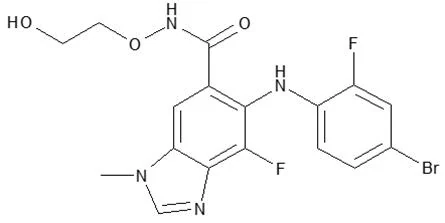
Binimetinib is a white to slightly yellow powder. In aqueous media, binimetinib is slightly soluble at pH 1, very slightly soluble at pH 2, and practically insoluble at pH 4.5 and higher.
MEKTOVI (binimetinib) tablets for oral use contain 15 mg of binimetinib with the following inactive ingredients: lactose monohydrate, microcrystalline cellulose, croscarmellose sodium, magnesium stearate (vegetable source), and colloidal silicon dioxide. The coating contains polyvinyl alcohol, polyethylene glycol, titanium dioxide, talc, ferric oxide yellow, and ferrosoferric oxide.
12 CLINICAL PHARMACOLOGY
12.1 Mechanism of Action
Binimetinib is a reversible inhibitor of mitogen-activated extracellular signal regulated kinase 1 (MEK1) and MEK2 activity. MEK proteins are upstream regulators of the extracellular signal-related kinase (ERK) pathway. In vitro, binimetinib inhibited extracellular signal-related kinase (ERK) phosphorylation in cell-free assays as well as viability and MEK-dependent phosphorylation of BRAF-mutant human melanoma cell lines. Binimetinib also inhibited in vivo ERK phosphorylation and tumor growth in BRAF-mutant murine xenograft models.
Binimetinib and encorafenib target two different kinases in the RAS/RAF/MEK/ERK pathway. Compared to either drug alone, coadministration of encorafenib and binimetinib resulted in greater anti-proliferative activity in vitro in BRAF mutation-positive cell lines and greater anti-tumor activity with respect to tumor growth inhibition in BRAF V600E mutant human melanoma xenograft studies in mice. Additionally, the combination of binimetinib and encorafenib delayed the emergence of resistance in BRAF V600E mutant human melanoma xenografts in mice compared to either drug alone. In a BRAF V600E mutant NSCLC patient-derived xenograft model in mice, coadministration of encorafenib and binimetinib resulted in greater anti-tumor activity compared to binimetinib alone, with respect to tumor growth inhibition. Increased tumor growth delay after dosing cessation was also observed with the coadministration compared to either drug alone.
12.2 Pharmacodynamics
Cardiac Electrophysiology
Following MEKTOVI 45 mg twice daily, no clinically meaningful QT prolongation was observed.
12.3 Pharmacokinetics
The pharmacokinetics of binimetinib was studied in healthy subjects and patients with solid tumors. After twice-daily dosing, the accumulation is 1.5-fold and the coefficient of variation (CV%) of the area under the concentration-time curve (AUC) is <40% at steady state. The systemic exposure of binimetinib is approximately dose proportional.
Absorption
After oral administration, at least 50% of the binimetinib dose was absorbed with a median time to maximum concentration (Tmax) of 1.6 hours.
Effect of Food
The administration of a single dose of MEKTOVI 45 mg with a high-fat, high-calorie meal (consisting of approximately 150 calories from protein, 350 calories from carbohydrate, and 500 calories from fat) in healthy subjects had no effect on binimetinib exposure.
Distribution
Binimetinib is 97% bound to human plasma proteins and the blood-to-plasma ratio is 0.72. The geometric mean (CV%) of apparent volume of distribution of binimetinib is 92 L (45%).
Elimination
The mean (CV%) terminal half-life (t1/2) of binimetinib is 3.5 hours (28.5%) and apparent clearance (CL/F) is 20.2 L/h (24%).
Metabolism
The primary metabolic pathway is glucuronidation with UGT1A1 contributing up to 61% of the binimetinib metabolism. Other pathways of binimetinib metabolism include N-dealkylation, amide hydrolysis, and loss of ethane-diol from the side chain. The active metabolite M3 produced by CYP1A2 and CYP2C19 represents 8.6% of the binimetinib exposure. Following a single oral dose of 45 mg radiolabeled binimetinib, approximately 60% of the circulating radioactivity AUC in plasma was attributable to binimetinib.
Excretion
Following a single oral dose of 45 mg radiolabeled binimetinib in healthy subjects, 62% (32% unchanged) of the administered dose was recovered in the feces while 31% (6.5% unchanged) was recovered in the urine.
Specific Populations
Age (20 to 94 years), sex, or body weight do not have a clinically important effect on the systemic exposure of binimetinib. The effect of race or ethnicity on the pharmacokinetics of binimetinib is unknown.
Hepatic Impairment: No clinically meaningful changes in binimetinib exposure (AUC and Cmax) were observed in subjects with mild hepatic impairment (total bilirubin >1 and ≤1.5 × ULN and any AST or total bilirubin ≤ ULN and AST > ULN) as compared to subjects with normal liver function (total bilirubin ≤ ULN and AST ≤ ULN). A 2-fold increase in AUC was observed in subjects with moderate (total bilirubin >1.5 and ≤3 × ULN and any AST) or severe (total bilirubin levels >3 × ULN and any AST) hepatic impairment [see Dosage and Administration (2.4)].
Renal Impairment: In subjects with severe renal impairment (eGFR ≤29 mL/min/1.73 m2), no clinically important changes in binimetinib exposure were observed as compared to subjects with normal renal function.
Drug Interaction Studies
Clinical Studies
Effect of UGT1A1 Inducers or Inhibitors on Binimetinib: UGT1A1 genotype and smoking (UGT1A1 inducer) do not have a clinically important effect on binimetinib exposure. Simulations predict similar Cmax of binimetinib 45 mg in the presence or absence of atazanavir 400 mg (UGT1A1 inhibitor).
No differences in binimetinib exposure have been observed when MEKTOVI is coadministered with encorafenib.
Effect of Binimetinib on CYP Substrates: Binimetinib did not alter the exposure of a sensitive CYP3A4 substrate (midazolam).
Effect of Acid Reducing Agents on Binimetinib: The extent of binimetinib exposure (AUC) was not altered in the presence of a gastric acid reducing agent (rabeprazole).
In Vitro Studies
Effect of Binimetinib on CYP Substrates: Binimetinib is not a time-dependent inhibitor of CYP1A2, CYP2C9, CYP2D6 or CYP3A.
Effect of Transporters on Binimetinib: Binimetinib is a substrate of P-glycoprotein (P-gp) and breast cancer resistance protein (BCRP). Binimetinib is not a substrate of organic anion transporting polypeptide (OATP1B1, OATP1B3, OATP2B1) or organic cation transporter 1 (OCT1).
13 NONCLINICAL TOXICOLOGY
13.1 Carcinogenesis, Mutagenesis, Impairment of Fertility
Carcinogenicity studies with binimetinib have not been conducted. Binimetinib was not genotoxic in studies evaluating reverse mutations in bacteria, chromosomal aberrations in mammalian cells, or micronuclei in bone marrow of rats.
No dedicated fertility studies have been conducted with binimetinib in animals. In general toxicology studies in rats and monkeys, there were no remarkable findings in male or female reproductive organs.
14 CLINICAL STUDIES
14.1 BRAF V600E or V600K Mutation-Positive Unresectable or Metastatic Melanoma
MEKTOVI in combination with encorafenib was evaluated in a randomized, active-controlled, open-label, multicenter trial (COLUMBUS; NCT01909453). Eligible patients were required to have BRAF V600E or V600K mutation-positive unresectable or metastatic melanoma, as detected using the bioMerieux THxID™BRAF assay. Patients were permitted to have received immunotherapy in the adjuvant setting and one prior line of immunotherapy for unresectable locally advanced or metastatic disease. Prior use of BRAF inhibitors or MEK inhibitors was prohibited. Randomization was stratified by American Joint Committee on Cancer (AJCC) Stage (IIIB, IIIC, IVM1a or IVM1b, versus IVM1c), Eastern Cooperative Oncology Group (ECOG) performance status (0 versus 1), and prior immunotherapy for unresectable or metastatic disease (yes versus no).
Patients were randomized (1:1:1) to receive MEKTOVI 45 mg twice daily in combination with encorafenib 450 mg once daily (MEKTOVI in combination with encorafenib), encorafenib 300 mg once daily, or vemurafenib 960 mg twice daily. Treatment continued until disease progression or unacceptable toxicity. Only the results of the approved dosing (MEKTOVI 45 mg in combination with encorafenib 450 mg) are described below.
The major efficacy outcome measure was progression-free survival (PFS), as assessed by a blinded independent central review, to compare MEKTOVI in combination with encorafenib with vemurafenib. Additional efficacy measures included overall survival (OS), as well as objective response rate (ORR) and duration of response (DoR) which were assessed by central review.
A total of 577 patients were randomized, 192 to the MEKTOVI in combination with encorafenib arm, 194 to the encorafenib arm, and 191 to the vemurafenib arm. Of the 383 patients randomized to either the MEKTOVI in combination with encorafenib or the vemurafenib arms, the median age was 56 years (20 to 89 years), 59% were male, 91% were White, and 72% had baseline ECOG performance status of 0. Ninety-five percent (95%) had metastatic disease, 65% were Stage IVM1c, and 4% received prior CTLA-4, PD-1, or PD-L1 directed antibodies. Twenty-eight percent (28%) had elevated baseline serum lactate dehydrogenase (LDH), 45% had ≥3 organs with tumor involvement at baseline, and 3% had brain metastases. Based on centralized testing, 100% of patients’ tumors tested positive for BRAF mutations; BRAF V600E (88%), BRAF V600K (11%), or both (<1%).
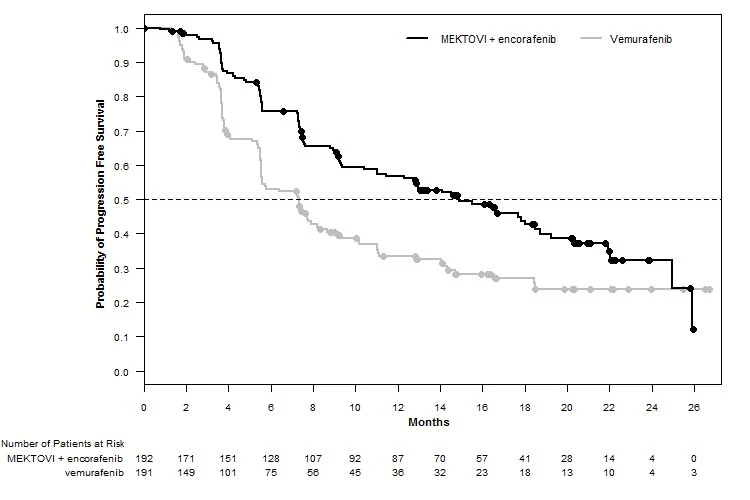
MEKTOVI in combination with encorafenib demonstrated a statistically significant improvement in PFS compared to vemurafenib. Efficacy results are summarized in Table 7 and Figure 1.
Table 7: Efficacy Results for COLUMBUS
| CI = Confidence interval; CR = Complete response; DoR = Duration of response; HR = Hazard ratio; NE = Not estimable; ORR = Overall response rate; OS = Overall survival; PFS = Progression-free survival; PR = Partial response. | ||
MEKTOVI with encorafenib N=192 | Vemurafenib N=191 | |
| Progression-Free Survival | ||
| Number of events (%) | 98 (51) | 106 (55) |
| Progressive disease | 88 (46) | 104 (54) |
| Death | 10 (5) | 2 (1) |
| Median PFS, months (95% CI) | 14.9 (11.0, 18.5) | 7.3 (5.6, 8.2) |
| HR (95% CI)Estimated with Cox proportional hazard model adjusted by the following stratification factors: American Joint Committee on Cancer (AJCC) Stage (IIIB, IIIC, IVM1a or IVM1b, versus IVM1c) and Eastern Cooperative Oncology Group (ECOG) performance status (0 versus 1). | 0.54 (0.41, 0.71) | |
| P valueLog-rank test adjusted by the same stratification factors. | <0.0001 | |
| Overall Survival Based on a cutoff date 82.4 months after the date of PFS analysis. | ||
| Number of events (%) | 139 (72) | 147 (77) |
| Median OS, months (95% CI) | 33.6 (24.4, 39.2) | 16.9 (14.0, 24.5) |
| HR (95% CI) | 0.67 (0.53, 0.84) | |
| Overall Response Rate | ||
| ORR (95% CI) | 63% (56%, 70%) | 40% (33%, 48%) |
| CR | 8% | 6% |
| PR | 55% | 35% |
| Duration of Response | ||
| Median DoR, months (95% CI) | 16.6 (12.2, 20.4) | 12.3 (6.9, 16.9) |
Figure 1: Kaplan-Meier Curves for Progression-Free Survival in COLUMBUS
14.2 BRAF V600E Mutation-Positive Metastatic Non-Small Cell Lung Cancer
MEKTOVI in combination with encorafenib was evaluated in an open-label, multicenter, single-arm study in patients with BRAF V600E mutation-positive metastatic non-small cell lung cancer (NSCLC) (PHAROS; NCT03915951). Eligible patients had a diagnosis of histologically-confirmed metastatic NSCLC with BRAF V600E mutation that was treatment-naïve or had been previously treated with 1 prior line of systemic therapy in the metastatic setting (platinum-based chemotherapy and/or anti-PD-1/PD-L1 therapies), age 18 years or older, Eastern Cooperative Oncology Group (ECOG) performance status (PS) of 0 or 1, and measurable disease as defined by Response Evaluation Criteria in Solid Tumors (RECIST) v1.1. Prior use of BRAF inhibitors or MEK inhibitors was not allowed.
Patients received MEKTOVI 45 mg orally twice daily and encorafenib 450 mg once daily until disease progression or unacceptable toxicity. The major efficacy outcome measures were objective response rate (ORR) per RECIST v1.1 and duration of response (DoR) as assessed by independent review committee (IRC).
In the efficacy population, BRAF V600E mutation status was determined by prospective local testing using tumor tissue (78%) or blood (22%) specimens. Of the 98 patients with BRAF V600E mutation, 6 patients were enrolled into the trial based on testing of their tumor tissue specimens with the FoundationOne CDx tissue test. Of the remaining 92 patients enrolled based on local testing, 68 patients had their tumor tissue specimens retrospectively confirmed as having BRAF V600E positive status by the FoundationOne CDx tissue test. The remaining patients had either BRAF V600E negative status (n=5) or had unevaluable results (n=19) by the FoundationOne CDx tissue test. In addition, plasma samples from 81 out of 98 patients were retrospectively tested using the FoundationOne Liquid CDx assay. Of the 81 patients, 48 were confirmed positive for BRAF V600E, while 33 patients were BRAF V600E mutation negative by FoundationOne Liquid CDx assay. The remaining 17 samples had unevaluable results with FoundationOne Liquid CDx assay.
The efficacy population included 59 treatment-naïve patients and 39 previously-treated patients. Among these 98 patients, the median age was 70 years (range: 47 to 86); 53% female; 88% White, 7% Asian, 3% Black or African American, and 1% American Indian or Alaska Native; 99% were not Hispanic or Latino; 13% were current smokers and 57% were former smokers; 73% had ECOG PS of 1; and 97% had adenocarcinoma. All patients had metastatic disease and 8% had brain metastases at baseline.
Efficacy results for patients with BRAF V600E mutation-positive metastatic NSCLC are summarized in Table 8.
Table 8: Efficacy Results for PHAROS
| CI = Confidence interval; CR = Complete response; DoR = Duration of response; N = Number of patients; NE = Not estimable; ORR = Objective response rate; PR = Partial response. | ||
| MEKTOVI with encorafenib | ||
| Efficacy Parameter | Treatment naïve (N=59) | Previously treated (N=39) |
| Objective Response Rate Assessed by Independent Central Review (ICR). | ||
| ORR (95% CI) | 75% (62, 85) | 46% (30, 63) |
| CR | 15% | 10% |
| PR | 59% | 36% |
| Duration of Response Based on observed duration of response. | N=44 | N=18 |
| Range in months | 1.4, 51.6+ | 3.8, 45.8+ |
| % with DoR ≥12 months | 64% | 44% |
| % with DoR ≥24 months | 43% | 22% |
16 HOW SUPPLIED/STORAGE AND HANDLING
MEKTOVI (binimetinib) is supplied as 15 mg yellow/dark yellow, unscored biconvex oval film-coated tablets debossed with a stylized "A" on one side and "15" on the other side, available in bottles of 180 tablets (NDC 70255-010-02).
Store at 20°C to 25°C (68°F to 77°F); excursions permitted between 15°C and 30°C (59°F and 86°F) [see USP Controlled Room Temperature].
17 PATIENT COUNSELING INFORMATION
Advise the patient to read the FDA-approved patient labeling (Medication Guide).
Inform patients of the following:
New Primary Malignancies
Advise patients that MEKTOVI administered with encorafenib can result in the development of new primary cutaneous and non-cutaneous malignancies. Advise patients to contact their healthcare provider immediately for any new lesions, changes to existing lesions on their skin, or other signs and symptoms of malignancies [see Warnings and Precautions (5.1)].
Cardiomyopathy
Advise patients to report any symptoms of heart failure to their healthcare provider [see Warnings and Precautions (5.2) ].
Venous Thromboembolism
Advise patients to contact their healthcare provider if they experience symptoms of venous thrombosis or pulmonary embolism. Advise patients to seek medical attention for sudden onset of difficulty breathing, leg pain, or swelling [see Warnings and Precautions (5.3) ].
Ocular Toxicities
Advise patients to contact their healthcare provider as soon as possible if they experience any changes in their vision [see Warnings and Precautions (5.4) ].
Interstitial Lung Disease
Advise patients to contact their healthcare provider if they experience any new or worsening respiratory symptoms including cough or dyspnea [see Warnings and Precautions (5.5) ].
Hepatotoxicity
Advise patients that serial testing of serum liver tests (ALT, AST, bilirubin) is recommended during treatment with MEKTOVI. Instruct patients to report symptoms of liver dysfunction including jaundice, dark urine, nausea, vomiting, loss of appetite, fatigue, bruising, or bleeding [see Warnings and Precautions (5.6) ].
Rhabdomyolysis
Advise patients to contact their healthcare provider as soon as possible if they experience unusual or new onset weakness, myalgia, or darkened urine [see Warnings and Precautions (5.7) ].
Hemorrhage
Advise patients to notify their healthcare provider if they experience symptoms suggestive of hemorrhage, such as unusual bleeding [see Warnings and Precautions (5.8) ].
Females and Males of Reproductive Potential
Embryo-Fetal Toxicity: Advise females with reproductive potential of the potential risk to a fetus. Advise females to contact their healthcare provider if they become pregnant, or if pregnancy is suspected, during treatment with MEKTOVI [see Warnings and Precautions (5.9), Use in Specific Populations (8.1)]. Advise females of reproductive potential to use effective contraception during treatment with MEKTOVI and for 30 days after the last dose.
Lactation: Advise women not to breastfeed during treatment with MEKTOVI and for 3 days after the last dose [see Use in Specific Populations (8.2)].
Distributed by:
Array BioPharma Inc., a wholly owned subsidiary of Pfizer Inc.
3200 Walnut Street
Boulder, CO 80301
© 2023 Array BioPharma Inc. All rights reserved.
MEKTOVI® is a registered trademark of Array BioPharma Inc. in the United States and various other countries.
This product’s labeling may have been updated. For the most recent Prescribing Information, please visit www.pfizer.com.
LAB-1426-4.0