


Patient information: uses, side effects, how to take - Livmarli
What is LIVMARLI?
LIVMARLI is a prescription medicine used to treat:
- cholestatic pruritus (itch) in patients 3 months of age and older with Alagille syndrome (ALGS).
- cholestatic pruritus (itch) in patients 12 months of age and older with progressive familial intrahepatic cholestasis (PFIC).
- LIVMARLI is not for use in PFIC type 2 patients who have a severe defect in the bile salt export pump (BSEP) protein.
It is not known if LIVMARLI is safe and effective in children with ALGS who are under 3 months of age.
- It is not known if LIVMARLI is safe and effective in children with PFIC who are under 12 months of age.
- It is not known if LIVMARLI is safe and effective in adults 65 years of age and older.
Before taking LIVMARLI, tell your healthcare provider about all of your medical conditions, including if you:
are pregnant or plan to become pregnant. It is not known if LIVMARLI will harm your unborn baby. Tell your healthcare provider right away if you think that you are pregnant.
- are breastfeeding or plan to breastfeed. It is not known if LIVMARLI passes into your breast milk. Talk with your healthcare provider about the best way to feed your baby if you take LIVMARLI.
Tell your healthcare provider about all medicines that you take, including prescription and over-the-counter medicines, vitamins, and herbal supplements. Know the medicines you take. Keep a list of them to show your healthcare provider and pharmacist when you get a new medicine. LIVMARLI may affect the way some other medicines work, and some other medicines may affect the way LIVMARLI works.
How should you take LIVMARLI?
- LIVMARLI is available in oral solution and tablet.
Read the Instructions for Use that comes with LIVMARLI for information about the right way to prepare and take LIVMARLI oral solution.
LIVMARLI oral solution comes in 2 different strengths:
- LIVMARLI oral solution 9.5 mg/mL for use in ALGS
- LIVMARLI oral solution 19 mg/mL for use in PFIC
- Before you take LIVMARLI oral solution for the first time, talk to your healthcare provider or pharmacist about how to measure the prescribed dose.
- Take LIVMARLI exactly as your healthcare provider tells you to.
- Your healthcare provider may start you on a low dose of LIVMARLI and then increase the dose, especially if you have not taken LIVMARLI.
- Do not change your dose of LIVMARLI unless your healthcare provider tells you to.
- LIVMARLI is taken by mouth, 1 or 2 times each day (if 2 times per day, take in the morning and evening), 30 minutes before a meal.
If you miss a dose of LIVMARLI and you take LIVMARLI 1-time a day:
- If it is 12 hours or less from the time you usually take LIVMARLI, take the missed dose as soon as possible. Then take your next dose at the usual time.
- If it is more than 12 hours from the time you usually take LIVMARLI, do not take the missed dose. Take your next dose at the usual time.
If you miss a dose of LIVMARLI and you take LIVMARLI 2-times a day:
- If it is 6 hours or less from the time you usually take LIVMARLI, take the missed dose as soon as possible. Then take your next dose at the usual time.
- If it is more than 6 hours from the time you usually take LIVMARLI, do not take the missed dose. Take your next dose at the usual time.
- If you take a medicine that lowers cholesterol by binding bile acids, such as cholestyramine, colesevelam, or colestipol, take it at least 4 hours before or 4 hours after you take LIVMARLI. Ask your healthcare provider if you are not sure if you take these medicines.
- If you take too much LIVMARLI, call your healthcare provider or go to the nearest emergency room right away.
- After opening the LIVMARLI oral solution bottle, store below 30°C (86°F). Throw away any remaining LIVMARLI oral solution 100 days after first opening the bottle.
What are the possible side effects of LIVMARLI?
LIVMARLI can cause serious side effects, including:
Liver injury. Changes in certain liver tests are common in patients with ALGS and in patients with PFIC but may worsen during treatment with LIVMARLI. These changes may be a sign of liver injury and can be serious or may lead to liver transplant or death. Your healthcare provider should do blood tests and physical exams before starting and during treatment with LIVMARLI to check your liver function. Tell your healthcare provider right away if you get any signs or symptoms of liver problems, including:
- nausea or vomiting
- your skin or the white part of your eye turns yellow
- dark or brown urine
- pain on the right side of your stomach (abdomen)
- fullness, bloating, or fluid in your stomach area (ascites)
- loss of appetite
- bleeding or bruising more easily than normal, including vomiting blood
Stomach and intestinal (gastrointestinal) problems. LIVMARLI can cause stomach and intestinal problems, including diarrhea and stomach pain during treatment. Diarrhea can also cause the loss of too much body fluid (severe dehydration). Your healthcare provider should check your stool for blood and monitor you for too much body fluid loss.
Tell your healthcare provider right away if you have any new or worsening signs or symptoms of stomach and intestinal problems including:
- diarrhea
- more frequent bowel movements than usual
- stools that are black, tarry, sticky, or have blood or mucous
- severe stomach-area pain or tenderness
Tell your healthcare provider if you have any signs and symptoms of a loss of too much body fluid including:
- vomiting
- diarrhea
- urinating less often than usual
- headache
- dizziness
A condition called Fat Soluble Vitamin (FSV) Deficiency caused by low levels of certain vitamins (vitamin A, D, E, and K) stored in body fat. FSV deficiency is common in patients with ALGS and in patients with PFIC but may worsen during treatment with LIVMARLI. Your healthcare provider should do blood tests before starting and during treatment with LIVMARLI.
Other common side effects of FSV deficiency reported during treatment with LIVMARLI were bone fractures and bleeding. Tell your healthcare provider if you have signs or symptoms of bleeding or any fractures.
Your healthcare provider may change your dose, or temporarily or permanently stop treatment with LIVMARLI if you have certain side effects.
These are not all of the possible side effects of LIVMARLI. For more information, ask your healthcare provider or pharmacist. Call your doctor for medical advice about side effects. You may report side effects to FDA at 1-800-FDA-1088.
How should I store LIVMARLI?
- Store unopened LIVMARLI oral solution and tablet bottles at room temperature between 68ºF and 77ºF (20ºC and 25°C).
- After opening the LIVMARLI oral solution bottle, store below 30ºC (86ºF). Throw away any remaining LIVMARLI oral solution 100 days after first opening the bottle.
Keep LIVMARLI and all medicines out of the reach of children.
General information about the safe and effective use of LIVMARLI.
Medicines are sometimes prescribed for purposes other than those listed in a Patient Information leaflet. Do not use LIVMARLI for a condition for which it was not prescribed. Do not give LIVMARLI to other people, even if they have the same symptoms that you have. It may harm them. You can ask your healthcare provider or pharmacist for information about LIVMARLI that is written for health professionals.
What are the ingredients in LIVMARLI?
Active ingredients: maralixibat chloride.
Oral Solution inactive ingredients: edetate disodium, grape flavor, propylene glycol, purified water, and sucralose.
Tablet inactive ingredients crospovidone, glyceryl distearate, lactose monohydrate, microcrystalline cellulose, and silicon dioxide.
Manufactured for: Mirum Pharmaceuticals, Inc., 989 E. Hillsdale Blvd., Suite 300, Foster City, CA 94404
For more information, go to www.LIVMARLI.com or call 1-855-MRM-4YOU
LB00203 / LB00212
This Patient Information has been approved by the U.S. Food and Drug Administration
Revised: April 2025
INSTRUCTIONS FOR USE LIVMARLI® [liv-MAR-lee] (maralixibat) oral solution | ||||
This Instructions for Use contains information on how to take LIVMARLI. Read this Instructions for Use before you start taking LIVMARLI for the first time and each time you get a refill. There may be new information. This information does not take the place of talking to your healthcare provider about your medical condition or treatment. LIVMARLI is available in two strengths:
| ||||
| Follow your healthcare provider's instructions for the dose of LIVMARLI to give. | ||||
| Ask your healthcare provider or pharmacist if you have questions about how to prepare or give the prescribed dose of LIVMARLI. | ||||
| Important information about measuring LIVMARLI | ||||
| ||||
| Table 1 | ||||
| Dose (mL) | Dosing dispenser size (mL) | |||
| 0.1 to 0.5 | 0.5 | |||
| 0.6 to 1 | 1 | |||
| 1.25 to 3 | 3 | |||
| ||||
| Storage information | ||||
Keep LIVMARLI and all medicines out of the reach of children. | ||||
| You will receive | ||||
| LIVMARLI oral solution | ||||
| Each package of LIVMARLI contains: | ||||
LIVMARLI (9.5 mg/mL or 19 mg/mL): 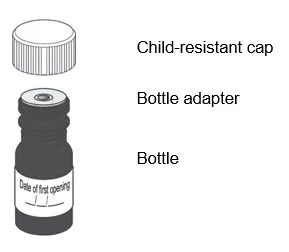 | ||||
| Dosing dispensers, provided separately by your pharmacist: | ||||
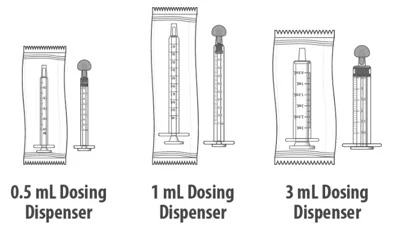 | ||||
| Note: Dosing dispenser sizes shown are for example only. | ||||
| Section A: Prepare the bottle | ||||
| ||||
| Note: The LIVMARLI bottle may not be in a box. | ||||
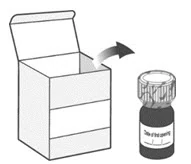 Figure A | ||||
| ||||
| Note: The date of first opening or a throw away (discard) date may already be written on the bottle label by your pharmacist. | ||||
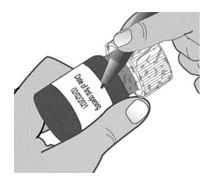 Figure B | ||||
| ||||
| Note: Your pharmacist may have already removed the plastic seal from the bottle. | ||||
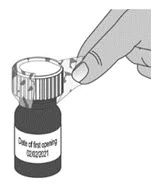 Figure C | ||||
| Section B: Prepare and give LIVMARLI | ||||
| Step 1: Draw the dose | ||||
| 1.1: | Open the bottle by pushing down firmly on the child-resistant cap and turning the cap to the left (counter-clockwise) (See Figure D). Do not throw away the child-resistant cap. | |||
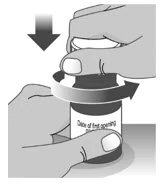 Figure D | ||||
| 1.2: | If using a new dosing dispenser, remove the dosing dispenser from the wrapper (See Figure E). Throw away (dispose of) the wrapper in household trash. 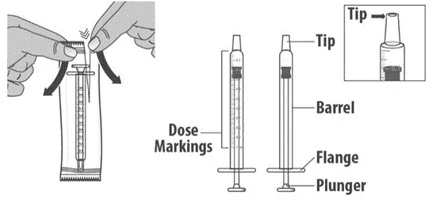 Figure E If using a used dosing dispenser, make sure the dosing dispenser has been cleaned (See Section C). If there is a cap on the dosing dispenser, remove it and throw away (dispose of) the cap into the household trash (See Figure F). Important:
Note: You can mark the prescribed dose on the dosing dispenser with a thin permanent marker to draw up the prescribed dose more easily. | |||
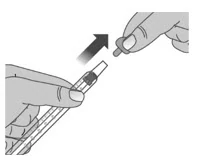 Figure F | 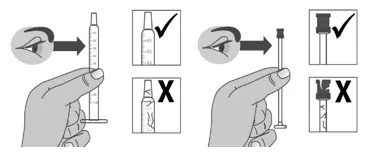 Figure G | |||
| 1.3: Push the plunger down fully to remove air from the dosing dispenser (See Figure H). | ||||
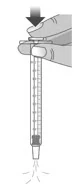 Figure H | ||||
| 1.4: | Make sure the cap is removed from bottle and insert the tip of the dosing dispenser into the bottle. The tip of the dosing dispenser should fit securely into the hole of the bottle (See Figure I). | |||
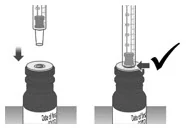 Figure I | ||||
| 1.5: | Keep the dosing dispenser in place and turn the bottle upside down (See Figure J). | |||
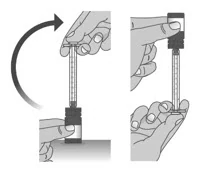 Figure J | ||||
| 1.6: | Pull back the plunger slowly until the top of the plunger is even with the marking on the barrel of the dosing dispenser for your prescribed dose of LIVMARLI (See Figure K). See Figure L on how to align the plunger with your prescribed dose. Note: The medicine should appear colorless to light yellow and clear. If it is not, do not use the medicine and contact your pharmacist. | |||
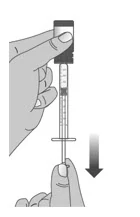 Figure K | 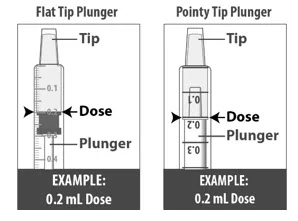 Figure L | |||
| Note: Your dose may be different than the dose shown in the figures. | ||||
| 1.7: | Check the dosing dispenser for air bubbles. If you see any air bubbles, fully push the plunger so that the medicine flows back into the bottle and withdraw the prescribed dose (See Figure M). | |||
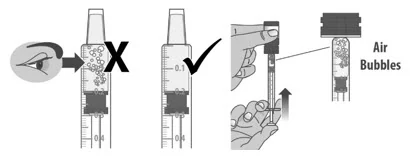 Figure M | ||||
| 1.8: | When you have measured the correct dose, leave the dosing dispenser in the bottle, and turn the bottle right side up (See Figure N). | |||
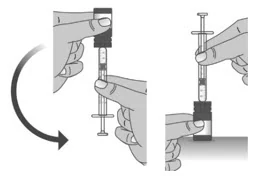 Figure N | ||||
| 1.9: | Carefully remove the dosing dispenser from the bottle by pulling straight up on the barrel of the dosing dispenser (See Figure O). Do not push the dosing dispenser plunger during this step. | |||
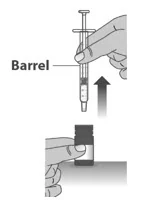 Figure O | ||||
| Step 2: Give the dose | ||||
| Note: LIVMARLI should be taken while sitting up or standing. After taking LIVMARLI wait a few minutes before lying down. | ||||
| 2.1: | Place the tip of the dosing dispenser against the inside of the cheek (See Figure P) and slowly push the plunger all the way in to give the entire dose of LIVMARLI (See Figure Q). | |||
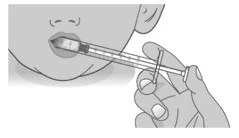 Figure P | 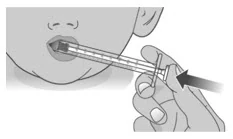 Figure Q | |||
| 2.2: | Swallow the dose. If you are not sure the entire dose was swallowed, do not give another dose. Wait until the next scheduled dose. | |||
| 2.3: | Place the child-resistant cap back on the bottle and turn the cap to the right (clockwise) (See Figure R). | |||
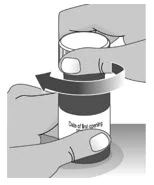 Figure R | ||||
| Section C: Cleaning instructions for the dosing dispenser | ||||
| Step 1: Rinse dosing dispenser | ||||
| 1.1: | Fill a cup with water (See Figure S). | |||
 Figure S | ||||
| 1.2: | Clean the dosing dispenser by pulling back on the plunger slowly to fill the dosing dispenser with water from the cup (See Figure T). | |||
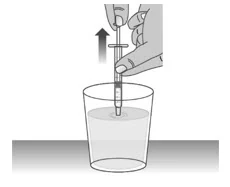 Figure T | ||||
| 1.3: | Over a sink, push the water out of the dosing dispenser (See Figure U). Repeat several times to make sure that all of the LIVMARLI has been removed. | |||
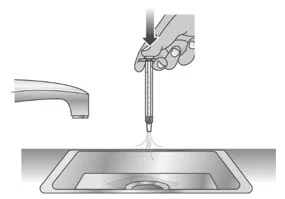 Figure U | ||||
| Step 2: Dry the dosing dispenser | ||||
| 2.1: | Remove the plunger from the barrel of the dosing dispenser by pulling the plunger and barrel away from each other (See Figure V). | |||
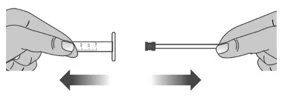 Figure V | ||||
| 2.2: | Shake off excess water (See Figure W). | |||
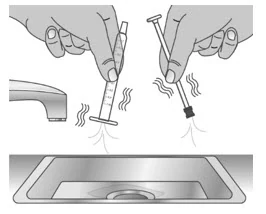 Figure W | ||||
| 2.3: | Place the plunger and barrel on a clean, dry paper towel to air dry. Store the dosing dispenser in a clean, dry place until your next dose (See Figure X). | |||
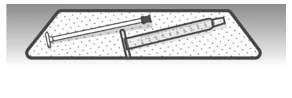 Figure X Before you give the next dose, put the dosing dispenser back together by pushing the plunger into the barrel (See Figure Y). 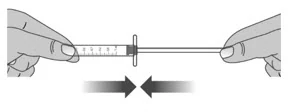 Figure Y | ||||
| Section D: Disposal | ||||
| ||||
| This Instructions for Use has been approved by the U.S. Food and Drug Administration. | Revised: July 2024 | |||
| LB00203 / LB00212 | ||||