


Prescribing information (package insert) - Kybella
1 INDICATIONS AND USAGE
KYBELLA® is indicated for improvement in the appearance of moderate to severe convexity or fullness associated with submental fat in adults.
Limitations of U se
KYBELLA is not approved for the treatment of subcutaneous fat outside the submental region, and such use is not recommended [see Warnings and Precautions ( 5.5 )].
2 DOSAGE AND ADMINISTRATION
2.1 Recommended Dos age
Before injection, see General Considerations for Administration [see Dosage and Administration ( 2.2 , 2.3 ) ] .
Inject KYBELLA into subcutaneous fat tissue in the submental area using an area-adjusted dose of 2 mg/cm2 (a single treatment of up to 100 mg (up to a total of 10 mL)) that consists of up to a maximum of 50 subcutaneous injections, (2 mg (0.2 mL)) each, spaced 1 cm apart.
Up to 6 treatments may be administered at intervals no less than 1 month apart.
2.2 Recommendations Prior to KYBELLA Treatment
KYBELLA should be administered by a healthcare provider.
Prior to KYBELLA treatment:
- Screen patients for other potential causes of submental convexity/fullness (e.g., thyromegaly and cervical lymphadenopathy).
- Consider the risks of KYBELLA use in patients with excessive skin laxity, prominent platysmal bands or other conditions for which reduction of submental fat may result in an aesthetically undesirable outcome.
- Visually inspect KYBELLA vials for particulate matter and/or discoloration, and discard the vial if the solution is discolored and/or contains particulate matter (KYBELLA is clear, colorless and free of particulate matter).
Given that patients who have had prior surgical or aesthetic treatment of the submental area may have changes in anatomy/landmarks or scar tissue that may impact the ability of the health care provider to safely administer KYBELLA or to obtain the desired aesthetic result, use KYBELLA with caution in such patients.
2. 3 Recommended Preparation and Administration Instructions
The safe and effective use of KYBELLA depends on the use of the correct number and locations of subcutaneous injections, proper needle placement, and administration technique. Prior to administration, understand the relevant submental anatomy and associated neuromuscular structures in the area involved and any alterations to the anatomy due to prior surgical or aesthetic procedures [ see W a r n in g s a n d Preca u ti o ns ( 5.1 ) ].
Avoid Injections Near the Area of the Marginal Mandibular Nerve
To avoid injury to the marginal mandibular nerve:
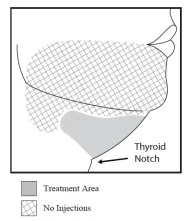
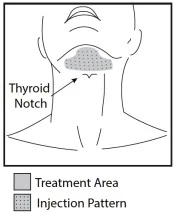
- Inject KYBELLA only within the target submental fat treatment area (see Figures 1 and 3).
- Do not inject above the inferior border of the mandible.
- Do not inject within a region defined by a 1-1.5 cm line below the inferior border (from the angle of the mandible to the mentum).
Figure 1. Avoid the Marginal Mandibular Nerve Area
Avoid Injection into the Platysma
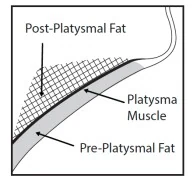
Prior to each treatment session, palpate the submental area to ensure sufficient submental fat and to identify subcutaneous fat between the dermis and platysma (pre-platysmal fat) within the target treatment area (Figure 2). The number of injections and the number of treatments should be tailored to the individual patient’s submental fat distribution and treatment goals.
Figure 2 . Sagittal View of Platy s ma Area
Administration Instructions
Consider use of ice/cold packs, topical and/or injectable local anesthesia (e.g., lidocaine) to enhance patient comfort.
Outline the planned KYBELLA treatment area with a surgical pen and apply a 1 cm injection grid to mark the injection sites (Figure 3).
Figure 3 . Treatment Area and Injection Pattern
Do not inject KYBELLA outside the defined parameters [see Warnings and Precautions ( 5.1 , 5.3 , 5.4 ) ] and follow these subcutaneous administration instructions:
- Using a large bore needle, draw 1 mL of KYBELLA into a sterile 1 mL syringe and expel any air bubbles in the syringe barrel.
- Have the patient tense the platysma.
- Pinch the submental fat and, using a 30 gauge (or smaller) 0.5 inch needle, inject 0.2 mL of KYBELLA into the pre-platysmal fat (see Figure 2) next to each of the marked injection sites by advancing the needle perpendicular to the skin.
- Do not withdraw the needle from the subcutaneous fat during injection; this could increase the risk of intradermal exposure and very superficial injections (into the dermis) may result in skin ulceration and necrosis [see Warnings and Precautions ( 5.3 )].
- Avoid injecting into the post-platysmal fat by injecting KYBELLA into fat tissue at the depth of approximately mid-way into the subcutaneous fat layer (Figure 2).
- If at any time resistance is met as the needle is inserted, indicating the possibility of contact with fascial or nonfat tissue, withdraw the needle to an appropriate depth before the injection is administered.
- Avoid injecting into other tissues such as the muscle, salivary glands, lymph nodes; and artery or vein [see Warnings and Precautions ( 5.4 )].
- Upon needle withdrawal, may apply pressure to each injection site as necessary to minimize bleeding; an adhesive dressing may be applied.
After use, discard any remaining solution in the vial. Do not dilute or mix KYBELLA with other compounds.
3 DOSAGE FORMS AND STRENG T HS
Injection: 10 mg/mL,
clear, colorless, sterile solution supplied in 2 mL vials intended for single patient use.
4 CONTRAINDICATIONS
KYBELLA is contraindicated in patients with an infection in the injection area.
5 WARNINGS AND PR E CAUTIONS
5. 1 Marginal Mandibular Nerve Injury
Cases of marginal mandibular nerve injury, manifested as an asymmetric smile or facial muscle weakness (paresis), were reported in KYBELLA-treated patients during clinical trials. All marginal mandibular nerve injuries reported from the trials resolved without additional treatment (range 1-298 days, median 44 days).
To avoid the potential for marginal mandibular nerve injury, do not inject KYBELLA into or in close proximity to the marginal mandibular branch of the facial nerve [see Dosage and Administration ( 2.3 )].
5 . 2 Dysphagia
Difficulty swallowing (dysphagia) occurred in KYBELLA-treated patients in clinical trials in the setting of administration site reactions, e.g., pain, swelling, and induration of the submental area. Cases of dysphagia resolved without additional treatment (range 1-81 days, median 3 days). Subjects with current or prior history of dysphagia were excluded from clinical trials.
Avoid use of KYBELLA in patients with a current or prior history of dysphagia because KYBELLA use may exacerbate the condition.
5.3 Injection Site Reactions
Injection Site Hematoma or Bruising
In clinical trials, 72% of subjects treated with KYBELLA had an injection site hematoma or bruising [see Adverse Reactions ( 6.1 ) ].
Use KYBELLA with caution in patients with bleeding abnormalities (e.g., taking antiplatelet or anticoagulant therapy) as excessive bleeding or bruising in the treatment area may occur.
Injection Site Alopecia
Cases of injection site alopecia have been reported with KYBELLA administration. The onset and duration of this adverse reaction may vary among individuals and may persist.
Consider withholding subsequent KYBELLA treatments until resolution of this adverse reaction.
Injection Site Ulceration, Necrosis, Nodule, Mass, and Infection
Very superficial injections (into the dermis) of KYBELLA may result in skin ulceration and necrosis [see Dosage and Administration ( 2.3 )]. Cases of injection site ulceration, necrosis, nodule (≤ 3 cm in diameter), mass (> 3 cm in diameter), and infection have been reported with KYBELLA administration. Nodules or masses may occur following initial or subsequent KYBELLA administration. Some nodules and masses may not resolve and medical intervention may be required. Some cases of injection site infection have included cellulitis and abscess requiring intravenous antibiotic treatment and incision and drainage.
Discontinue KYBELLA if patients develop injection site ulceration, necrosis, nodule, mass, or infection after KYBELLA administration.
5.4 Risk of Injecting in Proximity to Vulnerable Anatomic Structures
To avoid potential tissue damage, do not inject KYBELLA into or in close proximity (1-1.5 cm) to salivary glands, lymph nodes and muscles.
Avoid inadvertent injection directly into an artery or a vein as it can result in vascular injury.
5.5 Serious Adverse Reactions Associated with Unapproved Use Outside the Submental Region
Serious adverse reactions have been reported following unapproved administration of KYBELLA outside the submental region (e.g., blurred or reduced vision with periorbital use, muscle or nerve injury including facial paresis and paresthesia). Cases of injection site nodules (≤ 3 cm in diameter) and masses (> 3 cm in diameter) have also been reported following initial or subsequent administration of KYBELLA outside the submental region. The nodules and masses may not resolve and medical intervention may be required.
KYBELLA is not approved for the treatment of subcutaneous fat outside the submental region [see Indications and Usage ( 1 )].
6 ADVERSE REACTIONS
6 . 1 Clinical Trials Experience
Because clinical trials are conducted under widely varying conditions, the adverse reaction rates observed in the clinical trials of a drug cannot be directly compared to rates in the clinical trials of another drug and may not reflect the rates observed in practice.
In two double-blind, placebo-controlled clinical trials 513 subjects were treated with KYBELLA and 506 subjects were treated with placebo [see Clinical Studies ( 14 )]. Subjects received up to 6 treatments at least 1 month apart and were followed for up to 6 months after the last received treatment.
The most commonly reported adverse reactions are listed below (Table 1).
Table 1. Adverse Reactions in the Pooled Trials 1 and 2a
| Adverse reactions | KYBELLA (N=513) n (%) | Placebo (N=506) n (%) |
| Injection site reactions | 492 (96%) | 411 (81%) |
| edema/swelling | 448 (87%) | 218 (43%) |
| hematoma/bruising | 368 (72%) | 353 (70%) |
| pain | 356 (70%) | 160 (32%) |
| numbness | 341 (66%) | 29 (6%) |
| erythema | 136 (27%) | 91 (18%) |
| induration | 120 (23%) | 13 (3%) |
| paresthesia | 70 (14%) | 20 (4%) |
| nodule | 68 (13%) | 14 (3%) |
| pruritus | 64 (12%) | 30 (6%) |
| skin tightness | 24 (5%) | 6 (1%) |
| site warmth | 22 (4%) | 8 (2%) |
| nerve injury b | 20 (4 %) | 1 (<1%) |
| Headache | 41 (8%) | 20 (4%) |
| Oropharyngeal pain | 15 (3%) | 7 (1%) |
| Hypertension | 13 (3%) | 7 (1%) |
| Nausea | 12 (2%) | 3 (1%) |
| Dysphagia | 10 (2%) | 1 (<1%) |
a Adverse reactions that occurred in ≥ 2% KYBELLA treated subjects and at greater incidence than placebo
b Marginal mandibular nerve paresis
Other adverse reactions associated with the use of KYBELLA included injection site hemorrhage, injection site discoloration, pre-syncope/syncope, lymphadenopathy, injection site urticaria, and neck pain.
Adverse reactions that lasted more than 30 days and occurred in more than 10% of KYBELLA-treated subjects were injection site numbness (42%), injection site edema/swelling (20%), injection site pain (16%), and injection site induration (13%).
6.2 Postmarketing Experience
The following adverse reactions have been identified during post-approval use of KYBELLA.
Because these reactions are reported voluntarily from a population of uncertain size, it is not always possible to reliably estimate their frequency or establish a causal relationship to KYBELLA exposure.
- Administration Site Conditions: injection site ulceration, necrosis, mass, infection, alopecia, and scarring.
- Immune System Disorders: Hypersensitivity reactions including rash, urticaria, and itching.
- Nervous System Disorders: Oral hypoaesthesia and oral paraesthesia.
- Procedural Complications: Vascular injury due to inadvertent intravascular injection.
8 USE IN SPECIFIC POP U L A TIO N S
8 . 1 Preg n a n c y
Risk Summary
There are no adequate and well-controlled trials of KYBELLA in pregnant women to inform the drug-associated risk. In animal reproduction studies, no fetal harm was observed with the subcutaneous administration of deoxycholic acid to rats during organogenesis at doses up to 5 times the maximum recommended human dose (MRHD) of 100 mg [see Data] .
The background risk of major birth defects and miscarriage for the indicated population is unknown. However, the background risk of major birth defects in the U.S. general population is 2-4% and of miscarriage is 15-20% of clinically recognized pregnancies.
Data
Animal Data:
Embryofetal development studies have been performed in rats and rabbits using subcutaneous doses of deoxycholic acid administered during the period of organogenesis. For the basis of comparing animal to human doses, the MRHD is 1.7 mg/kg (100 mg/60 kg). No evidence of fetal harm was observed in rats at up to the highest dose tested (50 mg/kg) which is 5-fold higher than the MRHD of KYBELLA based on a mg/m2 comparison. However, missing intermediate lung lobe was noted in rabbits at all dose levels tested including the lowest dose (10 mg/kg) which is 2-fold higher than the MRHD of KYBELLA based on a mg/m2 comparison. These effects may be related to maternal toxicity, which was also seen at all dose levels tested.
8 . 2 Lactation
Risk Summary
There is no information available on the presence of synthetic deoxycholic acid in human milk, the effects of the drug on the breastfed infant or the effects of the drug on milk production. The developmental and health benefits of breastfeeding should be considered along with the mother's clinical need for KYBELLA and any potential adverse effects on the breastfed child from KYBELLA or from the underlying maternal condition.
8 . 4 Ped i atr i c Use
Safety and effectiveness of KYBELLA have not been established in pediatric patients and KYBELLA is not recommended for use in children or adolescents.
8.5 Geriatric Use
The clinical trials of KYBELLA did not include sufficient numbers of subjects aged 65 and over to determine whether they respond differently from younger adult subjects.
11 DESCRIPTION
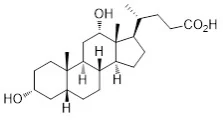
The chemical name of deoxycholic acid is 3α,12α-dihydroxy-5β-cholan-24-oic acid, and its molecular formula is C24H40O4, and its molecular weight is 392.57 g/mol. The chemical structure of deoxycholic acid is:
KYBELLA (deoxycholic acid) injection, 10 mg/mL is a clear colorless, sterile solution for subcutaneous use. Each 2 mL vial of KYBELLA contains 20 mg of deoxycholic acid, a cytolytic agent, as the active ingredient and the following inactive ingredients: benzyl alcohol (18 mg), dibasic sodium phosphate (2.84 mg), sodium chloride (8.76 mg), sodium hydroxide (2.86 mg) in water for injection, USP. Hydrochloric acid and additional sodium hydroxide are added as necessary to adjust the formulation to pH 8.3. Each vial is for single patient use.
12 CLINICAL PHARMACO L OGY
12.1 Mechanism of Action
KYBELLA is a cytolytic drug, which when injected into submental fat - in patients with moderate to severe convexity or fullness associated with submental fat - physically destroys the cell membrane causing lysis.
1 2 .2 Phar m a c o d y n a mics
Cardiac Electrophysiology
At the recommended deoxycholic acid dose, clinically significant QTc interval prolongation was not observed.
1 2 .3 Phar m a c o k in et i cs
Endogenous deoxycholic acid plasma levels are highly variable within and between individuals; most of this natural bile component is sequestered in the enterohepatic circulation loop.
Absorption and Distribution
After KYBELLA subcutaneous injection, deoxycholic acid was rapidly absorbed. After dosing with the recommended single treatment KYBELLA dose (100 mg)
- Maximum plasma concentrations of deoxycholic acid (mean Cmax) were observed with a median Tmax of 18 minutes after injection.
- Mean (±SD) deoxycholic acid exposure (AUC0-24) was 7896 ± 2269 ng.hr/mL and was 1.6-fold higher over endogenous exposure.
The mean (±SD) Cmax value was 1024 ± 304 ng/mL and was 3.2-fold higher than average Cmax values observed during a 24-hour baseline endogenous period in the absence of KYBELLA. Post-treatment deoxycholic acid plasma levels returned to the endogenous range within 24 hours. No accumulation is expected with the proposed treatment frequency.
Deoxycholic acid is extensively bound to proteins in plasma (98%).
Metabolism and Excretion
Endogenous deoxycholic acid is a product of cholesterol metabolism and is excreted intact in feces. Deoxycholic acid is not metabolized to any significant extent under normal conditions. Deoxycholic acid from KYBELLA joins the endogenous bile acid pool in the enterohepatic circulation and is excreted along with the endogenous deoxycholic acid.
Drug Interaction Studies
In Vitro Assessment of Drug Interactions :
Results from in vitro studies indicate that deoxycholic acid does not inhibit or induce human cytochrome P450 (CYP) enzymes at clinically relevant concentrations. Deoxycholic acid does not inhibit the following transporters: P-gp, BCRP, MRP4, MRP2, OATP1B1, OATP2B1, OATP1B3, OCT1, OCT2, OAT1, OAT3, NTCP, and ASBT.
Specific Populations
Patients with Hepatic Impairment :
KYBELLA has not been studied in subjects with hepatic impairment. Considering the intermittent dose frequency, the small dose administered that represents approximately 3% of the total bile acid pool, and the highly variable endogenous deoxycholic acid levels, the pharmacokinetics of deoxycholic acid following KYBELLA injection is unlikely to be influenced by hepatic impairment.
Male and Female Patients: Deoxycholic acid pharmacokinetics were not influenced by sex.
1 3 NONCLINICAL TO X ICOLOGY
13.1 Carcinogenes i s, Mutagenes i s, Impairment of Fe r tility
Long-term studies in animals have not been performed to evaluate the carcinogenic potential of deoxycholic acid.
Deoxycholic acid was negative in a battery of in vitro (Ames test and chromosomal aberration assay in human lymphocytes) and in vivo (rat erythrocyte micronucleus assay) genetic toxicology assays.
No effects on fertility were observed in male and female rats administered deoxycholic acid at subcutaneous doses up to 50 mg/kg (5 times the MRHD based on a mg/m2 comparison) once weekly prior to and during the mating period and through gestation day 7 in female rats.
14 CLINICAL STUDIES
Two randomized, multi-center, double-blind, placebo-controlled trials (Trials 1 and 2) of identical design were conducted to evaluate KYBELLA for use to improve the appearance of moderate to severe convexity or fullness associated with submental fat. The trials enrolled healthy adults (ages 19 to 65, BMI ≤ 40 kg/m2) with moderate or severe convexity or fullness associated with submental fat (i.e., grade 2 or 3 on 5-point grading scales, where 0 = none and 4 = extreme), as judged by both clinician and subject ratings. Subjects received up to 6 treatments with KYBELLA (N=514, combined trials) or placebo (N=508, combined trials) at no less than 1 month intervals. Use of ice/cold packs, topical and/or injectable local anesthesia was allowed during the clinical trials. Injection volume was 0.2 mL (2 mg) per injection site, spaced 1 cm apart into the submental fat tissue, which is also expressed in dose per area as 2 mg/cm2. For each treatment session a maximum of 100 mg (10 mL) was permitted over the entire treatment area. Subjects were administered an average of 64 mg (6.4 mL) at the first treatment session, and subjects who received all six treatments were administered an average of 44 mg (4.4 mL) at the sixth treatment session. In these trials, 59% of subjects received all six treatments.
Baseline Demographics and Important Disease Characteristics
In these trials, the mean age was 49 years and the mean BMI was 29 kg/m2. Most of the subjects were women (85%) and White (87%) and African American (8%). At baseline, 51% of the subjects had a clinician-rated submental fat severity rating of moderate submental fat rating (graded as 2 on a 0 to 4 scale) and 49% had a severe submental fat rating (graded as 3 on a 0 to 4 scale) and without excessive skin laxity.
Key Endpoints
The co-primary efficacy assessments in these trials were based on at least 2-grade and at least 1-grade improvements in submental convexity or fullness on the composite of clinician-reported and patient-reported ratings of submental fat 12 weeks after final treatment. Additionally, changes in submental fat volume were evaluated in a subset of subjects (N=449, combined trials) using magnetic resonance imaging (MRI). Visual and emotional impacts of submental fat (happy, bothered, self-conscious, embarrassed, looking older or overweight) were also evaluated using a 6-question survey, with each question rated from 0 (not at all) to 10 (extremely/very much).
Efficacy Results
In Trials 1 and 2, reductions in submental fat volume were observed more frequently in the KYBELLA group compared to the placebo group as measured by the composite clinician and patient ratings (Table 2). The composite response rates by visit are presented in Figure 4.
Table 2. ≥ 2-Grade and ≥ 1-Grade Composite Clinician Response and Composite Patient Response 12 Weeks After Final Treatment in Adult Patients with Moderate to Severe Convexity or Fullness Associated with Submental Fat
| Trial 1 | Trial 2 | |||
| Endpoint | KYBELLA (N=256) | Placebo (N=250) | KYBELLA (N=258) | Placebo (N=258) |
| 2-Grade Composite Response a | 13.4% | <0.1% | 18.6% | 3.0% |
| 1-Grade Composite Response b | 70.0% | 18.6% | 66.5% | 22.2% |
a At least 2 grade reduction on both the clinician-reported and patient-reported ratings of submental fat
b At least 1 grade reduction on both the clinician-reported and patient-reported ratings of submental fat
Figure 4 . Subjects with ≥ 2 -Grade on Both the Clinician -Reporting Ratings and the Patient Response in Adult Patients with Moderate to Severe Convexity or Fullness Associated with Submental Fat
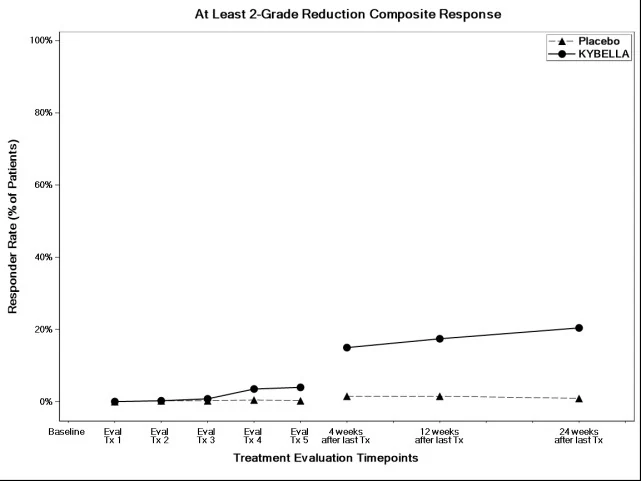
Subjects were followed up 4, 12 and 24 weeks after the last¬ treatment. Forty-one percent of subjects received fewer than 6 treatments and entered the post-treatment period earlier than Week 24.
Figure 5 . Subjects with ≥ 1 -Grade on Both the Composite Clinician Response and the Composite Patient Response in Adult Patients with Moderate to Severe Convexity or Fullness Associated with Submental Fat
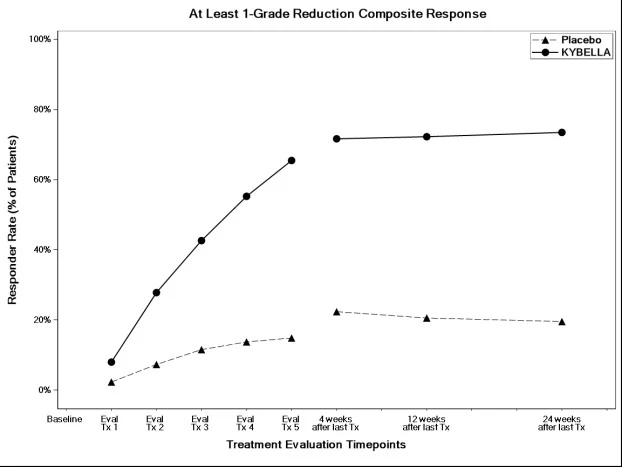
Subjects were followed up 4, 12 and 24 weeks after the last treatment. Forty-one percent of subjects received fewer than 6 treatments and entered the post-treatment period earlier than Week 24.
A greater proportion of KYBELLA-treated subjects had at least a 10% reduction in submental fat volume (evaluated by MRI) as compared to placebo-treated subjects (43% vs 5%, respectively).
The overall patient-reported satisfaction and self-perceived visual attributes showed greater improvement in the KYBELLA group than in the placebo group.
1 6 HOW SUPPLIED/STORAGE AND HANDLING
KYBELLA (deoxycholic acid) injection, 10 mg/mL is a clear, colorless, sterile solution supplied in 2 mL, single patient use vials in the following dispensing pack:
- vials, NDC 61168-101-04
Store at 20°C to 25°C (68°F to 77°F); excursions are permitted between 15°C to 30°C (59°F to 86°F) [See USP Controlled Room Temperature].
KYBELLA has a unique hologram on the vial label. If you do not see a hologram, do not use the product and call 1-800-633-9110.
Each vial is for a single patient use.
1 7 PATIENT COUNSELING INFORMA T ION
Advise the patient to read the FDA-approved patient labeling (Patient Information).
Advise patients to contact their healthcare providers if they develop signs of marginal mandibular nerve paresis (e.g., asymmetric smile, facial muscle weakness) or difficulty swallowing, or if existing symptoms worsen [see Warnings and Precautions ( 5.1 , 5.2 )].
Advise patients to contact their healthcare providers if they develop injection site hematoma, brusing, alopecia, ulceration, necrosis, nodule, mass, infection, pain, numbness, induration, or paresthesia from the treatment area [see Warnings and Precautions ( 5.3 )].
Distributed by: AbbVie Inc.
Manufactured for:
AbbVie Inc.
North Chicago, IL 60064
© 2026 AbbVie. All rights reserved.
KYBELLA and its design are trademarks of Allergan Sales, LLC, an AbbVie company.
Patented. See www.abbvie.com/patents

V5.0USPI0101