


Prescribing information (package insert) - Jelmyto
1 INDICATIONS AND USAGE
JELMYTO® is indicated for the treatment of adult patients with low-grade Upper Tract Urothelial Cancer (LG-UTUC).
2 DOSAGE AND ADMINISTRATION
2.1 Important Administration Instructions
See the Instructions for Administration provided separately.
JELMYTO is for pyelocalyceal use only. JELMYTO is not for intravenous use, topical use, or oral administration. Prior to every instillation, instruct the patient to take 1.3 g of sodium bicarbonate orally the evening prior to, the morning of, and 30 minutes prior to the instillation procedure (total of 3.9 g).
General anesthesia, local anesthesia, sedation, prophylactic antibiotics and/or antihistamines may be used at the discretion of the treating urologist. If the patient is to be anesthetized, advise the patient not to take sodium bicarbonate within 30 minutes prior to the treatment.
Consider withholding diuretics one day prior to instillation until 4 hours post-instillation.
When instilling JELMYTO, the entire syringe must be emptied within one minute.
Advise patients that JELMYTO may discolor urine to a violet to blue color following the instillation procedure. Advise patients to avoid contact with urine for at least six hours post-instillation, to void urine sitting on a toilet, and to flush the toilet several times after use.
2.2 Recommended Dosage
The dose of JELMYTO to be instilled is 4 mg per mL via ureteral catheter or a nephrostomy tube, with total instillation volume based on volumetric measurements using pyelography, not to exceed 15 mL (60 mg of mitomycin).
Instill JELMYTO once weekly for six weeks. For patients with a complete response 3 months after JELMYTO initiation, JELMYTO instillations may be administered once a month for a maximum of 11 additional instillations.
2.3 Preparation and Handling
See the Instructions for Pharmacy for preparation provided separately.
JELMYTO is a hazardous drug. Follow applicable special handling and disposal procedures.1
JELMYTO must be prepared under chilled conditions. Once reconstituted, the admixture will have a concentration of 4 mg of mitomycin per mL and will appear as a viscous liquid for instillation. Reconstituted JELMYTO has reverse thermal properties with a gelation point of approximately 19°C (66°F). Reconstituted JELMYTO should be instilled as soon as possible after reconstitution. Store reconstituted JELMYTO at 20°C to 25°C (68°F to 77°F) for up to 96 hours (4 days). JELMYTO will appear as a semisolid gel when stored under these conditions. Protect reconstituted JELMYTO from light.
JELMYTO must be instilled as a chilled solution using a Uroject12 Lever, a Luer Lock syringe, and a ureteral catheter with molded Luer Lock connector. Once chilled at -3°C to 5°C (27°F to 41°F), JELMYTO will convert to a viscous liquid for instillation and is stable for up to 1 additional hour. Reconstituted JELMYTO must be instilled within 1 hour after it is converted to a viscous liquid.
3 DOSAGE FORMS AND STRENGTHS
For pyelocalyceal solution: A kit containing the following:
- Two 40 mg (each) single-dose vials of sterile, lyophilized, grey to greyish-purple, cake or powder of mitomycin for pyelocalyceal solution
- One single-dose vial of 20 mL of sterile, clear, colorless gel with or without bubbles at room temperature or clear, colorless liquid at 2°C to 8°C (36°F to 46°F), to be used as a vehicle for reconstitution
4 CONTRAINDICATIONS
JELMYTO is contraindicated in patients with perforation of the bladder or upper urinary tract.
5 WARNINGS AND PRECAUTIONS
5.1 Ureteric Obstruction
Ureteric obstruction, including ureteral stenosis and hydronephrosis, occurred in patients receiving JELMYTO.
In the Olympus study, ureteric obstruction was reported in 58% (n=41) of patients receiving JELMYTO, including 17% (n=12) of patients who experienced Grade 3 obstruction. The median time to first onset was 72 days (range: 15-462). Interventions in the 41 patients experiencing ureteric obstruction included ureteral stent placement (88%), balloon dilatation (29%), and nephroureterectomy (4.9%). In the 36 patients who required ureteral stent placement, the median duration of indwelling stents was 52 days (range: 1-292). Ureteric obstruction did not resolve or resolved with sequelae in 44% (n=18) of these patients. Of the 41 patients who experienced ureteric obstruction, 17% (n=7) experienced Grades 1-2 increase in serum creatinine.
In the 42 patients who only received JELMYTO during the treatment phase (no maintenance therapy), ureteric obstruction was reported in 40% (n=17).
Monitor patients for signs and symptoms of ureteric obstruction, including flank pain, and fever, and for changes in renal function. Patients who experience obstruction may require transient or long-term ureteral stents or alternative procedures. Withhold or permanently discontinue JELMYTO based on the severity of ureteric obstruction.
5.2 Bone Marrow Suppression
The use of JELMYTO can result in bone marrow suppression, particularly thrombocytopenia and neutropenia. In the Olympus study, Grade 3 thrombocytopenia occurred in three patients, Grade 3 anemia in one patient, and Grade 3 neutropenia in one patient. Gross extravasation of JELMYTO via urinary tract perforation or impaired mucosa was not observed in these patients. The following tests should be obtained prior to each treatment: Platelet count, white blood cell count differential and hemoglobin. Withhold JELMYTO for Grade 2 thrombocytopenia or neutropenia. Permanently discontinue for Grade 3 or greater thrombocytopenia or neutropenia.
5.3 Embryo-Fetal Toxicity
Based on findings in animals and mechanism of action, JELMYTO can cause fetal harm when administered to a pregnant woman. In animal reproduction studies, administration of mitomycin resulted in teratogenicity. Advise females of reproductive potential to use effective contraception during treatment with JELMYTO and for 6 months following the last dose. Advise male patients with female partners of reproductive potential to use effective contraception during treatment with JELMYTO and for 3 months following the last dose [see Use in Specific Populations (8.1, 8.3) and Clinical Pharmacology (12.1)].
6 ADVERSE REACTIONS
The following clinically significant adverse reactions are discussed in greater detail in other sections of the labeling:
- Ureteric Obstruction [see Warnings and Precautions (5.1)]
- Bone Marrow Suppression [see Warnings and Precautions (5.2)]
6.1 Clinical Trials Experience
Because clinical trials are conducted under widely varying conditions, adverse reaction rates observed in clinical trials of a drug cannot be directly compared to rates in the clinical trials of another drug and may not reflect rates observed in practice.
The safety of JELMYTO was evaluated in Olympus, an open-label, single-arm study in 71 patients with LG-UTUC [see Clinical Studies (14)]. For the 71 patients treated with JELMYTO during the treatment period, the median number of instillations was 6 (range: 3-6). Following initial treatment, 29 patients were treated with up to 11 doses of maintenance instillations, with a median of 6 instillations (range: 1-11).
Serious adverse reactions occurred in 39% of patients who received JELMYTO. Serious adverse reactions in > 3% of patients included ureteric obstruction (including ureteric stenosis and hydronephrosis), flank pain, and urosepsis. Two deaths occurred due to cerebrovascular accident and failure to thrive.
JELMYTO was permanently discontinued due to an adverse reaction in 17 (24%) patients, including 11 patients who discontinued during the treatment phase and 6 who discontinued during the maintenance phase. Adverse reactions resulting in study drug discontinuation of JELMYTO in > 3% of patients who received JELMYTO included ureteric obstruction.
Dosage interruptions due to an adverse reaction occurred in 37% of patients who received JELMYTO. Adverse reactions requiring dosage interruption in > 3% of patients who received JELMYTO included renal dysfunction, ureteric obstruction, urinary tract infection, and flank pain.
The most common adverse reactions (≥ 20%) reported were ureteric obstruction, flank pain, urinary tract infection, hematuria, renal dysfunction, nausea, abdominal pain, fatigue, dysuria, and vomiting.
Table 1 summarizes the adverse reactions in Olympus.
Table 1: Adverse Reactions (≥ 10% All Grades) in Patients Who Received JELMYTO in Olympus
JELMYTOGraded per National Cancer Institute Common Terminology Criteria for Adverse Events. Version 5.0 (NCI CTCAE v5) (n=71) | ||
|---|---|---|
| Adverse Reaction | All Grades (%) | Grade 3-4 (%) |
| Renal and urinary disorders | ||
| Ureteric ObstructionIncludes hydronephrosis, obstructive uropathy, pelvi-ureteric obstruction, ureteric obstruction, ureteric stenosis, and urinary tract obstruction. | 58 | 17 |
| Ureteric stenosis | 44 | 9 |
| Hydronephrosis | 18 | 6 |
| Urinary tract obstruction | 7 | 1.4 |
| Pelvi-ureteric obstruction | 6 | 1.4 |
| Ureteric obstruction | 2.8 | 1.4 |
| Obstructive uropathy | 1.4 | 0 |
| Flank painIncludes flank pain and back pain. | 41 | 2.8 |
| HematuriaIncludes hematuria and hemorrhage urinary tract. | 34 | 2.8 |
| Urinary tract infectionIncludes urinary tract infection, pyelonephritis, and urinary tract infection fungal. | 34 | 4.2 |
| Renal dysfunctionIncludes renal impairment, acute kidney injury, and renal failure. | 25 | 2.8 |
| Dysuria | 23 | 0 |
| Pollakiuria | 14 | 0 |
| Gastrointestinal disorders | ||
| Nausea | 25 | 1.4 |
| Abdominal painIncludes abdominal pain and abdominal pain lower. | 24 | 1.4 |
| Vomiting | 20 | 4.2 |
| General disorders and administration site conditions | ||
| FatigueIncludes asthenia, fatigue, and malaise. | 24 | 1.4 |
| Pyrexia | 13 | 1.4 |
| Chills | 11 | 0 |
| Blood and lymphatic system disorders | ||
| Anemia | 14 | 1.4 |
| Skin and subcutaneous tissue disorders | ||
| RashIncludes rash, dermatitis allergic, rash generalized, genital rash, eczema, rash maculo-papular, and skin exfoliation. | 14 | 0 |
| Pruritus | 13 | 0 |
| Metabolism and nutrition disorders | ||
| Decreased appetite | 10 | 0 |
| Vascular disorders | ||
| Hypertension | 10 | 4.2 |
Selected clinically relevant adverse reactions in < 10% and ≥ 2% of patients who received JELMYTO in Olympus include urinary tract inflammation, bladder spasm, urosepsis, hypersensitivity, and instillation site pain.
Table 2 summarizes the laboratory abnormalities in Olympus.
Table 2: Select Laboratory Abnormalities (≥ 10%) Worsening from Baseline in Patients Who Received JELMYTO in Olympus
| Laboratory AbnormalityGraded per National Cancer Institute Common Terminology Criteria for Adverse Events. Version 5.0 (NCI CTCAE v5). Each test incidence is based on the number of patients who had both baseline and at least one on-study laboratory measurement available. | JELMYTO | |
|---|---|---|
| All Grades (%) | Grade ≥ 3 (%) | |
| Hematology | ||
| Anemia | 38 | 0 |
| Lymphopenia | 21 | 2.9 |
| Thrombocytopenia | 21 | 2.8 |
| Chemistry | ||
| Estimated Glomerular Filtration Rate (eGFR) eGFR calculated per MDRD (Modification of Diet in Renal Disease) equation | 38 | 11 |
| Creatinine increased | 34 | 0 |
| Hypoalbuminemia | 28 | 2.8 |
| Hypocalcemia | 16 | 0 |
| Hyperuricemia | 16 | 16 |
| Hyperkalemia | 13 | 1.4 |
| Hypernatremia | 11 | 0 |
8 USE IN SPECIFIC POPULATIONS
8.1 Pregnancy
Risk Summary
Based on findings in animals and mechanism of action, JELMYTO can cause fetal harm when administered to a pregnant woman [see Clinical Pharmacology (12.1)]. There are no available data on JELMYTO use in pregnant women to inform the drug-associated risk. In animal reproduction studies, administration of mitomycin resulted in teratogenicity (see Data). Advise pregnant women of the potential risk to a fetus.
The estimated background risk of major birth defects and miscarriage for the indicated population is unknown. In the U.S. general population, the estimated background risk of major birth defects and miscarriage in clinically recognized pregnancies is 2% - 4% and 15% - 20%, respectively.
Data
Animal Data
Teratological changes have been noted with mitomycin in animal studies.
8.2 Lactation
Risk Summary
There are no data on the presence of mitomycin in human milk, the effects on the breastfed child, or the effects on milk production. Because of the potential for serious adverse reactions in a breastfed child, advise women not to breastfeed during treatment with JELMYTO and for 1 week following the last dose.
8.3 Females and Males of Reproductive Potential
JELMYTO can cause fetal harm when administered to pregnant women [see Use in Specific Populations (8.1)].
Pregnancy Testing
Verify pregnancy status in females of reproductive potential prior to initiating JELMYTO.
Contraception
Females
Advise females of reproductive potential to use effective contraception during treatment with JELMYTO and for 6 months following the last dose.
Males
Advise male patients with female partners of reproductive potential to use effective contraception during treatment with JELMYTO and for 3 months following the last dose.
8.4 Pediatric Use
Safety and efficacy in pediatric patients have not been established.
8.5 Geriatric Use
Of the total number of patients in the Olympus trial, 75% (53 patients) were 65 years of age and over and 37% (26 patients) were 75 years of age and over. Clinical studies of JELMYTO did not include sufficient numbers of younger patients less than 65 years old to determine whether they respond differently from older patients.
8.6 Renal Impairment
No data are available in patients with severe renal impairment. Avoid use of JELMYTO in patients with a Glomerular Filtration Rate of < 30 mL/min.
11 DESCRIPTION
Mitomycin (also known as mitomycin-C) is an alkylating drug isolated from the broth of Streptomyces. Mitomycin is a blue-violet crystalline powder with a molecular formula of C15H18N4O5, and a molecular weight of 334.33. Its chemical name is 7-amino-9α-methoxymitosane, and it has the following structural formula:
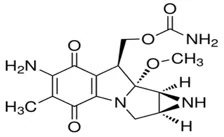
Mitomycin is heat stable, has a high melting point, and is freely soluble in organic solvents.
JELMYTO is supplied in a kit containing two vials of sterile lyophilized mitomycin for pyelocalyceal solution, 40 mg each, and one vial of 20 mL of sterile hydrogel, to be used as a vehicle for reconstitution.
Mitomycin for pyelocalyceal solution is a sterile, lyophilized, grey to greyish-purple, cake or powder that contains mitomycin 40 mg and mannitol 80 mg in each vial.
Sterile hydrogel is a sterile, clear, colorless gel with or without bubbles at room temperature or clear, colorless liquid at 2°C to 8°C (36°F to 46°F), which contains 0.04 g hydroxypropyl methylcellulose, 5.67 g poloxamer, 0.21 g polyethylene glycol, and water for injection in each vial.
Once reconstituted, JELMYTO is a clear, purple, viscous liquid at 2°C to 8°C (36°F to 46°F) or semisolid gel at room temperature with a concentration of 4 mg per mL of mitomycin, which may contain a few visible particles and have a pH between 6.0 and 8.0.
12 CLINICAL PHARMACOLOGY
12.1 Mechanism of Action
Mitomycin inhibits the synthesis of deoxyribonucleic acid (DNA). The guanine and cytosine content correlates with the degree of mitomycin-induced cross-linking. At high concentrations of the drug, cellular RNA and protein synthesis are also suppressed.
12.2 Pharmacodynamics
There is insufficient data to characterize an exposure-response relationship or time course of pharmacodynamic response for mitomycin.
12.3 Pharmacokinetics
Absorption
The systemic exposure of mitomycin following instillation of up to 60 mg of mitomycin as JELMYTO into the pyelocalyceal system was evaluated pre-instillation and hourly for up to six hours post-instillation in six patients. The concentrations of mitomycin in plasma were variable and ranged from 2.43 to 12.80 ng/mL over the course of treatment; the mean Cmax was 6.24 ng/mL, which is estimated to be less than 1% of the expected Cmax after intravenous administration.
Elimination
Following instillation into the pyelocalyceal system, JELMYTO forms a semisolid gel which dissolves from normal kidney urine flow releasing mitomycin for up to 4 to 6 hours. Mitomycin is eliminated unchanged in the urine. Systemically absorbed mitomycin is rapidly cleared from the serum and approximately 10% is excreted unchanged in the urine.
Metabolism
Mitomycin is metabolized primarily in the liver, but metabolism occurs in other tissues as well. It is believed that the rate of clearance is inversely proportional to the maximal serum concentration because of saturation of the degradative pathways.
13 NONCLINICAL TOXICOLOGY
13.1 Carcinogenesis, Mutagenesis, Impairment of Fertility
Adequate long-term studies in animals to evaluate carcinogenic potential from instillation of mitomycin into the pyelocalyceal system have not been conducted. Mitomycin has been found to be carcinogenic in rats and mice. At doses approximating the recommended intravenous clinical dose in humans, mitomycin produced a greater than 100% increase in tumor incidence in male Sprague-Dawley rats, and a greater than 50% increase in tumor incidence in female Swiss mice.
The effect of JELMYTO on fertility is unknown.
14 CLINICAL STUDIES
The efficacy of JELMYTO is based on the results of the Olympus study (NCT02793128), an open-label, single-arm, multicenter trial that enrolled 71 patients with treatment-naïve or recurrent non-invasive low-grade upper tract urothelial cancer (LG-UTUC) with at least one measurable papillary tumor 5 to ≤ 15 mm located above the ureteropelvic junction; patients who had larger tumors could have had tumor debulking prior to treatment, in order to meet the criteria. Patients were excluded from the trial for a history of carcinoma in situ (CIS) in the urinary tract, invasive urothelial carcinoma within 5 years, high grade papillary urothelial carcinoma within 2 years; or for BCG treatment within 6 months of JELMYTO treatment. Following biopsy and prior to treatment, patients were required to have at least one remaining visible tumor with a diameter of at least 5 mm.
Patients received JELMYTO 4 mg per mL via ureteral catheter or nephrostomy tube with total instillation volume based on individualized volumetric measurements using pyelography with the intent to fill the renal pelvis. Patients were treated with 6 instillations once a week. Patients who maintained a complete response (CR) after the initial treatment period were allowed to proceed to the follow-up period. During the initial treatment period, 71 patients were treated with JELMYTO, of whom 41 were subsequently continued in the follow-up period. During the follow-up period, 29 patients received at least one dose of maintenance therapy.
The baseline demographic and disease characteristics for the trial population were: median age 71 years (range: 42-87 years); 68% male; 87% White; 90% Eastern Cooperative Oncology Group Performance Status (ECOG PS) 0 or 1 and 10% ECOG PS 2. The median number of papillary lesions subsequent to debulking and/or biopsy and prior to treatment was 1 lesion (range: 1, 5), the median diameter of the largest lesion was 8.0 mm (range: 5.0, 15.0), and the median total visible tumor burden was 10.0 mm (range: 5.0, 25.0). Twenty-six (37%) patients underwent tumor debulking during the six weeks preceding enrollment. Of 71 enrolled patients, 48% had tumors located in regions not amenable to endoscopic resection. General anesthesia was used in 37% of patients for at least one instillation during the treatment period and for 83% of patients for at least one instillation during the follow-up period.
The major efficacy outcome measures were CR and durability of CR at 12 months after determination of CR based on ureteroscopic and local pathology assessment. CR was defined as complete absence of tumor lesions in the ipsilateral pyelocalyceal system at 3 months after initiation of JELMYTO by urine cytology and ureteroscopy. Biopsy was performed if warranted. Durability of response in patients with a CR was evaluated at 3, 6, 9 and 12 months following the initial assessment. Assessment of durability of CR subsequent to these evaluations was performed per local standards of care.
Forty-one patients (58%) achieved CR in the study (95% CI: 45%, 69%). Of the 41 patients who achieved CR, 23 (56%) of the patients remained at CR at the 12-month time point for assessment of durability, 8 (20%) experienced recurrence of disease, and 10 (24%) were unable to be evaluated (died, discontinued from the study, or were indeterminate for ongoing response). The median duration of response was not reached (range: 0, 18.8 months and ongoing). One patient, who achieved 6 months of durable CR, was diagnosed with metastatic urothelial carcinoma approximately 4.5 months after the last dose of study medication and died from the disease.
15 REFERENCES
- 1. "OSHA Hazardous Drugs." OSHA. http://www.osha.gov/SLTC/hazardousdrugs/index.html
16 HOW SUPPLIED/STORAGE AND HANDLING
16.1 How Supplied
JELMYTO kit – NDC 72493-103-03
JELMYTO is available in a kit containing the following:
- Two 40 mg (each) single-dose vials of mitomycin for pyelocalyceal solution supplied as a sterile, lyophilized, grey to greyish-purple, cake or powder. (NDC 72493-101-40)
- One 20 mL single-dose vial of sterile hydrogel supplied as a sterile, clear, colorless gel with or without bubbles at room temperature or clear, colorless liquid at 2°C to 8°C (36°F to 46°F), to be used as a vehicle for reconstitution. (NDC 72493-102-20)
16.2 Storage and Handling
Store the JELMYTO kit at 20°C to 25°C (68°F to 77°F); excursions permitted between 15°C and 30°C (59°F and 86°F) [see USP Controlled Room Temperature]. Avoid excessive heat over 40°C (104°F). Protect from light.
JELMYTO is a hazardous drug. Follow applicable special handling and disposal procedures. 1
17 PATIENT COUNSELING INFORMATION
Advise the patient to read the FDA-approved patient labeling (Patient Information).
Ureteric Obstruction
Inform patients that ureteric obstruction may occur, and ureteral stents or alternative procedures may be required during treatment with JELMYTO. Advise patients to contact their healthcare provider immediately if signs and symptoms of ureteric obstruction, including flank pain and/or fever, occur [see Warnings and Precautions (5.1)].
Bone Marrow Suppression
Inform patients that JELMYTO may decrease blood counts such as white blood cells and platelets. Thus, it is important that periodic assessment of their blood counts be performed to detect the development of neutropenia and thrombocytopenia [see Warnings and Precautions (5.2)].
Embryo-Fetal Toxicity
Advise pregnant women and females of reproductive potential of the potential risk to a fetus. Advise females to inform their healthcare providers of a known or suspected pregnancy [see Warnings and Precautions (5.3) and Use in Specific Populations (8.1)].
Advise females of reproductive potential to use effective contraception during treatment with JELMYTO and for 6 months following the last dose [see Use in Specific Populations (8.3)].
Advise male patients with female partners of reproductive potential to use effective contraception during treatment with JELMYTO and for 3 months following the last dose [see Use in Specific Populations (8.3)].
Lactation
Advise women not to breastfeed during treatment with JELMYTO and for 1 week following the last dose [see Use in Specific Populations (8.2)].
Important Post-Treatment Instructions [see Dosage and Administration (2.1)]
Advise patients that JELMYTO contains mitomycin which is a violet to blue color and may discolor urine following the instillation procedure.
Advise patients to avoid contact with urine for at least six hours post-instillation.
Advise patients to void sitting on a toilet, flush the toilet several times after use, and to wash hands, perineum or glans with soap and water after each instillation procedure.
Advise patients to wash clothing soiled with urine promptly and separately from other clothing.
Distributed by:
UroGen Pharma, Inc.
Princeton, NJ 08540
JELMYTO® and UroGen® are registered trademarks of UroGen Pharma, Ltd.
U.S. Patent Nos. 9,040,074 and 9,950,069
Copyright© 2025 UroGen Pharma, Inc.
All rights reserved.
JEL-PI-005