


Patient information: uses, side effects, how to take - Inlexzo
What is INLEXZO?
- INLEXZO is a prescription medicine for the treatment of adults with a type of cancer of the lining of the bladder called non-muscle invasive bladder cancer (NMIBC), that has not spread to other parts of the body, and that did not respond to treatment with Bacillus Calmette-Guérin (BCG).
It is not known if INLEXZO is safe and effective for use in children.
Do not receive INLEXZO if you:
- have a tear or hole (perforation) of your bladder.
- have had an allergic reaction to gemcitabine or any of the ingredients in INLEXZO. See the end of this Patient Information leaflet for a complete list of ingredients in INLEXZO.
Before receiving INLEXZO, tell your healthcare provider about all of your medical conditions, including if you:
are pregnant, or plan to become pregnant. INLEXZO can harm your unborn baby. You should not become pregnant during treatment with INLEXZO. Tell your healthcare provider right away if you become pregnant or think you may be pregnant during treatment with INLEXZO.
Females who are able to become pregnant:
- Your healthcare provider will check to see if you are pregnant before starting treatment with INLEXZO.
- Use effective birth control (contraception) during treatment with INLEXZO and for 6 months after final removal of INLEXZO.
Males treated with INLEXZO:
- If you have a female partner who is able to become pregnant, you should use effective birth control (contraception) during treatment with INLEXZO and for 3 months after final removal of INLEXZO.
- are breastfeeding, or plan to breastfeed. It is not known if INLEXZO passes into your breastmilk. Do not breastfeed during treatment with INLEXZO and for 1 week after final removal of INLEXZO.
Tell your healthcare provider about all the medicines you take,including prescription and over-the-counter medicines, vitamins, and herbal supplements.
How will I receive INLEXZO?
- INLEXZO will be inserted and removed by your healthcare provider.
- INLEXZO is inserted into your bladder through a tube called a urinary catheter 1 time every 3 weeks for up to 6 months (8 doses) and then 1 time every 12 weeks for up to 18 months (6 doses).
- INLEXZO is removed after 3 weeks of being inserted (3-week indwelling period).
- Your healthcare provider will decide how many INLEXZO treatments you will receive.
- Your healthcare provider may give you antibiotics before INLEXZO is inserted or removed.
- It is very important that you go to all of your appointments. If you miss any appointments, call your healthcare provider as soon as possible to schedule your appointment.
Before receiving INLEXZO:
- Do not empty your bladder right before your procedure to insert INLEXZO.
After receiving INLEXZO:
- Drink about 6 to 7 cups (1500 mL) of fluids per day during treatment with INLEXZO to make sure you produce enough urine for the medicine to be released into the bladder.
- You can urinate normally. There is no need to hold your urine.
- Avoid contact between your skin and urine.
- To urinate, males and femalesshould sit on the toilet and flush after each use.
- Wash your hands with soap and water and wash your genital area with water after each time you urinate.
- Wash clothing soiled with urine right away and separately from other clothing.
After your healthcare provider removes INLEXZO:
- Avoid contact between your skin and urine for at least 24 hours after INLEXZO is removed.
What should I avoid after INLEXZO is inserted?
Tell your healthcare provider that you have INLEXZO before having a type of scan called Magnetic Resonance Imaging (MRI).
INLEXZO may be used under specific conditions.Your healthcare provider will give you an MRI Safety Information Card. Keep the card in a safe place and show it to all of your healthcare providers. The card contains important information in case you need to have an MRI. Your healthcare provider will review the information on the MRI Safety Information Card and determine the conditions they can safely do an MRI scan while INLEXZO is in your bladder.
What are the possible side effects of INLEXZO?
The most common side effects of INLEXZO include:
- frequent need to pass urine more often than usual
- urinary tract infection
- pain or burning sensation when passing urine
- urgent need to pass urine
- decreased hemoglobin
- increased lipase
- pain in the urinary tract (felt in the lower stomach area or lower back)
- decreased lymphocytes
- blood in urine
- increased creatinine
- increased potassium
- increased aspartate aminotransferase
- decreased sodium
- bladder irritation
- increased alanine transaminase
INLEXZO may cause fertility problems in males, which may affect your ability to have children. It is unknown if these side effects of fertility are reversible. Talk to your healthcare provider if this is a problem for you.
Tell your healthcare provider if you have any side effect that bothers you or does not go away.
These are not all the possible side effects of INLEXZO.
Call your healthcare provider for medical advice about side effects. You may report side effects to FDA at 1-800-FDA-1088.
General information about the safe and effective use of INLEXZO.
Medicines are sometimes prescribed for purposes other than those listed in this Patient Information leaflet. You can ask your pharmacist or healthcare provider for information about INLEXZO that is written for healthcare professionals.
What are the ingredients in INLEXZO?
Active ingredient:gemcitabine hydrochloride
Inactive ingredients for gemcitabine component:polyethylene glycol 8000, povidone K30, and urea.
Inactive ingredients for osmotic components:FD&C Blue No.1, polyethylene oxide 600,000, and urea.
Manufactured for:
Janssen Biotech, Inc.
Horsham, PA 19044, USA
U.S. License Number 1864
For patent information: www.janssenpatents.com
© Johnson & Johnson and its affiliates 2025
For more information, call 1-800-526-7736 or go to www.INLEXZO.com
INSTRUCTIONS FOR USE
INLEXZO™
[inn-lex-zo]
(gemcitabine intravesical system)
For Intravesical Administration Only
Intended Use
INLEXZO releases gemcitabine into bladder urine during the indwelling period. See INLEXZO Prescribing Information (PI) for additional details.
The contents of the Instructions for Use provide instructions for both the insertion and removal of INLEXZO. Ensure that the Instructions for Use are available and reviewed prior to insertion and removal of INLEXZO.
User
INLEXZO should be inserted and removed by a trained healthcare provider.
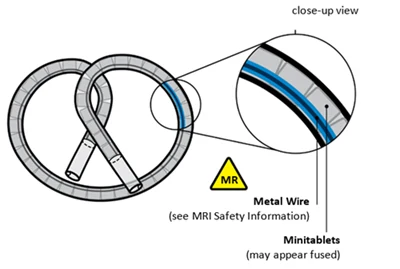
 | MRI Safety Information INLEXZOis MR Conditional. A patient with INLEXZOmay be safely scanned under the following conditions. Failure to follow these conditions may result in injury to the patient. | |
| Parameter | Condition of Use/Information | |
| Nominal Values of Static Magnetic Field (T) | 1.5-Tesla and 3.0-Tesla | |
| Maximum Spatial Field Gradient (T/m and gauss/cm) | 50-T/m (5,000-gauss/cm) | |
| Type of RF Excitation | Circularly Polarized (CP) (i.e., Quadrature Transmission) | |
| Transmit RF Coil | Any transmit RF coil may be used. | |
| Receive RF Coil | Any receive-only RF coil may be used | |
| Maximum Whole Body Averaged SAR (W/kg) | 2-W/kg (Normal Operating Mode) | |
| Limits on Scan Duration | Whole body averaged SAR of 2-W/kg for 60 minutes of continuous RF exposure (i.e., per pulse sequence or back-to-back sequences/series without breaks) | |
| MR Image Artifact | The presence of INLEXZO produces an imaging artifact. Therefore, carefully select pulse sequence parameters if INLEXZO is located in the area of interest. | |
 | Precautions |
INLEXZO is a hazardous drug. Follow applicable special handling and disposal procedures while handling INLEXZO and during the insertion and removal procedure. Dispose of the used urinary catheter and stylet, INLEXZO, and its packaging per facility procedures and per applicable federal, state, and local regulations.
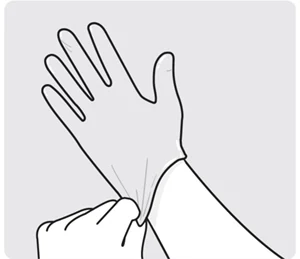
Wear gloves, and take appropriate precautions, per local guidelines for handling hazardous drugs,to prevent skin or mucus membrane exposure while handling INLEXZO and during the insertion and removal procedure.
If contact with INLEXZO is suspected, immediately wash the skin thoroughly or rinse the mucosa with copious amounts of water.
Advise patients and caregivers to exercise caution when handling urine during indwelling period of approximately 3 weeks. See INLEXZO PI for details.
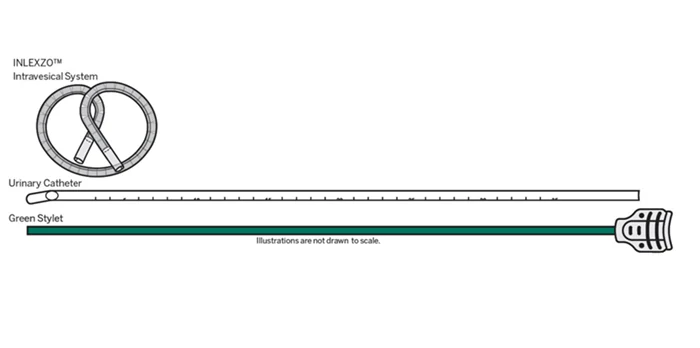
INLEXZO contains one single-dose 225 mg strength gemcitabine intravesical system consisting of a flexible bi-oval shaped tube containing an almost white to light pink-brown colored component at the center surrounded by off white to light blue osmotic components.
Important Information
Use aseptic technique during insertion and removal of INLEXZO.
Follow these instructions carefully, to avoid patient injury and ensure proper functioning.
Insertion
To ensure proper insertion of INLEXZO and to avoid damage to INLEXZO, use only the following:
- Water-based lubricant
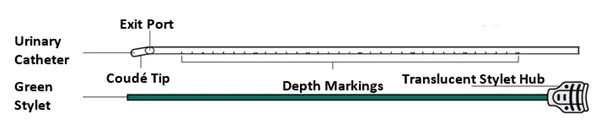
- Urinary catheter and stylet (supplied)
Do notuse the urinary catheter and stylet for any other purpose. Do not re-sterilize/re-use the urinary catheter or stylet. Re-use of the urinary catheter and stylet can lead to its degradation, failure, and contamination, which can increase the risk of infection or transmission of blood borne pathogens to patients and users.
Do notuse any components that are damaged or have damaged packaging.
Check the expiration ('EXP') date before use.
Do notuse INLEXZO if expiration date has passed.
Removal
To ensure proper INLEXZO removal and to avoid damage to INLEXZO and/or cystoscope, use only the following:
- Non-cutting, grasping forceps
- Flexible or rigid cystoscope
Storage
Store in the original package at 20°C to 25°C(68°F to 77°F); with excursions permitted between 15°C to 30°C(59°F to 86°F) [see USP Controlled Room Temperature].
INLEXZO™
Intravesical System
Urinary Catheter and Stylet
| Prepare components for INLEXZO insertion | ||
|---|---|---|
| ||
Included in the product carton:
Not included in the product carton:
| ||
| ||
 |
| |
 |
| |
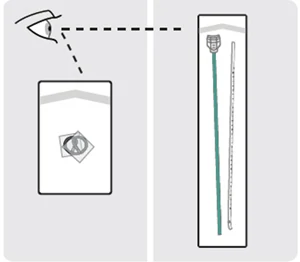 |
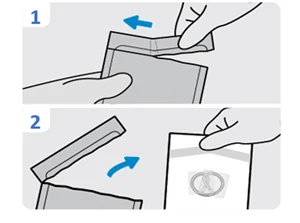
Check the white INLEXZO pouch and white pouch containing the urinary catheter and stylet for damage (e.g., cuts, tears, punctures) that could compromise sterility of the components before opening. | |
 | Do not use if packaging is damaged. | |
| Surfaces of the white INLEXZO pouch and the white component pouches are not sterile. | |
 |
| |
 |
| |
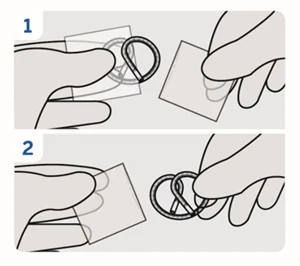 |
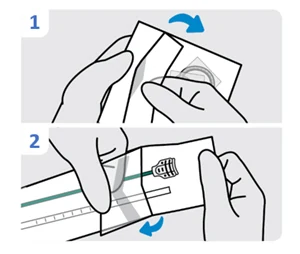
Remove the plastic sleeves from INLEXZO. | |
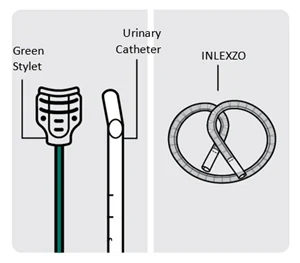 |
Inspect INLEXZO, the urinary catheter, and green stylet for damage. Do notuse if the urinary catheter or green stylet are damaged or if the outer surface of INLEXZO is damaged. | |
| Insert INLEXZO | ||
|---|---|---|
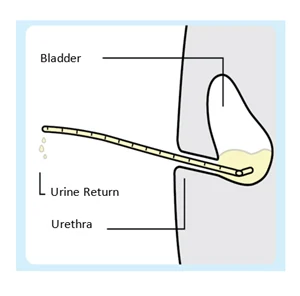 |
Lubricate tip of the urinary catheter. The urinary catheter should be free of INLEXZO and the stylet. | |
Introduce the urinary catheter into the urethra by hand and advance until urine return. Do not empty the bladder. Use depth markings to maintain coudé tip orientation and insertion depth position throughout the procedure. | ||
| Do not excessively force the urinary catheter into the bladder. | |
| In case of resistance, careful assessment and standard procedural techniques can be performed, as appropriate, in order to safely advance the urinary catheter into the bladder. | |
| If advancement is obstructed or cause cannot be determined or resolved, withdraw the urinary catheter to avoid patient injury or urinary catheter damage. | |
| Do not re-use urinary catheter. | |
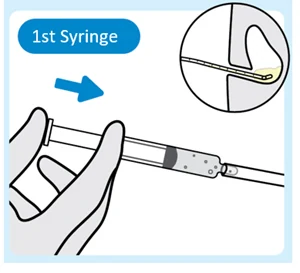 |
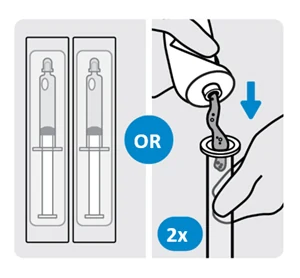
Inject 2 mL to 3 mL of lubricant from the first syringe into the end of the urinary catheter with the urinary catheter placed in the bladder. | |
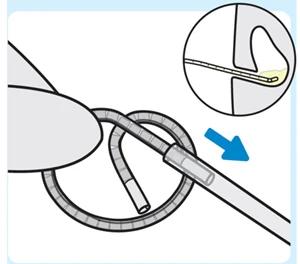 |
Insert either end of INLEXZO into the urinary catheter and advance until fully inserted. | |
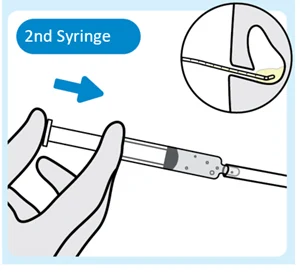 |
Inject 2 mL to 3 mL of lubricant from the second syringe into the urinary catheter to help advance INLEXZO further, with the urinary catheter placed in the bladder. | |
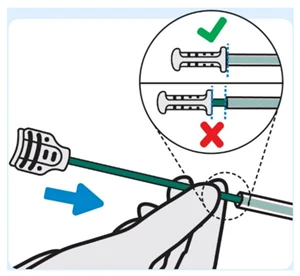 |
Slowly insert the stylet into the urinary catheter until the stylet hub is flush with end of the urinary catheter. This ensures INLEXZO exits the urinary catheter and enters the bladder. | |
| If INLEXZO cannot be advanced, remove the urinary catheter and stylet together as a single unit. | |
| Ensure INLEXZO is also removed. | ||
| Do not attempt to re-use the removed INLEXZO. | ||
| Begin again by obtaining a new carton of INLEXZO including a new urinary catheter and stylet. | ||
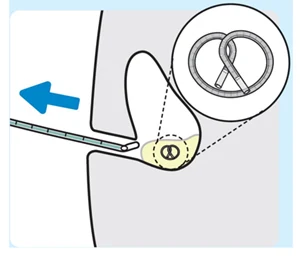 |
Do notremove the urinary catheter and stylet individually. INLEXZO should remain inside the bladder. Retain Instructions for Use for the removal procedure. | |
| Post-Insertion Instructions | |
|---|---|
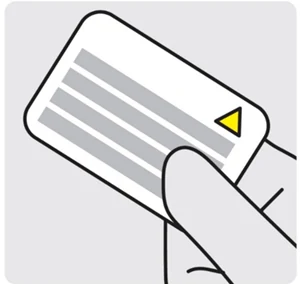 |
Remove the MRI Safety Information Card from the carton. Complete the details and give it to the patient. Advise the patient to carry the card and to show their current and future healthcare providers in case of need for MRI scans.
|
| |
| The indwelling period is approximately 3 weeks. See INLEXZO PI for additional information. | |
| Inform the patient and caregivers that INLEXZO will remain in the bladder for the indwelling dosing period. | |
| INLEXZO contains a hazardous drug. The patient and caregivers should be made aware of the need to exercise caution when handling urine during the indwelling period. See INLEXZO PI for additional information. | |
| Removal of INLEXZO after the indwelling period | ||
|---|---|---|
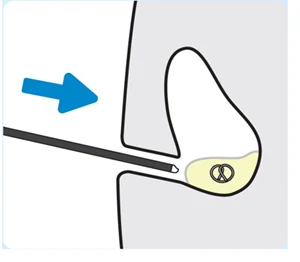 |
Use a water-based lubricant to lubricate the cystoscope.
Insert the cystoscope into the bladder to locate INLEXZO. | |
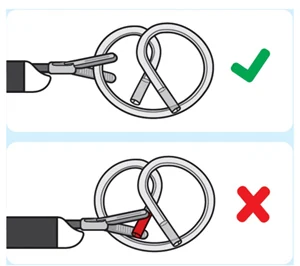 |
Introduce non-cuttinggrasping forceps through the working channel of the cystoscope. | |
| Do not use cutting forceps. | |
| Grasp INLEXZO over tubing and metal wire. | ||
| Do not grasp on or near the ends of INLEXZO. | |
| Grasping near the ends of INLEXZO could result in exposing the metal wire, potentially causing damage to surrounding tissue. | ||
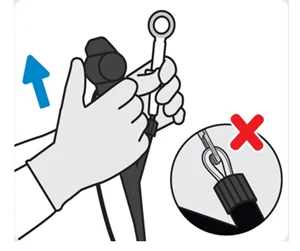 |
Remove the cystoscope and forceps out of the urethra togetherto remove INLEXZO under direct vision. Do notremove INLEXZO through working channel of the cystoscope. Doing so may damage INLEXZO and/or the cystoscope. | |
| ||
| After removal, inspect INLEXZO to confirm it is intact and unbroken. | |