


Patient information: uses, side effects, how to take - Imcivree
What is IMCIVREE?
IMCIVREE is a prescription medicine used in adults and children:
- 4 years of age and older with acquired hypothalamic obesity (HO) to help them lose weight and keep the weight off.
- 2 years of age and older with obesity due to Bardet-Biedl syndrome (BBS) to help them lose weight and keep the weight off.
- 2 years of age and older with obesity due to the genetic conditions proopiomelanocortin (POMC), proprotein convertase subtilisin/kexin type 1 (PCSK1), or leptin receptor (LEPR) deficiency, to help them lose weight and keep the weight off.
- Your healthcare provider should order a genetic test to confirm POMC, PCSK1, or LEPR deficiency before you start using IMCIVREE.
IMCIVREE is not for use in people with the following conditions because it may not work:
- Obesity due to suspected POMC, PCSK1, or LEPR deficiency not confirmed by genetic testing or with benign or likely benign genetic testing results.
- Other types of obesity not related to acquired HO, BBS, or POMC, PCSK1, or LEPR deficiency, including obesity associated with other genetic conditions and general obesity.
It is not known if IMCIVREE is safe and effective in children under 2 years of age.
Do not use IMCIVREE if you have had a serious allergic reaction to setmelanotide or any of the ingredients in IMCIVREE. Serious allergic reactions, including a severe allergic reaction called anaphylaxis, can happen when you use IMCIVREE. See the end of this Patient Information leaflet for a complete list of ingredients in IMCIVREE.
Before using IMCIVREE, tell your healthcare provider about all your medical conditions, including if you:
- have or have had areas of darkened skin, including skin discoloration (hyperpigmentation).
- have or have had depression, or suicidal thoughts or behavior.
- have had a prior allergic reaction to setmelanotide or any of the ingredients in IMCIVREE.
- have kidney problems.
- have adrenal insufficiency.
- have diabetes insipidus.
- are pregnant or planning to become pregnant. Losing weight while pregnant may harm your unborn baby. Your healthcare provider may stop your treatment with IMCIVREE if you become pregnant. Tell your healthcare provider if you become pregnant or think you might be pregnant during treatment with IMCIVREE.
are breastfeeding or plan to breastfeed. It is not known if IMCIVREE passes into your breastmilk. You should not breastfeed during treatment with IMCIVREE.
Tell your healthcare provider about all the medicines you take, including prescription and over-the-counter medicines, vitamins, and herbal supplements.
How should I use IMCIVREE?
- See the detailed Instructions for Use to learn how to prepare and inject IMCIVREE.
- IMCIVREE is given as an injection under your skin (subcutaneous) by you or a caregiver.
- A healthcare provider should show you or your caregiver how to prepare and inject your dose of IMCIVREE before injecting for the first time. Do not try to inject IMCIVREE unless you have been trained by a healthcare provider.
- Use IMCIVREE exactly as prescribed by your healthcare provider.
IMCIVREE should be injected 1 time each day when you first wake up. IMCIVREE can be given with or without food.
- If you miss a dose of IMCIVREE, inject your next dose at the regularly scheduled time the next day.
What are the possible side effects of IMCIVREE?
IMCIVREE may cause serious side effects, including:
- Male and female sexual function problems. IMCIVREE can cause an erection that happens without any sexual activity in males (spontaneous penile erection) and unwanted sexual reactions (changes in sexual arousal that happen without any sexual activity) in females. If you have an erection lasting longer than 4 hours, get emergency medical help right away.
- Depression and suicidal thoughts or actions. You or a caregiver should call your healthcare provider right away if you have any new or worsening symptoms of depression, suicidal thoughts or behaviors, or any unusual changes in mood or behavior.
Serious allergic reactions. Stop taking IMCIVREE and get medical help right away if you have any symptoms of a serious allergic reaction including:
- swelling of your face, lips, tongue or throat
- problems breathing or swallowing
- severe rash or itching
- fainting or feeling dizzy
- rapid heartbeat
- Increased skin pigmentation, darkening of skin lesions (moles or nevi) you already have, and development of new skin lesions. These changes happen because of how IMCIVREE works in the body and will go away when you stop using IMCIVREE. You should have a full body skin exam before starting and during treatment with IMCIVREE to check for skin changes.
- Adrenal insufficiency. If you have acquired HO and adrenal insufficiency, your healthcare provider should evaluate your adrenal function before starting IMCIVREE. You or your caregiver should call your healthcare provider if you have changes in feeling tired or exhausted (fatigue), lack of energy (lethargy), mental status, or dizziness, or fever, or signs of infection during treatment with IMCIVREE. Your healthcare provider should monitor and adjust any medicines that may be affected during treatment.
- Low sodium levels in the blood. If you have acquired HO and diabetes insipidus, you or your caregiver should watch for signs of dehydration. You or your caregiver should contact your healthcare provider if you have changes in fluid intake or urine output, confusion, lethargy, or nausea and vomiting during treatment with IMCIVREE. Your healthcare provider should closely monitor sodium levels in your blood and adjust your other medicines if needed.
The most common side effects of IMCIVREE include:
- darkening of the skin
- injection site reactions
- nausea
- headache
- diarrhea
- stomach pain
- vomiting
- depression
- erection that happens without any sexual activity in males
These are not all the possible side effects of IMCIVREE.
Call your doctor for medical advice about side effects. You may report side effects to FDA at 1-800-FDA-1088.
You may also report side effects to Rhythm Pharmaceuticals at 1-833-789-6337.
General information about the safe and effective use of IMCIVREE.
Medicines are sometimes prescribed for purposes other than those listed in a Patient Information leaflet. Do not use IMCIVREE for a condition for which it was not prescribed. Do not give IMCIVREE to other people, even if they have the same symptoms that you have. It may harm them. You can ask your pharmacist or healthcare provider for information about IMCIVREE that is written for health professionals.
What are the ingredients in IMCIVREE?
Active ingredient: setmelanotide
Inactive ingredients: benzyl alcohol, carboxymethylcellulose sodium, edetate disodium dihydrate, N-(carbonyl-methoxypolyethylene glycol 2000)-1, 2-distearoyl- glycero-3-phosphoethanolamine sodium salt, mannitol, phenol, hydrochloric acid, sodium hydroxide and water for injection.
INSTRUCTIONS FOR USE
IMCIVREE™ [im-SIV-ree]
(setmelanotide)
injection, for subcutaneous use
This Instructions for Use contains information on how to inject IMCIVREE. Read and follow these instructions before injecting IMCIVREE.
Important Information You Need to Know Before Injecting IMCIVREE
- IMCIVREE is for injection under the skin only (subcutaneous injection). Do not inject IMCIVREE into a vein or muscle.
- The IMCIVREE vial may be used to give more than 1 dose of medicine (multiple-dose vial) but is for single patient use only and should not be shared with other patients.
- Inject IMCIVREE 1 time each day when you first wake up.
- Take IMCIVREE with or without food.
- IMCIVREE is given by you or a caregiver. A healthcare provider will show you or your caregiver how to inject your dose of IMCIVREE before you inject for the first time. Ask your healthcare provider or call IMCIVREE Guidance, Partnership, Support (GPS) at 1-844-YOUR-GPS (1-844-968-7477) if you have questions.
Important note:
- Only use the syringes and needles provided to you for use with IMCIVREE.
- Always use a new syringe and needle for each injection to prevent contamination.
- Throw away used syringes and needles in a puncture-resistant, disposable sharps container as soon as you finish giving the injection. See “Disposing of IMCIVREE” at the end of these instructions.
- Do not reuse or share your needles with other people.
- Do not recap the needle. Recapping the needle can lead to a needle stick injury.
Understanding Your IMCIVREE Dose
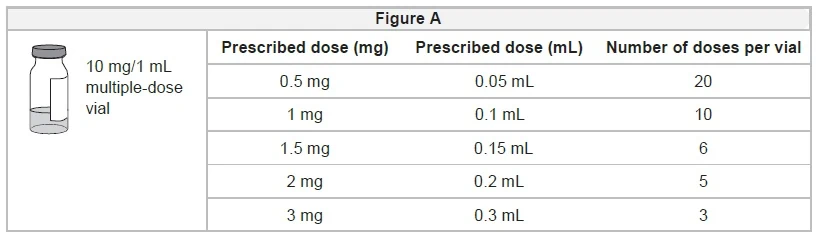
Calculate the number of doses of IMCIVREE in each vial:
- Each unopened IMCIVREE vial contains 10 milligrams (mg) of medicine in 1 milliliter (mL) of solution.
- The vial will contain both medicine and air. Most of the vial will be filled with air.
- Your healthcare provider will determine your dose of medicine in milligrams (mg).
- The IMCIVREE vial may be used to give more than 1 dose of medicine (multiple-dose vial).
- Use Figure A to see how many times you may use each vial based on your prescribed dose.
- Do not use more doses from a single vial than listed in Figure A
Preparing to Inject IMCIVREE
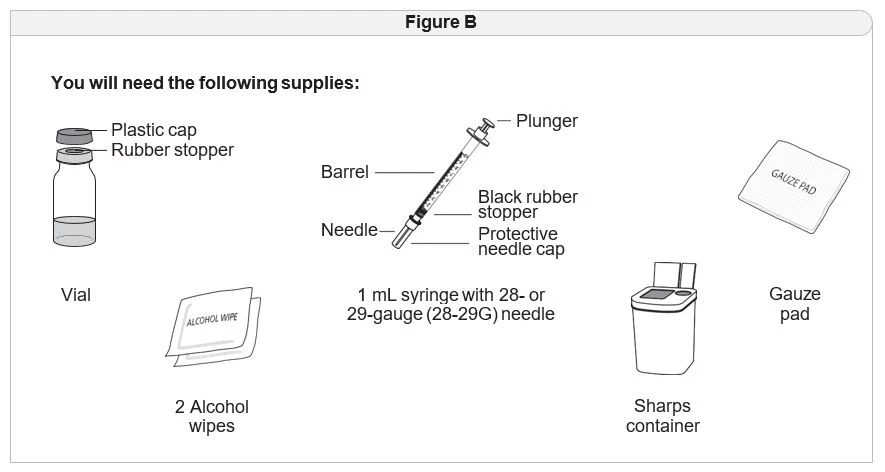
Step 1 Gather your supplies.
- Gather the supplies you will need for your injection ( Figure B ).
- Place your supplies on a clean, flat work surface.
| Step 2 Check your IMCIVREE vial. | |
 |
|
| Step 3 Prepare your IMCIVREE vial. | |
 |
|
 |
|
 |
|
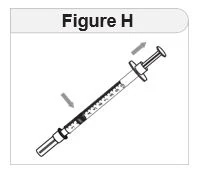
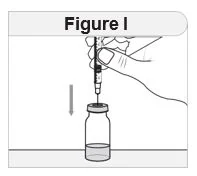
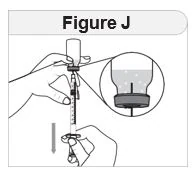
Step 4 Prepare the syringe. When measuring your dose, be sure to read the markings starting from the end closest to the black rubber stopper ( Figure G ). 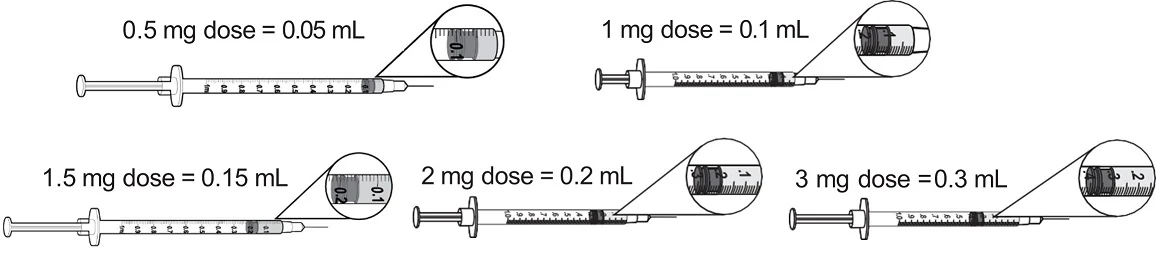 | |
 |
|
 |
|
 |
|
 |
|
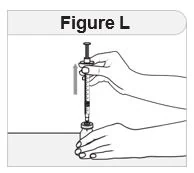
What to do if you see large air bubbles: Large air bubbles can reduce the dose of medicine you receive. To remove large air bubbles:
| |
 |
|
Injecting IMCIVREE Step 5 Prepare your injection site. | |
   |
|
| |
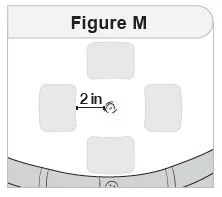
Rotate your injection site each day. You should use a different injection site each time you give an injection, at least 1 inch away from the area you used for your previous injection. You may want to use a calendar or diary to record your injection sites. | |
| Step 6 Place your hands for the injection. | |
 |
|
| Step 7 Inject and release. | |
 |
|
 |
|
Tips for giving injections to children When giving a child an injection, it can help to have the child do other things. Have the child:
| |
Storing IMCIVREE
| |
| Disposing of IMCIVREE | |
 |
|
For more information about IMCIVREE, including how to inject IMCIVREE, go to www.IMCIVREE.com or call 1-844-YOUR-GPS (1-844-968-7477).
IMCIVREE is Manufactured for:
Rhythm Pharmaceuticals, Inc
222 Berkeley Street, Suite 1200
Boston, MA 02116
Made in France
IMCIVREE is a trademark of Rhythm Pharmaceuticals, Inc.
©2020 Rhythm Pharmaceuticals, Inc.
This Patient Information and Instructions for Use have been approved by the U.S. Food and Drug Administration.
Revised [June 2025]