


Patient information: uses, side effects, how to take - Gvoke VialDx
INSTRUCTIONS FOR USE
GVOKE® PFS
[GEE-voke P-F-S ]
(glucagon injection)
pre-filled syringe
for subcutaneous use
This “Instructions for Use” contains information on how to inject GVOKE® PFS
Section headings and other template-related items found in this IFU are for organization of the document only and are not intended for use in corresponding artwork/patient-facing IFU files. Figure numbers in this content document may not correspond to figure numbers in corresponding artwork/patient-facing IFU files.
Appropriate trademark symbol (™ or ®) should be used upon first use of a trademarked name on each page; usage may differ from this content file and final artwork based on page layout.
1. GVOKE® PFS VISUAL
Understanding GVOKE PFS
GVOKE PFS contains a 1 mg dose of glucagon and is in a foil pouch. Below is a picture of the pouch. See the GVOKE PFS package for a full view of the Quick-Use Guide.
GVOKE PFS (1 mg dose)
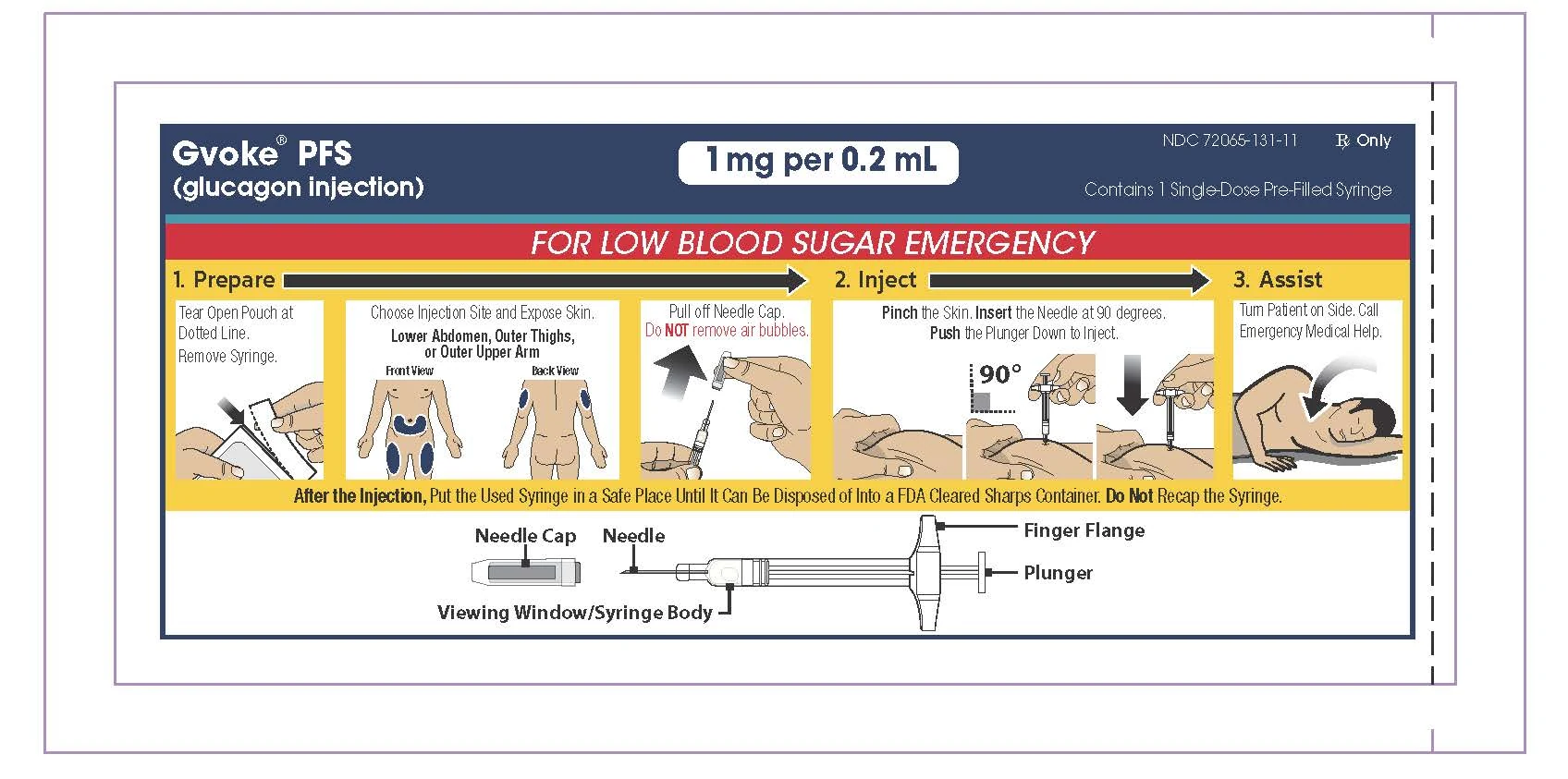
PFS Device

Note: GVOKE PFS should be used one time and then thrown away (discarded).
2. IMPORTANT INFORMATION YOU NEED TO KNOW BEFORE INJECTING GVOKE® PFS
- Become familiar with the following instructions before an emergency happens.
- Do not use this product past the expiration date printed on the device. Replace GVOKE PFS before the expiration date on the box.
- If you have questions regarding the use of this product, talk to a healthcare provider or pharmacist.
Make sure that relatives, close friends, or caregivers know that if you become unconscious, they should call for emergency medical help right away. GVOKE PFS may have been prescribed so that relatives, close friends, and caregivers can give the injection if you become hypoglycemic (severe low blood sugar) and are unable to take sugar by mouth. If you are unconscious, GVOKE PFS can be given while awaiting medical assistance.
Show your relatives, close friends, or caregivers where you store GVOKE PFS and how to use it. They need to know how to use GVOKE PFS before an emergency situation happens.
Indications for Use
GVOKE PFS is for the treatment of severe hypoglycemia in pediatric and adult patients with diabetes ages 2 years and above. Symptoms of severe hypoglycemia include unconsciousness, and seizures or convulsions.
Give GVOKE PFS if:
- 1. the patient is unconscious,
- 2. the patient is unable to eat sugar or a sugar-sweetened product,
- 3. the patient is having a seizure, or
- 4. you have tried to give the patient sugar or drinks that are high in sugar such as a regular soft drink (soda) or fruit juice and the patient does not get better.
Milder cases of hypoglycemia should be treated promptly by eating sugar or a sugar sweetened product. (See Information on Hypoglycemia for more information on the symptoms of low blood sugar.) GVOKE PFS will not work when taken by mouth (orally).
Information on Hypoglycemia
Early symptoms of hypoglycemia (low blood sugar) include:
|
|
If not treated, the patient may progress to severe hypoglycemia which can include:
- confusion
- seizures
- unconsciousness
- death
The occurrence of early symptoms calls for quick and, if necessary, repeated administration of some form of carbohydrate. Patients should always carry a quick source of sugar, such as candy mints or glucose tablets. The prompt treatment of mild hypoglycemic symptoms can prevent severe hypoglycemic reactions. If the patient does not improve or if administration of carbohydrate is impossible, GVOKE® PFS should be given or the patient should be treated with intravenous glucose by a medical professional.
Possible Problems with GVOKE PFS Treatment
Common side effects in adults and pediatric patients are nausea and vomiting. The product may cause serious side effects including serious allergic reactions, fast heart beat and high blood pressure.
People may be allergic to glucagon or to one of the inactive ingredients in GVOKE PFS, or may experience fast heart-beat for a short while.
If you experience any other reactions that may have been caused by GVOKE PFS, please contact your healthcare provider.
Important:
- Act quickly. Prolonged unconsciousness may be harmful.
- After the injection is complete, turn the unconscious patient on his or her side to prevent them from choking in case they throw up (vomit).
- Carefully read and follow these instructions. Have a healthcare provider show you the right way to use GVOKE PFS.
Important Warnings
- Do not open pouch until time of use.
- Do not use after the expiration date has passed.
- Do not use if the needle cap has been removed or is damaged.
- Do not remove the needle cap until you are ready to inject.
- Do not remove the finger flange from the syringe.
- Call a healthcare provider as soon as GVOKE® PFS has been injected.
- If the patient does not wake up within 15 minutes, give another dose of GVOKE PFS and call for emergency medical help right away.
- Feed the patient as soon as he or she wakes up and is able to swallow.
Read and become familiar with the following instructions before an emergency happens. If you have questions about using GVOKE PFS, talk with your healthcare provider or pharmacist.
3. PREPARING TO INJECT GVOKE® PFS
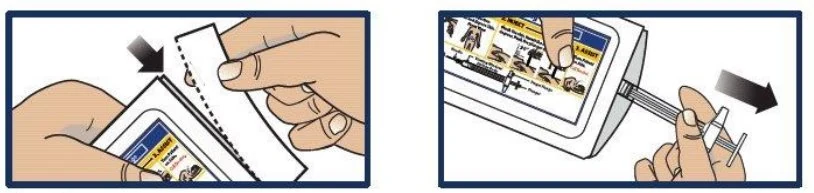
Step 1. Remove GVOKE PFS from Foil Pouch
- Tear open pouch at the dotted line and carefully remove GVOKE PFS (see Figure 1).
Figure 1
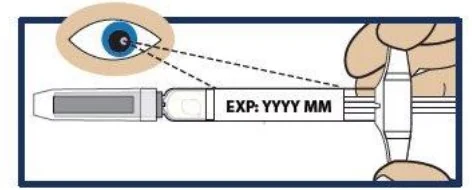
Step 2. Check the Expiration Date
- Check the expiration date printed on the label of GVOKE PFS (see Figure 2).
- Important: Do not use GVOKE PFS if the expiration date has passed. If GVOKE PFS is expired, throw it away in an FDA cleared sharps container and use a new GVOKE PFS.
Figure 2
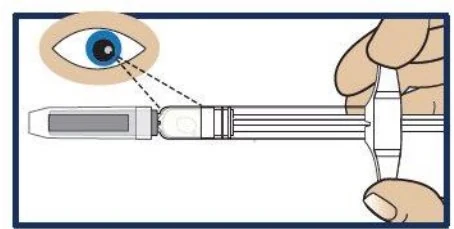
Step 3. Inspect the Solution
- Look at the liquid medicine through the viewing window. It must be clear and colorless, or a pale yellow (see Figure 3).
- It is normal to see air bubbles in the medicine.
- Important: Do not try to remove air bubbles before injecting.
- Do not use GVOKE® PFS or inject if the liquid contains lumps, flakes, or particles.
- Do not inject if solution is not visible in the viewing window.
- If you do not have another GVOKE PFS to use, call for emergency help right away.
Figure 3
4. INJECTING GVOKE® PFS
Step 4. Choose Injection Site and Expose Bare Skin
- Choose the lower abdomen, outer thigh, or outer upper arm for your injection site (see Figure 4).
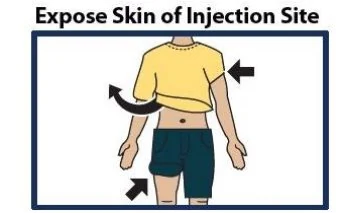
- Remove any clothing covering the injection site (see Figure 5). The injection must be performed straight into the skin.
- Important: Do not inject through clothing
Figure 4
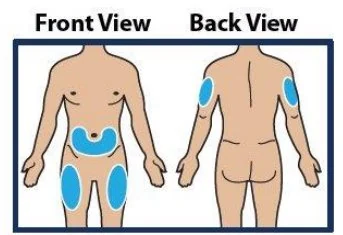
Figure 5
Step 5. Pull off the Needle Cap
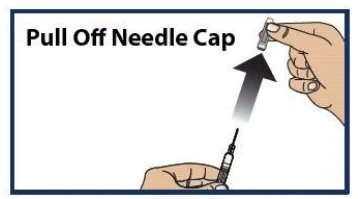
- Pull the needle cap straight off the syringe (see Figure 6).
- Important: Do not put your thumb, fingers, or hand on or near the needle to help prevent accidental needle sticks.
Figure 6
Step 6. Pinch, Insert and Push to Start Injection
- Pinch the skin directly around the chosen injection site and keep pinching for the entire injection (see Figure 7). This is recommended to make sure a subcutaneous (under the skin) injection is given and to prevent injection into the muscle.
- Without touching the plunger, insert the needle into the skin at the injection site at a 90-degree angle (see Figure 8).
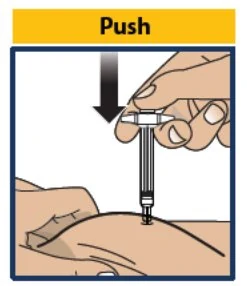
- Push the plunger down as far as it will go to inject all of the liquid medicine into the skin (see Figure 9). You want to inject the medicine very fast to help decrease the pain.
- Important: Do not aspirate (pull back on plunger rod) after inserting the needle. Push the plunger down as far as it will go. Do not lift up GVOKE® PFS until the injection is complete.
Figure 7
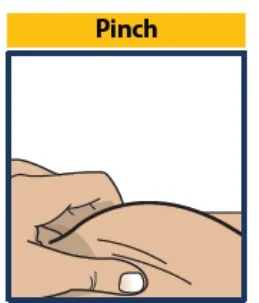
Figure 8
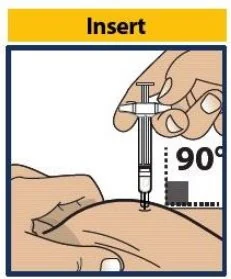
Figure 9
Step 7. Lift Away from Skin
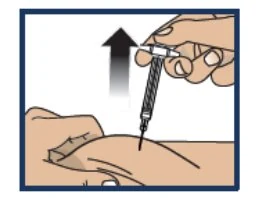
- Lift the syringe straight up from the injection site (see Figure 10).
- Important: Do not re-cap the syringe.
Figure 10
Step 8. Turn Patient onto Side
- When an unconscious person wakes up, he or she may throw up (vomit).
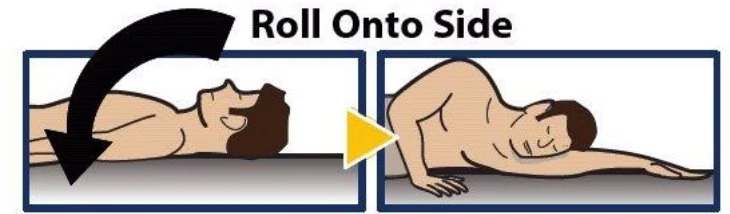
- Turn the unconscious patient on their side to prevent choking (see Figure 11).
Figure 11
Step 9. Make Sure Patient Receives Immediate Medical Attention After Use
- Call for emergency medical help right after GVOKE® PFS has been injected.
- Even if GVOKE PFS helps the patient to wake up, you should still call for emergency medical help right away.
- The patient’s healthcare provider should also be notified whenever a severe drop in blood sugar (hypoglycemic reactions) happens. Hypoglycemia may happen again after receiving an injection from GVOKE PFS. The patient’s diabetes medicine may need to be changed.
- Feed the patient as soon as he or she wakes up and is able to swallow. Give the patient a fast-acting source of sugar (such as a regular soft drink or fruit juice) and a long-acting source of sugar (such as crackers and cheese or a meat sandwich). If the patient does not wake up within 15 minutes, give another dose of glucagon if a second GVOKE PFS is available and notify emergency medical services right away.
5. STORING GVOKE® PFS
Storage Information
- Store in sealed original foil pouch until time of use.
- Store at room temperature, 68° to 77°F (20° to 25°C).
- Do not refrigerate or freeze.
6. DISPOSING OF GVOKE® PFS
Dispose of GVOKE PFS in an FDA Cleared Sharps Disposal Container
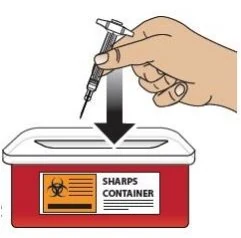
To prevent injury caused from contact with the used needle, put the used syringe in a safe place until it can be disposed of into a FDA cleared sharps container right away after use (see Figure 12). Do not throw away (dispose of) loose needles and syringes in your household trash.
If you do not have a FDA cleared sharps disposal container, you may use a household container that is:
- made of a heavy-duty plastic
- can be closed with a tight-fitting puncture-resistant lid, without sharps being able to come out
- upright and stable during use
- leak-resistant
- properly labeled to warn of hazardous waste inside the container.
When your sharps disposal container is almost full, you will need to follow your community guidelines for the right way to dispose of your sharps disposal container. There may be state or local laws about how you should throw away used needles and syringes. For more information about safe sharps disposal, and for specific information about sharps disposal in the state that you live in, go to the FDA’s website at: http://www.fda.gov/safesharpsdisposal.
Do not dispose of your used sharps disposal container in your household trash unless your community guidelines permit this. Always keep the sharps container out of the reach of children. If needed, make sure to get a refill of GVOKE PFS.
Figure 12
7. ADDITIONAL INFORMATION
This Instructions for Use has been approved by the U.S. Food and Drug Administration.
Distributed by:
Xeris Pharmaceuticals, Inc.
Chicago, IL 60607
Revised 04/2023
©2023 by Xeris Pharmaceuticals, Inc.
INSTRUCTIONS FOR USE
GVOKE KIT
[GEE-voke k-it]
glucagon injection
Subcutaneous Injection
This Instructions for Use contains information on how to inject GVOKE® KIT.
Section headings and other template-related items found in this IFU are for organization of the document only and are not intended for use in corresponding artwork/patient-facing IFU files. Figure numbers in this content document may not correspond to figure numbers in artwork/patient-facing IFU files.
GVOKE ® KIT VISUAL
Understanding GVOKE KIT
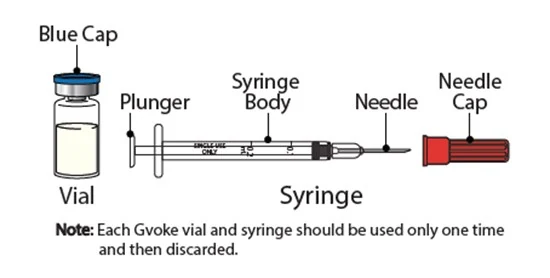
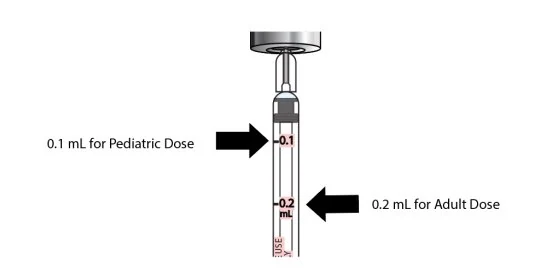
GVOKE KIT contains one (1) single-dose sterile syringe (29 G x ½” needle) with markings for 0.1 mL (0.5 mg pediatric dose) and 0.2 mL (1 mg adult dose), and one single-dose vial containing 0.2 mL of solution.
STORING GVOKE KIT
Storage Information
- Store vial and pouched syringe together in original carton until time of use. Do not remove syringe from pouch until time of use.
- Store at room temperature, 68°F to 77°F (20°C to 25°C).
- Do not refrigerate or freeze.
- Protect vial from light exposure.
IMPORTANT INFORMATION YOU NEED TO KNOW BEFORE INJECTING GVOKE KIT
- Become familiar with the following instructions before an emergency happens.
- Do not use this product past the expiration date printed on the vial. Replace GVOKE® KIT before the expiration date on the box.
- If you have questions regarding the use of this product, talk to a healthcare provider or pharmacist.
Make sure that relatives, close friends, or caregivers know that if you become unconscious, they should call for emergency medical help right away. GVOKE KIT may have been prescribed so that relatives, close friends, and caregivers can give the injection if you become hypoglycemic (severe low blood sugar) and are unable to take sugar by mouth. If you are unconscious, GVOKE KIT can be given while awaiting medical assistance.
Show your relatives, close friends, or caregivers where you store GVOKE KIT and how to use it. They need to know how to use GVOKE KIT before an emergency happens.
Indications for Use
GVOKE KIT is for the treatment of severe hypoglycemia in pediatric and adult patients with diabetes ages 2 years and above. Symptoms of severe hypoglycemia include unconsciousness and seizures or convulsions.
Give GVOKE KIT if:
- 1. the patient is unconscious,
- 2. the patient is unable to eat sugar or a sugar-sweetened product,
- 3. the patient is having a seizure, or
- 4. you have tried to give the patient sugar or drinks that are high in sugar such as a regular soft drink (soda) or fruit juice and the patient does not get better.
Milder cases of hypoglycemia should be treated promptly by eating sugar or a sugar-sweetened product. (See Information on Hypoglycemia for more information on the symptoms of low blood sugar.) GVOKE KIT will not work when taken by mouth (orally).
Information on Hypoglycemia
Early symptoms of hypoglycemia (low blood sugar) include:
|
|
If not treated, the patient may progress to severe hypoglycemia which can include:
- confusion
- seizures
- unconsciousness
- death
The occurrence of early symptoms of hypoglycemia calls for quick and, if necessary, repeated administration of some form of carbohydrate. Patients should always carry a quick source of sugar, such as candy mints or glucose tablets. The prompt treatment of mild hypoglycemic symptoms can prevent severe hypoglycemic reactions. If the patient does not improve or if administration of carbohydrate is not possible, GVOKE® KIT should be used or the patient should be treated with intravenous glucose by a medical professional.
Possible Problems with GVOKE KIT Treatment
Common side effects in adults and pediatric patients are nausea and vomiting. The product may cause serious side effects including serious allergic reactions, fast heart-beat, and high blood pressure.
People may be allergic to glucagon or to one of the inactive ingredients in GVOKE KIT or may experience fast heartbeat for a short while.
If you experience any other reactions that may have been caused by GVOKE KIT, please contact your healthcare provider.
Important:
- Act quickly. Prolonged unconsciousness may be harmful.
- After the injection is complete, turn the unconscious patient on his or her side to prevent them from choking in case they throw up (vomit).
- Carefully read and follow these instructions. Have a healthcare provider show you the right way to use GVOKE KIT.
Important Warnings
- Do not remove syringe from pouch until time of use.
- Do not use after the expiration date has passed.
- Do not use if the needle cap has been removed or is damaged.
- Draw the correct dose of Gvoke: 0.1 mL for pediatric patients aged 2 to under 12 years of age weighing less than 45 kg (100 lbs) and 0.2 mL for adults and pediatric patients aged 12 years and older or pediatric patients weighing 45 kg (100 lbs) or greater.
- There will be unused medicine in the vial after use. Do not save unused medicine for later use. Throw away (discard) unused portion
- Call a healthcare provider as soon as glucagon has been injected.
- If the patient does not wake up within 15 minutes, give another dose of GVOKE® KIT and call for emergency medical help right away.
- Feed the patient as soon as he or she wakes up and is able to swallow.
Read and become familiar with the following instructions before an emergency happens. If you have questions about using GVOKE KIT, talk with your healthcare provider or pharmacist.
PREPARING TO INJECT GVOKE KIT
Step 1. Remove GVOKE Vial and Syringe from Carton
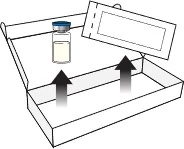
- Open carton and carefully remove GVOKE vial and syringe (see Figure A ).
Figure A
Step 2. Check the Expiration Date on GVOKE Vial
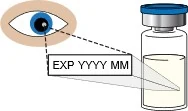
- Check the expiration date printed on the label of the GVOKE vial (see Figure B).
- Important: Do not use the GVOKE vial if the expiration date has passed. If the GVOKE vial is expired, discard and use a new GVOKE KIT. If you do not have another GVOKE KIT to use call for emergency medical help right away.
Figure B
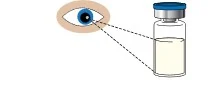
Step 3. Inspect the Solution in GVOKE® Vial
- Look at the liquid medicine in the vial. It must be clear and colorless, or a pale yellow (see Figure C).
- Important: Do not use GVOKE or inject if the liquid contains lumps, flakes, or particles.
Figure C
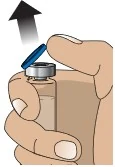
Step 4. Prepare
- Remove the blue cap from the vial to expose the rubber stopper (see Figure D).
Figure D
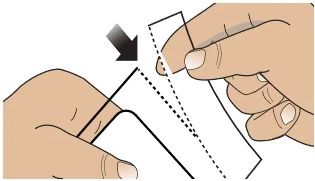
- Tear Open Pouch at Dotted Line (see Figure E). Remove syringe.
Figure E
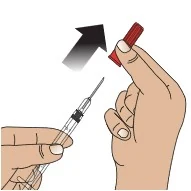
- Pull the needle cap straight off the syringe (see Figure F).
- Important: Do not put your thumb, fingers, or hand on or near the needle to help prevent accidental needle sticks.
Figure F
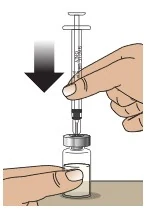
- Push the needle fully into the center of the rubber stopper (see Figure G). It is important to make sure the needle punctures within the raised circle of the stopper.
Figure G
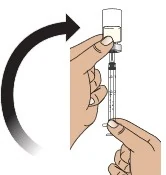
- Flip vial and syringe so vial is on top (see Figure H).
Figure H
- Hold the vial upside down and pull the plunger out until the mark for 0.1 mL (0.5 mg pediatric dose) or 0.2 mL (1 mg adult dose) is lined up with the plunger and remove the syringe from the vial stopper (Figure I).
Figure I
- GVOKE should be administered immediately.
- Important: Avoid drawing air into the syringe. If large air bubbles are drawn into the syringe, gently press the plunger to push air bubbles back into the vial and redraw the dose.
- There will be unused medicine in the vial after use. Do not save unused medicine for later use. Throw away (discard) unused portion.
INJECTING GVOKE® KIT
Step 5. Choose Injection Site and Expose Bare Skin
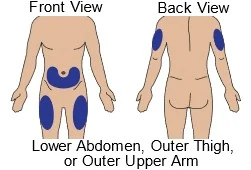
- Choose the lower abdomen, outer thigh, or outer upper arm for your injection site (see Figure J).
Figure J
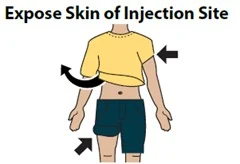
- Remove any clothing covering the injection site (see Figure K). The injection must be performed straight into the skin.
- Important: Do not inject through clothing.
Figure K
Step 6. Pinch, Insert, and Push to Start Injection
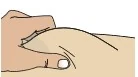
- Pinch the skin directly around the chosen injection site and keep pinching for the entire injection (see Figure L). This is recommended to make sure a subcutaneous (under the skin) injection is given and to prevent injection into the muscle.
Figure L
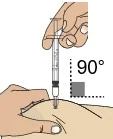
- Without touching the plunger, insert the needle into the skin at the injection site at a 90 degree angle (see Figure M).
Figure M
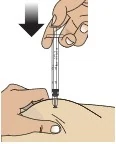
- Push the plunger down as far as it will go to inject all of the liquid medicine into the skin (see Figure N). You want to inject the medicine very fast to help decrease the pain.
Important: Do not aspirate (pull back on plunger rod) after inserting the needle. Do not lift up the syringe until the injection is complete.
Figure N
Step 7. Lift Away from Skin
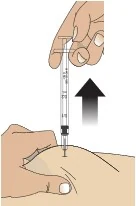
- Lift the syringe straight up from the injection site (Figure O).
- Important: Do not re-cap the syringe.
Figure O
Step 8. Turn Patient onto Side
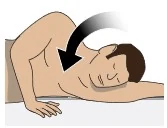
- When an unconscious person wakes up, he or she may throw up (vomit).
- Turn the unconscious patient on their side to prevent choking (see Figure P).
Figure P
Step 9. Make Sure Patient Receives Immediate Medical Attention After Use
- Call for emergency medical help right after GVOKE has been injected.
- Even if GVOKE® KIT helps the patient to wake up, you should still call for emergency medical help right away.
- The patient’s healthcare provider should also be notified whenever a severe drop in blood sugar (hypoglycemic reactions) happens. Hypoglycemia may happen again after receiving an injection from GVOKE KIT. The patient’s diabetes medicine may need to be changed.
- Feed the patient as soon as he or she wakes up and is able to swallow. Give the patient a fast-acting source of sugar (such as a regular soft drink or fruit juice) and a long-acting source of sugar (such as crackers and cheese or a meat sandwich).
- If the patient does not wake up within 15 minutes, give another dose of glucagon if a second GVOKE KIT is available and notify emergency medical services right away.
DISPOSING OF GVOKE KIT
Disposing of GVOKE KIT
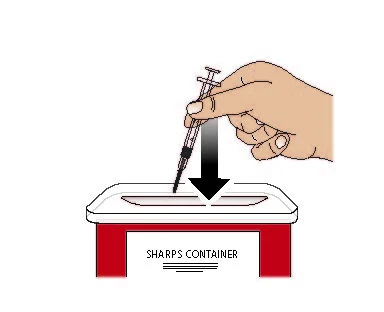
After the injection, discard vial with unused medicine and place the used syringe in a safe place until it can be disposed of in an FDA-cleared sharps container (see Figure Q). Do not throw away (dispose of) loose needles and syringes in your household trash.
If you do not have an FDA-cleared sharps disposal container, you may use a household container that is:
- made of a heavy-duty plastic
- can be closed with a tight-fitting puncture-resistant lid, without sharps being able to come out
- upright and stable during use
- leak-resistant
- properly labeled to warn of hazardous waste inside the container
When your sharps disposal container is almost full, you will need to follow your community guidelines for the right way to dispose of your sharps disposal container. There may be state or local laws about how you should throw away used needles and syringes. For more information about safe sharps disposal, and for specific information about sharps disposal in the state that you live in, go to the FDA’s website at: http://www.fda.gov/safesharpsdisposal.
Do not dispose of your used sharps disposal container in your household trash unless your community guidelines permit this. Do not recycle your used sharps disposal container.
Always keep the sharps container out of the reach of children.
If needed, make sure to get a refill of your GVOKE KIT.
Figure Q
ADDITIONAL INFORMATION
This Instructions for Use has been approved by the U.S. Food and Drug Administration.
Distributed by:
Xeris Pharmaceuticals, Inc.
Chicago, IL 60607
Original Approval 08/2021
©2023 by Xeris Pharmaceuticals, Inc.