


Prescribing information (package insert) - Glucagon
1 INDICATIONS AND USAGE
1.1 Severe Hypoglycemia
Glucagon for injection is indicated for the treatment of severe hypoglycemia in pediatric and adult patients with diabetes mellitus.
1.2 Diagnostic Aid
Glucagon for injection is indicated as a diagnostic aid for use during radiologic examinations to temporarily inhibit movement of the gastrointestinal tract in adult patients.
2 DOSAGE AND ADMINISTRATION
2.1 Important Administration Instructions for Using Glucagon for Injection to Treat Severe Hypoglycemia
Glucagon for injection is for subcutaneous, intramuscular, or intravenous injection. Administer intravenously ONLY under medical supervision.
Instruct patients and their caregivers on the signs and symptoms of severe hypoglycemia. Because severe hypoglycemia requires the help of others to recover, instruct the patient to inform those around them about glucagon for injection and its Instructions for Use. Administer glucagon for injection, as soon as possible when severe hypoglycemia is recognized.
Instruct the patient or caregiver to read the Instructions for Use at the time they receive a prescription for glucagon for injection. Emphasize the following instructions to the patient or caregiver:
- Using the supplied prefilled syringe, carefully insert the needle through the rubber stopper of the vial containing glucagon for injection powder and inject all the liquid from the syringe into the vial.
- Swirl the vial gently until the powder is completely dissolved and no particles remain in the fluid. The reconstituted solution should be clear and of a water-like consistency at time of use. Inspect visually for particulate matter and discoloration. If the resulting solution is cloudy or contains particulate matter do not use.
- The reconstituted solution is 1 mg per mL glucagon. Use immediately after reconstitution.
- Immediately after reconstitution, use the same syringe to withdraw the correct dose of glucagon for injection.
- Inject the solution subcutaneously or intramuscularly in the upper arm, thigh, or buttocks. In addition, healthcare providers may administer intravenously.
- Call for emergency assistance immediately after administering the dose.
- If there has been no response after 15 minutes, an additional dose of glucagon for injection may be administered while waiting for emergency assistance.
- When the patient has responded to the treatment and is able to swallow, give oral carbohydrates to restore the liver glycogen and prevent recurrence of hypoglycemia.
- Discard any unused portion.
2.2 Dosage for Treatment of Severe Hypoglycemia
Adults and Pediatric Patients Weighing 20 kg or More
- The recommended dosage is 1 mg (1 mL) injected subcutaneously or intramuscularly into the upper arm, thigh, or buttocks. Alternatively, healthcare providers may administer the dose intravenously.
- If there has been no response after 15 minutes, an additional 1 mg dose (1 mL) of glucagon for injection may be administered while waiting for emergency assistance.
Pediatric Patients Weighing Less Than 20 kg
- The recommended dosage is 0.5 mg (0.5 mL) or dose equivalent to 20 to 30 mcg/kg injected subcutaneously or intramuscularly into the upper arm, thigh, or buttocks. Alternatively, healthcare providers may administer the dose intravenously.
- If there has been no response after 15 minutes, an additional 0.5 mg dose (0.5 mL) of glucagon for injection may be administered while waiting for emergency assistance.
2.3 Important Administration Instructions for Using Glucagon for Injection as a Diagnostic Aid
- Reconstitute glucagon for injection with 1 mL of diluent.
- Swirl the vial gently until the powder is completely dissolved and no particles remain in the fluid. The reconstituted solution should be clear and of a water-like consistency at time of use. Inspect visually for particulate matter and discoloration. If the resulting solution is cloudy or contains particulate matter do not use.
- Withdraw the correct dose of glucagon for injection.
- The reconstituted solution is 1 mg per mL glucagon.
- Immediately after reconstitution, inject the solution intravenously or intramuscularly into upper arm, thigh, or buttocks.
- Discard unused portion.
- After the end of the diagnostic procedure, give oral carbohydrates to patients who have been fasting, if this is compatible with the diagnostic procedure.
2.4 Dosage in Adults for Use as a Diagnostic Aid
- Doses required for relaxation of the stomach, duodenum, and small bowel, depend on the onset and duration of effect required for the examination [see Pharmacodynamics (12.2)].
- The usual dose for relaxation of the stomach, duodenum and small bowel is 0.25 mg to 0.5 mg given intravenously or 1 mg given intramuscularly, but up to 2 mg intravenously or intramuscularly may be used if required (2 mg doses produce a higher rate of nausea and vomiting than lower doses) [see Adverse Reactions (6)].
- For the stomach because it is less sensitive to the effect of glucagon, 0.5 mg intravenous or 2 mg intramuscular doses are recommended.
- For the examination of the colon, it is recommended that a 2 mg dose be administered intramuscularly approximately 10 minutes prior to the procedure.
3 DOSAGE FORMS AND STRENGTHS
Glucagon for Injection, USP is white lyophilized cake or powder supplied as follows:
- Single-dose vial containing 1 mg Glucagon for Injection with a pre-filled syringe containing 1 mL of diluent for Glucagon.
4 CONTRAINDICATIONS
- Glucagon for injection is contraindicated in patients with:
- Pheochromocytoma because of the risk of substantial increase in blood pressure [see Warning and Precautions (5.1)]
- Insulinoma because of the risk of hypoglycemia [see Warning and Precautions (5.2)]
- Known hypersensitivity to glucagon or any of the excipients in glucagon for injection. Allergic reactions have been reported with glucagon and include anaphylactic shock with breathing difficulties and hypotension [see Warning and Precautions (5.3)]
- Glucagonoma when used as a diagnostic aid because of the risk of hypoglycemia [see Warnings and Precautions (5.8)]
5 WARNINGS AND PRECAUTIONS
5.1 Substantial Increase in Blood Pressure in Patients with Pheochromocytoma
Glucagon for injection is contraindicated in patients with pheochromocytoma because glucagon may stimulate the release of catecholamines from the tumor [see Contraindications (4)]. If the patient develops a substantial increase in blood pressure and a previously undiagnosed pheochromocytoma is suspected, 5 to 10 mg of phentolamine mesylate, administered intravenously, has been shown to be effective in lowering blood pressure.
5.2 Hypoglycemia in Patients with Insulinoma
In patients with insulinoma, administration of glucagon may produce an initial increase in blood glucose; however, glucagon for injection administration may directly or indirectly (through an initial rise in blood glucose) stimulate exaggerated insulin release from an insulinoma and cause hypoglycemia. Glucagon for injection is contraindicated in patients with insulinoma [see Contraindications (4)]. If a patient develops symptoms of hypoglycemia after a dose of glucagon for injection, give glucose orally or intravenously.
5.3 Hypersensitivity and Allergic Reactions
Allergic reactions have been reported with glucagon, these include generalized rash, and in some cases anaphylactic shock with breathing difficulties and hypotension. Glucagon for injection is contraindicated in patients with a prior hypersensitivity reaction [see Contraindications (4)].
5.4 Lack of Efficacy in Patients with Decreased Hepatic Glycogen
Glucagon for injection is effective in treating hypoglycemia only if sufficient hepatic glycogen is present. Patients in states of starvation, with adrenal insufficiency or chronic hypoglycemia may not have adequate levels of hepatic glycogen for glucagon for injection administration to be effective. Patients with these conditions should be treated with glucose.
5.5 Necrolytic Migratory Erythema
Necrolytic Migratory Erythema (NME), a skin rash commonly associated with glucagonomas (glucagon-producing tumors) and characterized by scaly, pruritic erythematous plaques, bullae, and erosions, has been reported post marketing following continuous glucagon infusion. NME lesions may affect the face, groin, perineum and legs or be more widespread. In the reported cases, NME resolved with discontinuation of the glucagon, and treatment with corticosteroids was not effective. Should NME occur, consider whether the benefits of continuous glucagon infusion outweigh the risks.
5.6 Hyperglycemia in Patients with Diabetes Mellitus when Used as a Diagnostic Aid
Treatment with glucagon for injection in patients with diabetes mellitus may cause hyperglycemia. Monitor diabetic patients for changes in blood glucose levels during treatment and treat if indicated.
5.7 Blood Pressure and Heart Rate Increase in Patients with Cardiac Disease when Used as a Diagnostic Aid
Glucagon for injection may increase myocardial oxygen demand, blood pressure, and pulse rate which may be life-threatening in patients with cardiac disease. Cardiac monitoring is recommended in patients with cardiac disease during use of glucagon for injection as a diagnostic aid, and an increase in blood pressure and pulse rate may require therapy.
5.8 Hypoglycemia in Patients with Glucagonoma
Glucagon administered to patients with glucagonoma may cause secondary hypoglycemia. Test patients suspected of having glucagonoma for blood levels of glucagon prior to use as a diagnostic aid as glucagon for injection is contraindicated in this setting [see Contraindications (4)].
6 ADVERSE REACTIONS
The following important adverse reactions are described below and elsewhere in the labeling:
- Hypersensitivity and Allergic Reactions [see Warnings and Precautions (5.3)]
- Necrolytic Migratory Erythema [see Warnings and Precautions (5.5)]
- Hyperglycemia in Patients with Diabetes Mellitus when Used as a Diagnostic Aid [see Warnings and Precautions (5.6)]
- Blood Pressure and Heart Rate Increase in Patients with Cardiac Disease when used as a Diagnostic Aid [see Warnings and Precautions (5.7)]
The following adverse reactions have been identified during post-approval use of glucagon. Because these reactions are reported voluntarily from a population of uncertain size, it is generally not possible to reliably estimate their frequency or establish a causal relationship to drug exposure.
- Injection site reactions including erythema and swelling
- Nausea
- Vomiting
- Headache
- Dizziness
- Asthenia
- Pallor
- Diarrhea
- Somnolence
- Generalized allergic reactions including anaphylactic shock with breathing difficulties and hypotension
- Hypertension and tachycardia
- Decreased blood pressure. Hypotension has been reported up to 2 hours after administration in patients receiving glucagon as premedication for upper gastrointestinal endoscopy procedures.
- Hypoglycemia and hypoglycemic coma. Patients taking indomethacin may be more likely to experience hypoglycemia following glucagon administration [see Drug Interactions (7)]
- Necrolytic Migratory Erythema (NME) cases have been reported post marketing in patients receiving continuous infusion of glucagon.
7 DRUG INTERACTIONS
Table 1: Clinically Significant Drug Interactions with Glucagon for Injection
| Beta-Blockers | |
| Clinical Impact: | Patients taking beta-blockers may have a transient increase in pulse and blood pressure when given glucagon for injection. |
| Intervention: | The increase in blood pressure and heart rate may require therapy in patients with coronary artery disease. |
| Indomethacin | |
| Clinical Impact: | In patients taking indomethacin, glucagon for injection may lose its ability to raise blood glucose or may even produce hypoglycemia. |
| Intervention: | Monitor blood glucose levels during glucagon treatment of patients taking indomethacin. |
| Anticholinergic Drugs | |
| Clinical Impact: | The concomitant use of anticholinergic drugs and glucagon for injection increase the risk of gastrointestinal adverse reactions due to additive effects on inhibition of gastrointestinal motility. |
| Intervention: | Concomitant use of anticholinergic drugs with glucagon for injection for use as a diagnostic aid is not recommended. |
| Warfarin | |
| Clinical Impact: | Glucagon for injection may increase the anticoagulant effect of warfarin. |
| Intervention: | Monitor patients for unusual bruising or bleeding, as adjustments in warfarin dosage may be required. |
| Insulin | |
| Clinical Impact: | Insulin acts antagonistically to glucagon. |
| Intervention: | Monitor blood glucose when glucagon for injection is used as a diagnostic aid in patients receiving insulin. |
8 USE IN SPECIFIC POPULATIONS
8.1 Pregnancy
Risk Summary
Available data from case reports and a small number of observational studies with glucagon use in pregnant women over decades of use have not identified a drug-associated risk of major birth defects, miscarriage or adverse maternal or fetal outcomes. Multiple small studies have demonstrated a lack of transfer of pancreatic glucagon across the human placental barrier during early gestation. In a rat reproduction study, no embryofetal toxicity was observed with glucagon administered by injection during the period of organogenesis at doses representing up to 40 times the human dose, based on body surface area (mg/m2) (see Data).
The estimated background risk of major birth defects and miscarriage for the indicated population is unknown. In the U.S. general population, the estimated background risk of major birth defects and miscarriage in clinically recognized pregnancies is 2% to 4% and 15% to 20%, respectively.
Data
Animal Data:
In pregnant rats given animal sourced glucagon twice-daily by injection at doses up to 2 mg/kg (up to 40 times the human dose based on body surface area extrapolation, mg/m2) during the period of organogenesis, there was no evidence of increased malformations or embryofetal lethality.
8.2 Lactation
Risk Summary
There is no information available on the presence of glucagon in human or animal milk, the effects of glucagon on the breastfed child or the effects of glucagon on milk production. However, glucagon is a peptide and would be expected to be broken down to its constituent amino acids in the infant's digestive tract and is therefore, unlikely to cause harm to an exposed infant.
8.4 Pediatric Use
The safety and effectiveness of glucagon for injection for the treatment of severe hypoglycemia in pediatric patients with diabetes have been established.
Safety and effectiveness for use as a diagnostic aid during radiologic examinations to temporarily inhibit movement of the gastrointestinal tract in pediatric patients have not been established.
8.5 Geriatric Use
Clinical studies of glucagon did not include sufficient numbers of subjects aged 65 and over to determine whether they respond differently from younger subjects. Other reported clinical experience has not identified differences in responses between the elderly and younger patients. In general, dose selection for an elderly patient when used as a diagnostic aid should be cautious, usually starting at the low end of the dosing range, reflecting the greater frequency of decreased hepatic, renal, or cardiac function, and of concomitant disease or other drug therapy.
10 OVERDOSAGE
If overdosage occurs, the patient may experience nausea, vomiting, inhibition of GI tract motility, increase in blood pressure and pulse rate. In case of suspected overdosing, the serum potassium may decrease and should be monitored and corrected if needed. If the patient develops a dramatic increase in blood pressure, phentolamine mesylate has been shown to be effective in lowering blood pressure for the short time that control would be needed.
11 DESCRIPTION
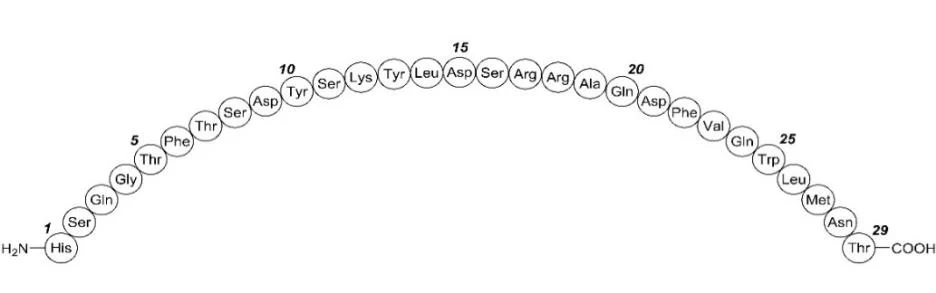
Glucagon is an antihypoglycemic agent and a gastrointestinal motility inhibitor. Glucagon is produced by solid phase peptide synthesis. The chemical structure of the glucagon is identical to human glucagon. Glucagon is a single-chain polypeptide that contains 29 amino acid residues and has a molecular weight of 3482.68 g/mol.
The empirical formula is C153H225N43O49S. The primary sequence of glucagon is shown below.
Glucagon is a white powder. It is very slightly soluble in water.
Glucagon for injection, USP is a sterile white lyophilized cake or powder in a vial and a syringe of sterile diluent for intravenous, intramuscular, or subcutaneous use. The vial contains 1 mg of glucagon, 49 mg of lactose monohydrate. Hydrochloric acid may have been added during manufacture to adjust the pH of the glucagon to 3.0 to 3.2. One International Unit of glucagon is equivalent to 1 mg of glucagon. The 1-mL diluent syringe contains 12 mg of glycerin, 1 mg hydrochloric acid, and water for injection, at pH 1.8 to 2.2.
12 CLINICAL PHARMACOLOGY
12.1 Mechanism of Action
Glucagon increases blood glucose concentration by activating hepatic glucagon receptors, thereby stimulating glycogen breakdown and release of glucose from the liver. Hepatic stores of glycogen are necessary for glucagon to produce an antihypoglycemic effect. Extrahepatic effects of glucagon include relaxation of the smooth muscle of the stomach, duodenum, small bowel, and colon.
12.2 Pharmacodynamics
Treatment of Severe Hypoglycemia
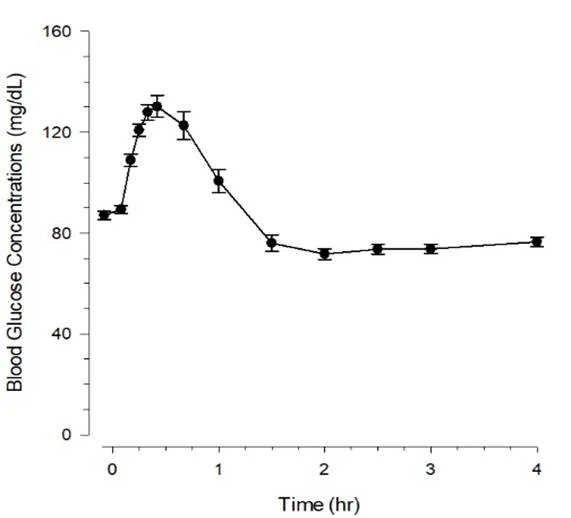
Blood glucose concentrations rise within 10 minutes of subcutaneous injection and mean maximal concentration of 136 mg/dL is attained 30 minutes after injection (see Figure 1). Similarly, following intramuscular injection, the mean peak glucose level was 138 mg/dL, which occurred at 26 minutes after injection.
Figure 1: Mean (SE) Blood Glucose Concentrations after Subcutaneous Injection of Glucagon (1 mg) in 25 Normal Volunteers
Diagnostic Aid
Table 2 displays the dose and pharmacodynamics properties of glucagon for injection as a diagnostic aid during radiological examination.
Table 2: Dose and Pharmacodynamic Properties of Glucagon for Injection as a Diagnostic Aid
| Dose | Route of Administration | Time of Onset of Action | Approximate Duration of Effect |
| 0.25 to 0.5 mg | Intravenous | 1 minute | 9 to 17 minutes |
| 1 mg | Intramuscular | 8 to 10 minutes | 12 to 27 minutes |
| 2 mg* | Intravenous | 1 minute | 22 to 25 minutes |
| 2 mg* | Intramuscular | 4 to 7 minutes | 21 to 32 minutes |
* Administration of 2 mg doses produces a higher incidence of nausea and vomiting than do lower doses.
12.3 Pharmacokinetics
Absorption
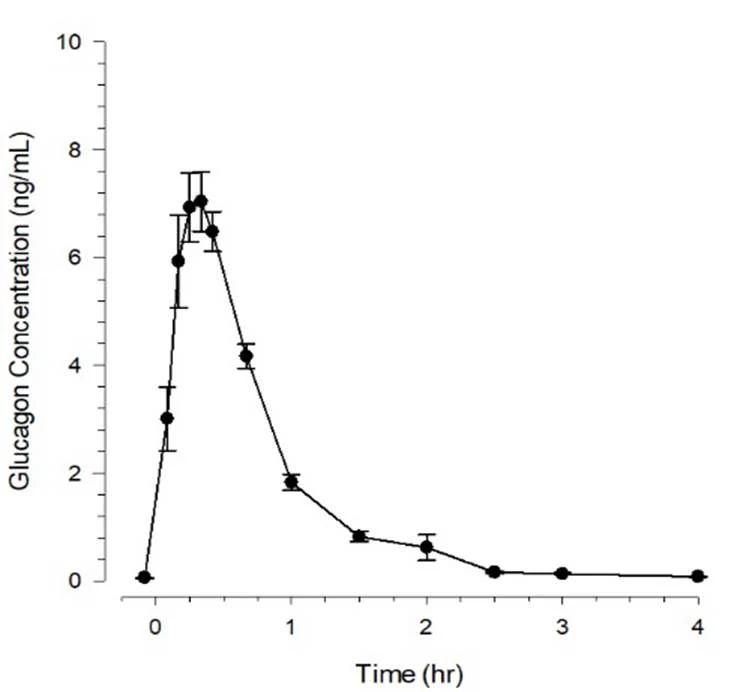
Glucagon injected through the intramuscular route achieved mean peak plasma levels of 6.9 ng/mL at approximately 13 minutes after dosing; and 7.9 ng/mL at approximately 20 minutes after subcutaneous dosing. Administration of the intravenous glucagon showed dose proportionality of the pharmacokinetics between 0.25 and 2 mg.
Figure 2: Mean (SE) Serum Glucagon Concentrations after Subcutaneous Injection of Glucagon (1 mg) in 25 Normal Volunteers
Distribution
The mean volume of distribution was 0.25 L/kg.
Elimination
The mean clearance was 13.5 mL/min/kg. The mean half-life ranged from 8 to 18 minutes.
Metabolism
Glucagon is degraded in the liver, kidney and plasma.
13 NONCLINICAL TOXICOLOGY
13.1 Carcinogenesis, Mutagenesis, Impairment of Fertility
Long term studies in animals to evaluate carcinogenic potential have not been performed. Recombinant glucagon was positive in the bacterial Ames assay. It was determined that an increase in colony counts was related to technical difficulties in running this assay with peptides. Studies in rats have shown that glucagon does not cause impaired fertility.
16 HOW SUPPLIED/STORAGE AND HANDLING
16.1 How Supplied
Glucagon Emergency Kit for Low Blood Sugar contains 1 mg Glucagon for Injection, USP (a white lyophilized cake or powder) in a single-dose vial and 1 prefilled syringe containing 1 mL of diluent of Glucagon.
- NDC 70748-311-01
16.2 Storage and Handling
Before Reconstitution:
Store glucagon for injection at 20° to 25°C (68° to 77°F); excursions permitted between 15° and 30°C (59° and 86°F) [see USP Controlled Room Temperature]. Do not use glucagon for injection if the expiration date has passed. Do not freeze. Keep in its original package and away from light.
After Reconstitution:
Use reconstituted glucagon for injection immediately. Discard unused portion [see Dosage and Administration (2.3)].
17 PATIENT COUNSELING INFORMATION
Advise the patient to read the FDA-approved patient labeling (Patient Information and Instructions for Use).
Recognition of Severe Hypoglycemia
Inform patient and family members or caregivers on how to recognize the signs and symptoms of severe hypoglycemia and the risks of prolonged hypoglycemia.
Administration
Review the Patient Information and Instructions for Use with the patient and family members or caregivers.
Serious Hypersensitivity
Inform patients that allergic reactions can occur with glucagon for injection. Advise patients to seek immediate medical attention if they experience any symptoms of serious hypersensitivity reactions [see Warnings and Precautions (5.3)].
Manufactured for:
Lupin Pharmaceuticals, Inc.
Naples, FL 34108
United States
Manufactured by:
Lupin Limited
Nagpur 441 108
INDIA
Revised: March 2024