


Patient information: uses, side effects, how to take - Ethinyl Estradiol and Etonogestrel Vaginal
What is the most important information I should know about Etonogestrel and ethinyl estradiol vaginal ring?
Do not use Etonogestrel and ethinyl estradiol vaginal ring if you smoke cigarettes and are over 35 years old. Smoking increases your risk of serious cardiovascular side effects (heart and blood vessel problems) from combination hormonal contraceptives (CHCs), including death from heart attack, blood clots or stroke. This risk increases with age and the number of cigarettes you smoke.
Hormonal birth control methods help to lower the chances of becoming pregnant. They do not protect against HIV infection (AIDS) and other sexually transmitted infections.
What is Etonogestrel and ethinyl estradiol vaginal ring?
Etonogestrel and ethinyl estradiol vaginal ring is a flexible birth control vaginal ring used to prevent pregnancy.
Etonogestrel and ethinyl estradiol vaginal ringcontains a combination of a progestin and estrogen, 2 kinds of female hormones. Birth control methods that contain both an estrogen and a progestin are called combination hormonal contraceptives (CHCs).
How well does Etonogestrel and ethinyl estradiol vaginal ringwork?
Your chance of getting pregnant depends on how well you follow the directions for using Etonogestrel and ethinyl estradiol vaginal ring. The better you follow the directions, the less chance you have of getting pregnant.
Based on the results of a US clinical study, approximately 1 to 3 women out of 100 women may get pregnant during the first year they use Etonogestrel and ethinyl estradiol vaginal ring.
The following chart shows the chance of getting pregnant for women who use different methods of birth control. Each box on the chart contains a list of birth control methods that are similar in effectiveness. The most effective methods are at the top of the chart. The box on the bottom of the chart shows the chance of getting pregnant for women who do not use birth control and are trying to get pregnant.
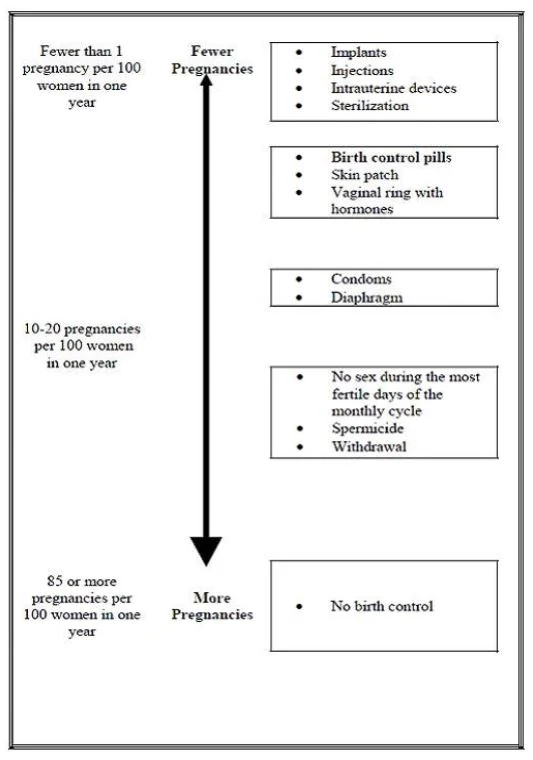
Who should not use Etonogestrel and ethinyl estradiol vaginal ring?
Do not use Etonogestrel and ethinyl estradiol vaginal ringif you:
- smoke and are over 35 years old
- have or have had blood clots in your arms, legs, eyes, or lungs
- have an inherited problem with your blood that makes it clot more than normal
- have had a stroke
- have had a heart attack
- have certain heart valve problems or heart rhythm problems that can cause blood clots to form in the heart
- have high blood pressure that medicine can't control
- have diabetes with kidney, eye, nerve, or blood vessel damage
- have certain kinds of severe migraine headaches with aura, numbness, weakness, or changes in vision, or have any migraine headaches if you are over age 35
- have liver disease, including liver tumors
- take any Hepatitis C drug combination containing ombitasvir/paritaprevir/ritonavir, with or without dasabuvir. This may increase levels of the liver enzyme “alanine aminotransferase” (ALT) in the blood
- have unexplained vaginal bleeding
- are pregnant or think you may be pregnant. Etonogestrel and ethinyl estradiol vaginal ring is not for pregnant women.
- have or have had breast cancer or any cancer that is sensitive to female hormones
- are allergic to etonogestrel, ethinyl estradiol or any of the ingredients in Etonogestrel and ethinyl estradiol vaginal ring. See the list of ingredients in Etonogestrel and ethinyl estradiol vaginal ring at the end of this leaflet.
Hormonal birth control methods may not be a good choice for you if you have ever had jaundice (yellowing of the skin or eyes) caused by pregnancy or related to previous use of hormonal birth control.
Tell your healthcare provider if you have ever had any of the conditions listed above. Your healthcare provider can suggest another method of birth control.
What should I tell my healthcare provider before using Etonogestrel and ethinyl estradiol vaginal ring?
Before you use Etonogestrel and ethinyl estradiol vaginal ring tell your healthcare provider if you:
- have any medical conditions
- smoke
- are pregnant or think you are pregnant
- recently had a baby
- recently had a miscarriage or abortion
- have a family history of breast cancer
- have or have had breast nodules, fibrocystic disease, an abnormal breast x-ray, or abnormal mammogram
- use tampons and have a history of toxic shock syndrome
- have been diagnosed with depression
- have had liver problems including jaundice during pregnancy
- have or have had elevated cholesterol or triglycerides
- have or have had gallbladder, liver, heart, or kidney disease
- have diabetes
- have a history of jaundice (yellowing of the skin or eyes) caused by pregnancy (also called cholestasis of pregnancy)
- have a history of scanty or irregular menstrual periods
- have any condition that makes the vagina become irritated easily
- have or have had high blood pressure
- have or have had migraines or other headaches or seizures
- are scheduled for surgery. Etonogestrel and ethinyl estradiol vaginal ring may increase your risk of blood clots after surgery. You should stop using Etonogestrel and ethinyl estradiol vaginal ring at least 4 weeks before you have surgery and not restart it until at least 2 weeks after your surgery.
- are scheduled for any laboratory tests. Certain blood tests may be affected by hormonal birth control methods.
- are breastfeeding or plan to breastfeed. Hormonal birth control methods that contain estrogen, like Etonogestrel and ethinyl estradiol vaginal ring, may decrease the amount of milk you make. A small amount of hormones from Etonogestrel and ethinyl estradiol vaginal ring may pass into your breast milk. Consider another non-hormonal method of birth control until you are ready to stop breastfeeding.
- have (or have ever had) an allergic reaction while using Etonogestrel and ethinyl estradiol vaginal ring, including hives, swelling of the face, lips, tongue, and/or throat causing difficulty in breathing or swallowing (anaphylaxis and/or angioedema).
- have a family history of angioedema. Products containing estrogens may cause or worsen these symptoms.
Tell your healthcare provider about all medicines and herbal products you take,including prescription and over-the-counter medicines, vitamins and herbal supplements.
Some medicines and herbal products may make hormonal birth control less effective, including, but not limited to:
- certain anti-seizure medicines (such as barbiturates, carbamazepine, felbamate, oxcarbazepine, phenytoin, rufinamide and topiramate)
- medicine to treat fungal infections (griseofulvin)
- certain combinations of HIV medicines, (such as nelfinavir, ritonavir, darunavir/ritonavir, (fos)amprenavir/ritonavir, lopinavir/ritonavir, and tipranavir/ritonavir)
- certain hepatitis C (HCV) medicines (such as boceprevir and telaprevir)
- non-nucleoside reverse transcriptase inhibitors (such as efavirenz and nevirapine)
- medicine to treat tuberculosis (such as rifampicin and rifabutin)
- medicine to treat high blood pressure in the vessels of the lung (bosentan)
- medicine to treat chemotherapy-induced nausea and vomiting (aprepitant)
- St John’s wort
Use an additional barrier contraceptive method (such as a male condom with spermicide) when you take medicines that may make Etonogestrel and ethinyl estradiol vaginal ring less effective. Since the effect of another medicine on Etonogestrel and ethinyl estradiol vaginal ring may last up to 28 days after stopping the medicine, it is necessary to use the additional barrier contraceptive method for that long to help prevent you from becoming pregnant. While using Etonogestrel and ethinyl estradiol vaginal ring, you should not use certain female barrier contraceptive methods such as a vaginal diaphragm, cervical cap or female condom as your back-up method of birth control because Etonogestrel and ethinyl estradiol vaginal ring may interfere with the correct placement and position of a diaphragm, cervical cap or female condom.
Some medicines and grapefruit juice may increase the level of ethinyl estradiol in your blood if used together, including:
- the pain reliever acetaminophen
- ascorbic acid (vitamin C)
- medicines that affect how your liver breaks down other medicines (such as itraconazole, ketoconazole, voriconazole, fluconazole, clarithromycin, erythromycin, and diltiazem)
- certain HIV medicines (atazanavir/ritonavir and indinavir)
- non-nucleoside reverse transcriptase inhibitors (such as etravirine)
- medicines to lower cholesterol such as atorvastatin and rosuvastatin
Hormonal birth control methods may interact with lamotrigine, a medicine used for seizures. This may increase the risk of seizures, so your healthcare provider may need to adjust your dose of lamotrigine.
Women on thyroid replacement therapy may need increased doses of thyroid hormone.
Some Hepatitis C drug combinations (such as glecaprevir/pibrentasvir) may increase levels of the liver enzyme "alanine aminotransferase" (ALT) in the blood.
Ask your healthcare provider if you are not sure if you take any of the medicines listed above. Know the medicines you take. Keep a list of them to show your doctor and pharmacist when you get a new medicine.
How should I use Etonogestrel and ethinyl estradiol vaginal ring?
- Read the Instructions for Useat the end of this Patient Information that comes with your Etonogestrel and ethinyl estradiol vaginal ring for information about the right way to use Etonogestrel and ethinyl estradiol vaginal ring.
- Use Etonogestrel and ethinyl estradiol vaginal ring exactly as your healthcare provider tells you to use it.
Etonogestrel and ethinyl estradiol vaginal ring is used in a 4-week cycle.
- Insert 1 Etonogestrel and ethinyl estradiol vaginal ring in the vagina and keep it in place for 3 weeks (21 days). Regularly check that Etonogestrel and ethinyl estradiol vaginal ring is in your vagina (for example, before and after intercourse) to ensure that you are protected from pregnancy.
- Remove the Etonogestrel and ethinyl estradiol vaginal ring for a 1-week break (7 days). During the 1-week break (7 days), you will usually have your menstrual period.
Note: Insert and remove Etonogestrel and ethinyl estradiol vaginal ring on the same day of the week and at the same time:
- For example, if you insert your Etonogestrel and ethinyl estradiol vaginal ring on a Monday at 8:00 am, you should remove it on the Monday 3 weeks later at 8:00 am.
- After your 1-week (7 days) break, you should insert a new Etonogestrel and ethinyl estradiol vaginal ring on the next Monday at 8:00 am.
- While using Etonogestrel and ethinyl estradiol vaginal ring, you should not use certain female barrier contraceptive methods such as a vaginal diaphragm, cervical cap or female condom as your back-up method of birth control because Etonogestrel and ethinyl estradiol vaginal ring may interfere with the correct placement and position of a diaphragm, cervical cap or female condom.
- Ring breakage has occurred when also using a vaginal product such as a lubricant or treatment for infection (see “What should I do if my Etonogestrel and ethinyl estradiol vaginal ring comes out of my vagina?”). Use of spermicides or vaginal yeast products will not make Etonogestrel and ethinyl estradiol vaginal ring less effective at preventing pregnancy.
- Use of tampons will not make Etonogestrel and ethinyl estradiol vaginal ring less effective or stop Etonogestrel and ethinyl estradiol vaginal ring from working.
- If Etonogestrel and ethinyl estradiol vaginal ring has been left inside your vagina for more than 4 weeks (28 days), you may not be protected from pregnancy and you should see your healthcare provider to be sure you are not pregnant. Until you know the results of your pregnancy test, you should use an extra method of birth control, such as male condoms with spermicide, until the new Etonogestrel and ethinyl estradiol vaginal ring has been in place for 7 days in a row.
- Do not use more than 1 Etonogestrel and ethinyl estradiol vaginal ring at a time. Too much hormonal birth control medicine in your body may cause nausea, vomiting, or vaginal bleeding.
Your healthcare provider should examine you at least 1 time a year to see if you have any signs of side effects from using Etonogestrel and ethinyl estradiol vaginal ring.
What are the possible side effects of using Etonogestrel and ethinyl estradiol vaginal ring?
See “What is the most important information I should know about Etonogestrel and ethinyl estradiol vaginal ring?”
Etonogestrel and ethinyl estradiol vaginal ring may cause serious side effects, including:
blood clots.Like pregnancy, combination hormonal birth control methods increase the risk of serious blood clots (see following graph), especially in women who have other risk factors, such as smoking, obesity, or age greater than 35. This increased risk is highest when you first start using a combination hormonal birth control method or when you restart the same or different combination hormonal birth control method after not using it for a month or more. Talk with your healthcare provider about your risk of getting a blood clot before using Etonogestrel and ethinyl estradiol vaginal ring or before deciding which type of birth control is right for you.
In some studies of women who used Etonogestrel and ethinyl estradiol vaginal ring, the risk of getting a blood clot was similar to the risk in women who used combination birth control pills.
Other studies have reported that the risk of blood clots was higher for women who use combination birth control pills containing desogestrel (a progestin similar to the progestin in Etonogestrel and ethinyl estradiol vaginal ring) than for women who use combination birth control pills that do not contain desogestrel.
It is possible to die or be permanently disabled from a problem caused by a blood clot, such as heart attack or stroke.Some examples of serious blood clots are blood clots in the:
- legs (deep vein thrombosis)
- lungs (pulmonary embolus)
- eyes (loss of eyesight)
- heart (heart attack)
- brain (stroke)
To put the risk of developing a blood clot into perspective: If 10,000 women who are not pregnant and do not use hormonal birth control are followed for one year, between 1 and 5 of these women will develop a blood clot. The figure below shows the likelihood of developing a serious blood clot for women who are not pregnant and do not use hormonal birth control, for women who use hormonal birth control, for pregnant women, and for women in the first 12 weeks after delivering a baby.
Likelihood of Developing a Serious Blood Clot (Venous Thromboembolism [VTE])
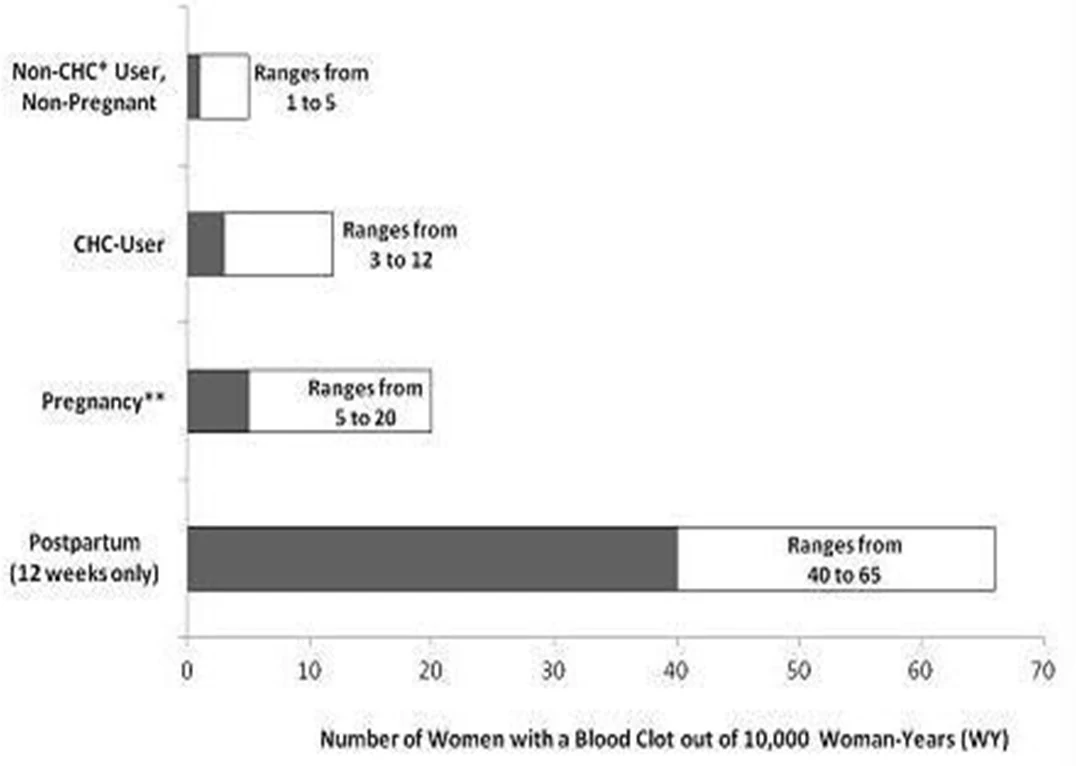
*CHC=combination hormonal contraception
**Pregnancy data based on actual duration of pregnancy in the reference studies. Based on a model assumption that pregnancy duration is nine months, the rate is 7 to 27 per 10,000 WY.
Call your healthcare provider right away if you have:
- leg pain that does not go away
- sudden shortness of breath
- sudden blindness, partial or complete
- severe pain or pressure in your chest
- sudden, severe headache unlike your usual headaches
- weakness or numbness in an arm or leg, or trouble speaking
- yellowing of the skin or eyeballs
Other serious risks include:
Toxic Shock Syndrome (TSS). Some of the symptoms are much the same as the flu, but they can become serious very quickly. Call your healthcare provider or get emergency treatment right away if you have the following symptoms:
- sudden high fever
- vomiting
- diarrhea
- fainting or feeling faint when standing up
- a sunburn-like rash
- muscle aches
- dizziness
- allergic reaction, including hives, swelling of the face, lips, tongue, and/or throat causing difficulty in breathing or swallowing (anaphylaxis and/or angioedema)
- liver problems, including liver tumors
- high blood pressure
- gallbladder problems
- accidental insertion into bladder
- symptoms of a problem called angioedema if you already have a (family) history of angioedema
The most common side effects of Etonogestrel and ethinyl estradiol vaginal ring are:
- tissue irritation inside your vagina or on your cervix
- headache (including migraine)
- mood changes (including depression, especially if you had depression in the past). Call your healthcare provider immediately if you have any thoughts of harming yourself.
- Etonogestrel and ethinyl estradiol vaginal ring problems, including the ring slipping out or causing discomfort
- nausea and vomiting
- vaginal discharge
- weight gain
- vaginal discomfort
- breast pain, discomfort, or tenderness
- painful menstrual periods
- abdominal pain
- acne
- less sexual desire
Some women have spotting or light bleeding during Etonogestrel and ethinyl estradiol vaginal ring use. If these symptoms occur, do not stop using Etonogestrel and ethinyl estradiol vaginal ring. The problem will usually go away. If it doesn’t go away, check with your healthcare provider.
Other side effects seen with Etonogestrel and ethinyl estradiol vaginal ring include breast discharge; vaginal injury (including pain, discomfort, and bleeding) associated with broken rings; and penis discomfort of the partner (such as irritation, rash, itching).
Less common side effects seen with combination hormonal birth control include:
- Blotchy darkening of your skin, especially on your face
- High blood sugar, especially in women who already have diabetes
- High fat (cholesterol, triglycerides) levels in the blood
There have been reports of the ring becoming stuck to the vaginal tissue and having to be removed by a healthcare provider. Call your healthcare provider if you are unable to remove your Etonogestrel and ethinyl estradiol vaginal ring.
Tell your healthcare provider about any side effect that bothers you or that does not go away. These are not all the possible side effects of Etonogestrel and ethinyl estradiol vaginal ring. For more information, ask your healthcare provider or pharmacist. Call your healthcare provider for medical advice about side effects. You may report side effects to FDA at 1-800-FDA-1088.
How should I store Etonogestrel and ethinyl estradiol vaginal ring and throw away used Etonogestrel and ethinyl estradiol vaginal rings?
- Store Etonogestrel and ethinyl estradiol vaginal ring at room temperature between 68°F to 77°F (20°C to 25°C).
- Store Etonogestrel and ethinyl estradiol vaginal ring at room temperature for up to 4 months after you receive it. Throw Etonogestrel and ethinyl estradiol vaginal ring away if the expiration date on the label has passed.
- Do not store Etonogestrel and ethinyl estradiol vaginal ring above 86°F (30°C).
- Avoid direct sunlight.
- Place the used Etonogestrel and ethinyl estradiol vaginal ring in the foil pouch and properly throw it away in your household trash out of the reach of children and pets. Do not flush your used Etonogestrel and ethinyl estradiol vaginal ring down the toilet.
Keep Etonogestrel and ethinyl estradiol vaginal ring and all medicines out of the reach of children.
General information about the safe and effective use of Etonogestrel and ethinyl estradiol vaginal ring
Medicines are sometimes prescribed for purposes other than those listed in the Patient Information. Do not use Etonogestrel and ethinyl estradiol vaginal ring for a condition for which it was not prescribed. Do not give Etonogestrel and ethinyl estradiol vaginal ring to other people. It may harm them.
This leaflet summarizes the most important information about Etonogestrel and ethinyl estradiol vaginal ring. If you would like more information, talk with your healthcare provider. You can ask your pharmacist or healthcare provider for information about Etonogestrel and ethinyl estradiol vaginal ring that is written for health professionals.
For more information on Etonogestrel and ethinyl estradiol vaginal ring, go to www.avkare.com or call 1-855-361-3993.
What are the ingredients in Etonogestrel and ethinyl estradiol vaginal ring?
Active ingredients:etonogestrel and ethinyl estradiol
Inactive ingredients:ethylene vinylacetate copolymers (28% and 9% vinylacetate) and magnesium stearate.
Etonogestrel and ethinyl estradiol vaginal ring is not made with natural rubber latex.
Does hormonal birth control cause cancer?
It is not known if hormonal birth control causes breast cancer. Some studies, but not all, suggest that there could be a slight increase in the risk of breast cancer among current users with longer duration of use.
If you have breast cancer now or have had it in the past, do not use hormonal birth control because some breast cancers are sensitive to hormones.
Women who use hormonal birth control methods may have a slightly higher chance of getting cervical cancer. However, this may be due to other reasons such as having more sexual partners.
What should I know about my period when using Etonogestrel and ethinyl estradiol vaginal ring?
When you use Etonogestrel and ethinyl estradiol vaginal ring you may have bleeding and spotting between periods, called unplanned bleeding. Unplanned bleeding may vary from slight staining between menstrual periods to breakthrough bleeding, which is a flow much like a regular period. Unplanned bleeding occurs most often during the first few months of Etonogestrel and ethinyl estradiol vaginal ring use, but may also occur after you have been using Etonogestrel and ethinyl estradiol vaginal ring for some time. Such bleeding may be temporary and usually does not indicate any serious problems. It is important to continue using the ring on schedule. If the unplanned bleeding or spotting is heavy or lasts for more than a few days, you should discuss this with your healthcare provider.
What if I miss my regular scheduled period when using Etonogestrel and ethinyl estradiol vaginal ring?
Some women miss periods on hormonal birth control, even when they are not pregnant. Consider the possibility that you may be pregnant if:
- 1. you miss a period and Etonogestrel and ethinyl estradiol vaginal ring was out of the vagina for more than 3 hours during the 3 weeks (21 days) of ring use
- 2. you miss a period and waited longer than 1 week to insert a new ring
- 3. you have followed the instructions and you miss 2 periods in a row
- 4. you have left Etonogestrel and ethinyl estradiol vaginal ring in place for longer than 4 weeks (28 days)
What if I want to become pregnant?
You may stop using Etonogestrel and ethinyl estradiol vaginal ring whenever you wish. Consider a visit with your healthcare provider for a pre-pregnancy checkup before you stop using Etonogestrel and ethinyl estradiol vaginal ring.
INSTRUCTIONS FOR USE
Instructions for Use
Etonogestrel and ethinyl estradiol vaginal ring
Read these Instructions for Use before you start using Etonogestrel and ethinyl estradiol vaginal ring and each time you get a refill. There may be new information. This information does not take the place of talking to your healthcare provider about your treatment.
How should I start using Etonogestrel and ethinyl estradiol vaginal ring?
If you are not currently using hormonal birth control, you have 2 ways to start using Etonogestrel and ethinyl estradiol vaginal ring.Choose the best way for you:
- First Day Start:Insert Etonogestrel and ethinyl estradiol vaginal ring on the first day of your menstrual period. You will not need to use another birth control method since you are using Etonogestrel and ethinyl estradiol vaginal ring on the first day of your menstrual period.
- Day 2 to Day 5 Cycle Start:You may choose to start Etonogestrel and ethinyl estradiol vaginal ring on days 2 to 5 of your menstrual period. Make sure you also use an extra method of birth control (barrier method), such as male condoms with spermicide for the first 7 days of Etonogestrel and ethinyl estradiol vaginal ring use in the first cycle.
If you are changing from a birth control pill or patch to Etonogestrel and ethinyl estradiol vaginal ring:
If you have been using your birth control method correctly and are certain that you are not pregnant, you can change to Etonogestrel and ethinyl estradiol vaginal ring any day. Do not start Etonogestrel and ethinyl estradiol vaginal ring any later than the day you would start your next birth control pill or apply your patch.
If you are changing from a progestin-only birth control method, such as a minipill, implant or injection or from an intrauterine system (IUS):
- You may switch from a minipill on any day. Start using Etonogestrel and ethinyl estradiol vaginal ring on the day that you would have taken your next minipill.
- You should switch from an implant or the IUS and start using Etonogestrel and ethinyl estradiol vaginal ring on the day that you remove the implant or IUS.
- You should switch from an injectable and start using Etonogestrel and ethinyl estradiol vaginal ring on the day when your next injection would be due.
If you are changing from a minipill, implant or injection or from an intrauterine system (IUS), you should use an extra method of birth control, such as a male condom with spermicide during the first 7 days of using Etonogestrel and ethinyl estradiol vaginal ring.
If you start using Etonogestrel and ethinyl estradiol vaginal ring after an abortion or miscarriage:
- Following a first trimester abortion or miscarriage:You may start Etonogestrel and ethinyl estradiol vaginal ring within 5 days following a first trimester abortion or miscarriage (the first 12 weeks of pregnancy). You do not need to use an additional birth control method.
If you do not start Etonogestrel and ethinyl estradiol vaginal ring within 5 days after a first trimester abortion or miscarriage, use a non-hormonal birth control method, such as male condoms and spermicide, while you wait for your period to start. Begin Etonogestrel and ethinyl estradiol vaginal ring at the time of your next menstrual period. Count the first day of your menstrual period as “Day 1” and start Etonogestrel and ethinyl estradiol vaginal ring one of the following 2 ways below.
- First Day Start:Insert Etonogestrel and ethinyl estradiol vaginal ring on the first day of your menstrual period. You will not need to use another birth control method since you are using Etonogestrel and ethinyl estradiol vaginal ring on the first day of your menstrual period.
- Day 2 to Day 5 Cycle Start:You may choose to start Etonogestrel and ethinyl estradiol vaginal ring on Days 2 to 5 of your menstrual period. Make sure you also use an extra method of birth control (barrier method), such as male condoms with spermicide for the first 7 days of Etonogestrel and ethinyl estradiol vaginal ring use in the first cycle.
- Following a second trimester abortion or miscarriage:You may start using Etonogestrel and ethinyl estradiol vaginal ring no sooner than 4 weeks (28 days) after a second trimester abortion ( after the first 12 weeks of pregnancy).
If you are starting Etonogestrel and ethinyl estradiol vaginal ring after childbirth:
- You may start using Etonogestrel and ethinyl estradiol vaginal ring no sooner than 4 weeks (28 days) after having a baby if you are not breastfeeding.
- If you have not gotten your menstrual period after childbirth, you should talk to your healthcare provider. You may need a pregnancy test to make sure you are not pregnant before you start using Etonogestrel and ethinyl estradiol vaginal ring.
- Use another birth control method such as male condoms with spermicide for the first 7 days in addition to Etonogestrel and ethinyl estradiol vaginal ring.
If you are breastfeeding you should not use Etonogestrel and ethinyl estradiol vaginal ring. Use other birth control methods until you are no longer breastfeeding.
Step 1. Choose a position for insertion of Etonogestrel and ethinyl estradiol vaginal ring.
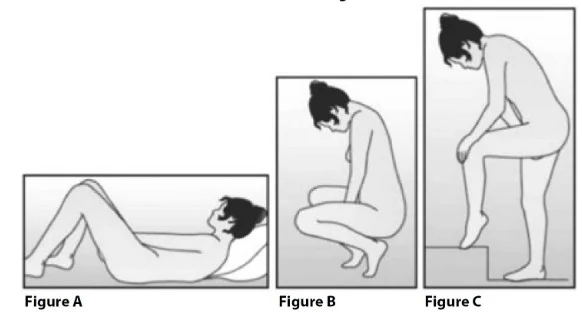
- Choose the position that is comfortable for you. For example, lying down, squatting, or standing with 1 leg up (See Figures A, B, and C).
Positions for Etonogestrel and Ethinyl Vaginal Ring:
Step 2. Open the pouch to remove your Etonogestrel and ethinyl estradiol vaginal ring.
- Each Etonogestrel and ethinyl estradiol vaginal ring comes in a foil pouch.
- Wash and dry your hands before removing Etonogestrel and ethinyl estradiol vaginal ring from the foil pouch.
- Open the foil pouch at either notch near the top.
- Keep the foil pouch so you can place your used Etonogestrel and ethinyl estradiol vaginal ring in it before you throw it away in your household trash.
Step 3. Prepare Etonogestrel and ethinyl estradiol vaginal ring for insertion.
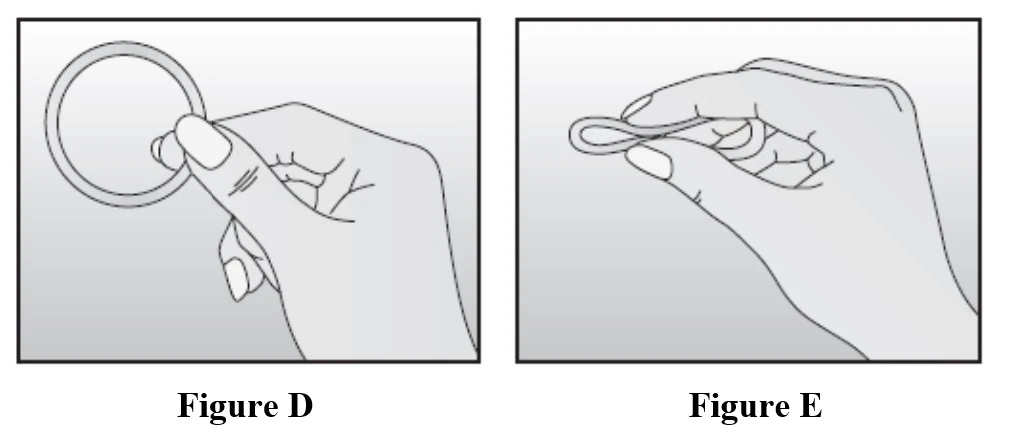
- Hold Etonogestrel and ethinyl estradiol vaginal ring between your thumb and index finger and press the sides of the ring together (See Figures D and E).
Step 4. Insert Etonogestrel and ethinyl estradiol vaginal ring into your vagina.
- Insert the folded Etonogestrel and ethinyl estradiol vaginal ring into your vagina and gently push it further up into your vagina using your index finger (See Figures F and G).
- When you insert Etonogestrel and ethinyl estradiol vaginal ring it may be in different positions in your vagina, but Etonogestrel and ethinyl estradiol vaginal ring does not have to be in an exact position for it to work (See Figures H and I).
- Etonogestrel and ethinyl estradiol vaginal ring may move around slightly within your vagina. This is normal. Although some women may be aware of Etonogestrel and ethinyl estradiol vaginal ring in the vagina, most women do not feel it when it is in place.
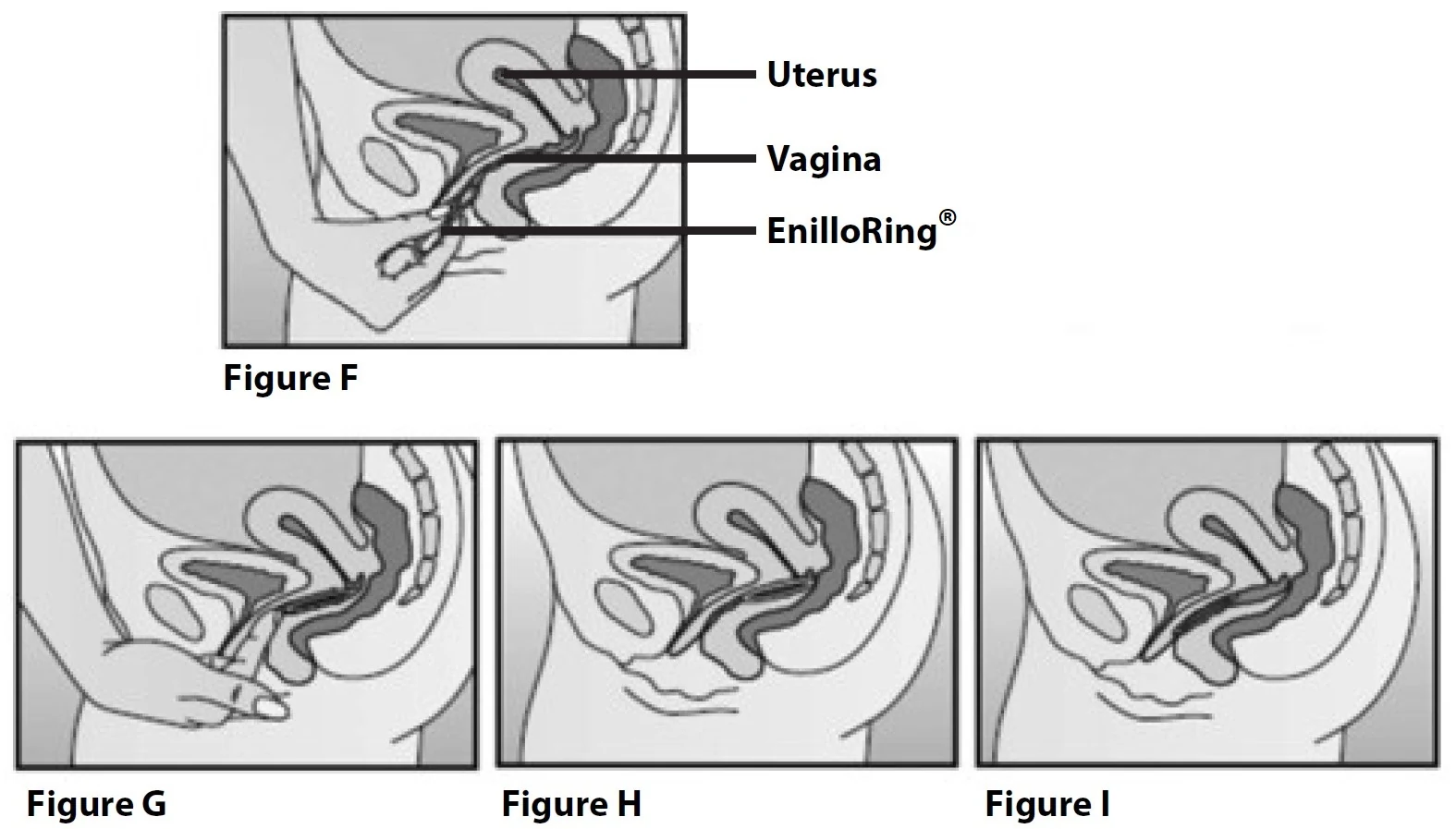
Inserting Etonogestrel and ethinyl estradiol vaginal ring ( Figure F, Figure G) and positioning Etonogestrel and ethinyl estradiol vaginal ring ( Figure H, Figure I)
Note:
- If the Etonogestrel and ethinyl estradiol vaginal ring feels uncomfortable, you may not have pushed the ring into your vagina far enough. Use your finger to gently push the Etonogestrel and ethinyl estradiol vaginal ring as far as you can into your vagina. There is no danger of Etonogestrel and ethinyl estradiol vaginal ring being pushed too far up in the vagina or getting lost (See Figure G).
- Some women have accidentally inserted Etonogestrel and ethinyl estradiol vaginal ring into their bladder. If you have pain during or after insertion and you cannot find Etonogestrel and ethinyl estradiol vaginal ring in your vagina, call your healthcare provider right away.
- Regularly check that Etonogestrel and ethinyl estradiol vaginal ring is in your vagina (for example, before and after intercourse) to ensure you are protected from pregnancy.
Step 5. How do I remove Etonogestrel and ethinyl estradiol vaginal ring?
- Wash and dry your hands.
- Choose the position that is most comfortable for you (See Figures A, B, and C).
- Put your index finger into your vagina and hook it through the Etonogestrel and ethinyl estradiol vaginal ring. Gently pull downward and forward to remove the Etonogestrel and ethinyl estradiol vaginal ring and pull it out (See Figure J).
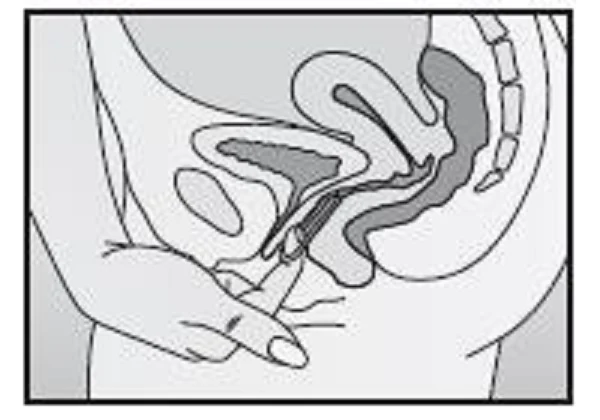
Figure J
Step 6. Throw away the used Etonogestrel and ethinyl estradiol vaginal ring.
- Place the used Etonogestrel and ethinyl estradiol vaginal ring in the foil pouch and put it in a trash can out of the reach of children and pets.
- Do not throw Etonogestrel and ethinyl estradiol vaginal ring in the toilet.
What else should I know about using Etonogestrel and ethinyl estradiol vaginal ring?
What if I leave Etonogestrel and ethinyl estradiol vaginal ring in too long?
- If you leave Etonogestrel and ethinyl estradiol vaginal ring in your vagina for up to 4 weeks (28 days) you will still be getting pregnancy protection. Remove your old Etonogestrel and ethinyl estradiol vaginal ring for 1 week (7 days) and insert a new Etonogestrel and ethinyl estradiol vaginal ring 1 week (7 days) later (See Steps 1 through 4).
- If you leave Etonogestrel and ethinyl estradiol vaginal ring in your vagina longer than 4 weeks (28 days), remove the ring and check to make sure you are not pregnant.
- If you are not pregnant, insert a new Etonogestrel and ethinyl estradiol vaginal ring (See Steps 1 through 4).You must use another birth control method, such as male condoms with spermicide, until the new Etonogestrel and ethinyl estradiol vaginal ring has been used for 7 days in a row.
What should I do if my Etonogestrel and ethinyl estradiol vaginal ring comes out of my vagina?
Etonogestrel and ethinyl estradiol vaginal ring can slip or accidentally come out (expelled) of your vagina, for example, during sexual intercourse, bowel movements, use of tampons, or if it breaks.
Etonogestrel and ethinyl estradiol vaginal ring may break causing the ring to lose its shape. If the ring stays in your vagina this should not lower Etonogestrel and ethinyl estradiol vaginal ring's effectiveness at preventing pregnancy.
- If Etonogestrel and ethinyl estradiol vaginal ring breaks and slips out of your vagina, throw the broken ring in your household trash out of the reach of children and pets.
- Insert a new Etonogestrel and ethinyl estradiol vaginal ring (See Steps 1 through 4).
You should pay attention when removing a tampon to be sure that your Etonogestrel and ethinyl estradiol vaginal ring is not accidentally pulled out.
- Be sure to insert Etonogestrel and ethinyl estradiol vaginal ring before inserting a tampon.
- If you accidentally pull out your Etonogestrel and ethinyl estradiol vaginal ring while using tampons, rinse your Etonogestrel and ethinyl estradiol vaginal ring in cool to lukewarm (not hot) water and insert it again right away.
Etonogestrel and ethinyl estradiol vaginal ring can be pushed out of (expelled from) your vagina, for example, during sexual intercourse or during a bowel movement.
- If the expelled ring has been out of your vagina for less than 3 hours, rinse the expelled Etonogestrel and ethinyl estradiol vaginal ring in cool to lukewarm (not hot) water and insert it again right away.
If the expelled Etonogestrel and ethinyl estradiol vaginal ring has been out of your vagina for more than 3 continuous hours:
- During Weeks 1 and 2,you may not be protected from pregnancy. Reinsert the ring as soon as you remember (See Steps 1 through 4).Use another birth control method, such as male condoms with spermicide, until the ring has been in place for 7 days in a row.
- During Week 3,do not reinsert the Etonogestrel and ethinyl estradiol vaginal ring that has been out of your vagina; but throw it away in your household trash away from children and pets. Use another birth control method, such as male condoms with spermicide, until the new Etonogestrel and ethinyl estradiol vaginal ring has been used for 7 days in a row, following one of the two options below:
- Option 1.Insert a new ring right away to start your next 21 Day Etonogestrel and ethinyl estradiol vaginal ring use cycle. You may not have your regular period, but you may have spotting or vaginal bleeding.
- Option 2.Insert a new ring no later than 7 days from the time the previous ring was removed or expelled. During this time, you may have your period.
Note:You should only choose to do option 2 if you used Etonogestrel and ethinyl estradiol vaginal ring for 7 days in a row, prior to the day that your previous Etonogestrel and ethinyl estradiol vaginal ring was accidentally removed or expelled.
- If Etonogestrel and ethinyl estradiol vaginal ring was out of the vagina for an unknown amount of time, you may not be protected from pregnancy. Perform a pregnancy test prior to inserting a new ring and consult your healthcare provider.
This Patient Information and Instructions for Use have been approved by the U.S. Food and Drug Administration.
Manufactured For:
AvKARE
Pulaski, TN 38478
PI-478-02
Rev. 07/2026