


Prescribing information (package insert) - Diacomit
1 INDICATIONS AND USAGE
DIACOMIT is indicated for the treatment of seizures associated with Dravet syndrome (DS) in patients taking clobazam who are 6 months of age and older and weighing 7 kg or more. There are no clinical data to support the use of DIACOMIT as monotherapy in Dravet syndrome.
2 DOSAGE AND ADMINISTRATION
2.1 Laboratory Tests Prior to First Dose of DIACOMIT
Hematologic testing should be obtained prior to starting treatment with DIACOMIT [see Warnings and Precautions (5.3)].
2.2 Dosing Information
The recommended oral dosage of DIACOMIT is 50 mg/kg/day, administered in 2 or 3 divided doses (i.e., 16.67 mg/kg three times daily or 25 mg/kg twice daily), depending on the patient’s age and body weight as shown in Table 1. If the exact dosage is not achievable given the available strengths, round to the nearest possible dosage, which is usually within 50 mg to 150 mg of the recommended 50 mg/kg/day. A combination of the two DIACOMIT strengths can be used to achieve this dosage. The maximum recommended total dosage is 3,000 mg/day.
Table 1. Recommended Dosage for Patients 6 Months of Age and Older Weighing 7 kg or More with Dravet Syndrome
| Age of Patient | Body Weight | Dosing Regimen (administered by mouth in equally divided doses) | Total Daily Dose |
| 6 months to less than 1 year | 7 kg and above | 25 mg/kg twice dailya,b | 50 mg/kg/day |
| 1 year and above | 7 kg to less than 10 kg | 25 mg/kg twice dailyb | 50 mg/kg/day |
| 10 kg and above | 25 mg/kg twice daily or 16.67 mg/kg three times daily | 50 mg/kg/day Maximum daily dose is 3000 mg |
a Dosing frequency should not exceed twice daily to limit free water administration.
b Dosing frequency should not exceed twice daily to avoid overexposures.
2.3 Administration Instructions
DIACOMIT Capsules
DIACOMIT capsules must be swallowed whole with a glass of water during a meal. Capsules should not be broken or opened.
DIACOMIT for Oral Suspension
DIACOMIT should be mixed in a glass of water (100 mL) and should be taken immediately after mixing during a meal. To be sure there is no medicine left in the glass, add a small amount of water (25 mL) to the drinking cup and drink all of the mixture [see Instructions for Use].
2.4 Missed Dose
A missed dose should be taken as soon as possible. If it is almost time for the next dose, the missed dose should not be taken. Instead, the next scheduled dose should be taken. Doses should not be doubled.
2.5 Discontinuation of DIACOMIT
As is advisable for most antiepileptic drugs, if DIACOMIT treatment is discontinued, the drug should be withdrawn gradually to minimize the risk of increased seizure frequency and status epilepticus [see Warnings and Precautions (5.4)].
In situations where rapid withdrawal of DIACOMIT is medically required, appropriate monitoring is recommended.
3 DOSAGE FORMS AND STRENGTHS
Capsules
- 250 mg: size 2, pink, and imprinted with “Diacomit” and “250mg”
- 500 mg: size 0, white, and imprinted with “Diacomit” and “500mg”
For Oral Suspension
- Pale pink fruit flavored powder packaged in packets. Each packet contains either 250 mg or 500 mg of stiripentol
4 CONTRAINDICATIONS
None.
5 WARNINGS AND PRECAUTIONS
5.1 Somnolence
DIACOMIT can cause somnolence. In controlled studies in patients with Dravet syndrome, the incidence of somnolence was 67% in DIACOMIT-treated patients, compared to 23% in patients on placebo. All patients in both groups were on concomitant clobazam, which is also known to cause somnolence. Co-administration of DIACOMIT with clobazam results in increased levels of clobazam and its active metabolite [see Drug Interactions (7.1)]. Other central nervous system CNS depressants, including alcohol, could potentiate the somnolence effect of DIACOMIT.
Prescribers should monitor patients for somnolence. If somnolence occurs during co-administration with clobazam, consider an initial reduction of clobazam by 25%. If somnolence persists, further clobazam reduction by an additional 25% should be considered, as should adjustment of the dosage of other concomitant anticonvulsant drugs with sedating properties. Prescribers should caution patients against engaging in hazardous activities requiring mental alertness, such as operating dangerous machinery or motor vehicles, until the effect of DIACOMIT on mental alertness is known.
5.2 Decreased Appetite and Decreased Weight
DIACOMIT can cause decreases in appetite and weight. In controlled studies in patients with Dravet syndrome, the incidence of decreased appetite was 46% in DIACOMIT-treated patients, compared to 10% in patients on placebo. The incidence of decreased weight was 27% in DIACOMIT-treated patients, compared to 6% in patients on placebo. Nausea and vomiting also occurred more frequently in DIACOMIT-treated patients [see Adverse Reactions (6.1)]. Given the frequency of these adverse reactions, the growth of pediatric patients treated with DIACOMIT should be carefully monitored. In some cases, decreasing the dose of concomitant valproate by 30% per week can reduce the decrease in appetite and weight.
5.3 Neutropenia and Thrombocytopenia
DIACOMIT can cause a significant decline in neutrophil count. In controlled studies in patients with Dravet syndrome, there were 31 patients treated with DIACOMIT who had both a baseline and end-of-study neutrophil count obtained. A decrease in neutrophil count from normal at baseline to less than 1500 cells/mm3 during the trial was observed in 13% of these DIACOMIT- treated patients, but not in any placebo-treated patients.
DIACOMIT can cause a significant decline in platelet count. In controlled studies in patients with Dravet syndrome, there were 31 patients treated with DIACOMIT who had both a baseline and end-of-study platelet count. A decrease in platelet count from normal at baseline to less than 150,000/µL during the trial was observed in 13% of these DIACOMIT-treated patients, but not in any placebo-treated patients.
Hematologic testing should be obtained prior to starting treatment with DIACOMIT, and then every 6 months.
5.4 Withdrawal of Antiepileptic Drugs
As with most antiepileptic drugs, DIACOMIT should generally be withdrawn gradually to minimize the risk of increased seizure frequency and status epilepticus.
In situations where rapid withdrawal of DIACOMIT is required (e.g., in the setting of a serious adverse reaction), appropriate monitoring is recommended.
5.5 Risks in Patients with Phenylketonuria
Phenylalanine can be harmful to patients with phenylketonuria (PKU). DIACOMIT for oral suspension contains phenylalanine, a component of aspartame. Each 250 mg packet contains 1.40 mg phenylalanine; each 500 mg packet contains 2.80 mg phenylalanine. Before prescribing DIACOMIT for oral Suspension to a patient with PKU, consider the combined daily amount of phenylalanine from all sources, including DIACOMIT for oral Suspension.
DIACOMIT capsules do not contain phenylalanine.
5.6 Suicidal Behavior and Ideation
AEDs, including DIACOMIT, increase the risk of suicidal thoughts or behavior in patients taking these drugs for any indication. Patients treated with any AED for any indication should be monitored for the emergence or worsening of depression, suicidal thoughts or behavior, and/or any unusual changes in mood or behavior.
Pooled analyses of 199 placebo-controlled clinical trials (mono- and adjunctive therapy) of 11 different AEDs showed that patients randomized to one of the AEDs had approximately twice the risk (adjusted relative risk 1.8, 95% confidence interval [CI]:1.2, 2.7) of suicidal thinking or behavior compared to patients randomized to placebo. In these trials, which had a median treatment duration of 12 weeks, the estimated incidence rate of suicidal behavior or ideation among 27,863 AED treated patients was 0.43%, compared to 0.24% among 16,029 placebo treated patients, representing an increase of approximately one case of suicidal thinking or behavior for every 530 patients treated. There were four suicides in drug treated patients in the trials and none in placebo treated patients, but the number is too small to allow any conclusion about drug effect on suicide.
The increased risk of suicidal thoughts or behavior with AEDs was observed as early as one week after starting drug treatment with AEDs and persisted for the duration of treatment assessed. Because most trials included in the analysis did not extend beyond 24 weeks, the risk of suicidal thoughts or behavior beyond 24 weeks could not be assessed.
The risk of suicidal thoughts or behavior was generally consistent among drugs in the data analyzed. The finding of increased risk with AEDs of varying mechanisms of action and across a range of indications suggests that the risk applies to all AEDs used for any indication. The risk did not vary substantially by age (5-100 years) in the clinical trials analyzed. Table2 shows absolute and relative risk by indication for all evaluated AEDs.
Table 2. Risk by Indication for Antiepileptic Drugs in the Pooled Analysis
| Indication | Placebo Patients with Events per 1000 Patients | Drug Patients with Events per 1000 Patients | Relative Risk: Incidence of Drug Events in Drug Patients/Incidence in Placebo Patients | Risk Difference: Additional Drug Patients with Events per 1000 Patients |
| Epilepsy | 1.0 | 3.4 | 3.5 | 2.4 |
| Psychiatric | 5.7 | 8.5 | 1.5 | 2.9 |
| Other | 1.0 | 1.8 | 1.9 | 0.9 |
| Total | 2.4 | 4.3 | 1.8 | 1.9 |
The relative risk for suicidal thoughts or behavior was higher in clinical trials for epilepsy than in clinical trials for psychiatric or other conditions, but the absolute risk differences were similar for the epilepsy and psychiatric indications.
Anyone considering prescribing DIACOMIT or any other AED must balance the risk of suicidal thoughts or behavior with the risk of untreated illness. Epilepsy and many other illnesses for which AEDs are prescribed are themselves associated with morbidity and mortality and an increased risk of suicidal thoughts and behavior. Should suicidal thoughts and behavior emerge during treatment, the prescriber needs to consider whether the emergence of these symptoms in any given patient may be related to the illness being treated.
Patients, their caregivers, and families should be informed that AEDs increase the risk of suicidal thoughts and behavior and should be advised of the need to be alert for the emergence or worsening of the signs and symptoms of depression, any unusual changes in mood or behavior, or the emergence of suicidal thoughts, behavior, or thoughts about self-harm. Behaviors of concern should be reported immediately to healthcare providers.
6 ADVERSE REACTIONS
The following serious or otherwise clinically significant adverse reactions are described elsewhere in the labeling:
- Somnolence [see Warnings and Precautions (5.1)]
- Decreased Appetite and Decreased Weight [see Warnings and Precautions (5.2)]
- Neutropenia and Thrombocytopenia [see Warnings and Precautions (5.3)]
- Withdrawal Symptoms [see Warnings and Precautions (5.4)]
- Risks in Patients with Phenylketonuria [see Warnings and Precautions (5.5)]
- Suicidal Behavior and Ideation [see Warnings and Precautions (5.6)]
6.1 Clinical Trials Experience
Because clinical trials are conducted under widely varying conditions, adverse reaction rates observed in the clinical trials of a drug cannot be directly compared to rates in clinical trials of another drug, and may not reflect the rates observed in practice.
During its development for the treatment of seizures associated with Dravet syndrome, DIACOMIT was administered to 55 healthy male volunteers and 438 patients with Dravet syndrome, including 310 patients treated for 12 months or more. The conditions and duration of exposure varied greatly, and included single- and multiple-dose clinical pharmacology studies in healthy male volunteers, 2 randomized, double-blind, placebo-controlled, 12-week studies in patients with Dravet syndrome (Sticlo France and Sticlo Italy), and open-label long-term studies.
In Sticlo France and Sticlo Italy, 33 patients received DIACOMIT and 31 patients received placebo for a treatment duration of 8 weeks [see Clinical Studies (14)]. Adverse reactions from these trials are presented below. Approximately 53% of patients were female and the mean age was 9.2 years. All patients were taking clobazam and valproate.
There were 2 patients in whom adverse reactions led to discontinuation of DIACOMIT treatment: one patient had an adverse reaction of status epilepticus; the second patient had drowsiness, balance impaired and sialorrhea.
The most common adverse reactions, occurring in at least 10% of DIACOMIT-treated patients and more frequently than on placebo, included somnolence (67%), decreased appetite (45%), agitation (27%), ataxia (27%), weight decreased (27%), hypotonia (24%), nausea (15%), tremor (15%), dysarthria (12%), and insomnia (12%).
Table 3 lists the adverse reactions that occurred in 5% or more of DIACOMIT-treated patients and at a rate greater than in patients on placebo in the 2 randomized, double-blind, placebo-controlled, clinical trials in patients with Dravet syndrome (Sticlo France and Sticlo Italy).
Table 3. Adverse Reactions in 5% or More of DIACOMIT-Treated Patients and More Frequently than on Placebo in Patients with Dravet Syndrome (Sticlo France and Sticlo Italy)
| Sticlo France and Sticlo Italy– Pooled Total | ||
| DIACOMIT (50mg/kg/day) | Placebo | |
| Adverse Reactions | N=33 % | N=31 % |
| Gastrointestinal disorders | ||
| Nausea | 15 | 3 |
| Vomiting | 9 | 0 |
| Salivary hypersecretion | 6 | 0 |
| General disorders and administration site conditions | ||
| Fatigue | 9 | 3 |
| Pyrexia | 6 | 3 |
| Infections and infestations | ||
| Bronchitis | 6 | 0 |
| Nasopharyngitis | 6 | 0 |
| Investigations | ||
| Weight decreased | 27 | 6 |
| Weight increased | 6 | 3 |
| Metabolism and nutrition disorders | ||
| Decreased appetite | 46 | 10 |
| Nervous system disorders | ||
| Somnolence | 67 | 23 |
| Ataxia | 27 | 23 |
| Hypotonia | 18 | 13 |
| Tremor | 15 | 10 |
| Dysarthria | 12 | 0 |
| Psychiatric disorders | ||
| Agitation | 27 | 16 |
| Insomnia | 12 | 7 |
| Aggression | 9 | 0 |
Adverse Reactions in Pediatric Patients 6 months to Less Than 2 Years of Age
In five open-label studies including pediatric patients 6 months to less than 2 years of age with Dravet syndrome, a total of 106 patients received DIACOMIT, with 81 patients exposed for at least 6 months, and 69 patients exposed for at least 1 year. Adverse reactions in pediatric patients with Dravet syndrome who were 6 months to less than 2 years of age were similar to those seen in patients in Sticlo France and Sticlo Italy.
6.2 Postmarketing Experience
The following adverse reactions have been identified during postapproval use of DIACOMIT. Because these reactions are reported voluntarily from a population of uncertain size, it is not always possible to reliably estimate their frequency or establish a causal relationship to drug exposure.
Infections and infestations: Pneumonia
7 DRUG INTERACTIONS
7.1 Effect of DIACOMIT on Other Drugs
CYP1A2, CYP2B6, CYP3A4, CYP2C8, CYP2C19, P-glycoprotein (P-gp) and Breast Cancer Resistance Protein (BCRP) Substrates
In vitro data show that stiripentol is both an inhibitor and inducer of CYP1A2, CYP2B6, and CYP3A4. Because of potential drug-drug interactions, consider dose adjustment of CYP1A2 substrates (e.g., theophylline, caffeine), CYP2B6 substrates (e.g., sertraline, thiotepa), and CYP3A4 substrates (e.g., midazolam, triazolam, quinidine), as clinically appropriate, when administered concomitantly with DIACOMIT.
Because of potential inhibition of enzyme/transporter activity, consider a reduction in dosage of substrates of CYP2C8, CYP2C19 (e.g., diazepam, clopidogrel), P-gp (e.g., carbamazepine), and BCRP (e.g., methotrexate, prazosin, glyburide), if adverse reactions are experienced when administered concomitantly with DIACOMIT.
Clobazam
Co-administration of DIACOMIT (which inhibits CYP 3A4 and 2C19) with clobazam results in increased plasma concentrations of clobazam (a substrate of CYP3A4) and norclobazam, the active metabolite of clobazam (a substrate of CYP2C19) [see Clinical Pharmacology (12.3)]. This may increase the risk of clobazam-related adverse reactions. Consider a reduction in dosage of clobazam if adverse reactions are experienced when co-administered with DIACOMIT [see Warnings and Precautions (5.1)].
7.2 Effect of Other Drugs on DIACOMIT
Induction-based interactions leading to decreases in DIACOMIT concentrations are possible when co-administered with a potent CYP1A2, CYP3A4, or CYP2C19 inducer, such as rifampin, phenytoin, phenobarbital and carbamazepine, as these enzymes all metabolize stiripentol. Concomitant use of strong inducers with DIACOMIT should be avoided, or dosage adjustments should be made.
7.3 CNS Depressants and Alcohol
Concomitant use of DIACOMIT with other CNS depressants, including alcohol, may increase the risk of sedation and somnolence [see Warnings and Precautions (5.1)].
8 USE IN SPECIFIC POPULATIONS
8.1 Pregnancy
Pregnancy Exposure Registry
There is a pregnancy exposure registry that monitors pregnancy outcomes in women exposed to AEDs, such as DIACOMIT, during pregnancy. Physicians are advised to recommend that pregnant patients taking DIACOMIT enroll in the North American Antiepileptic Drug (NAAED) Pregnancy Registry. This can be done by calling the toll free number 1-888-233-2334, and must be done by patients themselves or their caregiver. Information on the registry can also be found at the website http://www.aedpregnancyregistry.org/.
Risk Summary
There are no adequate data on the developmental risks associated with the use of DIACOMIT in pregnant women. Administration of stiripentol to pregnant animals produced evidence of developmental toxicity, including increased incidences of fetal malformations, increased embryofetal and pup mortality, and decreased embryofetal and pup growth, at maternal doses lower than the recommended clinical dose [see Animal Data] .
The background risk of major birth defects and miscarriage in Dravet syndrome is unknown. In the U.S. general population, the estimated background risk of major birth defects and miscarriage in clinically recognized pregnancies is 2 to 4% and 15 to 20%, respectively.
Data
Animal Data
Oral administration of stiripentol (0, 50, 200, or 800 mg/kg/day) to pregnant mice throughout the period of organogenesis resulted in increased embryofetal mortality and decreased fetal body weights at all doses and an increased incidence of malformations at the high dose, with no evidence of maternal toxicity. The lowest effect dose for developmental toxicity in mice (50 mg/kg/day) was less than the recommended human dose (RHD) of 50 mg/kg/day on a body surface area (mg/m2) basis.
Oral administration of stiripentol (0, 50, 200, or 800 mg/kg/day) to pregnant rabbits throughout organogenesis resulted in increased embryofetal mortality at the mid and high dose and decreased fetal body weights at all doses. The mid and high doses were associated with maternal toxicity. The lowest effect dose for developmental toxicity in rabbits (50 mg/kg/day) was less than the RHD on a mg/m2 basis.
Oral administration of stiripentol (0, 50, 200, or 800 mg/kg/day) to rats throughout pregnancy and lactation resulted in decreased pup survival, decreased pup body weights at birth and throughout lactation, and deficits in pup reflex development at the high dose, which was also associated with maternal toxicity. The no-effect dose for pre- and postnatal developmental toxicity in rats (200 mg/kg) was less than the RHD on a mg/m2 basis.
8.2 Lactation
Risk Summary
There are no data on the presence of stiripentol in human milk, the effects on the breastfed infant, or the effects on milk production.
The developmental and health benefits of breastfeeding should be considered along with the mother’s clinical need for DIACOMIT and any potential adverse effects on the breastfed infant from DIACOMIT or from the underlying maternal condition.
8.4 Pediatric Use
The safety and effectiveness of DIACOMIT have been established for the treatment of seizures associated with Dravet syndrome in patients taking clobazam who are 6 months and older and weighing 7 kg or more. Use of DIACOMIT in this pediatric population is supported by 2 multicenter placebo-controlled, double-blind randomized studies in patients 3 to 18 years of age with additional pharmacokinetic and safety data in patients 6 months to less than 3 years of age [see Clinical Studies (14)].
The safety and effectiveness of DIACOMIT have not been established in pediatric patients below the age of 6 months or who weigh less than 7 kg.
8.5 Geriatric Use
Clinical studies of DIACOMIT in Dravet syndrome did not include patients ≥65 years of age to determine whether they respond differently from younger patients. The possibility of age-associated hepatic and renal function abnormalities should be considered when using DIACOMIT in patients ≥65 years of age [see Clinical Pharmacology (12.3)].
8.6 Renal Impairment
There is no formal study of the pharmacokinetics and metabolism of DIACOMIT in patients with renal impairment. However, since DIACOMIT metabolites are eliminated mainly through the kidney, administration to patients with moderate or severe renal impairment is not recommended.
8.7 Hepatic Impairment
There has been no formal study of the pharmacokinetics of DIACOMIT in patients with liver impairment. However, since the drug is mainly metabolized by the liver, administration to patients with moderate or severe liver impairment is not recommended.
10 OVERDOSAGE
There are no data concerning overdose in humans. In mice treated with high doses of stiripentol (600 to 1800 mg/kg i.p.), decreased motor activity and decreased respiration were observed. Treatment of an overdose should be supportive (symptomatic measures in intensive care units).
For management of a suspected drug overdose, contact your regional Poison Control Center.
11 DESCRIPTION
Table 4. Description
| Proprietary Name | DIACOMIT |
| Established Name | Stiripentol |
| Route of Administration | Oral |
| Chemical Name | 4,4-dimethyl-1-[3,4-(methylendioxyphenyl)-1-pentene-3-ol |
| Structural Formula | 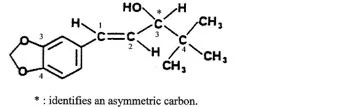 |
Stiripentol is a white to pale yellow crystalline powder with a bitter taste; it is practically insoluble in water (at 25°C), sparingly soluble in chloroform, and soluble in acetone, ethanol, ether, acetonitrile, and dichloromethane. The melting point is approximately 75°C. The pKa is 14.2, and measurement of the partition coefficient (water-octanol) provides a Log P value of 2.94. The molecular formula is C14H18O3 and the molecular weight is 234.3.
Capsules
DIACOMIT capsules contain 250 mg (size 2: pink) or 500 mg (size 0: white) of stiripentol. Capsules also contain the following inactive ingredients: erythrosine (250 mg capsule only), gelatin, indigotine (250 mg capsule only), magnesium stearate, povidone, sodium starch glycolate, titanium dioxide.
For Oral Suspension
DIACOMIT for oral suspension packets contain 250 mg or 500 mg of stiripentol. DIACOMIT packets also contain the following inactive ingredients: aspartame, carmellose sodium, erythrosine, glucose, hydroxyethylcellulose, povidone, sodium starch glycolate, sorbitol, titanium dioxide, fruit flavor (acacia, Bergamot oil, hypromellose, maltodextrin, sorbitol, and vanillin).
12 CLINICAL PHARMACOLOGY
12.1 Mechanism of Action
The mechanism by which DIACOMIT exerts its anticonvulsant effect in humans is unknown. Possible mechanisms of action include direct effects mediated through the gamma-aminobutyric acid (GABA)A receptor and indirect effects involving inhibition of cytochrome P450 activity with resulting increase in blood levels of clobazam and its active metabolite.
12.2 Pharmacodynamics
There are no relevant data on the pharmacodynamic effects of DIACOMIT.
12.3 Pharmacokinetics
The following pharmacokinetic properties of stiripentol have been found in studies in adult healthy volunteers and adult patients. Systemic exposure of stiripentol increases in a greater than dose proportional manner from 500 mg to 2000 mg.
Absorption: The median time to stiripentol peak plasma concentration is 2 to 3 hours.
Distribution: Protein binding of stiripentol is 99%.
Elimination: The elimination half-life of stiripentol ranges from 4.5 to 13 hours, increasing with doses of 500 mg, 1000 mg and 2000 mg.
Metabolism: On the basis of in vitro studies, the main liver cytochrome P450 (CYP) isoenzymes involved in metabolism are considered to be CYP1A2, CYP2C19, and CYP3A4.
Specific Populations The effect of age (≥ 65 years), race, renal and hepatic impairment on stiripentol pharmacokinetics is unknown [see Use in Specific Populations (8.5, 8.6, 8.7)]. Sex does not have a clinically significant effect on the pharmacokinetics of DIACOMIT.
Pediatric Patients: In a study of children (median age 7.3 years) with Dravet syndrome treated with DIACOMIT, valproate, and clobazam, the apparent clearance and volume of distribution of stiripentol were related to body weight. Elimination half-life increased from 8.5 hr (for 10 kg) to 23.5 hr (for 60 kg).
Drug Interaction Studies
In Vitro Studies
The metabolic pathway for stiripentol has not been clearly elucidated. Stiripentol is a substrate of several CYP enzymes, including CYP1A2, CYP2C19, and CYP3A4. Stiripentol inhibits and induces CYP1A2, CYP2B6, and CYP3A4. Stiripentol also inhibits CYP2C8, CYP2C19, and drug transporters, including P-gp and BCRP, at clinically relevant concentrations [see Drug Interactions (7.1)].
Clinical Studies
Antiepileptic drugs: Co-administration of clobazam with stiripentol increased concentrations of clobazam by approximately 2-fold and norclobazam (clobazam active metabolite) by 5-fold [see Drug Interactions (7.1)].
13 NONCLINICAL TOXICOLOGY
13.1 Carcinogenesis, Mutagenesis, Impairment of Fertility
Carcinogenesis
In mice, oral administration of stiripentol (0, 60, 200, or 600 mg/kg/day) for 78 weeks increased the incidences of liver tumors (hepatocellular adenoma and carcinoma) at the mid and high dose. The dose not associated with an increase in liver tumors (60 mg/kg/day) is less than the recommended human dose (RHD) of 50 mg/kg/day, based on body surface area (mg/m2). In rats, oral administration of stiripentol at doses of up to 800 mg/kg/day (approximately 2.5 times the RHD on a mg/m2 basis) for 102 weeks did not result in an increase in tumors.
Mutagenesis
Stiripentol was negative for genotoxicity in in vitro (Ames, HPRT gene mutation in V79 Chinese hamster cells, and chromosomal aberration in human lymphocytes) and in vivo (mouse bone marrow micronucleus) assays. Stiripentol was clastogenic in CHO cells in vitro, but only at cytotoxic concentrations.
Impairment of Fertility
Oral administration of stiripentol (0, 50, 200, or 800 mg/kg/day) to male and female rats prior to and throughout mating and continuing in females throughout organogenesis produced no adverse effects on fertility. The highest dose tested is approximately 2.5 times the RHD on mg/m2 basis.
14 CLINICAL STUDIES
The effectiveness of DIACOMIT for the treatment of seizures associated with Dravet syndrome was established in 2 multicenter placebo-controlled double-blind randomized studies (Sticlo France and Sticlo Italy), conducted according to similar protocols. To be enrolled in either study, patients were required to be 3 years to less than 18 years of age, to have Dravet syndrome (ILAE classification of epilepsy, 1989), and to be inadequately controlled on clobazam and valproate, with at least 4 generalized clonic or tonic-clonic seizures per month despite optimized therapy.
Eligible patients were enrolled in a 1-month baseline period during which they continued to receive their optimized antiepileptic treatment. Following this 1-month baseline, patients were randomly allocated to receive either DIACOMIT (fixed dose of 50 mg/kg/day in divided doses with no dose titration) or placebo, added to their treatment with clobazam and valproate. Duration of double-blind treatment was 2 months. The frequency of generalized clonic or tonic-clonic seizures during the study was recorded by patients and/or their caregivers, using a diary. Although patients with Dravet syndrome have several different types of seizures, only generalized clonic or tonic-clonic seizures were recorded, as other seizure types can be difficult to recognize by patients and/or their caregivers as seizures.
The primary efficacy endpoint for both studies was the responder rate. A responder was defined as a patient who experienced a greater than 50% decrease in the frequency (per 30 days) of generalized clonic or tonic-clonic seizures during the double-blind treatment period compared to the 4-week baseline period (i.e., placebo run-in). The mean change from baseline in frequency of generalized clonic or tonic clonic seizures was also evaluated.
In Sticlo France (n=41), 21 patients were randomized to DIACOMIT, and 20 patients to placebo. In Sticlo Italy (n=23), 12 patients were randomized to DIACOMIT, and 11 patients to placebo. In both studies, the demographic and baseline clinical characteristics were similar between the treatment groups.
Table5 summarizes the results of the primary endpoint for DIACOMIT in each study.
Table 5. Efficacy Results in the Intent-to-Treat Population in Sticlo France and Sticlo Italy
a Responder is defined as a patient with a greater than 50% decrease in frequency of generalized tonic-clonic or clonic seizures b Fisher Exact Test c Frequency of generalized tonic-clonic or clonic seizures during month 2 d Wilcoxon Test with two-sided t-approximation e Nominal p value, as Sticlo Italy was stopped early CI=confidence interval; SD=standard deviation. | ||||
Sticlo France N=41 | Sticlo Italy N=23 | |||
DIACOMIT N=21 | Placebo N=20 | DIACOMIT N=12 | Placebo N=11 | |
| Responder Analysis a | ||||
No of responders/total (Responder Rate) [95% CI] | 15/21 (71%) [52% – 91%] | 1/20 (5%) [0.0% – 15%] | 8/12 (67%) [40% – 93%] | 1/11 (9.1%) [0.0%– 26%] |
| p-valueb | <0.0001 | 0.0094e | ||
| Percentage Change from Baseline in Seizure Frequency c | ||||
n Mean ± SD Median Min – Max | 20 -69% ± 42% -91% -100% – 28% | 16 7.6% ± 38% 7.4% -75% – 65% | 11 -74% ± 27% -81% -100% – -33% | 9 -13% ± 62% -27% -87% – 140% |
| p-valued | 0.0002 | 0.0056e | ||
In both studies, the responder rate (primary efficacy endpoint) was significantly greater for DIACOMIT than for placebo. DIACOMIT was also superior to placebo for the reduction in mean frequency of generalized clonic or tonic-clonic seizures. In Sticlo France and Sticlo Italy, respectively 43% and 25% of patients reported no generalized clonic or tonic-clonic seizure for the duration of the study.
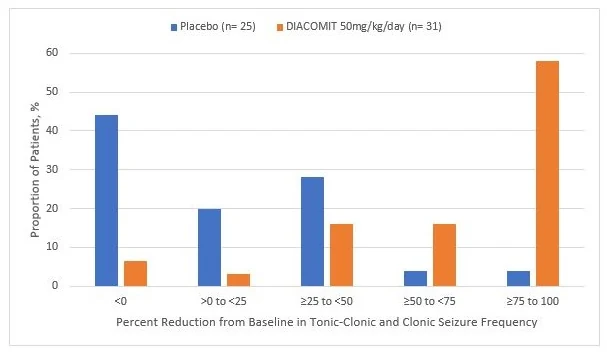
Figure 1 displays the percentage of patients by category of percent reduction in tonic-clonic and clonic seizure frequency during month 2 of the treatment period compared to baseline (per 30 days) in Sticlo France and Sticlo Italy (pooled).
Figure 1.: Proportion of Patients by Category of Seizure Response for DIACOMIT and Placebo in Sticlo France and Sticlo Italy Pooled, Baseline to 2nd Month of Treatment (per 30 days).
The effectiveness of DIACOMIT for the treatment of seizures associated with Dravet syndrome in patients 6 months of age to less than 3 years of age was extrapolated from the demonstration of effectiveness in patients 3 years to less than 18 years of age in Sticlo France and Sticlo Italy.
16 HOW SUPPLIED/STORAGE AND HANDLING
16.1 How Supplied
DIACOMIT Capsules
250 mg: size 2, pink, and imprinted with “Diacomit” and “250mg” are supplied as follows:
Bottles of 60 NDC 68418-7939-6
500 mg: size 0, white, and imprinted with “Diacomit” and “500mg” are supplied as follows:
Bottles of 60 NDC 68418-7940-6
For Oral Suspension
250 mg: pale pink fruit flavored powder packaged in packets are supplied as follows:
Cartons of 60 NDC 68418-7941-6
500 mg: pale pink fruit flavored powder packaged in packets are supplied as follows:
Cartons of 60 NDC 68418-7942-6
16.2 Storage and Handling
Store in a dry place at 20°C to 25°C (68°F to 77°F); excursions permitted to 15°C to 30°C (59°F to 86°F) [see USP Controlled Room Temperature]. Store in original package to protect from light.
17 PATIENT COUNSELING INFORMATION
Advise the patient to read the FDA-approved patient labeling (Medication Guide and Instructions for Use).
DIACOMIT Oral Capsule Administration
Inform patients or caregivers that DIACOMIT capsules must be swallowed whole with a glass of water during a meal. Capsules should not be broken or opened.
DIACOMIT For Oral Suspension Administration
DIACOMIT should be mixed in a glass of water and should be taken immediately after mixing during a meal [see Instructions for Use].
Somnolence
Advise patient or caregivers that somnolence may occur, and may require a decrease in the dose of clobazam [see Warnings and Precautions (5.1)]. Also, advise the patients and their caregivers to avoid alcohol consumption during DIACOMIT treatment [see Drug Interactions (7.3)].
If applicable, caution patients about hazardous machinery, including automobiles, until they know how DIACOMIT affects them.
Decreased Appetite and Decreased Weight
Advise patients or caregivers that decreased appetite is frequent and nausea and vomiting can also occur during DIACOMIT treatment, which can cause loss of weight [see Warnings and Precautions (5.2)].
Withdrawal Symptoms
Advise patients or caregivers that abrupt withdrawal of DIACOMIT may increase their risk of seizures or status epilepticus [see Dosage and Administration (2.5) and Warnings and Precautions (5.4)]. Instruct patients or caregivers to not discontinue use of DIACOMIT without consulting with their healthcare provider.
Neutropenia and Thrombocytopenia
Advise patients or caregivers of the risk of neutropenia and thrombocytopenia and the importance of hematologic testing, which should be obtained prior to starting treatment with DIACOMIT and then every 6 months [see Warnings and Precautions (5.3)].
Suicidal Thinking and Behavior
Counsel patients, their caregivers, and their families that AEDs, including DIACOMIT, may increase the risk of suicidal thoughts and behavior and advise them of the need to be alert for the emergence of worsening of symptoms of depression, any unusual changes in mood or behavior, or the emergence of suicidal thoughts, behavior, or thought of self-harm. Patients or caregivers should report behaviors of concern immediately to healthcare providers [see Warnings and Precautions (5.5)].
Use in Pregnancy
Advise patients to notify their healthcare provider if they become pregnant or intend to become pregnant during DIACOMIT therapy. Encourage patients to enroll in the NAAED Pregnancy registry if they become pregnant. This registry is collecting information about the safety of AEDs during pregnancy [see Use in Specific Populations (8.1)].
Use in Nursing
Instruct patients to notify their physician if they are breast feeding or intend to breast feed during therapy [see Use in Specific Populations (8.2)].
DIACOMIT Capsules and DIACOMIT for Oral Suspension manufactured by:
BIOCODEX
1, avenue Blaise Pascal
60000 BEAUVAIS
France