


Patient information: uses, side effects, how to take - Daysee
What is the most important information I should know about Daysee?
Do not use Daysee if you smoke cigarettes and are over 35 years old. Smoking increases your risk of serious cardiovascular side effects from birth control pills, including death from heart attack, blood clots or stroke. This risk increases with age and the number of cigarettes you smoke.
What is Daysee?
Daysee is a birth control pill (hormonal contraceptive) used by women to prevent pregnancy. It contains two female hormones, an estrogen called ethinyl estradiol, and a progestin called levonorgestrel.
Daysee does not protect against HIV infection (AIDS) and other sexually transmitted infections.
How Does Daysee Work for contraception?
Your chance of getting pregnant depends on how well you follow the directions for taking your birth control pills. The more carefully you follow the directions, the less chance you have of getting pregnant.
Based on the results of a single clinical study lasting 12 months, 1 to 3 women, out of 100 women, may get pregnant during the first year they use Daysee.
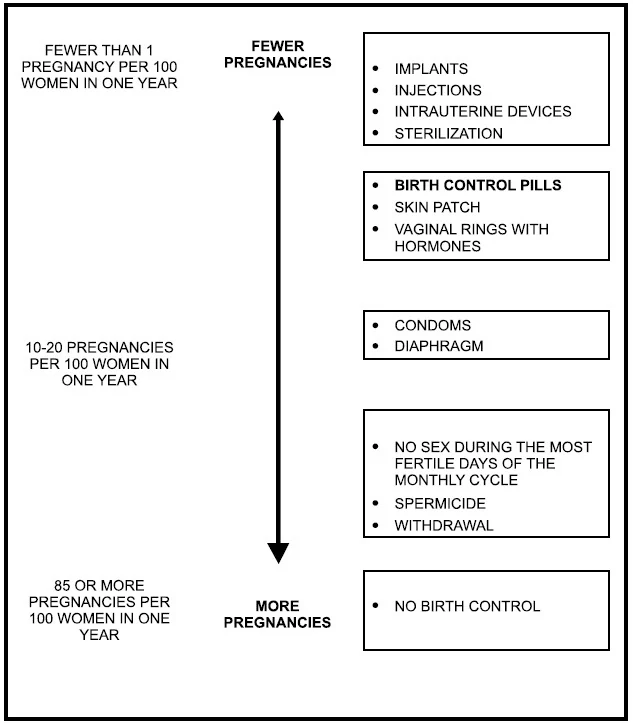
The following chart shows the chance of getting pregnant for women who use different methods of birth control. Each box on the chart contains a list of birth control methods that are similar in effectiveness. The most effective methods are at the top of the chart. The box on the bottom of the chart shows the chance of getting pregnant for women who do not use birth control and are trying to get pregnant.
Who Should Not Take Daysee?
Do not take Daysee if you:
- smoke and are over 35 years of age
- have or had blood clots in your arms, legs, eyes or lungs
- had a stroke
- had a heart attack
- have certain heart valve problems or heart rhythm abnormalities that can cause blood clots to form in the heart
- have or had a problem with your blood that makes it clot more than normal
- have high blood pressure that cannot be controlled by medicine or have high blood pressure with blood vessel problems
- have diabetes and are over the age of 35; have diabetes with high blood pressure; kidney, eye, nerve, or blood vessel damage; or for more than 20 years
- have certain kinds of severe migraine headaches with aura, numbness, weakness or changes in vision, or any migraine headaches if you are over the age of 35
- have or had breast cancer
- have liver disease, including liver tumors
- have unexplained vaginal bleeding
- take any Hepatitis C drug combination containing ombitasvir/paritaprevir/ritonavir, with or without dasabuvir. This may increase levels
Birth control pills may not be a good choice for you if you have ever had jaundice (yellowing of the skin or eyes) caused by pregnancy.
If any of these conditions happen to you while you are taking Daysee, stop taking Daysee right away and talk to your healthcare provider. Use non-hormonal contraception when you stop taking Daysee.
What should I tell my healthcare provider before taking Daysee?
Tell your healthcare provider if you:
- are pregnant or think you may be pregnant
- are scheduled for surgery. Daysee may increase your risk of blood clots after surgery. You should stop taking Daysee at least 4 weeks before you have surgery and not restart Daysee until at least 2 weeks after your surgery.
- are depressed now or have been depressed in the past
- had yellowing of your skin or eyes (jaundice) caused by pregnancy (cholestasis of pregnancy)
- are breastfeeding or plan to breastfeed. Daysee may decrease the amount of breast milk you make. A small amount of the hormones in Daysee may pass into your breast milk. Talk to your healthcare provider about the best birth control method for you while breastfeeding.
Tell your healthcare provider if you have ever had any of the conditions listed in, "Who should not take Daysee" above. Your healthcare provider may recommend another method of birth control.
Tell your healthcare provider about all medicines and herbal products that you take. Some medicines and herbal products may make birth control pills less effective, including:
- barbiturates
- bosentan
- carbamazepine
- felbamate
- griseofulvin
- oxcarbazepine
- phenytoin
- rifampin
- St. John's wort
- Topiramate
Use a back-up or alternative birth control method when you take medicines that may make birth control pills less effective.
Birth control pills may interact with lamotrigine, an anticonvulsant used for epilepsy. This may increase the risk of seizures, so your physician may need to adjust the dose of lamotrigine.
Women on thyroid hormone replacement therapy may need increased doses of thyroid hormone.
Know the medicines you take. Keep a list of them to show your healthcare provider and pharmacist when you get a new medicine.
How should I take Daysee?
Read the Instructions for Use at the end of this Patient Information.
What are the most serious risks of taking birth control pills?
Like pregnancy, birth control pills increase the risk of serious blood clots, especially in women who have other risk factors, such as smoking, obesity, or age over 35 years old. It is possible to die from a problem caused by a blood clot, such as a heart attack or a stroke. Some examples of serious blood clots are blood clots in the:
- Legs (thrombophlebitis)
- Lungs (pulmonary embolus)
- Eyes (loss of eyesight)
- Heart (heart attack)
- Brain (stroke)
Women who take birth control pills may get:
- High blood pressure. You should see your healthcare provider to check your blood pressure regularly.
- Gallbladder problems
- Rare cancerous or noncancerous liver tumors
All of these events are uncommon in healthy women.
Call your healthcare provider right away if you have:
- Persistent leg pain
- Sudden shortness of breath
- Sudden blindness, partial or complete
- Severe pain in your chest
- Sudden, severe headache unlike your usual headaches
- Weakness or numbness in an arm or leg, or trouble speaking
- Yellowing of the skin or eyeballs
What are common side effects of birth control pills?
The most common side effects of birth control pills are:
- Spotting or bleeding between menstrual periods
- Nausea
- Breast tenderness
- Headache
These side effects are usually mild and usually disappear with time. Less common side effects are:
- Acne
- Less sexual desire
- Bloating or fluid retention
- Blotchy darkening of the skin, especially on the face
- High blood sugar, especially in women who already have diabetes
- High fat levels in the blood
- Depression, especially if you have had depression in the past. Call your healthcare provider immediately if you have any thoughts of harming yourself.
- Problems tolerating contact lenses
- Weight changes
This is not a complete list of possible side effects. Talk to your healthcare provider if you develop any side effects that concern you. You may report side effects to the FDA at 1-800-FDA-1088.
No serious problems have been reported from a birth control pill overdose, even when accidentally taken by children.
What else should I know about taking Daysee?
- If you are scheduled for any lab tests, tell your healthcare provider you are taking Daysee. Certain blood tests may be affected by Daysee.
- Do not skip any pills, even if you do not have sex often.
- Birth control pills should not be taken during pregnancy. However, birth control pills taken by accident during pregnancy are not known to cause birth defects.
- You should stop Daysee at least four weeks before you have major surgery and not restart it for at least two weeks after the surgery, due to an increased risk of blood clots.
- If you are breastfeeding, consider another birth control method until you are ready to stop breastfeeding. Birth control pills that contain estrogen, like Daysee, may decrease the amount of milk you make. A small amount of the pill's hormones pass into breast milk.
- If you have vomiting or diarrhea, your birth control pills may not work as well. Use another birth control method, like condoms or a spermicide, until you check with your healthcare provider.
How should I store Daysee?
- Store Daysee at room temperature between 68°F to 77°F (20°C to 25°C).
- Keep Daysee and all medicines out of the reach of children.
General information about Daysee
Medicines are sometimes prescribed for purposes other than those listed in a Patient Information leaflet. Do not use Daysee for a condition for which it was not prescribed. Do not give Daysee to anyone else.
This Patient Information summarizes the most important information about Daysee. If you have concerns or questions, ask your healthcare provider. You may also ask your healthcare providers for a more detailed label written for medical professionals.
Do birth control pills cause cancer?
It is not known if hormonal birth control pills cause breast cancer. Some studies, but not all, suggest that there could be a slight increase in the risk of breast cancer among current users with longer duration of use.
If you have breast cancer now, or have had it in the past, do not use hormonal birth control because some breast cancers are sensitive to hormones. Women who use birth control pills may have a slightly higher chance of getting cervical cancer. However, this may be due to other reasons such as having more sexual partners.
What if I want to become pregnant?
You may stop taking the pill whenever you wish. Consider a visit with your healthcare provider for a pre-pregnancy checkup before you stop taking the pill.
What should I know about my period when taking Daysee?
When you take Daysee, which has a 91-day extended dosing cycle, you should expect to have 4 scheduled periods per year (bleeding when you are taking the 7 mustard pills). Each period is likely to last about 3 days. However, you will probably have more bleeding or spotting between your scheduled periods than if you were using a birth control pill with a 28-day dosing cycle. During the first Daysee 91-day treatment cycle, about 3 in 10 women may have 20 or more days of unplanned bleeding or spotting. This bleeding or spotting tends to decrease with time. Do not stop taking Daysee because of this bleeding or spotting. If the spotting continues for more than 7 consecutive days or if the bleeding is heavy, call your healthcare provider.
What if I miss my scheduled period when taking Daysee?
You should consider the possibility that you are pregnant if you miss your scheduled period (no bleeding on the days that you are taking mustard tablets). Since scheduled periods are less frequent when you are taking Daysee, notify your healthcare provider that you have missed your period and that you are taking Daysee. Also notify your healthcare provider if you have symptoms of pregnancy such as morning sickness or unusual breast tenderness. It is important that your healthcare provider evaluates you to determine if you are pregnant. Stop taking Daysee if it is determined that you are pregnant.
What are the ingredients in Daysee?
Active ingredients:
Light blue tablets: levonorgestrel and ethinyl estradiol
Mustard tablets: ethinyl estradiol
Inactive ingredients:
Light blue tablets: croscarmellose sodium, hypromellose, FD and C blue No. 1, FD and C yellow No. 6, iron oxide yellow, lactose anhydrous, magnesium stearate, microcrystalline cellulose, polyethylene glycol, povidone and titanium dioxide.
Mustard tablets: FD and C yellow No. 6, hypromellose, iron oxide yellow, lactose anhydrous, magnesium stearate, microcrystalline cellulose, polacrillin potassium, polyethylene glycol, polysorbate 80 and titanium dioxide.