


Patient information: uses, side effects, how to take - Besremi
What is the most important information I should know about BESREMi?
BESREMi can cause serious side effects that may cause death, be life threatening, or worsen certain serious conditions that you may already have.
Tell your healthcare provider right away if you get any of the problems listed below during treatment with BESREMi.
- Mental health problems, including depression and suicide. BESREMi may cause you to develop mood or behavior problems that may get worse during treatment with BESREMi or after your last dose. Your healthcare provider should closely monitor you for new or worsening depression and any unusual changes in mood or behavior during treatment with BESREMi. If you have thoughts of hurting yourself or thoughts of suicide, stop using BESREMi right away. You, your caregiver, or family member should tell your healthcare provider or get medical help right away if you develop any of the following signs or symptoms, especially if they are new, worse, or worry you:
- thoughts about suicide or dying
- new or worse depression
- feeling very agitated or restless
- trouble sleeping (insomnia)
- acting aggressive, being angry, or violent
- an extreme increase in activity or talking (mania)
- suicide attempts
- new or worse anxiety
- panic attacks
- new or worse irritability
- acting on dangerous impulses
- other unusual changes in behavior or mood
- New or worsening autoimmune problems. BESREMi may cause autoimmune problems (a condition where the body’s immune cells attack other cells or organs in the body), including thyroid problems, increased blood sugar (hyperglycemia), and type I diabetes. In some people who already have an autoimmune problem, it may get worse during your treatment with BESREMi. Tell your healthcare provider if you get any of the following symptoms:
- tiredness
- urinating more often than normal
- very thirsty
- increase in appetite
- problems concentrating
- sensitivity to heat or cold temperature
- weight changes
- skin changes
- Heart and blood vessel (cardiovascular) problems. BESREMi may cause heart problems, including problems with your heart muscle (cardiomyopathy), heart attack, abnormal heart rhythm (atrial fibrillation), and decreased or sudden loss of blood flow to your heart. BESREMi may also cause blood clots (thrombotic events) in your brain, lungs, arms, and legs. Your healthcare provider should closely monitor you during treatment with BESREMi if you have a history of heart problems or blood clots. You should not use BESREMi if you have:
- high blood pressure that is not controlled
- congestive heart failure
- a serious abnormal heart rhythm
- narrowing of the arteries to your heart
- certain types of chest pain (angina)
- a recent stroke or heart attack
- Tell your healthcare provider right away if you develop any of the following signs and symptoms during treatment with BESREMi:
- fast heart rate or abnormal heart beat
- trouble breathing or chest pain
- pain, swelling, or redness in the arms, legs, ankles, or feet
- tiredness
- sudden confusion
- numbness or weakness
- loss of coordination
- trouble speaking clearly
- sudden vision changes
If symptoms get worse, or become severe and do not go away, your healthcare provider may tell you to stop using BESREMi permanently. For some people, these symptoms may go away after they stop using BESREMi.
See “What are the possible side effects of BESREMi?” for more information about side effects.
What is BESREMi?
BESREMi is a prescription medicine that is used to treat adults with:
- essential thrombocythemia.
- polycythemia vera.
It is not known if BESREMi is safe and effective in children.
Who should not use BESREMi?
Do not use BESREMi if you:
- have or had severe mental health problems, especially severe depression, thoughts of suicide, or attempted suicide
- are allergic to another interferon product, including interferon alfa-2b, or to any of the ingredients in BESREMi. See the end of this Medication Guide for a complete list of ingredients in BESREMi. Ask your healthcare provider if you are not sure.
- have certain types of liver problems
- have or had a serious or untreated autoimmune disease
- have received an organ or stem cell transplant and take immunosuppressive medicines
Talk to your healthcare provider before taking BESREMi if you have any of these conditions.
Before using BESREMi, tell your healthcare provider about all of your medical conditions, including if you:
- are being treated for a mental illness or had treatment in the past for any mental illness, including depression and have had thoughts of hurting yourself or others.
- have thyroid problems
- have diabetes
- have a condition that suppresses your immune system, such as cancer
- have or ever had any problems with your heart, including heart attack or high blood pressure
- have or ever had bleeding problems or a blood clot
- have liver problems
- have kidney problems
are pregnant or plan to become pregnant. BESREMi can harm your unborn baby and can cause loss of your pregnancy (miscarriage).
Females who can become pregnant:
- Your healthcare provider should do a pregnancy test before you start treatment with BESREMi.
- Use effective birth control (contraception) during treatment and for at least 8 weeks after your final dose of BESREMi. Talk to your healthcare provider about birth control choices for you during treatment with BESREMi.
- BESREMi can affect your menstrual cycles and may cause your menstrual periods to stop.
- Tell your healthcare provider if you become pregnant during treatment with BESREMi.
- are breastfeeding or plan to breastfeed. It is not known if BESREMi passes into your breast milk. Do not breastfeed during treatment and for 8 weeks after your final dose of BESREMi.
Tell your healthcare provider about all the medicines you take, including prescription and over-the-counter medicines, vitamins, and herbal supplements.
BESREMi and certain other medicines may affect each other and cause side effects. Know the medicines you take. Keep a list of your medicines and show it to your healthcare provider and pharmacist when you get a new medicine.
How should I use BESREMi?
Read the Instructions for Use that comes with BESREMi for detailed instructions on how to prepare and inject a dose of BESREMi.
- Use BESREMi exactly as your healthcare provider tells you to use it. Your healthcare provider will tell you how much BESREMi to inject and when to inject it. Do not inject more than your prescribed dose.
- Do not inject more than 1 dose of BESREMi every 2 weeks without talking to your healthcare provider.
- BESREMi comes in a single-dose prefilled syringe and in a single-dose prefilled pen injector.
- BESREMi is given as an injection under your skin (subcutaneous injection).
- BESREMi can be given by yourself, a caregiver, or healthcare provider. If your healthcare provider decides that you or a caregiver may give your injections of BESREMi at home, you should receive training on the right way to prepare and inject BESREMi. Do not try to inject BESREMi yourself until your healthcare provider has shown you how to give BESREMi the right way.
- Do not reuse the BESREMi single-dose prefilled syringe or the single-dose prefilled pen injector. They are for one time use only.
- Your healthcare provider will do blood tests before you start BESREMi, and regularly during treatment to monitor your essential thrombocythemia or polycythemia vera, and to check you for side effects.
- If you inject too much BESREMi, call the Poison Help Line at 1-800-222-1222 or your healthcare provider right away.
What should I avoid during treatment with BESREMi?
BESREMi may cause neurologic symptoms including dizziness, sleepiness, and hallucinations. Avoid driving or using heavy machinery if you develop any of these neurologic symptoms during treatment with BESREMi.
What are the possible side effects of BESREMi?
BESREMi can cause serious side effects including:
- See “What is the most important information I should know about BESREMi?”
Decreased blood cell counts and bleeding problems. BESREMi can cause decreased blood cell counts, including decreased platelets, red blood cells, or white blood cells, that can sometimes be severe. If your blood cell counts are low, you can develop anemia, serious infections, or have problems with bleeding or bruising. Your healthcare provider will monitor you for signs or symptoms of infection or bleeding.
Tell your healthcare provider or get medical help right away if you develop any of the following symptoms:
- weakness and tiredness
- bruising easily
- you have nose bleeds often
- fever
- gum or tongue bleeding
- chills
- burning and painful urination
- urinating often
- coughing up yellow or pink mucus (phlegm)
- bleeding in the eye
Serious allergic reactions and skin reactions. BESREMi can cause serious, sudden allergic reactions.
Stop using BESREMi and get medical help right away if you get any of the following symptoms:
- skin rash or hives
- itching swelling of your face, eyes, lips tongue, or throat
- trouble breathing
- chest pain
- feeling dizzy or faint
- Inflammation of the pancreas (pancreatitis). Tell your healthcare provider if you develop signs and symptoms of pancreatitis, including:
- nausea
- vomiting
- upper stomach area (abdomen) pain
- bloating
- fever
- Inflammation of the intestine (colitis). BESREMi can cause serious and possibly life-threatening colitis. This can lead to open sores, bleeding, or reduced blood flow to the intestine. Tell your healthcare provider if you develop any signs or symptoms of colitis, including:
- stomach area (abdomen) pain
- bloody diarrhea or blood in your stool
- fever
- Lung problems. BESREMi can cause serious and life-threatening lung problems that can lead to breathing problems (respiratory failure) or death. Tell your healthcare provider if you develop any signs or symptoms of a lung problem, including:
- shortness of breath
- cough
- difficulty breathing
- Eye problems. BESREMi can cause severe eye problems with your retinas that can lead to vision loss or blindness. You should have an eye exam before and during treatment with BESREMi, if you have diabetes or high blood pressure. Your healthcare provider may stop BESREMi if you develop new or worsening eye problems during treatment with BESREMi. Tell your healthcare provider if you develop any new or worsening eye symptoms or vision changes during treatment with BESREMi, including:
- blurred vision
- dry eyes
- seeing floaters or flashes of light
- sudden loss of vision
- eye pain or redness
- High cholesterol and triglycerides (fats in the blood). BESREMi can cause high levels of cholesterol and fats (triglyceride) in your blood. High triglyceride levels may lead to inflammation of the pancreas (pancreatitis). Your healthcare provider may treat high cholesterol or triglyceride levels.
- Liver problems. BESREMi can cause increases in liver enzymes and liver damage. Tell your healthcare provider if you develop any signs and symptoms of a liver problem, including:
- yellowing of your skin or the white part of your eyes
- swelling of your stomach area (abdomen)
- stomach area (abdomen) pain or discomfort
- confusion
- sleepiness
- nausea
- loss of appetite
- tiredness
- diarrhea
- bleeding more easily than normal
- Kidney problems. Tell your healthcare provider if you develop any signs or symptoms of a kidney problem, including:
- changes in the amount or color of your urine
- blood in your urine
- swelling in your ankles
- loss of appetite
- Tooth and gum (periodontal) problems. BESREMi can cause tooth and gum problems which can lead to tooth loss. BESREMi can also cause problems with dry mouth that can damage your teeth and the lining of the mouth during long-term treatment. Brush and floss your teeth well and get regular dental examinations during treatment with BESREMI.
- Skin problems. Get medical help if you develop any signs and symptoms of a skin problem during treatment with BESREMi including:
- itching
- hair loss
- rash
- redness
- dry skin
- a skin condition causing red, scaly patches (psoriasis)
- acne
- thickening of the skin
- excessive sweating
The most common side effects of BESREMi in adults with essential thrombocythemia include:
- increased liver function tests
- low red blood cell counts (anemia)
- fever
- increased protein in the urine
- bacterial infection
- itching
- weight loss
The most common side effects of BESREMi in adults with polycythemia vera include:
- flu-like symptoms
- joint pain
- tiredness
- itching
- runny or stuffy nose, cough, or sore throat
- muscle and bone pain
Your healthcare provider may reduce your dose, temporarily stop, or permanently stop your treatment with BESREMi if you develop side effects.
These are not all of the possible side effects of BESREMi.
Call your doctor for medical advice about side effects. You may report side effects to FDA at 1-800-FDA-1088.
How should I store BESREMi?
- Store BESREMi in the refrigerator between 36oF to 46oF (2oC to 8oC).
- Keep BESREMi in the original carton to protect it from light.
- Do not freeze BESREMi.
Keep BESREMi and all medicines out of the reach of children.
General information about the safe and effective use of BESREMi.
Medicines are sometimes prescribed for purposes other than those listed in a Medication Guide. Do not use BESREMi for a condition for which it was not prescribed. Do not give BESREMi to other people, even if they have the same symptoms that you have. It may harm them. You can ask your pharmacist or healthcare provider for information about BESREMi that is written for health professionals.
What are the ingredients in BESREMi?
Active ingredient: ropeginterferon alfa-2b-njft
Inactive ingredients: benzyl alcohol, glacial acetic acid, polysorbate 80, sodium acetate, sodium chloride, and Water for Injection.
Manufactured by: PharmaEssentia Corporation 13F, No. 3, Park Street, Nangang District, Taipei 115, Taiwan
U.S. License number: 2155
Distributed by: PharmaEssentia USA Corporation, 35 Corporate Dr, Suite 325, Burlington, MA 01803, USA
BESREMi is a registered trademark of PharmaEssentia Corporation.© 2021-2026 PharmaEssentia® USA Corporation. All rights reserved.
For more information, go to www.BESREMi.com or call 1-800-999-2449
This Medication Guide has been approved by the U.S. Food and Drug Administration.
Revised: 08/2026
INSTRUCTIONS FOR USE BESREMi [bez-reh-me] (ropeginterferon alfa-2b-njft) injection, for subcutaneous use Single-dose prefilled syringe | |||
| This "Instructions for Use" contains information on how to prepare and inject BESREMi under your skin (subcutaneous injection) using the single-dose prefilled syringe. | |||
| Guide to Prefilled syringe and Needle Parts (Figure A) | |||
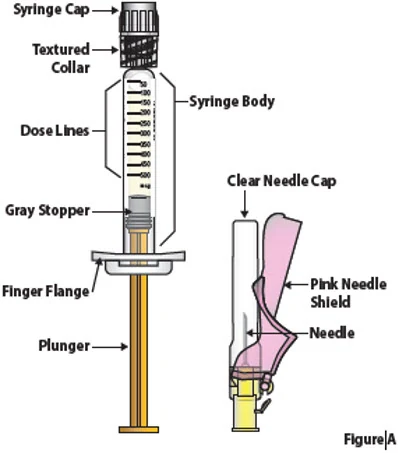 | |||
| Storing BESREMi | |||
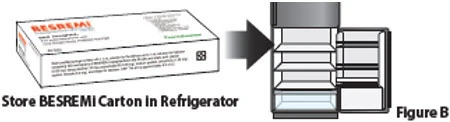
Store the BESREMi carton in the refrigerator between 36°F to 46°F (2°C to 8°C) (Figure B).
| |||
| Important information you need to know before injecting BESREMi | |||
Read this Instructions for Use before using your single-dose BESREMi prefilled syringe for the first time and each time you get a new prescription. There may be new information. This leaflet does not take the place of talking with your healthcare provider about your medical condition or your treatment. Ask your healthcare provider about the right way to prepare and give your BESREMi injection.
| |||
 | |||
| Gather and check supplies | |||
| 1. | Prepare BESREMi Prefilled Syringe | ||
| 1.1. | Take the BESREMi carton out of the refrigerator (Figure E). 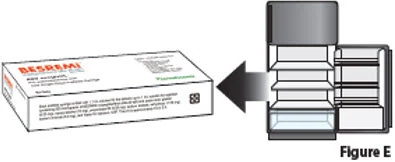 | ||
| 1.2. | Check the expiration date ("EXP") on the top panel of the carton to make sure it has not passed (Figure F). Do not use the prefilled syringe if the expiration date has passed. 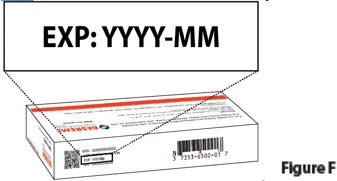 | ||
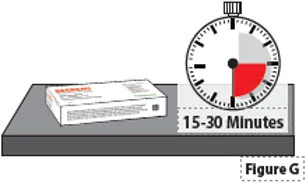
| 1.3. | Let carton containing the BESREMi prefilled syringe sit on a clean work surface for 15 to 30 minutes to allow it to come to room temperature (Figure G). Do not warm the prefilled syringe any other way. | ||
 | |||
| 2. | Gather supplies for injection | ||
| 2.1. | After allowing the prefilled syringe to come to room temperature for 15 to 30 minutes inside the carton, gather the following additional supplies. Alcohol Swab (Figure H). 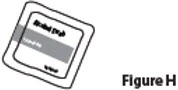 FDA-cleared Sharps Disposal Container (Figure I) 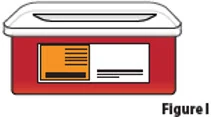 A paper towel, sink, or trash can to minimize mess during dose adjustment (Figure J). 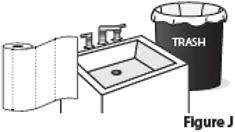 Optional Items: Gauze or Cotton Ball and a Small Adhesive Bandage (Figure K). 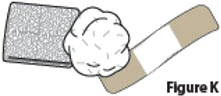 | ||
| 3. | Wash hands and remove syringe from tray | ||
| 3.1. | Wash your hands with soap and water, then dry your hands (Figure L). 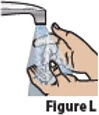 | ||
| 3.2. | Open the carton and remove the clear plastic tray that holds the BESREMi prefilled syringe and needle package (Figure M). 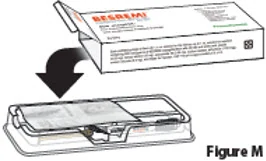 | ||
| 3.3. | Remove the needle package and BESREMi prefilled syringe from the plastic tray. Hold the prefilled syringe by the middle of the syringe body during removal (Figure N). 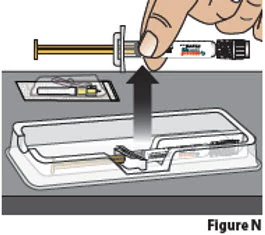 | ||
| 4. | Check the liquid medicine in the BESREMi prefilled syringe | ||
| 4.1. | Check the liquid medicine in the prefilled syringe (Figure O). The liquid should be clear and colorless to slightly yellow, and should not have particles. Do not use the prefilled syringe if the liquid is cloudy, discolored, or contains particles. Contact your healthcare provider or pharmacist. | ||
| 4.2. | Check the syringe to see if it is damaged or broken (Figure O). Do not use if it shows any signs of damage or breakage. Contact your healthcare provider or pharmacist. 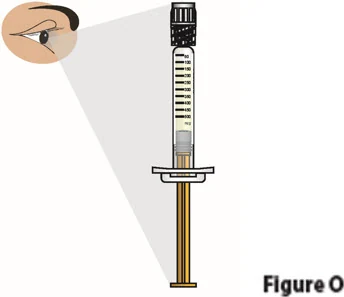 | ||
| Prepare syringe for injection | |||
| 5. | Attach the needle to the BESREMi prefilled syringe | ||
| 5.1. | Carefully open the needle package, remove the needle, and set it aside (Figure P). Throw away the packaging into household trash. 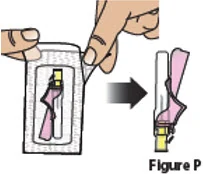 | ||
| 5.2. | Hold the prefilled syringe as shown. Remove the prefilled syringe cap by unscrewing it counter-clockwise (Figure Q). Throw away the syringe cap into household trash. Do not allow the tip of the prefilled syringe to touch anything. 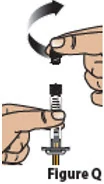 | ||
| 5.3. | Attach the needle to the prefilled syringe by firmly pushing it into the collar of the syringe and then screwing (turn clock-wise) it on until it feels securely attached (Figure R). 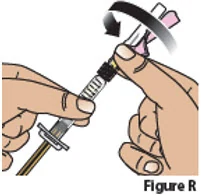 The needle should now be assembled to the prefilled syringe (Figure S). 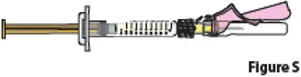 | ||
| 6. | Choose and clean injection site | ||
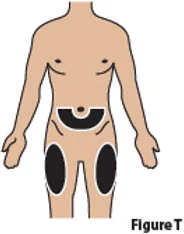
| 6.1. | Choose one of the following injection sites (Figure T):
| ||
| 6.2. | Clean the chosen injection site with an alcohol swab and let it air dry (Figure U). Do not blow on or touch the injection site after it has been cleaned. 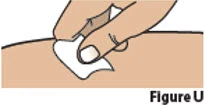 | ||
| 7. | Uncap needle and move air bubbles to top | ||
| 7.1. | Pull the pink needle shield back (Figure V). Note: The pink needle shield will be used after the injection to cover the needle and protect you from needle-stick injuries. 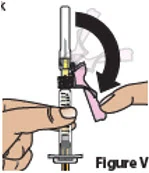 | ||
| 7.2. | Hold the syringe from the syringe body. Remove the clear needle cap by pulling it straight off (Figure W). Throw away the needle cap into household trash. Do not recap needle. 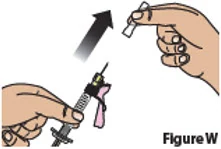 | ||
| 7.3. | Hold the prefilled syringe with the needle pointing up. Tap on the body of the prefilled syringe to move any air bubbles to the top (Figure X). 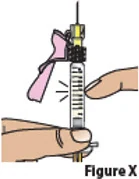 | ||
| 8. | Set your dose | ||
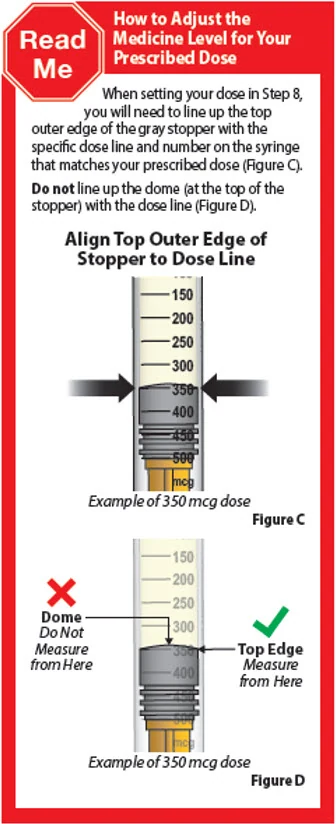
| 8.1. | Check your prescription to identify your prescribed dose (Figure Y). Depending on your prescribed dose, you may have to adjust the dose in the syringe by getting rid of (discarding) some medicine from the prefilled syringe before you inject the medicine. 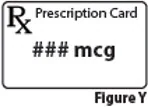 | ||
| 8.2. | To set your dose follow the 4 steps below:
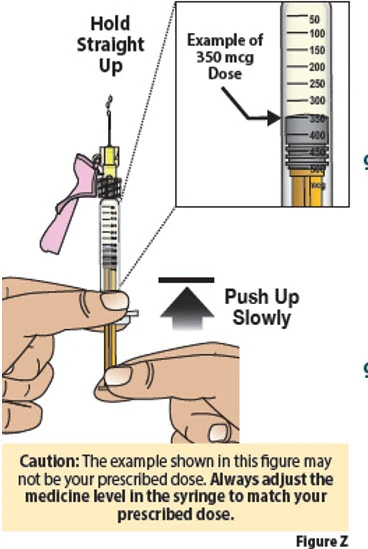 | ||
| Inject BESREMi | |||
| 9. | Give Injection | ||
| 9.1. | Pinch the chosen injection site (Figure AA). 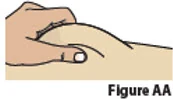 | ||
| 9.2. | While pinching the skin, insert the needle at a 45 to 90 degree angle into the pinched skin (Figure AB). Then release the pinched skin. 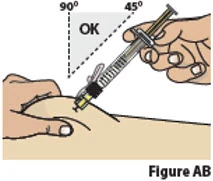 | ||
| 9.3. | Inject the medicine by slowly pressing down on the plunger all the way until it stops (Figure AC). 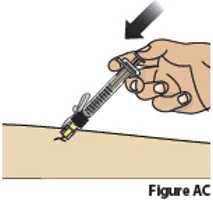 | ||
| 9.4. | After all the liquid medicine is injected, remove the needle from the skin (Figure AD). 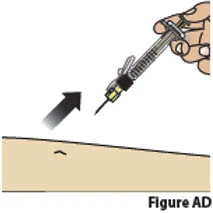 | ||
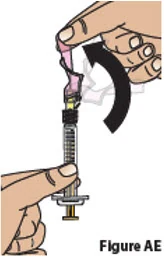
| 9.5 | Cover needle Carefully push the pink needle shield over the needle until it snaps into place and covers the needle (Figure AE). This helps prevent needle-stick injuries. Do not recap the needle using the needle cap. Only use the pink needle shield to cover the needle. | ||
 | |||
| Do not reuse the prefilled syringe and needle. | |||
| Disposing of used prefilled syringes and needles | |||
| 10. | Dispose of used prefilled syringes and needles.
| ||
| 11 | Check injection site. | ||
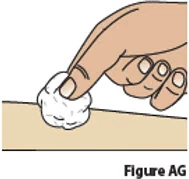
| 11.1 | If there is a small amount of blood or liquid at the injection site, press a gauze or cotton ball over the injection site until the bleeding stops (Figure AG). | ||
| 11.2 | Do not rub the injection site. If needed, you may apply a small adhesive bandage. | ||
 | |||
| Additional information. | |||
For additional information about BESREMi and a video demonstration on how to use BESREMi, go to: www.BESREMi.com | |||
Manufactured by: PharmaEssentia Corporation 2F-5 No. 3 YuanQu Street Nangang Dist. Taipei, Taiwan U.S. License number: 2155 | |||
Distributed by: PharmaEssentia Corporation 35 Corporate Drive, Suite 325, Burlington, MA 01803, USA | |||
BESREMi is a trademark/registered trademark of PharmaEssentia Copyright 2021 PharmaEssentia | |||
| This "Instructions for Use" has been approved by the U.S. Food and Drug Administration. | Issued: November 2021 | ||
INSTRUCTIONS FOR USE BESREMi PenTM [bez-reh-me p-eh-n] (ropeginterferon alfa-2b-njft) injection, for subcutaneous use Single-dose prefilled pen injector | ||
| This Instructions for Use contains information on how to prepare and inject BESREMi under your skin (subcutaneous injection) using the single-dose prefilled pen injector. | ||
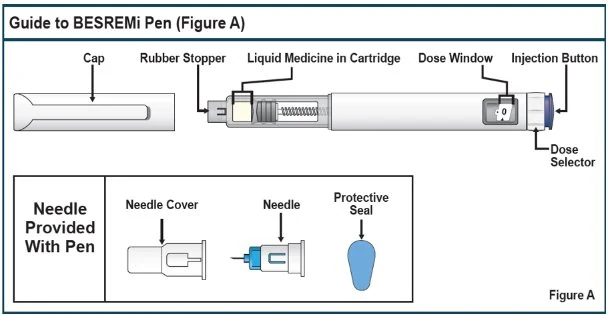
| Guide to BESREMi Pen (Figure A) | ||
 | ||
| Important Information You Need to Know Before Injecting BESREMi Pen | ||
Read this Instructions for Use before using your single-dose BESREMi Pen and each time you get a new prescription. There may be new information. This leaflet does not take the place of talking with your healthcare provider about your medical condition or your treatment. Ask your healthcare provider about the right way to prepare and give your BESREMi injection.
| ||
| Storing BESREMi Pen | ||
Store the BESREMi Pen carton in the refrigerator between 36°F to 46°F (2°C to 8°C) (Figure B). Keep the BESREMi Pen in the original carton to protect it from light (Figure B). Do not freeze the BESREMi Pen. Keep the BESREMi Pen, needles, and all medicines out of the reach of children. | 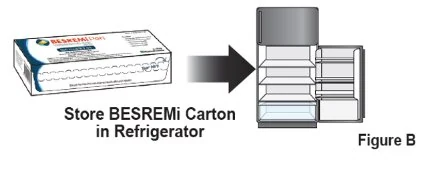 | |
| Prepare to Inject BESREMi Pen | ||
| 1 Prepare BESREMi Pen | ||
| 1.1 Take the BESREMi Pen carton out of the refrigerator (Figure C). | 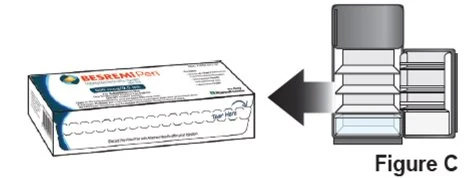 | |
1.2 Let the carton containing the BESREMi Pen sit on a flat, clean work surface for 15 to 30 minutes to allow it to come to room temperature between 59˚F to 77 ˚F (15 ˚C to 25 ˚C). (Figure D). Do not warm the BESREMi Pen any other way. | 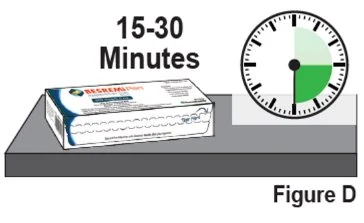 | |
| 2 Gather supplies for injection | ||
| 2.1 After allowing the BESREMi Pen to come to room temperature, gather the following additional supplies not provided in the BESREMi Pen carton (Figure E, Figure F, and Figure G). | 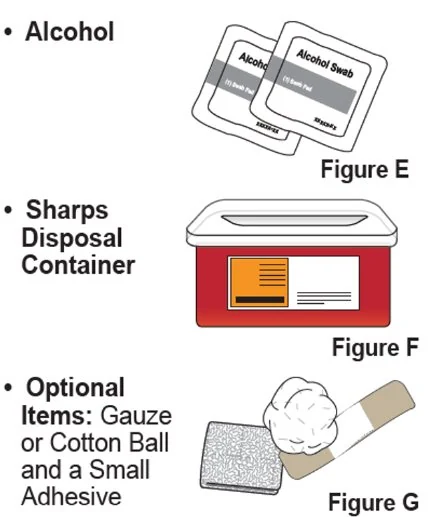 | |
| ||
| 3.1 Wash your hands with soap and water, then dry your hands (Figure H). | 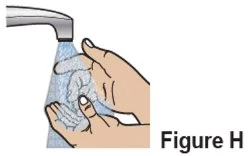 | |
3.2 Check the expiration date (EXP) on the carton to make sure it has not passed (Figure I). Do not use the BESREMi Pen if the expiration date has passed. | 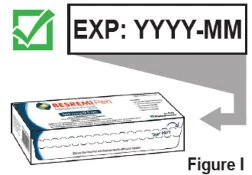 | |
| 3.3 Open the carton and remove the BESREMi Pen and needle (Figure J). | 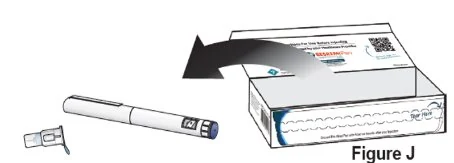 | |
| 4 Remove the pen cap, check BESREMi Pen, and check liquid medicine | ||
| 4.1 Remove the pen cap by pulling it straight off the BESREMi Pen (Figure K) and throw away. | 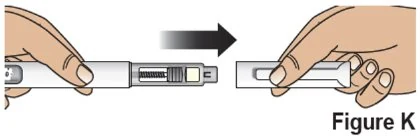 | |
4.2 Check the BESREMi Pen to see if it is damaged or broken (Figure L). Do not use the BESREMi Pen if it shows any signs of damage or breakage. | 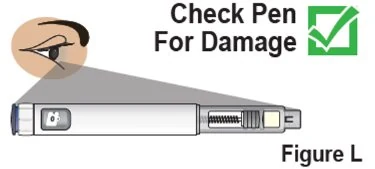 | |
4.3 Check the liquid medicine in the BESREMi Pen (Figure M). The liquid should appear clear and colorless to slightly yellow in color. Do not use the BESREMi Pen if the liquid is cloudy, discolored, or contains particles. | 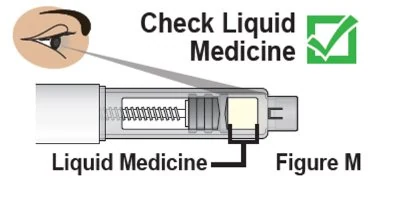 | |
| 5 Choose and clean injection site | ||
5.1 Choose one of the following injection sites (Figure N):
Rotate (change) the injection site for each injection. Do not inject into skin that is irritated, red, bruised, infected, or scarred. Do not inject into a vein. BESREMi Pen is for subcutaneous (under the skin) injection only. | 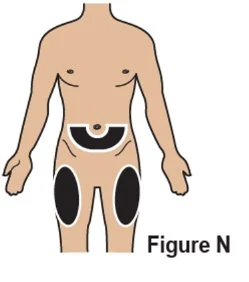 | |
5.2 Clean the chosen injection site with an alcohol swab and let it air dry (Figure O). Throw away the alcohol swab after use. Do not blow on or touch the cleaned injection site. | 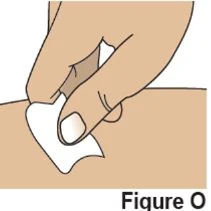 | |
| 6 Clean the rubber stopper and peel off needle seal | ||
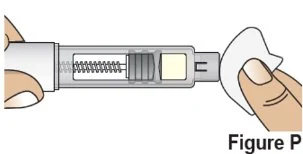
| 6.1 Clean the rubber stopper on the tip of the pen with a new alcohol swab (Figure P). Throw away the alcohol swab after use. | ||
| 6.2 Peel off the protective seal from the needle and throw it away (Figure Q). | 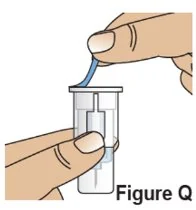 | |
| 7 Attach the needle to the BESREMi Pen and remove the needle cover | ||
7.1 Attach the capped needle by pushing it straight onto the BESREMi Pen until you feel or hear it “snap” into place (Figure R). Turn or rotate the needle in either direction until it “clicks” into place (Figure S). The needle is attached when it no longer turns or rotates freely. | 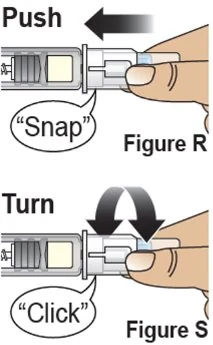 | |
7.2 Remove the needle cover by pulling it off (Figure T) and throw it away. Do not recap the needle. | 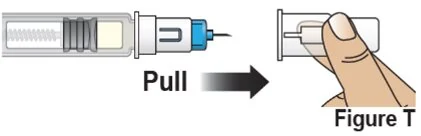 | |
| Remove Air | ||
| 8 Remove air from the drug Cartridge | ||
8.1 Turn the dose selector until the flow check drop symbol Do not dial your prescribed dose when doing the flow check. You will be instructed to do so in Step 10.1. | 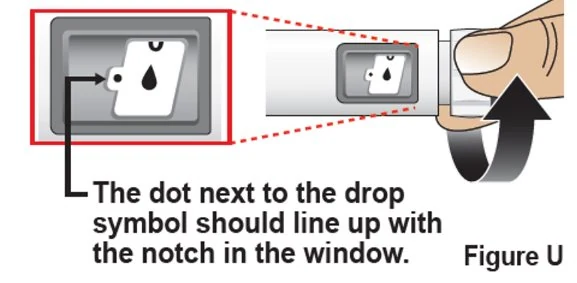 | |
8.2 Hold the BESREMi Pen with the needle pointing up (Figure V). 8.3 Press and hold the injection button all the way in until the dose window returns to “0” (Figure V). | 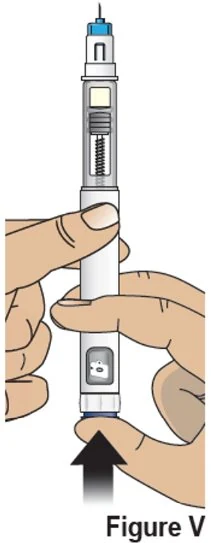 | |
| 8.4 Repeat Steps 8.1 to 8.3 (dial to drop symbol and press injection button) 3 more times for a total of 4 cycles (Figure W). | 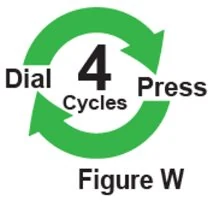 | |
| 9 Check needle for liquid medicine | ||
| 9.1 After 4 cycles (see step 8.4), check the tip of the needle to make sure there is liquid medicine (Figure X). | 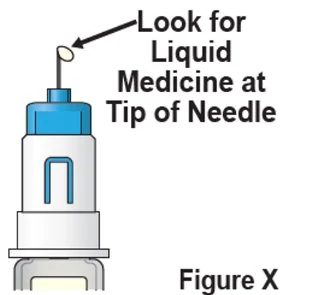 | |
9.2 If you do not see liquid at the tip of the needle, repeat Steps 8.1 to 8.3 again (dial to drop symbol and press injection button) up to 3 more times for a total of 7 cycles. Important: If you still do not see liquid at the tip of the needle after 7 cycles, get a new BESREMi Pen carton and start over from Step 1. | ||
| Inject BESREMi Pen | ||
| 10 Set your dose | ||
| 10.1 Check your prescription to make sure you know your prescribed dose (Figure Y). You will need to set your prescribed dose before giving the injection. | 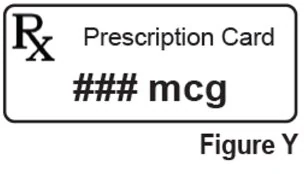 | |
10.2 Set your dose by turning the dose selector clockwise until the prescribed dose is centered in the dose window (Figure Z). It is normal to hear a clicking sound as you dial. Check to make sure the number in the dose window is the correct prescribed dose before giving the injection. If you accidentally turn the dose selector past the prescribed dose, turn the dose selector back to the correct dose. | 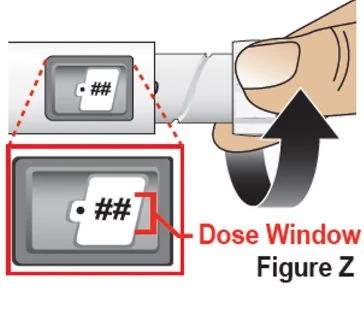 | |
| 11 Insert the needle | ||
| 11.1 Hold the BESREMi Pen over the cleaned injection site at a 90-degree angle (Figure AA). | 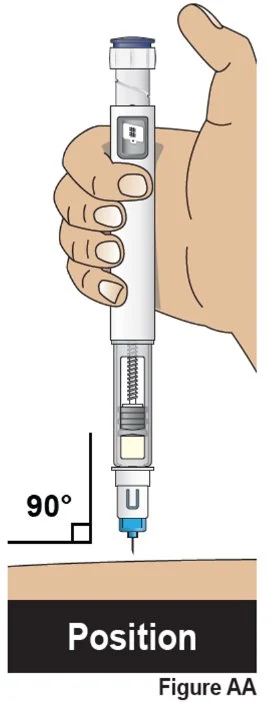 | |
| 11.2 Without touching the injection button, push the BESREMi Pen down to fully insert the needle into the skin (Figure AB). | 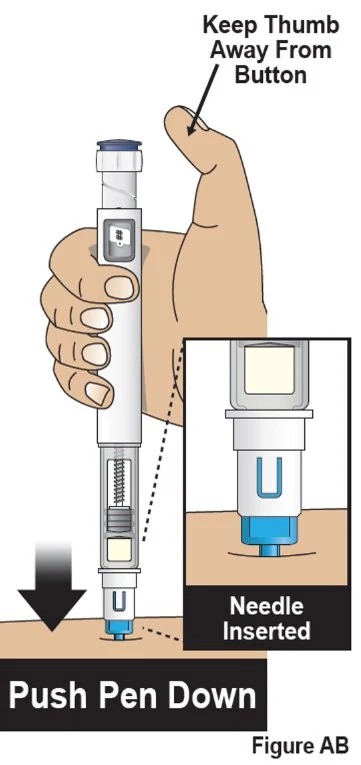 | |
| 12 Give injection | ||
| 12.1 Press and hold the injection button all the way down until it stops. The number in the dose window will go back to “0” (Figure AC). | 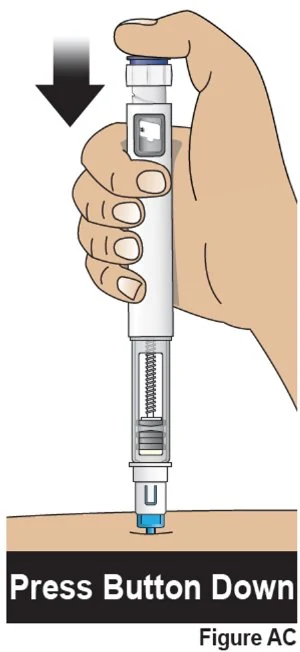 | |
12.2 Keep holding the injection button down after the dose window returns to “0” and count to 5 to make sure the full dose is delivered (Figure AD). Note: There may still be liquid remaining in the pen cartridge after the injection. This is normal. | 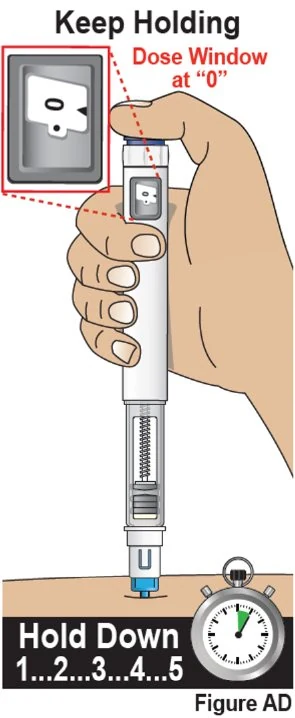 | |
| Dispose of Used BESREMi Pen | ||
| 13 Remove needle from skin | ||
13.1 Remove the needle from the skin by lifting the pen straight up (Figure AE). The blue needle shield will cover the needle. | 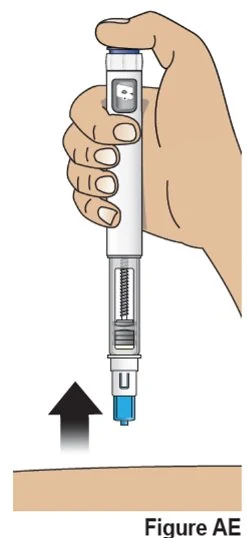 | |
| 14 Throw away (dispose of) pen and treat injection site | ||
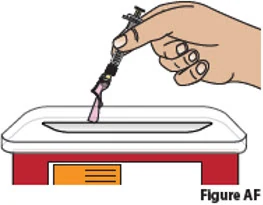
14.1 Put the used BESREMi Pen, with the needle still attached, into a sharps disposal container right away after use (Figure AF). Important: Do not recap the needle or attempt to remove it. Do not reuse the BESREMi Pen. Throw it away in a sharps disposal container after use, even if there is still medicine left in the BESREMi Pen. | 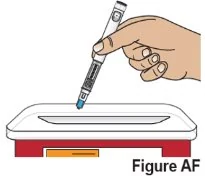 | |
| ||
14.2 If there is a small amount of blood or liquid at the injection site, press a gauze or cotton ball over the injection site until the bleeding stops (Figure AG). If needed, you may apply a small adhesive bandage. Do not rub the injection site. | 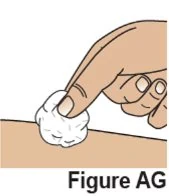 | |
| Additional Information | ||
For additional information about BESREMi Pen and a video demonstration on how to use BESREMi Pen, go to: www.BESREMi.com Distributed by: PharmaEssentia USA Corporation 35 Corporate Drive, Suite 325, Burlington, MA 01803, USA Manufactured by: PharmaEssentia Corporation 13F, No. 3, Park St., Nangang Dist., Taipei 115, Taiwan U.S. License number: 2155 This Instructions for Use has been approved by the U.S. Food and Drug Administration. | ||
| Issued: June 2026 | Version 1 | June 2026 | |
 is centered in the dose window (Figure U).