


Patient information: uses, side effects, how to take - Azelastine and Fluticasone
What is azelastine hydrochloride and fluticasone propionate nasal spray?
- Azelastine hydrochloride and fluticasone propionate nasal spray is a prescription medicine used to treat symptoms of seasonal allergic rhinitis in people 6 years of age and older.
- Azelastine hydrochloride and fluticasone propionate nasal spray may help to reduce your nasal symptoms including stuffy nose, runny nose, itching, and sneezing.
It is not known if azelastine hydrochloride and fluticasone propionate nasal spray is safe or effective in children under 4 years of age.
Do not use azelastine hydrochloride and fluticasone propionate nasal spray if you:
- are allergic to azelastine hydrochloride, or fluticasone propionate, or any of the ingredients in azelastine hydrochloride and fluticasone propionate nasal spray. Stop using azelastine hydrochloride and fluticasone propionate nasal spray and get medical help right away if you have symptoms of a serious allergic reaction.
- See the end of the leaflet for a complete list of ingredients in azelastine hydrochloride and fluticasone propionate nasal spray.
Before using azelastine hydrochloride and fluticasone propionate nasal spray, tell your healthcare provider about all of your medical conditions, including if you:
- have had recent nasal sores, nasal surgery, or nasal injury.
- have eye or vision problems, such as cataracts or glaucoma (increased pressure in your eye).
- have tuberculosis or any untreated fungal, bacterial, viral infections or eye infections caused by herpes.
- have been near someone who has chickenpox or measles.
- are not feeling well or have any other symptoms that you do not understand.
are pregnant or plan to become pregnant.
- are breastfeeding or plan to breastfeed. It is not known if azelastine hydrochloride and fluticasone propionate pass into your breast milk. Talk to your healthcare provider about the best way to feed your baby while using azelastine hydrochloride and fluticasone propionate nasal spray.
Tell your healthcare provider about all the medicines you take, including prescription and over-the-counter medicines, vitamins, and herbal supplements.
Azelastine hydrochloride and fluticasone propionate nasal spray and other medicines may affect each other, causing side effects.
Especially tell your healthcare provider if you take:
- antifungal or anti-HIV medicines
Ask your healthcare provider or pharmacist for a list of these medicines, if you are not sure.
Know the medicines you take. Keep a list of your medicines and show it to your healthcare provider and pharmacist when you get a new medicine.
How should I use azelastine hydrochloride and fluticasone propionate nasal spray?
- Read the Instructions for Use at the end of this leaflet for information about the right way to use azelastine hydrochloride and fluticasone propionate nasal spray.
- An adult should help a young child use azelastine hydrochloride and fluticasone propionate nasal spray.
- Azelastine hydrochloride and fluticasone propionate nasal spray is for use in your nose only. Do not spray it into your eyes or mouth. If you spray azelastine hydrochloride and fluticasone propionate nasal spray into your eyes, flush your eyes with large amounts of water for 10 minutes and then call your healthcare provider.
- Use azelastine hydrochloride and fluticasone propionate nasal spray exactly as your healthcare provider tells you to use it. Your healthcare provider will tell you how much azelastine hydrochloride and fluticasone propionate nasal spray to use and when to use it.
- If a child accidentally swallows azelastine hydrochloride and fluticasone propionate nasal spray or you use too much azelastine hydrochloride and fluticasone propionate nasal spray, call your healthcare provider or go to the nearest hospital emergency room right away.
What should I avoid while using azelastine hydrochloride and fluticasone propionate nasal spray?
- Azelastine hydrochloride and fluticasone propionate nasal spray can cause sleepiness or drowsiness. Do not drive, operate machinery, or do anything that needs you to be alert until you know how azelastine hydrochloride and fluticasone propionate nasal spray affects you.
- Do not drink alcohol or take any other medicines that may cause you to feel sleepy while using azelastine hydrochloride and fluticasone propionate nasal spray. It can increase your chances of having serious side effects.
What are the possible side effects of azelastine hydrochloride and fluticasone propionate nasal spray?
Azelastine hydrochloride and fluticasone propionate nasal spray may cause serious side effects including:
- sleepiness or drowsiness.
nasal problems. Symptoms of nasal problems may include:
- crusting in the nose
- nosebleeds
- runny nose
- hole in the cartilage between your nose (nasal septal perforation). A whistling sound when you breathe may be a symptom of nasal septal perforation.
- slow wound healing. You should not use azelastine hydrochloride and fluticasone propionate nasal spray until your nose has healed if you have a sore in your nose, if you have had surgery on your nose, or if your nose has been injured.
- thrush (candida), a fungal infection in your nose and throat. Tell your healthcare provider if you have any redness or white colored patches in your nose or mouth.
- eye problems, such as glaucoma or cataracts. Some people may have eye problems, including glaucoma and cataracts. You should have regular eye exams when using azelastine hydrochloride and fluticasone propionate nasal spray.
immune system problems and increased risk of infections. Azelastine hydrochloride and fluticasone propionate nasal spray may cause problems with the way your immune system protects your body against infection and increase your risk of infection. Avoid contact with people who have contagious diseases such as chickenpox or measles while you use azelastine hydrochloride and fluticasone propionate nasal spray. Symptoms of infection may include:
- fever
- aches or pains
- chills
- feeling tired
adrenal insufficiency. Adrenal insufficiency is a condition in which the adrenal glands do not make enough steroid hormones. Symptoms of adrenal insufficiency may include:
- tiredness
- weakness
- nausea
- vomiting
- low blood pressure
- slowed or delayed growth in children. A child’s growth should be checked regularly while using azelastine hydrochloride and fluticasone propionate nasal spray.
Call your healthcare provider or get medical help right away if you have symptoms of any of the serious side effects listed above.
The most common side effects of azelastine hydrochloride and fluticasone propionate nasal spray include:
- changes in taste
- nosebleeds
- headache
Tell your healthcare provider if you have any side effect that bothers you or that does not go away. These are not all of the possible side effects of azelastine hydrochloride and fluticasone propionate nasal spray.
Call your doctor for medical advice about side effects. You may report side effects to FDA at 1-800-FDA-1088.
How should I store azelastine hydrochloride and fluticasone propionate nasal spray?
- Store azelastine hydrochloride and fluticasone propionate nasal spray upright with the dust cap in place at room temperature between 68°F to 77°F (20°C to 25°C).
- Do not freeze or refrigerate azelastine hydrochloride and fluticasone propionate nasal spray.
- Protect azelastine hydrochloride and fluticasone propionate nasal spray from light.
- Do not use azelastine hydrochloride and fluticasone propionate nasal spray after the expiration date “EXP” printed on the bottle label and carton.
- Throw away your azelastine hydrochloride and fluticasone propionate nasal spray bottle after using 120 sprays after initial priming. Even though the bottle may not be completely empty, you may not get the correct dose of medicine if you continue to use it.
Keep azelastine hydrochloride and fluticasone propionate nasal spray and all medicines out of reach of children.
General information about the safe and effective use of azelastine hydrochloride and fluticasone propionate nasal spray.
Medicines are sometimes prescribed for purposes other than those listed in a Patient Information leaflet. Do not use azelastine hydrochloride and fluticasone propionate nasal spray for a condition for which it was not prescribed. Do not give azelastine hydrochloride and fluticasone propionate nasal spray to other people, even if they have the same symptoms that you have. It may harm them. You can ask your pharmacist or healthcare provider for information about azelastine hydrochloride and fluticasone propionate nasal spray that is written for health professionals.
What are the ingredients in azelastine hydrochloride and fluticasone propionate nasal spray?
Active ingredients: azelastine hydrochloride and fluticasone propionate
Inactive ingredients: benzalkonium chloride (0.1 mg/g), edetate disodium, glycerin, microcrystalline cellulose and carboxymethylcellulose sodium, phenylethyl alcohol (2.5 mg/g), polysorbate 80, and Water for Injection, USP q.s.
Manufactured In Czech Republic By: Teva Czech Industries, s.r.o., Opava-Komarov, Czech Republic
Manufactured For: Teva Pharmaceuticals, Parsippany, NJ 07054
For more information, call Teva at 1-888-838-2872.
Rev. C 1/2025
INSTRUCTIONS FOR USE
Azelastine Hydrochloride (ay" ze las' teen hye" droe klor' ide)
and Fluticasone Propionate (floo tik' a sone proe' pee oh nate)
Nasal Spray
For use in your nose only. Do not spray in your eyes.
Read the Instructions for Use before you start to use azelastine hydrochloride and fluticasone propionate nasal spray and each time you get a refill. There may be new information. This leaflet does not take the place of talking with your healthcare provider about your medical condition or treatment. Before you use azelastine hydrochloride and fluticasone propionate nasal spray, make sure your healthcare provider shows you the right way to use it.
Shake the bottle gently before each use.
Your azelastine hydrochloride and fluticasone propionate nasal spray pump. (See Figure A)
Figure A
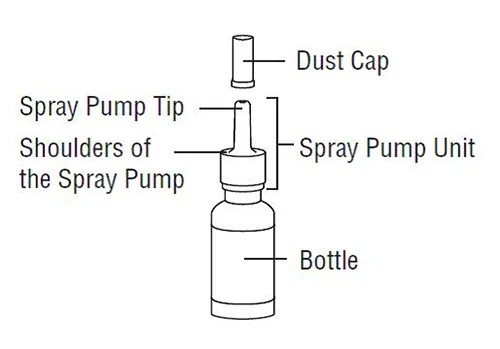
Instructions for Using Your Azelastine Hydrochloride and Fluticasone Propionate Nasal Spray Pump.
Before you use azelastine hydrochloride and fluticasone propionate nasal spray for the first time, you will need to shake the bottle gently and prime the pump.
For use in young children: An adult should help a young child use azelastine hydrochloride and fluticasone propionate nasal spray. (See Steps 1 through 12).
Priming your azelastine hydrochloride and fluticasone propionate nasal spray pump
Before you prime the bottle, shake it gently.
Step 1.
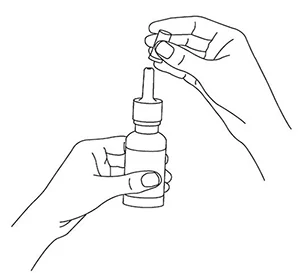
Remove the clear plastic dust cap from the spray pump tip of the bottle. (See Figure B)
Figure B
Step 2.
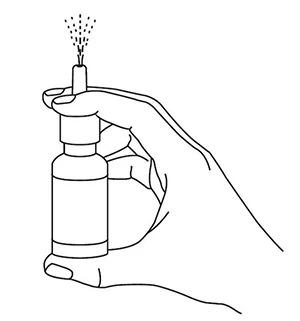
Hold the bottle upright with two fingers on the shoulders of the spray pump unit and put your thumb on the bottom of the bottle. Press upward with your thumb and release for the pumping action.
- Repeat the pumping action until you see a fine mist. You should see a fine mist of the medicine after 6 pumps or less. (See Figure C)
- To get a fine mist of medicine, you must repeat the pumping action fast and use firm pressure against the bottom of the bottle.
- If you see a stream of liquid, the spray will not work right and may cause nasal discomfort.
- If you do not use azelastine hydrochloride and fluticasone propionate nasal spray for 14 or more days, you will need to shake the bottle gently, and prime the pump with 1 spray or until you see a fine mist. If you do not see a fine mist, clean the tip of the spray nozzle. See the cleaning section below.
- Once you see the fine mist of medicine, your azelastine hydrochloride and fluticasone propionate nasal spray pump is ready for use.
Figure C
Using your azelastine hydrochloride and fluticasone propionate nasal spray:
For use in young children: An adult should help a young child use azelastine hydrochloride and fluticasone propionate nasal spray.
Step 3.
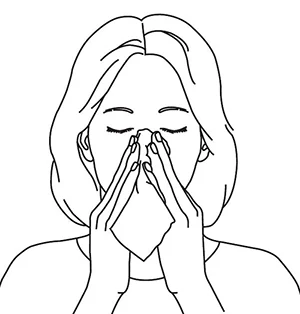
Gently blow your nose to clear nostrils. (See Figure D)
Figure D
Step 4.
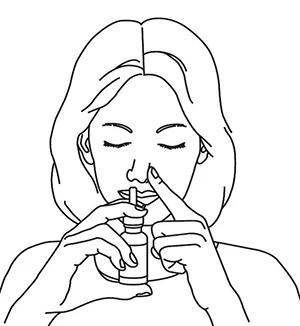
Shake the bottle gently. Close 1 nostril with a finger. Tilt your head forward slightly. Keep the bottle upright and carefully place the spray pump tip 1/4 to 1/2 inch into your other nostril. (See Figure E)
Figure E
Step 5.
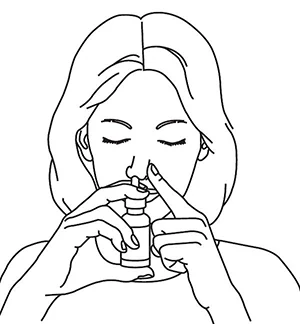
For each spray firmly press the pump 1 time. Keep your head tilted down and at the same time, gently breathe in through your nostril. (See Figure F)
Do not spray directly onto the nasal septum (the wall between your 2 nostrils).
- Repeat Step 5 in your other nostril.
- Do not tilt your head back. This will help to keep the medicine from going into your throat.
- If the medicine goes into your throat you may get a bitter taste in your mouth. This is normal.
Figure F
Step 6.
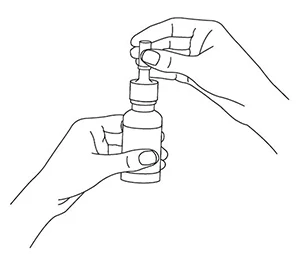
When you finish using azelastine hydrochloride and fluticasone propionate nasal spray, wipe the spray tip with a clean tissue or cloth. Put the dust cap back on the spray pump tip of the bottle. (See Figure G)
Figure G
Each bottle of azelastine hydrochloride and fluticasone propionate nasal spray contains enough medicine for you to spray medicine from the bottle 120 times. After initial priming, do not use your bottle of azelastine hydrochloride and fluticasone propionate nasal spray after 120 sprays. You may not receive the right amount of medicine. Keep track of the number of sprays you use from your bottle of azelastine hydrochloride and fluticasone propionate nasal spray and throw away the bottle even if it has medicine left in it.
Do not count any sprays used for initially priming the bottle.
Cleaning the Spray Pump Tip:
Your azelastine hydrochloride and fluticasone propionate nasal spray should be cleaned at least 1 time each week. To do this:
Step 7.
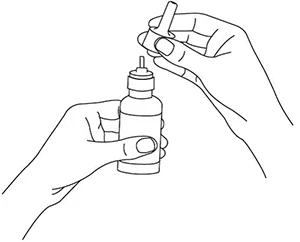
Remove the dust cap and then gently pull upward on the spray pump unit to remove it from the bottle. (See Figure H)
Figure H
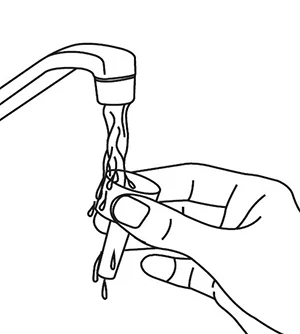
Step 8.
Wash the spray pump unit and dust cap in warm tap water. (See Figure I)
Figure I
Step 9.
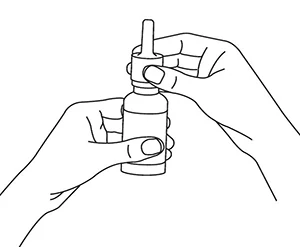
Allow to dry completely. When dry, place the spray pump unit and dust cap back on the bottle. (See Figure J)
Figure J
Step 10.
If the spray pump unit becomes blocked, it can be removed as instructed above in Step 7 and placed in warm water to soak.
Do not try to unblock the spray pump unit by inserting a pin or other sharp object. This will damage the spray pump unit and cause you not to get the right dose of medicine.
Step 11.
After the spray pump unit is unblocked, rinse the applicator and cap with cold water, and allow them to dry as in Step 10 above. When dry, place the spray pump unit back on the bottle and put the dust cap on the spray pump tip.
Step 12.
Reprime the bottle as in Steps 1 and 2 above. Replace the dust cap and your azelastine hydrochloride and fluticasone propionate nasal spray is ready for use.
This Patient Information and Instructions for Use has been approved by the U.S. Food and Drug Administration.
Brands listed are the trademarks of their respective owners.
Manufactured In Czech Republic By:
Teva Czech Industries, s.r.o.
Opava-Komarov, Czech Republic
Manufactured For:
Teva Pharmaceuticals
Parsippany, NJ 07054
Rev. C 1/2025